

Search Result
Results for "
N-methyl-N'-dodecylguanidine
" in MedChemExpress (MCE) Product Catalog:
12
Isotope-Labeled Compounds
| Cat. No. |
Product Name |
Target |
Research Areas |
Chemical Structure |
-
- HY-134124
-
|
|
Reactive Oxygen Species (ROS)
|
Metabolic Disease
|
|
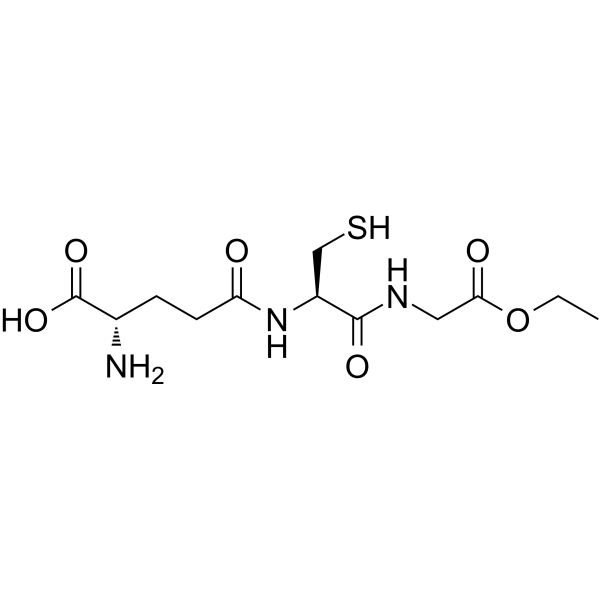
Glutathione ethyl ester is a cell-permeable GSH donor and provides an efficient supply of GSH to the oocyte. Glutathione ethyl ester shows positive effect on the in vitro production of embryos by enhancement of the antioxidative defense .
|
-
-
- HY-W089645
-
|
N-methyl-n-trimethylsilyltrifluoroacetamide
|
Biochemical Assay Reagents
|
Cancer
|
|
2,2,2-Trifluoro-N-methyl-N-(trimethylsilyl)acetamide (N-Methyl-n-trimethylsilyltrifluoroacetamide) is an ester product commonly used for silylation reactions in analyticalchemistry. 2,2,2-Trifluoro-N-methyl-N-(trimethylsilyl)acetamide can be used in the derivatization step of metabolomics analysis with gas chromatography/mass spectrometry (GC/MS) or as a derivatization reagent in GC with flame ionization detection analysis. 2,2,2-Trifluoro-N-methyl-N-(trimethylsilyl)acetamide can be used in research for studying Tamoxifen (HY-13757A) resistant breast cancer cells and other disease pathways .
|
-
-
- HY-P10272
-
|
PTG-300
|
Ferroportin
|
Others
|
|
Rusfertide is a peptide mimetic of natural hepcidin, which targets and degrades ferroportin, reduces serum iron and transferrin-saturation, and thus regulates the production of red blood cells. Rusfertide ameliorates the polycythemia vera, β-thalassemia and hereditary hemochromatosis .
|
-
-
- HY-A0248A
-
|
|
Bacterial
|
Infection
|
|
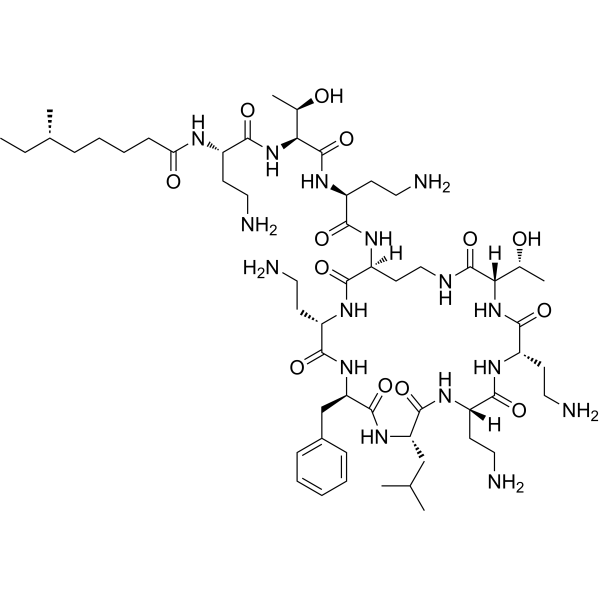
Polymyxin B1 is a potent antimicrobial lipopeptide first derived from Bacilus polymyxa. Polymyxin B1 is the major component in Polymyxin B (HY-A0248). Polymyxin B1 can induce lysis of bacterial cells through interaction with their membranes. Polymyxin B1 has the potential for multidrug-resistant Gram-negative bacterial infections treatment .
|
-
-
- HY-127034
-
|
|
Ser/Thr Protease
DNA/RNA Synthesis
|
Metabolic Disease
Cancer
|
|
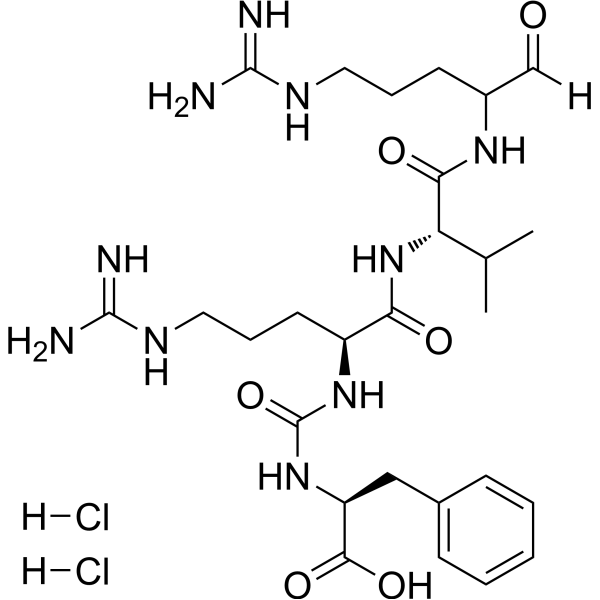
Antipain dihydrochloride is a protease inhibitor isolated from Actinomycetes. Antipain dihydrochloride inhibits N-methyl-N'-nitro-N-nitrosoguanidine (MNNG)-induced transformation and increases chromosomal aberrations. Antipain dihydrochloride restricts uterine DNA synthesis and function in mice .
|
-
-
- HY-P1108A
-
|
|
CRFR
|
Neurological Disease
Inflammation/Immunology
|
Astressin 2B TFA is a blood-brain barrier-impermeable, highly selective CRFR2 antagonist (rCRFR2, IC50=0.57 nM). Astressin 2B TFA blocks the protective effects mediated by CRFR2, thereby exacerbating indomethacin (HY-14397)-induced hemorrhagic intestinal injury in rats. Astressin 2B TFA reverses the protective effects of Urocortin 1 against intestinal hypermotility, bacterial invasion and upregulation of inflammatory mediators. Astressin 2B TFA also blocks the anxiogenic effect of Urocortin 2 and attenuates stress-induced anxiety-related behaviors. In the Clostridioides difficile toxin A (C. difficile toxin A)-mediated enteritis model, Astressin 2B TFA mimics the phenotype of CRFR2-deficient mice, significantly exacerbating intestinal epithelial damage, edema, neutrophil migration and the expression of multiple proinflammatory cytokines. Astressin 2B TFA is an important tool molecule for investigating the intestinal protective mechanisms of CRFR2 .
|
-
-
- HY-P1108
-
|
|
CRFR
|
Neurological Disease
Inflammation/Immunology
|
Astressin 2B is a blood-brain barrier-impermeable, highly selective CRFR2 antagonist (rCRFR2, IC50=0.57 nM). Astressin 2B blocks the protective effects mediated by CRFR2, thereby exacerbating indomethacin (HY-14397)-induced hemorrhagic intestinal injury in rats. Astressin 2B reverses the protective effects of Urocortin 1 against intestinal hypermotility, bacterial invasion and upregulation of inflammatory mediators. Astressin 2B also blocks the anxiogenic effect of Urocortin 2 and attenuates stress-induced anxiety-related behaviors. In the Clostridioides difficile toxin A (C. difficile toxin A)-mediated enteritis model, Astressin 2B mimics the phenotype of CRFR2-deficient mice, significantly exacerbating intestinal epithelial damage, edema, neutrophil migration and the expression of multiple proinflammatory cytokines. Astressin 2B is an important tool molecule for investigating the intestinal protective mechanisms of CRFR2 .
|
-
-
- HY-111054A
-
|
MDCG sodium
|
Endogenous Metabolite
|
Others
|
|
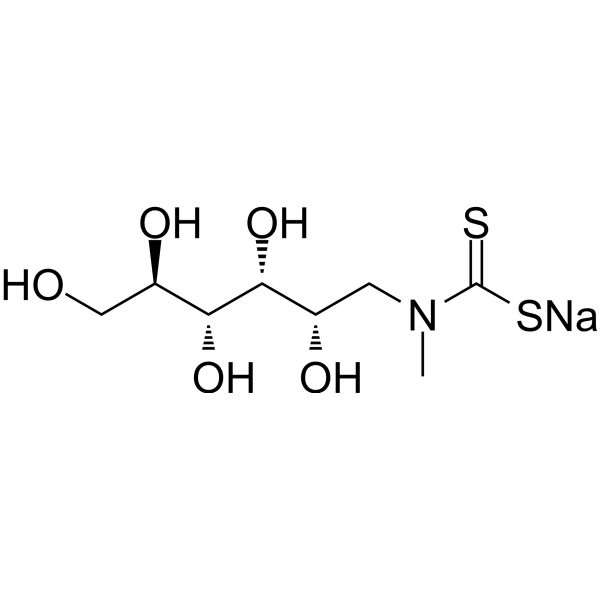
N-methyl-N-dithiocarboxyglucamine (MDCG) sodium mobilizes and promotes excretion of metallothionein-bound 109Cd in mouse model. N-methyl-N-dithiocarboxyglucamine significantly lowers the Cd content of both the liver and kidney, which is organs most susceptible to Cd-induced toxicity .
|
-
-
- HY-40352
-
|
|
Drug Intermediate
|
Others
|
|
N-Methyl-N-((3R,4R)-4-methylpiperidin-3-yl)-7H-pyrrolo[2,3-d]pyrimidin-4-amine is a drug intermediate for synthesis of various active compounds.
|
-
-
- HY-40352B
-
|
|
Drug Intermediate
|
Others
|
|
N-Methyl-N-((3R,4R)-4-methylpiperidin-3-yl)-7H-pyrrolo[2,3-d]pyrimidin-4-amine dihydrochloride is a drug intermediate for synthesis of various active compounds.
|
-
-
- HY-P10143
-
|
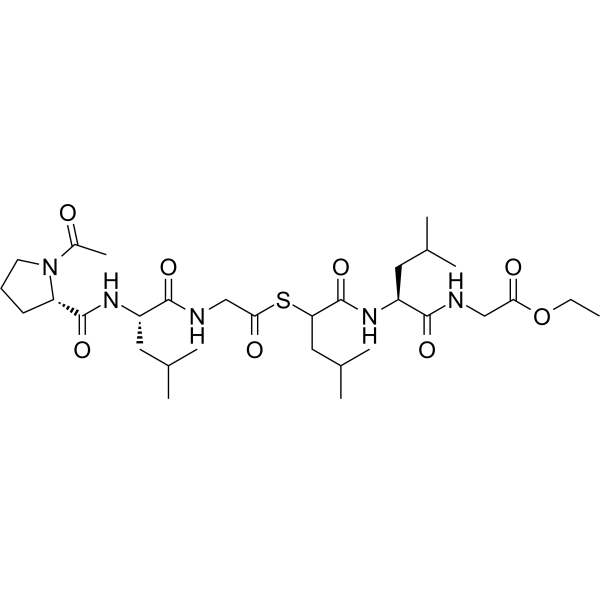
Ac-Pro-Leu-Gly-[(S)-2-mercapto-4-methyl-pentanoyl]-Leu-Gly-OEt
|
MMP
|
Others
|
|
MMP-2/MMP-9 Substrate (Ac-Pro-Leu-Gly-[(S)-2-mercapto-4-methyl-pentanoyl]-Leu-Gly-OEt) is a synthetic chromogenic polypeptide substrate whose core structure mimics the cleavage sites of MMP-2 and MMP-9 (gelatinase A and B) in collagen. After being hydrolyzed by collagenase, MMP-2/MMP-9 Substrate reacts with 4,4'-dithiodipyridine or Ellman's Reagent via its thiol fragment to produce a product with ultraviolet absorption properties .
|
-
-
- HY-A0248AS
-
|
|
Isotope-Labeled Compounds
Bacterial
|
Infection
|
|
Polymyxin B1-d7 TFA is the deuterium labeled Polymyxin B1 TFA (HY-A0248A). Polymyxin B1 is a potent antimicrobial lipopeptide first derived from Bacilus polymyxa. Polymyxin B1 is the major component in Polymyxin B (HY-A0248). Polymyxin B1 can induce lysis of bacterial cells through interaction with their membranes. Polymyxin B1 has the potential for multidrug-resistant Gram-negative bacterial infections treatment .
|
-
-
- HY-Z0085
-
|
|
Drug Intermediate
|
Others
|
|
2-Chloro-N-methyl-N-(4-nitrophenyl)acetamide is a synthetic intermediate useful for pharmaceutical synthesis.
|
-
-
- HY-118796
-
|
4-HO-MET; 4-Hydroxy-N-methyl-N-ethyltryptamine
|
5-HT Receptor
Serotonin Transporter
|
Neurological Disease
|
|
4-Hydroxy MET (4-HO-MET; 4-Hydroxy-N-methyl-N-ethyltryptamine) is a synthetic tryptamine psychoactive substance. 4-Hydroxy MET is a partial 5-HT2A receptor agonist, a serotonin transporter inhibitor and weak norepinephrine transporter inhibitor. 4-Hydroxy MET affects emotional, motoric, and cognitive functions via serotonergic hallucinogenic activity .
|
-
-
- HY-149308
-
|
|
Macrophage migration inhibitory factor (MIF)
|
Infection
|
|
MKA031 (compound 6y) is a non-competitive MIF inhibitor with an IC50 value of 1.7 μM. MKA031 (compound 6y) interferes with MIF/AIF interaction, MIF nuclear translocation, and N-methyl-N'-nitro-N-nitrosoguanidine (MNNG)-induced dependent cell death. MKA031 can be used in the study of chronic hepatitis C virus infection .
|
-
-
- HY-153059
-
-
-
- HY-P10563
-
|
BHV-1100
|
CD38
|
Cancer
|
|
Noraramtide (BHV-1100) is an antibody recruitment molecule. Noraramtide can specifically bind to CD38 molecules to recruit natural killer (NK) cells. Noraramtide enhances the ability of NK cells to kill tumor cells through antibody-dependent cellular cytotoxicity (ADCC). This mechanism allows NK cells to more effectively recognize and eliminate tumor cells while avoiding mutual killing between NK cells. Noraramtide can be used for the study of autologous cancer immunity .
|
-
-
- HY-W663740
-
|
MNP; MeNP; N-methyl-N'-nitrosopiperazine
|
Biochemical Assay Reagents
|
Others
|
|
1-Methyl-4-nitrosopiperazine (MNP; MeNP;N-Methyl-N'-nitrosopiperazine) is a potential impurity in sartans, non-steroidal anti-inflammatory drugs (NSAIDs), and thiazide diuretics .
|
-
-
- HY-W198256
-
|
|
PROTAC Linkers
|
Cancer
|
|
Tert-butyl n-methyl-N-[2-(piperidin-4-yl)ethyl]carbamate is a PROTAC linker that can be used in the synthesis of PROTACs.
|
-
-
- HY-127039
-
|
|
Ser/Thr Protease
DNA/RNA Synthesis
|
Metabolic Disease
Cancer
|
|
Antipain is a protease inhibitor isolated from Actinomycetes. Antipain inhibits N-methyl-N'-nitro-N-nitrosoguanidine (MNNG)-induced transformation and increases chromosomal aberrations. Antipain restricts uterine DNA synthesis and function in mice .
|
-
-
- HY-143822S
-
-
-
- HY-111054
-
|
MDCG
|
Endogenous Metabolite
|
Inflammation/Immunology
|
|
N-methyl-N-dithiocarboxyglucamine (MDCG) mobilizes and promotes excretion of metallothione-bound 109Cd. N-methyl-N-dithiocarboxyglucamine shows effects on acute and chronic Cd intoxication .
|
-
-
- HY-Y0544S
-
-
-
- HY-P3066
-
|
d(CH2)5Tyr(Et)VAVP
|
Vasopressin Receptor
|
Metabolic Disease
|
|
SKF 100398 (d(CH2)5Tyr(Et)VAVP), an arginine vasopressin (AVP) analogue, is a specific antagonist of the antidiuretic effect of exogenous and endogenous AVP .
|
-
-
- HY-170475
-
|
5-Methoxy-N-methyl-N-ethyltryptamine
|
5-HT Receptor
|
Neurological Disease
|
|
5-MeO-MET (5-Methoxy-N-methyl-N-ethyltryptamine) is a 5-methoxytryptamines compound. 5-MeO-MET is the agonist of 5-HT1A and 5-HT2A. 5-MeO-MET can inhibit the movement of mice and has a sedative effect .
|
-
-
- HY-W613883
-
|
|
PROTAC Linkers
|
Cancer
|
|
tert-Butyl N-methyl-N-[4-(methylamino)butyl]carbamate is a PROTAC linker that can be used in the synthesis of PROTACs.
|
-
-
- HY-W250410
-
|
|
ADC Linker
|
Cancer
|
|
N-Methyl-N-[(3-methyldithio)-1-oxopropyl]-L-alanine is a PEGn linker for antibody-drug-conjugation (ADC).
|
-
-
- HY-W704014
-
|
N-methyl-N-nitroso-1-dodecanamine-d5
|
Isotope-Labeled Compounds
|
Others
|
|
N-Nitroso-N-methyl-N-dodecylamine-d5 (N-Methyl-N-nitroso-1-dodecanamine-d5) is the deuterium labeled N-Methyl-N-nitroso-1-dodecanamine (HY-W899995).
|
-
-
- HY-W089645S
-
-
-
- HY-P10828
-
|
|
Virus Protease
|
Infection
Inflammation/Immunology
|
|
MAPI is a polypeptide irreversible 3C cysteine protease (SV3CP) inhibitor. MAPI inhibits SV3CP by covalently binding its C-terminal Michael-acceptor extension to the active site thiol of SV3CP Cys 139. MAPI is promising for research of noroviruses infection .
|
-
-
- HY-W725046
-
-
-
- HY-W047901
-
-
-
- HY-W665796
-
|
|
Drug Derivative
|
Cancer
|
|
N-Methyl-N-nitroso-2-propanamine is an N-nitrosamine, which induces tumor formation in mice .
|
-
-
- HY-W015813S
-
-
-
- HY-140510
-
|
|
PROTAC Linkers
|
Cancer
|
|
N-Methyl-N-(t-Boc)-PEG4-acid is a PEG-based PROTAC linker that can be used in the synthesis of PROTACs .
|
-
-
- HY-141049
-
|
|
PROTAC Linkers
|
Cancer
|
|
N-methyl-N'-(propargyl-PEG4)-Cy5 (chloride) is a PEG-based PROTAC linker that can be used in the synthesis of PROTACs . N-methyl-N'-(propargyl-PEG4)-Cy5 is a click chemistry reagent, it contains an Alkyne group and can undergo copper-catalyzed azide-alkyne cycloaddition (CuAAc) with molecules containing Azide groups.
|
-
-
- HY-59252
-
|
|
PROTAC Linkers
|
Cancer
|
|
tert-Butyl N-methyl-N-(piperidin-4-ylmethyl)carbamate is a PROTAC linker that can be used in the synthesis of PROTACs.
|
-
-
- HY-141072
-
|
|
PROTAC Linkers
|
Cancer
|
|
N-Methyl-N'-(hydroxy-PEG2)-Cy5 is a PEG-based PROTAC linker that can be used in the synthesis of PROTACs .
|
-
-
- HY-140010
-
|
|
PROTAC Linkers
|
Cancer
|
|
N-methyl-N'-(azide-PEG3)-Cy3 is a PEG-based PROTAC linker that can be used in the synthesis of PROTACs . N-methyl-N'-(azide-PEG3)-Cy3 is a click chemistry reagent, it contains an Azide group and can undergo copper-catalyzed azide-alkyne cycloaddition reaction (CuAAc) with molecules containing Alkyne groups. It can also undergo strain-promoted alkyne-azide cycloaddition (SPAAC) reactions with molecules containing DBCO or BCN groups.
|
-
-
- HY-141062
-
|
|
PROTAC Linkers
|
Cancer
|
|
N-Methyl-N'-(azido-PEG2-C5)-Cy5 is a PEG-based PROTAC linker that can be used in the synthesis of PROTACs . N-Methyl-N'-(azido-PEG2-C5)-Cy5 is a click chemistry reagent, it contains an Azide group and can undergo copper-catalyzed azide-alkyne cycloaddition reaction (CuAAc) with molecules containing Alkyne groups. It can also undergo strain-promoted alkyne-azide cycloaddition (SPAAC) reactions with molecules containing DBCO or BCN groups.
|
-
-
- HY-141040
-
|
|
PROTAC Linkers
|
Cancer
|
|
N-methyl-N'-methyl-O-(m-PEG4)-O'-(acid-PEG5)-Cy5 is a PEG-based PROTAC linker that can be used in the synthesis of PROTACs .
|
-
-
- HY-141032
-
|
|
PROTAC Linkers
|
Cancer
|
|
N-methyl-N'-methyl-O-(m-PEG4)-O'-(propargyl-PEG4)-Cy3 is a PEG-based PROTAC linker that can be used in the synthesis of PROTACs . N-methyl-N'-methyl-O-(m-PEG4)-O'-(propargyl-PEG4)-Cy3 is a click chemistry reagent, it contains an Alkyne group and can undergo copper-catalyzed azide-alkyne cycloaddition (CuAAc) with molecules containing Azide groups.
|
-
-
- HY-141052
-
|
|
PROTAC Linkers
|
Cancer
|
|
N-methyl-N'-methyl-O-(m-PEG4)-O'-(propargyl-PEG4)-Cy5 is a PEG-based PROTAC linker that can be used in the synthesis of PROTACs . N-methyl-N'-methyl-O-(m-PEG4)-O'-(propargyl-PEG4)-Cy5 is a click chemistry reagent, it contains an Alkyne group and can undergo copper-catalyzed azide-alkyne cycloaddition (CuAAc) with molecules containing Azide groups.
|
-
-
- HY-141067
-
|
|
PROTAC Linkers
|
Cancer
|
|
N-methyl-N'-methyl-O-(m-PEG4)-O'-(azide-PEG4)-Cy5 is a PEG-based PROTAC linker that can be used in the synthesis of PROTACs . N-methyl-N'-methyl-O-(m-PEG4)-O'-(azide-PEG4)-Cy5 is a click chemistry reagent, it contains an Azide group and can undergo copper-catalyzed azide-alkyne cycloaddition reaction (CuAAc) with molecules containing Alkyne groups. It can also undergo strain-promoted alkyne-azide cycloaddition (SPAAC) reactions with molecules containing DBCO or BCN groups.
|
-
-
- HY-141031
-
|
|
PROTAC Linkers
|
Cancer
|
|
N-Methyl-N'-methyl-O-(m-PEG4)-O'-(azide-PEG4)-Cy3 is a PEG-based PROTAC linker that can be used in the synthesis of PROTACs . N-Methyl-N'-methyl-O-(m-PEG4)-O'-(azide-PEG4)-Cy3 is a click chemistry reagent, it contains an Azide group and can undergo copper-catalyzed azide-alkyne cycloaddition reaction (CuAAc) with molecules containing Alkyne groups. It can also undergo strain-promoted alkyne-azide cycloaddition (SPAAC) reactions with molecules containing DBCO or BCN groups.
|
-
-
- HY-W702094
-
-
-
- HY-79417
-
|
Carbamic acid, [(1S)-1-[(methoxymethylamino)carbonyl]-3-methylbutyl]-, 1,1-dimethylethyl ester (9CI); Carbamic acid, [1-[(methoxymethylamino)carbonyl]-3-methylbutyl]-, 1,1-dimethylethyl ester, (S)-
|
Amino Acid Derivatives
|
Others
|
|
(S)-N-Methyl-N-methoxy-2-(tert-butoxycarbonylamino)-4-methylpentanamide is a leucine derivative .
|
-
-
- HY-W076490
-
|
IPO 4328; N-methyl-N'-phenylurea; 1-methyl-3-phenylurea
|
Herbicide
|
Others
|
|
Defenuron (IPO 4328) is a herbicide for controlling undesirable grasses and broad-leaved plants in a variety of crops .
|
-
-
- HY-W074886
-
|
|
Biochemical Assay Reagents
|
Others
|
|
N-Methyl-N-tetradecanoylglycine is a rectal absorption promoter. N-Methyl-N-tetradecanoylglycine enhances rectal absorption of antibiotics .
|
-
-
- HY-40352R
-
|
|
Reference Standards
|
|
|
N-methyl-N-((3R,4R)-4-methylpiperidin-3-yl)-7H-pyrrolo[2,3-d]pyrimidin-4-amine (Standard) is the analytical standard of N-methyl-N-((3R,4R)-4-methylpiperidin-3-yl)-7H-pyrrolo[2,3-d]pyrimidin-4-amine. This product is intended for research and analytical applications.
|
-
- HY-W700581
-
|
|
Isotope-Labeled Compounds
Biochemical Assay Reagents
|
Others
|
|
1-(Methyl-d3)-4-nitrosopiperazine is the deuterium labeled 1-Methyl-4-nitrosopiperazine (HY-W663740). 1-Methyl-4-nitrosopiperazine (MNP; MeNP;N-Methyl-N'-nitrosopiperazine) is a potential impurity in sartans, non-steroidal anti-inflammatory drugs (NSAIDs), and thiazide diuretics .
|
-
- HY-118077
-
|
|
Others
|
Others
|
|
RE 11775 (m-tert-butylphenyl-N-methyl-N-(phenylthio) carbonate) is a new carbonate ester with unusually high toxicity to mosquito larvae. Laboratory and field evaluations have shown that it has potential for use in controlling sensitive and organophosphate-resistant larval and adult stages of Aedes nigromaculis (Ludlow). Preliminary studies also suggest that RE 11775 may also be useful for controlling sensitive and organophosphate-resistant Culex spccies. This new carbonate ester is relatively safe, with no adverse effects found in current testing.
|
-
- HY-Z0138R
-
|
|
Reference Standards
|
|
|
N-Methyl-N-(4-nitrophenyl)acetamide (Nintedanib Impurity) (Standard) is the analytical standard of N-Methyl-N-(4-nitrophenyl)acetamide (Nintedanib Impurity). This product is intended for research and analytical applications.
|
-
- HY-W342316
-
-
- HY-P2592
-
-
- HY-W611494
-
|
|
MOFs
|
Others
|
|
N-Methyl-N-(pyridin-4-yl)isonicotinamide is a metal-organic framework (MOF).
|
-
- HY-125628
-
|
|
Endogenous Metabolite
|
Infection
|
|
Kahalalide A is an anti-mycobacterial compound with antimicrobial activity. Kahalalide A is derived from the marine mollusk Elysia rufescens. Kahalalide A has attracted extensive attention in natural product research due to its potential medicinal value .
|
-
- HY-W726845
-
|
MNP-d11; MeNP-d11; N-methyl-N'-nitrosopiperazine-d11
|
Isotope-Labeled Compounds
Biochemical Assay Reagents
|
Others
|
|
1-Methyl-4-nitrosopiperazine-d11 (MNP-d11) is the deuterium labeled 1-Methyl-4-nitrosopiperazine (HY-W663740). 1-Methyl-4-nitrosopiperazine (MNP; MeNP;N-Methyl-N'-nitrosopiperazine) is a potential impurity in sartans, non-steroidal anti-inflammatory drugs (NSAIDs), and thiazide diuretics .
|
-
- HY-I0364R
-
|
|
Reference Standards
|
|
|
2-Chloro-N-methyl-N-((3R,4R)-4-methylpiperidin-3-yl)-7H-pyrrolo[2,3-d]pyrimidin-4-amine (Standard) is the analytical standard of 2-Chloro-N-methyl-N-((3R,4R)-4-methylpiperidin-3-yl)-7H-pyrrolo[2,3-d]pyrimidin-4-amine. This product is intended for research and analytical applications.
|
-
- HY-W101655R
-
-
- HY-W416548S
-
|
|
Isotope-Labeled Compounds
Biochemical Assay Reagents
|
Others
|
|
1-Methyl-4-nitro piperazine-d11 is the deuterium labeled 1-Methyl-4-nitro piperazine. 1-Methyl-4-nitrosopiperazine (MNP; MeNP;N-Methyl-N'-nitrosopiperazine) is a potential impurity in sartans, non-steroidal anti-inflammatory drugs (NSAIDs), and thiazide diuretics .
|
-
- HY-A0248AS1
-
|
|
Isotope-Labeled Compounds
Bacterial
|
Infection
|
|
Polymyxin B1-D-Leu-d7 TFA is the deuterium labeled Polymyxin B1 (HY-A0248A). Polymyxin B1 is a potent antimicrobial lipopeptide first derived from Bacilus polymyxa. Polymyxin B1 is the major component in Polymyxin B (HY-A0248). Polymyxin B1 can induce lysis of bacterial cells through interaction with their membranes. Polymyxin B1 has the potential for multidrug-resistant Gram-negative bacterial infections treatment .
|
-
| Cat. No. |
Product Name |
Target |
Research Area |
-
- HY-134124
-
|
|
Reactive Oxygen Species (ROS)
|
Metabolic Disease
|
|
Glutathione ethyl ester is a cell-permeable GSH donor and provides an efficient supply of GSH to the oocyte. Glutathione ethyl ester shows positive effect on the in vitro production of embryos by enhancement of the antioxidative defense .
|
-
- HY-P10272
-
|
PTG-300
|
Ferroportin
|
Others
|
|
Rusfertide is a peptide mimetic of natural hepcidin, which targets and degrades ferroportin, reduces serum iron and transferrin-saturation, and thus regulates the production of red blood cells. Rusfertide ameliorates the polycythemia vera, β-thalassemia and hereditary hemochromatosis .
|
-
- HY-A0248A
-
|
|
Bacterial
|
Infection
|
|
Polymyxin B1 is a potent antimicrobial lipopeptide first derived from Bacilus polymyxa. Polymyxin B1 is the major component in Polymyxin B (HY-A0248). Polymyxin B1 can induce lysis of bacterial cells through interaction with their membranes. Polymyxin B1 has the potential for multidrug-resistant Gram-negative bacterial infections treatment .
|
-
- HY-P1108A
-
|
|
CRFR
|
Neurological Disease
Inflammation/Immunology
|
Astressin 2B TFA is a blood-brain barrier-impermeable, highly selective CRFR2 antagonist (rCRFR2, IC50=0.57 nM). Astressin 2B TFA blocks the protective effects mediated by CRFR2, thereby exacerbating indomethacin (HY-14397)-induced hemorrhagic intestinal injury in rats. Astressin 2B TFA reverses the protective effects of Urocortin 1 against intestinal hypermotility, bacterial invasion and upregulation of inflammatory mediators. Astressin 2B TFA also blocks the anxiogenic effect of Urocortin 2 and attenuates stress-induced anxiety-related behaviors. In the Clostridioides difficile toxin A (C. difficile toxin A)-mediated enteritis model, Astressin 2B TFA mimics the phenotype of CRFR2-deficient mice, significantly exacerbating intestinal epithelial damage, edema, neutrophil migration and the expression of multiple proinflammatory cytokines. Astressin 2B TFA is an important tool molecule for investigating the intestinal protective mechanisms of CRFR2 .
|
-
- HY-P1108
-
|
|
CRFR
|
Neurological Disease
Inflammation/Immunology
|
Astressin 2B is a blood-brain barrier-impermeable, highly selective CRFR2 antagonist (rCRFR2, IC50=0.57 nM). Astressin 2B blocks the protective effects mediated by CRFR2, thereby exacerbating indomethacin (HY-14397)-induced hemorrhagic intestinal injury in rats. Astressin 2B reverses the protective effects of Urocortin 1 against intestinal hypermotility, bacterial invasion and upregulation of inflammatory mediators. Astressin 2B also blocks the anxiogenic effect of Urocortin 2 and attenuates stress-induced anxiety-related behaviors. In the Clostridioides difficile toxin A (C. difficile toxin A)-mediated enteritis model, Astressin 2B mimics the phenotype of CRFR2-deficient mice, significantly exacerbating intestinal epithelial damage, edema, neutrophil migration and the expression of multiple proinflammatory cytokines. Astressin 2B is an important tool molecule for investigating the intestinal protective mechanisms of CRFR2 .
|
-
- HY-P10143
-
|
Ac-Pro-Leu-Gly-[(S)-2-mercapto-4-methyl-pentanoyl]-Leu-Gly-OEt
|
MMP
|
Others
|
|
MMP-2/MMP-9 Substrate (Ac-Pro-Leu-Gly-[(S)-2-mercapto-4-methyl-pentanoyl]-Leu-Gly-OEt) is a synthetic chromogenic polypeptide substrate whose core structure mimics the cleavage sites of MMP-2 and MMP-9 (gelatinase A and B) in collagen. After being hydrolyzed by collagenase, MMP-2/MMP-9 Substrate reacts with 4,4'-dithiodipyridine or Ellman's Reagent via its thiol fragment to produce a product with ultraviolet absorption properties .
|
-
- HY-A0248AS
-
|
|
Isotope-Labeled Compounds
Bacterial
|
Infection
|
|
Polymyxin B1-d7 TFA is the deuterium labeled Polymyxin B1 TFA (HY-A0248A). Polymyxin B1 is a potent antimicrobial lipopeptide first derived from Bacilus polymyxa. Polymyxin B1 is the major component in Polymyxin B (HY-A0248). Polymyxin B1 can induce lysis of bacterial cells through interaction with their membranes. Polymyxin B1 has the potential for multidrug-resistant Gram-negative bacterial infections treatment .
|
-
- HY-P10563
-
|
BHV-1100
|
CD38
|
Cancer
|
|
Noraramtide (BHV-1100) is an antibody recruitment molecule. Noraramtide can specifically bind to CD38 molecules to recruit natural killer (NK) cells. Noraramtide enhances the ability of NK cells to kill tumor cells through antibody-dependent cellular cytotoxicity (ADCC). This mechanism allows NK cells to more effectively recognize and eliminate tumor cells while avoiding mutual killing between NK cells. Noraramtide can be used for the study of autologous cancer immunity .
|
-
- HY-P3066
-
|
d(CH2)5Tyr(Et)VAVP
|
Vasopressin Receptor
|
Metabolic Disease
|
|
SKF 100398 (d(CH2)5Tyr(Et)VAVP), an arginine vasopressin (AVP) analogue, is a specific antagonist of the antidiuretic effect of exogenous and endogenous AVP .
|
-
- HY-P10828
-
|
|
Virus Protease
|
Infection
Inflammation/Immunology
|
|
MAPI is a polypeptide irreversible 3C cysteine protease (SV3CP) inhibitor. MAPI inhibits SV3CP by covalently binding its C-terminal Michael-acceptor extension to the active site thiol of SV3CP Cys 139. MAPI is promising for research of noroviruses infection .
|
-
- HY-W047901
-
-
- HY-79417
-
|
Carbamic acid, [(1S)-1-[(methoxymethylamino)carbonyl]-3-methylbutyl]-, 1,1-dimethylethyl ester (9CI); Carbamic acid, [1-[(methoxymethylamino)carbonyl]-3-methylbutyl]-, 1,1-dimethylethyl ester, (S)-
|
Amino Acid Derivatives
|
Others
|
|
(S)-N-Methyl-N-methoxy-2-(tert-butoxycarbonylamino)-4-methylpentanamide is a leucine derivative .
|
-
- HY-P4756
-
|
|
Peptides
|
Others
|
|
N-(2-Carbamoyl-ethyl)-Val-Leu-anilide is a polypeptide that can be found by peptide screening. Peptide screening is a research tool that pools active peptides primarily by immunoassay. Peptide screening can be used for protein interaction, functional analysis, epitope screening, especially in the field of agent research and development .
|
-
- HY-P2592
-
-
- HY-125628
-
|
|
Endogenous Metabolite
|
Infection
|
|
Kahalalide A is an anti-mycobacterial compound with antimicrobial activity. Kahalalide A is derived from the marine mollusk Elysia rufescens. Kahalalide A has attracted extensive attention in natural product research due to its potential medicinal value .
|
-
- HY-A0248AS1
-
|
|
Isotope-Labeled Compounds
Bacterial
|
Infection
|
|
Polymyxin B1-D-Leu-d7 TFA is the deuterium labeled Polymyxin B1 (HY-A0248A). Polymyxin B1 is a potent antimicrobial lipopeptide first derived from Bacilus polymyxa. Polymyxin B1 is the major component in Polymyxin B (HY-A0248). Polymyxin B1 can induce lysis of bacterial cells through interaction with their membranes. Polymyxin B1 has the potential for multidrug-resistant Gram-negative bacterial infections treatment .
|
| Cat. No. |
Product Name |
Category |
Target |
Chemical Structure |
| Cat. No. |
Product Name |
Chemical Structure |
-
- HY-A0248AS
-
|
|
|
Polymyxin B1-d7 TFA is the deuterium labeled Polymyxin B1 TFA (HY-A0248A). Polymyxin B1 is a potent antimicrobial lipopeptide first derived from Bacilus polymyxa. Polymyxin B1 is the major component in Polymyxin B (HY-A0248). Polymyxin B1 can induce lysis of bacterial cells through interaction with their membranes. Polymyxin B1 has the potential for multidrug-resistant Gram-negative bacterial infections treatment .
|
-
-
- HY-143822S
-
|
|
|
N-Methyl-N’-nitrosopiperazine-d4 is the deuterium labeled N-Methyl-N’-nitrosopiperazine .
|
-
-
- HY-Y0544S
-
|
|
|
N-Methyl-N-nitrosotoluene-4-sulfonamide-d3 is the deuterium labeled N-Methyl-N-nitrosotoluene-4-sulfonamide .
|
-
-
- HY-W704014
-
|
|
|
N-Nitroso-N-methyl-N-dodecylamine-d5 (N-Methyl-N-nitroso-1-dodecanamine-d5) is the deuterium labeled N-Methyl-N-nitroso-1-dodecanamine (HY-W899995).
|
-
-
- HY-W089645S
-
|
|
|
N-Methyl-N-(trimethylsilyl)trifluoroacetamide-d9 is the deuterium labeled N-Methyl-N-(trimethylsilyl)trifluoroacetamide .
|
-
-
- HY-W725046
-
|
|
|
N-Methyl-N-phenylnitrous amide-d5 is the deuterium labeled N-Methyl-N-phenylnitrous amide (HY-W015813).
|
-
-
- HY-W015813S
-
|
|
|
N-Methyl-N-phenylnitrous amide- 13C,d3, 15N is the deuterium, 13C and 15N labeled N-Methyl-N-phenylnitrous amide .
|
-
-
- HY-W702094
-
|
|
|
N-Methyl-N-(3-oxopropyl)nitrous amide-d5 is the deuterium labeled N-Methyl-N-(3-oxopropyl)nitrous amide (HY-W701813).
|
-
-
- HY-W700581
-
|
|
|
1-(Methyl-d3)-4-nitrosopiperazine is the deuterium labeled 1-Methyl-4-nitrosopiperazine (HY-W663740). 1-Methyl-4-nitrosopiperazine (MNP; MeNP;N-Methyl-N'-nitrosopiperazine) is a potential impurity in sartans, non-steroidal anti-inflammatory drugs (NSAIDs), and thiazide diuretics .
|
-
-
- HY-W726845
-
|
|
|
1-Methyl-4-nitrosopiperazine-d11 (MNP-d11) is the deuterium labeled 1-Methyl-4-nitrosopiperazine (HY-W663740). 1-Methyl-4-nitrosopiperazine (MNP; MeNP;N-Methyl-N'-nitrosopiperazine) is a potential impurity in sartans, non-steroidal anti-inflammatory drugs (NSAIDs), and thiazide diuretics .
|
-
-
- HY-W416548S
-
|
|
|
1-Methyl-4-nitro piperazine-d11 is the deuterium labeled 1-Methyl-4-nitro piperazine. 1-Methyl-4-nitrosopiperazine (MNP; MeNP;N-Methyl-N'-nitrosopiperazine) is a potential impurity in sartans, non-steroidal anti-inflammatory drugs (NSAIDs), and thiazide diuretics .
|
-
-
- HY-A0248AS1
-
|
|
|
Polymyxin B1-D-Leu-d7 TFA is the deuterium labeled Polymyxin B1 (HY-A0248A). Polymyxin B1 is a potent antimicrobial lipopeptide first derived from Bacilus polymyxa. Polymyxin B1 is the major component in Polymyxin B (HY-A0248). Polymyxin B1 can induce lysis of bacterial cells through interaction with their membranes. Polymyxin B1 has the potential for multidrug-resistant Gram-negative bacterial infections treatment .
|
-
| Cat. No. |
Product Name |
|
Classification |
-
- HY-141049
-
|
|
|
PROTAC Synthesis
Alkynes
|
|
N-methyl-N'-(propargyl-PEG4)-Cy5 (chloride) is a PEG-based PROTAC linker that can be used in the synthesis of PROTACs . N-methyl-N'-(propargyl-PEG4)-Cy5 is a click chemistry reagent, it contains an Alkyne group and can undergo copper-catalyzed azide-alkyne cycloaddition (CuAAc) with molecules containing Azide groups.
|
-
- HY-140010
-
|
|
|
Azide
PROTAC Synthesis
|
|
N-methyl-N'-(azide-PEG3)-Cy3 is a PEG-based PROTAC linker that can be used in the synthesis of PROTACs . N-methyl-N'-(azide-PEG3)-Cy3 is a click chemistry reagent, it contains an Azide group and can undergo copper-catalyzed azide-alkyne cycloaddition reaction (CuAAc) with molecules containing Alkyne groups. It can also undergo strain-promoted alkyne-azide cycloaddition (SPAAC) reactions with molecules containing DBCO or BCN groups.
|
-
- HY-141062
-
|
|
|
PROTAC Synthesis
Azide
|
|
N-Methyl-N'-(azido-PEG2-C5)-Cy5 is a PEG-based PROTAC linker that can be used in the synthesis of PROTACs . N-Methyl-N'-(azido-PEG2-C5)-Cy5 is a click chemistry reagent, it contains an Azide group and can undergo copper-catalyzed azide-alkyne cycloaddition reaction (CuAAc) with molecules containing Alkyne groups. It can also undergo strain-promoted alkyne-azide cycloaddition (SPAAC) reactions with molecules containing DBCO or BCN groups.
|
-
- HY-141032
-
|
|
|
PROTAC Synthesis
Alkynes
|
|
N-methyl-N'-methyl-O-(m-PEG4)-O'-(propargyl-PEG4)-Cy3 is a PEG-based PROTAC linker that can be used in the synthesis of PROTACs . N-methyl-N'-methyl-O-(m-PEG4)-O'-(propargyl-PEG4)-Cy3 is a click chemistry reagent, it contains an Alkyne group and can undergo copper-catalyzed azide-alkyne cycloaddition (CuAAc) with molecules containing Azide groups.
|
-
- HY-141052
-
|
|
|
PROTAC Synthesis
Alkynes
|
|
N-methyl-N'-methyl-O-(m-PEG4)-O'-(propargyl-PEG4)-Cy5 is a PEG-based PROTAC linker that can be used in the synthesis of PROTACs . N-methyl-N'-methyl-O-(m-PEG4)-O'-(propargyl-PEG4)-Cy5 is a click chemistry reagent, it contains an Alkyne group and can undergo copper-catalyzed azide-alkyne cycloaddition (CuAAc) with molecules containing Azide groups.
|
-
- HY-141067
-
|
|
|
PROTAC Synthesis
Azide
|
|
N-methyl-N'-methyl-O-(m-PEG4)-O'-(azide-PEG4)-Cy5 is a PEG-based PROTAC linker that can be used in the synthesis of PROTACs . N-methyl-N'-methyl-O-(m-PEG4)-O'-(azide-PEG4)-Cy5 is a click chemistry reagent, it contains an Azide group and can undergo copper-catalyzed azide-alkyne cycloaddition reaction (CuAAc) with molecules containing Alkyne groups. It can also undergo strain-promoted alkyne-azide cycloaddition (SPAAC) reactions with molecules containing DBCO or BCN groups.
|
-
- HY-141031
-
|
|
|
Azide
PROTAC Synthesis
|
|
N-Methyl-N'-methyl-O-(m-PEG4)-O'-(azide-PEG4)-Cy3 is a PEG-based PROTAC linker that can be used in the synthesis of PROTACs . N-Methyl-N'-methyl-O-(m-PEG4)-O'-(azide-PEG4)-Cy3 is a click chemistry reagent, it contains an Azide group and can undergo copper-catalyzed azide-alkyne cycloaddition reaction (CuAAc) with molecules containing Alkyne groups. It can also undergo strain-promoted alkyne-azide cycloaddition (SPAAC) reactions with molecules containing DBCO or BCN groups.
|
| Cat. No. |
Product Name |
|
Classification |
Your information is safe with us. * Required Fields.
Inquiry Information
- Product Name:
- Cat. No.:
- Quantity:
- MCE Japan Authorized Agent: