1. Search Result
Search Result
Results for "

PB2

" in MedChemExpress (MCE) Product Catalog:

26

Inhibitors & Agonists

2

Fluorescent Dye

1

Biochemical Assay Reagents

7

Natural
Products

Cat. No. Product Name Target Research Areas Chemical Structure
  • HY-145586

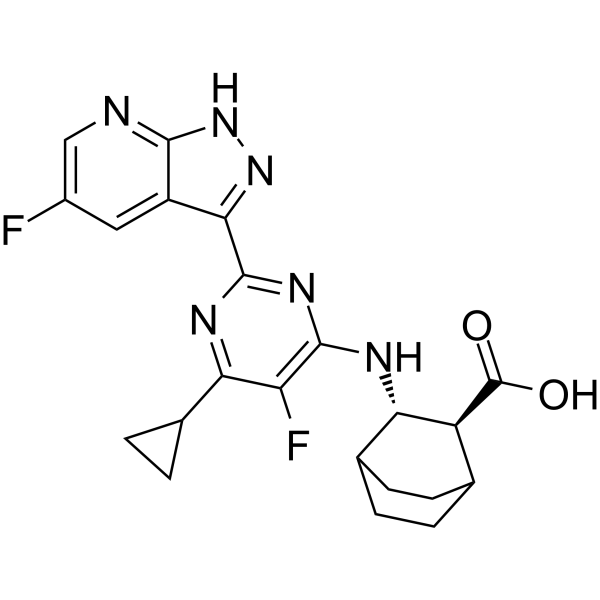
    ZSP1273

    Influenza Virus DNA/RNA Synthesis Infection
    Onradivir (ZSP1273) is an orally active antiviral agent targeting influenza A virus RNA polymerase PB2 subunit with an IC50 of 0.562 nM. Onradivir inhibits cap binding to influenza A virus RNA polymerase PB2 subunit, suppresses viral replication, reduces viral titres and RNA loads, and inhibits influenza A virus infection. Onradivir maintains high survival rates in influenza A virus-infected mice, and reduces influenza A virus titers in a murine model. Onradivir can be used for the research of influenza A virus infection [2].
    Onradivir
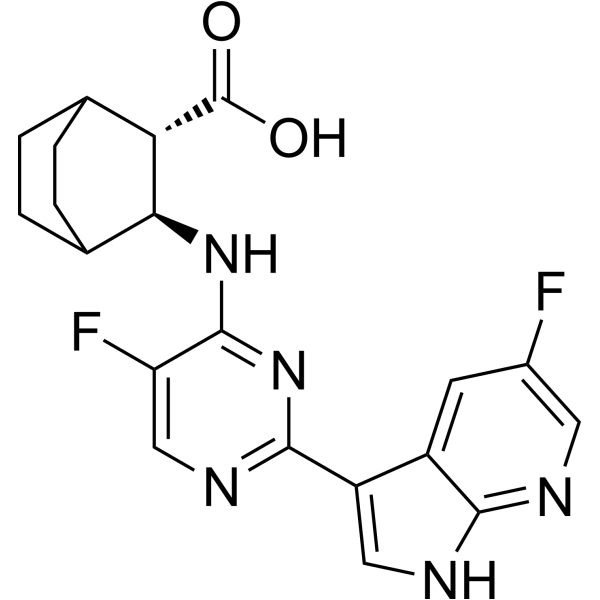
  • HY-12353A
    Pimodivir
    5+ Cited Publications

    VX-787

    Influenza Virus Infection
    Pimodivir (VX-787) is an orally bioavailable inhibitor of influenza A virus polymerases through interaction with the viral PB2 subunit.
    Pimodivir
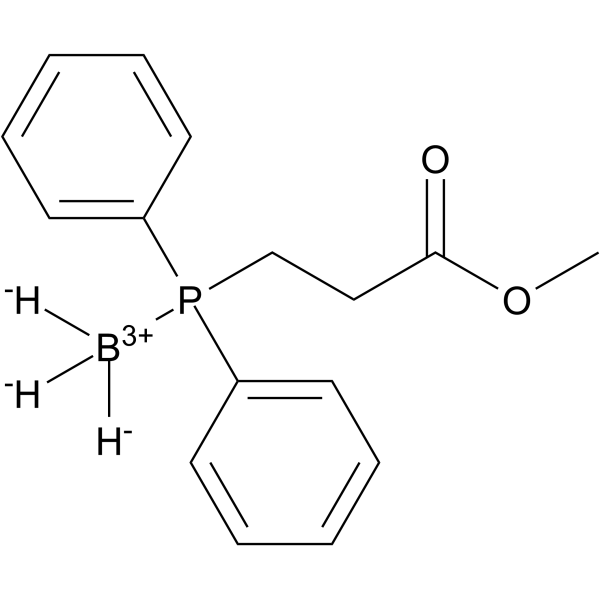
  • HY-138649

    Influenza Virus Neurological Disease
    PB2 is a tris(2-carboxyethyl)phosphine (TCEP) analogue increasing retinal ganglion (RGCs) cells survival after axotomy in vitro at nanomolar and picomolar concentrations. PB2 is substantially more permeable than TCEP. PB2, as a reducing agent, is highly neuroprotective for RGCs .
    PB2
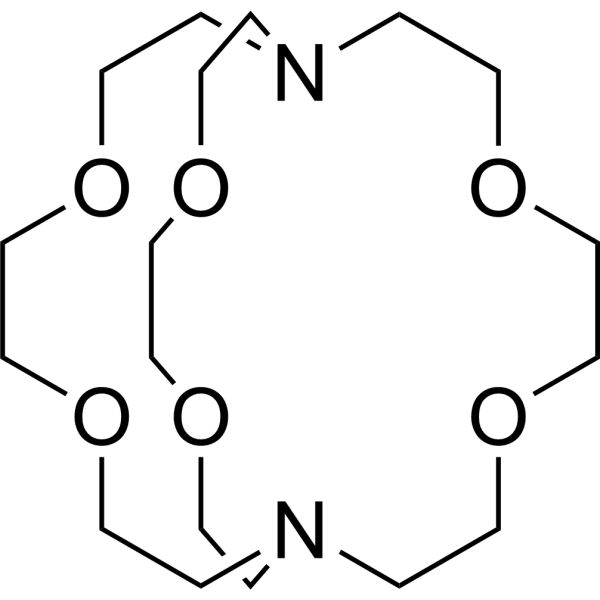
  • HY-W011060

    4,7,13,16,21,24-Hexaoxa-1,10-diazabicyclo[8.8.8]hexacosane

    Biochemical Assay Reagents Others
    Cryptand 2.2.2 (4,7,13,16,21,24-Hexaoxa-1,10-diazabicyclo[8.8.8]hexacosane) is a metal ion chelator. Cryptand 2.2.2 forms stable mononuclear, protonated and dinuclear complexes with copper (II) ions; forms protonated complexes with hydrogen ions; and also forms stable complexes with Zn 2+, Co 2+, Ni 2+, Cd 2+, Hg 2+ and Pb 2+ ions. Cryptand 2.2.2 can be used for the preparation of nanoparticles, transition metal compounds, etc.
    Cryptand 2.2.2
  • HY-W012683

    Biochemical Assay Reagents Cancer
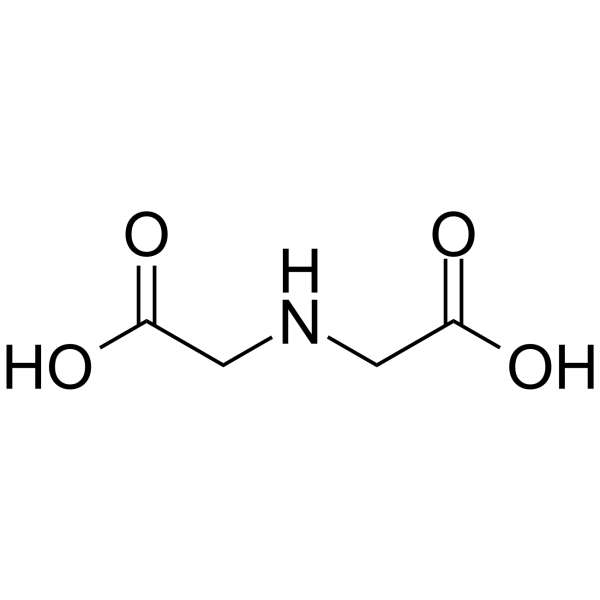
    Iminodiacetic acid is a metal ion chelator targeting Cr 6+, Cd 2+, Ni 2+, and Pb 2+. Iminodiacetic acid selectively and irreversibly binds metal ions through the coordination of carboxyl and imino groups, reduces the toxicity of metal ions and promotes their adsorption and separation. Iminodiacetic acid has the functions of heavy metal ion removal and coordination complex stabilization. Iminodiacetic acid is often used in environmental pollution control (such as heavy metal adsorption in water) and coordination chemistry (such as metal ion detection and separation) research [2] .
    Iminodiacetic acid
  • HY-W015815

    Endogenous Metabolite Neurological Disease
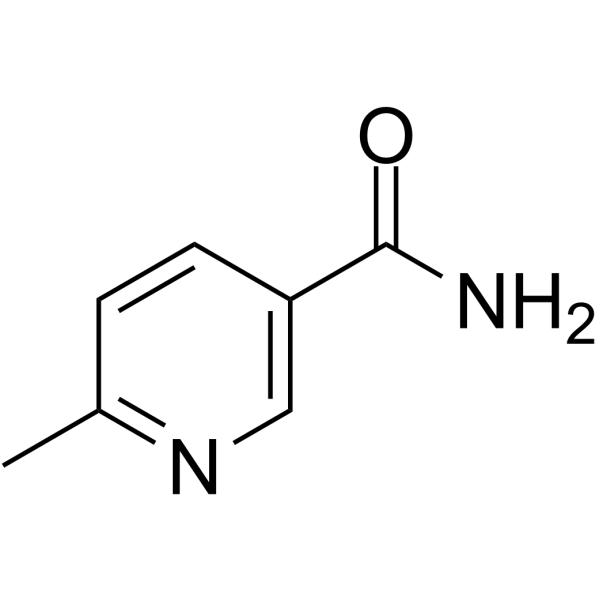
    6-Methylnicotinamide is a nicotinamide derivative. 6-methylnicotinamide is also an endogenous metabolite and its sudden increase in the acute stages of intracerebral hemorrhage (ICH) exacerbates neurological damages in rat model. 6-Methylnicotinamide can significantly enhance the coordination effect between acylamino and undercoordinated defective Pb 2+ cations. 6-Methylnicotinamide results in enhanced efficiency of perovskite solar cells to 24.33% with excellent environmental storage, heat, and light stabilities [2].
    6-Methylnicotinamide
  • HY-N12110

    Toll-like Receptor (TLR) SARS-CoV Infection
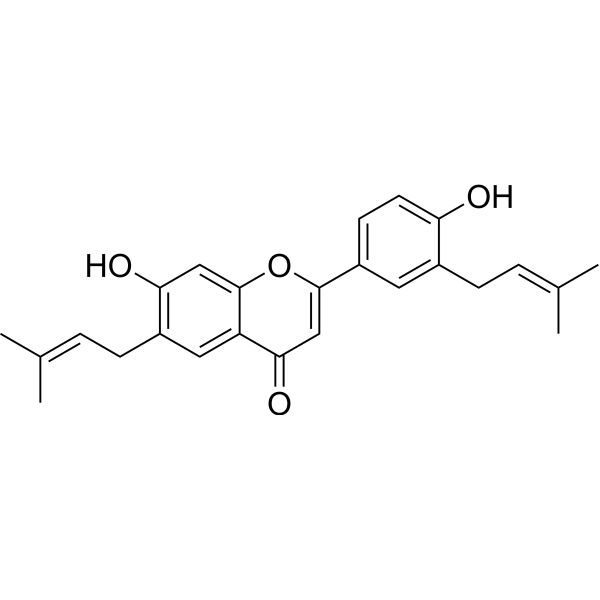
    SMU-CX1 is a specific TLR3 inhibitor (IC50: 0.11 μM) with IC50 ranging from 0.14-0.33 μM against multiple influenza A virus subtypes. SMU-CX1 inhibits the viral PB2 and NP proteins with an IC50 of 0.43 μM for SARS-CoV-2 activity. SMU-CX1 also inhibits inflammatory factors in host cells, including IFN-β, IP-10, and CCL-5 .
    SMU-CX1
  • HY-W015815R

    Reference Standards Endogenous Metabolite Neurological Disease
    6-Methylnicotinamide is a nicotinamide derivative. 6-methylnicotinamide is also an endogenous metabolite and its sudden increase in the acute stages of intracerebral hemorrhage (ICH) exacerbates neurological damages in rat model. 6-Methylnicotinamide can significantly enhance the coordination effect between acylamino and undercoordinated defective Pb2+ cations. 6-Methylnicotinamide results in enhanced efficiency of perovskite solar cells to 24.33% with excellent environmental storage, heat, and light stabilities [2].
    6-Methylnicotinamide (Standard)
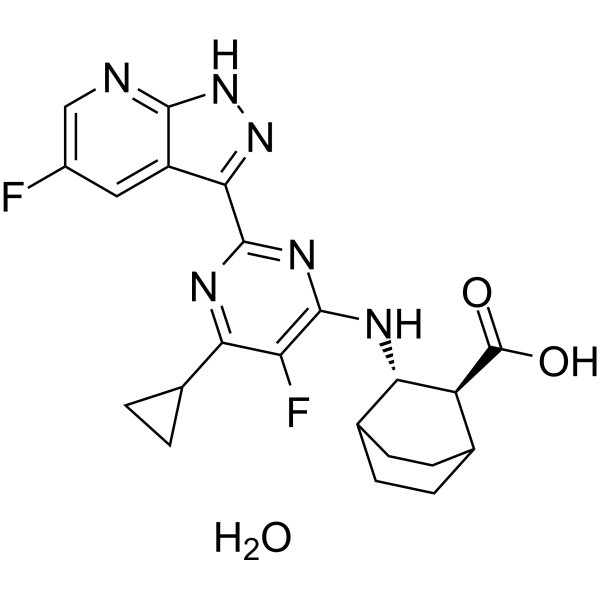
  • HY-145586A

    ZSP1273 monohydrate

    Influenza Virus DNA/RNA Synthesis Infection
    Onradivir (ZSP1273) monohydrate is an orally active antiviral agent targeting influenza A virus RNA polymerase PB2 subunit with an IC50 of 0.562 nM. Onradivir monohydrate inhibits cap binding to influenza A virus RNA polymerase PB2 subunit, suppresses viral replication, reduces viral titres and RNA loads, and inhibits influenza A virus infection. Onradivir monohydrate maintains high survival rates in influenza A virus-infected mice, and reduces influenza A virus titers in a murine model. Onradivir monohydrate can be used for the research of influenza A virus infection [2].
    Onradivir monohydrate
  • HY-149263

    Influenza Virus Virus Protease Infection
    HAA-09 is an orally active and potent anti-influenza agent, targeting the influenza PB2_cap binding domain. HAA-09 displays potent anti-influenza A virus activity, with an EC50 of 0.03 μM. HAA-09 shows polymerase inhibition, with an IC50 of 0.06±0.004 μM. HAA-09 blocks virus replication without causing obvious cytotoxicity .
    HAA-09
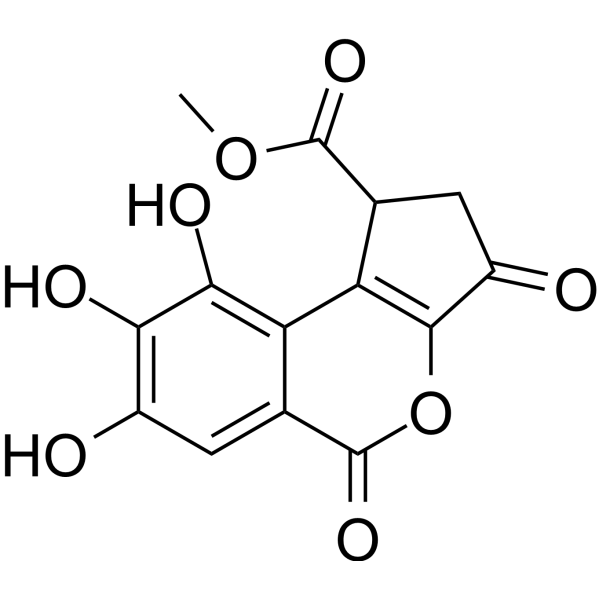
  • HY-N7647

    Brevifolincarboxylic acid methyl ester

    Influenza Virus Infection Cardiovascular Disease Inflammation/Immunology
    Methyl brevifolincarboxylate (Brevifolincarboxylic acid methyl ester) is a potent influenza virus PB2 cap-binding inhibitor. Methyl brevifolincarboxylate has anti-oxidant activity. Methyl brevifolincarboxylate also inhibits platelet aggregation, lipid metabolism and inflammation [2] .
    Methyl brevifolincarboxylate
  • HY-163617

    HIV Infection
    c-PB2(OH)2 is a 4-carboxyphenyl / 4-hydroxyphenyl meso-substituted porphyrin compound. c-PB2(OH)2 shows anti HIV-1 activity under non-photodynamic and photodynamic conditions .
    c-PB2(OH)2
  • HY-156440

    Influenza Virus Infection
    7-51A is a potent PB2 inhibitor with a KD value of 1.64 nM as determined by ITC. PB2 is an essential subunit of influenza RNA-dependent RNA polymerase (RdRP).
    7-51A
  • HY-100858

    Influenza Virus Infection
    PP7 is a potent PB1-PB2 interaction inhibitor with an IC50 of 8.6 μM, and their inhibition against viral polymerase activity (IC50=9.5 μM). PP7 shows antiviral activities against influenza A virus (IAV), including A(H1N1)pdm09 (EC50=1.4 μM), A(H7N9) and A(H9N2) subtypes .
    PP7
  • HY-W012683R

    Biochemical Assay Reagents Reference Standards Cancer
    Iminodiacetic acid is a metal ion chelator targeting Cr6+, Cd2+, Ni2+, and Pb2+. Iminodiacetic acid selectively and irreversibly binds metal ions through the coordination of carboxyl and imino groups, reduces the toxicity of metal ions and promotes their adsorption and separation. Iminodiacetic acid has the functions of heavy metal ion removal and coordination complex stabilization. Iminodiacetic acid is often used in environmental pollution control (such as heavy metal adsorption in water) and coordination chemistry (such as metal ion detection and separation) research [2] .
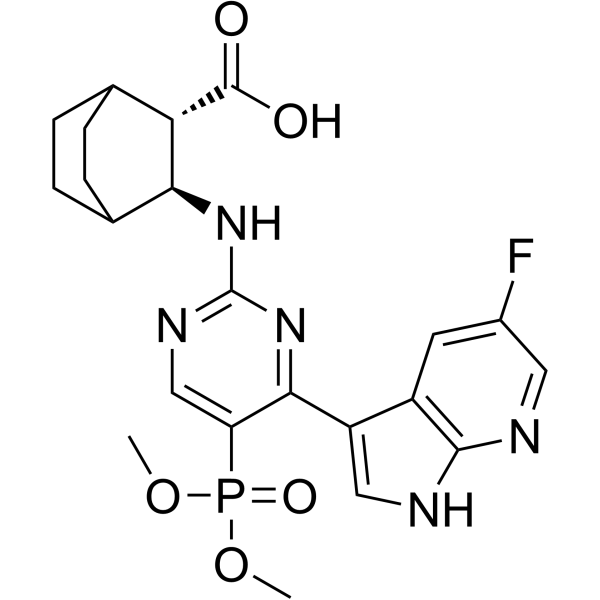
    Iminodiacetic acid (Standard)
  • HY-181915

    Influenza Virus Infection
    PB2-IN-3 (Compound 11) is a PB2 inhibitor. PB2-IN-3 exhibits antiviral activity against Influenza A H1N1 and H3N2 strains. PB2-IN-3 can be used in studies related to influenza A virus infection .
    PB2-IN-3
  • HY-W1113135

    Biochemical Assay Reagents Others
    Carboxymethyl-β-cyclodextrin sodium salt is a negatively charged β-cyclodextrin derivative, as well as a metal ion chelator and solubilizing reagent. Carboxymethyl-β-cyclodextrin sodium salt forms stable aqueous complexes with Ba 2+, Ca 2+, Cd 2+, Ni 2+, Pb 2+, Sr 2+, and Zn 2+ ions. Carboxymethyl-β-cyclodextrin sodium salt derived hydrogel carriers support oral insulin delivery via paracellular permeation across Caco-2 monolayers and produce sustained hypoglycemic effects in diabetic mice. Carboxymethyl-β-cyclodextrin sodium salt can be conjugated onto folate-modified BSA nanoparticles to boost folate receptor-mediated endocytosis, elevate intracellular anticancer drug uptake and trigger cell apoptosis. Carboxymethyl-β-cyclodextrin sodium salt can be utilized for chiral separation in capillary electrophoresis, development of nanoscale drug carriers and nucleic acid transfection research [2] .
    Carboxymethyl-β-cyclodextrin sodium salt
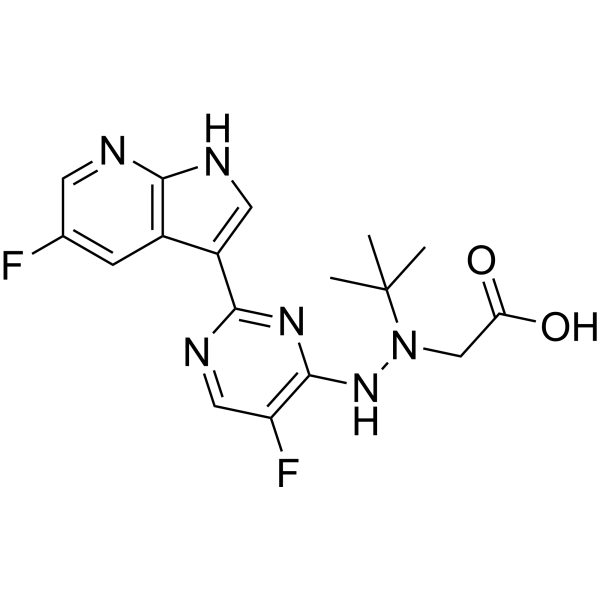
  • HY-180525

    Influenza Virus Infection
    PB2-IN-2 is an orally active PB2 inhibitor with RNA-dependent RNA Polymerase (RNP) IC50 = 0.2 nM, LRA (Ligand Receptor Assay) EC50 = 0.8 nM, Cytopathic Effect (CPE) EC50 = 0.1 nM. PB2-IN-2 exhibits broad-spectrum, nanomolar antiviral potency against a panel of influenza A strains (including H1N1pdm09, Lyon/1337/2007/H1N1, Tex12-Like/H3N2, PR/8/34/H1N1, WSN/1933/H1N1, rPR8(H1N1)/H7N9 with EC50 = 1.5, 3.6, 3.7, 13.8, 2.9 and 9.8 nM and all the CC50 values > 2 μM. PB2-IN-2 possesses an excellent pharmacokinetic profile and metabolic stability. PB2-IN-2 can be used for anti-influenza research .
    PB2-IN-2
  • HY-175559

    Influenza Virus Infection
    TTHP 512 is an influenza A virus (IAV) inhibitor. TTHP 512 demonstrates significant antiviral activity with an IC50 value of 1.46 μM. TTHP 512 inhibits the expression of viral nucleoprotein (NP) and PB2 protein, thereby disrupting the viral replication process. TTHP 512 is promising for research of influenza A virus .
    TTHP 512
  • HY-12353B

    VX-787 hydrochlorid hemihydrate

    Influenza Virus Infection
    Pimodivir hydrochlorid hemihydrate (VX-787) is an orally bioavailable inhibitor of influenza A virus polymerases through interaction with the viral PB2 subunit.
    Pimodivir hydrochlorid hemihydrate
  • HY-129623R

    Reference Standards Endogenous Metabolite Metabolic Disease
    Nigericin (sodium salt) (Standard) is the analytical standard of Nigericin (sodium salt). This product is intended for research and analytical applications. Nigericin sodium salt is an antibiotic from Streptomyces hygroscopicus that works by acting as an H+, K+, and Pb2+ ionophore, a NLRP3 activator .
    Ethyl nonanoate (Standard)
  • HY-136894

    Fluorescent Dye Others
    Rhod-5N is a cell-impermeant calcium-binding fluorescent dye composed of a BAPTA chelating group and a rhodamine fluorophore. Rhod-5N is often added to MOPS buffer to complex and indicate cation content. The selectivity of Rhod-5N for Cd 2+ is higher than other interfering cations ((Na+, K+, Mg 2+, Ca 2+, Zn 2+) except Pb 2+), and the detection limit is 3.1 μg/L [2].
    Rhod-5N
  • HY-181691

    JAK Influenza Virus Infection
    JAK2-IN-20 is an orally active dual inhibitor targeting JAK2 kinase (IC50=49.17 nM) and influenza A virus PB2 protein (IC50=3.337 μM, Kd=2.82 μM). JAK2-IN-20 effectively blocks the JAK/STAT signaling pathway by reducing the phosphorylation levels of STAT1 and STAT3, thereby inhibiting viral replication and downregulating the expression of viral NP and PB2 proteins. In addition, JAK2-IN-20 significantly inhibits the mRNA expression of key inflammatory cytokines such as IL-6, TNF-α and IFN-β in inflammation and influenza infection models. JAK2-IN-20 serves as an important tool molecule for the study of influenza A virus infection and related pathologies .
    JAK2-IN-20
  • HY-180162

    Influenza Virus Infection
    Influenza A virus-IN-17 (Compound 6a) is a potent influenza A inhibitor with EC90s of 3.5 μM and 2.6 μM for H3N2 and H1N1, respectively. Influenza A virus-IN-17 inhibits U2-PB2 chimeric mRNA (EC90 = 2.1 μM from cap snatching polymerase) .
    Influenza A virus-IN-17
  • HY-D1551

    Fluorescent Dye Others
    10-(4-(Bis(2-hydroxyethyl)amino)phenyl)-5,5-difluoro-1,3,7,9-tetramethyl-5H-dipyrrolo[1,2-c:2',1'-f][1,3,2]diazaborinin-4-ium-5-uide, a BODIPY derivative, is a fluorescent indicator for detecting Pb 2+ (Ex=504 nM, Em=510 nM) [2].
    10-(4-(Bis(2-hydroxyethyl)amino)phenyl)-5,5-difluoro-1,3,7,9-tetramethyl-5H-dipyrrolo[1,2-c:2',1'-f][1,3,2]diazaborinin-4-ium-5-uide
  • HY-D3009

    Fluorescent Dye Others
    LCE1 is an azacrown ether-based NIR fluorescence probe. LCT can be used for the detection of Pb 2+ in food, environmental water, plant and animal samples .
    LCE1

Inquiry Online

Your information is safe with us. * Required Fields.

Salutation


Country or Region *

Applicant Name *


Organization Name *

Department *


Email Address *


Product Name *

Cat. No.


Requested quantity *

Phone Number *


Remarks

Inquiry Online

Inquiry Information

Product Name:
Cat. No.:
Quantity:
MCE Japan Authorized Agent:

