
17 Results for "

PCC

" in MedChemExpress (MCE) Product Catalog:
Products (17)

17 Results for "PCC" in MCE Product Catalog:

11
11 Cited Publications
Cat. No.: HY-N2342
CAS No.: 37064-30-5
Synonyms: PCC1
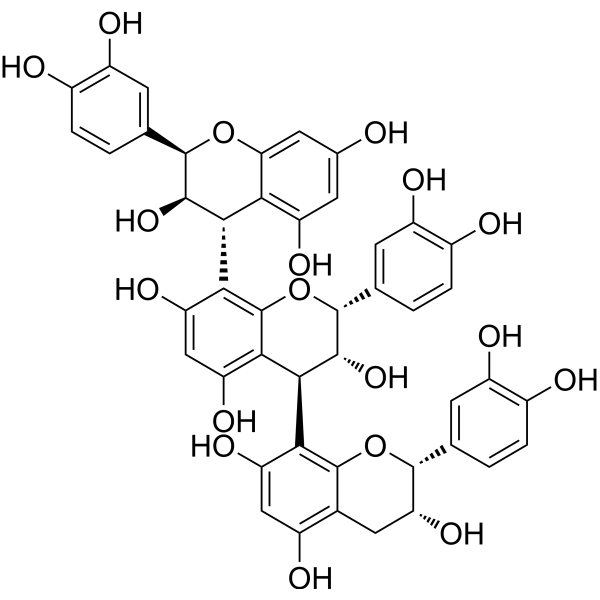
Procyanidin C1 (PCC1), a natural polyphenol with oral activity, causes DNA damage, cell cycle arrest and induces apoptosis. Procyanidin C1 decreases the level of Bcl-2, but enhances BAX, caspase 3 and 9 expression in cancer cells. Procyanidin C1 shows senotherapeutic activity and increases lifespan in mice .
loading...
    loading...
3
3 Cited Publications
Cat. No.: HY-139604
CAS No.: 2623158-64-3
Purity:  99.56%
Target:  

MARK Apoptosis

Research Areas:  

Cancer

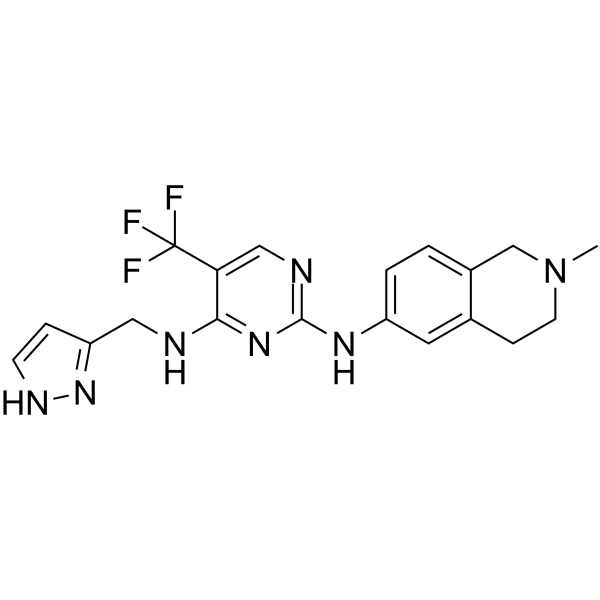
PCC0208017 is a microtubule affinity regulating kinases (MARK3/MARK4) inhibitor with IC50s of 1.8 and 2.01 nM, respectively. PCC0208017 has much lower inhibitory activity against MARK1 and MARK2, with IC50s of 31.4 and 33.7 nM, respectively. PCC0208017 suppresses glioma progression in vitro and in vivo. PCC0208017 disrupts microtubule dynamics and induces G2/M phase cell cycle arrest and cell apoptosis. PCC0208017 demonstrates robust antitumor activity in vivo and displays good BBB permeability .
loading...
    loading...
Cat. No.: HY-100771
CAS No.: 1668565-74-9
Purity:  99.08%
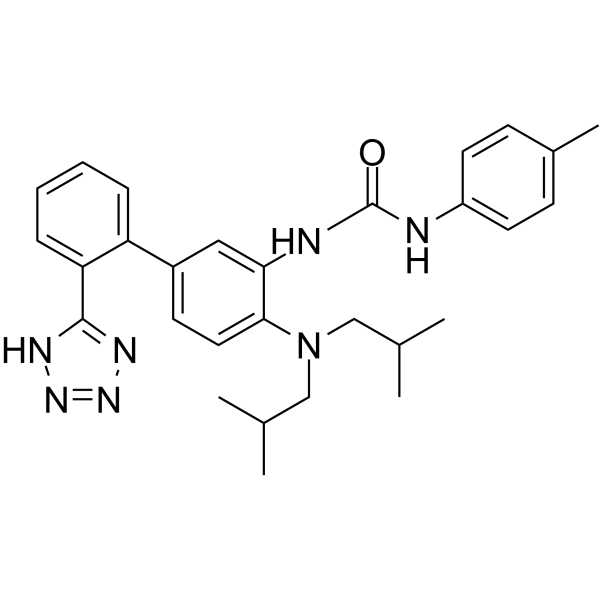
PCC0208009 is a potent IDO inhibitor with an IC50 value of 4.52 nM in HeLa cell. PCC0208009 alleviates neuropathic pain and comorbidities by regulating synaptic plasticity of anterior cingulate cortex (ACC) and amygdala .
loading...
    loading...
Cat. No.: HY-W353469
CAS No.: 22160-26-5
Synonyms: Glucosylglycerol
2-O-(α-D-Glucopyranosyl) glycerol (55% w/w in water) (Glucosylglycerol) is a glycerol glycoside and compatible solute. 2-O-(α-D-Glucopyranosyl) glycerol is isolable from the marine cyanobacterium Oscillatoria sp. 2-O-(α-D-Glucopyranosyl) glycerol (55% w/w in water) acts as a salt stress protectant in Synechocystis sp. PCC 6803 ΔggpS cells. It enhances salt tolerance of Synechocystis sp. PCC 6803 ΔggpS cells and maintains cell division under salt stress .
loading...
    loading...
Cat. No.: HY-N2342R
CAS No.: 37064-30-5
Synonyms: PCC1 (Standard)
Procyanidin C1 (Standard) is the analytical standard of Procyanidin C1. This product is intended for research and analytical applications. Procyanidin C1 (PCC1), a natural polyphenol with oral activity, causes DNA damage, cell cycle arrest and induces apoptosis. Procyanidin C1 decreases the level of Bcl-2, but enhances BAX, caspase 3 and 9 expression in cancer cells. Procyanidin C1 shows senotherapeutic activity and increases lifespan in mice .
loading...
    loading...
Cat. No.: HY-P11337
CAS No.: 403479-63-0
Research Areas:  

Others

Scyptolin B, a cyclic depsipeptides, is a secondary metabolite. Scyptolin B can be isolated from axenic cultures of Scytonema hofmanni PCC 7110. Scyptolin B selective inhibits porcine pancreatic Elastase with an IC50 of 3.1 μg/mL .
loading...
    loading...
Cat. No.: HY-161771
CAS No.: 2347368-51-6
Target:  

RSV

Research Areas:  

Infection

JNJ-7184 is a non-nucleoside inhibitor of the RSV-Large (L) polymerase, with the pEC50 and pCC50 of 7.86 and 4.29 in Hela cells, respectively. JNJ-7184 prevents RSV replication and transcription by inhibiting initiation or early elongation .
loading...
    loading...
Cat. No.: HY-159113
CAS No.: 3123359-15-6
Target:  

MARK

Research Areas:  

Neurological Disease

PCC0105003 is a potent MARK inhibitor. PCC0105003 can be used in the study of neuropathic pain .
loading...
    loading...
Cat. No.: HY-169232
Target:  

PROTACs PD-1/PD-L1

Research Areas:  

Cancer

PCC16 chloride is a dual PROTAC degrader targeting DHHC3 and PD-L1, with a DC50 of 0.103 μM for PD-L1 degradation. PCC16 chloride induces DHHC3 degradation via the ubiquitin-proteasome pathway by recruiting the CRBN E3 ubiquitin ligase (E3 ubiquitin ligase). By targeting DHHC3-which is essential for PD-L1 palmitoylation and membrane stability-PCC16 chloride reduces PD-L1 levels, decreases PD-L1 membrane retention time, and impairs its immunosuppressive function. PCC16 chloride enhances anti-tumor immunity by disrupting PD-L1-mediated immunosuppression. PCC16 chloride can be used in the research of immune checkpoint blockade-resistant cancers .
loading...
    loading...
Cat. No.: HY-P1089
CAS No.: 86579-06-8
Synonyms: PCC 88-104
Target:  

Cytochrome P450

Research Areas:  

Inflammation/Immunology

Cytochrome c-pigeon (88-104) (PCC 88-104) has full stimulatory activity for pigeon cytochrome c-primed T cells from B10.A mice. The I-E k-restricted T cell response to Cytochrome c pigeon (pcyt c) is specific for the COOH-terminal sequence 88-104 .
loading...
    loading...
Cat. No.: HY-RS03215
Research Areas:  

Others

CRYGD Human Pre-designed siRNA Set A contains three designed siRNAs for CRYGD gene (Human), as well as a negative control, a positive control, and a FAM-labeled negative control.

loading...
    loading...
Cat. No.: HY-169235
Research Areas:  

Cancer

DHHC3 degrader 1 is a PROTAC target protein ligand that is used to synthesize PCC16 chloride (HY-169232) .
loading...
    loading...
Cat. No.: HY-169236
CAS No.: 947504-71-4
Target:  

PROTAC Linkers

Research Areas:  

Cancer

COOH-C-PEG2-NHCO-C2-COOH is a PROTAC linker that is used to synthesize PCC16 chloride (HY-169232) .
loading...
    loading...
Cat. No.: HY-169237
Research Areas:  

Cancer

Pomalidomide-C2-CONH-PEG2-C-COOH is a conjugate of E3 ligase ligand and linker and can be used in the synthesis of PCC16 chloride (HY-169232) .
loading...
    loading...
Cat. No.: HY-179684
CAS No.: 2921670-99-5
PCC0105005 is a dual-target CGRP Receptor antagonist (IC50 = 1.01 nM) and a partial agonist of 5-HT1F Receptor (EC50 = 77.91 nM). PCC0105005 shows significant efficacy in the rat model of migraine. PCC0105005 significantly reduces the expression of CGRP and c-Fos proteins, and inhibits the phosphorylation levels of ERK and CREB. PCC0105005 can be used for research on migraine .
loading...
    loading...
Cat. No.: HY-155726
CAS No.: 444792-16-9
Target:  

Others

Research Areas:  

Others

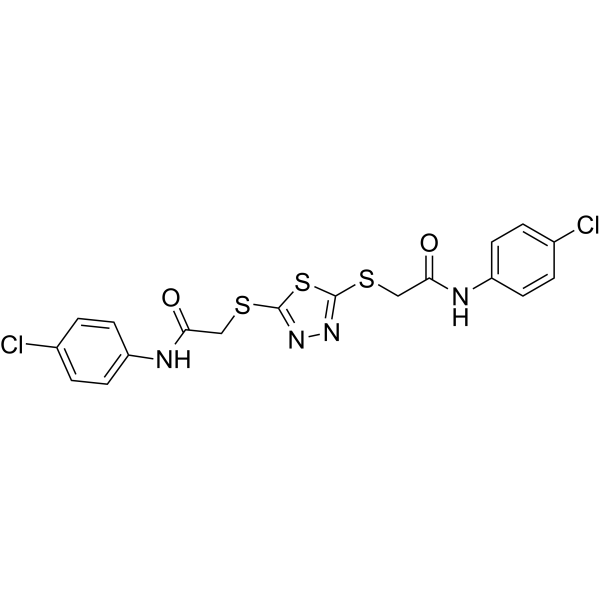
Cy-FBP/SBPase-IN-1 (compound S5) is a Cy-FBP/SBPase inhibitor, which is an important regulatory enzyme in cyanobacterial photosynthesis. Thus Cy-FBP/SBPase-IN-1 inhibits Calvin cycle and photosystem, and decreases photosynthetic efficiency in cyanobacterial photosynthesis. Cy-FBP/SBPase-IN-1 potently inhibits the growth of cyanobacteria, as well as Synechocystis sp.PCC6803. Cy-FBP/SBPase-IN-1 shows safety profile in human-derived cells and zebrafish models .
loading...
    loading...
Cat. No.: HY-184378
CAS No.: 2922221-22-3
Research Areas:  

Metabolic Disease Cancer

MDB5 is a Hedgehog pathway and Smoothened inhibitor that binds to the 7-TM domain of Smo . MDB5 reduces hepatic stellate cell activation, extracellular matrix-related gene expression, collagen deposition, hydroxyproline content and epithelial-mesenchymal transition, and prevents sinusoidal endothelial cell capillarization . MDB5 induces G1 and S phase cell cycle arrest, triggers apoptosis by upregulating Bax and downregulating Bcl-2, and also decreases oxygen consumption rate, glucose uptake, transglutaminase activity and fibronectin matrix assembly . MDB5 reduces the levels of liver injury markers, hepatic triglyceride deposition and hepatic steatosis, restores the tissue structure of the kidney and spleen, and inhibits pancreatic tumor growth without causing body weight loss . MDB5 can be loaded into PEG-PCC-g-DC micelles, achieving high drug loading, sustained release, improved water solubility, enhanced cellular uptake and optimized hepatic distribution, with good tolerance in mice . MDB5 is applicable to research related to alcohol-associated liver disease, liver fibrosis and pancreatic cancer .
loading...
    loading...
  • 1

