1. Search Result
Search Result
Results for "

PRC1

" in MedChemExpress (MCE) Product Catalog:

16

Inhibitors & Agonists

1

Peptides

1

Recombinant Proteins

4

Antibodies

3

Oligonucleotides

Cat. No. Product Name Target Research Areas Chemical Structure
  • HY-19817
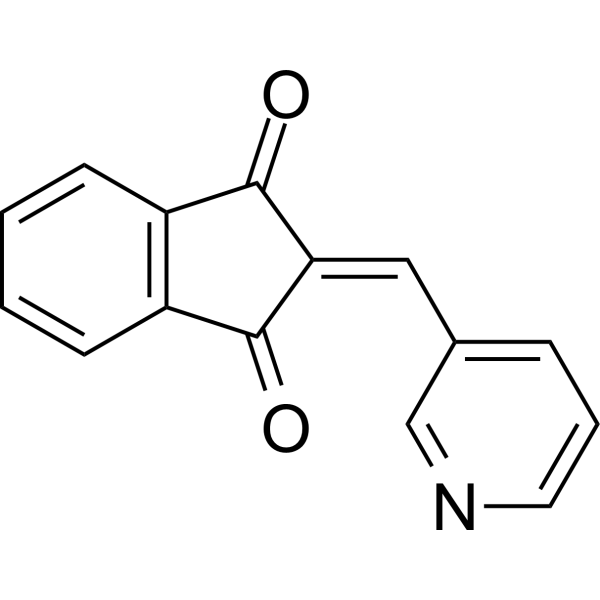
    PRT4165
    Maximum Cited Publications
    10 Publications Verification

    NSC600157

    E1/E2/E3 Enzyme Cancer
    PRT4165 is a potent inhibitor of polycomb-repressive complex 1 (PRC1)-mediated H2A ubiquitylation.
    PRT4165
  • HY-139514

    E1/E2/E3 Enzyme Cancer
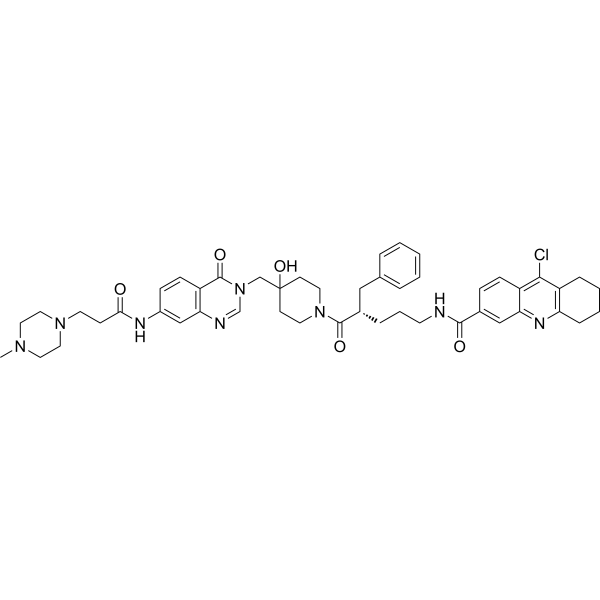
    RB-3, a polycomb repressive complex 1 (PRC1) inhibitor, binds to RING1B-BMI1f, with a Kd of 2.8 μM [1].
    RB-3
  • HY-138794
    XL177A
    5 Publications Verification

    Deubiquitinase Histone Demethylase SARS-CoV Cancer
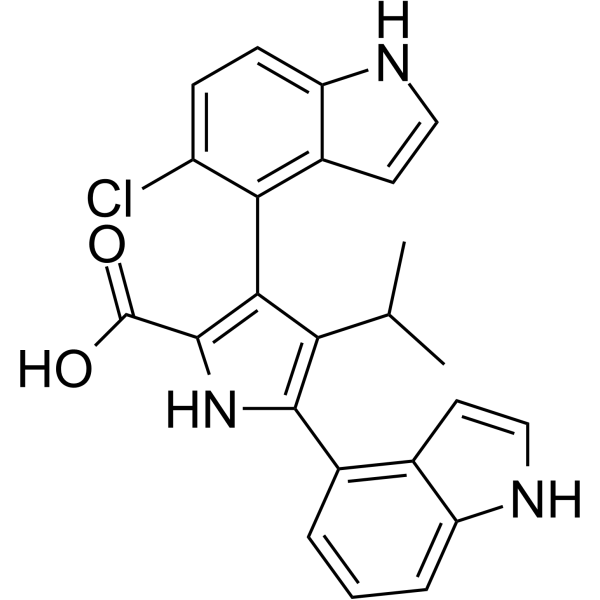
    XL177A is a covalent USP7 inhibitor that blocks the deubiquitinase activity of USP7. XL177A destabilizes non-canonical PRC1 complexes or KDM6A and reduces chromatin deposition of H2AK119Ub, thereby relieving the repression of neuronal differentiation programs. Meanwhile, XL177A also regulates the ELOF1-UVSSA-USP7-nuclear β-catenin axis, decreasing the transcription levels of related proteins and the accumulation of nuclear β-catenin. XL177A exerts antiviral effects by reducing the expression levels of coronavirus receptors, and exhibits inhibitory activity against APC-mutated colorectal cancer cells, neuroblastoma, and coronaviruses including SARS-CoV-2 variants. XL177A is mainly used in studies related to colorectal cancer, neuroblastoma, and coronavirus infections [1] .
    XL177A
  • HY-170823

    E1/E2/E3 Enzyme Cancer
    PRC1-IN-1 is a PRC1 complex inhibitor. PRC1-IN-1 binds to both RING1A and RING1B proteins, and inhibits the activities of RING1B-BMI1 and RING1B-PCGF1. PRC1-IN-1 effectively inhibits H2AK119 ubiquitination and induces cell differentiation in leukemia cells. PRC1-IN-1 can be used for the research of leukemia [1].
    PRC1-IN-1
  • HY-159805

    CDK Cancer
    CDK2-IN-31 is a CCNE1:CDK2 complex inhibitor with an IC50 of 0.13 μM. CDK2-IN-31 binds to a cryptic allosteric pocket at the CCNE1:CDK2 interface, inducing structural rearrangements of the CDK2 A-loop that disrupt the kinase's active conformation and interfere with substrate binding. CDK2-IN-31 inhibits phosphorylation of retinoblastoma protein 1 (RB1) in CCNE1-dependent ovarian cancer cells. CDK2-IN-31 impairs coenrichment of protein PRC1 with CCNE1-N112C:CDK2 complexes. CDK2-IN-31 can be used for the research of ovarian cancer [1].
    CDK2-IN-31
  • HY-158239

    PROTACs E1/E2/E3 Enzyme Cancer
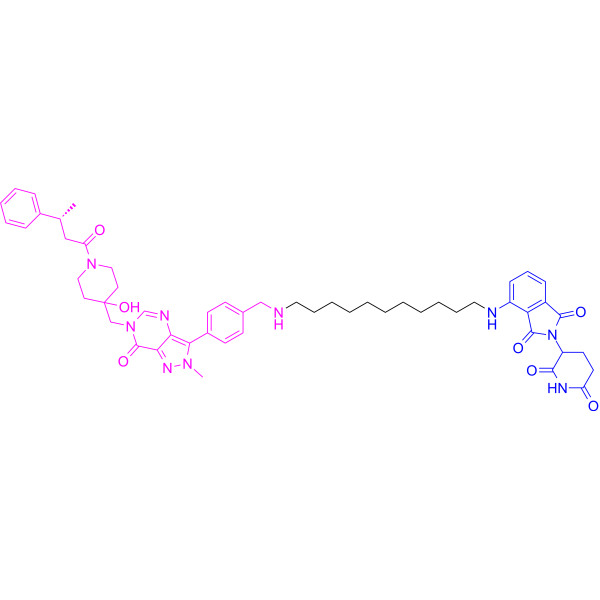
    MS181 (compound 1) is a potent cereblon (CRBN)-recruiting and EED-binding polycomb repressive complex 1 (PRC1) PROTAC degrader. MS181 decreases the expression of EED, EZH2, SUZ12, BMI1 and RING1B. MS181 shows antiproliferative activity (Strtucture Note: Red, EED binder (HY-158771); Blue, CRBN ligand (HY-41547); Black, Linker HY-131717) [1].
    MS181
  • HY-158771

    Ligands for Target Protein for PROTAC Cancer
    PRC1 ligand 1 is a target protein ligand of MS147 (HY-160924). PRC1 ligand 1 can be used to study cancer [1].
    PRC1 ligand 1
  • HY-P2254

    Histone Methyltransferase Cancer
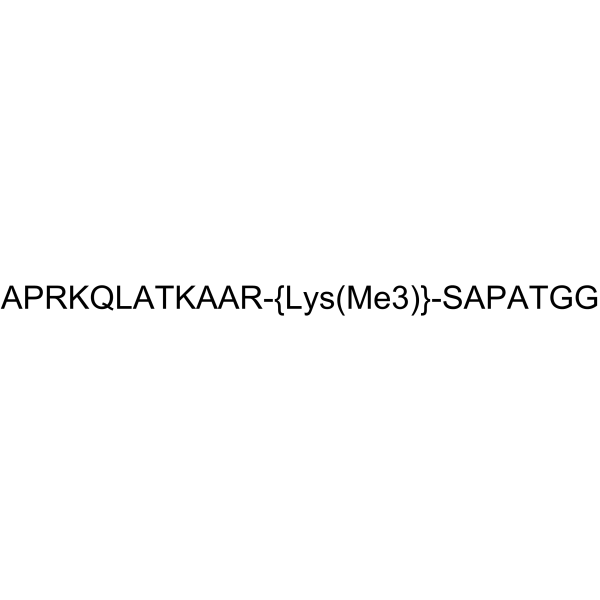
    H3K27(Me3) (15-34), a histone peptide, is a repressive chromatin mark derived from human histone. Polycomb Repressive Complex 2 (PRC2) is a multiprotein complex that catalyzes the methylation of H3K27(Me) [1] .
    H3K27(Me3) (15-34)
  • HY-RS11055

    Small Interfering RNA (siRNA) Others

    PRC1 Human Pre-designed siRNA Set A contains three designed siRNAs for PRC1 gene (Human), as well as a negative control, a positive control, and a FAM-labeled negative control.

    PRC1 Human Pre-designed siRNA Set A
    PRC1 Human Pre-designed siRNA Set A
  • HY-RS23168

    Small Interfering RNA (siRNA) Others

    Prc1 Rat Pre-designed siRNA Set A contains three designed siRNAs for Prc1 gene (Rat), as well as a negative control, a positive control, and a FAM-labeled negative control.

    Prc1 Rat Pre-designed siRNA Set A
    Prc1 Rat Pre-designed siRNA Set A
  • HY-RS16732

    Small Interfering RNA (siRNA) Others

    Prc1 Mouse Pre-designed siRNA Set A contains three designed siRNAs for Prc1 gene (Mouse), as well as a negative control, a positive control, and a FAM-labeled negative control.

    Prc1 Mouse Pre-designed siRNA Set A
    Prc1 Mouse Pre-designed siRNA Set A
  • HY-138794A

    Deubiquitinase Cancer
    (Rac)-XL177A is the racemic isomer of XL177A (HY-138794). XL177A is a covalent USP7 inhibitor that blocks the deubiquitinase activity of USP7. XL177A destabilizes non-canonical PRC1 complexes or KDM6A and reduces chromatin deposition of H2AK119Ub, thereby relieving the repression of neuronal differentiation programs. Meanwhile, XL177A also regulates the ELOF1-UVSSA-USP7-nuclear β-catenin axis, decreasing the transcription levels of related proteins and the accumulation of nuclear β-catenin. XL177A exerts antiviral effects by reducing the expression levels of coronavirus receptors, and exhibits inhibitory activity against APC-mutated colorectal cancer cells, neuroblastoma, and coronaviruses including SARS-CoV-2 variants. XL177A is mainly used in studies related to colorectal cancer, neuroblastoma, and coronavirus infections [1] .
    (Rac)-XL177A
  • HY-172943

    Polo-like Kinase (PLK) Cancer
    PLK1/PRC1-IN-1 (compound B4) is a PLK1/PRC1 protein complex formation inhibitor. PLK1/PRC1-IN-1 can be used in the study of non-small cell lung cancer (NSCLC) [1].
    PLK1/PRC1-IN-1
  • HY-161521

    Polo-like Kinase (PLK) Cancer
    PLK1-IN-10 (Compound 4Bb) is an orally active PLK1 PBD (polo-box domain) inhibitor. PLK1-IN-10 blocks the interaction of PLK1 with the cell division regulator protein 1 (PRC1) and decreases the protein expression of the CDK1-Cyclin B1 complex. PLK1-IN-10 reacts with glutathione (GSH) to increase cellular oxidative stress, ultimately leading to cell death [1].
    PLK1-IN-10
  • HY-179466

    Microtubule/Tubulin Apoptosis Caspase Cancer
    BKT300 is a potent and selective protein regulator of cytokinesis 1 (PRC1) inhibitor. BKT300 inhibits PRC1 dephosphorylation at T481, disrupts actin and microtubule formation, induces G2/M cell cycle arrest, triggers mitotic catastrophe, and promotes apoptosis, thereby inhibiting proliferation and migration of acute myeloid leukemia (AML) cells while sparing normal cells. BKT300 inhibits tumor growth in mouse xenograft AML models. BKT300 can be used for the research of AML [1].
    BKT300
  • HY-104023

    Polo-like Kinase (PLK) Cancer
    ZK-Thiazolidinone is an ATP-competitive Polo-like kinase 1 (Plk1) inhibitor with an IC50 of 19 nM. ZK-Thiazolidinone inhibits tumor cell proliferation, induces cell cycle arrest and typical mitotic defects. ZK-Thiazolidinone impairs the recruitment of γ-tubulin and Aurora A kinase to centrosomes, resulting in failure of bipolar spindle maintenance and sister chromatid arm cohesion.\nZK-Thiazolidinone is applicable for cancer research [1].
    ZK-Thiazolidinone

Inquiry Online

Your information is safe with us. * Required Fields.

Salutation


Country or Region *

Applicant Name *


Organization Name *

Department *


Email Address *


Product Name *

Cat. No.


Requested quantity *

Phone Number *


Remarks

Inquiry Online

Inquiry Information

Product Name:
Cat. No.:
Quantity:
MCE Japan Authorized Agent:

