

1. Search Result
Search Result
Results for "

Protein Cross-link Inducer

" in MedChemExpress (MCE) Product Catalog:

21

Inhibitors & Agonists

4

Biochemical Assay Reagents

2

Inhibitory Antibodies

4

Natural
Products

3

Isotope-Labeled Compounds

Cat. No. Product Name Target Research Areas Chemical Structure
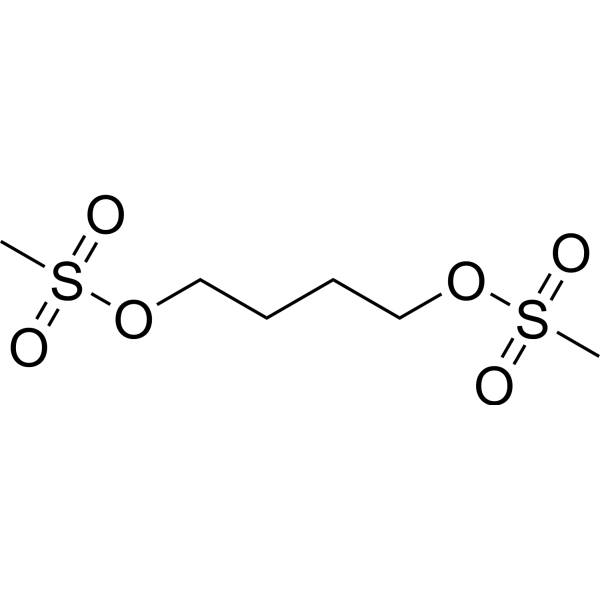
  • HY-B0245
    Busulfan
    Maximum Cited Publications
    19 Publications Verification

    DNA Alkylator/Crosslinker Apoptosis Infection Neurological Disease Inflammation/Immunology Cancer
    Busulfan is a potent alkylating antineoplastic agent. Busulfan causes DNA damage by cross-linking DNAs and DNA and proteins. Busulfan inhibits thioredoxin reductase. Busulfan induces apoptosis. Busulfan is an immunosuppressive and myeloablative chemotherapeutic agent .
    Busulfan
  • HY-48999A
    FSK hydrochloride
    1 Publications Verification

    EGFR Cancer
    FSK hydrochloride is fluorosulfonyloxybenzoyl-L-lysine, which features a long, flexible aryl fluorosulfate-containing side chain that can reach protein sites inaccessible to covalent conjugation. FSK hydrochloride modifies nanomolecules to target epidermal growth factor receptor (EGFR), resulting in irreversibly bound covalent interactions. Through genetically encoded chemical crosslinking, FSK hydrochloride captures unknown enzyme-substrate interactions in living cells, targets residues other than Cys, and mediates crosslinking at the binding periphery. FSK hydrochloride enables the construction of a bioreactive SuFEx system for generating covalent bonds in various proteins both in vitro and in vivo .
    FSK hydrochloride
  • HY-P99618

    IBI-315; BH2950

    EGFR PD-1/PD-L1 Cancer
    Fidasimtamab is a bispecific antibody targeting human epidermal growth factor receptor 2 (Her2) and programmed death protein 1 (PD-1), with a Ka of 3.55e-10 M for human Her2 and a Ka of 1.17e-9 M for human PD-1. Fidasimtamab cross-links Her2-positive tumor cells with PD-1-positive T cells to form immune synapses, blocks PD-1-ligand interactions, preserves antibody-dependent cellular cytotoxicity, induces gasdermin B (GSDMB)-mediated pyroptosis, and activates T cells. Fidasimtamab is applicable to relevant research on Her2-positive gastric cancer .
    Fidasimtamab
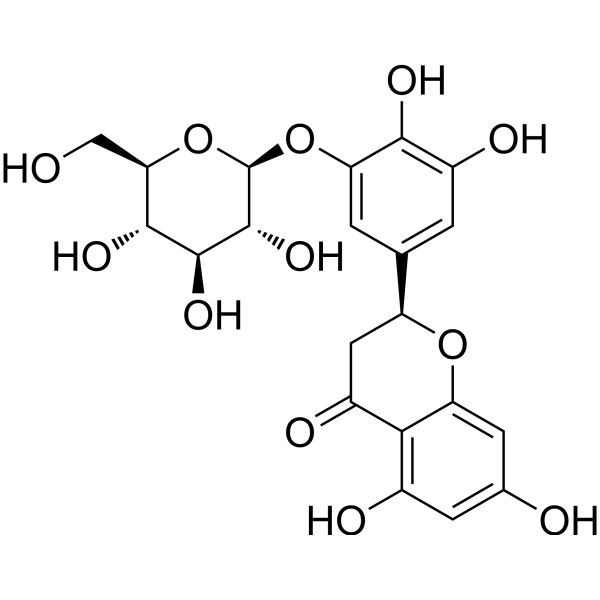
  • HY-N1470

    Glycosidase Metabolic Disease
    Plantagoside is a flavanone glucoside found in Plantago asiatica seeds, acting as a specific non-competitive α-mannosidase inhibitor with IC50 values of 5 μM and a Ki of 2.7 μM (jack bean). Plantagoside suppresses antibody response and Concanavalin A (HY-P2149)-induced lymphocyte proliferation in mouse spleen cells. Plantagoside inhibits the Maillard reaction, advanced glycation end product formation, and glycation-dependent protein-protein cross-link formation. Plantagoside can be used for the research of diabetes .
    Plantagoside
  • HY-P99047

    AB 0024; GS 6624

    Monoamine Oxidase Cardiovascular Disease Inflammation/Immunology
    Simtuzumab (AB 0024; GS 6624) is a monoclonal antibody directed against Lysyl oxidase like-2 (LOXL2). Simtuzumab non-competitively blocks collagen cross-linking, reduces LOXL2 protein expression and attenuates extracellular matrix changes. Simtuzumab reduces myocardial fibrosis and prevents cardiac dysfunction. Simtuzumab lowers Myh7 and Nppa gene expression, reduces contraction heterogeneity, and cuts COL1A1 deposition. Simtuzumab can be used for the research of LMNA mutation-induced dilated cardiomyopathy, idiopathic pulmonary fibrosis, and primary sclerosing cholangitis .
    Simtuzumab
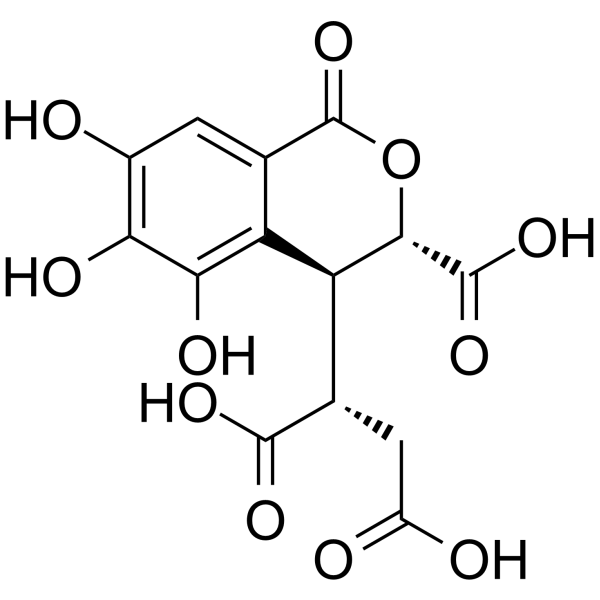
  • HY-N4170
    Chebulic acid
    2 Publications Verification

    Keap1-Nrf2 Reactive Oxygen Species (ROS) Metabolic Disease
    Chebulic acid is a phenolic acid compound isolated from Terminalia chebula with strong antioxidant activity, which breaks protein cross-links induced by advanced glycation end products (AGEs) and inhibits the formation of AGEs. Chebulic acid is effective in controlling elevated metabolic parameters, oxidative stress, and liver damage, supporting its beneficial role in asthma, diabetes, and liver protection .
    Chebulic acid
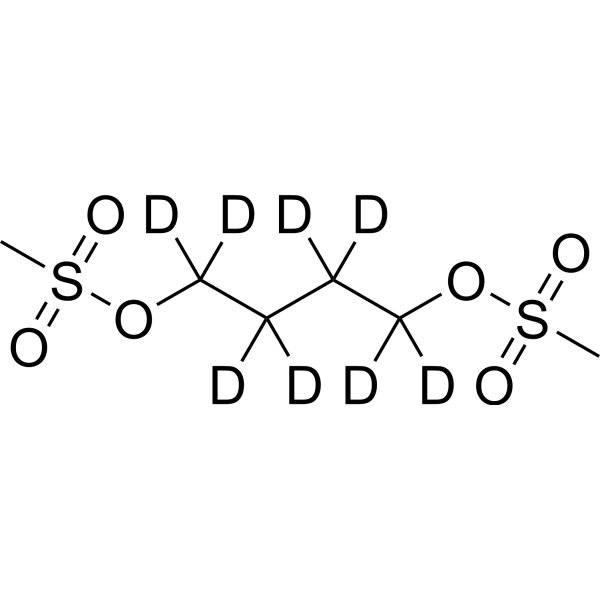
  • HY-B0245S

    DNA Alkylator/Crosslinker Apoptosis Inflammation/Immunology Cancer
    Busulfan-d8 is a deuterium labeled Busulfan. Busulfan is a potent alkylating antineoplastic agent. Busulfan causes DNA damage by cross-linking DNAs and DNA and proteins. Busulfan inhibits thioredoxin reductase. Busulfan induces apoptosis. Busulfan is an immunosuppressive and myeloablative chemotherapeutic agent .
    Busulfan-d8
  • HY-150014

    Others Others
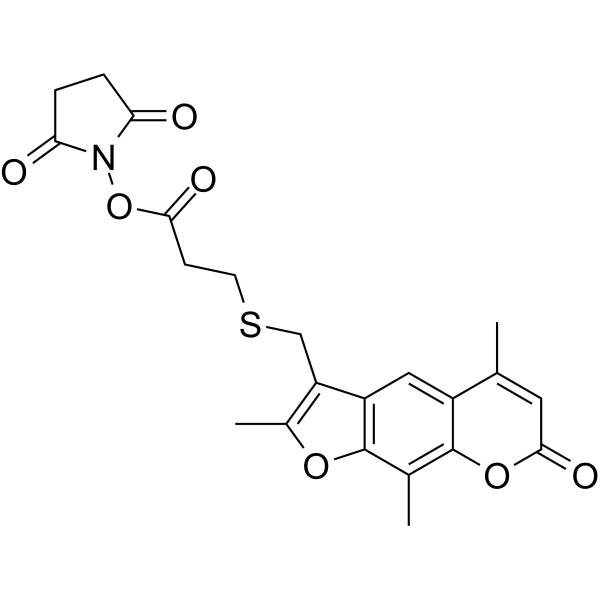
    AMT-NHS is an RNA-protein crosslinker. AMT-NHS is composed of a psoralen derivative and an N-hydroxysuccinimide ester group which react with RNA bases and primary amines of protein, respectively. AMT-NHS can penetrate into living yeast cells and crosslink Cbf5 to H/ACA snoRNAs with high specificity. AMT-NHS induces different crosslinking patterns and targets both single- and double-stranded regions of RNA. AMT-NHS can be used for capturing diverse RNA-protein interactions in cells .
    AMT-NHS
  • HY-78985

    Trimesic acid

    MOFs Biochemical Assay Reagents Others
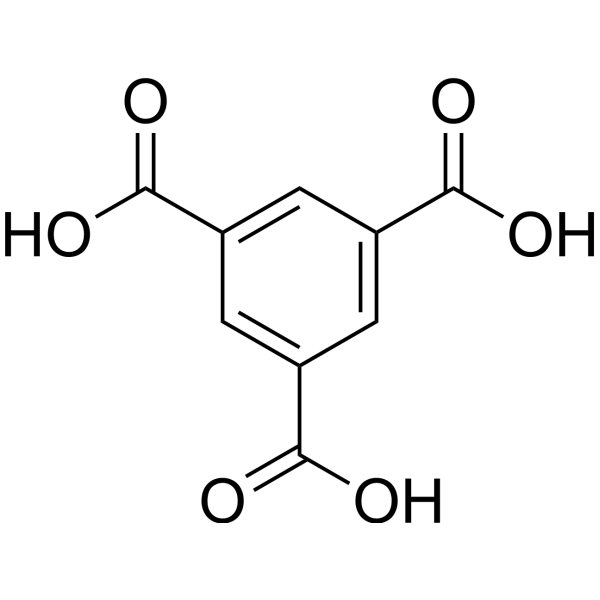
    Benzene-1,3,5-tricarboxylic acid (Trimesic acid) is a rigid planar small-molecule scaffold and crosslinker. Benzene-1,3,5-tricarboxylic acid induces bicyclic peptides to adopt a planar conformation, so as to maximize surface area and bind to the flat protein surfaces involved in protein-protein interactions. Benzene-1,3,5-tricarboxylic acid forms ionic crosslinks, hydrogen bonds and π-π bonds with chitosan, thereby constructing a hydrogel network. Benzene-1,3,5-tricarboxylic acid endows chitosan hydrogel systems with specific mechanical properties, enabling sustained release of cancer therapeutic drugs including 5-Fluorouracil (HY-90006) .
    Benzene-1,3,5-tricarboxylic acid
  • HY-B0245R

    DNA Alkylator/Crosslinker Apoptosis Reference Standards Inflammation/Immunology Cancer
    Busulfan (Standard) is the analytical standard of Busulfan. This product is intended for research and analytical applications. Busulfan is a potent alkylating antineoplastic agent. Busulfan causes DNA damage by cross-linking DNAs and DNA and proteins. Busulfan inhibits thioredoxin reductase. Busulfan induces apoptosis. Busulfan is an immunosuppressive and myeloablative chemotherapeutic agent .
    Busulfan (Standard)
  • HY-Y1155

    HMPA

    Environmental Pollutants DNA Alkylator/Crosslinker Biochemical Assay Reagents Cytochrome P450 Inflammation/Immunology Endocrinology Cancer
    Hexamethylphosphoramide is an orally active polar aprotic solvent, flame retardant additive, and carcinogen. Hexamethylphosphoramide undergoes cytochrome P-450-mediated N-demethylation to Formaldehyde. Hexamethylphosphoramide induces DNA-protein crosslinks. Hexamethylphosphoramide has been linked to nasal tumors (squamous cell carcinoma, adenoid squamous cell carcinoma), squamous metaplasia, rhinitis, tracheitis, and reversible and irreversible infertility .
    Hexamethylphosphoramide
  • HY-W075885

    trans-platinumdiamminedichloride

    DNA Alkylator/Crosslinker Others
    trans-Platinum(II)diammine dichloride (trans-platinumdiamminedichloride) is a geometric isomer of Cisplatin (HY-17394). Trans-Platinum(II)diammine dichloride is a DNA cross-linking agent that induces significant DNA cross-link damage while exhibiting low cytotoxicity. Trans-Platinum(II)diammine dichloride is useful for studying DNA-protein cross-links .
    trans-Platinum(II)diammine dichloride
  • HY-W585874

    EAAT Apoptosis Neurological Disease Metabolic Disease
    Nε-(Carboxyethyl) lysine is an advanced glycation end product (AGE). Nε-(Carboxyethyl) lysine induces cross-linking between proteins, thereby affecting protein structure and function and causing protein denaturation. Nε-(Carboxyethyl) lysine binds to the RAGE receptor, affects cell signal transduction, and regulates processes such as inflammatory responses, cell proliferation, and apoptosis. Nε-(Carboxyethyl) lysine affects glutamate transporters, reduces glutamate uptake and S100β protein secretion, influences neurotransmission in the nervous system, and exhibits diabetes-related neurotoxicity .
    Nε-(Carboxyethyl)lysine
  • HY-121234

    Bacterial DNA/RNA Synthesis Infection
    Botryodiplodin is a mycotoxin isolated from Penicillium roqueforti. Botryodiplodin inhibits the growth of some Gram-positive and Gram-negative bacteria and can also induce DNA-protein cross-links in mammalian cells, inhibiting the synthesis of DNA, RNA, and protein .
    Botryodiplodin
  • HY-Y1155S

    Isotope-Labeled Compounds Biochemical Assay Reagents Cytochrome P450 DNA Alkylator/Crosslinker Inflammation/Immunology Endocrinology Cancer
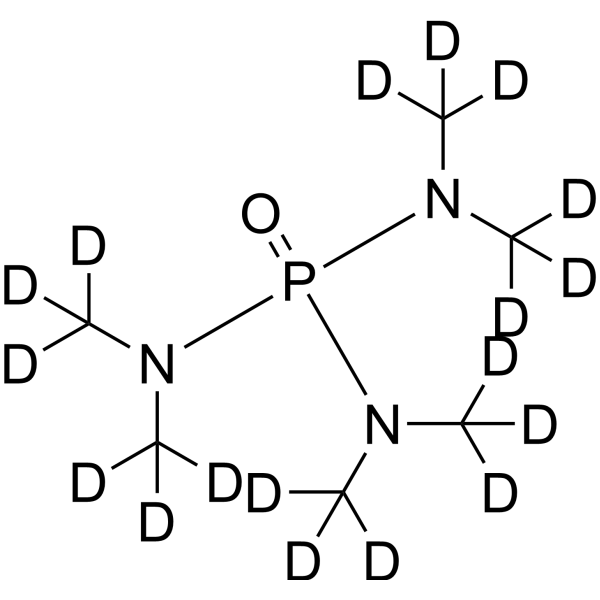
    Hexamethylphosphoramide-d18 is the deuterium labeled Hexamethylphosphoramide (HY-Y1155). Hexamethylphosphoramide is an orally active polar aprotic solvent, flame retardant additive, and carcinogen. Hexamethylphosphoramide undergoes cytochrome P-450-mediated N-demethylation to Formaldehyde. Hexamethylphosphoramide induces DNA-protein crosslinks. Hexamethylphosphoramide has been linked to nasal tumors (squamous cell carcinoma, adenoid squamous cell carcinoma), squamous metaplasia, rhinitis, tracheitis, and reversible and irreversible infertility .
    Hexamethylphosphoramide-d18
  • HY-78985S

    Trimesic acid-d3

    Isotope-Labeled Compounds Biochemical Assay Reagents MOFs Others
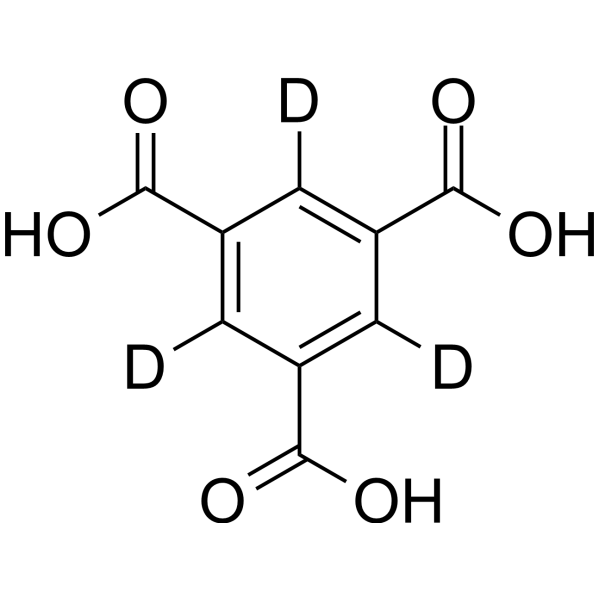
    Benzene-1,3,5-tricarboxylic acid-d3 (Trimesic acid-d3) is the deuterium labeled Benzene-1,3,5-tricarboxylic acid (HY-78985). Benzene-1,3,5-tricarboxylic acid (Trimesic acid) is a rigid planar small-molecule scaffold and crosslinker. Benzene-1,3,5-tricarboxylic acid induces bicyclic peptides to adopt a planar conformation, so as to maximize surface area and bind to the flat protein surfaces involved in protein-protein interactions. Benzene-1,3,5-tricarboxylic acid forms ionic crosslinks, hydrogen bonds and π-π bonds with chitosan, thereby constructing a hydrogel network. Benzene-1,3,5-tricarboxylic acid endows chitosan hydrogel systems with specific mechanical properties, enabling sustained release of cancer therapeutic drugs including 5-Fluorouracil (HY-90006) .
    Benzene-1,3,5-tricarboxylic acid-d3
  • HY-W075885R

    trans-platinumdiamminedichloride (Standard)

    Biochemical Assay Reagents Reference Standards Others
    trans-Platinum(II)diammine dichloride (trans-platinumdiamminedichloride) (Standard) is an analytical standard for trans-Platinum(II)diammine dichloride (HY-W075885). This product is intended for research and analytical applications. trans-Platinum(II)diammine dichloride is a geometric isomer of Cisplatin (HY-17394). trans-Platinum(II)diammine dichloride is a DNA cross-linking agent that induces significant DNA cross-link damage but exhibits low cytotoxicity. trans-Platinum(II)diammine dichloride can be used to study DNA-protein cross-links.
    trans-Platinum(II)diammine dichloride (Standard)
  • HY-N1470R

    Reference Standards Glycosidase Metabolic Disease
    Plantagoside (Standard) is the analytical standard of Plantagoside (HY-N1470). This product is intended for research and analytical applications. Plantagoside is a flavanone glucoside found in Plantago asiatica seeds, acting as a specific non-competitive α-mannosidase inhibitor with IC50 values of 5 μM and a Ki of 2.7 μM (jack bean). Plantagoside suppresses antibody response and Concanavalin A (HY-P2149)-induced lymphocyte proliferation in mouse spleen cells. Plantagoside inhibits the Maillard reaction, advanced glycation end product formation, and glycation-dependent protein-protein cross-link formation. Plantagoside can be used for the research of diabetes .
    Plantagoside (Standard)
  • HY-182759

    DNA Alkylator/Crosslinker Topoisomerase Caspase Bcl-2 Family Apoptosis Cancer
    MN33-47 is a multi-target anti-tumor compound with broad-spectrum anti-proliferative activity. MN33-47 relieves the inhibition of the mitochondrial apoptosis pathway by downregulating the anti-apoptotic protein Bcl-2, while activating caspase-3 and inhibiting Topoisomerase I activity, thereby promoting its degradation through the ubiquitin-proteasome and autophagy-lysosome pathways. MN33-47 can also induce DNA cross-linking and G2/M cell cycle arrest, inhibit cancer cell migration and activate the mitochondrial apoptosis pathway, thus exerting potent anti-tumor effects. MN33-47 can improve the water solubility of SN-38 (HY-13704), and exhibits dose-dependent tumor growth inhibition effects in CT26 tumor-bearing mouse models without obvious toxic and side effects. MN33-47 can be used in related studies on colorectal adenocarcinoma, cervical adenocarcinoma, hepatocellular carcinoma, alveolar basal epithelial adenocarcinoma, gastric cancer and colon cancer .
    MN33-47
  • HY-N4170R

    Reference Standards Keap1-Nrf2 Reactive Oxygen Species (ROS) Metabolic Disease
    Chebulic acid (Standard) is the analytical standard of Chebulic acid (HY-N4170). This product is intended for research and analytical applications. Chebulic acid is a phenolic acid compound isolated from Terminalia chebula with strong antioxidant activity, which breaks protein cross-links induced by advanced glycation end products (AGEs) and inhibits the formation of AGEs. Chebulic acid is effective in controlling elevated metabolic parameters, oxidative stress, and liver damage, supporting its beneficial role in asthma, diabetes, and liver protection .
    Chebulic acid (Standard)
  • HY-132974

    NSC-686288

    Aryl Hydrocarbon Receptor Reactive Oxygen Species (ROS) DNA Alkylator/Crosslinker DNA/RNA Synthesis Caspase Apoptosis HIF/HIF Prolyl-Hydroxylase Cancer
    Aminoflavone is an anti-tumor agent. Aminoflavone inhibits the expression of ITGA6/SOX2 by activating the AhR-miR-125b-2-3p axis, thereby targeting breast cancer stem cells. Aminoflavone induces an increase in intracellular ROS, increases the level of oxidative DNA damage marker 8-oxodG and DNA-protein cross-links. Aminoflavone causes S-phase arrest, activates caspase-3/8/9 and induces apoptosis (apoptosis). Aminoflavone inhibits HIF-1α expression in a manner independent of AhR. Aminoflavone can be used for the study of breast cancer .
    Aminoflavone

Inquiry Online

Your information is safe with us. * Required Fields.

Salutation


Country or Region *

Applicant Name *


Organization Name *

Department *


Email Address *


Product Name *

Cat. No.


Requested quantity *

Phone Number *


Remarks

Inquiry Online

Inquiry Information

Product Name:
Cat. No.:
Quantity:
MCE Japan Authorized Agent:

