1. Search Result
Search Result
Results for "

RLS

" in MedChemExpress (MCE) Product Catalog:

16

Inhibitors & Agonists

1

Biochemical Assay Reagents

1

Peptides

5

Isotope-Labeled Compounds

1

Oligonucleotides

Cat. No. Product Name Target Research Areas Chemical Structure
  • HY-17355
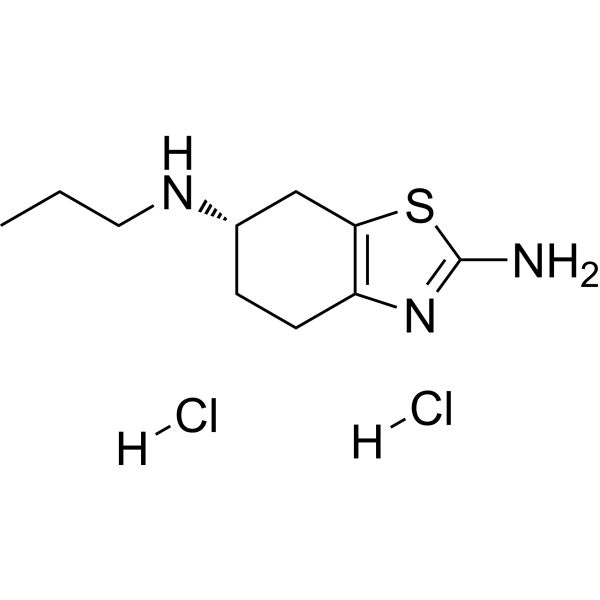
    Pramipexole dihydrochloride
    Maximum Cited Publications
    13 Publications Verification

    Dopamine Receptor Neurological Disease
    Pramipexole dihydrochloride is a selective and blood-brain barrier (BBB) penetrant dopamine D2-type receptor agonist, with Kis of 2.2 nM, 3.9 nM, 0.5 nM and 1.3 nM for D2-type receptor, D2, D3 and D4 receptors, respectively. Pramipexole dihydrochloride can be used for the research of Parkinson's disease (PD) and restless legs syndrome (RLS) .
    Pramipexole dihydrochloride
  • HY-B0410
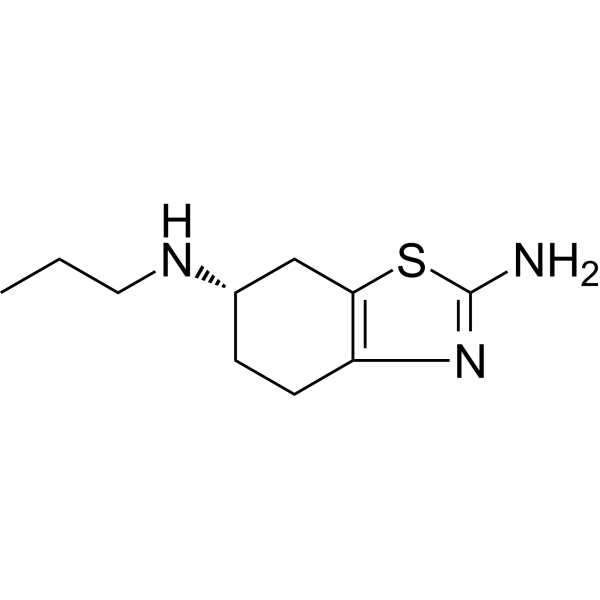
    Pramipexole
    Maximum Cited Publications
    13 Publications Verification

    Dopamine Receptor Neurological Disease
    Pramipexole is a selective and blood-brain barrier (BBB) penetrant dopamine D2-type receptor agonist, with Kis of 2.2 nM, 3.9 nM, 0.5 nM and 1.3 nM for D2-type receptor, D2, D3 and D4 receptors, respectively. Pramipexole can be used for the research of Parkinson's disease (PD) and restless legs syndrome (RLS) .
    Pramipexole
  • HY-16216

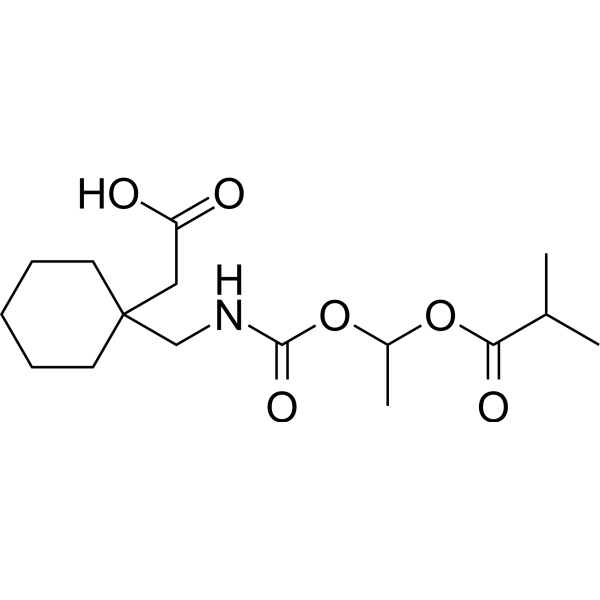
    XP-13512

    Calcium Channel Neurological Disease
    Gabapentin enacarbil (XP-13512) is a prodrug of Gabapentin (HY-A0057) designed to be absorbed throughout the intestine by high-capacity nutrient transporters. Gabapentin is a potent, orally active P/Q type Ca 2+ channel blocker. Gabapentin enacarbil can be used for the study of Restless Legs Syndrome (RLS) and postherpetic neuralgia (PHN) .
    Gabapentin enacarbil
  • HY-B0410A
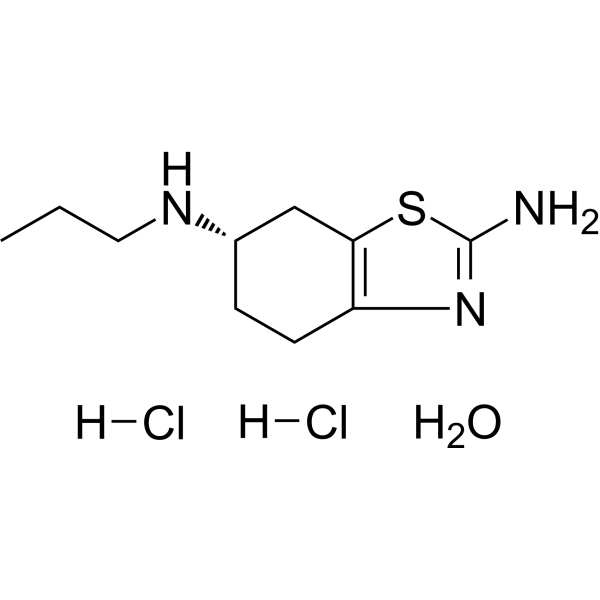
    Pramipexole dihydrochloride hydrate
    Maximum Cited Publications
    13 Publications Verification

    Dopamine Receptor Neurological Disease
    Pramipexole dihydrochloride hydrate is a selective and blood-brain barrier (BBB) penetrant dopamine D2-type receptor agonist, with Kis of 2.2 nM, 3.9 nM, 0.5 nM and 1.3 nM for D2-type receptor, D2, D3 and D4 receptors, respectively. Pramipexole dihydrochloride hydrate can be used for the research of Parkinson's disease (PD) and restless legs syndrome (RLS) .
    Pramipexole dihydrochloride hydrate
  • HY-P10868

    RLS-0071

    Reactive Oxygen Species (ROS) Infection Inflammation/Immunology
    Pegtarazimod (RLS-0071) is a dual-target anti-inflammatory peptide that exerts its effects by simultaneously regulating the complement system and neutrophil-associated inflammatory pathways. Pegtarazimod reduces ROS production both in vitro and in vivo, and decreases the level of neutrophil elastase, a marker of neutrophil extracellular traps (NETs), in vivo, thereby alleviating inflammatory responses. Pegtarazimod significantly improves the survival rate of mice in multiple in vivo models of acute graft-versus-host disease (aGVHD). Pegtarazimod inhibits the activation of the C1 complex, reduces the herpes zoster-like spread of herpes simplex virus type 1 skin infection, and improves the survival rate of infected mice . Pegtarazimod can be used in research related to acute graft-versus-host disease, acute pulmonary diseases, and skin herpes simplex virus type 1 infection .
    Pegtarazimod
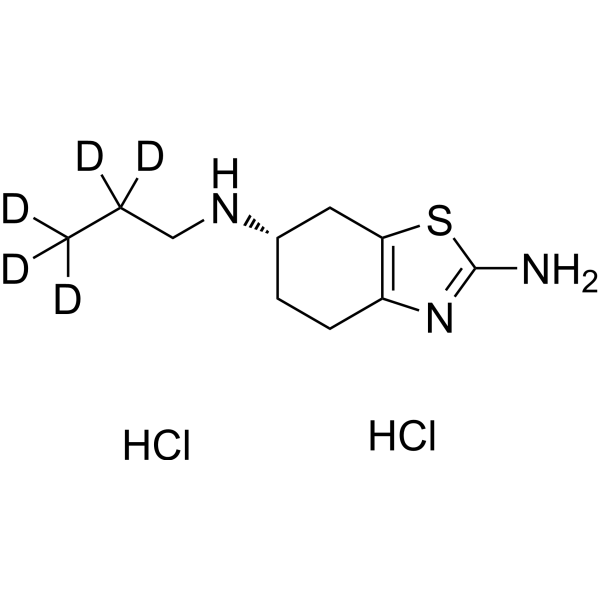
  • HY-17355S1

    Isotope-Labeled Compounds Dopamine Receptor Neurological Disease
    Pramipexole-d5 dihydrochloride is deuterium labeled Pramipexole dihydrochloride. Pramipexole dihydrochloride is a selective and blood-brain barrier (BBB) penetrant dopamine D2-type receptor agonist, with Kis of 2.2 nM, 3.9 nM, 0.5 nM and 1.3 nM for D2-type receptor, D2, D3 and D4 receptors, respectively. Pramipexole dihydrochloride can be used for the research of Parkinson's disease (PD) and restless legs syndrome (RLS) .
    Pramipexole-d5 dihydrochloride
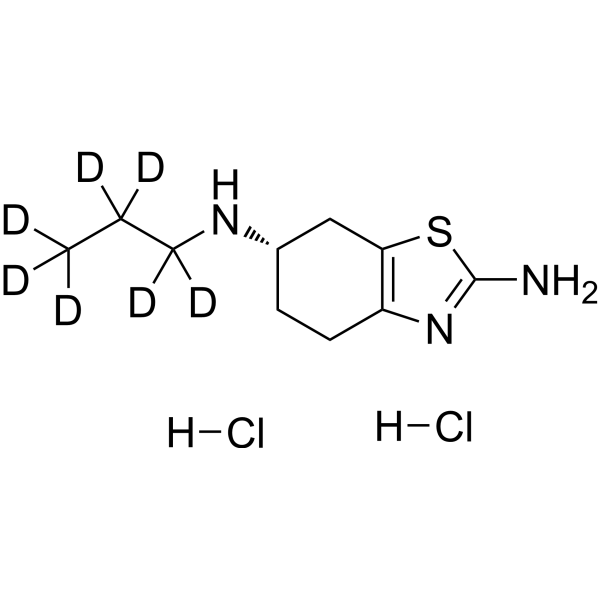
  • HY-17355S

    Isotope-Labeled Compounds Dopamine Receptor Neurological Disease
    Pramipexole-d7 dihydrochloride is the deuterium labeled Pramipexole dihydrochloride. Pramipexole dihydrochloride is a selective and blood-brain barrier (BBB) penetrant dopamine D2-type receptor agonist, with Kis of 2.2 nM, 3.9 nM, 0.5 nM and 1.3 nM for D2-type receptor, D2, D3 and D4 receptors, respectively. Pramipexole dihydrochloride can be used for the research of Parkinson's disease (PD) and restless legs syndrome (RLS) .
    Pramipexole-d7 dihydrochloride
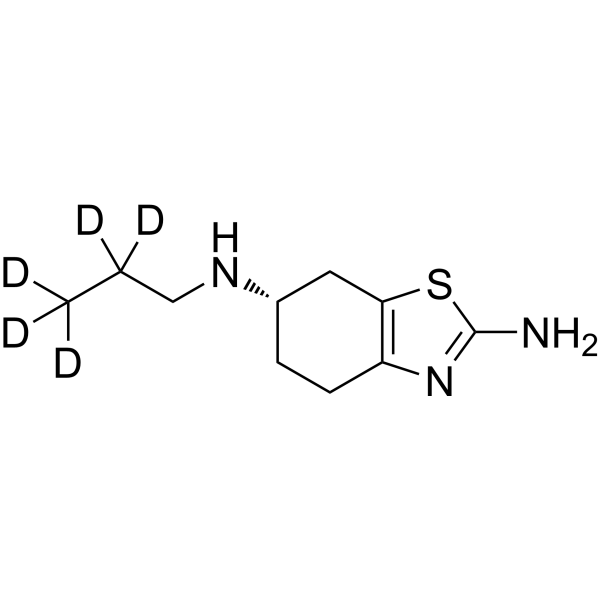
  • HY-B0410S1

    Dopamine Receptor Neurological Disease
    Pramipexole-d5 is the deuterium labeled Pramipexole . Pramipexole is a selective and blood-brain barrier (BBB) penetrant dopamine D2-type receptor agonist, with Kis of 2.2 nM, 3.9 nM, 0.5 nM and 1.3 nM for D2-type receptor, D2, D3 and D4 receptors, respectively. Pramipexole can be used for the research of Parkinson's disease (PD) and restless legs syndrome (RLS) .
    Pramipexole-d5
  • HY-RS16325

    Small Interfering RNA (siRNA) Others

    RLS3 Human Pre-designed siRNA Set A contains three designed siRNAs for RLS3 gene (Human), as well as a negative control, a positive control, and a FAM-labeled negative control.

    RLS3 Human Pre-designed siRNA Set A
    RLS3 Human Pre-designed siRNA Set A
  • HY-B0410AR

    Reference Standards Dopamine Receptor Neurological Disease
    Pramipexole (dihydrochloride hydrate) (Standard) is the analytical standard of Pramipexole (dihydrochloride hydrate). This product is intended for research and analytical applications. Pramipexole dihydrochloride hydrate is a selective and blood-brain barrier (BBB) penetrant dopamine D2-type receptor agonist, with Kis of 2.2 nM, 3.9 nM, 0.5 nM and 1.3 nM for D2-type receptor, D2, D3 and D4 receptors, respectively. Pramipexole dihydrochloride hydrate can be used for the research of Parkinson's disease (PD) and restless legs syndrome (RLS) .
    Pramipexole dihydrochloride hydrate (Standard)
  • HY-B0410R

    Reference Standards Dopamine Receptor Neurological Disease
    Pramipexole (Standard) is the analytical standard of Pramipexole. This product is intended for research and analytical applications. Pramipexole is a selective and blood-brain barrier (BBB) penetrant dopamine D2-type receptor agonist, with Kis of 2.2 nM, 3.9 nM, 0.5 nM and 1.3 nM for D2-type receptor, D2, D3 and D4 receptors, respectively. Pramipexole can be used for the research of Parkinson's disease (PD) and restless legs syndrome (RLS) .
    Pramipexole (Standard)
  • HY-16216R

    XP-13512 (Standard)

    Calcium Channel Reference Standards Neurological Disease
    Gabapentin enacarbil (Standard) is the analytical standard of Gabapentin enacarbil. This product is intended for research and analytical applications. Gabapentin enacarbil (XP-13512) is a prodrug of Gabapentin (HY-A0057) designed to be absorbed throughout the intestine by high-capacity nutrient transporters. Gabapentin is a potent, orally active P/Q type Ca2+ channel blocker. Gabapentin enacarbil can be used for the study of Restless Legs Syndrome (RLS) and postherpetic neuralgia (PHN) .
    Gabapentin enacarbil (Standard)
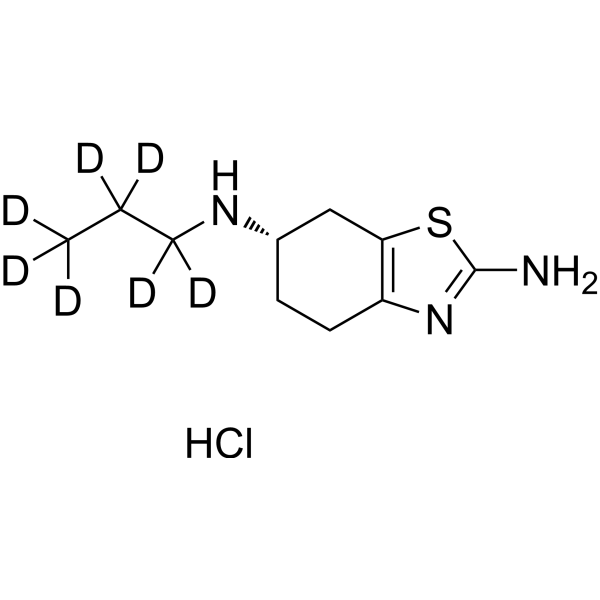
  • HY-17355S2

    Dopamine Receptor Neurological Disease
    Pramipexole-d7-1 dihydrochloride is the deuterium labeled Pramipexole dihydrochloride . Pramipexole dihydrochloride is a selective and blood-brain barrier (BBB) penetrant dopamine D2-type receptor agonist, with Kis of 2.2 nM, 3.9 nM, 0.5 nM and 1.3 nM for D2-type receptor, D2, D3 and D4 receptors, respectively. Pramipexole dihydrochloride can be used for the research of Parkinson's disease (PD) and restless legs syndrome (RLS) .
    Pramipexole-d7-1 dihydrochloride
  • HY-W720629

    Isotope-Labeled Compounds Phytohormone Aldehyde Dehydrogenase (ALDH) Others
    Cyanamide- 15N2 is the 15N-labeled Cyanamide (HY-Y0070). Cyanamide is a cell division and plant growth inhibitor, as well as an allelochemical derived from Vicia villosa. Cyanamide inhibits root growth and biomass accumulation in a dose-dependent manner by disrupting the formation of mitotic spindles and phragmoplast complexes, reducing the number of mitotic cells and blocking the cell cycle. The effects of Cyanamide are partially reversible after removal from low-concentration environments. Cyanamide is also a specific inhibitor of aldehyde dehydrogenase (ALDH). Although Cyanamide has no direct effect on tumor growth, it can significantly enhance the anti-tumor efficacy of Cyclophosphamide (HY-17420) at non-toxic doses by inhibiting the inactivation of Cyclophosphamide. Cyanamide enables Cyclophosphamide to exert equivalent therapeutic effects at lower doses, effectively inhibiting the growth of primary and metastatic tumors and prolonging the lifespan of tumor-bearing mice. Cyanamide is commonly used in studies related to ha-1 hepatoma and rls lymphosarcoma .
    Cyanamide-15N2
  • HY-17355R

    Dopamine Receptor Reference Standards Neurological Disease
    Pramipexole (dihydrochloride) (Standard) is the analytical standard of Pramipexole (dihydrochloride). This product is intended for research and analytical applications. Pramipexole dihydrochloride is a selective and blood-brain barrier (BBB) penetrant dopamine D2-type receptor agonist, with Kis of 2.2 nM, 3.9 nM, 0.5 nM and 1.3 nM for D2-type receptor, D2, D3 and D4 receptors, respectively. Pramipexole dihydrochloride can be used for the research of Parkinson's disease (PD) and restless legs syndrome (RLS) .
    Pramipexole dihydrochloride (Standard)
  • HY-Y0070

    Phytohormone Aldehyde Dehydrogenase (ALDH) Cancer
    Cyanamide is a cell division and plant growth inhibitor, as well as an allelochemical derived from Vicia villosa. Cyanamide inhibits root growth and biomass accumulation in a dose-dependent manner by disrupting the formation of mitotic spindles and phragmoplast complexes, reducing the number of mitotic cells and blocking the cell cycle. The effects of Cyanamide are partially reversible after removal from low-concentration environments. Cyanamide is also a specific inhibitor of aldehyde dehydrogenase (ALDH). Although Cyanamide has no direct effect on tumor growth, it can significantly enhance the anti-tumor efficacy of Cyclophosphamide (HY-17420) at non-toxic doses by inhibiting the inactivation of Cyclophosphamide. Cyanamide enables Cyclophosphamide to exert equivalent therapeutic effects at lower doses, effectively inhibiting the growth of primary and metastatic tumors and prolonging the lifespan of tumor-bearing mice. Cyanamide is commonly used in studies related to ha-1 hepatoma and rls lymphosarcoma .
    Cyanamide

Inquiry Online

Your information is safe with us. * Required Fields.

Salutation


Country or Region *

Applicant Name *


Organization Name *

Department *


Email Address *


Product Name *

Cat. No.


Requested quantity *

Phone Number *


Remarks

Inquiry Online

Inquiry Information

Product Name:
Cat. No.:
Quantity:
MCE Japan Authorized Agent:

