12 Results for "

Saffron

" in MedChemExpress (MCE) Product Catalog:
Products (12)

12 Results for "Saffron" in MCE Product Catalog:

6
6 Publications Verification
Cat. No.: HY-N7560
CAS No.: 116-26-7
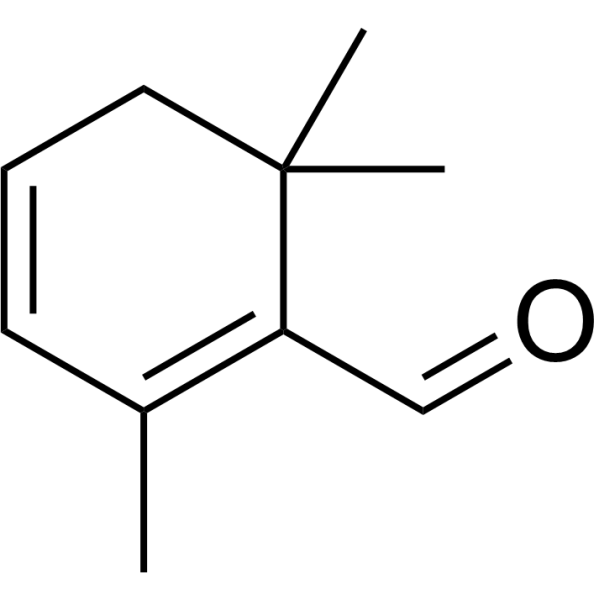
Safranal is an orally active main component of Saffron (Crocus sativus) and is responsible for the unique aroma of this spice. Safranal has neuroprotective and anti-inflammatory effects and has the potential for Parkinson’s disease research .
loading...
    loading...
3
3 Cited Publications
Cat. No.: HY-16502
CAS No.: 591230-99-8
Synonyms: Transcrocetin disodium; trans-Crocetin disodium
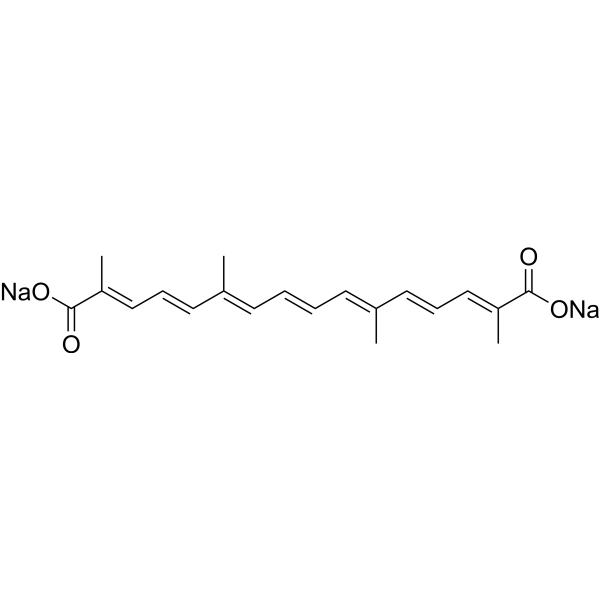
Crocetin (Transcrocetin) disodium, extracted from saffron (Crocus sativus L.), acts as an NMDA receptor antagonist with high affinity.
loading...
    loading...
3
3 Cited Publications
Cat. No.: HY-42937
Synonyms: Transcrocetin meglumine; trans-Crocetin meglumine
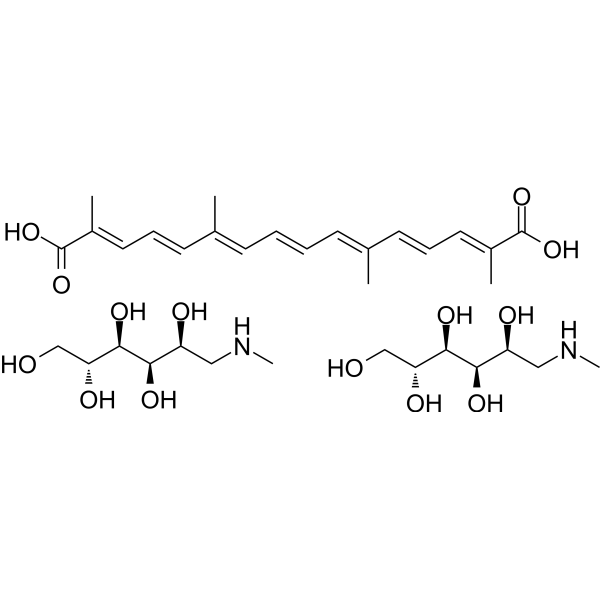
Crocetin (Transcrocetin) meglumine, extracted from saffron (Crocus sativus L.), acts as an NMDA receptor antagonist with high affinity.
loading...
    loading...
Cat. No.: HY-N4114
CAS No.: 138-55-6
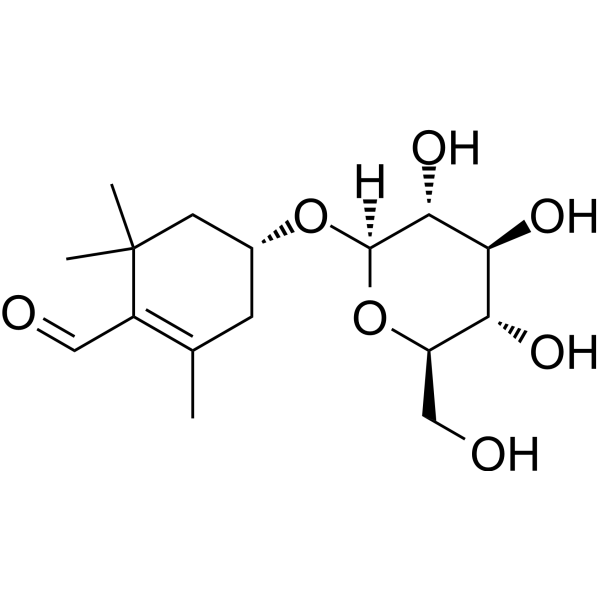
Picrocrocin, an apocarotenoid found in Saffron. Picrocrocin shows anticancer effect. Picrocrocin exhibits growth inhibitory effects against SKMEL-2 human malignant melanoma cells .
loading...
    loading...
Cat. No.: HY-N10991
CAS No.: 502-70-5
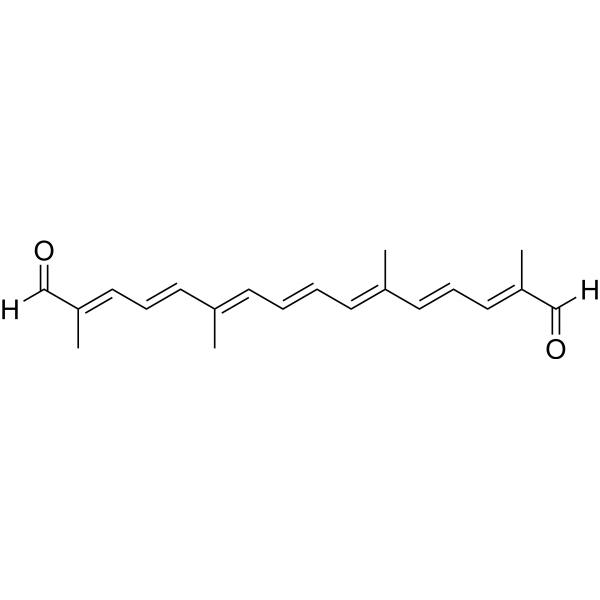
Crocetin dialdehyde is a non-volatile apocarotenoid obtained by the action of the plastidic enzyme CCD2 over the carotenoid zeaxanthin in saffron. Crocetin dialdehyde can be converted into Crocetin (HY-N2072) by aldehyde dehydrogenases (ALDHs). Crocetin dialdehyde has no effect on the liver in mice .
loading...
    loading...
Cat. No.: HY-N7560R
CAS No.: 116-26-7
Safranal (Standard) is an analytical standard for Safranal. This product is intended for research and analytical applications. Safranal is the main component of saffron (Crocus sativus), is orally active, and is the source of the spice's unique aroma. Safranal has neuroprotective and anti-inflammatory effects and has research potential for Parkinson's disease.
loading...
    loading...
Cat. No.: HY-N10183
CAS No.: 55750-86-2
Crocin-4, a carotenoid constituent of saffron, is a potent and brain-penetrant antioxidant agent. Crocin-4 can inhibit the aggregation and the concomitant deposition of Aβ fibrils in the brain. Crocin-4 can be used for the research of Alzheimer's Disease. Crocin-4 also exhibits antitumor and anti-inflammatory activities .
loading...
    loading...
Cat. No.: HY-N4114R
CAS No.: 138-55-6
Picrocrocin (Standard) is the analytical standard of Picrocrocin. This product is intended for research and analytical applications. Picrocrocin, an apocarotenoid found in Saffron. Picrocrocin shows anticancer effect. Picrocrocin exhibits growth inhibitory effects against SKMEL-2 human malignant melanoma cells .
loading...
    loading...
Cat. No.: HY-N6899
CAS No.: 5892-54-6
Synonyms: Dimethylcrocetin
Target:  

DNA/RNA Synthesis

Research Areas:  

Metabolic Disease

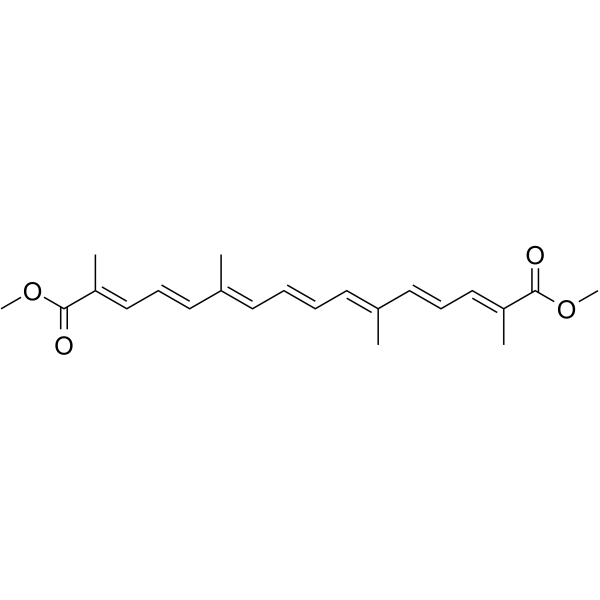
Crocetine dimethyl ester (Dimethylcrocetin) is found in the stigmas of saffron (Crocus sativus L.), and has antioxidant activity .
loading...
    loading...
Cat. No.: HY-N9372
CAS No.: 58050-17-2
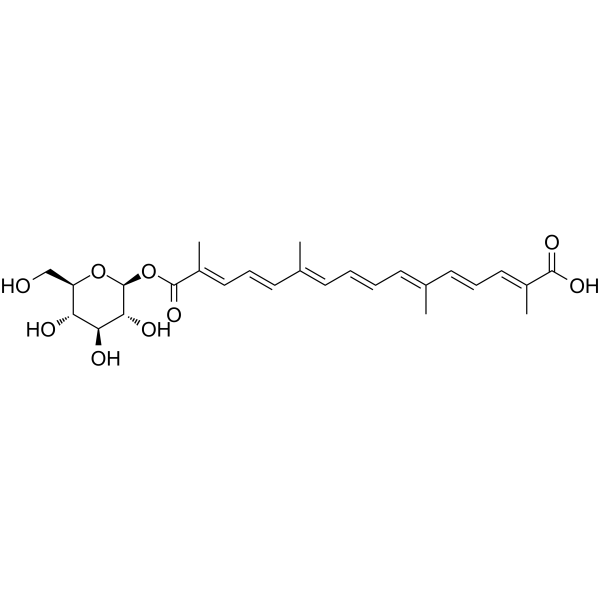
Crocetin β-D-glucopyranoside is an active part of saffron pigments extracted from patent CN 105935363 A .
loading...
    loading...
Cat. No.: HY-N17660
CAS No.: 1215276-36-0
Saffloquinoside A is a natural product that can be found in saffron.
loading...
    loading...
Cat. No.: HY-L191
1,143 compounds

Tibetan medicine, as one of the treasures of traditional Chinese medicine, carries the profound cultural heritage of the Tibetan people and their unique understanding of health. Tibet is the birthplace of Tibetan medicine, and its plateau climate and unique ecological environment have nurtured its rich medicinal resources. Among them, cordyceps, saffron and snow lily are favored by people for their excellent medicinal value and unique growth characteristics. Tibetan medicine, with its profound heritage, plays a crucial role in the management of diseases that are unique to high-altitude regions, such as altitude stress. It facilitates a swifter adaptation to high-altitude conditions and mitigates the symptoms of altitude sickness by meticulously recalibrating the internal environment within the human body. For rheumatic diseases, cardiovascular diseases, etc., Tibetan medicine has also shown its remarkable effect.

MCE included 1,143 natural products from Tibetan medicine, including animal, plant and mineral sources.

  • 1

