
Search Result
Results for "
Saturated
" in MedChemExpress (MCE) Product Catalog:
23
Biochemical Assay Reagents
113
Isotope-Labeled Compounds
| Cat. No. |
Product Name |
Target |
Research Areas |
Chemical Structure |
-
- HY-N0830B
-
|
|
Environmental Pollutants
Endogenous Metabolite
HSP
|
Cancer
|
|
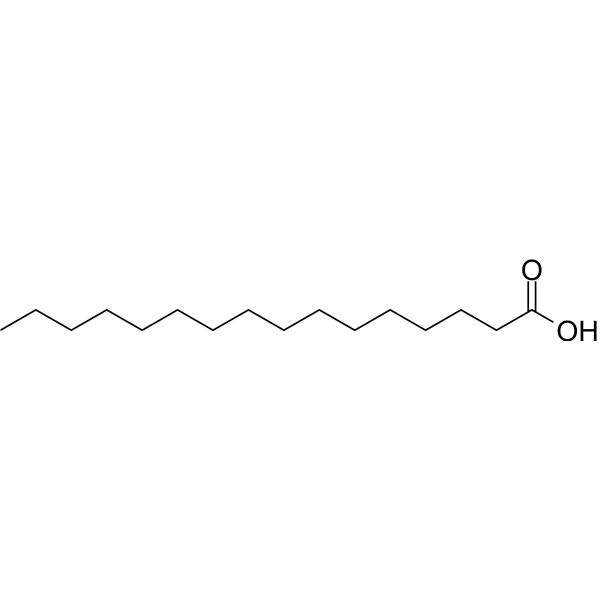
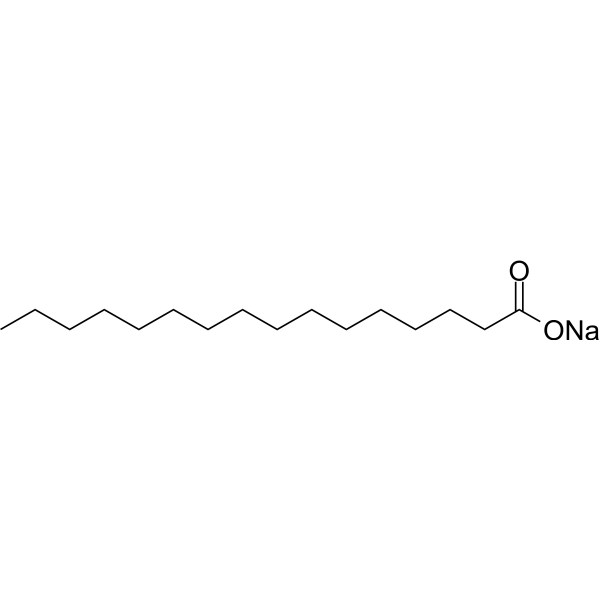
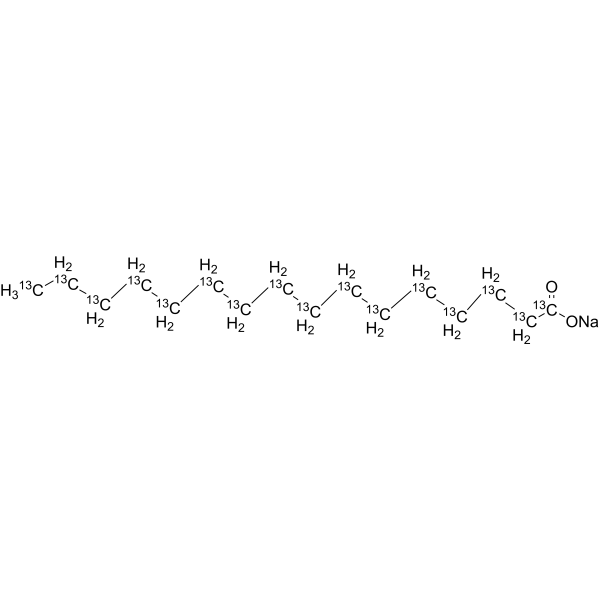
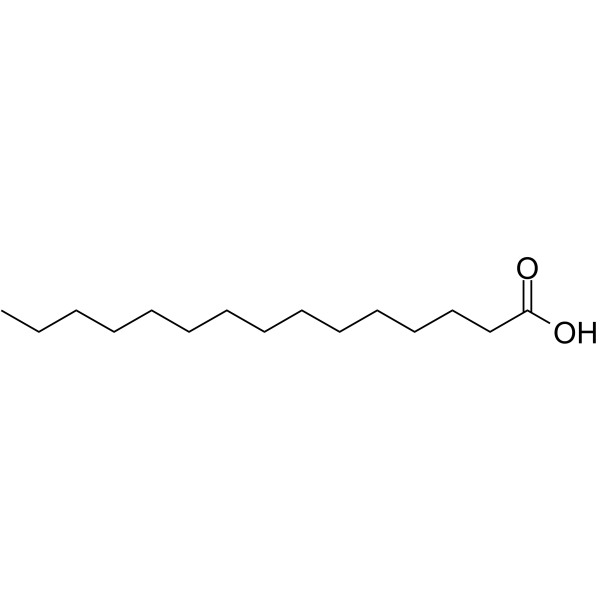
Palmitic acid sodium is a long-chain saturated fatty acid commonly found in both animals and plants. Palmitic acid sodium can induce the expression of glucose-regulated protein 78 (GRP78) and CCAAT/enhancer binding protein homologous protein (CHOP) in in mouse granulosa cells. Palmitic acid sodium is used to establish a cell steatosis model .
|
-
-
- HY-B2219
-
-
-
- HY-W004283
-
-
-
- HY-W032013
-
-
-
- HY-N16308
-
|
|
Fluorescent Dye
|
Others
|
|
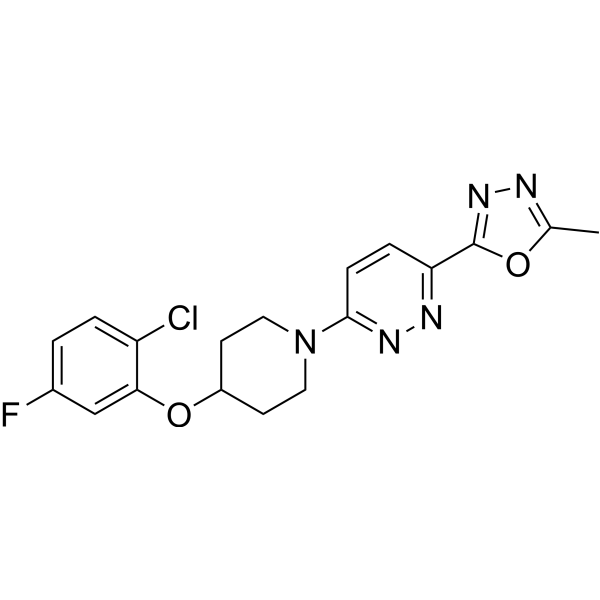
ER-Laurdan is a derivative of the membrane-permeable fluorescent probe Laurdan (HY-D0080) that targets the endoplasmic reticulum (ER). As a membrane fluidity reporter, ER-Laurdan specifically localizes to the ER luminal membrane, and exhibits a prominent solvatochromic response to fluidity changes caused by membrane packing and exogenous saturated fatty acid stress. ER-Laurdan shows no overlapping localization with mitochondria, enables quantitative analysis of ER membrane fluidity via generalized polarization ratio measurement, and allows automatic signal masking with the help of ER markers. With high specificity and quantitative capability, ER-Laurdan serves as an important tool for investigating metabolic disorders and associated changes in the physical properties of cell membranes .
|
-
-
- HY-W004288
-
|
Tetradecanoic acid methyl ester
|
Environmental Pollutants
Drug Derivative
|
Others
|
|
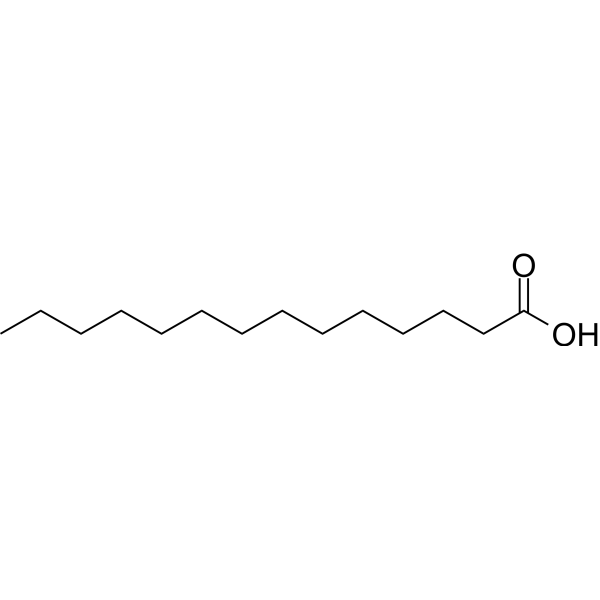
Methyl myristate is a saturated fatty acid methyl ester obtained from the esterification of myristic acid. Methyl myristate shows a high melanin induction in B16F10 melanoma .
|
-
-
- HY-N2041S
-
|
|
Endogenous Metabolite
|
Others
|
|
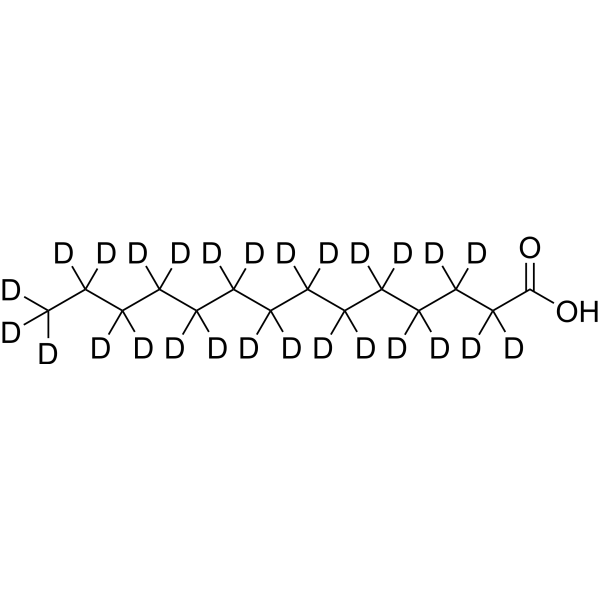
Myristic acid-d27 is the deuterium labeled Myristic acid. Myristic acid is a saturated 14-carbon fatty acid occurring in most animal and vegetable fats, particularly butterfat and coconut, palm, and nutmeg oils.
|
-
-
- HY-W013061
-
|
|
Endogenous Metabolite
|
Metabolic Disease
|
|
Propane-1,2,3-triyl tripalmitate is a saturated fat. Propane-1,2,3-triyl tripalmitate enhances the lymphatic transport of Glycerol tristearate (HY-127035) .
|
-
-
- HY-113201
-
|
|
Endogenous Metabolite
|
Neurological Disease
|
|
Tetradecanoylcarnitine is an acylcarnitine involved in mitochondrial β-oxidation of long-chain saturated fatty acids and fatty acid metabolism. Tetradecanoylcarnitine serves as a biomarker for very long-chain acyl-CoA dehydrogenase deficiency and MPTP (HY-15608)-induced Parkinson's disease. Tetradecanoylcarnitine exhibits a characteristic significant elevation in plasma levels in patients with sarcopenia, including those complicated with hypertension, and this elevation is closely associated with an increased risk of death. Tetradecanoylcarnitine is widely used in research on the pathological mechanisms of diseases such as Parkinson's disease and sarcopenia .
|
-
-
- HY-121447
-
|
|
Endogenous Metabolite
|
Metabolic Disease
|
|
Heneicosanoic acid is an odd-chain saturated fatty acid widely present in human milk, fish, seeds, and cerebrosides in the cell membranes of the nervous system. Heneicosanoic acid can form Langmuir monolayers and is often used as a model to study lipid self-assembly and disassembly processes in biological membranes and drug delivery systems. In the low-temperature L'2 and CS crystalline phases, Heneicosanoic acid undergoes local oscillations, which in turn drive the spontaneous formation and expulsion of micelles and vesicles .
|
-
-
- HY-N8016
-
-
-
- HY-128468
-
|
|
Liposome
PKC
Parasite
|
Others
|
|
1,2-Dimyristoyl-sn-glycerol is a saturated diacylglycerol and a weak second messenger for the activation of PKC .
|
-
-
- HY-170482
-
|
|
Biochemical Assay Reagents
|
Others
|
|
Bouin′s solution is a compound fixative used in histology. Bouin′s solution consists of saturated picric acid, formaldehyde, and Acetic acid .
|
-
-
- HY-B2219S4
-
-
-
- HY-B2219S3
-
-
-
- HY-B0222
-
|
Behenyl alcohol
|
Environmental Pollutants
HSV
|
Infection
|
|
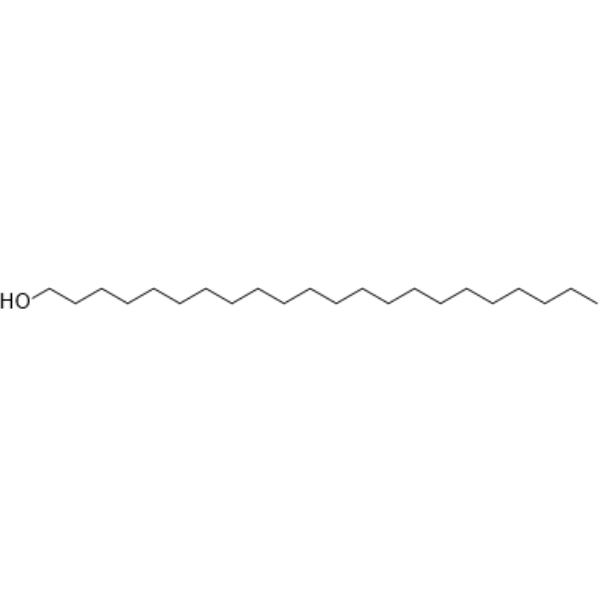
1-Docosanol (Behenyl alcohol) is a saturated fatty alcohol with reported inhibitory activity against lipid-enveloped viruses, including herpes simplex virus (HSV) .
|
-
-
- HY-N7113
-
|
|
Environmental Pollutants
|
Cancer
|
|
Squalane, found in certain fish oils (especially shark liver oil), and some vegetable oils, is a saturated derivative of Squalene. Squalane shows anticancer, antioxidant, skin hydrating, and emollient activities .
|
-
-
- HY-131503
-
|
13-MTD; 13-Methylmyristic acid
|
Apoptosis
|
Cancer
|
|
13-Methyltetradecanoic acid (13-MTD), a saturated branched-chain fatty acid with potent anticancer effects. 13-Methyltetradecanoic acid induces apoptosis in many types of human cancer cells .
|
-
-
- HY-B2219S2
-
-
-
- HY-107568
-
|
|
Histamine Receptor
|
Inflammation/Immunology
|
|
Iodophenpropit dihydrobromide is a potent and selective histamine H3 receptor antagonist. The binding of [ 125I]Iodophenpropit is selective, saturable, readily reversible, and of high affinity (KD 0.32 nM) .
|
-
-
- HY-N8425
-
|
Montanic acid
|
Endogenous Metabolite
|
Metabolic Disease
|
|
Octacosanoic acid is a very long-chain saturated fatty acid. It is the major component of D-003, a mixture of very long-chain aliphatic acids purified from sugar cane wax that has antiplatelet and cholesterol-lowering activities in animal models .
|
-
-
- HY-W004283S
-
-
-
- HY-B2219S9
-
|
|
Endogenous Metabolite
|
Cancer
|
|
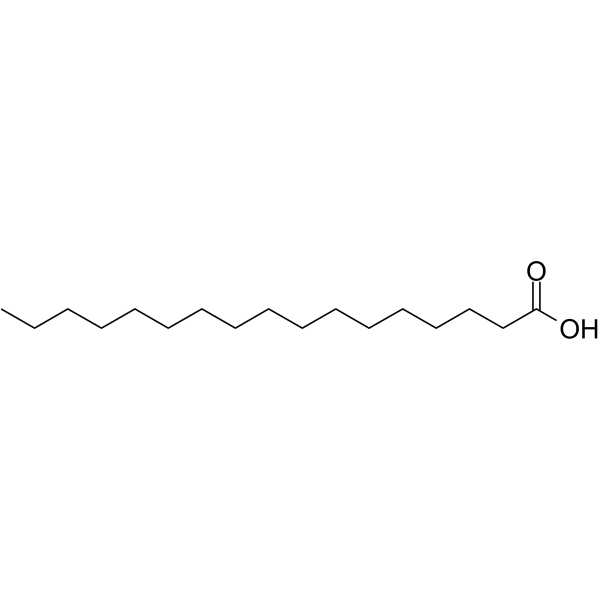
Stearic acid-d7 is the deuterium labeled Stearic acid. Stearic acid is a long chain dietary saturated fatty acid which exists in many animal and vegetable fats and oils.
|
-
-
- HY-B2219A
-
-
-
- HY-124422
-
-
-
- HY-N7868
-
|
|
Biochemical Assay Reagents
|
Others
|
|
Methyl tricosanoate is a saturated fatty acid methyl ester and also serves as an internal standard, which can be used for the quantitative analysis of neuraminic acid (NA) concentration .
|
-
-
- HY-W004260S1
-
|
Icosanoic acid-d39
|
Isotope-Labeled Compounds
Endogenous Metabolite
|
Others
|
|
Arachidic acid-d39 is the deuterium labeled Arachidic acid (HY-W004260). Arachidic acid (Eicosanoic acid) is a long-chain saturated fatty acid. Arachidic acid can be found in the human organism from the plasma phospholipid, fish, cannabis and other plant oils. Arachidic acid conjugated with Chitosan oligosaccharide (HY-112108) can be used for anti-cancer drug delivery research .
|
-
-
- HY-128465
-
|
|
Endogenous Metabolite
|
Others
|
|
1,2-Dilauroyl-sn-glycerol is a saturated diacylglycerol and may play a role in second messenger signal transduction .
|
-
-
- HY-W782122
-
|
|
Biochemical Assay Reagents
|
Cancer
|
|
Photoclick cholesterol is a photoreactive cholesterol analog capable of undergoing click reactions. Photoclick cholesterol enables specific, saturable photoaffinity labeling of the mitochondrial translocator protein TSPO .
|
-
-
- HY-Z16070
-
|
|
Drug Derivative
|
Cardiovascular Disease
Neurological Disease
|
|
Hydronopol is a saturated alcohol terpene derivative. Hydronopol shows central inhibitory, anticonvulsant, analgesic, anticholinergic and antihypertensive activities. Hydronopol can be used for the researches of neurological and cardiovascular disease .
|
-
-
- HY-116133
-
-
-
- HY-W004260R
-
|
Eicosanoic acid (Standard)
|
Reference Standards
Endogenous Metabolite
|
Others
|
|
Arachidic acid (Standard) is the analytical standard of Arachidic acid (HY-W004260). This product is intended for research and analytical applications. Arachidic acid (Eicosanoic acid) is a long-chain saturated fatty acid. Arachidic acid can be found in the human organism from the plasma phospholipid, fish, cannabis and other plant oils. Arachidic acid conjugated with Chitosan oligosaccharide (HY-112108) can be used for anti-cancer drug delivery research .
|
-
-
- HY-N8016S
-
-
-
- HY-W015972
-
|
|
Drug Intermediate
|
Cancer
|
|
Propionamide is a saturated amide small molecule compound. Propionamide can be used to assist in the mechanistic research of BTK covalent inhibitors .
|
-
-
- HY-W590674
-
|
|
Drug Derivative
|
Others
|
|
C26 Ceramide is a lipid featuring two hydrophobic tails, one saturated and the other unsaturated. Ceramides may be used in developing lipid nanoparticles or liposomes.
|
-
-
- HY-B2219S6
-
-
-
- HY-B2219S7
-
-
-
- HY-N2041S3
-
|
|
Isotope-Labeled Compounds
Endogenous Metabolite
|
Others
|
|
Myristic acid-d33 is the deuterium labeled Myristic acid. Myristic acid is a saturated 14-carbon fatty acid occurring in most animal and vegetable fats, particularly butterfat and coconut, palm, and nutmeg oils.
|
-
-
- HY-N7856
-
|
3-Oxostearic acid
|
Others
|
Others
|
|
3-Oxooctadecanoic acid (3-Oxostearic acid) is a saturated fatty acid (SFA). 3-Oxooctadecanoic acid is an intermediate product in fatty acid biosynthesis and it was converted from malonic acid via the enzyme .
|
-
-
- HY-W004260S4
-
|
Icosanoic acid-d4
|
Isotope-Labeled Compounds
Endogenous Metabolite
|
Others
|
|
Arachidic acid-d4 is the deuterium labeled Arachidic acid (HY-W004260). Arachidic acid (Eicosanoic acid) is a long-chain saturated fatty acid. Arachidic acid can be found in the human organism from the plasma phospholipid, fish, cannabis and other plant oils. Arachidic acid conjugated with Chitosan oligosaccharide (HY-112108) can be used for anti-cancer drug delivery research .
|
-
-
- HY-W590672
-
|
|
Biochemical Assay Reagents
|
Others
|
|
C22 Dihydroceramide is a lipid featuring two saturated hydrophobic tails. Ceramides may be used in developing lipid nanoparticles or liposomes.
|
-
-
- HY-N8016R
-
-
-
- HY-W590573
-
|
|
Biochemical Assay Reagents
|
Others
|
|
C3 Ceramide is a lipid featuring two hydrophobic tails, one saturated and the other unsaturated. Ceramides may be used in developing lipid nanoparticles or liposomes.
|
-
-
- HY-W051298
-
|
Stearic diglyceride
|
Biochemical Assay Reagents
|
Metabolic Disease
|
|
Distearin is a diacylglycerol containing stearic acid at two positions. Stearic acid is a long chain dietary saturated fatty acid which exists in many animal and vegetable fats and oils .
|
-
-
- HY-B2219S
-
-
-
- HY-W004261S
-
|
|
Isotope-Labeled Compounds
Endogenous Metabolite
|
Others
|
|
Nonadecanoic acid-d37 is the deuterium labeled Nonadecanoic acid. Nonadecanoic acid is a 19-carbon long saturated fatty acid. Nonadecanoic acid is the major constituent of the substance secreted by Rhinotermes marginalis to defence .
|
-
-
- HY-N2041S2
-
|
|
Isotope-Labeled Compounds
Endogenous Metabolite
|
Others
|
|
Myristic acid- 13C the 13C is labeled Myristic acid. Myristic acid is a saturated 14-carbon fatty acid occurring in most animal and vegetable fats, particularly butterfat and coconut, palm, and nutmeg oils.
|
-
-
- HY-N2041S4
-
|
|
Isotope-Labeled Compounds
Endogenous Metabolite
|
Others
|
|
Myristic acid- 13C3 is the 13C labeled Myristic acid. Myristic acid is a saturated 14-carbon fatty acid occurring in most animal and vegetable fats, particularly butterfat and coconut, palm, and nutmeg oils.
|
-
-
- HY-N2041S6
-
|
|
Endogenous Metabolite
|
Infection
|
|
Myristic acid-d5 is the deuterium labeled Myristic acid. Myristic acid is a saturated 14-carbon fatty acid occurring in most animal and vegetable fats, particularly butterfat and coconut, palm, and nutmeg oils.
|
-
-
- HY-N2041S7
-
-
- HY-W725399
-
|
DLiPC; PC24
|
Drug Intermediate
Endogenous Metabolite
|
Others
|
|
1,2-Dilignoceroyl-sn-glycero-3-phosphocholine (DLiPC) is a long-chain diacyl phospholipid characterized by its C24 saturated hydrocarbon chains and serves as a significant precursor for eicosanoids.
|
-
- HY-W004288S
-
|
Myristic acid methyl ester-d27
|
Isotope-Labeled Compounds
Drug Derivative
|
Cancer
|
|
Methyl tetradecanoate-d27 is the deuterium labeled Methyl myristate. Methyl myristate is a saturated fatty acid methyl ester obtained from the esterification of myristic acid. Methyl myristate shows a high melanin induction in B16F10 melanoma .
|
-
- HY-W032013R
-
|
Octanol (Standard)
|
Reference Standards
Calcium Channel
Endogenous Metabolite
|
Neurological Disease
Metabolic Disease
|
|
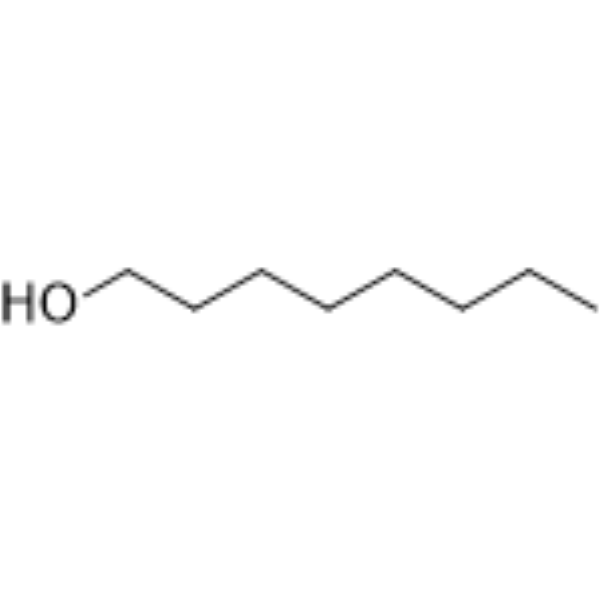
1-Octanol (Standard) is the analytical standard of 1-Octanol. This product is intended for research and analytical applications. 1-Octanol (Octanol), a saturated fatty alcohol, is a T-type calcium channels (T-channels) inhibitor with an IC50 of 4 μM for native T-currents . 1-Octanol is a highly attractive biofuel with diesel-like properties .
|
-
- HY-157592
-
-
- HY-W004283S2
-
-
- HY-B2219S1
-
-
- HY-W004286R
-
|
Methyl dodecanoate (Standard)
|
Biochemical Assay Reagents
Reference Standards
|
Others
|
|
Methyl laurate (Standard) is the analytical standard of Methyl laurate. This product is intended for research and analytical applications. Methyl laurate, a 12-carbon saturated fatty acid, is an esterified version of lauric acid .
|
-
- HY-N7399
-
|
|
Environmental Pollutants
|
Others
|
|
Dipalmitin is an active product that can be extracted from root tuber of Typhonium giganteum Engl. Dipalmitin is a diacylglycerol that contains the saturated 16-carbon fatty acid Palmitic acid (HY-N0830) at two positions .
|
-
- HY-122426
-
|
n-Undecyl bromide
|
Biochemical Assay Reagents
|
Others
|
|
1-Bromoundecane (n-Undecyl bromide) is a chemical reagent featuring a bromide along a saturated C11 chain. Bromide is easily displaced by nucleophiles such as alcohols or amines. Compounds such as this may be used as intermediates in building lipids for use in lipid nanoparticles.
|
-
- HY-N3221
-
|
|
Others
|
Others
|
|
Myriceric acid C, a saturated fatty acid, is a natural product that can be isolated from Myrica cerifera .
|
-
- HY-124422R
-
|
|
Reference Standards
Endogenous Metabolite
|
Metabolic Disease
|
|
Pentacosanoic acid (Standard) is the analytical standard of Pentacosanoic acid. This product is intended for research and analytical applications. Pentacosanoic acid is a 25-carbon long-chain saturated fatty acid. Pentacosanoic is a conjugate acid of a pentacosanoate[1].
|
-
- HY-162550
-
|
|
SARS-CoV
|
Infection
|
|
Jobosic acid, a saturated fatty acid, is a selective SARS-CoV-2 inhibitor. Jobosic acid inhibits Mpro and spike-RBD/ACE-2 interaction with IC50 values of 7.5 μg/mL and 3 μg/mL, respectively. Jobosic acid shows viral entry inhibition for the omicron SARS-CoV-2 variant .
|
-
- HY-W004260S2
-
|
Icosanoic acid-d3
|
Isotope-Labeled Compounds
Endogenous Metabolite
|
Others
|
|
Arachidic acid-d3 is the deuterium labeled Arachidic acid (HY-W004260). Arachidic acid (Eicosanoic acid) is a long-chain saturated fatty acid. Arachidic acid can be found in the human organism from the plasma phospholipid, fish, cannabis and other plant oils. Arachidic acid conjugated with Chitosan oligosaccharide (HY-112108) can be used for anti-cancer drug delivery research .
|
-
- HY-W004260S
-
|
Icosanoic acid-d2
|
Isotope-Labeled Compounds
Endogenous Metabolite
|
Others
|
|
Arachidic acid-d2 is the deuterium labeled Arachidic acid (HY-W004260). Arachidic acid (Eicosanoic acid) is a long-chain saturated fatty acid. Arachidic acid can be found in the human organism from the plasma phospholipid, fish, cannabis and other plant oils. Arachidic acid conjugated with Chitosan oligosaccharide (HY-112108) can be used for anti-cancer drug delivery research .
|
-
- HY-N8622A
-
|
|
Others
|
Others
|
|
Heteroclitin B is a saturated dibenzocyclooctene lignan isolated from the stems of Schisandra chinensis.
|
-
- HY-172021
-
-
- HY-W004283S1
-
-
- HY-N8016S2
-
-
- HY-W099565
-
-
- HY-W127464
-
|
|
Biochemical Assay Reagents
|
Others
|
|
Arachidyl Laurate is a laurate medium chain saturated (C20:0) fatty acid ester compound that can be used as a reference for the analysis of wax laurate.
|
-
- HY-N8016S1
-
-
- HY-N7878
-
-
- HY-B2219S8
-
-
- HY-N2641
-
|
4'-O-Methyldihydroquercetin; Blumeatin A
|
NADPH Oxidase
|
Others
|
|
Dihydrotamarixetin (4'-O-Methyldihydroquercetin; Blumeatin A) is a flavonoid with a saturated 2,3-bond and a non-catechol B ring. Dihydrotamarixetin acts as an inhibitor of NADPH Oxidase .
|
-
- HY-W588184
-
|
|
Biochemical Assay Reagents
|
Others
|
|
(Rac)-C22-Ceramide is a lipid featuring two hydrophobic tails, one saturated and the other unsaturated. Ceramides may be used in developing lipid nanoparticles or liposomes.
|
-
- HY-121447R
-
|
|
Reference Standards
Endogenous Metabolite
|
Metabolic Disease
|
|
Heneicosanoic acid (Standard) is the analytical standard of Heneicosanoic acid. This product is intended for research and analytical applications. Heneicosanoic acid is a long-chain saturated fatty acid which is found in plants and animals .
|
-
- HY-W654314
-
-
- HY-W590535
-
|
1,2-DNPC;
1,2-Dinonadecanoyl-sn-glycero-3-phosphocholine
|
Liposome
|
Cancer
|
|
19:0 PC is a saturated phospholipid that has been used as a standard for the quantification of phosphatidylcholines in human synovial fluid. It has also been used to study dynamics of lipid bilayer phase transition.
|
-
- HY-N2041S1
-
-
- HY-B2219S5
-
|
|
Endogenous Metabolite
|
Metabolic Disease
Cancer
|
|
Stearic acid-9,10-d2 is the deuterium labeled Stearic acid. Stearic acid is a long chain dietary saturated fatty acid which exists in many animal and vegetable fats and oils.
|
-
- HY-170457
-
|
1-Oleoyl-2-cholesterylhemisuccinoyl-sn-glycero-3-phosphocholine
|
Biochemical Assay Reagents
|
Others
|
|
OChemsPC (1-Oleoyl-2-cholesterylhemisuccinoyl-sn-glycero-3-phosphocholine), a sterol-lipid, is an unsaturated hydrocarbon chain replaces the saturated chain of Sterol-lipid A .
|
-
- HY-W004260B
-
|
Glycerol diarachidate
|
Endogenous Metabolite
Biochemical Assay Reagents
|
Others
|
|
Dieicosanoin is a diacylglycerol containing arachidic acid (HY-W004260). Arachidic acid is a saturated long-chain fatty acid with a 20-carbon backbone. Arachidic acid can be isolated from peanut butter and anaerobic fungi .
|
-
- HY-W800819
-
|
|
Biochemical Assay Reagents
|
Others
|
|
Arachidic Acid N-Hydroxysuccinimide Ester is a lipid comprised of a saturated fatty acid with a 20-carbon chain with a terminal NHS ester. The NHS ester can be used to label the primary amines (-NH2) of proteins, amine-modified oligonucleotides, and other amine-containing molecules.
|
-
- HY-E70267
-
|
|
Biochemical Assay Reagents
|
Metabolic Disease
|
|
22:0 Coenzyme A triammonium is a derivative of coenzyme A (CoA), where CoA is combined with a 22-carbon saturated fatty acid (behenic acid, also known as docosanoic acid). 22:0 Coenzyme A triammonium can serve as a substrate for AmFAR1 .
|
-
- HY-167273
-
|
|
Drug Derivative
|
Others
|
|
4-Methyldecane is a branched saturated hydrocarbon found in the Dufour gland of Formica lemani workers .
|
-
- HY-W012969
-
|
3-Ethoxypropanol
|
Drug Derivative
|
Others
|
|
3-Ethoxy-1-propanol (3-Ethoxypropanol) is a saturated aliphatic alcohol that can be found in Chinese Sinkiang fermented camel milk as a volatile component .
|
-
- HY-W004260S5
-
|
|
Endogenous Metabolite
|
Others
|
|
Arachidic acid-d4-1 is the deuterium labeled Arachidic acid (HY-W004260). Arachidic acid (Eicosanoic acid) is a long-chain saturated fatty acid. Arachidic acid can be found in the human organism from the plasma phospholipid, fish, cannabis and other plant oils. Arachidic acid conjugated with Chitosan oligosaccharide (HY-112108) can be used for anti-cancer drug delivery research .
|
-
- HY-179548
-
|
|
Drug Derivative
|
Others
|
|
Photoclick palmitic acid is a derivative of the long-chain saturated fatty acid palmitic acid (HY-N0830). The photoclick-type long-chain saturated fatty acid has been used as a probe for studying protein lipidation .
|
-
- HY-N15804
-
-
- HY-N15834
-
-
- HY-W176477
-
|
Octyldecanoic acid
|
Biochemical Assay Reagents
|
Others
|
|
2-Octyldecanoic acid (Octyldecanoic acid) is a saturated fatty acid with a long aliphatic tail consisting of 17 carbon atoms and a carboxylic acid group.
|
-
- HY-N18107
-
|
|
Others
|
Others
|
|
Interiorin B is a partially saturated dibenzocyclooctene lignan. Interiorin B can be isolated from the stems of Schisandra rubriflora .
|
-
- HY-W722084
-
|
|
Others
|
Others
|
|
3,7-Dimethylnonane is a saturated aliphatic hydrocarbon compound found in the leaves of silver acacia (Leucaena leucocephala (Lam.) De Wit) .
|
-
- HY-W004286S
-
|
Methyl dodecanoate-d3
|
Biochemical Assay Reagents
|
|
|
Methyl laurate-d3 is the deuterated Methyl laurate. Methyl laurate, a 12-carbon saturated fatty acid, is an esterified version of lauric acid.
|
-
- HY-N2041S5
-
-
- HY-178385S
-
-
- HY-135015
-
|
|
Endogenous Metabolite
|
Infection
|
|
Tetradecanenitrile is a nitrogen-containing saturated long-chain aliphatic nitrile that can be found in Pseudomonas veronii R02. Tetradecanenitrile can be used for the research of multiresistant Staphylococcus aureus infection .
|
-
- HY-178422S
-
-
- HY-W699942
-
|
|
Isotope-Labeled Compounds
|
Others
|
|
3-(2-Hydroxy-2-(methyl-d3)propyl-3,3,3-d3) 5-methyl 2,6-dimethyl-4-(2-nitrophenyl)-1,4-dihydropyridine-3,5-dicarboxylate is deuterated labeled 3-(2-Hydroxy-2-(methyl-)propyl-3,3,3-) 5-methyl 2,6-dimethyl-4-(2-nitrophenyl)-1,4-dihydropyridine-3,5-dicarboxylate.
|
-
- HY-169872
-
|
|
Endogenous Metabolite
|
Others
|
|
17-Hydroxystearic acid isolable from Torulopsis magnoliae fermentation oil. 17-Hydroxystearic acid is a saturated C18 ω2-hydroxy fatty acid existing in D- and L-enantiomeric forms .
|
-
- HY-W004294
-
-
- HY-W440958
-
|
PSPC; PC(16:0-18:0)
|
Liposome
|
Cancer
|
|
1-Palmitoyl-2-stearoyl-sn-glycero-3-phosphocholine is an assymetrical phospholipid containing saturated palmitic and stearic acid at the sn-1 and sn-2 position respectively. The phosphate group is attached to choline.
|
-
- HY-N6933
-
|
Triacontan-1-ol
|
Environmental Pollutants
|
Cancer
|
|
1-Triacontanol is a naturally occurring plant growth regulator. 1-Triacontanol is a saturated long-chain alcohol that has growth-promoting activities on a number of plants. 1-Triacontanol has anticancer activity .
|
-
- HY-121883
-
|
Tetracosanoic acid
|
Endogenous Metabolite
|
Neurological Disease
|
|
Lignoceric acid (Tetracosanoic acid) is a 24-carbon saturated (24:0) fatty acid, which is synthesized in the developing brain. Lignoceric acid is also a by-product of lignin production. Lignoceric acid can be used for Zellweger cerebro‐hepato‐renal syndrome and adrenoleukodystrophy research .
|
-
- HY-W441007
-
|
|
Liposome
|
Inflammation/Immunology
Cancer
|
|
DSPE-MAL is a phospholipid compound with a maleimide reactive group. DSPE-MAL contains two saturated fatty acids and can self-assemble in water to form a lipid bilayer. DSPE-MAL can be used to prepare liposomes as nanocarriers for active molecules .
|
-
- HY-W013049
-
|
Behenic acid
|
Endogenous Metabolite
DNA/RNA Synthesis
|
Metabolic Disease
Cancer
|
|
Docosanoic acid (Behenic acid) is a long-chain saturated fatty acid. Docosanoic acid inhibits the double-stranded DNA (dsDNA) binding activity of p53 DNA binding domain, with a Kd of 12 nM. Docosanoic acid has low bioavailability and can increase cholesterol in humans .
|
-
- HY-W013049R
-
-
- HY-N7057
-
|
Pelargonic acid
|
Environmental Pollutants
Endogenous Metabolite
Bacterial
|
Infection
|
|
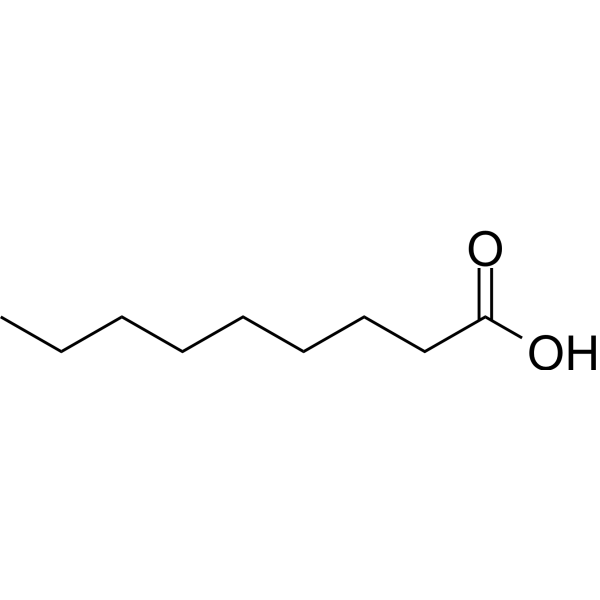
Nonanoic acid (Pelargonic acid) is a naturally-occurring saturated fatty acid with nine carbon atoms. Nonanoic acid significantly reduces bacterial translocation, enhances antibacterial activity, and remarkably increases the secretion of porcine β-defensins 1 (pBD-1) and pBD-2 .
|
-
- HY-144016
-
|
|
Liposome
|
Others
|
|
16:0 EPC chloride, a P-O-ethyl derivative, is a saturated cationic lipid. 16:0 EPC chloride can serve as a DNA and RNA transfecting agent. 16:0 EPC chloride can be used as a co-adjuvant for preparing vaccines and promote drug delivery .
|
-
- HY-W004284S1
-
|
|
Endogenous Metabolite
|
Cardiovascular Disease
Metabolic Disease
Cancer
|
|
Heptadecanoic acid-d33 is the deuterium labeled Heptadecanoic acid. Heptadecanoic acid is an odd chain saturated fatty acid (OCS-FA). Heptadecanoic acid is associated with several diseases, including the incidence of coronary heart disease, prediabetes and type 2 diabetes as well as multiple sclerosis .
|
-
- HY-A0241R
-
|
RP54476 (Standard)
|
Reference Standards
Bacterial
Antibiotic
|
Infection
|
|
Stearic acid (Standard) is the analytical standard of Stearic acid. This product is intended for research and analytical applications. Stearic acid is a long-chain dietary saturated fatty acid that can significantly reduce visceral fat by inducing apoptosis of preadipocytes. Stearic acid can be used in the study of cardiovascular and metabolic diseases .
|
-
- HY-W032014
-
|
n-Octylamine
|
Biochemical Assay Reagents
|
Others
|
|
Octylamine (n-Octylamine) is a chemical reagent featuring a primary amine and a saturated C8 tail. The primary amine is a versatile substrate which can be used to build a wide variety of bonds. Compounds such as this may be used as intermediates in building lipids for use in lipid nanoparticles.
|
-
- HY-B2219R
-
-
- HY-W004284S
-
-
- HY-N7113S
-
|
|
Isotope-Labeled Compounds
|
Cancer
|
|
Squalane-d62 is the deuterium labeled Squalane . Squalane, found in certain fish oils (especially shark liver oil), and some vegetable oils, is a saturated derivative of Squalene. Squalane shows anticancer, antioxidant, skin hydrating, and emollient activities .
|
-
- HY-121465
-
|
|
Endogenous Metabolite
|
Metabolic Disease
|
|
Stearoyl serotonin is a hybrid molecule patterned after arachidonoyl serotonin. Arachidonoyl serotonin is a dual antagonist of fatty acid amide hydrolase (FAAH) and the transient receptor potential vanilloid-type 1 (TRPV1) channel, reducing both acute and chronic peripheral pain. The effects of replacing the arachidonoyl portion with the saturated 18-carbon stearoyl moiety have not been studied. However, replacement of arachidonate with saturated 11- or 12-carbon fatty acids produces compounds that potently inhibit capsaicin-induced TRPV1 channel activation (IC50=0.76 μM) without blocking FAAH-mediated hydrolysis of arachidonoyl ethanolamine (IC50 > 50 μM).
|
-
- HY-N7057A
-
|
Pelargonic acid ammonium
|
Bacterial
|
Infection
|
|
Nonanoic acid (Pelargonic acid) ammonium is a naturally-occurring saturated fatty acid with nine carbon atoms. Nonanoic acid significantly reduces bacterial translocation, enhances antibacterial activity, and remarkably increases the secretion of porcine β-defensins 1 (pBD-1) and pBD-2 .
|
-
- HY-W004288R
-
|
Tetradecanoic acid methyl ester (Standard)
|
Reference Standards
Drug Derivative
|
Cancer
|
|
Methyl myristate (Standard) is the analytical standard of Methyl myristate. This product is intended for research and analytical applications. Methyl myristate is a saturated fatty acid methyl ester obtained from the esterification of myristic acid. Methyl myristate shows a high melanin induction in B16F10 melanoma .
|
-
- HY-W015370R
-
|
|
Reference Standards
Endogenous Metabolite
|
Others
Inflammation/Immunology
|
|
Squalane (Standard) is the analytical standard of Squalane. This product is intended for research and analytical applications. Squalane, found in certain fish oils (especially shark liver oil), and some vegetable oils, is a saturated derivative of Squalene. Squalane shows anticancer, antioxidant, skin hydrating, and emollient activities .
|
-
- HY-W004294S1
-
|
|
Bacterial
|
Infection
|
|
1-Tetradecanol-d2 is the deuterium labeled 1-Tetradecanol . 1-Tetradecanol, isolated from Myristica fragrans, is a straight-chain saturated fatty alcohol. 1-Tetradecanol possesses antibacterial and anti-inflammatory (periodontitis) activity .
|
-
- HY-N7113R
-
|
|
Reference Standards
Others
|
Cancer
|
|
Squalane (Standard) is the analytical standard of Squalane. This product is intended for research and analytical applications. Squalane, found in certain fish oils (especially shark liver oil), and some vegetable oils, is a saturated derivative of Squalene. Squalane shows anticancer, antioxidant, skin hydrating, and emollient activities .
|
-
- HY-W708886
-
|
|
Isotope-Labeled Compounds
Drug Derivative
|
Others
|
|
Methyl-d3 tetradecanoate is the deuterium labeled Methyl myristate (HY-W004288). Methyl myristate is a saturated fatty acid methyl ester obtained from the esterification of myristic acid. Methyl myristate shows a high melanin induction in B16F10 melanoma .
|
-
- HY-119491
-
|
|
Biochemical Assay Reagents
|
Others
|
|
Ethyl Tricosanoate is a long-chain saturated fatty acid ethyl ester, which exists in small amounts in C. conicum and C. conicum. Free acid reduces the hemolytic activity of Staphylococcus aureus delta toxin on human erythrocytes. Both ethyl ester and free acid can be used as standards for the analysis of lipid mixtures.
|
-
- HY-W004294S
-
|
|
Bacterial
|
Infection
|
|
1-Tetradecanol-d29 is the deuterium labeled 1-Tetradecanol . 1-Tetradecanol, isolated from Myristica fragrans, is a straight-chain saturated fatty alcohol. 1-Tetradecanol possesses antibacterial and anti-inflammatory (periodontitis) activity .
|
-
- HY-34419
-
|
Di-n-octylamine
|
Biochemical Assay Reagents
|
Others
|
|
Dioctylamine (Di-n-octylamine) is a chemical reagent featuring a secondary amine linked to two saturated C8 tails. The secondary amine is a versatile substrate which can be used to build a wide variety of bonds. Compounds such as this may be used as intermediates in building lipids for use in lipid nanoparticles.
|
-
- HY-B0222S
-
|
|
HSV
|
Infection
|
|
1-Docosanol-d45 is the deuterium labeled 1-Docosanol. 1-Docosanol is a saturated fatty alcohol used traditionally as an emollient, emulsifier, and thickener in cosmetics, and nutritional supplement. 1-Docosanol is an inhibitor of lipid-enveloped viruses including herpes simplex.
|
-
- HY-145541
-
|
1,2-Dinonadecanoin
|
Biochemical Assay Reagents
|
Others
|
|
12-Dinonadecanoyl-rac-glycerol is a diacylglycerol containing nonadecanoic acid (HY-W004261) at the sn-1 and sn-2 positions. Nonadecanoic acid is a 19-carbon long saturated fatty acid. Nonadecanoic acid is the major constituent of the substance secreted by Rhinotermes marginalis to defence .
|
-
- HY-W482407
-
|
(S)-2,3-Bis(hexadecyloxy)propan-1-ol
|
Biochemical Assay Reagents
|
Metabolic Disease
|
|
1,2-O-Dihexadecyl-sn-glycerol ((S)-2,3-Bis(hexadecyloxy)propan-1-ol) is a saturated dialkyl glyceryl ether with hexadecyl groups at the sn-1 and sn-2 positions that mimics the structure of diacylglycerol.
|
-
- HY-Y1718S1
-
|
N-Tridecanoic acid-d25
|
Isotope-Labeled Compounds
Endogenous Metabolite
Bacterial
|
Cancer
|
|
Tridecanoic acid-d25 is the deuterium labeled Tridecanoic acid. Tridecanoic acid (N-Tridecanoic acid), a 13-carbon medium-chain saturated fatty acid, can serve as an antipersister and antibiofilm agent that may be applied to research bacterial infections. Tridecanoic acid inhibits Escherichia coli persistence and biofilm formation .
|
-
- HY-Y1718S
-
|
N-Tridecanoic acid-d2
|
Isotope-Labeled Compounds
Endogenous Metabolite
Bacterial
|
Infection
|
|
Tridecanoic acid-d2 is the deuterium labeled Tridecanoic acid. Tridecanoic acid (N-Tridecanoic acid), a 13-carbon medium-chain saturated fatty acid, can serve as an antipersister and antibiofilm agent that may be applied to research bacterial infections. Tridecanoic acid inhibits Escherichia coli persistence and biofilm formation .
|
-
- HY-W004294R
-
|
|
Reference Standards
Bacterial
|
Infection
Inflammation/Immunology
|
|
1-Tetradecanol (Standard) is the analytical standard of 1-Tetradecanol. This product is intended for research and analytical applications. 1-Tetradecanol, isolated from Myristica fragrans, is a straight-chain saturated fatty alcohol. 1-Tetradecanol possesses antibacterial and anti-inflammatory (periodontitis) activity .
|
-
- HY-157618
-
|
|
Bacterial
|
Others
|
|
18:0-18:1 PG sodium is a hydrogenated phospholipid that contributes to the stability of photosystem I and II protein complexes and plays a role in bacterial defense mechanisms, featuring two extra methylene groups in its saturated sn-1 chain, and is present in the thylakoid membranes of higher plants and cyanobacteria.
|
-
- HY-139411
-
|
Paraffin oil
|
Environmental Pollutants
Biochemical Assay Reagents
|
Infection
|
|
White mineral oil is the highly refined mineral oil, and is composed of saturated aliphatic and alicyclic nonpolar hydrocarbons. White mineral oil is biologically and chemically stable, and doesn’t support pathogenic bacterial growth. White mineral oil can resist moisture, extend, soften, smoothen, and lubricate .
|
-
- HY-128465R
-
|
|
Endogenous Metabolite
|
Others
|
|
1,2-Dilauroyl-sn-glycerol (Standard) is the analytical standard of 1,2-Dilauroyl-sn-glycerol. This product is intended for research and analytical applications. 1,2-Dilauroyl-sn-glycerol is a saturated diacylglycerol and may play a role in second messenger signal transduction .
|
-
- HY-W004284
-
|
|
Environmental Pollutants
Apoptosis
PI3K
Akt
|
Cardiovascular Disease
Metabolic Disease
Cancer
|
|
Heptadecanoic acid is an odd-chain saturated fatty acid (OCS-FA) with oral activity. Heptadecanoic acid can inhibit cell proliferation and induce Apoptosis. Heptadecanoic acid has antitumor activity. Heptadecanoic acid is associated with a number of diseases, including coronary heart disease, pre-diabetes and type 2 diabetes, and multiple sclerosis .
|
-
- HY-B0222R
-
|
Behenyl alcohol (Standard)
|
Reference Standards
HSV
|
Infection
|
|
1-Docosanol (Standard) is the analytical standard of 1-Docosanol. This product is intended for research and analytical applications. 1-Docosanol (Behenyl alcohol) is a saturated fatty alcohol with reported inhibitory activity against lipid-enveloped viruses, including herpes simplex virus (HSV) .
|
-
- HY-Y1718S2
-
|
N-Tridecanoic acid-d9
|
Isotope-Labeled Compounds
Endogenous Metabolite
Bacterial
|
Infection
|
|
Tridecanoic acid-d9 is the deuterium labeled Tridecanoic acid. Tridecanoic acid (N-Tridecanoic acid), a 13-carbon medium-chain saturated fatty acid, can serve as an antipersister and antibiofilm agent that may be applied to research bacterial infections. Tridecanoic acid inhibits Escherichia coli persistence and biofilm formation .
|
-
- HY-126751
-
|
|
Na+/K+ ATPase
|
Metabolic Disease
|
|
DBM-819 is a reversible inhibitor of H⁺/K⁺-ATPase (H +/K +-ATPase), with an IC50 value of 5 μM. DBM-819 can reversibly block gastric acid secretion by inhibiting the proton pump in the gastric mucosa. It shows significant protective effects against duodenal ulcers induced by Cysteamine (HY-77591), gastric ulcers induced by Indomethacin (HY-14397), and gastric ulcers induced by Aspirin (HY-14654), with EC50 values of 6, 3.1, and 4 mg/kg respectively. DBM-819 can be used in ulcer prevention research .
|
-
- HY-N0830S18
-
|
|
Isotope-Labeled Compounds
HSP
Endogenous Metabolite
|
Metabolic Disease
|
|
Palmitic acid-d is the deuterium labeled Palmitic acid. Palmitic acid is a long-chain saturated fatty acid commonly found in both animals and plants. PA can induce the expression of glucose-regulated protein 78 (GRP78) and CCAAT/enhancer binding protein homologous protein (CHOP) in in mouse granulosa cells .
|
-
- HY-167663
-
|
|
5-HT Receptor
|
Neurological Disease
|
|
Ebalzotan is a 5-HT1A receptor agonist with activity in the study of depression. Ebalzotan can serve as a precursor to important active pharmaceutical ingredients. The synthesis of Ebalzotan involves a multi-enzyme catalyzed reduction reaction to obtain saturated primary or secondary alcohols in high yields and high enantioselectivity .
|
-
- HY-Y1718R
-
|
N-Tridecanoic acid (Standard)
|
Reference Standards
Endogenous Metabolite
Bacterial
|
Infection
Metabolic Disease
|
|
Tridecanoic acid (Standard) is the analytical standard of Tridecanoic acid. This product is intended for research and analytical applications. Tridecanoic acid (N-Tridecanoic acid), a 13-carbon medium-chain saturated fatty acid, can serve as an antipersister and antibiofilm agent that may be applied to research bacterial infections. Tridecanoic acid inhibits Escherichia coli persistence and biofilm formation .
|
-
- HY-W142525
-
|
N-Dodecyldodecan-1-amine
|
Biochemical Assay Reagents
|
Others
|
|
Didodecylamine (N-Dodecyldodecan-1-amine) is a chemical reagent featuring a secondary amine linked to two saturated C12 tails. The secondary amine is a versatile substrate which can be used to build a wide variety of bonds. Compounds such as this may be used as intermediates in building lipids for use in lipid nanoparticles.
|
-
- HY-W013854
-
|
3β-Hydroxy-5α-androstane
|
Endogenous Metabolite
|
Others
|
|
5α-Androstan-3β-ol (Androstan), a saturated sterol, is a CAR (constitutive androstane receptor) inverse agonist ligand. 5α-Androstan-3β-ol (Androstan) increases the AmB-channel conductance in a concentration dependent manner .
|
-
- HY-N0830
-
-
- HY-131503S
-
|
13-MTD-d6; 13-Methylmyristic acid-d6
|
Isotope-Labeled Compounds
Apoptosis
|
Cancer
|
|
13-Methyltetradecanoic acid-d6 is a deuterated labeled 13-Methyltetradecanoic acid . 13-Methyltetradecanoic acid (13-MTD), a saturated branched-chain fatty acid with potent anticancer effects. 13-Methyltetradecanoic acid induces apoptosis in many types of human cancer cells .
|
-
- HY-141614
-
|
Phosphatidylcholine Diarachidoyl; 1,2-DAPC; L-α-Diarachidonoyl lecithin
|
Liposome
|
Metabolic Disease
|
|
1,2-Diarachidoyl-sn-glycero-3-phosphocholine (1,2-DAPC) is a phospholipid containing the saturated long-chain (20:0) arachidic acid inserted at the sn-1 and sn-2 positions. It can be used in the generation of micelles, liposomes, and other types of artificial membranes.
|
-
- HY-121883S
-
|
Tetracosanoic acid-d47
|
Isotope-Labeled Compounds
Endogenous Metabolite
|
Neurological Disease
|
|
Lignoceric acid-d47 is the deuterium labeled Lignoceric acid. Lignoceric acid (Tetracosanoic acid) is a 24-carbon saturated (24:0) fatty acid, which is synthesized in the developing brain. Lignoceric acid is also a by-product of lignin production. Lignoceric acid can be used for Zellweger cerebro‐hepato‐renal syndrome and adrenoleukodystrophy research .
|
-
- HY-W343736
-
|
1,3-DPPE; 1,3-Dipalmitoyl-sn-glycero-2-PE
|
Liposome
|
Cancer
|
|
1,3-Dipalmitoyl-glycero-2-phosphoethanolamine is a phospholipid containing the saturated long-chain (16:0) stearic acid inserted at the sn-1 and sn-3 positions and PE at the sn-2 site. It can be used in the generation of micelles, liposomes, and other types of artificial membranes.
|
-
- HY-121883SS5
-
|
|
Endogenous Metabolite
|
Neurological Disease
|
|
Lignoceric acid-d9 is the deuterium labeled Lignoceric acid. Lignoceric acid (Tetracosanoic acid) is a 24-carbon saturated (24:0) fatty acid, which is synthesized in the developing brain. Lignoceric acid is also a by-product of lignin production. Lignoceric acid can be used for Zellweger cerebro‐hepato‐renal syndrome and adrenoleukodystrophy research .
|
-
- HY-W093183
-
|
Palmitic acid anhydride
|
Biochemical Assay Reagents
|
Others
|
|
Palmitic anhydride, a saturated fatty acid found in many natural sources such as animal fats and vegetable oils, is commonly used as a reagent in organic synthesis to introduce palmitoyl(hexadecanoyl) functional groups into other organic molecules, moreover, Palmitic anhydride has been Used in the production of surfactants, lubricants and plasticizers, as well as in the preparation of cosmetics and pharmaceuticals.
|
-
- HY-121883S4
-
|
Tetracosanoic acid-d4-2
|
Endogenous Metabolite
|
Neurological Disease
|
|
Lignoceric acid-d4-2 is the deuterium labeled Lignoceric acid. Lignoceric acid (Tetracosanoic acid) is a 24-carbon saturated (24:0) fatty acid, which is synthesized in the developing brain. Lignoceric acid is also a by-product of lignin production. Lignoceric acid can be used for Zellweger cerebro‐hepato‐renal syndrome and adrenoleukodystrophy research .
|
-
- HY-121883S1
-
|
Tetracosanoic acid-d3
|
Endogenous Metabolite
|
Neurological Disease
|
|
Lignoceric acid-d3 is the deuterium labeled Lignoceric acid . Lignoceric acid (Tetracosanoic acid) is a 24-carbon saturated (24:0) fatty acid, which is synthesized in the developing brain. Lignoceric acid is also a by-product of lignin production. Lignoceric acid can be used for Zellweger cerebro‐hepato‐renal syndrome and adrenoleukodystrophy research .
|
-
- HY-W099580S1
-
|
n-Hexadecane-d34; Cetane-d34
|
Isotope-Labeled Compounds
Bacterial
|
Others
|
|
Hexadecane-d34 (n-Hexadecane-d34) is the deuterium labeled Hexadecane (HY-W099580). Hexadecane (n-Hexadecane) is a saturated hydrocarbon of alkanes or paraffins and can be used as an organic solvent. Hexadecane is a component of petroleum, belongs to hydrophobic substrates, and is a model substance for studying bacterial degradation of hydrophobic compounds .
|
-
- HY-N0830S11
-
-
- HY-N0830S4
-
|
|
HSP
|
Cardiovascular Disease
Neurological Disease
Metabolic Disease
Cancer
|
|
Palmitic acid-d2 is the deuterium labeled Palmitic acid. Palmitic acid is a long-chain saturated fatty acid commonly found in both animals and plants. Palmitic acid can induce the expression of glucose-regulated protein 78 (GRP78) and CCAAT/enhancer binding protein homologous protein (CHOP) in in mouse granulosa cells .
|
-
- HY-N0830S7
-
|
|
HSP
|
Cardiovascular Disease
Neurological Disease
Metabolic Disease
Cancer
|
|
Palmitic acid-d4 is the deuterium labeled Palmitic acid. Palmitic acid is a long-chain saturated fatty acid commonly found in both animals and plants. Palmitic acid can induce the expression of glucose-regulated protein 78 (GRP78) and CCAAT/enhancer binding protein homologous protein (CHOP) in in mouse granulosa cells .
|
-
- HY-N0830A
-
|
|
HSP
Endogenous Metabolite
|
Cardiovascular Disease
Neurological Disease
Metabolic Disease
|
|
Palmitic acid calcium is a long-chain saturated fatty acid commonly found in both animals and plants. PA can induce the expression of glucose-regulated protein 78 (GRP78) and CCAAT/enhancer binding protein homologous protein (CHOP) in in mouse granulosa cells. Palmitic acid calcium is used to establish a cell steatosis model .
|
-
- HY-N0830S17
-
|
|
Isotope-Labeled Compounds
HSP
Endogenous Metabolite
|
Metabolic Disease
|
|
Palmitic acid-d2-4 is the deuterium labeled Palmitic acid. Palmitic acid is a long-chain saturated fatty acid commonly found in both animals and plants. PA can induce the expression of glucose-regulated protein 78 (GRP78) and CCAAT/enhancer binding protein homologous protein (CHOP) in in mouse granulosa cells .
|
-
- HY-N0830S2
-
-
- HY-N0830S15
-
|
|
Isotope-Labeled Compounds
HSP
Endogenous Metabolite
|
Cancer
|
|
Palmitic acid-d2-2 is the deuterium labeled Palmitic acid. Palmitic acid is a long-chain saturated fatty acid commonly found in both animals and plants. PA can induce the expression of glucose-regulated protein 78 (GRP78) and CCAAT/enhancer binding protein homologous protein (CHOP) in in mouse granulosa cells .
|
-
- HY-N0830S21
-
|
|
Isotope-Labeled Compounds
HSP
Endogenous Metabolite
|
Metabolic Disease
|
|
Palmitic acid-d5 is the deuterium labeled Palmitic acid. Palmitic acid is a long-chain saturated fatty acid commonly found in both animals and plants. PA can induce the expression of glucose-regulated protein 78 (GRP78) and CCAAT/enhancer binding protein homologous protein (CHOP) in in mouse granulosa cells .
|
-
- HY-N0830S6
-
-
- HY-N0830BS1
-
-
- HY-N0830S14
-
|
|
Isotope-Labeled Compounds
HSP
Endogenous Metabolite
|
Inflammation/Immunology
|
|
Palmitic acid-d17 is the deuterium labeled Palmitic acid. Palmitic acid is a long-chain saturated fatty acid commonly found in both animals and plants. PA can induce the expression of glucose-regulated protein 78 (GRP78) and CCAAT/enhancer binding protein homologous protein (CHOP) in in mouse granulosa cells .
|
-
- HY-N0830S13
-
|
|
Isotope-Labeled Compounds
HSP
Endogenous Metabolite
|
Metabolic Disease
|
|
Palmitic acid-d4-2 is the deuterium labeled Palmitic acid. Palmitic acid is a long-chain saturated fatty acid commonly found in both animals and plants. PA can induce the expression of glucose-regulated protein 78 (GRP78) and CCAAT/enhancer binding protein homologous protein (CHOP) in in mouse granulosa cells .
|
-
- HY-N0830S19
-
|
|
Isotope-Labeled Compounds
HSP
Endogenous Metabolite
|
Metabolic Disease
|
|
Palmitic acid-d2-5 is the deuterium labeled Palmitic acid. Palmitic acid is a long-chain saturated fatty acid commonly found in both animals and plants. PA can induce the expression of glucose-regulated protein 78 (GRP78) and CCAAT/enhancer binding protein homologous protein (CHOP) in in mouse granulosa cells .
|
-
- HY-N8425R
-
|
Montanic acid (Standard)
|
Reference Standards
Endogenous Metabolite
|
Metabolic Disease
|
|
Octacosanoic acid (Standard) is the analytical standard of Octacosanoic acid. This product is intended for research and analytical applications. Octacosanoic acid is a very long-chain saturated fatty acid. It is the major component of D-003, a mixture of very long-chain aliphatic acids purified from sugar cane wax that has antiplatelet and cholesterol-lowering activities in animal models .
|
-
- HY-N0830S16
-
|
|
Isotope-Labeled Compounds
HSP
Endogenous Metabolite
|
Cancer
|
|
Palmitic acid-d2-3 is the deuterium labeled Palmitic acid. Palmitic acid is a long-chain saturated fatty acid commonly found in both animals and plants. PA can induce the expression of glucose-regulated protein 78 (GRP78) and CCAAT/enhancer binding protein homologous protein (CHOP) in in mouse granulosa cells .
|
-
- HY-121883S3
-
|
|
Endogenous Metabolite
|
Neurological Disease
|
|
Lignoceric acid-d4-11 is the deuterium labeled Lignoceric acid. Lignoceric acid (Tetracosanoic acid) is a 24-carbon saturated (24:0) fatty acid, which is synthesized in the developing brain. Lignoceric acid is also a by-product of lignin production. Lignoceric acid can be used for Zellweger cerebro‐hepato‐renal syndrome and adrenoleukodystrophy research .
|
-
- HY-134174
-
|
|
Liposome
|
Cancer
|
|
1-Palmitoyl-2-oleoyl-sn-glycero-3-phosphate is a phospholipid containing saturated palmitic acid (16:0) and monounsaturated oleic acid (18:1) inserted at the sn-1 and sn-2 positions, respectively. It can be used in the generation of micelles, liposomes, and other types of artificial membranes.
|
-
- HY-N0830BS
-
-
- HY-W510032
-
|
Monoethyl nonanedioate; Ethyl hydrogen azelaate
|
Biochemical Assay Reagents
|
Infection
|
|
9-Ethoxy-9-oxononanoic acid is a C-11 fatty acid that has an ethyl ester group at the end of the saturated tail. The carboxylic acid can react with primary amine groups in the presence of activators (e.g. EDC, or HATU) to form a stable amide bond. Azelaic Acid Monoethyl Ester has antifungal activity against Cladosporium herbarum.
|
-
- HY-N0830S10
-
-
- HY-N0830S20
-
|
|
Isotope-Labeled Compounds
HSP
Endogenous Metabolite
|
Metabolic Disease
|
|
Palmitic acid-d9 is the deuterium labeled Palmitic acid. Palmitic acid is a long-chain saturated fatty acid commonly found in both animals and plants. PA can induce the expression of glucose-regulated protein 78 (GRP78) and CCAAT/enhancer binding protein homologous protein (CHOP) in in mouse granulosa cells .
|
-
- HY-N0830S5
-
-
- HY-121883R
-
|
Tetracosanoic acid (Standard)
|
Reference Standards
Endogenous Metabolite
|
Neurological Disease
|
|
Lignoceric acid (Standard) is the analytical standard of Lignoceric acid. This product is intended for research and analytical applications. Lignoceric acid (Tetracosanoic acid) is a 24-carbon saturated (24:0) fatty acid, which is synthesized in the developing brain. Lignoceric acid is also a by-product of lignin production. Lignoceric acid can be used for Zellweger cerebro‐hepato‐renal syndrome and adrenoleukodystrophy research[1][2].
|
-
- HY-W032013S
-
|
Octanol-d17
|
Calcium Channel
Endogenous Metabolite
|
Metabolic Disease
|
|
1-Octanol-d17 is the deuterium labeled 1-Octanol . 1-Octanol (Octanol), a saturated fatty alcohol, is a T-type calcium channels (T-channels) inhibitor with an IC50 of 4 μM for native T-currents . 1-Octanol is a highly attractive biofuel with diesel-like properties .
|
-
- HY-N0830S12
-
|
|
HSP
Endogenous Metabolite
|
Cancer
|
|
Palmitic acid-d4-1 is the deuterium labeled Palmitic acid. Palmitic acid is a long-chain saturated fatty acid commonly found in both animals and plants. PA can induce the expression of glucose-regulated protein 78 (GRP78) and CCAAT/enhancer binding protein homologous protein (CHOP) in in mouse granulosa cells .
|
-
- HY-W032013S1
-
|
Octanol-d2
|
Calcium Channel
Endogenous Metabolite
|
Metabolic Disease
|
|
1-Octanol-d2 is the deuterium labeled 1-Octanol . 1-Octanol (Octanol), a saturated fatty alcohol, is a T-type calcium channels (T-channels) inhibitor with an IC50 of 4 μM for native T-currents . 1-Octanol is a highly attractive biofuel with diesel-like properties .
|
-
- HY-W099580R
-
|
n-Hexadecane (Standard); Cetane (Standard)
|
Reference Standards
Biochemical Assay Reagents
|
Others
|
|
Hexadecane (Standard) (n-Hexadecane (Standard)) is the analytical standard of Hexadecane (HY-W099580). This product is intended for research and analytical applications. Hexadecane (n-Hexadecane) is a saturated hydrocarbon of alkanes or paraffins and can be used as an organic solvent. Hexadecane is a component of petroleum, belongs to hydrophobic substrates, and is a model substance for studying bacterial degradation of hydrophobic compounds .
|
-
- HY-N2041
-
-
- HY-N0830R
-
-
- HY-W673589
-
|
2-Me-C26
|
Insecticide
|
Infection
|
|
2-Methylhexacosane is a saturated hydrocarbon and an insect pheromone. It has been found in the cuticle of M. dasystomus females, but not males, where it contributes to the mating behavior of males, as well as in D. melanogaster females where it modulates aggression of males towards females. 2-methylhexacosane has also been found in yellow jacket (V. vulgaris) trail extracts.
|
-
- HY-N0830S3
-
|
|
HSP
|
Cardiovascular Disease
Neurological Disease
Metabolic Disease
Cancer
|
|
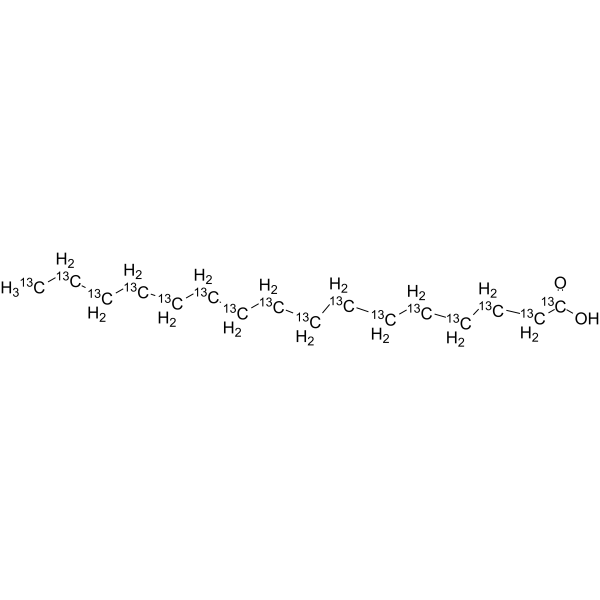
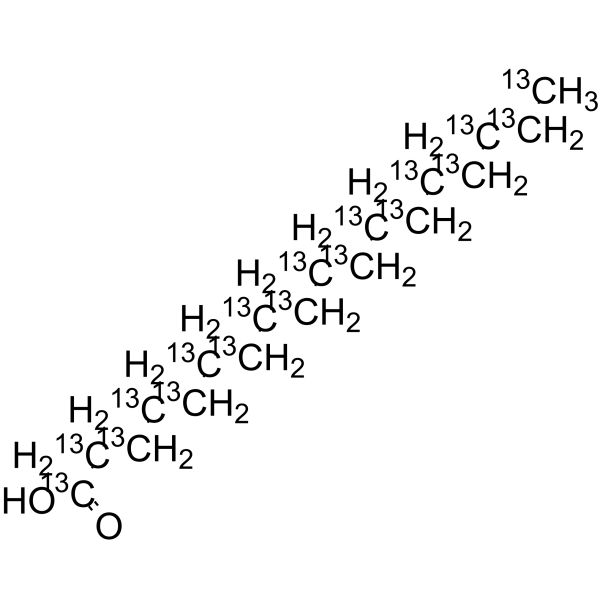
Palmitic acid-1- 13C is the 13C-labeled Palmitic acid. Palmitic acid is a long-chain saturated fatty acid commonly found in both animals and plants. Palmitic acid can induce the expression of glucose-regulated protein 78 (GRP78) and CCAAT/enhancer binding protein homologous protein (CHOP) in in mouse granulosa cells .
|
-
- HY-N7057S3
-
|
Pelargonic acid-d2; Pelargonic acid-d2 (n-Nonanoic acid, C9 )
|
Isotope-Labeled Compounds
Bacterial
|
Infection
|
|
Nonanoic acid (Pelargonic acid)-d2 is the deuterium labeled Nonanoic acid (HY-N7057) . Nonanoic acid is a naturally-occurring saturated fatty acid with nine carbon atoms. Nonanoic acid significantly reduces bacterial translocation, enhances antibacterial activity, and remarkably increases the secretion of porcine β-defensins 1 (pBD-1) and pBD-2 .
|
-
- HY-N7057S2
-
|
Pelargonic acid-d4
|
Isotope-Labeled Compounds
Bacterial
|
Infection
|
|
Nonanoic acid (Pelargonic acid)-d4 is the deuterium labeled Nonanoic acid (HY-N7057). Nonanoic acid is a naturally-occurring saturated fatty acid with nine carbon atoms. Nonanoic acid significantly reduces bacterial translocation, enhances antibacterial activity, and remarkably increases the secretion of porcine β-defensins 1 (pBD-1) and pBD-2 .
|
-
- HY-N7057S1
-
|
Pelargonic acid-d3
|
Isotope-Labeled Compounds
Bacterial
|
Infection
|
|
Nonanoic acid (Pelargonic acid)-d3 is the deuterium labeled Nonanoic acid (HY-N7057). Nonanoic acid is a naturally-occurring saturated fatty acid with nine carbon atoms. Nonanoic acid significantly reduces bacterial translocation, enhances antibacterial activity, and remarkably increases the secretion of porcine β-defensins 1 (pBD-1) and pBD-2 .
|
-
- HY-113427
-
|
|
Endogenous Metabolite
Bcl-2 Family
Apoptosis
|
Cardiovascular Disease
Cancer
|
|
trans-Vaccenic acid is a naturally occurring trans fatty acid (TFA). trans-Vaccenic acid inhibits nasopharyngeal carcinoma (NPC) cell growth and induces apoptosis through the inhibition of Bad/Akt phosphorylation. trans-Vaccenic acid is a precursor for the synthesis of saturated fatty acid in the rumen and of conjugated Linoleic acid (CLA) at the tissue level. trans-Vaccenic acid exerts hypolipidemic effects in a rat model of obesity .
|
-
- HY-114641
-
|
|
Leukotriene Receptor
|
Inflammation/Immunology
|
|
BIIL-260 is a potent and long-acting orally active leukotriene B(4) receptor LTB4 antagonist, with anti-inflammatory activity. BIIL-260 interacts with the LTB4 receptor in a saturable, reversible, and competitive manner, has high affinity to the LTB4 receptor on isolated human neutrophil cell membranes with the Ki value of 1.7 nM .
|
-
- HY-N0830S9
-
-
- HY-N0830S8
-
-
- HY-121855
-
|
Glycerol 1-monoelaidate; α-Monoelaidin
|
Biochemical Assay Reagents
|
Others
|
|
Monoeladin is an ester derivative of glycerin and oleic acid, which are commonly found in various vegetable and animal fats. Monoeladin has unique chemical properties that make it an important intermediate in the biosynthesis of other lipid molecules, especially in the formation of triglycerides and phospholipids. It also plays a role in food science as a partial replacement for saturated fat, which has been linked to an increased risk of heart disease.
|
-
- HY-W758425
-
-
- HY-114641A
-
|
|
Leukotriene Receptor
|
Inflammation/Immunology
|
|
BIIL-260 hydrochloride is a potent and long-acting orally active leukotriene B(4) receptor LTB4 antagonist, with anti-inflammatory activity. BIIL-260 hydrochloride interacts with the LTB4 receptor in a saturable, reversible, and competitive manner, has high affinity to the LTB4 receptor on isolated human neutrophil cell membranes with Ki values of 1.7 nM .
|
-
- HY-N7057S
-
|
Pelargonic acid-d17
|
Isotope-Labeled Compounds
Bacterial
|
Infection
|
|
Nonanoic acid (Pelargonic acid)-d17 is the deuterium labeled Nonanoic acid (HY-N7057). Nonanoic acid is a naturally-occurring saturated fatty acid with nine carbon atoms. Nonanoic acid significantly reduces bacterial translocation, enhances antibacterial activity, and remarkably increases the secretion of porcine β-defensins 1 (pBD-1) and pBD-2 .
|
-
- HY-W004284R
-
|
|
Reference Standards
Apoptosis
PI3K
Akt
|
Cardiovascular Disease
Metabolic Disease
Cancer
|
|
Heptadecanoic acid (Standard) is the analytical standard of Heptadecanoic acid. This product is intended for research and analytical applications. Heptadecanoic acid is an odd-chain saturated fatty acid (OCS-FA) with oral activity. Heptadecanoic acid can inhibit cell proliferation and induce Apoptosis. Heptadecanoic acid has antitumor activity. Heptadecanoic acid is associated with a number of diseases, including coronary heart disease, pre-diabetes and type 2 diabetes, and multiple sclerosis[1].
|
-
- HY-167663A
-
|
|
5-HT Receptor
|
Neurological Disease
|
|
(S)-Ebalzotan is the S-form of Ebalzotan (HY-167663). Ebalzotan is a 5-HT1A receptor agonist with activity in the study of depression. Ebalzotan can serve as a precursor to important active pharmaceutical ingredients. The synthesis of Ebalzotan involves a multi-enzyme catalyzed reduction reaction to obtain saturated primary or secondary alcohols in high yields and high enantioselectivity .
|
-
- HY-23190
-
|
17-TFM-PGF1α
|
Prostaglandin Receptor
|
Others
|
|
17-Trifluoromethylphenyl-13,14-dihydro trinor prostaglandin F1α (Compound 8) is a saturated prostaglandin analogue. 17-Trifluoromethylphenyl-13,14-dihydro trinor prostaglandin F1α has good affinity and receptor selectivity for human prostaglandin F receptor (hFP receptor) witn an EC50 of 85 nM .
|
-
- HY-W032013S3
-
|
Octanol-d5
|
Calcium Channel
Endogenous Metabolite
Isotope-Labeled Compounds
|
Others
|
|
1-Octanol-d5 is deuterated labeled 1-Octanol (HY-W032013). 1-Octanol (Octanol), a saturated fatty alcohol, is a T-type calcium channels (T-channels) inhibitor with an IC50 of 4 μM for native T-currents . 1-Octanol is a highly attractive biofuel with diesel-like properties .
|
-
- HY-N0830S1
-
-
- HY-N0830S
-
-
- HY-N7057R
-
|
Pelargonic acid (Standard)
|
Reference Standards
Bacterial
|
Infection
|
|
Nonanoic acid (Pelargonic acid) (Standard) is the analytical standard of Nonanoic acid (HY-N7057). This product is intended for research and analytical applications. Nonanoic acid is a naturally-occurring saturated fatty acid with nine carbon atoms. Nonanoic acid significantly reduces bacterial translocation, enhances antibacterial activity, and remarkably increases the secretion of porcine β-defensins 1 (pBD-1) and pBD-2 .
|
-
- HY-115706
-
|
1,3-Ditetracosanoin
|
Biochemical Assay Reagents
|
Neurological Disease
|
|
13-Dilignoceroyl glycerol is a diacylglycerol containing lignoceric acid (HY-121883 ) at the sn-1 and sn-3 positions. Lignoceric acid is a 24-carbon saturated (24:0) fatty acid, which is synthesized in the developing brain. Lignoceric acid is also a by-product of lignin production. Lignoceric acid can be used for Zellweger cerebro-hepato-renal syndrome and adrenoleukodystrophy research .
|
-
- HY-W032013S2
-
|
Octanol-d2-1
|
Calcium Channel
Endogenous Metabolite
Isotope-Labeled Compounds
|
Others
|
|
1-Octanol-d2-1 is deuterated labeled 1-Octanol (HY-W032013). 1-Octanol (Octanol), a saturated fatty alcohol, is a T-type calcium channels (T-channels) inhibitor with an IC50 of 4 μM for native T-currents . 1-Octanol is a highly attractive biofuel with diesel-like properties .
|
-
- HY-W127458
-
|
Hexadecanoic acid, tin(2+) salt
|
Environmental Pollutants
Endogenous Metabolite
HSP
|
Neurological Disease
Metabolic Disease
Cancer
|
|
Tin(II) palmitate (Hexadecanoic acid, tin(2+) salt) is a long-chain saturated fatty acid commonly found in animals and plants. Tin(II) palmitate can induce the expression of glucose-regulated protein 78 (GRP78) and CCAAT/enhancer-binding protein homologous protein (CHOP) in mouse granular cells. Tin(II) palmitate can be used to establish a model of cellular steatosis.
|
-
- HY-W013049S
-
|
Behenic acid-d4
|
Isotope-Labeled Compounds
Endogenous Metabolite
DNA/RNA Synthesis
|
Metabolic Disease
Cancer
|
|
Docosanoic acid-d4 (Behenic acid-4) is deuterium labeled Docosanoic acid (HY-W013049). Docosanoic acid (Behenic acid) is a long-chain saturated fatty acid. Docosanoic acid inhibits the double-stranded DNA (dsDNA) binding activity of p53 DNA binding domain, with a Kd of 12 nM. Docosanoic acid has low bioavailability and can increase cholesterol in humans .
|
-
- HY-121883S2
-
|
Tetracosanoic acid-d4
|
Isotope-Labeled Compounds
Endogenous Metabolite
|
Neurological Disease
|
|
Lignoceric acid-d4 (Tetracosanoic acid-d4) is deuterium labeled Lignoceric acid. Lignoceric acid (Tetracosanoic acid) is a 24-carbon saturated (24:0) fatty acid, which is synthesized in the developing brain. Lignoceric acid is also a by-product of lignin production. Lignoceric acid can be used for Zellweger cerebro‐hepato‐renal syndrome and adrenoleukodystrophy research .
|
-
- HY-W004261
-
|
|
Endogenous Metabolite
Interleukin Related
Ser/Thr Protease
Thrombin
|
Others
|
|
Nonadecanoic acid is a 19-carbon long saturated fatty acid. Nonadecanoic acid is the major constituent of the substance secreted by Rhinotermes marginalis. Nonadecanoic acid can be isolated from several sources, including fungus, plant, and marine sponge. Nonadecanoic acid exhibits inhibitory effects on fibrinolysis and plasmin activity. Nonadecanoic acid produced from Streptomyces is an anti-tumor agent and inhibits IL-12 production .
|
-
- HY-W009544
-
|
3-Hydroxymyristic acid
|
Biochemical Assay Reagents
|
Others
|
|
3-Hydroxytetradecanoic acidis a saturated fatty acid. 3-Hydroxytetradecanoic acidOccurs naturally in various animal and plant sources such as butter and milk fat. 3-Hydroxytetradecanoic acidIt has various uses in industry, especially in the production of soaps, detergents and other surfactants. 3-Hydroxytetradecanoic acidIt is also used as a precursor for the synthesis of other bioactive compounds such as antibiotics and anticancer drugs.
|
-
- HY-169794
-
|
|
DNA/RNA Synthesis
|
Others
|
|
N-Palmitoyl-phenylalanine is an N-acyl amide that contains the long-chain saturated fatty acid Palmitic acid (HY-N0830) conjugated via an amide bond to the essential amino acid L-Phenylalanine (HY-N0215). N-Palmitoyl-phenylalanine inhibits pre-mRNA splicing in HeLa cell nuclear lysates (IC50 > 400 μM) but has no splicing activity in intact HeLa cells .
|
-
- HY-W013049S2
-
|
Behenic acid-d2
|
Isotope-Labeled Compounds
Endogenous Metabolite
DNA/RNA Synthesis
|
Metabolic Disease
Cancer
|
|
Docosanoic acid-d2 (Behenic acid-d2) is deuterium labeled Docosanoic acid (HY-W013049).
Docosanoic acid (Behenic acid) is a long-chain saturated fatty acid. Docosanoic acid inhibits the double-stranded DNA (dsDNA) binding activity of p53 DNA binding domain, with a Kd of 12 nM. Docosanoic acid has low bioavailability and can increase cholesterol in humans .
|
-
- HY-W013049S6
-
|
Behenic acid-13C4
|
Isotope-Labeled Compounds
Endogenous Metabolite
DNA/RNA Synthesis
|
Metabolic Disease
|
|
Docosanoic acid- 13C4 (Behenic acid- 13C4) is the 13C-labeled Docosanoic acid (HY-W013049). Docosanoic acid (Behenic acid) is a long-chain saturated fatty acid. Docosanoic acid inhibits the double-stranded DNA (dsDNA) binding activity of p53 DNA binding domain, with a Kd of 12 nM. Docosanoic acid has low bioavailability and can increase cholesterol in vivo .
|
-
- HY-W099580S
-
|
n-Hexadecane-1,2-13C2; Cetane-1,2-13C2
|
Isotope-Labeled Compounds
Bacterial
|
Others
|
|
Hexadecane-1,2- 13C2 (n-Hexadecane-1,2- 13C2) is the 13C labeled Hexadecane (HY-W099580). Hexadecane (n-Hexadecane) is a saturated hydrocarbon of alkanes or paraffins and can be used as an organic solvent. Hexadecane is a component of petroleum, belongs to hydrophobic substrates, and is a model substance for studying bacterial degradation of hydrophobic compounds .
|
-
- HY-W013049S1
-
|
Behenic acid-d43
|
Isotope-Labeled Compounds
Endogenous Metabolite
DNA/RNA Synthesis
|
Metabolic Disease
Cancer
|
|
Docosanoic acid-d43 (Behenic acid-d43) is the deuterium labeled Docosanoic acid (HY-W013049). Docosanoic acid (Behenic acid) is a long-chain saturated fatty acid. Docosanoic acid inhibits the double-stranded DNA (dsDNA) binding activity of p53 DNA binding domain, with a Kd of 12 nM. Docosanoic acid has low bioavailability and can increase cholesterol in humans .
|
-
- HY-N8451
-
|
Triacontanoic acid
|
Biochemical Assay Reagents
|
Others
|
|
Melissic acid, which belongs to the category of long-chain saturated fatty acids. It is a 30-carbon straight-chain fatty acid found in a variety of natural sources, including beeswax and coconut oil. Due to its unique physical properties, such as high melting point and viscosity, Melissic acid has a variety of uses in industry. It can be used as a lubricant in the production of some plastics and rubber, and is also used in the manufacture of surfactants and detergents.
|
-
- HY-W013049S3
-
|
Behenic acid-d3
|
Isotope-Labeled Compounds
Endogenous Metabolite
DNA/RNA Synthesis
|
Metabolic Disease
Cancer
|
|
Docosanoic acid-d3 (Behenic acid-d3) is the deuterium labeled Docosanoic acid (HY-W013049). Docosanoic acid (Behenic acid) is a long-chain saturated fatty acid. Docosanoic acid inhibits the double-stranded DNA (dsDNA) binding activity of p53 DNA binding domain, with a Kd of 12 nM. Docosanoic acid has low bioavailability and can increase cholesterol in humans .
|
-
- HY-W099601
-
|
Lauric acid sodium salt, 99-100%
|
Environmental Pollutants
Biochemical Assay Reagents
|
Others
|
|
Sodium LaurateIt is an organic compound belonging to fatty acids. It is the sodium salt of lauric acid, a medium-chain saturated fatty acid found in various animal and vegetable fats. Sodium LaurateCommonly used as surfactants, emulsifiers and cleaning agents in various industries such as cosmetics, personal care and detergent industries. It's found in a variety of products, including soaps, shampoos, toothpaste, and laundry detergent. Furthermore, it also has applications in the food industry where it is used as a food additive to improve texture and stability.
|
-
- HY-W013049S4
-
|
Behenic acid-d4-1
|
Isotope-Labeled Compounds
Endogenous Metabolite
DNA/RNA Synthesis
|
Metabolic Disease
Cancer
|
|
Docosanoic acid-d4-1 (Behenic acid-d4-1) is the deuterium labeled Docosanoic acid (HY-W013049). Docosanoic acid (Behenic acid) is a long-chain saturated fatty acid. Docosanoic acid inhibits the double-stranded DNA (dsDNA) binding activity of p53 DNA binding domain, with a Kd of 12 nM. Docosanoic acid has low bioavailability and can increase cholesterol in humans .
|
-
- HY-134658
-
|
|
Biochemical Assay Reagents
|
Others
|
|
Hentriacontanoic acid is a long-chain saturated fatty acid commonly found in various plant and animal tissues, especially in certain waxes and oils, such as beeswax and lanolin. Hentriacontanoic acid has unique chemical properties that make it an important ingredient in many industrial products, including cosmetics, candles and lubricants. It also has potential physiological roles in regulating lipid metabolism and protecting against oxidative stress, although its biological function is not fully understood.
|
-
- HY-131640
-
|
1,2-Didecanoyl-sn-glycero-3-phosphocholine
|
Liposome
|
Others
|
|
1,2-Didecanoyl PC (1,2-Didecanoyl-sn-glycero-3-phosphocholine) is a phosphocholine that can be introduced into single-chain mean field theory as a coarse-grained model of saturated phospholipids. The 1,2-Didecanoyl PC model can be used to estimate the free energy of compressive or tensile bilayers in stacks or multilayers and gives a reasonable estimate of the free energy .
|
-
- HY-W099570
-
|
|
Environmental Pollutants
Biochemical Assay Reagents
|
Others
|
|
Stearate sodiumIt is an organic compound belonging to fatty acids. It is the sodium salt of stearic acid, a saturated fatty acid commonly found in various animal and vegetable fats. Stearate sodiumCommonly used as surfactants, emulsifiers and detergents, it is widely used in the cosmetics, personal care and detergent industries. It's found in a variety of products, including soaps, shampoos, toothpaste, and laundry detergent. Also, it has applications in the food industry where it is used as a food additive to improve texture and shelf life.
|
-
- HY-W013049S5
-
|
Behenic acid-d4-2
|
Isotope-Labeled Compounds
Endogenous Metabolite
DNA/RNA Synthesis
|
Metabolic Disease
Cancer
|
|
Docosanoic acid-d4-2 (Behenic acid-d4-2) is the deuterium labeled Docosanoic acid (HY-W013049). Docosanoic acid (Behenic acid) is a long-chain saturated fatty acid. Docosanoic acid inhibits the double-stranded DNA (dsDNA) binding activity of p53 DNA binding domain, with a Kd of 12 nM. Docosanoic acid has low bioavailability and can increase cholesterol in humans .
|
-
- HY-111150
-
|
|
Dipeptidyl Peptidase
|
Metabolic Disease
|
|
AMG-222 is a dipeptidyl peptidase IV (DPP-IV) inhibitor that exerts its inhibitory effect by tightly and reversibly binding to DPPIV. AMG 222 binds to human plasma proteins in a saturable and concentration-dependent manner, with a binding rate of 80.8% at 1 nM, while the binding rate decreases to 29.4% at concentrations above 100 nM. AMG-222 can be used in research related to diabetes .
|
-
- HY-124634
-
PZ-2891
4 Publications Verification
|
PANK
|
Neurological Disease
|
|
PZ-2891 is an orally bioavailable, brain penetrant pantothenate kinase (PANK) modulator. PZ-2891 act as an orthosteric inhibitor at high concentrations and an allosteric activator at lower sub-saturating concentrations. PZ-2891 inhibits human pantothenate kinases PANK1β, PANK2, and PANK3 with IC50s of 40.2 nM, 0.7 nM and 1.3 nM, respectively .
|
-
- HY-P5366
-
|
|
Liposome
|
Others
|
|
PEP1 is an amphipathic α-helical peptide containing 31 residues. The interaction of PEP1 with POPC-supported lipid bilayers (SLBs) is concentration-dependent: at low concentrations, it inserts into SLBs to generate compressive stress; at medium concentrations, it saturates the membrane surface to maintain constant stress; and at high concentrations, it solubilizes SLBs. PEP1 can be used for research on the mechanism of membrane-peptide interactions .
|
-
- HY-N0830S22
-
-
- HY-W013061S2
-
|
|
Endogenous Metabolite
Isotope-Labeled Compounds
|
Metabolic Disease
|
|
Propane-1,2,3-triyl tripalmitate-d31 is the deuterium labeled Propane-1,2,3-triyl tripalmitate (HY-W013061). Propane-1,2,3-triyl tripalmitate is a saturated fat. Propane-1,2,3-triyl tripalmitate enhances the lymphatic transport of Glycerol tristearate (HY-127035) .
|
-
- HY-N2041R
-
|
|
Reference Standards
Endogenous Metabolite
NF-κB
Bacterial
|
Infection
Inflammation/Immunology
|
|
Myristic acid (Standard) is the analytical standard of Myristic acid. This product is intended for research and analytical applications. Myristic acid is an orally active saturated 14-carbon fatty acid found in most animal and plant fats, especially milk fat coconut oil, palm oil and nutmeg oil. Myristic acid exerts anti-inflammatory activity through the NF-κB pathway. Myristic acid has antibacterial, anti-inflammatory and analgesic properties .
|
-
- HY-W013061S5
-
|
|
Isotope-Labeled Compounds
Endogenous Metabolite
|
Metabolic Disease
|
|
Propane-1,2,3-triyl tripalmitate- 13C2 is the 13C labeled Propane-1,2,3-triyl tripalmitate (HY-W013061). Propane-1,2,3-triyl tripalmitate is a saturated fat. Propane-1,2,3-triyl tripalmitate enhances the lymphatic transport of Glycerol tristearate (HY-127035) .
|
-
- HY-W013061S1
-
|
|
Endogenous Metabolite
Isotope-Labeled Compounds
|
Metabolic Disease
|
|
Propane-1,2,3-triyl tripalmitate- 13C3 is the 13C labeled Propane-1,2,3-triyl tripalmitate (HY-W013061). Propane-1,2,3-triyl tripalmitate is a saturated fat. Propane-1,2,3-triyl tripalmitate enhances the lymphatic transport of Glycerol tristearate (HY-127035) .
|
-
- HY-W013061S7
-
|
|
Isotope-Labeled Compounds
Endogenous Metabolite
|
Metabolic Disease
|
|
Propane-1,2,3-triyl tripalmitate-d27 is the deuterium labeled Propane-1,2,3-triyl tripalmitate (HY-W013061). Propane-1,2,3-triyl tripalmitate is a saturated fat. Propane-1,2,3-triyl tripalmitate enhances the lymphatic transport of Glycerol tristearate (HY-127035) .
|
-
- HY-160562
-
|
|
PROTACs
Estrogen Receptor/ERR
|
Cancer
|
|
PROTAC ERα Degrader-7 (compound i-320) is a potent estrogen receptor alpha(ERα) PROTAC degrader with a DC50 value of 0.000006 µM. PROTAC ERα Degrader-7 comprises a cereblon-binding moiety LBM linked to a ligand ERBM that binds ERα and comprises a benzofused partially saturated 6-membered carbocyclic or heterocyclic ring .
|
-
- HY-W013061S6
-
|
|
Isotope-Labeled Compounds
Endogenous Metabolite
|
Metabolic Disease
|
|
Propane-1,2,3-triyl tripalmitate-d98 is the deuterium labeled Propane-1,2,3-triyl tripalmitate (HY-W013061). Propane-1,2,3-triyl tripalmitate is a saturated fat. Propane-1,2,3-triyl tripalmitate enhances the lymphatic transport of Glycerol tristearate (HY-127035) .
|
-
- HY-W013061S
-
|
|
Isotope-Labeled Compounds
Endogenous Metabolite
|
Metabolic Disease
|
|
Propane-1,2,3-triyl tripalmitate-d9 is deuterium labeled Propane-1,2,3-triyl tripalmitate (HY-W013061). Propane-1,2,3-triyl tripalmitate is a saturated fat. Propane-1,2,3-triyl tripalmitate enhances the lymphatic transport of Glycerol tristearate (HY-127035) .
|
-
- HY-W013061S3
-
|
|
Isotope-Labeled Compounds
Endogenous Metabolite
|
Metabolic Disease
|
|
Propane-1,2,3-triyl tripalmitate-d5 is the deuterium labeled Propane-1,2,3-triyl tripalmitate (HY-W013061). Propane-1,2,3-triyl tripalmitate is a saturated fat. Propane-1,2,3-triyl tripalmitate enhances the lymphatic transport of Glycerol tristearate (HY-127035) .
|
-
- HY-128371
-
|
|
Biochemical Assay Reagents
|
Others
|
|
2-Methylhexanoic acid is a saturated branched-chain carboxylic acid with a strong "fatty" or "oily" odor. At high concentrations, it is often described as having the smell of lard, chicken fat or sweat; when diluted, it exhibits a dairy, cream or cheese aroma. Therefore, it is commonly used in the formulation of milk, meat (pork/chicken) and baked food flavors. 2-Methylhexanoic acid occurs naturally in fresh apples, cheese, grape brandy, lamb, potatoes and tea .
|
-
- HY-W013061S10
-
|
|
Endogenous Metabolite
Isotope-Labeled Compounds
|
Metabolic Disease
|
|
Propane-1,2,3-triyl tripalmitate- 13C is the 13C labeled Propane-1,2,3-triyl tripalmitate (HY-W013061). Propane-1,2,3-triyl tripalmitate is a saturated fat. Propane-1,2,3-triyl tripalmitate enhances the lymphatic transport of Glycerol tristearate (HY-127035) .
|
-
- HY-W013061S8
-
|
|
Isotope-Labeled Compounds
Endogenous Metabolite
|
Metabolic Disease
|
|
Propane-1,2,3-triyl tripalmitate-d9-1 is the deuterium labeled Propane-1,2,3-triyl tripalmitate (HY-W013061). Propane-1,2,3-triyl tripalmitate is a saturated fat. Propane-1,2,3-triyl tripalmitate enhances the lymphatic transport of Glycerol tristearate (HY-127035) .
|
-
- HY-W013061S9
-
|
|
Endogenous Metabolite
Isotope-Labeled Compounds
|
Metabolic Disease
|
|
Propane-1,2,3-triyl tripalmitate-d6 is the deuterium labeled Propane-1,2,3-triyl tripalmitate (HY-W013061). Propane-1,2,3-triyl tripalmitate is a saturated fat. Propane-1,2,3-triyl tripalmitate enhances the lymphatic transport of Glycerol tristearate (HY-127035) .
|
-
- HY-N2041S8
-
-
- HY-W013061R
-
|
|
Reference Standards
Endogenous Metabolite
|
Metabolic Disease
|
|
Propane-1,2,3-triyl tripalmitate (Standard) is the analytical standard of Propane-1,2,3-triyl tripalmitate (HY-W013061). This product is intended for research and analytical applications. Propane-1,2,3-triyl tripalmitate is a saturated fat. Propane-1,2,3-triyl tripalmitate enhances the lymphatic transport of Glycerol tristearate (HY-127035) .
|
-
- HY-108750
-
|
VT 18 (oil); Vegetoil; Wesson
|
Environmental Pollutants
|
Cardiovascular Disease
|
|
Soybean oil (VT 18 (oil); Vegetoil; Wesson) is an edible vegetable oil. Soybean oil reduces circulating blood cholesterol levels when it replaces dietary saturated fats. Soybean oil does not affect inflammatory biomarkers or increase oxidative stress. Soybean oil contains γ-tocopherol and δ-tocopherol, which possess antioxidant properties. Soybean oil can be used in research related to coronary heart disease .
|
-
- HY-N6933R
-
|
Triacontan-1-ol (Standard)
|
Others
Reference Standards
|
Cancer
|
|
1-Triacontanol (Standard) (Triacontan-1-ol (Standard)) is the analytical standard of 1-Triacontanol (HY-N6933). This product is intended for research and analytical applications. 1-Triacontanol is a naturally occurring plant growth regulator. 1-Triacontanol is a saturated long-chain alcohol that has growth-promoting activities on a number of plants. 1-Triacontanol has anticancer activity .
|
-
- HY-128395
-
|
C20-DHSM; DHSM (d18:0/20:0)
|
Liposome
Endogenous Metabolite
|
Metabolic Disease
|
|
C20-Dihydrosphingomyelin (C20-DHSM; DHSM (d18:0/20:0)) is a saturated form of Sphingomyelin (HY-113498). C20-Dihydrosphingomyelin is a secondary component of most cell sphingolipids and its levels significantly decrease after intermittent fasting during Ramadan. C20-Dihydrosphingomyelin can be used for the development of liposome reagents .
|
-
- HY-W013061S4
-
|
|
Isotope-Labeled Compounds
Endogenous Metabolite
|
Metabolic Disease
|
|
Propane-1,2,3-triyl tripalmitate- 13C3-1 is the 13C labeled Propane-1,2,3-triyl tripalmitate (HY-W013061). Propane-1,2,3-triyl tripalmitate is a saturated fat. Propane-1,2,3-triyl tripalmitate enhances the lymphatic transport of Glycerol tristearate (HY-127035) .
|
-
- HY-15823
-
|
|
Stearoyl-CoA Desaturase (SCD)
|
Cancer
|
|
CAY10566 is a potent, orally bioavailable and selective stearoyl-CoA desaturase1 (SCD1) inhibitor with IC50s of 4.5 and 26 nM in mouse and human enzymatic assays, respectively.
CAY10566 also shows excellent cellular activity in blocking the conversion of saturated long-chain fatty acid-CoAs (LCFA-CoAs) to monounsaturated LCFA-CoAs in HepG2 cells (IC50=7.9 nM or 6.8 nM) .
|
-
- HY-W012472
-
|
|
Environmental Pollutants
Biochemical Assay Reagents
|
Others
|
|
1,3,5-Triisopropylbenzene is a symmetric aromatic hydrocarbon compound. 1,3,5-Triisopropylbenzene serves as a saturated crosslinker to participate in the "inverse vulcanization" reaction of elemental sulfur. 1,3,5-Triisopropylbenzene acts as a probe molecule to evaluate the external surface acidity and accessibility of zeolite materials. 1,3,5-Triisopropylbenzene is also used as fuel and fuel additive, lubricant and lubricant additive, as well as micelle swelling agent .
|
-
- HY-110088
-
|
|
MDM-2/p53
|
Cancer
|
|
SCH529074 is a potent and orally active p53 activator. SCH529074 binds specifically and conformation-dependently to p53 DBD ( DNA binding domain) with a Ki of 1-2 μM in a saturable manner. SCH529074 restores mutant p53 function and interrupts HDM2-mediated ubiquitination of wild Type p53. SCH529074 can be used for the study of non-small-cell lung carcinoma (NSCLC) .
|
-
- HY-113427R
-
|
|
Endogenous Metabolite
Reference Standards
Bcl-2 Family
Apoptosis
|
Cardiovascular Disease
Cancer
|
|
trans-Vaccenic acid (Standard) is the analytical standard of trans-Vaccenic acid (HY-113427). This product is intended for research and analytical applications. trans-Vaccenic acid is a naturally occurring trans fatty acid (TFA). trans-Vaccenic acid inhibits nasopharyngeal carcinoma (NPC) cell growth and induces apoptosis through the inhibition of Bad/Akt phosphorylation. trans-Vaccenic acid is a precursor for the synthesis of saturated fatty acid in the rumen and of conjugated Linoleic acid (CLA) at the tissue level. trans-Vaccenic acid exerts hypolipidemic effects in a rat model of obesity.
|
-
- HY-173582
-
|
2’-Deoxyribavirin-5’-O-triphosphate tetrasodium
|
Nucleoside Antimetabolite/Analog
|
Others
|
|
1-β-D-2'-Deoxyribofuranosyl-1,2,4-triazole-3-carboxamide-5'-O-triphosphate (tetrasodium) is a nucleotide analog. 1-β-D-2'-Deoxyribofuranosyl-1,2,4-triazole-3-carboxamide-5'-O-triphosphate (tetrasodium) can be used in the investigation of the sequence-saturated mutagenesis (SeSaM) method .
|
-
- HY-113427S
-
|
|
Isotope-Labeled Compounds
Endogenous Metabolite
Bcl-2 Family
Apoptosis
|
Cardiovascular Disease
Cancer
|
|
trans-Vaccenic acid-d13 is deuterium labeled trans-Vaccenic acid (HY-113427). trans-Vaccenic acid is a naturally occurring trans fatty acid (TFA). trans-Vaccenic acid inhibits nasopharyngeal carcinoma (NPC) cell growth and induces apoptosis through the inhibition of Bad/Akt phosphorylation. trans-Vaccenic acid is a precursor for the synthesis of saturated fatty acid in the rumen and of conjugated Linoleic acid (CLA) at the tissue level. trans-Vaccenic acid exerts hypolipidemic effects in a rat model of obesity .
|
-
- HY-178398S
-
|
|
Isotope-Labeled Compounds
Ser/Thr Protease
Interleukin Related
Thrombin
Endogenous Metabolite
|
Others
|
|
Nonadecanoic acid-d3 is the deuterium labeled Nonadecanoic acid (HY-W004261). Nonadecanoic acid is a 19-carbon long saturated fatty acid. Nonadecanoic acid is the major constituent of the substance secreted by Rhinotermes marginalis. Nonadecanoic acid can be isolated from several sources, including fungus, plant, and marine sponge. Nonadecanoic acid exhibits inhibitory effects on fibrinolysis and plasmin activity. Nonadecanoic acid produced from Streptomyces is an anti-tumor agent and inhibits IL-12 production .
|
-
- HY-W004261R
-
|
|
Reference Standards
Endogenous Metabolite
Interleukin Related
Ser/Thr Protease
Thrombin
|
Others
|
|
Nonadecanoic acid (Standard) is the analytical standard of Nonadecanoic acid. This product is intended for research and analytical applications. Nonadecanoic acid is a 19-carbon long saturated fatty acid. Nonadecanoic acid is the major constituent of the substance secreted by Rhinotermes marginalis. Nonadecanoic acid can be isolated from several sources, including fungus, plant, and marine sponge. Nonadecanoic acid exhibits inhibitory effects on fibrinolysis and plasmin activity. Nonadecanoic acid produced from Streptomyces is an anti-tumor agent and inhibits IL-12 production .
|
-
- HY-N8469
-
|
|
COX
|
Inflammation/Immunology
|
|
cis-5-Dodecenoic acid is an inhibitor of COX-I and COX-II with anti-inflammatory activity. cis-5-Dodecenoic acid reduces prostaglandin synthesis by inhibiting COX enzyme activity and is involved in the fatty acid -β oxidative metabolic pathway. The metabolic rate of cis-5-Dodecenoic acid is significantly lower than that of saturated fatty acids. cis-5-Dodecenoic acid can be used in the research of anti-inflammation, fatty acid metabolism mechanisms and related physiological and pathological processes .
|
-
- HY-Y1718
-
|
N-Tridecanoic acid
|
Endogenous Metabolite
Bacterial
|
Infection
|
|
Tridecanoic acid (N-Tridecanoic acid) is a medium-chain saturated fatty acid and inhibitor with no antibacterial activity against enterohemorrhagic E. coli (EHEC). When used in combination with Ciprofloxacin (HY-B0356) or Ampicillin (HY-B0522), Tridecanoic acid suppresses persister formation in exponentially growing E. coli and EHEC, but exerts no inhibitory effect on persister formation induced by Kanamycin (HY-16566) or in stationary-phase cells. Tridecanoic acid inhibits biofilm formation in EHEC. It can be used in the research of bacterial infections .
|
-
- HY-W440982A
-
|
(Rac)-PC(18:0/18:1); (Rac)-2-Oleoyl-1-stearoyl-sn-glycero-3-phosphocholine
|
Liposome
|
Others
|
|
(Rac)-SOPC ((Rac)-PC(18:0/18:1)) ((Rac)-2-Oleoyl-1-stearoyl-sn-glycero-3-phosphocholine) is the racemate of SOPC (HY-W440982). SOPC is an asymmetrical phospholipid with saturated fatty acid (stearic acid/18:0) at sn-1 position and unsaturated fatty acid (oleic acid/18:1) at sn-2 position. SOPC can stabilize the outer segment membrane of frog rods .
|
-
- HY-Y1887
-
|
|
Environmental Pollutants
Biochemical Assay Reagents
Insecticide
|
Cardiovascular Disease
Infection
Inflammation/Immunology
|
|
Cottonseed oil is an edible oil extracted from the seeds of cotton (Gossypium hirsutum). Its fatty acid composition includes 26-35% saturated fatty acids, 42-52% polyunsaturated fatty acids, and 18-24% monounsaturated fatty acids. Cottonseed oil is regarded as an Insecticide, as it is used to protect the trunks of apple trees from damage by the apple clearwing moth. Cottonseed oil possesses anti-inflammatory and cardioprotective properties. It also has extensive applications in many fields such as biofuels, animal husbandry, cosmetics, agriculture, and chemical industry .
|
-
- HY-W115818
-
|
|
Environmental Pollutants
Biochemical Assay Reagents
|
Others
|
|
Polyoxyethylene Sorbitan Monostearate is an ester of the saturated fatty acid stearic acid (C18:0). Polyoxyethylene Sorbitan Monostearate can be used as an excipient, such as surfactant, emulsifier, solubilizer, wetting agent. Pharmaceutical excipients, or pharmaceutical auxiliaries, refer to other chemical substances used in the pharmaceutical process other than pharmaceutical ingredients. Pharmaceutical excipients generally refer to inactive ingredients in pharmaceutical preparations, which can improve the stability, solubility and processability of pharmaceutical preparations. Pharmaceutical excipients also affect the absorption, distribution, metabolism, and elimination (ADME) processes of co-administered drugs .
|
-
- HY-17604
-
|
EGT1442; EGT0001442; THR-1442
|
SGLT
|
Cardiovascular Disease
Metabolic Disease
|
|
Bexagliflozin (EGT1442) is an orally active and selective SGLT2 inhibitor with IC50 values of 0.002 μM and 5.6 μM for SGLT2 and SGLT1, respectively. Bexagliflozin selectively inhibits SGLT2-mediated sodium-dependent glucose uptake. Bexagliflozin induces saturable urinary glucose excretion in normal rats and dogs. Bexagliflozin reduces blood glucose and HbA1c levels in db/db mice without affecting body mass or insulin level. Bexagliflozin can be used for the research of type 2 diabetes mellitus, hypertensive stroke .
|
-
- HY-W009081
-
|
|
Free Fatty Acid Receptor
|
Neurological Disease
|
|
Tricosanoic acid is an endogenous agonist of long-chain saturated fatty acids and free fatty acid receptor FFAR1, which can activate hair growth. Tricosanoic acid (C23:0) has the activity of improving cognitive function by regulating neuronal membrane fluidity, inhibiting neuroinflammatory response, participating in myelination and neuronal energy metabolism. Tricosanoic acid expression levels are low in the prefrontal cortex of Alzheimer's disease (AD) models; while better cognitive performance corresponds to higher serum concentration levels. Tricosanoic acid can be used as a biomarker for diseases related to cognitive decline .
|
-
- HY-W010807
-
|
|
Environmental Pollutants
Biochemical Assay Reagents
|
Others
|
|
Hexadecyl palmitate is an organic compound commonly used in the cosmetic industry as an emollient, thickener and skin conditioning agent. Cetyl palmitate is derived from a mixture of cetyl alcohol (a fatty alcohol) and palmitic acid (a saturated fatty acid). It is often used in skin care products such as moisturizers, lotions, and creams to improve their texture and Helps them glide smoothly on the skin. In addition to its use in cosmetics, cetyl palmitate is used in other industries including pharmaceuticals, food additives and lubricants. Overall, it's considered safe for use in personal care products, but like any other ingredient, it may cause irritation or an allergic reaction in some people.
|
-
- HY-165650
-
|
C16-GM1; N-Hexadecaoyl (13,13,14,14,15,15,16,16,16)-moosialogaglioside GM1
|
Others
|
Infection
|
|
C16 Ganglioside GM1 (d18:1/16:0) (C16-GM1) is a member of the ganglioside family containing saturated C16:0 acyl chains. C16 Ganglioside GM1 (d18:1/16:0) serves as a functional receptor for Cholera toxin (HY-P1446) B subunit, while showing reduced efficiency in both transcytosis and retrograde pathways. C16 Ganglioside GM1 (d18:1/16:0) can be used for diarrheal diseases research .
|
-
- HY-165650A
-
|
C16-GM1 ammonium; N-Hexadecaoyl (13,13,14,14,15,15,16,16,16)-moosialogaglioside GM1 ammonium
|
Endogenous Metabolite
|
Infection
|
|
C16 Ganglioside GM1 (d18:1/16:0) (C16-GM1) ammonium is a member of the ganglioside family containing saturated C16:0 acyl chains. C16 Ganglioside GM1 (d18:1/16:0) ammonium serves as a functional receptor for Cholera toxin (HY-P1446) B subunit, while showing reduced efficiency in both transcytosis and retrograde pathways. C16 Ganglioside GM1 (d18:1/16:0) ammonium can be used for diarrheal diseases research .
|
-
- HY-178395S
-
|
|
Isotope-Labeled Compounds
Free Fatty Acid Receptor
|
Neurological Disease
|
|
Tricosanoic acid-d45 is the deuterium labeled Tricosanoic acid (HY-W009081). Tricosanoic acid is an endogenous agonist of long-chain saturated fatty acids and free fatty acid receptor FFAR1, which can activate hair growth. Tricosanoic acid (C23:0) has the activity of improving cognitive function by regulating neuronal membrane fluidity, inhibiting neuroinflammatory response, participating in myelination and neuronal energy metabolism. Tricosanoic acid expression levels are low in the prefrontal cortex of Alzheimer's disease (AD) models; while better cognitive performance corresponds to higher serum concentration levels. Tricosanoic acid can be used as a biomarker for diseases related to cognitive decline .
|
-
- HY-W746542
-
|
|
Isotope-Labeled Compounds
Free Fatty Acid Receptor
|
Neurological Disease
|
|
Tricosanoic acid-d3 is the deuterium labeled Tricosanoic acid (HY-W009081). Tricosanoic acid is an endogenous agonist of long-chain saturated fatty acids and free fatty acid receptor FFAR1, which can activate hair growth. Tricosanoic acid (C23:0) has the activity of improving cognitive function by regulating neuronal membrane fluidity, inhibiting neuroinflammatory response, participating in myelination and neuronal energy metabolism. Tricosanoic acid expression levels are low in the prefrontal cortex of Alzheimer's disease (AD) models; while better cognitive performance corresponds to higher serum concentration levels. Tricosanoic acid can be used as a biomarker for diseases related to cognitive decline .
|
-
- HY-149727
-
|
|
Adrenergic Receptor
|
Metabolic Disease
|
|
β2AR agonist 2(compound 8a) is a β2 -Adrenergic receptor (β2AR) agonist. β2AR agonist 2 is a saturated nitrogen ring compound containing 4- to 7-membered heterocycle. β2AR agonist 2 has a chiral structure (the -R form) by carrying carbon containing the essential hydroxyl, thereby enhancing cellular glucose uptake (GU) activity and significantly stimulating glucose uptake by skeletal muscle cells. β2AR agonist 2 can be used in the study of Type 2 Diabetes (T2D) .
|
-
- HY-NP0144
-
|
WGA (Fluorescein)
|
Fluorescent Dye
|
Others
|
|
Succinylated Wheat Germ Agglutinin (Fluorescein) (WGA (Fluorescein)) is a fluorescent lectin that acts as a probe to specifically bind biomolecules. Succinylated Wheat Germ Agglutinin (Fluorescein) binds to cell surface glycoconjugates containing N-acetylglucosamine. Succinylated Wheat Germ Agglutinin (Fluorescein) is a selective agglutinating agent targeting specific red blood cells, thymocytes, splenocytes and lymphocytes. Succinylated Wheat Germ Agglutinin (Fluorescein) binds to fibroblasts and lymphocytes via dual binding sites in a temperature-dependent, saturable manner. Succinylated Wheat Germ Agglutinin (Fluorescein) can be used for quantitative studies of cell surface receptor glycoconjugates (Ex=495 nm, Em=515 nm) .
|
-
- HY-155033
-
|
|
Stearoyl-CoA Desaturase (SCD)
DNA/RNA Synthesis
Apoptosis
Autophagy
mTOR
Influenza Virus
|
Metabolic Disease
Inflammation/Immunology
Cancer
|
|
SSI-4 is an orally active stearoyl-CoA desaturase (SCD1) inhibitor with an EC50 of 1.9 nM against mouse SCD1. SSI-4 blocks the conversion of saturated fatty acids to monounsaturated fatty acids, reducing the production of oleic acid and palmitoleic acid. SSI-4 induces lipid peroxidation, endoplasmic reticulum stress, DNA damage and activates apoptotic mechanisms. SSI-4 inhibits mTORC1 activity, suppresses B cell proliferation and antibody production, and induces autophagy. SSI-4 is applicable to research on cancers such as acute myeloid leukemia and renal cell carcinoma, as well as influenza infections .
|
-
- HY-N18104
-
|
|
Others
|
Others
|
|
Picrasin G is a bitter principle. Picrasin G can be isolated from Picrasma quassioides .
|
-
- HY-W010807R
-
|
|
Biochemical Assay Reagents
Reference Standards
|
Others
|
|
Hexadecyl palmitate (Standard) is the analytical standard of Hexadecyl palmitate. This product is intended for research and analytical applications. Hexadecyl palmitate is an organic compound commonly used in the cosmetic industry as an emollient, thickener and skin conditioning agent. Cetyl palmitate is derived from a mixture of cetyl alcohol (a fatty alcohol) and palmitic acid (a saturated fatty acid). It is often used in skin care products such as moisturizers, lotions, and creams to improve their texture and Helps them glide smoothly on the skin. In addition to its use in cosmetics, cetyl palmitate is used in other industries including pharmaceuticals, food additives and lubricants. Overall, it's considered safe for use in personal care products, but like any other ingredient, it may cause irritation or an allergic reaction in some people.
|
-
- HY-145540
-
|
1,2-Palmitin-3-caprylin
|
Biochemical Assay Reagents
|
Metabolic Disease
|
|
1,2-Dipalmitoyl-3-Octanoyl-rac-glycerol is a triacylglycerol containing palmitic acid (HY-N0830) at the sn-1 and sn-2 positions and octanoic acid (HY-41417) at the sn-3 position. Palmitic acid is a long-chain saturated fatty acid commonly found in both animals and plants. PA can induce the expression of glucose-regulated protein 78 (GRP78) and CCAAT/enhancer binding protein homologous protein (CHOP) in in mouse granulosa cells. Octanoic acid is an oily liquid with a slightly unpleasant rancid taste and used commercially in the production of esters used in perfumery and also in the manufacture of dyes. Octanoic acid is also a tremor-suppressing agent .
|
-
- HY-N8469R
-
|
|
Reference Standards
COX
|
Inflammation/Immunology
|
|
cis-5-Dodecenoic acid (Standard) is the analytical standard of cis-5-Dodecenoic acid (HY-N8469). This product is intended for research and analytical applications. cis-5-Dodecenoic acid is an inhibitor of COX-I and COX-II with anti-inflammatory activity. cis-5-Dodecenoic acid reduces prostaglandin synthesis by inhibiting COX enzyme activity and is involved in the fatty acid -β oxidative metabolic pathway. The metabolic rate of cis-5-Dodecenoic acid is significantly lower than that of saturated fatty acids. cis-5-Dodecenoic acid can be used in the research of anti-inflammation, fatty acid metabolism mechanisms and related physiological and pathological processes .
|
-
- HY-148009
-
|
16:0-18:1 Cardiolipin sodium
|
Biochemical Assay Reagents
|
Others
|
|
Cardiolipin (16:0/18:1/16:0/18:1) (16:0-18:1 Cardiolipin) sodium is a di-saturated mitochondrial-specific anionic phospholipid sodium salt containing the long-chain fatty acid palmitic acid (HY-N0830) and the monounsaturated fatty acid oleic acid (HY-N1446). Cardiolipin (16:0/18:1/16:0/18:1) sodium undergoes in-source fragmentation via diglyceride (DG)-H2O fragment formation and (DG-H2O) fragment loss pathways. Cardiolipin (16:0/18:1/16:0/18:1) sodium can be used in the synthesis of lipid nanodiscs for application in in situ mass spectrometry .
|
-
- HY-145504
-
|
1,2-Palmitin-3-Linoelaidin
|
Biochemical Assay Reagents
|
Metabolic Disease
|
|
12-Dipalmitoyl-3-Linoelaidoyl-rac-glycerol is a triacylglycerol containing palmitic acid (HY-N0830) at the sn-1 and sn-2 positions and linoelaidic acid (HY-W071746) at the sn-3 position. Palmitic acid is a long-chain saturated fatty acid commonly found in both animals and plants. Palmitic acid can induce the expression of glucose-regulated protein 78 (GRP78) and CCAAT/enhancer binding protein homologous protein (CHOP) in in mouse granulosa cells. Linolelaidic acid, an omega-6 trans fatty acid, acts as a source of energy. Linolelaidic acid is an essential nutrient, adding in enteral, parenteral, and infant formulas. Linolelaidic acid can be used for heart diseases research .
|
-
- HY-154636
-
|
|
Biochemical Assay Reagents
|
Endocrinology
|
Liquid Paraffin is a petroleum-derived mixture of saturated hydrocarbons and an orally active fecal lubricant. Liquid Paraffin is widely used in studies of constipation and fecal incontinence in children through its lubricating effect and the osmotic effect generated by its conversion to hydroxy fatty acids. Liquid Paraffin has high safety, is non-carcinogenic, and does not affect fat-soluble vitamin levels with long-term use. Liquid Paraffin does not cause abdominal pain or electrolyte disorders, but may lead to lipoid pneumonia and granulomas caused by rectal administration. Liquid Paraffin can also be used as a phase change material for thermal energy storage, or combined with nanoparticles to form a protective boundary film to reduce mechanical wear .
|
-
- HY-146841S
-
|
1-Nonadecanoyl-2-hydroxy-sn-glycero-3-phosphocholine-d5; 19:0 Lyso PC-d5
|
Isotope-Labeled Compounds
|
Others
|
|
Lecithin-cholesterol acyltransferase C19:0-d5 (19:0 lecithin-cholesterol acyltransferase-d5) is the deuterated form of lecithin-cholesterol acyltransferase C19:0 (HY-154830). Lecithin-cholesterol acyltransferase C19:0 is a lysophosphatidylcholine with a fully saturated C19 acyl chain. When lecithin-cholesterol acyltransferase C19:0 is combined with LPS (HY-D1056), it can induce the secretion of IL-1β by human monocyte-derived dendritic cells. Lecithin-cholesterol acyltransferase C19:0 can reduce the survival rate of dendritic cells derived from monocytes.
|
-
- HY-12193
-
|
|
Histamine Receptor
|
Others
|
|
A-349821 is a histamine H3 receptor antagonist characterized as a radioligand ([3H]-A-349821) for in vivo receptor occupancy assessment. In rats, [3H]-A-349821 penetrated the brain, showing higher levels in the cortex compared to the cerebellum, indicating selective H3 receptor binding. Its cortical occupancy was saturable, correlating with in vitro binding data. Inhibition studies with ABT-239 and other H3 antagonists showed dose-dependent reductions in receptor occupancy, matching blood levels associated with cognitive efficacy in preclinical models. [3H]-A-349821 thus serves as a valid tracer for H3 receptor occupancy, aiding in the development and clinical interpretation of H3 receptor antagonists .
|
-
- HY-W004290
-
|
Methyl margarate
|
Environmental Pollutants
Biochemical Assay Reagents
|
Others
|
|
Methyl heptadecanoate (Methyl margarate) is a methyl ester derivative of heptadecanoic acid (HY-W004284). Methyl heptadecanoate is used as an internal standard for the quantitative calibration of fatty acids in GC-MS analysis .
|
-
- HY-151226
-
|
GMS
|
Environmental Pollutants
Liposome
|
Others
|
|
Glyceryl monostearate (GMS) is a type of monoglyceride. Glyceryl monostearateGlyceryl monostearate can serve as a core lipid material for constructing solid lipid nanoparticles in the field of drug delivery. Glyceryl monostearate can be used as a gelling agent to structure liquid vegetable oils into semi-solid oleogels, so as to replace animal fat in meat products .
|
-
- HY-120247
-
|
|
Vasopressin Receptor
P-glycoprotein
|
Others
|
|
TASP0434299 (Compound 10) is a radiolabeled ligand for the vasopressin V1b receptor. TASP0434299 exhibits high binding affinity for human and murine V1B receptors, with IC50 values of 0.526 nM and 0.641 nM, respectively, and shows potent antagonistic activity against the human V1B receptor with an IC50 of 0.639 nM. TASP0434299 is a substrate for human and rhesus monkey P-glycoprotein, resulting in low brain uptake in rhesus monkeys. TASP0434299 binds to V1B receptors in rat and monkey pituitary tissues in a saturable and specific manner both in vitro and in vivo. When radiolabeled with tritium or 11C, TASP0434299 serves as a prototype V1B receptor radiotracer to visualize V1B receptor in the pituitary gland of anesthetized monkeys via positron emission tomography .
|
-
- HY-W015882
-
|
Isocaproic acid
|
Drug Metabolite
|
Neurological Disease
Metabolic Disease
|
4-Methylpentanoic acid (Isocaproic Acid) is a short-chain fatty acid and a metabolite of 20 α-hydroxycholesterol (HY-12316) that can be detected in feces. The concentration of 4-Methylpentanoic acid is closely associated with several diseases, such as depression. 4-Methylpentanoic acid is also applicable to studies on cholesterol metabolism .
|
-
- HY-164236
-
|
|
Endogenous Metabolite
|
Metabolic Disease
|
|
C22 Glucosylceramide (d18:1/22:0) is a bioactive sphingolipid composed of a d18:1 sphingoid base and a 22:0 fatty acid chain. C22 Glucosylceramide (d18:1/22:0) specifically exists in Doxorubicin (HY-15142A)-sensitive cancer cells, and its circulating concentration is positively correlated with the incidence of cardiovascular events. C22 Glucosylceramide (d18:1/22:0) has been widely used in research related to cardiovascular diseases, hypercholesterolemia, metabolic syndrome, breast adenocarcinoma and other fields .
|
-
- HY-Y0148
-
|
NSC 15139; 10-HDAA
|
Parasite
Autophagy
NF-κB
Interleukin Related
NO Synthase
MDM-2/p53
TNF Receptor
RANKL/RANK
Caspase
|
Infection
Neurological Disease
Inflammation/Immunology
|
|
10-Hydroxydecanoic acid (10-HDAA) is a saturated fatty acid derived from 10-hydroxy-trans-2-decenoic acid, which can be isolated from royal jelly. 10-Hydroxydecanoic acid exhibits various biological activities, including anti-inflammatory, insecticidal, anti-malarial, and anti-Leishmania properties, as well as enhancing antigen-specific immune responses. The anti-inflammatory effects of 10-Hydroxydecanoic acid are primarily mediated by inhibiting the activation of NF-κB and the translation of interferon regulatory factor 1 (IRF-1), which reduces the production of interleukin 6 (IL-6) and nitric oxide (NO) in inflammatory cells. Additionally, 10-Hydroxydecanoic acid alleviates neuroinflammatory responses through the p53-autophagy pathway and the p53-NLRP3 pathway. Finally, 10-Hydroxydecanoic acid enhances antigen-specific immune responses by promoting the effective uptake of antigens by microfold cells .
|
-
- HY-Y0148R
-
|
NSC 15139 (Standard); 10-HDAA (Standard)
|
Reference Standards
Parasite
Autophagy
NF-κB
Interleukin Related
NO Synthase
MDM-2/p53
TNF Receptor
RANKL/RANK
Caspase
|
Infection
Neurological Disease
Inflammation/Immunology
|
|
10-Hydroxydecanoic acid (Standard) is the analytical standard of 10-Hydroxydecanoic acid. This product is intended for research and analytical applications. 10-Hydroxydecanoic acid (10-HDAA) is a saturated fatty acid derived from 10-hydroxy-trans-2-decenoic acid, which can be isolated from royal jelly. 10-Hydroxydecanoic acid exhibits various biological activities, including anti-inflammatory, insecticidal, anti-malarial, and anti-Leishmania properties, as well as enhancing antigen-specific immune responses. The anti-inflammatory effects of 10-Hydroxydecanoic acid are primarily mediated by inhibiting the activation of NF-κB and the translation of interferon regulatory factor 1 (IRF-1), which reduces the production of interleukin 6 (IL-6) and nitric oxide (NO) in inflammatory cells. Additionally, 10-Hydroxydecanoic acid alleviates neuroinflammatory responses through the p53-autophagy pathway and the p53-NLRP3 pathway. Finally, 10-Hydroxydecanoic acid enhances antigen-specific immune responses by promoting the effective uptake of antigens by microfold cells[1][2][3][4][5].
|
-
-
-
HY-L0094V
-
|
|
1,398,968 compounds
|
|
The Chinese National Compound Library (CNCL) composes 1.4 million compounds possessing diversified structures. Coupled with this library will be advanced sample handling, information management and quality control systems. Most compounds in the library are drug-like, conforming to “Lipinski’s Rule of Five”, such as MW < 500, logP < 5, Hydrogen Bond Donors < 5.
|
-
-
HY-L182
-
|
|
284 compounds
|
|
Fatty acids (FAs) are the main components of lipids. The synthesis of fatty acids mainly involves the Triglyceride (TG) cycle and De Novo Lipogenesis (DNL). Fatty acids which exist widely in organisms are components of cell membranes and play an indispensable role in cell signaling. In addition, FFAs can be taken up from circulating plasma by all mitochondria-containing cells, and they are metabolized by β-oxidation and the citric acid cycle to release large amounts of energy in the form of ATP. Abnormal fatty acid metabolism is associated with the occurrence and development of cardiovascular diseases, diabetes, fatty liver, hyperthyroidism, and other diseases.
MCE offers a unique collection of fatty acid compounds. Fatty Acids Compound Library is an important tool for the study of energy metabolism and drug development of metabolism-related diseases.
|
-
-
HY-L0120V
-
|
|
170,269 compounds
|
|
“BioDesign” approach incorporates key structural features of known pharmacologically relevant natural products (e.g. alkaloids and other secondary metabolites) into synthetically feasible medicinal chemistry scaffolds. In order to identify the privileged pharmacophores, ring systems and linkers, we have carried out statistical analysis of structural features of natural products, marketed drugs, and drug candidates.
Saturated, fused ring, spiro, and bridged systems with a tendency towards multiple chiral centers are highly privileged among natural products and marketed drugs yet these structures are very poorly represented in commercial libraries. This library addressed this market need by incorporating these privileged elements into the design of novel synthetic molecules with high molecular framework diversity, multiple stereogenic centers (≥2), and degree of saturation (Fsp3 > 0.5).
|
| Cat. No. |
Product Name |
Type |
-
- HY-N0830B
-
|
|
Biochemical Assay Reagents
|
|
Palmitic acid sodium is a long-chain saturated fatty acid commonly found in both animals and plants. Palmitic acid sodium can induce the expression of glucose-regulated protein 78 (GRP78) and CCAAT/enhancer binding protein homologous protein (CHOP) in in mouse granulosa cells. Palmitic acid sodium is used to establish a cell steatosis model .
|
-
- HY-139411
-
|
Paraffin oil
|
Biochemical Assay Reagents
|
|
White mineral oil is the highly refined mineral oil, and is composed of saturated aliphatic and alicyclic nonpolar hydrocarbons. White mineral oil is biologically and chemically stable, and doesn’t support pathogenic bacterial growth. White mineral oil can resist moisture, extend, soften, smoothen, and lubricate .
|
-
- HY-108750
-
|
VT 18 (oil); Vegetoil; Wesson
|
Biochemical Assay Reagents
|
|
Soybean oil (VT 18 (oil); Vegetoil; Wesson) is an edible vegetable oil. Soybean oil reduces circulating blood cholesterol levels when it replaces dietary saturated fats. Soybean oil does not affect inflammatory biomarkers or increase oxidative stress. Soybean oil contains γ-tocopherol and δ-tocopherol, which possess antioxidant properties. Soybean oil can be used in research related to coronary heart disease .
|
-
- HY-Y1887
-
|
|
Biochemical Assay Reagents
|
|
Cottonseed oil is an edible oil extracted from the seeds of cotton (Gossypium hirsutum). Its fatty acid composition includes 26-35% saturated fatty acids, 42-52% polyunsaturated fatty acids, and 18-24% monounsaturated fatty acids. Cottonseed oil is regarded as an Insecticide, as it is used to protect the trunks of apple trees from damage by the apple clearwing moth. Cottonseed oil possesses anti-inflammatory and cardioprotective properties. It also has extensive applications in many fields such as biofuels, animal husbandry, cosmetics, agriculture, and chemical industry .
|
-
- HY-128468
-
|
|
Biochemical Assay Reagents
|
|
1,2-Dimyristoyl-sn-glycerol is a saturated diacylglycerol and a weak second messenger for the activation of PKC .
|
-
- HY-170482
-
|
|
Biochemical Assay Reagents
|
|
Bouin′s solution is a compound fixative used in histology. Bouin′s solution consists of saturated picric acid, formaldehyde, and Acetic acid .
|
-
- HY-W441007
-
|
|
Biochemical Assay Reagents
|
|
DSPE-MAL is a phospholipid compound with a maleimide reactive group. DSPE-MAL contains two saturated fatty acids and can self-assemble in water to form a lipid bilayer. DSPE-MAL can be used to prepare liposomes as nanocarriers for active molecules .
|
-
- HY-N8451
-
|
Triacontanoic acid
|
Biochemical Assay Reagents
|
|
Melissic acid, which belongs to the category of long-chain saturated fatty acids. It is a 30-carbon straight-chain fatty acid found in a variety of natural sources, including beeswax and coconut oil. Due to its unique physical properties, such as high melting point and viscosity, Melissic acid has a variety of uses in industry. It can be used as a lubricant in the production of some plastics and rubber, and is also used in the manufacture of surfactants and detergents.
|
-
- HY-W099601
-
|
Lauric acid sodium salt, 99-100%
|
Biochemical Assay Reagents
|
|
Sodium LaurateIt is an organic compound belonging to fatty acids. It is the sodium salt of lauric acid, a medium-chain saturated fatty acid found in various animal and vegetable fats. Sodium LaurateCommonly used as surfactants, emulsifiers and cleaning agents in various industries such as cosmetics, personal care and detergent industries. It's found in a variety of products, including soaps, shampoos, toothpaste, and laundry detergent. Furthermore, it also has applications in the food industry where it is used as a food additive to improve texture and stability.
|
-
- HY-W010807
-
|
|
Biochemical Assay Reagents
|
|
Hexadecyl palmitate is an organic compound commonly used in the cosmetic industry as an emollient, thickener and skin conditioning agent. Cetyl palmitate is derived from a mixture of cetyl alcohol (a fatty alcohol) and palmitic acid (a saturated fatty acid). It is often used in skin care products such as moisturizers, lotions, and creams to improve their texture and Helps them glide smoothly on the skin. In addition to its use in cosmetics, cetyl palmitate is used in other industries including pharmaceuticals, food additives and lubricants. Overall, it's considered safe for use in personal care products, but like any other ingredient, it may cause irritation or an allergic reaction in some people.
|
-
- HY-W093183
-
|
Palmitic acid anhydride
|
Biochemical Assay Reagents
|
|
Palmitic anhydride, a saturated fatty acid found in many natural sources such as animal fats and vegetable oils, is commonly used as a reagent in organic synthesis to introduce palmitoyl(hexadecanoyl) functional groups into other organic molecules, moreover, Palmitic anhydride has been Used in the production of surfactants, lubricants and plasticizers, as well as in the preparation of cosmetics and pharmaceuticals.
|
-
- HY-W009544
-
|
3-Hydroxymyristic acid
|
Biochemical Assay Reagents
|
|
3-Hydroxytetradecanoic acidis a saturated fatty acid. 3-Hydroxytetradecanoic acidOccurs naturally in various animal and plant sources such as butter and milk fat. 3-Hydroxytetradecanoic acidIt has various uses in industry, especially in the production of soaps, detergents and other surfactants. 3-Hydroxytetradecanoic acidIt is also used as a precursor for the synthesis of other bioactive compounds such as antibiotics and anticancer drugs.
|
-
- HY-N7868
-
|
|
Biochemical Assay Reagents
|
|
Methyl tricosanoate is a saturated fatty acid methyl ester and also serves as an internal standard, which can be used for the quantitative analysis of neuraminic acid (NA) concentration .
|
-
- HY-144016
-
|
|
Biochemical Assay Reagents
|
|
16:0 EPC chloride, a P-O-ethyl derivative, is a saturated cationic lipid. 16:0 EPC chloride can serve as a DNA and RNA transfecting agent. 16:0 EPC chloride can be used as a co-adjuvant for preparing vaccines and promote drug delivery .
|
-
- HY-W127458
-
|
Hexadecanoic acid, tin(2+) salt
|
Biochemical Assay Reagents
|
|
Tin(II) palmitate (Hexadecanoic acid, tin(2+) salt) is a long-chain saturated fatty acid commonly found in animals and plants. Tin(II) palmitate can induce the expression of glucose-regulated protein 78 (GRP78) and CCAAT/enhancer-binding protein homologous protein (CHOP) in mouse granular cells. Tin(II) palmitate can be used to establish a model of cellular steatosis.
|
-
- HY-NP0144
-
|
WGA (Fluorescein)
|
Biochemical Assay Reagents
|
|
Succinylated Wheat Germ Agglutinin (Fluorescein) (WGA (Fluorescein)) is a fluorescent lectin that acts as a probe to specifically bind biomolecules. Succinylated Wheat Germ Agglutinin (Fluorescein) binds to cell surface glycoconjugates containing N-acetylglucosamine. Succinylated Wheat Germ Agglutinin (Fluorescein) is a selective agglutinating agent targeting specific red blood cells, thymocytes, splenocytes and lymphocytes. Succinylated Wheat Germ Agglutinin (Fluorescein) binds to fibroblasts and lymphocytes via dual binding sites in a temperature-dependent, saturable manner. Succinylated Wheat Germ Agglutinin (Fluorescein) can be used for quantitative studies of cell surface receptor glycoconjugates (Ex=495 nm, Em=515 nm) .
|
-
- HY-121855
-
|
Glycerol 1-monoelaidate; α-Monoelaidin
|
Biochemical Assay Reagents
|
|
Monoeladin is an ester derivative of glycerin and oleic acid, which are commonly found in various vegetable and animal fats. Monoeladin has unique chemical properties that make it an important intermediate in the biosynthesis of other lipid molecules, especially in the formation of triglycerides and phospholipids. It also plays a role in food science as a partial replacement for saturated fat, which has been linked to an increased risk of heart disease.
|
-
- HY-W127464
-
|
|
Biochemical Assay Reagents
|
|
Arachidyl Laurate is a laurate medium chain saturated (C20:0) fatty acid ester compound that can be used as a reference for the analysis of wax laurate.
|
-
- HY-170457
-
|
1-Oleoyl-2-cholesterylhemisuccinoyl-sn-glycero-3-phosphocholine
|
Biochemical Assay Reagents
|
|
OChemsPC (1-Oleoyl-2-cholesterylhemisuccinoyl-sn-glycero-3-phosphocholine), a sterol-lipid, is an unsaturated hydrocarbon chain replaces the saturated chain of Sterol-lipid A .
|
-
- HY-119491
-
|
|
Biochemical Assay Reagents
|
|
Ethyl Tricosanoate is a long-chain saturated fatty acid ethyl ester, which exists in small amounts in C. conicum and C. conicum. Free acid reduces the hemolytic activity of Staphylococcus aureus delta toxin on human erythrocytes. Both ethyl ester and free acid can be used as standards for the analysis of lipid mixtures.
|
-
- HY-W099580R
-
|
n-Hexadecane (Standard); Cetane (Standard)
|
Biochemical Assay Reagents
|
|
Hexadecane (Standard) (n-Hexadecane (Standard)) is the analytical standard of Hexadecane (HY-W099580). This product is intended for research and analytical applications. Hexadecane (n-Hexadecane) is a saturated hydrocarbon of alkanes or paraffins and can be used as an organic solvent. Hexadecane is a component of petroleum, belongs to hydrophobic substrates, and is a model substance for studying bacterial degradation of hydrophobic compounds .
|
-
- HY-134658
-
|
|
Biochemical Assay Reagents
|
|
Hentriacontanoic acid is a long-chain saturated fatty acid commonly found in various plant and animal tissues, especially in certain waxes and oils, such as beeswax and lanolin. Hentriacontanoic acid has unique chemical properties that make it an important ingredient in many industrial products, including cosmetics, candles and lubricants. It also has potential physiological roles in regulating lipid metabolism and protecting against oxidative stress, although its biological function is not fully understood.
|
-
- HY-W010807R
-
|
|
Biochemical Assay Reagents
|
|
Hexadecyl palmitate (Standard) is the analytical standard of Hexadecyl palmitate. This product is intended for research and analytical applications. Hexadecyl palmitate is an organic compound commonly used in the cosmetic industry as an emollient, thickener and skin conditioning agent. Cetyl palmitate is derived from a mixture of cetyl alcohol (a fatty alcohol) and palmitic acid (a saturated fatty acid). It is often used in skin care products such as moisturizers, lotions, and creams to improve their texture and Helps them glide smoothly on the skin. In addition to its use in cosmetics, cetyl palmitate is used in other industries including pharmaceuticals, food additives and lubricants. Overall, it's considered safe for use in personal care products, but like any other ingredient, it may cause irritation or an allergic reaction in some people.
|
| Cat. No. |
Product Name |
Target |
Research Area |
-
- HY-P5366
-
|
|
Liposome
|
Others
|
|
PEP1 is an amphipathic α-helical peptide containing 31 residues. The interaction of PEP1 with POPC-supported lipid bilayers (SLBs) is concentration-dependent: at low concentrations, it inserts into SLBs to generate compressive stress; at medium concentrations, it saturates the membrane surface to maintain constant stress; and at high concentrations, it solubilizes SLBs. PEP1 can be used for research on the mechanism of membrane-peptide interactions .
|
-
- HY-P1743
-
|
|
Peptides
|
Infection
|
|
Acyl Carrier Protein (ACP) (65-74) is a key coenzyme fragment of fatty acid synthase (FAS) and participates in fatty acid synthesis as an acyl carrier. Acyl Carrier Protein (ACP) (65-74) mediates condensation, reduction and other cyclic reactions in fatty acid synthesis by covalently binding to acyl chains to form acyl-ACP intermediates, promoting acyl chain extension. Acyl Carrier Protein (ACP) (65-74) can regulate the synthesis ratio of saturated and unsaturated fatty acids. Acyl Carrier Protein (ACP) (65-74) can be used to study the mechanism of bacterial fatty acid synthesis and is a potential target for antibiotics (such as inhibiting the FAS system of pathogens) .
|
-
- HY-P10453
-
|
|
Peptides
|
Others
|
|
Myr5A peptide is an acylated peptide composed of apolipoprotein A1 (ApoA1) analog peptide 5A peptide coupled to the saturated fatty acid myristate. Myr5A peptide self-assembled into lipid nanostructures can be used to encapsulate anthracycline Doxorubicin (HY-15142A) and Valrubicin (HY-13772) for compound release studies in vitro .
|
| Cat. No. |
Product Name |
Category |
Target |
Chemical Structure |
-
- HY-N0830
-
-
-
- HY-B2219
-
-
-
- HY-N2041
-
-
-
- HY-W013049
-
-
-
- HY-W004283
-
-
-
- HY-121883
-
-
-
- HY-N6933
-
-
-
- HY-N7057
-
-
-
- HY-W004284
-
-
-
- HY-W032013
-
-
-
- HY-N16308
-
|
|
Structural Classification
Lipid
|
Fluorescent Dye
|
|
ER-Laurdan is a derivative of the membrane-permeable fluorescent probe Laurdan (HY-D0080) that targets the endoplasmic reticulum (ER). As a membrane fluidity reporter, ER-Laurdan specifically localizes to the ER luminal membrane, and exhibits a prominent solvatochromic response to fluidity changes caused by membrane packing and exogenous saturated fatty acid stress. ER-Laurdan shows no overlapping localization with mitochondria, enables quantitative analysis of ER membrane fluidity via generalized polarization ratio measurement, and allows automatic signal masking with the help of ER markers. With high specificity and quantitative capability, ER-Laurdan serves as an important tool for investigating metabolic disorders and associated changes in the physical properties of cell membranes .
|
-
-
- HY-W004288
-
-
-
- HY-W013061
-
-
-
- HY-W004290
-
-
-
- HY-113201
-
-
-
- HY-W004294
-
-
-
- HY-113427
-
-
-
- HY-N8469
-
-
-
- HY-121447
-
-
-
- HY-N8016
-
-
-
- HY-B0222
-
-
-
- HY-N7113
-
-
-
- HY-N0830R
-
-
-
- HY-W009081
-
-
-
- HY-W015882
-
-
-
- HY-Y0148
-
|
NSC 15139; 10-HDAA
|
Structural Classification
Animals
Classification of Application Fields
Ketones, Aldehydes, Acids
Inflammation/Immunology
Disease Research Fields
Source Classification
|
Parasite
Autophagy
NF-κB
Interleukin Related
NO Synthase
MDM-2/p53
TNF Receptor
RANKL/RANK
Caspase
|
|
10-Hydroxydecanoic acid (10-HDAA) is a saturated fatty acid derived from 10-hydroxy-trans-2-decenoic acid, which can be isolated from royal jelly. 10-Hydroxydecanoic acid exhibits various biological activities, including anti-inflammatory, insecticidal, anti-malarial, and anti-Leishmania properties, as well as enhancing antigen-specific immune responses. The anti-inflammatory effects of 10-Hydroxydecanoic acid are primarily mediated by inhibiting the activation of NF-κB and the translation of interferon regulatory factor 1 (IRF-1), which reduces the production of interleukin 6 (IL-6) and nitric oxide (NO) in inflammatory cells. Additionally, 10-Hydroxydecanoic acid alleviates neuroinflammatory responses through the p53-autophagy pathway and the p53-NLRP3 pathway. Finally, 10-Hydroxydecanoic acid enhances antigen-specific immune responses by promoting the effective uptake of antigens by microfold cells .
|
-
-
- HY-131503
-
-
-
- HY-N8425
-
-
-
- HY-W004261
-
-
-
- HY-Y1718
-
-
-
- HY-B2219A
-
-
-
- HY-B2219R
-
-
-
- HY-124422
-
-
-
- HY-N2041R
-
-
-
- HY-W004260R
-
-
-
- HY-W004284R
-
-
-
- HY-N7856
-
-
-
- HY-N8016R
-
-
-
- HY-N7113R
-
-
-
- HY-W440982A
-
|
(Rac)-PC(18:0/18:1); (Rac)-2-Oleoyl-1-stearoyl-sn-glycero-3-phosphocholine
|
Structural Classification
Animals
Lipid
Source Classification
|
Liposome
|
|
(Rac)-SOPC ((Rac)-PC(18:0/18:1)) ((Rac)-2-Oleoyl-1-stearoyl-sn-glycero-3-phosphocholine) is the racemate of SOPC (HY-W440982). SOPC is an asymmetrical phospholipid with saturated fatty acid (stearic acid/18:0) at sn-1 position and unsaturated fatty acid (oleic acid/18:1) at sn-2 position. SOPC can stabilize the outer segment membrane of frog rods .
|
-
-
- HY-W032013R
-
-
-
- HY-W004286R
-
-
-
- HY-N7399
-
-
-
- HY-N3221
-
-
-
- HY-124422R
-
-
-
- HY-N8622A
-
-
-
- HY-N2641
-
-
-
- HY-121447R
-
-
-
- HY-W013049R
-
-
-
- HY-W004288R
-
-
- HY-W015370R
-
-
- HY-W004294R
-
-
- HY-B0222R
-
-
- HY-Y1718R
-
-
- HY-N0830A
-
-
- HY-N8425R
-
-
- HY-121883R
-
-
- HY-N7057R
-
-
- HY-W013061R
-
-
- HY-113427R
-
-
- HY-W004261R
-
-
- HY-N8469R
-
|
|
Microorganisms
Ketones, Aldehydes, Acids
Source Classification
|
Reference Standards
COX
|
|
cis-5-Dodecenoic acid (Standard) is the analytical standard of cis-5-Dodecenoic acid (HY-N8469). This product is intended for research and analytical applications. cis-5-Dodecenoic acid is an inhibitor of COX-I and COX-II with anti-inflammatory activity. cis-5-Dodecenoic acid reduces prostaglandin synthesis by inhibiting COX enzyme activity and is involved in the fatty acid -β oxidative metabolic pathway. The metabolic rate of cis-5-Dodecenoic acid is significantly lower than that of saturated fatty acids. cis-5-Dodecenoic acid can be used in the research of anti-inflammation, fatty acid metabolism mechanisms and related physiological and pathological processes .
|
-
- HY-Y0148R
-
|
NSC 15139 (Standard); 10-HDAA (Standard)
|
Structural Classification
Animals
Ketones, Aldehydes, Acids
Source Classification
|
Reference Standards
Parasite
Autophagy
NF-κB
Interleukin Related
NO Synthase
MDM-2/p53
TNF Receptor
RANKL/RANK
Caspase
|
|
10-Hydroxydecanoic acid (Standard) is the analytical standard of 10-Hydroxydecanoic acid. This product is intended for research and analytical applications. 10-Hydroxydecanoic acid (10-HDAA) is a saturated fatty acid derived from 10-hydroxy-trans-2-decenoic acid, which can be isolated from royal jelly. 10-Hydroxydecanoic acid exhibits various biological activities, including anti-inflammatory, insecticidal, anti-malarial, and anti-Leishmania properties, as well as enhancing antigen-specific immune responses. The anti-inflammatory effects of 10-Hydroxydecanoic acid are primarily mediated by inhibiting the activation of NF-κB and the translation of interferon regulatory factor 1 (IRF-1), which reduces the production of interleukin 6 (IL-6) and nitric oxide (NO) in inflammatory cells. Additionally, 10-Hydroxydecanoic acid alleviates neuroinflammatory responses through the p53-autophagy pathway and the p53-NLRP3 pathway. Finally, 10-Hydroxydecanoic acid enhances antigen-specific immune responses by promoting the effective uptake of antigens by microfold cells[1][2][3][4][5].
|
-
- HY-167273
-
-
- HY-W012969
-
-
- HY-N15804
-
-
- HY-N15834
-
-
- HY-N18107
-
-
- HY-W722084
-
-
- HY-135015
-
-
- HY-169872
-
-
- HY-N6933R
-
-
- HY-N18104
-
-
| Cat. No. |
Product Name |
Chemical Structure |
-
- HY-N0830S6
-
3 Publications Verification
|
|
Palmitic acid- 13C16 is the 13C-labeled Palmitic acid. Palmitic acid is a long-chain saturated fatty acid commonly found in both animals and plants. PA can induce the expression of glucose-regulated protein 78 (GRP78) and CCAAT/enhancer binding protein homologous protein (CHOP) in in mouse granulosa cells .
|
-
-
- HY-N0830S2
-
|
|
|
Palmitic acid-d31 is the deuterium labeled Palmitic acid. Palmitic acid is a long-chain saturated fatty acid commonly found in both animals and plants. PA can induce the expression of glucose-regulated protein 78 (GRP78) and CCAAT/enhancer binding protein homologous protein (CHOP) in in mouse granulosa cells .
|
-
-
- HY-N0830S9
-
|
|
|
Palmitic acid- 13C is the 13C-labeled Palmitic acid (HY-N0830). Palmitic acid is a long-chain saturated fatty acid commonly found in both animals and plants. Palmitic acid can induce the expression of glucose-regulated protein 78 (GRP78) and CCAAT/enhancer binding protein homologous protein (CHOP) in in mouse granulosa cells .
|
-
-
- HY-N2041S
-
2 Publications Verification
|
|
Myristic acid-d27 is the deuterium labeled Myristic acid. Myristic acid is a saturated 14-carbon fatty acid occurring in most animal and vegetable fats, particularly butterfat and coconut, palm, and nutmeg oils.
|
-
-
- HY-N0830S5
-
|
|
|
Palmitic acid-d3 is the deuterium labeled Palmitic acid. Palmitic acid is a long-chain saturated fatty acid commonly found in both animals and plants. PA can induce the expression of glucose-regulated protein 78 (GRP78) and CCAAT/enhancer binding protein homologous protein (CHOP) in in mouse granulosa cells .
|
-
-
- HY-B2219S4
-
|
|
|
Stearic Acid-d35 is the deuterium labeled Stearic acid. Stearic acid is a long chain dietary saturated fatty acid which exists in many animal and vegetable fats and oils.
|
-
-
- HY-B2219S3
-
|
|
|
Stearic acid-d3 is the deuterium labeled Stearic acid. Stearic acid is a long chain dietary saturated fatty acid which exists in many animal and vegetable fats and oils.
|
-
-
- HY-W099580S1
-
|
|
|
Hexadecane-d34 (n-Hexadecane-d34) is the deuterium labeled Hexadecane (HY-W099580). Hexadecane (n-Hexadecane) is a saturated hydrocarbon of alkanes or paraffins and can be used as an organic solvent. Hexadecane is a component of petroleum, belongs to hydrophobic substrates, and is a model substance for studying bacterial degradation of hydrophobic compounds .
|
-
-
- HY-B2219S2
-
1 Publications Verification
|
|
Stearic acid- 13C18is the 13C-labeled Stearic acid. Stearic acid is a long chain dietary saturated fatty acid which exists in many animal and vegetable fats and oils.
|
-
-
- HY-N7113S
-
|
|
|
Squalane-d62 is the deuterium labeled Squalane . Squalane, found in certain fish oils (especially shark liver oil), and some vegetable oils, is a saturated derivative of Squalene. Squalane shows anticancer, antioxidant, skin hydrating, and emollient activities .
|
-
-
- HY-W013049S3
-
|
|
|
Docosanoic acid-d3 (Behenic acid-d3) is the deuterium labeled Docosanoic acid (HY-W013049). Docosanoic acid (Behenic acid) is a long-chain saturated fatty acid. Docosanoic acid inhibits the double-stranded DNA (dsDNA) binding activity of p53 DNA binding domain, with a Kd of 12 nM. Docosanoic acid has low bioavailability and can increase cholesterol in humans .
|
-
-
- HY-W004283S
-
|
|
|
Pentadecanoic acid-d29 is the deuterium labeled Pentadecanoic acid. Pentadecylic acid is a saturated fatty acid with a 15-carbon backbone.
|
-
-
- HY-B2219S9
-
|
|
|
Stearic acid-d7 is the deuterium labeled Stearic acid. Stearic acid is a long chain dietary saturated fatty acid which exists in many animal and vegetable fats and oils.
|
-
-
- HY-W004284S1
-
|
|
|
Heptadecanoic acid-d33 is the deuterium labeled Heptadecanoic acid. Heptadecanoic acid is an odd chain saturated fatty acid (OCS-FA). Heptadecanoic acid is associated with several diseases, including the incidence of coronary heart disease, prediabetes and type 2 diabetes as well as multiple sclerosis .
|
-
-
- HY-W004284S
-
|
|
|
Heptadecanoic acid-d3 is the deuterium labeled Heptadecanoic acid. Heptadecanoic acid is an odd chain saturated fatty acid (OCS-FA). Heptadecanoic acid is associated with several diseases, including the incidence of coronary heart disease, prediabetes and type 2 diabetes as well as multiple sclerosis .
|
-
-
- HY-N0830S18
-
|
|
|
Palmitic acid-d is the deuterium labeled Palmitic acid. Palmitic acid is a long-chain saturated fatty acid commonly found in both animals and plants. PA can induce the expression of glucose-regulated protein 78 (GRP78) and CCAAT/enhancer binding protein homologous protein (CHOP) in in mouse granulosa cells .
|
-
-
- HY-N0830BS1
-
3 Publications Verification
|
|
Palmitic acid- 13C16 sodium is the 13C-labeled Palmitic acid sodium. Palmitic acid sodium is a long-chain saturated fatty acid commonly found in both animals and plants. Palmitic acid sodium can induce the expression of glucose-regulated protein 78 (GRP78) and CCAAT/enhancer binding protein homologous protein (CHOP) in in mouse granulosa cells .
|
-
-
- HY-N0830S4
-
|
|
|
Palmitic acid-d2 is the deuterium labeled Palmitic acid. Palmitic acid is a long-chain saturated fatty acid commonly found in both animals and plants. Palmitic acid can induce the expression of glucose-regulated protein 78 (GRP78) and CCAAT/enhancer binding protein homologous protein (CHOP) in in mouse granulosa cells .
|
-
-
- HY-N0830S7
-
|
|
|
Palmitic acid-d4 is the deuterium labeled Palmitic acid. Palmitic acid is a long-chain saturated fatty acid commonly found in both animals and plants. Palmitic acid can induce the expression of glucose-regulated protein 78 (GRP78) and CCAAT/enhancer binding protein homologous protein (CHOP) in in mouse granulosa cells .
|
-
-
- HY-N0830S3
-
1 Publications Verification
|
|
Palmitic acid-1- 13C is the 13C-labeled Palmitic acid. Palmitic acid is a long-chain saturated fatty acid commonly found in both animals and plants. Palmitic acid can induce the expression of glucose-regulated protein 78 (GRP78) and CCAAT/enhancer binding protein homologous protein (CHOP) in in mouse granulosa cells .
|
-
-
- HY-N0830S
-
|
|
|
Palmitic acid-1,2,3,4- 13C4 is the 13C-labeled Palmitic acid. Palmitic acid is a long-chain saturated fatty acid commonly found in both animals and plants. Palmitic acid can induce the expression of glucose-regulated protein 78 (GRP78) and CCAAT/enhancer binding protein homologous protein (CHOP) in in mouse granulosa cells .
|
-
-
- HY-W004260S1
-
|
|
|
Arachidic acid-d39 is the deuterium labeled Arachidic acid (HY-W004260). Arachidic acid (Eicosanoic acid) is a long-chain saturated fatty acid. Arachidic acid can be found in the human organism from the plasma phospholipid, fish, cannabis and other plant oils. Arachidic acid conjugated with Chitosan oligosaccharide (HY-112108) can be used for anti-cancer drug delivery research .
|
-
-
- HY-Y1718S1
-
|
|
|
Tridecanoic acid-d25 is the deuterium labeled Tridecanoic acid. Tridecanoic acid (N-Tridecanoic acid), a 13-carbon medium-chain saturated fatty acid, can serve as an antipersister and antibiofilm agent that may be applied to research bacterial infections. Tridecanoic acid inhibits Escherichia coli persistence and biofilm formation .
|
-
-
- HY-Y1718S
-
|
|
|
Tridecanoic acid-d2 is the deuterium labeled Tridecanoic acid. Tridecanoic acid (N-Tridecanoic acid), a 13-carbon medium-chain saturated fatty acid, can serve as an antipersister and antibiofilm agent that may be applied to research bacterial infections. Tridecanoic acid inhibits Escherichia coli persistence and biofilm formation .
|
-
-
- HY-121883S
-
|
|
|
Lignoceric acid-d47 is the deuterium labeled Lignoceric acid. Lignoceric acid (Tetracosanoic acid) is a 24-carbon saturated (24:0) fatty acid, which is synthesized in the developing brain. Lignoceric acid is also a by-product of lignin production. Lignoceric acid can be used for Zellweger cerebro‐hepato‐renal syndrome and adrenoleukodystrophy research .
|
-
-
- HY-N0830S10
-
|
|
|
Palmitic acid- 13C2 is the 13C-labeled Palmitic acid. Palmitic acid is a long-chain saturated fatty acid commonly found in both animals and plants. Palmitic acid can induce the expression of glucose-regulated protein 78 (GRP78) and CCAAT/enhancer binding protein homologous protein (CHOP) in in mouse granulosa cells .
|
-
-
- HY-N7057S2
-
|
|
|
Nonanoic acid (Pelargonic acid)-d4 is the deuterium labeled Nonanoic acid (HY-N7057). Nonanoic acid is a naturally-occurring saturated fatty acid with nine carbon atoms. Nonanoic acid significantly reduces bacterial translocation, enhances antibacterial activity, and remarkably increases the secretion of porcine β-defensins 1 (pBD-1) and pBD-2 .
|
-
-
- HY-N7057S
-
|
|
|
Nonanoic acid (Pelargonic acid)-d17 is the deuterium labeled Nonanoic acid (HY-N7057). Nonanoic acid is a naturally-occurring saturated fatty acid with nine carbon atoms. Nonanoic acid significantly reduces bacterial translocation, enhances antibacterial activity, and remarkably increases the secretion of porcine β-defensins 1 (pBD-1) and pBD-2 .
|
-
-
- HY-W013061S1
-
|
|
|
Propane-1,2,3-triyl tripalmitate- 13C3 is the 13C labeled Propane-1,2,3-triyl tripalmitate (HY-W013061). Propane-1,2,3-triyl tripalmitate is a saturated fat. Propane-1,2,3-triyl tripalmitate enhances the lymphatic transport of Glycerol tristearate (HY-127035) .
|
-
-
- HY-N8016S
-
|
|
|
Nonanal-d18 is the deuterium labeled Nonanal . Nonanal is a saturated fatty aldehyde with antidiarrhoeal activity .
|
-
-
- HY-B2219S6
-
|
|
|
Stearic acid-d55 is the deuterium labeled Stearic acid. Stearic acid is a long chain dietary saturated fatty acid which exists in many animal and vegetable fats and oils.
|
-
-
- HY-B2219S7
-
|
|
|
Stearic acid-d4 is the deuterium labeled Stearic acid. Stearic acid is a long chain dietary saturated fatty acid which exists in many animal and vegetable fats and oils .
|
-
-
- HY-N2041S3
-
|
|
|
Myristic acid-d33 is the deuterium labeled Myristic acid. Myristic acid is a saturated 14-carbon fatty acid occurring in most animal and vegetable fats, particularly butterfat and coconut, palm, and nutmeg oils.
|
-
-
- HY-121883S4
-
|
|
|
Lignoceric acid-d4-2 is the deuterium labeled Lignoceric acid. Lignoceric acid (Tetracosanoic acid) is a 24-carbon saturated (24:0) fatty acid, which is synthesized in the developing brain. Lignoceric acid is also a by-product of lignin production. Lignoceric acid can be used for Zellweger cerebro‐hepato‐renal syndrome and adrenoleukodystrophy research .
|
-
-
- HY-121883S3
-
|
|
|
Lignoceric acid-d4-11 is the deuterium labeled Lignoceric acid. Lignoceric acid (Tetracosanoic acid) is a 24-carbon saturated (24:0) fatty acid, which is synthesized in the developing brain. Lignoceric acid is also a by-product of lignin production. Lignoceric acid can be used for Zellweger cerebro‐hepato‐renal syndrome and adrenoleukodystrophy research .
|
-
-
- HY-N0830S12
-
|
|
|
Palmitic acid-d4-1 is the deuterium labeled Palmitic acid. Palmitic acid is a long-chain saturated fatty acid commonly found in both animals and plants. PA can induce the expression of glucose-regulated protein 78 (GRP78) and CCAAT/enhancer binding protein homologous protein (CHOP) in in mouse granulosa cells .
|
-
-
- HY-N7057S3
-
|
|
|
Nonanoic acid (Pelargonic acid)-d2 is the deuterium labeled Nonanoic acid (HY-N7057) . Nonanoic acid is a naturally-occurring saturated fatty acid with nine carbon atoms. Nonanoic acid significantly reduces bacterial translocation, enhances antibacterial activity, and remarkably increases the secretion of porcine β-defensins 1 (pBD-1) and pBD-2 .
|
-
-
- HY-N7057S1
-
|
|
|
Nonanoic acid (Pelargonic acid)-d3 is the deuterium labeled Nonanoic acid (HY-N7057). Nonanoic acid is a naturally-occurring saturated fatty acid with nine carbon atoms. Nonanoic acid significantly reduces bacterial translocation, enhances antibacterial activity, and remarkably increases the secretion of porcine β-defensins 1 (pBD-1) and pBD-2 .
|
-
-
- HY-W013049S1
-
|
|
|
Docosanoic acid-d43 (Behenic acid-d43) is the deuterium labeled Docosanoic acid (HY-W013049). Docosanoic acid (Behenic acid) is a long-chain saturated fatty acid. Docosanoic acid inhibits the double-stranded DNA (dsDNA) binding activity of p53 DNA binding domain, with a Kd of 12 nM. Docosanoic acid has low bioavailability and can increase cholesterol in humans .
|
-
-
- HY-W013049S4
-
|
|
|
Docosanoic acid-d4-1 (Behenic acid-d4-1) is the deuterium labeled Docosanoic acid (HY-W013049). Docosanoic acid (Behenic acid) is a long-chain saturated fatty acid. Docosanoic acid inhibits the double-stranded DNA (dsDNA) binding activity of p53 DNA binding domain, with a Kd of 12 nM. Docosanoic acid has low bioavailability and can increase cholesterol in humans .
|
-
-
- HY-W004260S4
-
|
|
|
Arachidic acid-d4 is the deuterium labeled Arachidic acid (HY-W004260). Arachidic acid (Eicosanoic acid) is a long-chain saturated fatty acid. Arachidic acid can be found in the human organism from the plasma phospholipid, fish, cannabis and other plant oils. Arachidic acid conjugated with Chitosan oligosaccharide (HY-112108) can be used for anti-cancer drug delivery research .
|
-
-
- HY-B2219S
-
|
|
|
Stearic acid-1- 13C is the 13C labeled Stearic acid. Stearic acid is a long chain dietary saturated fatty acid which exists in many animal and vegetable fats and oils.
|
-
-
- HY-W004261S
-
|
|
|
Nonadecanoic acid-d37 is the deuterium labeled Nonadecanoic acid. Nonadecanoic acid is a 19-carbon long saturated fatty acid. Nonadecanoic acid is the major constituent of the substance secreted by Rhinotermes marginalis to defence .
|
-
-
- HY-N2041S2
-
|
|
|
Myristic acid- 13C the 13C is labeled Myristic acid. Myristic acid is a saturated 14-carbon fatty acid occurring in most animal and vegetable fats, particularly butterfat and coconut, palm, and nutmeg oils.
|
-
-
- HY-N2041S4
-
|
|
|
Myristic acid- 13C3 is the 13C labeled Myristic acid. Myristic acid is a saturated 14-carbon fatty acid occurring in most animal and vegetable fats, particularly butterfat and coconut, palm, and nutmeg oils.
|
-
-
- HY-N2041S6
-
|
|
|
Myristic acid-d5 is the deuterium labeled Myristic acid. Myristic acid is a saturated 14-carbon fatty acid occurring in most animal and vegetable fats, particularly butterfat and coconut, palm, and nutmeg oils.
|
-
-
- HY-N2041S7
-
|
|
|
Myristic acid-d7 is the deuterium labeled Myristic acid. Myristic acid is a saturated 14-carbon fatty acid occurring in most animal and vegetable fats, particularly butterfat and coconut, palm, and nutmeg oils.
|
-
-
- HY-W004288S
-
|
|
|
Methyl tetradecanoate-d27 is the deuterium labeled Methyl myristate. Methyl myristate is a saturated fatty acid methyl ester obtained from the esterification of myristic acid. Methyl myristate shows a high melanin induction in B16F10 melanoma .
|
-
-
- HY-W004294S1
-
|
|
|
1-Tetradecanol-d2 is the deuterium labeled 1-Tetradecanol . 1-Tetradecanol, isolated from Myristica fragrans, is a straight-chain saturated fatty alcohol. 1-Tetradecanol possesses antibacterial and anti-inflammatory (periodontitis) activity .
|
-
-
- HY-121883S1
-
|
|
|
Lignoceric acid-d3 is the deuterium labeled Lignoceric acid . Lignoceric acid (Tetracosanoic acid) is a 24-carbon saturated (24:0) fatty acid, which is synthesized in the developing brain. Lignoceric acid is also a by-product of lignin production. Lignoceric acid can be used for Zellweger cerebro‐hepato‐renal syndrome and adrenoleukodystrophy research .
|
-
- HY-N0830S19
-
|
|
|
Palmitic acid-d2-5 is the deuterium labeled Palmitic acid. Palmitic acid is a long-chain saturated fatty acid commonly found in both animals and plants. PA can induce the expression of glucose-regulated protein 78 (GRP78) and CCAAT/enhancer binding protein homologous protein (CHOP) in in mouse granulosa cells .
|
-
- HY-W032013S1
-
|
|
|
1-Octanol-d2 is the deuterium labeled 1-Octanol . 1-Octanol (Octanol), a saturated fatty alcohol, is a T-type calcium channels (T-channels) inhibitor with an IC50 of 4 μM for native T-currents . 1-Octanol is a highly attractive biofuel with diesel-like properties .
|
-
- HY-W013061S2
-
|
|
|
Propane-1,2,3-triyl tripalmitate-d31 is the deuterium labeled Propane-1,2,3-triyl tripalmitate (HY-W013061). Propane-1,2,3-triyl tripalmitate is a saturated fat. Propane-1,2,3-triyl tripalmitate enhances the lymphatic transport of Glycerol tristearate (HY-127035) .
|
-
- HY-W004283S2
-
|
|
|
Pentadecanoic acid-d2 is the deuterium labeled Pentadecanoic acid. Pentadecylic acid is a saturated fatty acid with a 15-carbon backbone.
|
-
- HY-B2219S1
-
|
|
|
Stearic acid-d2 is the deuterium labeled Stearic acid. Stearic acid is a long chain dietary saturated fatty acid which exists in many animal and vegetable fats and oils.
|
-
- HY-B0222S
-
|
|
|
1-Docosanol-d45 is the deuterium labeled 1-Docosanol. 1-Docosanol is a saturated fatty alcohol used traditionally as an emollient, emulsifier, and thickener in cosmetics, and nutritional supplement. 1-Docosanol is an inhibitor of lipid-enveloped viruses including herpes simplex.
|
-
- HY-121883SS5
-
|
|
|
Lignoceric acid-d9 is the deuterium labeled Lignoceric acid. Lignoceric acid (Tetracosanoic acid) is a 24-carbon saturated (24:0) fatty acid, which is synthesized in the developing brain. Lignoceric acid is also a by-product of lignin production. Lignoceric acid can be used for Zellweger cerebro‐hepato‐renal syndrome and adrenoleukodystrophy research .
|
-
- HY-N0830BS
-
|
|
|
Palmitic acid- 13C (sodium) is the 13C-labeled Palmitic acid. Palmitic acid is a long-chain saturated fatty acid commonly found in both animals and plants. Palmitic acid can induce the expression of glucose-regulated protein 78 (GRP78) and CCAAT/enhancer binding protein homologous protein (CHOP) in in mouse granulosa cells .
|
-
- HY-N0830S21
-
|
|
|
Palmitic acid-d5 is the deuterium labeled Palmitic acid. Palmitic acid is a long-chain saturated fatty acid commonly found in both animals and plants. PA can induce the expression of glucose-regulated protein 78 (GRP78) and CCAAT/enhancer binding protein homologous protein (CHOP) in in mouse granulosa cells .
|
-
- HY-N0830S16
-
|
|
|
Palmitic acid-d2-3 is the deuterium labeled Palmitic acid. Palmitic acid is a long-chain saturated fatty acid commonly found in both animals and plants. PA can induce the expression of glucose-regulated protein 78 (GRP78) and CCAAT/enhancer binding protein homologous protein (CHOP) in in mouse granulosa cells .
|
-
- HY-W013049S6
-
|
|
|
Docosanoic acid- 13C4 (Behenic acid- 13C4) is the 13C-labeled Docosanoic acid (HY-W013049). Docosanoic acid (Behenic acid) is a long-chain saturated fatty acid. Docosanoic acid inhibits the double-stranded DNA (dsDNA) binding activity of p53 DNA binding domain, with a Kd of 12 nM. Docosanoic acid has low bioavailability and can increase cholesterol in vivo .
|
-
- HY-W004260S2
-
|
|
|
Arachidic acid-d3 is the deuterium labeled Arachidic acid (HY-W004260). Arachidic acid (Eicosanoic acid) is a long-chain saturated fatty acid. Arachidic acid can be found in the human organism from the plasma phospholipid, fish, cannabis and other plant oils. Arachidic acid conjugated with Chitosan oligosaccharide (HY-112108) can be used for anti-cancer drug delivery research .
|
-
- HY-W004260S
-
|
|
|
Arachidic acid-d2 is the deuterium labeled Arachidic acid (HY-W004260). Arachidic acid (Eicosanoic acid) is a long-chain saturated fatty acid. Arachidic acid can be found in the human organism from the plasma phospholipid, fish, cannabis and other plant oils. Arachidic acid conjugated with Chitosan oligosaccharide (HY-112108) can be used for anti-cancer drug delivery research .
|
-
- HY-W004283S1
-
|
|
|
Pentadecanoic acid-d3 is the deuterium labeled Pentadecanoic acid. Pentadecylic acid is a saturated fatty acid with a 15-carbon backbone.
|
-
- HY-N8016S2
-
|
|
|
Nonanal-d2 is deuterated labeled Nonanal (HY-N8016). Nonanal is a saturated fatty aldehyde with antidiarrhoeal activity .
|
-
- HY-N8016S1
-
|
|
|
Nonanal-d4 is deuterated labeled Nonanal (HY-N8016). Nonanal is a saturated fatty aldehyde with antidiarrhoeal activity .
|
-
- HY-B2219S8
-
|
|
|
Stearic acid-d is the deuterium labeled Stearic acid. Stearic acid is a long chain dietary saturated fatty acid which exists in many animal and vegetable fats and oils.
|
-
- HY-W654314
-
|
|
|
S-Phenyl-d5-mercapturic Acid is deuterated labeled S-Phenyl.
|
-
- HY-N2041S1
-
|
|
|
Myristic acid-d2 is the deuterium labeled Myristic acid. Myristic acid is a saturated 14-carbon fatty acid occurring in most animal and vegetable fats, particularly butterfat and coconut, palm, and nutmeg oils.
|
-
- HY-B2219S5
-
|
|
|
Stearic acid-9,10-d2 is the deuterium labeled Stearic acid. Stearic acid is a long chain dietary saturated fatty acid which exists in many animal and vegetable fats and oils.
|
-
- HY-W708886
-
|
|
|
Methyl-d3 tetradecanoate is the deuterium labeled Methyl myristate (HY-W004288). Methyl myristate is a saturated fatty acid methyl ester obtained from the esterification of myristic acid. Methyl myristate shows a high melanin induction in B16F10 melanoma .
|
-
- HY-W004294S
-
|
|
|
1-Tetradecanol-d29 is the deuterium labeled 1-Tetradecanol . 1-Tetradecanol, isolated from Myristica fragrans, is a straight-chain saturated fatty alcohol. 1-Tetradecanol possesses antibacterial and anti-inflammatory (periodontitis) activity .
|
-
- HY-Y1718S2
-
|
|
|
Tridecanoic acid-d9 is the deuterium labeled Tridecanoic acid. Tridecanoic acid (N-Tridecanoic acid), a 13-carbon medium-chain saturated fatty acid, can serve as an antipersister and antibiofilm agent that may be applied to research bacterial infections. Tridecanoic acid inhibits Escherichia coli persistence and biofilm formation .
|
-
- HY-131503S
-
|
|
|
13-Methyltetradecanoic acid-d6 is a deuterated labeled 13-Methyltetradecanoic acid . 13-Methyltetradecanoic acid (13-MTD), a saturated branched-chain fatty acid with potent anticancer effects. 13-Methyltetradecanoic acid induces apoptosis in many types of human cancer cells .
|
-
- HY-N0830S11
-
|
|
|
Palmitic acid-d2-1 is the deuterium labeled Palmitic acid. Palmitic acid is a long-chain saturated fatty acid commonly found in both animals and plants. Palmitic acid can induce the expression of glucose-regulated protein 78 (GRP78) and CCAAT/enhancer binding protein homologous protein (CHOP) in in mouse granulosa cells .
|
-
- HY-N0830S17
-
|
|
|
Palmitic acid-d2-4 is the deuterium labeled Palmitic acid. Palmitic acid is a long-chain saturated fatty acid commonly found in both animals and plants. PA can induce the expression of glucose-regulated protein 78 (GRP78) and CCAAT/enhancer binding protein homologous protein (CHOP) in in mouse granulosa cells .
|
-
- HY-N0830S15
-
|
|
|
Palmitic acid-d2-2 is the deuterium labeled Palmitic acid. Palmitic acid is a long-chain saturated fatty acid commonly found in both animals and plants. PA can induce the expression of glucose-regulated protein 78 (GRP78) and CCAAT/enhancer binding protein homologous protein (CHOP) in in mouse granulosa cells .
|
-
- HY-N0830S14
-
|
|
|
Palmitic acid-d17 is the deuterium labeled Palmitic acid. Palmitic acid is a long-chain saturated fatty acid commonly found in both animals and plants. PA can induce the expression of glucose-regulated protein 78 (GRP78) and CCAAT/enhancer binding protein homologous protein (CHOP) in in mouse granulosa cells .
|
-
- HY-N0830S13
-
|
|
|
Palmitic acid-d4-2 is the deuterium labeled Palmitic acid. Palmitic acid is a long-chain saturated fatty acid commonly found in both animals and plants. PA can induce the expression of glucose-regulated protein 78 (GRP78) and CCAAT/enhancer binding protein homologous protein (CHOP) in in mouse granulosa cells .
|
-
- HY-N0830S20
-
|
|
|
Palmitic acid-d9 is the deuterium labeled Palmitic acid. Palmitic acid is a long-chain saturated fatty acid commonly found in both animals and plants. PA can induce the expression of glucose-regulated protein 78 (GRP78) and CCAAT/enhancer binding protein homologous protein (CHOP) in in mouse granulosa cells .
|
-
- HY-W032013S
-
|
|
|
1-Octanol-d17 is the deuterium labeled 1-Octanol . 1-Octanol (Octanol), a saturated fatty alcohol, is a T-type calcium channels (T-channels) inhibitor with an IC50 of 4 μM for native T-currents . 1-Octanol is a highly attractive biofuel with diesel-like properties .
|
-
- HY-N0830S8
-
|
|
|
Palmitic acid-9,10-d2 is the deuterium labeled Palmitic acid. Palmitic acid is a long-chain saturated fatty acid commonly found in both animals and plants. Palmitic acid can induce the expression of glucose-regulated protein 78 (GRP78) and CCAAT/enhancer binding protein homologous protein (CHOP) in in mouse granulosa cells .
|
-
- HY-W032013S3
-
|
|
|
1-Octanol-d5 is deuterated labeled 1-Octanol (HY-W032013). 1-Octanol (Octanol), a saturated fatty alcohol, is a T-type calcium channels (T-channels) inhibitor with an IC50 of 4 μM for native T-currents . 1-Octanol is a highly attractive biofuel with diesel-like properties .
|
-
- HY-N0830S1
-
|
|
|
Palmitic acid-15,15,16,16,16-d5 is the deuterium labeled Palmitic acid. Palmitic acid is a long-chain saturated fatty acid commonly found in both animals and plants. PA can induce the expression of glucose-regulated protein 78 (GRP78) and CCAAT/enhancer binding protein homologous protein (CHOP) in in mouse granulosa cells .
|
-
- HY-W032013S2
-
|
|
|
1-Octanol-d2-1 is deuterated labeled 1-Octanol (HY-W032013). 1-Octanol (Octanol), a saturated fatty alcohol, is a T-type calcium channels (T-channels) inhibitor with an IC50 of 4 μM for native T-currents . 1-Octanol is a highly attractive biofuel with diesel-like properties .
|
-
- HY-W013049S
-
|
|
|
Docosanoic acid-d4 (Behenic acid-4) is deuterium labeled Docosanoic acid (HY-W013049). Docosanoic acid (Behenic acid) is a long-chain saturated fatty acid. Docosanoic acid inhibits the double-stranded DNA (dsDNA) binding activity of p53 DNA binding domain, with a Kd of 12 nM. Docosanoic acid has low bioavailability and can increase cholesterol in humans .
|
-
- HY-121883S2
-
|
|
|
Lignoceric acid-d4 (Tetracosanoic acid-d4) is deuterium labeled Lignoceric acid. Lignoceric acid (Tetracosanoic acid) is a 24-carbon saturated (24:0) fatty acid, which is synthesized in the developing brain. Lignoceric acid is also a by-product of lignin production. Lignoceric acid can be used for Zellweger cerebro‐hepato‐renal syndrome and adrenoleukodystrophy research .
|
-
- HY-W013049S2
-
|
|
|
Docosanoic acid-d2 (Behenic acid-d2) is deuterium labeled Docosanoic acid (HY-W013049).
Docosanoic acid (Behenic acid) is a long-chain saturated fatty acid. Docosanoic acid inhibits the double-stranded DNA (dsDNA) binding activity of p53 DNA binding domain, with a Kd of 12 nM. Docosanoic acid has low bioavailability and can increase cholesterol in humans .
|
-
- HY-W099580S
-
|
|
|
Hexadecane-1,2- 13C2 (n-Hexadecane-1,2- 13C2) is the 13C labeled Hexadecane (HY-W099580). Hexadecane (n-Hexadecane) is a saturated hydrocarbon of alkanes or paraffins and can be used as an organic solvent. Hexadecane is a component of petroleum, belongs to hydrophobic substrates, and is a model substance for studying bacterial degradation of hydrophobic compounds .
|
-
- HY-W013049S5
-
|
|
|
Docosanoic acid-d4-2 (Behenic acid-d4-2) is the deuterium labeled Docosanoic acid (HY-W013049). Docosanoic acid (Behenic acid) is a long-chain saturated fatty acid. Docosanoic acid inhibits the double-stranded DNA (dsDNA) binding activity of p53 DNA binding domain, with a Kd of 12 nM. Docosanoic acid has low bioavailability and can increase cholesterol in humans .
|
-
- HY-N0830S22
-
|
|
|
Palmitic acid- 13C-1 is the 13C-labeled Palmitic acid (HY-N0830). Palmitic acid is a long-chain saturated fatty acid commonly found in both animals and plants. PA can induce the expression of glucose-regulated protein 78 (GRP78) and CCAAT/enhancer binding protein homologous protein (CHOP) in in mouse granulosa cells. Palmitic acid is used to establish a cell steatosis model .
|
-
- HY-W013061S5
-
|
|
|
Propane-1,2,3-triyl tripalmitate- 13C2 is the 13C labeled Propane-1,2,3-triyl tripalmitate (HY-W013061). Propane-1,2,3-triyl tripalmitate is a saturated fat. Propane-1,2,3-triyl tripalmitate enhances the lymphatic transport of Glycerol tristearate (HY-127035) .
|
-
- HY-W004260S5
-
|
|
|
Arachidic acid-d4-1 is the deuterium labeled Arachidic acid (HY-W004260). Arachidic acid (Eicosanoic acid) is a long-chain saturated fatty acid. Arachidic acid can be found in the human organism from the plasma phospholipid, fish, cannabis and other plant oils. Arachidic acid conjugated with Chitosan oligosaccharide (HY-112108) can be used for anti-cancer drug delivery research .
|
-
- HY-W004286S
-
|
|
|
Methyl laurate-d3 is the deuterated Methyl laurate. Methyl laurate, a 12-carbon saturated fatty acid, is an esterified version of lauric acid.
|
-
- HY-N2041S5
-
|
|
|
Myristic acid-d is the deuterium labeled Myristic acid. Myristic acid is a saturated 14-carbon fatty acid occurring in most animal and vegetable fats, particularly butterfat and coconut, palm, and nutmeg oils.
|
-
- HY-178385S
-
|
|
|
Heneicosanoic acid-d3 is the deuterium labeled Heneicosanoic acid (HY-121447). Heneicosanoic acid is a long-chain saturated fatty acid which is found in plants and animals .
|
-
- HY-178422S
-
|
|
|
Heneicosanoic acid-d41 is the deuterium labeled Heneicosanoic acid (HY-121447). Heneicosanoic acid is a long-chain saturated fatty acid which is found in plants and animals .
|
-
- HY-W699942
-
|
|
|
3-(2-Hydroxy-2-(methyl-d3)propyl-3,3,3-d3) 5-methyl 2,6-dimethyl-4-(2-nitrophenyl)-1,4-dihydropyridine-3,5-dicarboxylate is deuterated labeled 3-(2-Hydroxy-2-(methyl-)propyl-3,3,3-) 5-methyl 2,6-dimethyl-4-(2-nitrophenyl)-1,4-dihydropyridine-3,5-dicarboxylate.
|
-
- HY-W758425
-
|
|
|
1-Tetradecanol-d7 is the deuterium labeled 1-Tetradecanol (HY-W004294). 1-Tetradecanol is a straight-chain saturated fatty alcohol and antibacterial agent. 1-Tetradecanol can be isolated from Myristica fragrans. 1-Tetradecanol possesses antibacterial and anti-inflammatory (periodontitis) activity .
|
-
- HY-W013061S7
-
|
|
|
Propane-1,2,3-triyl tripalmitate-d27 is the deuterium labeled Propane-1,2,3-triyl tripalmitate (HY-W013061). Propane-1,2,3-triyl tripalmitate is a saturated fat. Propane-1,2,3-triyl tripalmitate enhances the lymphatic transport of Glycerol tristearate (HY-127035) .
|
-
- HY-W013061S6
-
|
|
|
Propane-1,2,3-triyl tripalmitate-d98 is the deuterium labeled Propane-1,2,3-triyl tripalmitate (HY-W013061). Propane-1,2,3-triyl tripalmitate is a saturated fat. Propane-1,2,3-triyl tripalmitate enhances the lymphatic transport of Glycerol tristearate (HY-127035) .
|
-
- HY-W013061S
-
|
|
|
Propane-1,2,3-triyl tripalmitate-d9 is deuterium labeled Propane-1,2,3-triyl tripalmitate (HY-W013061). Propane-1,2,3-triyl tripalmitate is a saturated fat. Propane-1,2,3-triyl tripalmitate enhances the lymphatic transport of Glycerol tristearate (HY-127035) .
|
-
- HY-W013061S3
-
|
|
|
Propane-1,2,3-triyl tripalmitate-d5 is the deuterium labeled Propane-1,2,3-triyl tripalmitate (HY-W013061). Propane-1,2,3-triyl tripalmitate is a saturated fat. Propane-1,2,3-triyl tripalmitate enhances the lymphatic transport of Glycerol tristearate (HY-127035) .
|
-
- HY-W013061S10
-
|
|
|
Propane-1,2,3-triyl tripalmitate- 13C is the 13C labeled Propane-1,2,3-triyl tripalmitate (HY-W013061). Propane-1,2,3-triyl tripalmitate is a saturated fat. Propane-1,2,3-triyl tripalmitate enhances the lymphatic transport of Glycerol tristearate (HY-127035) .
|
-
- HY-W013061S8
-
|
|
|
Propane-1,2,3-triyl tripalmitate-d9-1 is the deuterium labeled Propane-1,2,3-triyl tripalmitate (HY-W013061). Propane-1,2,3-triyl tripalmitate is a saturated fat. Propane-1,2,3-triyl tripalmitate enhances the lymphatic transport of Glycerol tristearate (HY-127035) .
|
-
- HY-W013061S9
-
|
|
|
Propane-1,2,3-triyl tripalmitate-d6 is the deuterium labeled Propane-1,2,3-triyl tripalmitate (HY-W013061). Propane-1,2,3-triyl tripalmitate is a saturated fat. Propane-1,2,3-triyl tripalmitate enhances the lymphatic transport of Glycerol tristearate (HY-127035) .
|
-
- HY-N2041S8
-
|
|
|
Myristic acid- 13C2 is the 13C-labeled Myristic acid (HY-N2041). Myristic acid is an orally active saturated 14-carbon fatty acid found in most animal and plant fats, especially milk fat coconut oil, palm oil and nutmeg oil. Myristic acid exerts anti-inflammatory activity through the NF-κB pathway. Myristic acid has antibacterial, anti-inflammatory and analgesic properties .
|
-
- HY-W013061S4
-
|
|
|
Propane-1,2,3-triyl tripalmitate- 13C3-1 is the 13C labeled Propane-1,2,3-triyl tripalmitate (HY-W013061). Propane-1,2,3-triyl tripalmitate is a saturated fat. Propane-1,2,3-triyl tripalmitate enhances the lymphatic transport of Glycerol tristearate (HY-127035) .
|
-
- HY-113427S
-
|
|
|
trans-Vaccenic acid-d13 is deuterium labeled trans-Vaccenic acid (HY-113427). trans-Vaccenic acid is a naturally occurring trans fatty acid (TFA). trans-Vaccenic acid inhibits nasopharyngeal carcinoma (NPC) cell growth and induces apoptosis through the inhibition of Bad/Akt phosphorylation. trans-Vaccenic acid is a precursor for the synthesis of saturated fatty acid in the rumen and of conjugated Linoleic acid (CLA) at the tissue level. trans-Vaccenic acid exerts hypolipidemic effects in a rat model of obesity .
|
-
- HY-178398S
-
|
|
|
Nonadecanoic acid-d3 is the deuterium labeled Nonadecanoic acid (HY-W004261). Nonadecanoic acid is a 19-carbon long saturated fatty acid. Nonadecanoic acid is the major constituent of the substance secreted by Rhinotermes marginalis. Nonadecanoic acid can be isolated from several sources, including fungus, plant, and marine sponge. Nonadecanoic acid exhibits inhibitory effects on fibrinolysis and plasmin activity. Nonadecanoic acid produced from Streptomyces is an anti-tumor agent and inhibits IL-12 production .
|
-
- HY-178395S
-
|
|
|
Tricosanoic acid-d45 is the deuterium labeled Tricosanoic acid (HY-W009081). Tricosanoic acid is an endogenous agonist of long-chain saturated fatty acids and free fatty acid receptor FFAR1, which can activate hair growth. Tricosanoic acid (C23:0) has the activity of improving cognitive function by regulating neuronal membrane fluidity, inhibiting neuroinflammatory response, participating in myelination and neuronal energy metabolism. Tricosanoic acid expression levels are low in the prefrontal cortex of Alzheimer's disease (AD) models; while better cognitive performance corresponds to higher serum concentration levels. Tricosanoic acid can be used as a biomarker for diseases related to cognitive decline .
|
-
- HY-W746542
-
|
|
|
Tricosanoic acid-d3 is the deuterium labeled Tricosanoic acid (HY-W009081). Tricosanoic acid is an endogenous agonist of long-chain saturated fatty acids and free fatty acid receptor FFAR1, which can activate hair growth. Tricosanoic acid (C23:0) has the activity of improving cognitive function by regulating neuronal membrane fluidity, inhibiting neuroinflammatory response, participating in myelination and neuronal energy metabolism. Tricosanoic acid expression levels are low in the prefrontal cortex of Alzheimer's disease (AD) models; while better cognitive performance corresponds to higher serum concentration levels. Tricosanoic acid can be used as a biomarker for diseases related to cognitive decline .
|
-
- HY-146841S
-
|
|
|
Lecithin-cholesterol acyltransferase C19:0-d5 (19:0 lecithin-cholesterol acyltransferase-d5) is the deuterated form of lecithin-cholesterol acyltransferase C19:0 (HY-154830). Lecithin-cholesterol acyltransferase C19:0 is a lysophosphatidylcholine with a fully saturated C19 acyl chain. When lecithin-cholesterol acyltransferase C19:0 is combined with LPS (HY-D1056), it can induce the secretion of IL-1β by human monocyte-derived dendritic cells. Lecithin-cholesterol acyltransferase C19:0 can reduce the survival rate of dendritic cells derived from monocytes.
|
-
| Cat. No. |
Product Name |
|
Classification |
-
- HY-W782122
-
|
|
|
Alkynes
|
|
Photoclick cholesterol is a photoreactive cholesterol analog capable of undergoing click reactions. Photoclick cholesterol enables specific, saturable photoaffinity labeling of the mitochondrial translocator protein TSPO .
|
| Cat. No. |
Product Name |
|
Classification |
-
- HY-N2041
-
|
|
|
Emulsifiers
|
|
Myristic acid is an orally active saturated 14-carbon fatty acid found in most animal and plant fats, especially milk fat coconut oil, palm oil and nutmeg oil. Myristic acid exerts anti-inflammatory activity through the NF-κB pathway. Myristic acid has antibacterial, anti-inflammatory and analgesic properties .
|
-
- HY-108750
-
|
VT 18 (oil); Vegetoil; Wesson
|
|
Solvents
|
|
Soybean oil (VT 18 (oil); Vegetoil; Wesson) is an edible vegetable oil. Soybean oil reduces circulating blood cholesterol levels when it replaces dietary saturated fats. Soybean oil does not affect inflammatory biomarkers or increase oxidative stress. Soybean oil contains γ-tocopherol and δ-tocopherol, which possess antioxidant properties. Soybean oil can be used in research related to coronary heart disease .
|
-
- HY-Y1887
-
|
|
|
Solvents
|
|
Cottonseed oil is an edible oil extracted from the seeds of cotton (Gossypium hirsutum). Its fatty acid composition includes 26-35% saturated fatty acids, 42-52% polyunsaturated fatty acids, and 18-24% monounsaturated fatty acids. Cottonseed oil is regarded as an Insecticide, as it is used to protect the trunks of apple trees from damage by the apple clearwing moth. Cottonseed oil possesses anti-inflammatory and cardioprotective properties. It also has extensive applications in many fields such as biofuels, animal husbandry, cosmetics, agriculture, and chemical industry .
|
-
- HY-151226
-
|
GMS
|
|
Phospholipids
|
|
Glyceryl monostearate (GMS) is a type of monoglyceride. Glyceryl monostearateGlyceryl monostearate can serve as a core lipid material for constructing solid lipid nanoparticles in the field of drug delivery. Glyceryl monostearate can be used as a gelling agent to structure liquid vegetable oils into semi-solid oleogels, so as to replace animal fat in meat products .
|
-
- HY-128468
-
|
|
|
Phospholipids
|
|
1,2-Dimyristoyl-sn-glycerol is a saturated diacylglycerol and a weak second messenger for the activation of PKC .
|
-
- HY-W441007
-
|
|
|
Phospholipids
|
|
DSPE-MAL is a phospholipid compound with a maleimide reactive group. DSPE-MAL contains two saturated fatty acids and can self-assemble in water to form a lipid bilayer. DSPE-MAL can be used to prepare liposomes as nanocarriers for active molecules .
|
-
- HY-148009
-
|
16:0-18:1 Cardiolipin sodium
|
|
Phospholipids
|
|
Cardiolipin (16:0/18:1/16:0/18:1) (16:0-18:1 Cardiolipin) sodium is a di-saturated mitochondrial-specific anionic phospholipid sodium salt containing the long-chain fatty acid palmitic acid (HY-N0830) and the monounsaturated fatty acid oleic acid (HY-N1446). Cardiolipin (16:0/18:1/16:0/18:1) sodium undergoes in-source fragmentation via diglyceride (DG)-H2O fragment formation and (DG-H2O) fragment loss pathways. Cardiolipin (16:0/18:1/16:0/18:1) sodium can be used in the synthesis of lipid nanodiscs for application in in situ mass spectrometry .
|
-
- HY-131640
-
|
1,2-Didecanoyl-sn-glycero-3-phosphocholine
|
|
Phospholipids
|
|
1,2-Didecanoyl PC (1,2-Didecanoyl-sn-glycero-3-phosphocholine) is a phosphocholine that can be introduced into single-chain mean field theory as a coarse-grained model of saturated phospholipids. The 1,2-Didecanoyl PC model can be used to estimate the free energy of compressive or tensile bilayers in stacks or multilayers and gives a reasonable estimate of the free energy .
|
-
- HY-W010807
-
|
|
|
Emulsifiers
|
|
Hexadecyl palmitate is an organic compound commonly used in the cosmetic industry as an emollient, thickener and skin conditioning agent. Cetyl palmitate is derived from a mixture of cetyl alcohol (a fatty alcohol) and palmitic acid (a saturated fatty acid). It is often used in skin care products such as moisturizers, lotions, and creams to improve their texture and Helps them glide smoothly on the skin. In addition to its use in cosmetics, cetyl palmitate is used in other industries including pharmaceuticals, food additives and lubricants. Overall, it's considered safe for use in personal care products, but like any other ingredient, it may cause irritation or an allergic reaction in some people.
|
-
- HY-154636
-
|
|
|
Others
|
Liquid Paraffin is a petroleum-derived mixture of saturated hydrocarbons and an orally active fecal lubricant. Liquid Paraffin is widely used in studies of constipation and fecal incontinence in children through its lubricating effect and the osmotic effect generated by its conversion to hydroxy fatty acids. Liquid Paraffin has high safety, is non-carcinogenic, and does not affect fat-soluble vitamin levels with long-term use. Liquid Paraffin does not cause abdominal pain or electrolyte disorders, but may lead to lipoid pneumonia and granulomas caused by rectal administration. Liquid Paraffin can also be used as a phase change material for thermal energy storage, or combined with nanoparticles to form a protective boundary film to reduce mechanical wear .
|
-
- HY-B2219A
-
|
|
|
Emulsifiers
|
|
Calcium stearate is an orally active long-chain dietary saturated fatty acid that can significantly reduce visceral fat by inducing apoptosis of preadipocytes. Calcium stearate can be used in the study of cardiovascular and metabolic diseases .
|
-
- HY-169794
-
|
|
|
Cationic Lipids
|
|
N-Palmitoyl-phenylalanine is an N-acyl amide that contains the long-chain saturated fatty acid Palmitic acid (HY-N0830) conjugated via an amide bond to the essential amino acid L-Phenylalanine (HY-N0215). N-Palmitoyl-phenylalanine inhibits pre-mRNA splicing in HeLa cell nuclear lysates (IC50 > 400 μM) but has no splicing activity in intact HeLa cells .
|
-
- HY-W440958
-
|
PSPC; PC(16:0-18:0)
|
|
Phospholipids
|
|
1-Palmitoyl-2-stearoyl-sn-glycero-3-phosphocholine is an assymetrical phospholipid containing saturated palmitic and stearic acid at the sn-1 and sn-2 position respectively. The phosphate group is attached to choline.
|
-
- HY-144016
-
|
|
|
Cationic Lipids
|
|
16:0 EPC chloride, a P-O-ethyl derivative, is a saturated cationic lipid. 16:0 EPC chloride can serve as a DNA and RNA transfecting agent. 16:0 EPC chloride can be used as a co-adjuvant for preparing vaccines and promote drug delivery .
|
-
- HY-W725399
-
|
DLiPC; PC24
|
|
Phospholipids
|
|
1,2-Dilignoceroyl-sn-glycero-3-phosphocholine (DLiPC) is a long-chain diacyl phospholipid characterized by its C24 saturated hydrocarbon chains and serves as a significant precursor for eicosanoids.
|
-
- HY-157618
-
|
|
|
Phospholipids
|
|
18:0-18:1 PG sodium is a hydrogenated phospholipid that contributes to the stability of photosystem I and II protein complexes and plays a role in bacterial defense mechanisms, featuring two extra methylene groups in its saturated sn-1 chain, and is present in the thylakoid membranes of higher plants and cyanobacteria.
|
-
- HY-141614
-
|
Phosphatidylcholine Diarachidoyl; 1,2-DAPC; L-α-Diarachidonoyl lecithin
|
|
Phospholipids
|
|
1,2-Diarachidoyl-sn-glycero-3-phosphocholine (1,2-DAPC) is a phospholipid containing the saturated long-chain (20:0) arachidic acid inserted at the sn-1 and sn-2 positions. It can be used in the generation of micelles, liposomes, and other types of artificial membranes.
|
-
- HY-W343736
-
|
1,3-DPPE; 1,3-Dipalmitoyl-sn-glycero-2-PE
|
|
Phospholipids
|
|
1,3-Dipalmitoyl-glycero-2-phosphoethanolamine is a phospholipid containing the saturated long-chain (16:0) stearic acid inserted at the sn-1 and sn-3 positions and PE at the sn-2 site. It can be used in the generation of micelles, liposomes, and other types of artificial membranes.
|
-
- HY-W440982A
-
|
(Rac)-PC(18:0/18:1); (Rac)-2-Oleoyl-1-stearoyl-sn-glycero-3-phosphocholine
|
|
Phospholipids
|
|
(Rac)-SOPC ((Rac)-PC(18:0/18:1)) ((Rac)-2-Oleoyl-1-stearoyl-sn-glycero-3-phosphocholine) is the racemate of SOPC (HY-W440982). SOPC is an asymmetrical phospholipid with saturated fatty acid (stearic acid/18:0) at sn-1 position and unsaturated fatty acid (oleic acid/18:1) at sn-2 position. SOPC can stabilize the outer segment membrane of frog rods .
|
-
- HY-W115818
-
|
|
|
Emulsifiers
Solubilizing Agents
Surfactants
|
|
Polyoxyethylene Sorbitan Monostearate is an ester of the saturated fatty acid stearic acid (C18:0). Polyoxyethylene Sorbitan Monostearate can be used as an excipient, such as surfactant, emulsifier, solubilizer, wetting agent. Pharmaceutical excipients, or pharmaceutical auxiliaries, refer to other chemical substances used in the pharmaceutical process other than pharmaceutical ingredients. Pharmaceutical excipients generally refer to inactive ingredients in pharmaceutical preparations, which can improve the stability, solubility and processability of pharmaceutical preparations. Pharmaceutical excipients also affect the absorption, distribution, metabolism, and elimination (ADME) processes of co-administered drugs .
|
-
- HY-W590535
-
|
1,2-DNPC;
1,2-Dinonadecanoyl-sn-glycero-3-phosphocholine
|
|
Phospholipids
|
|
19:0 PC is a saturated phospholipid that has been used as a standard for the quantification of phosphatidylcholines in human synovial fluid. It has also been used to study dynamics of lipid bilayer phase transition.
|
-
- HY-134174
-
|
|
|
Phospholipids
|
|
1-Palmitoyl-2-oleoyl-sn-glycero-3-phosphate is a phospholipid containing saturated palmitic acid (16:0) and monounsaturated oleic acid (18:1) inserted at the sn-1 and sn-2 positions, respectively. It can be used in the generation of micelles, liposomes, and other types of artificial membranes.
|
-
- HY-157687
-
|
1,2-Dielaidoyl-sn-glycero-3-phosphocholine
|
|
Phospholipids
|
|
18:1 (Δ9-Trans) PC (1,2-Dielaidoyl-sn-glycero-3-phosphocholine) is a phosphoglyceride with two unsaturated acyl chains. The product line is designed to offer compounds with different physical properties, including short chain (C3-C8, water soluble and hygroscopic), saturated, polyunsaturated and mixed acid PCs.
|
-
- HY-128395
-
|
C20-DHSM; DHSM (d18:0/20:0)
|
|
Phospholipids
|
|
C20-Dihydrosphingomyelin (C20-DHSM; DHSM (d18:0/20:0)) is a saturated form of Sphingomyelin (HY-113498). C20-Dihydrosphingomyelin is a secondary component of most cell sphingolipids and its levels significantly decrease after intermittent fasting during Ramadan. C20-Dihydrosphingomyelin can be used for the development of liposome reagents .
|
Your information is safe with us. * Required Fields.
Inquiry Information
- Product Name:
- Cat. No.:
- Quantity:
- MCE Japan Authorized Agent:

