
1. Search Result
Search Result
Pathways Recommended: Stem Cell/Wnt Cell Cycle/DNA Damage
Results for "

T cell subsets

" in MedChemExpress (MCE) Product Catalog:

15

Inhibitors & Agonists

10

Inhibitory Antibodies

1

Natural
Products

Cat. No. Product Name Target Research Areas Chemical Structure
  • HY-P990534

    K1-70

    TSH Receptor Endocrinology Cancer
    Anti-TSHR Antibody (K1-70) is an anti-TSHR monoclonal antibody. Anti-TSHR Antibody (K1-70) incorporates a single-chain variable fragment into a chimeric antigen receptor to redirect T cells to TSHR-expressing cells. Anti-TSHR Antibody (K1-70) shows antitumor activity with no apparent toxicity. Anti-TSHR Antibody (K1-70) can be used for the research of differentiated thyroid cancer (DTC) .
    Anti-TSHR Antibody (K1-70)
  • HY-P99459
    Baminercept
    2 Publications Verification

    BG 9924; TT-47

    TNF Receptor CXCR Inflammation/Immunology
    Baminercept (BG 9924; TT-47) is an Ig fusion protein targeting the lymphotoxin β receptor (LTβR). Baminercept effectively regulates subsets of circulating immune cells by inhibiting LIGHT, LT-α1β2 and their receptors. Baminercept also increases blood lymphocyte counts and reduces plasma CXCL13 levels. Baminercept carries a high risk of hepatotoxicity. Baminercept can be used in research on rheumatoid arthritis and primary Sjögren's syndrome .
    Baminercept
  • HY-P991061

    CHS-114; SRF-114

    CCR Cancer
    Tagmokitug (CHS-114; SRF-114) is a fully human IgG1 antibody targeting CCR8. Tagmokitug selectively binds to human CCR8 (Kd = 502 pM) and mediates the death of CCR8-expressing cells via antibody-dependent cellular cytotoxicity and antibody-dependent cellular phagocytosis. Tagmokitug selectively eliminates intratumoral regulatory T cells, induces tumor growth inhibition, remodels the tumor immune microenvironment, and promotes the differentiation of cytotoxic CD8 + T cell subsets. Tagmokitug can be used for the research of solid tumors .
    Tagmokitug
  • HY-P990690

    MEDI-5752

    PD-1/PD-L1 CTLA-4 Cancer
    Volrustomig (MEDI-5752) is a human IgG1 κ monoclonal antibody targeting CTLA4/PD1. The isotype control for Volrustomig is Human IgG1 kappa, Isotype Control (HY-P99001). Volrustomig anchors to the surface of T cells by binding PD-1, induces PD-1 internalization and degradation, and preferentially inhibits CTLA-4 on activated PD-1 + T cells. Volrustomig binds to tumor-infiltrating lymphocytes and a subset of PD-1 + B cells, enhances T cell function and IFNγ secretion. Volrustomig reduces the activation of non-tumor-infiltrating lymphocytes and exhibits manageable toxicity. Volrustomig can be used in research on various cancers, such as non-small cell lung cancer, gastric cancer, hepatobiliary cancer, and cervical cancer .
    Volrustomig
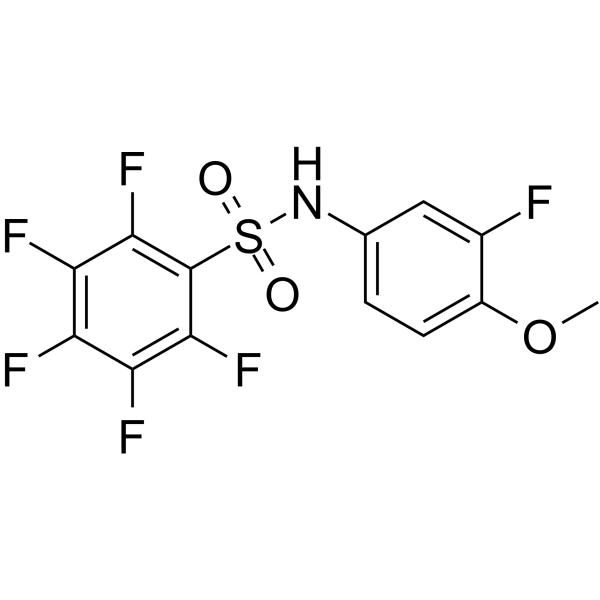
  • HY-13563

    T138067

    Microtubule/Tubulin Apoptosis Cancer
    Batabulin (T138067) is an antitumor agent, which binds covalently and selectively to a subset of the β-tubulin isotypes, thereby disrupting microtubule polymerization. Batabulin affects cell morphology and leads to cell-cycle arrest ultimately induces apoptotic cell death .
    Batabulin
  • HY-P99945

    ABBV-368

    Orexin Receptor (OX Receptor) Inflammation/Immunology Cancer
    Revdofilimab (ABBV-368) is a human IgG1 agonist monoclonal antibody against OX40. Among them, OX40 is a member of the TNF receptor superfamily expressed on activated and memory T cell subsets and T regulatory cells .
    Revdofilimab
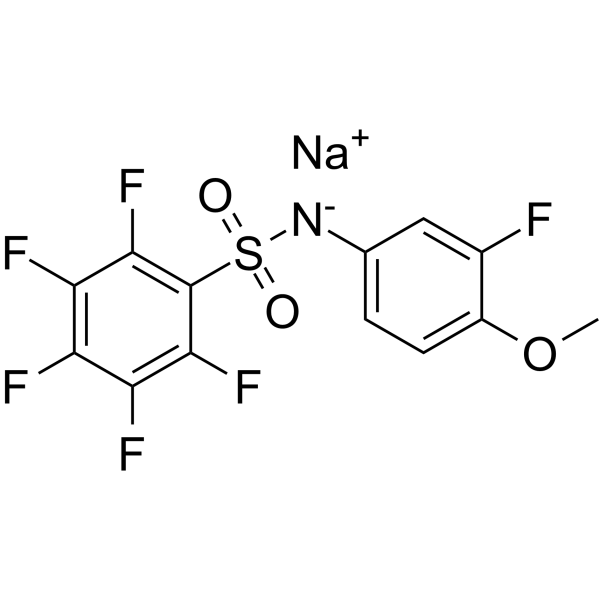
  • HY-13563A

    T138067 sodium

    Microtubule/Tubulin Apoptosis Cancer
    Batabulin sodium (T138067 sodium) is an antitumor agent, which binds covalently and selectively to a subset of the β-tubulin isotypes, thereby disrupting microtubule polymerization. Batabulin sodium affects cell morphology and leads to cell-cycle arrest ultimately induces apoptotic cell death .
    Batabulin sodium
  • HY-171034

    Interleukin Related TNF Receptor PAK Inflammation/Immunology
    PQA-18 is a unique PAK2 inhibitor (IC50: 10 nM). PQA-18 has immunosuppressing effects. PQA-18 suppresses IL2, IL4, IL6, and TNFα. PQA-18 inhibits the population of a subset of regulatory T cells and the immunoglobulin (Ig) production against T cell-dependent antigens as well as alleviates dermatitis in mice .
    PQA-18
  • HY-164002

    Btk Others
    PF-303 is a potent, oral inhibitor of Bruton's tyrosine kinase (BTK) (IC50=0.64 nM). The melamine portion of PF-303 forms a covalent bond with BTK's Cys481, which is reversible and exhibits a high selectivity compared to irreversible covalent BTK inhibitors. PF-303 can be used to model and study the effects of BTK inhibition on the mature immune system, including effects on B-cell subsets, antibody responses, and T-cell-mediated activation .
    PF-303
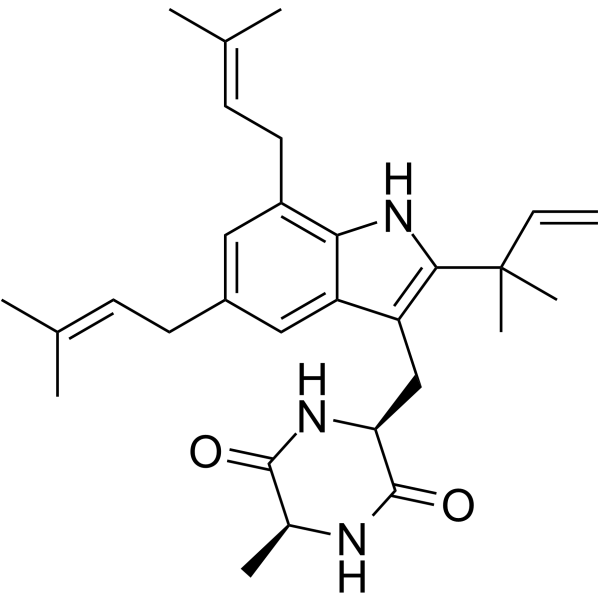
  • HY-N3796

    Echinuline

    NF-κB Inflammation/Immunology
    Echinulin (Echinuline) is a cyclic dipeptide carrying a triprenylated indole moiety. Echinulin contributes to the activation of T cell subsets, which leads to NF-κB activation.Echinulin exerts its immune roles by the NF-κB pathway.Echinulin has the potential to serve as a immunotherapeutic agent .
    Echinulin
  • HY-P992030

    Transmembrane Glycoprotein Inflammation/Immunology
    FB102 is an anti-human CD122 (IL-2Rβ) monoclonal antibody with selective activity. FB102 blocks the proliferation and activation of pathogenic NK cells and specific T cell subsets induced by IL-2 and IL-15, without affecting the proliferation of regulatory T cells. FB102 inhibits IL-2/IL-15-induced activation of CD4+ and CD8+ T cells in in vitro disease models. FB102 is applicable to research related to celiac disease .
    FB102
  • HY-P991530

    Biochemical Assay Reagents Inflammation/Immunology Cancer
    YH004 is an anti-CD137 agonistic monoclonal antibody, with immunostimulating and antineoplastic activities. YH004 activates CD137 expressed on a variety of leukocyte subsets including activated T lymphocytes and natural killer cells. YH004 enhances CD137-mediated signaling and induces cytotoxic T-lymphocyte (CTL) proliferation, cytokine production and promotes anti-tumor response mediated by CTL. YH004 induces NK-mediated tumor cell killing and suppresses the immunosuppressive activity of regulatory T cells. YH004 can be studied in anticancer research .
    YH004
  • HY-P992063

    Transmembrane Glycoprotein Inflammation/Immunology
    Anti-Mouse CD8α Antibody (YTS 105.18) is a non-depleting rat IgG2a monoclonal antibody. Anti-Mouse CD8α Antibody (YTS 105.18) binds to CD8α (epitope c) on mouse CD8 + T cells; when used in combination with a non-depleting anti-CD4 antibody, it does not deplete CD8 + T cells but instead promotes the induction of peripheral tolerance in this cell subset. Anti-Mouse CD8α Antibody (YTS 105.18) can be used in studies of graft rejection .
    Anti-Mouse CD8α Antibody (YTS 105.18)
  • HY-P992375

    Interleukin Related Inflammation/Immunology
    HuMax-IL15 is a human IgG1 monoclonal antibody against IL-15. HuMax-IL15 is applicable to the research of rheumatoid arthritis. The recommended isotype control is human IgG1 kappa (HY-P99001) .
    HuMax-IL15
  • HY-P992000

    Interleukin Related Inflammation/Immunology
    F8-IL-4 is an immune cytokine targeting IL-4. F8-IL-4 specifically delivers IL-4 to inflammatory sites via binding to targets expressed on neovascular vessels. F8-IL-4 alleviates collagen-induced arthritis in mice by regulating T cell subsets and macrophage polarization. When combined with Dexamethasone (HY-14648), F8-IL-4 produces a synergistic and long-lasting therapeutic effect, and prevents arthritis recurrence after drug withdrawal by maintaining anti-inflammatory cell phenotypes and cytokine profiles. F8-IL-4 can be used in the research of collagen-induced arthritis .
    F8-IL-4

Inquiry Online

Your information is safe with us. * Required Fields.

Salutation


Country or Region *

Applicant Name *


Organization Name *

Department *


Email Address *


Product Name *

Cat. No.


Requested quantity *

Phone Number *


Remarks

Inquiry Online

Inquiry Information

Product Name:
Cat. No.:
Quantity:
MCE Japan Authorized Agent:

