1. Search Result
Search Result
Results for "

Thymol

" in MedChemExpress (MCE) Product Catalog:

19

Inhibitors & Agonists

3

Fluorescent Dyes

1

Biochemical Assay Reagents

13

Natural
Products

1

Isotope-Labeled Compounds

1

Oligonucleotides

Cat. No. Product Name Target Research Areas Chemical Structure
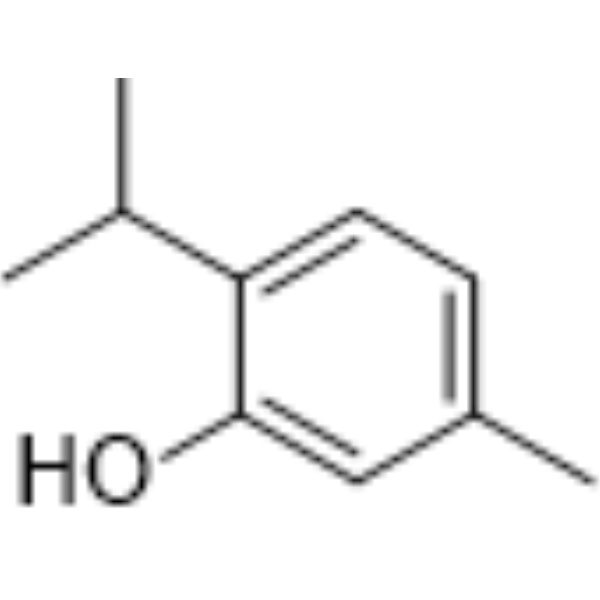
  • HY-N6810
    Thymol
    4 Publications Verification

    Environmental Pollutants Apoptosis Bacterial Fungal Infection Inflammation/Immunology Cancer
    Thymol is a TRPA1 agonist. Thymol induces cancer cell apoptosis. Thymol is the main monoterpene phenol occurring in essential oils isolated from plants belonging to the Lamiaceae family, and other plants such as those belonging to the Verbenaceae, Scrophulariaceae, Ranunculaceae and Apiaceae families. Thymol has antioxidant, anti-inflammatory, antibacterial and antifungal effects .
    Thymol
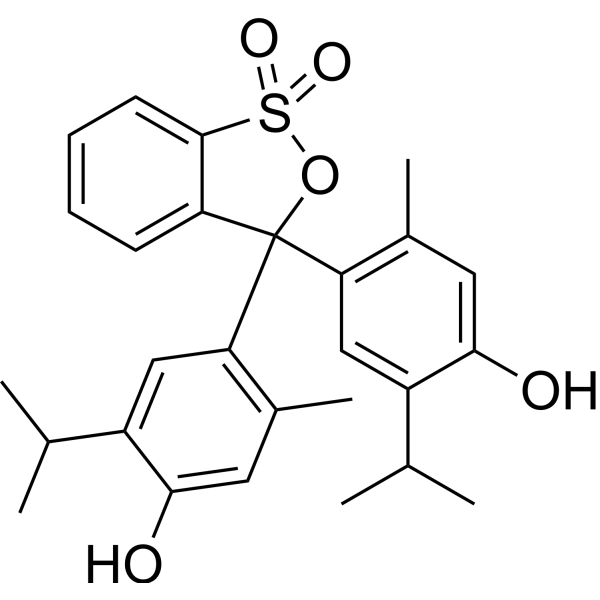
  • HY-D0219

    Thymolsulphonephthalein

    Fluorescent Dye Others
    Thymol blue is a reversible pH indicator that responds to the pH of the solution through structural changes of protonation and deprotonation. Thymol blue is red (HI - form) under acidic conditions and blue (I 2- form) under alkaline conditions. Quantitative detection is achieved through the absorption peak shift (435 nm/596 nm) of the UV-visible spectrum. Thymol blue selectively responds to pH changes, changing from red to yellow at pH 1.2-2.8 and from yellow to blue at pH 8.0-9.6. Thymol blue can be fixed in a silica gel matrix through sol-gel technology to form a solid-state sensor for in-situ pH measurement in the marine environment and acid-base monitoring in the biomedical field[1][2].
    Thymol blue
  • HY-N6810R

    Reference Standards Bacterial Fungal Apoptosis Infection Inflammation/Immunology Cancer
    Thymol (Standard) is the analytical standard of Thymol. This product is intended for research and analytical applications. Thymol is a TRPA1 agonist. Thymol induces cancer cell apoptosis. Thymol is the main monoterpene phenol occurring in essential oils isolated from plants belonging to the Lamiaceae family, and other plants such as those belonging to the Verbenaceae, Scrophulariaceae, Ranunculaceae and Apiaceae families. Thymol has antioxidant, anti-inflammatory, antibacterial and antifungal effects .
    Thymol (Standard)
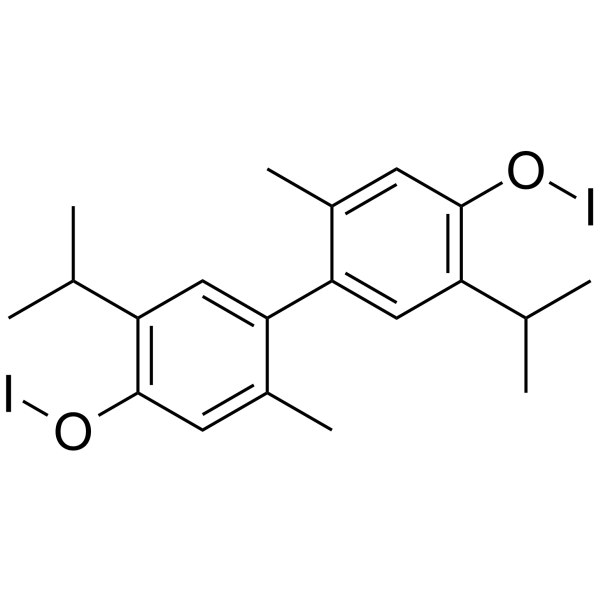
  • HY-B1796

    Fungal Infection
    Thymol iodide is an iodine derivative of thymol, serving as a mild preservative and fungicide. Thymol iodide is commonly used as an iodine source in the intensive culture of rotifers. Thymol iodide effectively enables Brachionus "Cayman" rotifers to reach iodine levels similar to those of copepods, and maintains a high iodine content during storage. After 28 days of intrapleural injection of Thymol iodide, it does not enhance the efficacy of inducing pleurodesis in rabbits, nor does it improve the efficacy of talc slurry pleurodesis .
    Thymol iodide
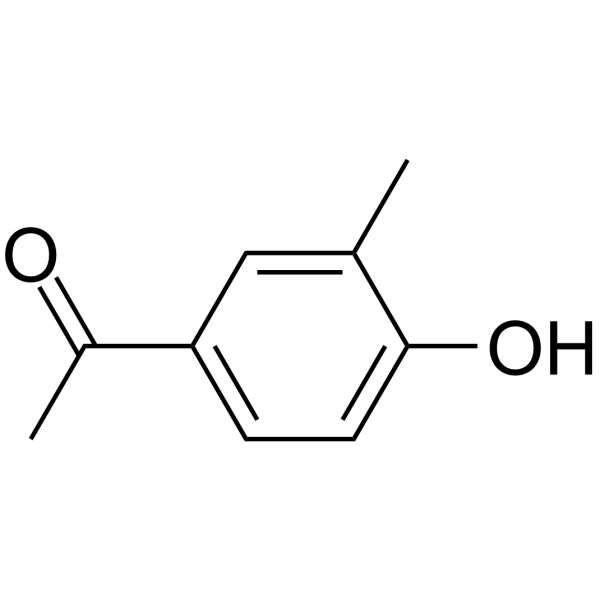
  • HY-W001663

    Bacterial Infection
    4'-Hydroxy-3'-methylacetophenone is a phenolic volatile compound. 4'-Hydroxy-3'-methylacetophenone can be isolated from Hawaiian green coffee beans (Coffea Arabica L.). 4'-Hydroxy-3'-methylacetophenone is believed to possess potent antioxidant activity similar to that of other phenolic volatile compounds, Thymol (HY-N6810) and Eugenol (HY-N0337). 4'-Hydroxy-3'-methylacetophenone also can be used to synthesize heterocyclic compounds which have antimycobacterial activity .
    4'-Hydroxy-3'-methylacetophenone
  • HY-D0265

    Environmental Pollutants Fluorescent Dye Others
    Thymolphthalein is an electrochemically active dye due to the presence of thymol fragments. Thymolphthalein is a Phthalein dye used as an acid-base indicator. It is colourless in acid pH and is blue in basic pH .
    Thymolphthalein
  • HY-D0219A

    Fluorescent Dye Others
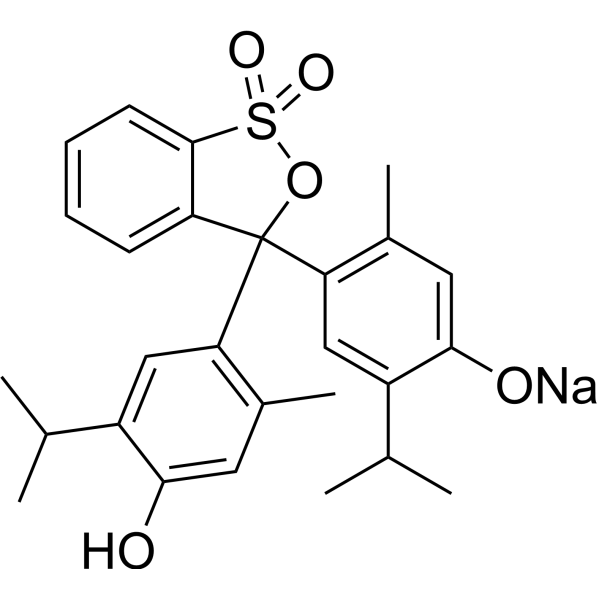
    Thymol Blue sodium is an acid-base indicator used to indicate changes in pH. Thymol Blue sodium fades from red to yellow at pH 1.2 to 2.8 and from yellow to blue at pH 8.0 to 9.6. Quantitative detection is achieved through the absorption peak shift (435 nm/596 nm) of the UV-visible spectrum. Thymol blue sodium can be fixed in a silica gel matrix through sol-gel technology to form a solid-state sensor for in-situ pH measurement in the marine environment and acid-base monitoring in the biomedical field .
    Thymol Blue sodium
  • HY-N10911

    Others Others
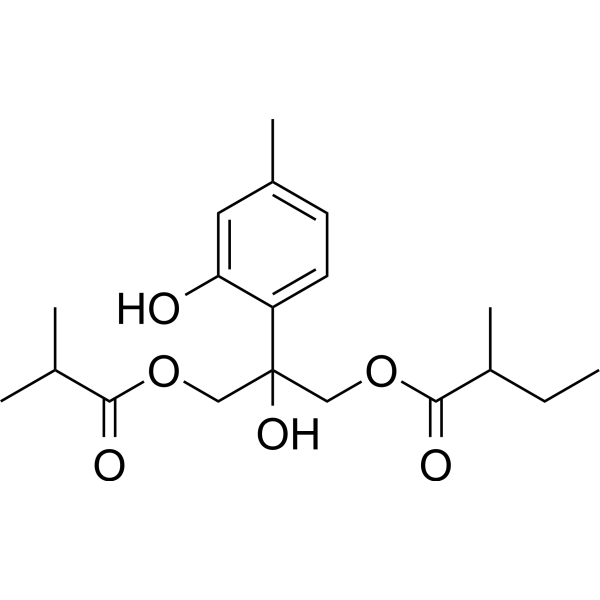
    8-Hydroxy9,10-diisobutyryloxy-thymol is a potent terpenoid that can be found in Inula sericophylla .
    8-Hydroxy-9-isobutyryloxy-10-(2-methylbutanoyl)thymol
  • HY-N10925

    Others Others
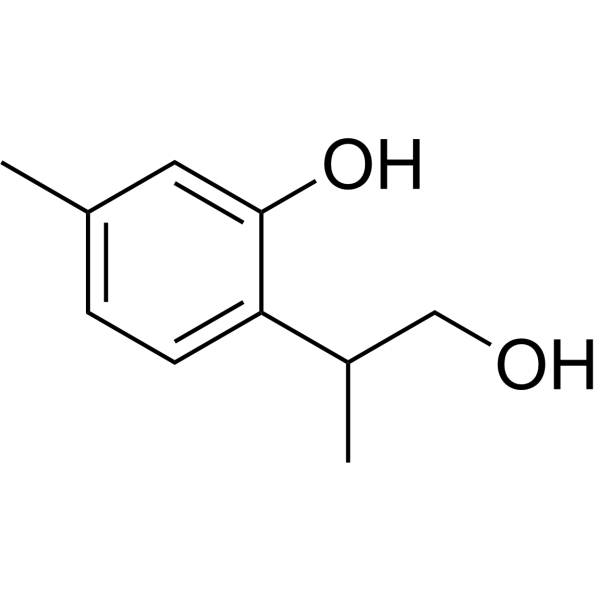
    9-Hydroxythymol is a thymol derivative. 9-Hydroxythymol can be isolated from Eupatorium fortunei .
    9-Hydroxythymol
  • HY-N6844

    Others Cancer
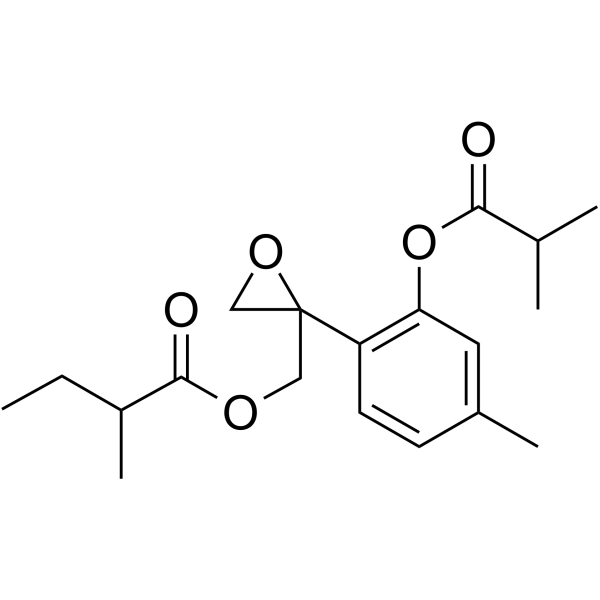
    8,9-Epoxy-3-isobutyryloxy-10-(2-methylbutanoyl)thymol is a chemical composition of essential oils from Telekia speciosa. 8,9-Epoxy-3-isobutyryloxy-10-(2-methylbutanoyl)thymol also shows marked antipro-liferative activity against human cancer cell lines in vitro .
    8,​9-​Epoxy-​3-​isobutyryloxy-​10-​(2-​methylbutanoyl)​thymol
  • HY-N6810S

    Bacterial Cancer
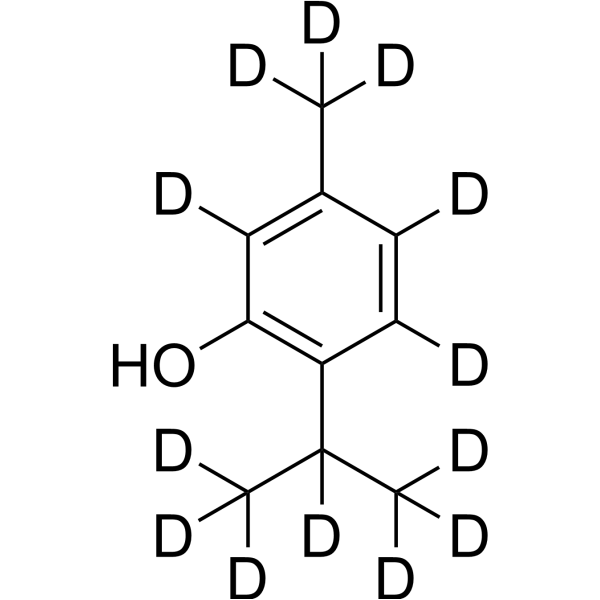
    Thymol-d13 is the deuterium labeled Thymol . Thymol is the main monoterpene phenol occurring in essential oils isolated from plants belonging to the Lamiaceae family, and other plants such as those belonging to the Verbenaceae, Scrophulariaceae, Ranunculaceae and Apiaceae families. Thymol has antioxidant, anti-inflammatory, antibacterial and antifungal effects .
    Thymol-d13
  • HY-163005

    Glycosidase Metabolic Disease
    α-Glucosidase-IN-43 (compound AS14) is an α-glucosidase inhibitor (IC50: 4.32 μM) with acute hypoglycemic activity. α-Glucosidase-IN-43 exhibits safety and in vivo efficacy, is nontoxic to normal mouse fibroblasts, and is able to rescue streptozotocin (HY-13753)-induced diabetic rats. α-Glucosidase-IN-43 can be used to study postprandial hyperglycemia in diabetic patients .
    α-Glucosidase-IN-43
  • HY-N9835

    Drug Derivative Infection Cancer
    Thymol isobutyrate is a thymol derivative that can be naturally extracted from the essential oil of the roots and aerial parts (leaves, stems, and flowers) of Carpesium cernuum L. This plant's essential oil has antibacterial and cytotoxic activity and can be used in antibacterial and antitumor research .
    Thymol isobutyrate
  • HY-W001663R

    Reference Standards Bacterial Infection
    4'-Hydroxy-3'-methylacetophenone (Standard) is an analytical standard of 4'-Hydroxy-3'-methylacetophenone (HY-W001663). This product is intended for research and analytical applications. 4'-Hydroxy-3'-methylacetophenone is a phenolic volatile compound. 4'-Hydroxy-3'-methylacetophenone can be isolated from Hawaiian green coffee beans (Coffea Arabica L.). 4'-Hydroxy-3'-methylacetophenone is believed to possess potent antioxidant activity similar to that of other phenolic volatile compounds, Thymol (HY-N6810) and Eugenol (HY-N0337). 4'-Hydroxy-3'-methylacetophenone also can be used to synthesize heterocyclic compounds which have antimycobacterial activity .
    4'-Hydroxy-3'-methylacetophenone (Standard)
  • HY-N18678

    Bacterial Infection Inflammation/Immunology Cancer
    Origanum vulgare extract is highly regarded for its rich content of various bioactive compounds, including carvacrol, thymol, rosmarinic acid, and other phenolic compounds, which have antioxidant, antibacterial, anti-inflammatory, and anticancer effects.
    Origanum vulgare extract
  • HY-N17408

    Others Others
    (E)-2-(2-Hydroxy-4-methylphenyl)-prop-1-en-1-yl acetate is a natural product. (E)-2-(2-Hydroxy-4-methylphenyl)-prop-1-en-1-yl acetate can be isolated in the aerial parts of Eupatorium fortunei .
    (E)-2-(2-Hydroxy-4-methylpheny1)-prop-l-en-1-yl acetate
  • HY-N9836

    Drug Derivative Others
    8,9-Dehydrothymol isobutyrate is a thymol (HY-N6810) derivative that can be naturally extracted from the essential oil of the trunk bark of Tetraclinis articulata (Vahl) Mast. This plant essential oil exhibits certain cytotoxicity and can be used as a research subject in the fields of natural product chemistry and the active components of plant essential oils .
    8,9-Dehydrothymol isobutyrate
  • HY-N17588

    Others Cancer
    9-O-Angeloyl-8-methoxythymol is a thymol derivative and cytotoxin, with a IC50 value of 13.1 μg/mL against human myeloid leukemia cells, a IC50 value of 31.8 μg/mL against human lymphoblastic leukemia cells, and a IC50 >40 μg/mL against colon cancer and lymphoma cells. 9-O-Angeloyl-8-methoxythymol is applicable to leukemia-related research .
    9-O-Angeloyl-8-methoxythymol
  • HY-N13838

    Bacterial Infection
    8,9-Dehydro-7,9-diisobutyryloxythymol is a Thymol (HY-N6810) derivative, as well as an antibacterial agent. 8,9-Dehydro-7,9-diisobutyryloxythymol can be found in the aerial parts of Ageratina adenophora, with selective activity against Gram-positive bacterial strains including Bacillus cereus. 8,9-Dehydro-7,9-diisobutyryloxythymol does not exhibit detectable in vitro cytotoxic activity against human cancer cell lines. 8,9-Dehydro-7,9-diisobutyryloxythymol can be used for the research of bacterial infection .
    8,9-Dehydro-7,9-diisobutyryloxythymol

Inquiry Online

Your information is safe with us. * Required Fields.

Salutation


Country or Region *

Applicant Name *


Organization Name *

Department *


Email Address *


Product Name *

Cat. No.


Requested quantity *

Phone Number *


Remarks

Inquiry Online

Inquiry Information

Product Name:
Cat. No.:
Quantity:
MCE Japan Authorized Agent:

