
21 Results for "

Transmembrane Glycoprotein

" in MedChemExpress (MCE) Product Catalog:
Products (21)

21 Results for "Transmembrane Glycoprotein" in MCE Product Catalog:

28
28 Publications Verification
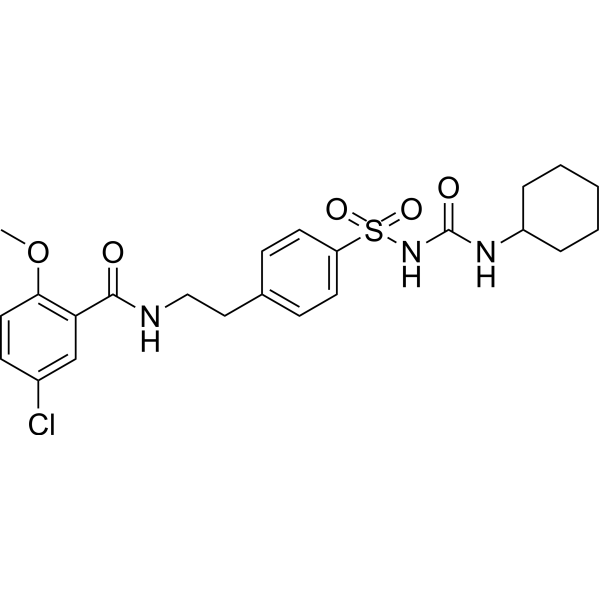
Cat. No.: HY-15206
CAS No.: 10238-21-8
Purity:  99.94%
Synonyms: Glyburide
Glibenclamide (Glyburide) is an orally active ATP-sensitive K + channel (KATP) inhibitor and can be used for the research of diabetes and obesity . Glibenclamide inhibits P-glycoprotein. Glibenclamide directly binds and blocks the SUR1 subunits of KATP and inhibits the cystic fibrosis transmembrane conductance regulator protein (CFTR) . Glibenclamide interferes with mitochondrial bioenergetics by inducing changes on membrane ion permeability . Glibenclamide can induce autophagy .
loading...
    loading...
3
3 Cited Publications
Cat. No.: HY-P75951
Purity:  ≥ 95%, as determined by reducing SDS-PAGE.
Synonyms: Transmembrane Glycoprotein NMB; GPNMB; HGFIN; NMB
Species:  
Source:  
loading...
    loading...
2
2 Cited Publications
Cat. No.: HY-P77116
Purity:  ≥ 95%, as determined by reducing SDS-PAGE.
Synonyms: Transmembrane Glycoprotein NMB; GPNMB; HGFIN; NMB
Species:  
Source:  
loading...
    loading...
1
1 Cited Publications
Cat. No.: HY-153084A
Target:  

mRNA CD19

Research Areas:  

Cancer

CD19 CAR mRNA (Human) expresses CAR protein that specifically targets human CD19. CD19 CAR mRNA can trigger transitory expression of CAR, allowing T cells to be targeted without permanent genetic modification. CD19 CAR mRNA targets CD19 which is a transmembrane glycoprotein primarily expressed on B lymphocytes and is important in B cell activation. CD19 CAR mRNA can be studied in cancer research such as lymphoma and leukemia .
loading...
    loading...
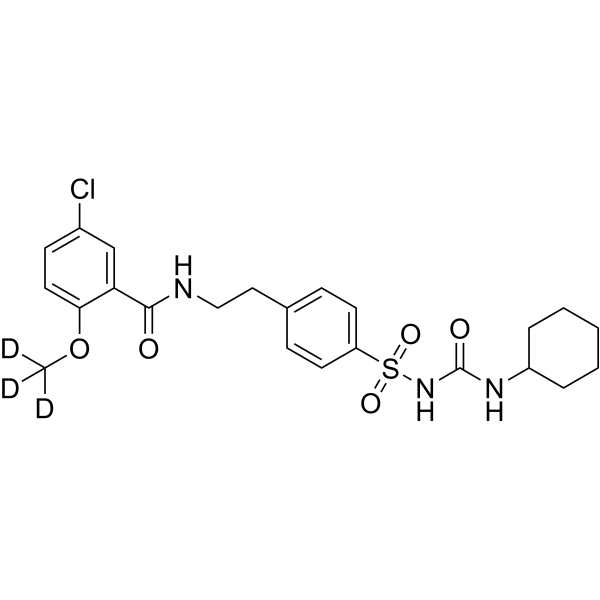
Cat. No.: HY-15206S1
CAS No.: 1219803-02-7
Purity:  99.24%
Synonyms: Glyburide-d3
Glyburide-d3 is the deuterium labeled Glibenclamide. Glibenclamide (Glyburide) is an orally active ATP-sensitive K+ channel (KATP) inhibitor and can be used for the research of diabetes and obesity[1]. Glibenclamide inhibits P-glycoprotein. Glibenclamide directly binds and blocks the SUR1 subunits of KATP and inhibits the cystic fibrosis transmembrane conductance regulator protein (CFTR)[3]. Glibenclamide interferes with mitochondrial bioenergetics by inducing changes on membrane ion permeability[4]. Glibenclamide can induce autophagy[5].
loading...
    loading...
Cat. No.: HY-P2508
CAS No.: 149205-73-2
Target:  

Mucin

Research Areas:  

Cancer

MUC1, mucin core is the region of the MUC1 mucin core. MUC1 is a type I transmembrane glycoprotein, and is overexpressed and aberrantly glycosylated in carcinoma cells. MUC1, mucin core protein binds to domain 1 of ICAM-1 .
loading...
    loading...
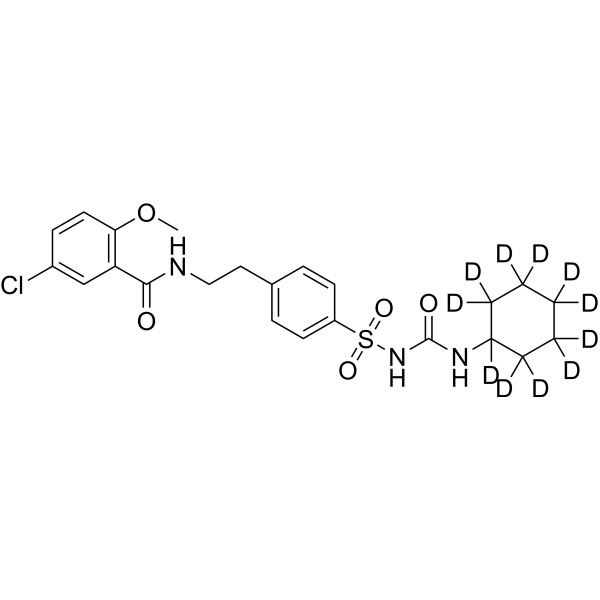
Cat. No.: HY-15206S
CAS No.: 1189985-02-1
Glyburide-d11 is the deuterium labeled Glibenclamide. Glibenclamide (Glyburide) is an orally active ATP-sensitive K+ channel (KATP) inhibitor and can be used for the research of diabetes and obesity . Glibenclamide inhibits P-glycoprotein. Glibenclamide directly binds and blocks the SUR1 subunits of KATP and inhibits the cystic fibrosis transmembrane conductance regulator protein (CFTR) . Glibenclamide interferes with mitochondrial bioenergetics by inducing changes on membrane ion permeability . Glibenclamide can induce autophagy .
loading...
    loading...
Cat. No.: HY-P991646
Synonyms: heMab

Research Areas:  

Cancer

ING-1 (heMab) is a high-affinity humanized monoclonal antibody against epithelial cell adhesion molecule (Ep-CAM). ING-1 is a transmembrane glycoprotein mediating Ca 2+. ING-1 binds to Ep-CAM on tumor cells and exhibits potent in vitro activity, targeting and inhibiting tumor growth and metastasis in mouse cancer models. ING-1 is useful in the research of breast, colorectal, and lung cancers, among other cancers .
loading...
    loading...
Cat. No.: HY-P11033
Research Areas:  

Cancer

Pep2 Peptide (also known as scavenger receptor B2) is a peptide ligand for the transmembrane glycoprotein CD36. Pep2 Peptide selectively binds to CD36 over HAS, IgG and CD44. Pep2 Peptide can be studied in research on enhancing delivery of anticancer agent .
loading...
    loading...
Cat. No.: HY-15206R
CAS No.: 10238-21-8
Synonyms: Glyburide (Standard)
Glibenclamide (Standard) is the analytical standard of Glibenclamide. This product is intended for research and analytical applications. Glibenclamide (Glyburide) is an orally active ATP-sensitive K + channel (KATP) inhibitor and can be used for the research of diabetes and obesity . Glibenclamide inhibits P-glycoprotein. Glibenclamide directly binds and blocks the SUR1 subunits of KATP and inhibits the cystic fibrosis transmembrane conductance regulator protein (CFTR) . Glibenclamide interferes with mitochondrial bioenergetics by inducing changes on membrane ion permeability . Glibenclamide can induce autophagy .
loading...
    loading...
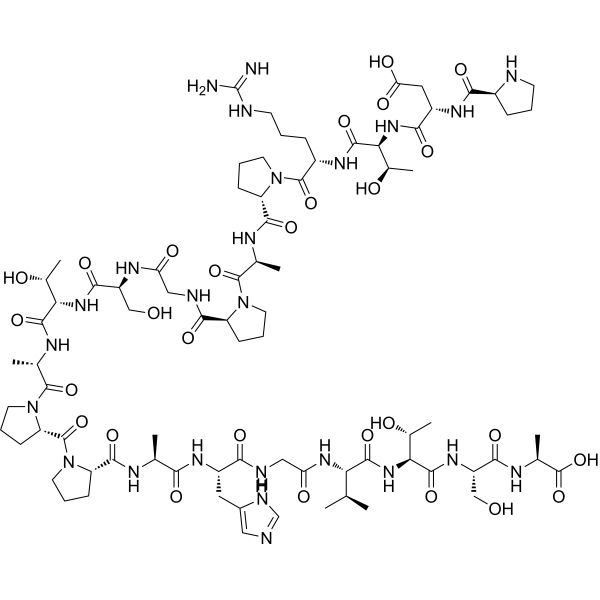
Cat. No.: HY-P5472
CAS No.: 129437-45-2
Research Areas:  

Others

Tumour-associated MUC1 epitope is a biological active peptide. (This sequence is the hallmark of MUC1 mucin. MUC1 is a highly glycosylated type I transmembrane glycoprotein with a unique extracellular domain consisting of a variable number of tandem repeats (VNTR) of this 20 amino acid peptide. It is overexpressed on the cell surface of many human adenocarcinomas and hematological malignancies, including multiple myeloma and B-cell lymphoma, making MUC1 broadly applicable target for immunotherapeutic strategies.)
loading...
    loading...
Cat. No.: HY-176193
Target:  

P-glycoprotein

Research Areas:  

Cancer

P-gp modulator-7 (Compound 9e) is a P-glycoprotein (P-gp) inhibitor. P-gp modulator-7 occupies the channel entrance of P-gp with a unique T-shaped configuration, hindering the peristaltic extrusion mechanism of transmembrane domains TM12 and TM9, thereby inhibiting P-gp from pumping drugs out of cells and reversing the multidrug resistance (MDR) of tumor cells. P-gp modulator-7 is promising for research of cancers .
loading...
    loading...
Cat. No.: HY-15206S2
Synonyms: Glyburide-13C6
Glibenclamide- 13C6 (Glyburide- 13C6) is 13C labeled Glibenclamide. Glibenclamide (Glyburide) is an orally active ATP-sensitive K + channel (KATP) inhibitor and can be used for the research of diabetes and obesity . Glibenclamide inhibits P-glycoprotein. Glibenclamide directly binds and blocks the SUR1 subunits of KATP and inhibits the cystic fibrosis transmembrane conductance regulator protein (CFTR) . Glibenclamide interferes with mitochondrial bioenergetics by inducing changes on membrane ion permeability . Glibenclamide can induce autophagy .
loading...
    loading...
Cat. No.: HY-P810373
Synonyms: Glycoprotein (Transmembrane) nmb, Glycoprotein nmb, Glycoprotein nmb like protein, Gpnmb, GPNMB_HUMAN, HGFIN, NMB, Osteoactivin, Transmembrane Glycoprotein, Transmembrane Glycoprotein HGFIN

Host:  

Rabbit

Application:  

WB, IHC-P, ICC/IF, FC

Reactivity:  

Human, Mouse, Rat

loading...
    loading...
Cat. No.: HY-P70836
Purity:  ≥ 95%, as determined by reducing SDS-PAGE.
Synonyms: Transmembrane Glycoprotein NMB; Transmembrane Glycoprotein HGFIN; GPNMB; HGFIN; NMB
Species:  
Source:  
loading...
    loading...
Cat. No.: HY-P992330
Synonyms: KB312

Research Areas:  

Inflammation/Immunology

CBT004 (KB312) is a human IgG1κ type monoclonal antibody against CD83. CD83 is a type I transmembrane glycoprotein and is a highly expressed marker on the surface of mature DCs. It can also be induced to be expressed on activated B cells, some activated T cells, and activated monocytes.
loading...
    loading...
Cat. No.: HY-P75950
Purity:  ≥ 95%, as determined by reducing SDS-PAGE.
Synonyms: Transmembrane Glycoprotein NMB; GPNMB; HGFIN; NMB
Species:  
Source:  
loading...
    loading...
Cat. No.: HY-184830
CAS No.: 77182-66-2
Isosilychristin is a P-glycoprotein inhibitor with an IC50 of 25.9 μM. Isosilychristin downregulates the expression of transmembrane efflux pumps, exerts intracellular antioxidant effects, and inhibits NO production in macrophages. Isosilychristin regulates cell cycle progression, and exerts weak antiproliferative and colony formation inhibitory effects in prostate cancer cells. Isosilychristin reduces bacterial intercellular communication and reverses the drug resistance of Staphylococcus aureus. Isosilychristin can be used in studies related to prostate cancer, inflammation and bacterial infections .
loading...
    loading...
Cat. No.: HY-L016
1,673 compounds

Protein tyrosine kinases (PTKs) are key signaling molecules and important drug targets. Two classes of PTKs are present in cells: the transmembrane receptor PTKs (RTKs) and the nonreceptor PTKs. The RTK family includes the receptors for insulin and for many growth factors, such as EGFR, FGFR, PDGFR, VEGFR, and NGFR. RTKs are transmembrane glycoproteins that are activated by the binding of their ligands, and they transduce the extracellular signal to the cytoplasm by phosphorylating tyrosine residues on the receptors themselves (autophosphorylation) and on downstream signaling proteins. Their principal functions of PTKs involve the regulation of multicellular aspects of the organism. Cell to cell signals concerning growth, differentiation, adhesion, motility, and death are frequently transmitted through tyrosine kinases. In humans, tyrosine kinases have been demonstrated to play significant roles in the development of many disease states, including diabetes and cancers.

MCE designs a unique collection of 1,673 compounds that act as a useful tool for PTKs-related drug screening and disease research.

Cat. No.: HY-P87109
Synonyms: Transmembrane emp24 domain-containing protein 9 GMP25 Glycoprotein 25L2 p24 family protein alpha-2 (p24alpha2) p25 TMED9 GP25L2

Host:  

Mouse

Application:  

WB, IHC-P

Reactivity:  

Human, Mouse, Rat

loading...
    loading...

