


29 Results for "

Urothelial cells

" in MedChemExpress (MCE) Product Catalog:
Products (29)

29 Results for "Urothelial cells" in MCE Product Catalog:

4
4 Cited Publications
Cat. No.: HY-101126
CAS No.: 1361951-15-6
Purity:  99.96%
Synonyms: TP-3654
Research Areas:  

Cancer

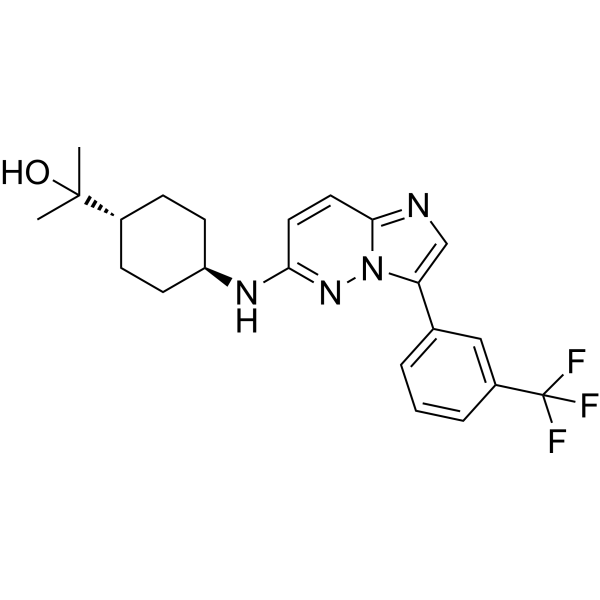
Nuvisertib (TP-3654) is an orally active second-generation pan-PIM kinase inhibitor with Ki values of 5 nM, 239 nM, and 42 nM against PIM-1, PIM-2, and PIM-3, respectively. Nuvisertib inhibits JAK-independent inflammatory and survival signaling pathways, reduces the production of proinflammatory cytokines, restores apoptotic sensitivity, inhibits mTORC1, MYC, and TGF-β signaling pathways, and decreases the expression of fibrosis markers. Nuvisertib selectively impairs the transport function of ABCG2, resensitizes multidrug-resistant cancer cells to cytotoxic drugs, and overcomes JAK2 inhibitor resistance. Nuvisertib can be used in research related to myelofibrosis, renal cell carcinoma, multidrug-resistant cancer, advanced solid tumors, urothelial carcinoma, and prostate adenocarcinoma .
loading...
    loading...
3
3 Cited Publications
Cat. No.: HY-164992
Synonyms: MRG002; Trastuzumab MMAE
Trastuzumab vedotin (MRG002; Trastuzumab MMAE) is an antibody-drug conjugate and cytotoxin targeting HER2, with a Kd of 7.50E-11 M for human HER2. After binding to HER2, Trastuzumab vedotin undergoes internalization and lysosomal trafficking, delivering a cytotoxic payload to HER2-expressing cells and inducing tumor regression in in vivo xenograft models with HER2-expressing tumors. The anti-tumor activity of Trastuzumab vedotin is enhanced when used in combination with anti-PD-1 antibodies, and it exhibits preclinical anti-tumor activity in drug-resistant breast cancer, gastric cancer, and urothelial carcinoma PDX models. Trastuzumab vedotin has low antibody-dependent cellular cytotoxicity activity and can be used in studies related to HER2-positive breast cancer, HER2-positive gastric cancer, and unresectable locally advanced or metastatic HER2-positive urothelial carcinoma .
loading...
    loading...
3
3 Cited Publications
Cat. No.: HY-P99052
CAS No.: 1858168-59-8
Synonyms: BGB-A317
Target:  

PD-1/PD-L1

Research Areas:  

Inflammation/Immunology Cancer

Tislelizumab is a monoclonal antibody that specifically binds to programmed cell death receptor 1 (PD-1), blocking its interaction with programmed death ligand 1 (PD-L1) and programmed death ligand 2 (PD-L2). Tislelizumab can reactivate immune cells such as T lymphocytes and enhance anti-tumor activity. Tislelizumab can be used for the research of a variety of tumors including typical Hodgkin's lymphoma, urothelial carcinoma, non-small cell lung cancer and hepatocellular carcinoma .
loading...
    loading...
Cat. No.: HY-164702
Synonyms: Izalontamab Brengitecan
Research Areas:  

Cancer

BL-B01D1 (Izalontamab Brengitecan) is a bispecific antibody-drug conjugate (ADC) targeting EGFR and HER3, formed by conjugating the EGFR/HER3 bispecific antibody Izalontamab (HY-P99676) to a novel TOP-I inhibitor payload Deruxtecan 2-hydroxypropanamide (HY-153891) via a cleavable linker (Mc-Gly-Gly-Phe-Gly). BL-B01D1 binds to EGFR and HER3 on the surface of tumor cells, mediates endocytosis and releases the payload, inhibits topoisomerase I, blocks DNA replication and RNA synthesis, and disrupts DNA structure. BL-B01D1 induces cell cycle S-phase arrest, apoptosis, antibody-dependent cell-mediated cytotoxicity, and tumor cell death. BL-B01D1 can be used for cancer research .
loading...
    loading...
Cat. No.: HY-116291
CAS No.: 27536-56-7
Purity:  ≥98.0%
Synonyms: 4αPDD
Target:  

TRP Channel CHIKV

Research Areas:  

Infection Inflammation/Immunology

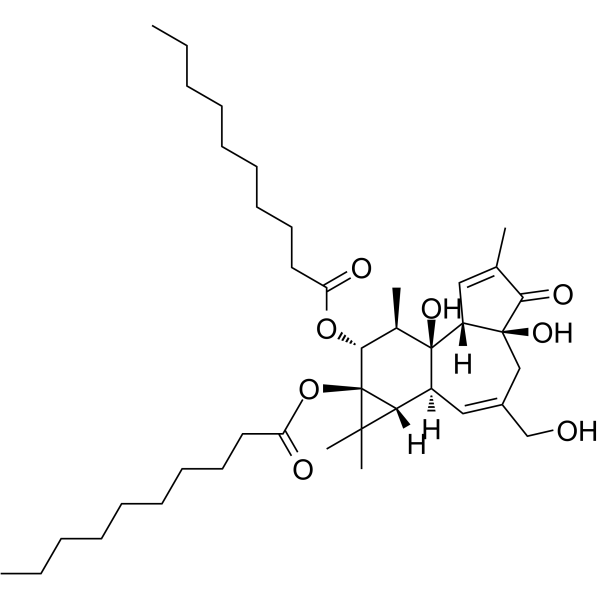
4α-Phorbol 12,13-didecanoate (4αPDD) is a transient receptor potential vanilloid 4 (TRPV4) agonist. 4α-Phorbol 12,13-didecanoate can promote Ca 2+ influx, induce ATP release and function as an osmoreceptor. 4α-Phorbol 12,13-didecanoate can inhibit water intake and increase maximal micturition pressure in rats. 4α-Phorbol 12,13-didecanoate can be used for the researches of inflammation and infection, such as chikungunya virus (CHIKV) .
loading...
    loading...
Cat. No.: HY-W755252
CAS No.: 3817-11-6
Synonyms: BBN
Research Areas:  

Cancer

N-Butyl-N-(4-hydroxybutyl)nitrosamine is a potent mutagen that can cause high-level of mutagenesis specifically in the epithelial cells (urothelial) of the urinary bladder. N-Butyl-N-(4-hydroxybutyl)nitrosamine is used to induce bladder cancer in rodents .
loading...
    loading...
Cat. No.: HY-P99899
CAS No.: 2052591-32-7
Synonyms: PR-1498487

Target:  

ADC Antibodies

Research Areas:  

Cancer

Samrotamab (PR-1498487) is a humanized IgG1-κ chimeric monoclonal antibody targeting LRRC15, with a Kd of 5.42 nM for human LRRC15. Samrotamab can be used to synthesize antibody-drug conjugates (ADC). Samrotamab disrupts the LRRC15-SCG5 signaling module, binds to a membrane-proximal conformational epitope within the C-terminal leucine-rich repeat region of LRRC15, and binds to the lateral edge of the LRR solenoid while leaving the canonical concave β-sheet surface fully exposed. Samrotamab reduces the viability of bladder cancer cells, inhibits clonogenic growth, impairs cell migration, and compromises cell invasion. Samrotamab induces compensatory upregulation of LRRC15 transcripts while suppressing the expression of SCG5 mRNA. Samrotamab is applicable to research related to urothelial carcinoma, sarcoma, osteosarcoma, and undifferentiated pleomorphic sarcoma .
loading...
    loading...
Cat. No.: HY-P99594
CAS No.: 2305043-30-3
Synonyms: ZKAB001; STI-1014; STI-A1014

Target:  

PD-1/PD-L1

Research Areas:  

Cancer

Socazolimab (ZKAB001) is an anti-PD-L1 monoclonal antibody. Socazolimab has lasting safety and efficacy in the treatment of recurrent or metastatic cervical cancer. Socazolimab also has potential applications in small cell lung cancer, esophageal squamous cell carcinoma (ESCC), advanced urothelial carcinoma and osteosarcoma .
loading...
    loading...
Cat. No.: HY-P991106
Synonyms: LY-3076226 antibody

Target:  

FGFR ADC Antibodies

Research Areas:  

Cancer

IMC-D11 (LY-3076226 antibody) is an anti-FGFR3 IgG1 monoclonal antibody with an EC50 of approximately 0.1 nM against hFGFR3b and hFGFR3c. IMC-D11 inhibits the growth of FGFR3-dependent lung adenocarcinoma in mouse models and shows no effect on tumors that do not express FGFR3. IMC-D11 can serve as an ADC Antibody for ADC synthesis, such as LY3076226. IMC-D11 is applicable to research related to urothelial carcinoma, multiple myeloma, lung adenocarcinoma, as well as advanced or metastatic cancers .
loading...
    loading...
Cat. No.: HY-W013078
CAS No.: 998-07-2
Synonyms: DMPE
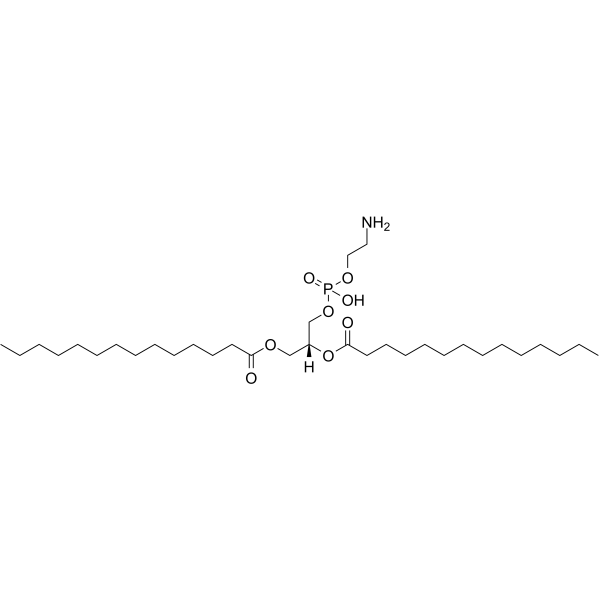
1,2-Dimyristoyl-sn-glycero-3-phosphoethanolamine (DMPE) is a zwitterionic saturated phosphatidylethanolamine bearing two myristoyl (C14:0) chains, and serves as a model membrane component, a neutral lipid component of lipid nanoparticles, and a cocoa butter crystallization nucleating agent. 1,2-Dimyristoyl-sn-glycero-3-phosphoethanolamine is used in nucleic acid delivery, construction of artificial cell membrane models, and research on urothelial carcinoma .
loading...
    loading...
Cat. No.: HY-176774
CAS No.: 3093296-36-4
Research Areas:  

Cancer

L07-2 is a TLR7/8 agonist. L07-2 is a linker-toxin building block that can be used to synthesize immunostimulatory antibody conjugates (ISACs) for cancer research. L07-2 can be used to studies related to tumors such as non-small cell lung cancer .
loading...
    loading...
Cat. No.: HY-117738
CAS No.: 143651-45-0
Purity:  95.79%
Benarthin is an orally active Pyroglutamyl peptidase inhibitor, THY1 inhibitor (with a Kd value of 5.13e-08 M) and competitive PGP-1 inhibitor (Ki = 1.2 µM). Benarthin is isolated from the culture broth of Streptomyces xanthophaeus MJ244-SF1. Benarthin disrupts the THY1-SFRP1 interaction, inhibits the activation of the GSK3α/β-β-catenin pathway, and reduces the upregulation of FASLG. Benarthin attenuates urothelial anoikis and reduces cell Apoptosis. Benarthin possesses iron-chelating activity. Benarthin maintains urothelial barrier integrity and blocks the pathological cascade of renal interstitial fibroblasts induced by HAP stimulation. Benarthin can be used in studies related to kidney stones .
loading...
    loading...
Cat. No.: HY-174981
Research Areas:  

Cancer

LC-MF-4 is an orally active VHL-recruiting FGFR3 PROTAC degrader and hERG potassium channel inhibitor. LC-MF-4 has an IC50 of 16.6 nM against human FGFR3, exhibits inhibitory activity against hERG potassium channels, suppresses the expression of genes related to mitochondrial biogenesis and ATP synthesis, inhibits cancer cell proliferation, and shows significant antitumor activity in mice. LC-MF-4 can be used in the research of bladder cancer, urothelial carcinoma, FGFR3 Y373C mutant cancers, and FGFR3-TACC3 fusion-positive cancers .
loading...
    loading...
Cat. No.: HY-126566
CAS No.: 68676-88-0
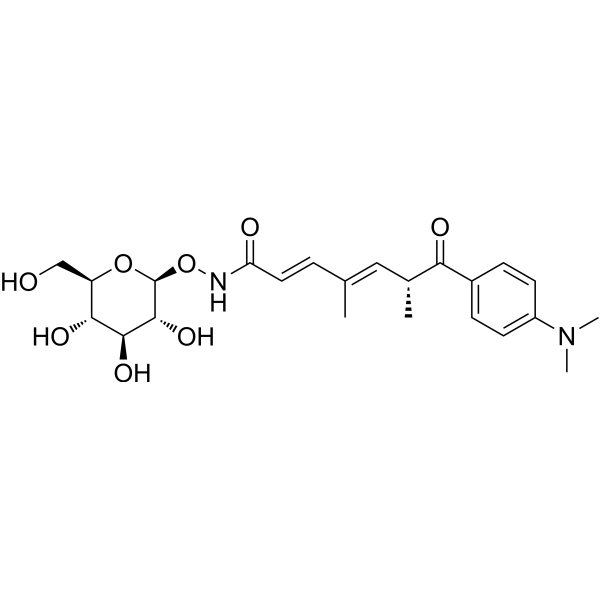
Trichostatin C is an inhibitor for histone deacetylase (HDAC), induces apoptosis and arrests cell cycle at G2/M phase, and exhibits anticancer activity against lung cancer and urothelial bladder cancer . Trichostatin C induces differentation of Friend leukemic cells . Trichostatin C exhibits antifungal activity .
loading...
    loading...
Cat. No.: HY-174154
CAS No.: 2640089-88-7
Target:  

FGFR

Research Areas:  

Cancer

INCB126503 is an orally activeM, selective FGFR2/3 Inhibitor with IC50 values of 70 nM (FGFR1), 2.1 nM (FGFR2), 1.2 nM (FGFR3), 0.92 nM (FGFR3-V555L), 0.85 nM (FGFR3-V555M) and 64 nM (FGFR4). INCB126503 suppresses FGFR signaling in vivo without causing hyperphosphatemia and shows antitumor efficacy in xenograft models harboring FGFR3 genetic alterations .
loading...
    loading...
Cat. No.: HY-W013078S
CAS No.: 326495-41-4
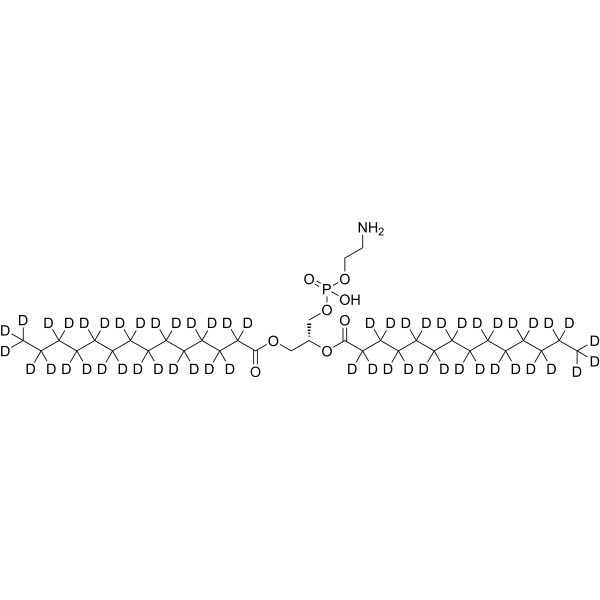
Synonyms: DMPE-d54
1,2-Dimyristoyl-sn-glycero-3-phosphoethanolamine (DMPE)-d54 is the deuterated-labeled 1,2-Dimyristoyl-sn-glycero-3-phosphoethanolamine (DMPE) (HY-W013078). 1,2-Dimyristoyl-sn-glycero-3-phosphoethanolamine (DMPE) is a zwitterionic saturated phosphatidylethanolamine bearing two myristoyl (C14:0) chains, and serves as a model membrane component, a neutral lipid component of lipid nanoparticles, and a cocoa butter crystallization nucleating agent. 1,2-Dimyristoyl-sn-glycero-3-phosphoethanolamine is used in nucleic acid delivery, construction of artificial cell membrane models, and research on urothelial carcinoma .
loading...
    loading...
Cat. No.: HY-W013078R
CAS No.: 998-07-2
Synonyms: DMPE (Standard)
1,2-Dimyristoyl-sn-glycero-3-phosphoethanolamine (DMPE) (Standard) is the analytical standard of 1,2-Dimyristoyl-sn-glycero-3-phosphoethanolamine (DMPE) (HY-W013078). This product is intended for research and analytical applications. 1,2-Dimyristoyl-sn-glycero-3-phosphoethanolamine (DMPE) is a zwitterionic saturated phosphatidylethanolamine bearing two myristoyl (C14:0) chains, and serves as a model membrane component, a neutral lipid component of lipid nanoparticles, and a cocoa butter crystallization nucleating agent. 1,2-Dimyristoyl-sn-glycero-3-phosphoethanolamine is used in nucleic acid delivery, construction of artificial cell membrane models, and research on urothelial carcinoma .
loading...
    loading...
Cat. No.: HY-181062
Research Areas:  

Cancer

VWK147 is a second-generation HSP90 C-terminal domain (CTD) inhibitor. VWK147 targets the CTD dimerization interface, prevents HSP90 CTD dimerization, disrupts co-chaperone PPID binding to HSP90 CTD, and inhibits HSP90 chaperone function dependent on dimerization. VWK147 reduces protein levels of HSP90 client proteins ULK1, RIPK1, and CDK4 without inducing a heat shock response. VWK147 induces cell death, including apoptosis, in Cisplatin (HY-17394)-sensitive and -resistant urothelial carcinoma cells. VWK147 induces LC3-II accumulation, inhibits autophagosome-lysosome fusion to block canonical autophagy, and induces non-canonical LC3 lipidation independent of ULK1 and PIK3C3 complexes. VWK147 can be used for the research of urothelial carcinoma .
loading...
    loading...
Cat. No.: HY-182747
Target:  

HDAC Autophagy Apoptosis

Research Areas:  

Cancer

HDAC6-IN-79 is a HDAC6 inhibitor with an IC50 of 98.40 nM, and it also exhibits inhibitory activity against other HDAC subtypes (HDAC1: 639.0 nM, HDAC2: 798.9 nM, HDAC8: 865.7 nM, HDAC4: 1187 nM). HDAC6-IN-79 induces acetylation of α-tubulin and histone H3, reduces the viability of cancer cells, activates the autophagy pathway and induces apoptosis. HDAC6-IN-79 can be used for research related to urothelial carcinoma (bladder cancer) .
loading...
    loading...
Cat. No.: HY-101126A
CAS No.: 1418143-09-5
Synonyms: TP-3654 hydrochloride
Research Areas:  

Cancer

Nuvisertib hydrochloride (TP-3654 hydrochloride) is an orally active second-generation pan-PIM kinase inhibitor with Ki values of 5 nM, 239 nM, and 42 nM against PIM-1, PIM-2, and PIM-3, respectively. Nuvisertib hydrochloride inhibits JAK-independent inflammatory and survival signaling pathways, reduces the production of proinflammatory cytokines, restores apoptotic sensitivity, inhibits mTORC1, MYC, and TGF-β signaling pathways, and decreases the expression of fibrosis markers. Nuvisertib hydrochloride selectively impairs the transport function of ABCG2, resensitizes multidrug-resistant cancer cells to cytotoxic drugs, and overcomes JAK2 inhibitor resistance. Nuvisertib hydrochloride can be used in research related to myelofibrosis, renal cell carcinoma, multidrug-resistant cancer, advanced solid tumors, urothelial carcinoma, and prostate adenocarcinoma .
loading...
    loading...

