
1. Search Result
Search Result
Results for "

X-rays

" in MedChemExpress (MCE) Product Catalog:

37

Inhibitors & Agonists

3

Biochemical Assay Reagents

1

Peptides

2

MCE Kits

5

Natural
Products

3

Isotope-Labeled Compounds

Cat. No. Product Name Target Research Areas Chemical Structure
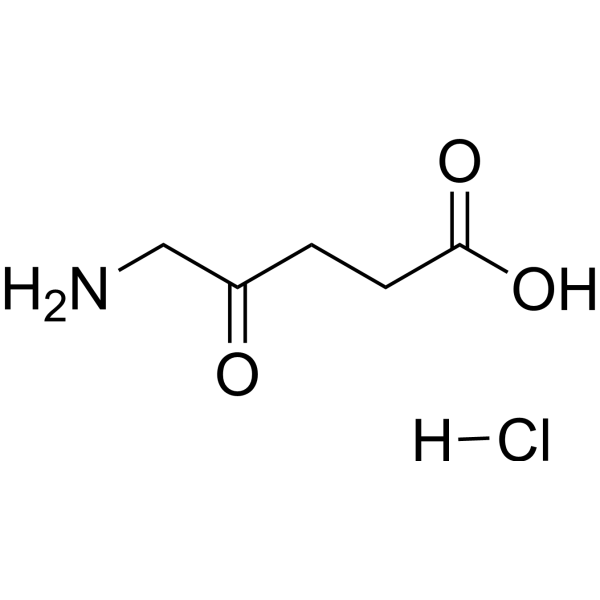
  • HY-N0305

    5-ALA hydrochloride; δ-Aminolevulinic acid hydrochloride; 5-Amino-4-oxopentanoic acid hydrochloride

    Reactive Oxygen Species (ROS) Neurological Disease Metabolic Disease Inflammation/Immunology Cancer
    5-Aminolevulinic acid (5-ALA; δ-Aminolevulinic acid; 5-Amino-4-oxopentanoic acid) hydrochloride is an orally active heme precursor. 5-Aminolevulinic acid hydrochloride promotes aerobic energy metabolism and increases ATP levels by enhancing the activity of cytochrome c oxidase. 5-Aminolevulinic acid hydrochloride enhances LPS-induced proinflammatory cytokine production and gene activation, and restores the phagocytic activity and ROS generation capacity of neutrophils. 5-Aminolevulinic acid hydrochloride selectively accumulates protoporphyrin IX in tumor cells; as a photosensitizer and radiosensitizer, it induces ROS burst upon light or X-ray irradiation to inhibit tumor growth. 5-Aminolevulinic acid hydrochloride can be applied to the research of septic shock, melanoma, and cancer radiotherapy .
    5-Aminolevulinic acid hydrochloride
  • HY-B0594
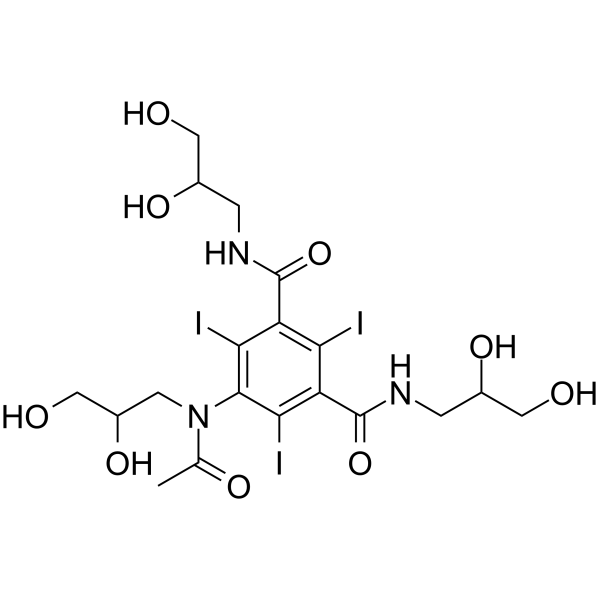
    Iohexol
    5 Publications Verification

    Autophagy Mitophagy Cancer
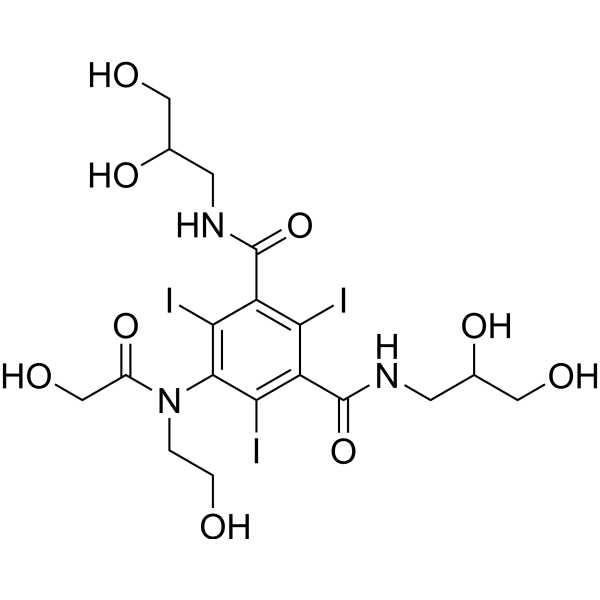
    Iohexol is a non-ionic, water-soluble contrast agent used as a reference marker for the determination of glomerular filtration rate (GFR) at the level of renal function. Iohexol can be used for contrast in myelography, computerized tomography (cisternography, ventriculography) and MicroCT imaging .
    Iohexol
  • HY-W000450
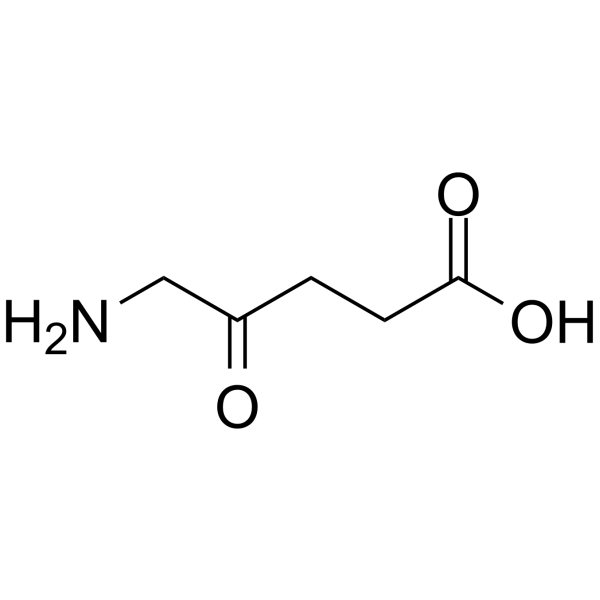
    5-Aminolevulinic acid
    15+ Cited Publications

    5-ALA; δ-Aminolevulinic acid; 5-Amino-4-oxopentanoic acid

    Reactive Oxygen Species (ROS) Cardiovascular Disease Cancer
    5-Aminolevulinic acid (5-ALA; δ-Aminolevulinic acid; 5-Amino-4-oxopentanoic acid) is an orally active heme precursor. 5-Aminolevulinic acid promotes aerobic energy metabolism and increases ATP levels by enhancing the activity of cytochrome c oxidase. 5-Aminolevulinic acid enhances LPS-induced proinflammatory cytokine production and gene activation, and restores the phagocytic activity and ROS generation capacity of neutrophils. 5-Aminolevulinic acid selectively accumulates protoporphyrin IX in tumor cells; as a photosensitizer and radiosensitizer, it induces ROS burst upon light or X-ray irradiation to inhibit tumor growth. 5-Aminolevulinic acid can be applied to the research of septic shock, melanoma, and cancer radiotherapy .
    5-Aminolevulinic acid
  • HY-B1410

    MP-328

    Biochemical Assay Reagents Others Cancer
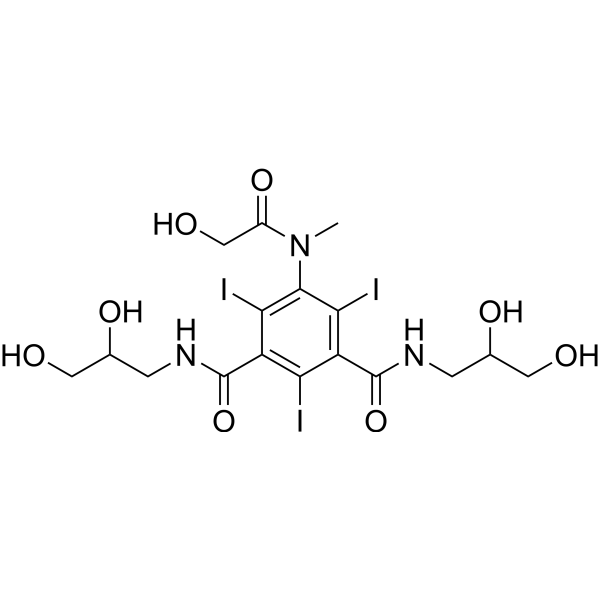
    Ioversol (MP-328) is a nonionic iodinated contrast medium (CM) that is used during a CT scan or x-ray in animal experiment. Ioversol does not damage the blood-brain barrier (BBB) in animal .
    Ioversol
  • HY-B1292
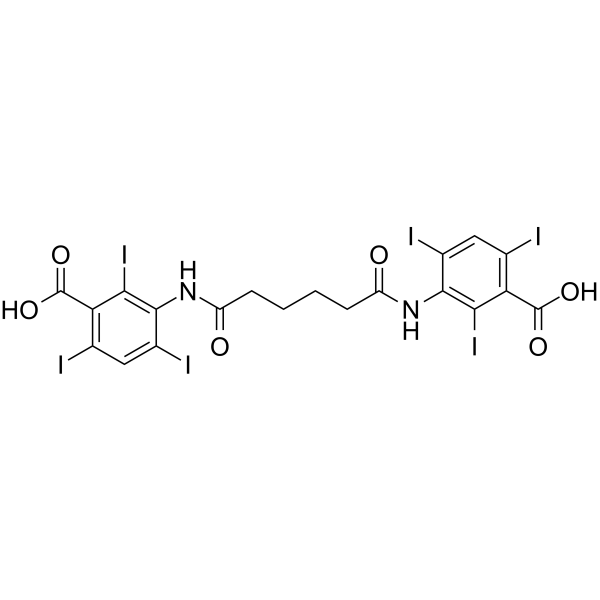
    Iodipamide
    1 Publications Verification

    Adipiodone

    Biochemical Assay Reagents Inflammation/Immunology
    Iodipamide (Adipiodone) is an ionic iodinated contrast agent. Iodipamide is used for diagnostic imaging to visualize the bile ducts and gallbladder during X-ray examinations .
    Iodipamide
  • HY-B0684
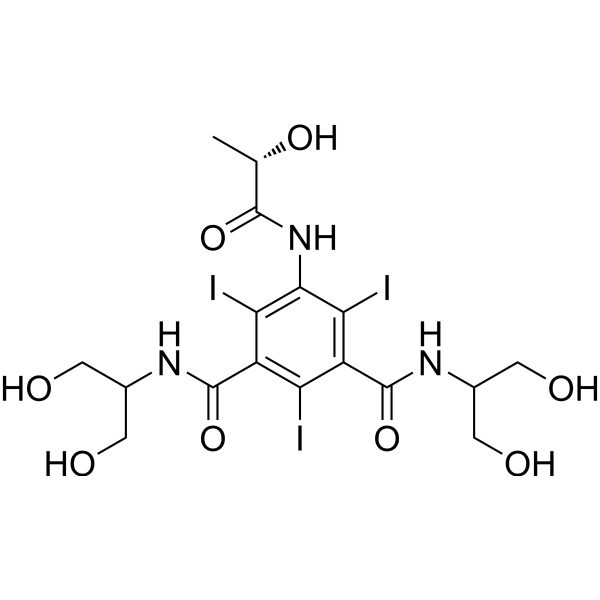
    Iopamidol
    3 Publications Verification

    B-15000; SQ-13396

    Biochemical Assay Reagents Cancer
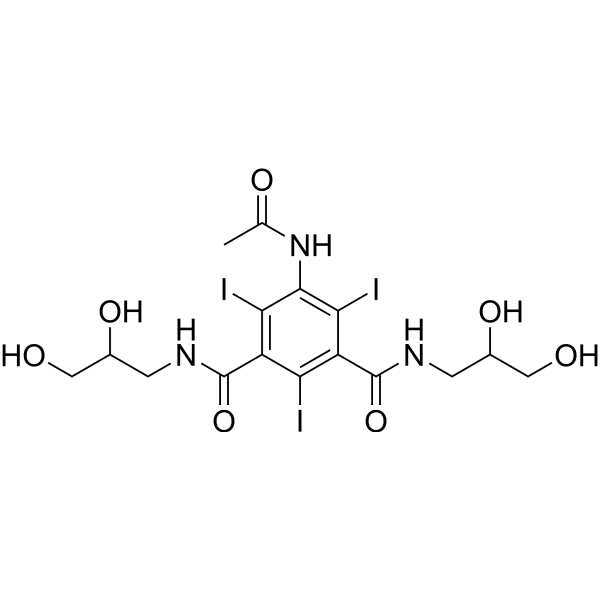
    Iopamidol is a nonionic, X-Ray iodinated contrast agent (CA) for a wide variety of diagnostic applications. Iopamidol contains amide and hydroxyl functionalities that can be exploited for the generation of the chemical exchange saturation transfer (CEST) contrast .
    Iopamidol
  • HY-113314

    Endogenous Metabolite Cancer
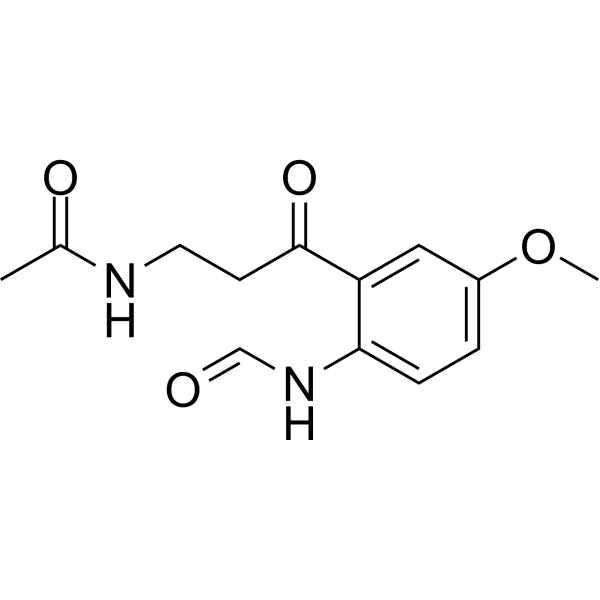
    AFMK, antioxidant metabolite of Melatonin, attenuates X-ray-induced oxidative damage to DNA, proteins and lipids in mice. AFMK is a poorer scavenger. The pKa of AFMK at physiological pH is 8.7. Antioxidant capacity . AFMK improves the anti-tumor effect of Gemcitabine in PANC-1 cells through the modulation of apoptotic pathway .
    AFMK
  • HY-123622

    Biochemical Assay Reagents Others
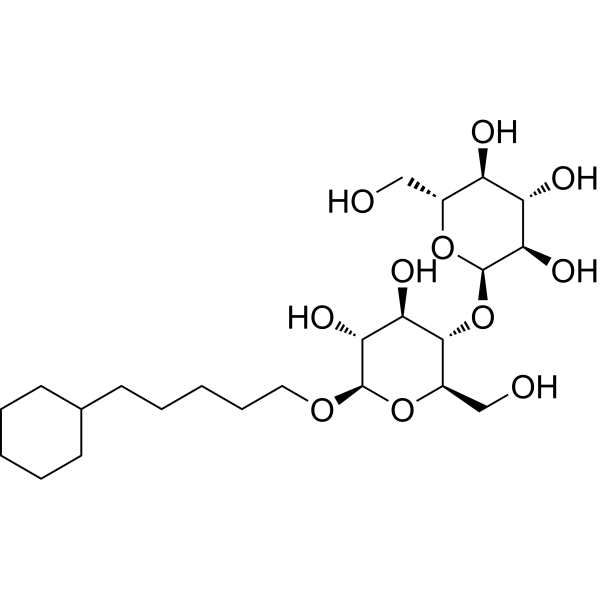
    CYMAL-5, 98% (TLC) is a cycloalkyl aliphatic saccharide. CYMAL-5, 98% (TLC) is a glycosidic surfactant (GS) with a chiral maltose polar head group and a cyclohexyl-pentyl hydrophobic tail. CYMAL-5, 98% (TLC) is a non-ionic detergent that has a tenfold lower critical micelle concentration (CMC) in comparison with OG, and has previously been used for membrane protein extraction or crystallization of membrane proteins for X-ray crystallographic studies .
    CYMAL-5, 98% (TLC)
  • HY-150137

    Biochemical Assay Reagents Others
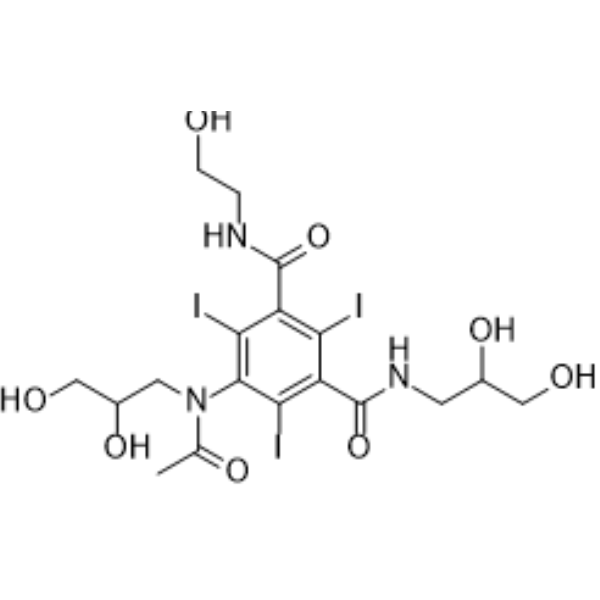
    Iomeprol is a nonionic X-ray contrast agent with low osmotic pressure, stable chemical properties, and can withstand high temperature sterilization. Iomeprol can be widely used in vascular, body cavity, and gastrointestinal angiography examinations .
    Iomeprol
  • HY-109513
    Ioxilan
    1 Publications Verification

    Biochemical Assay Reagents Others
    Ioxilan is a low-osmolar, nonionic and tri-iodinated diagnostic contrast agent. Ioxilan is also an X-ray contrast agent for excretory urography and contrast enhanced computed tomographic (CECT) imaging of the head and body. Intravascular injection results in opacification of vessels in the path of flow of the contrast medium, permitting radiographic visualization of the internal structures of the human body until significant hemodilution occurs .
    Ioxilan
  • HY-125695

    Biochemical Assay Reagents Others
    Ioxitalamic acid is a water-soluble, nephrophilic, highly permeable X-ray iodinated contrast media .
    Loxitalamic acid
  • HY-B0594R

    Reference Standards Autophagy Mitophagy Cancer
    Iohexol (Standard) is the analytical standard of Iohexol. This product is intended for research and analytical applications. Iohexol is a non-ionic, water-soluble contrast agent used as a reference marker for the determination of glomerular filtration rate (GFR) at the level of renal function. Iohexol can be used for contrast in myelography, computerized tomography (cisternography, ventriculography) and MicroCT imaging .
    Iohexol (Standard)
  • HY-W076166C

    Biochemical Assay Reagents Others
    Lead (II) iodide can be used as detector material for photocell X-ray and γ-ray detection .
    Lead (II) iodide
  • HY-W130190

    Biochemical Assay Reagents Others
    Iomeprol hydrolysate-2 (compound A) is iomeprol hydrolyzate, a key intermediate in the production of Iodixanol (HY-B1426) and Iohexol (HY-B0594) X-ray contrast agents .
    Iomeprol hydrolysate-1
  • HY-107943

    NSC 107434 sodium

    Biochemical Assay Reagents Others
    Tyropanoate (NSC 107434) sodium is an orally active contrast agent for the gallbladder. Tyropanoate sodium is absorbed through the intestines and secreted by the liver into the bile. Tyropanoate sodium then concentrates in the gallbladder to form an image that is not transparent to X-rays, enabling visualization of the gallbladder .
    Tyropanoate sodium
  • HY-121125

    Others Others
    Aucubigenin, the aglycone of the iridoid glycoside aucubin, has been characterized through X-ray diffraction analysis. Its crystal structure reveals monoclinic symmetry with specific conformations adopted by its cyclopentane and pyran rings. The study also determined the absolute configurations of both aucubin and aucubigenin. Significant O-H O hydrogen bonding interactions were observed in the crystal lattices of both compounds, highlighting their structural stability and potential for intermolecular interactions .
    Aucubigenin
  • HY-176217

    Biochemical Assay Reagents DNA/RNA Synthesis Cancer
    dA-NHbenzylOCF3 is a DNA-targeted radiosensitizer that enhances the sensitivity of tumor cells to X-rays through the dissociative electron attachment (DEA) mechanism. dA-NHbenzylOCF3 has low toxicity to normal cells and is mainly localized in the cytoplasm and nucleus after entering the cell. dA-NHbenzylOCF3 exerts radiosensitization effects by inducing cell cycle arrest in the radiosensitive G2/M phase. dA-NHbenzylOCF3 can be used for radiosensitization studies of malignant tumors such as prostate cancer and breast cancer .
    dA-NHbenzylOCF3
  • HY-125695S

    Isotope-Labeled Compounds Biochemical Assay Reagents Others
    Ioxitalamic acid-d4 is the deuterium labeled Loxitalamic acid (HY-125695). Ioxitalamic acid is a water-soluble, nephrophilic, highly permeable X-ray iodinated contrast media .
    Ioxitalamic acid-d4
  • HY-W799437

    Biochemical Assay Reagents Others
    Ioversol hydrolysate-1 is a hydrolyzate of Ioversol (HY-B1410), a non-ionic iodinated contrast agent (CM) used in CT scans or X-rays in animal experiments .
    Ioversol hydrolysate-1
  • HY-B1292R

    Adipiodone (Standard)

    Reference Standards Others
    Iodipamide (Standard) is the analytical standard of Iodipamide. This product is intended for research and analytical applications. Iodipamide is an iodine-based contrast agent, mainly used for X-ray imaging, particularly for gallbladder and bile duct imaging [1] .
    Iodipamide (Standard)
  • HY-117980

    AB 132

    DNA/RNA Synthesis Cancer
    Meturedepa (AB 132) functions as a radiation sensitizer, enhancing the biological effects of radiation. When combined with suboptimal doses of X-ray radiation, this combined therapy achieves better outcomes in terms of tumor shrinkage compared to Meturedepa used alone. Meturedepa is applicable in the research of bronchogenic carcinoma .
    Meturedepa
  • HY-125473

    Endogenous Metabolite Infection
    IDX375 is a novel non-nucleoside inhibitor with selective inhibitory activity against HCV NS5B. IDX375 has good selectivity for genotypes 1a and 1b. The structure and binding site of IDX375 were confirmed by X-ray cocrystal studies .
    IDX375
  • HY-B0684R

    B-15000 (Standard); SQ-13396 (Standard)

    Biochemical Assay Reagents Reference Standards Cancer
    Iopamidol (Standard) is the analytical standard of Iopamidol. This product is intended for research and analytical applications. Iopamidol is a nonionic, X-Ray iodinated contrast agent (CA) for a wide variety of diagnostic applications. Iopamidol contains amide and hydroxyl functionalities that can be exploited for the generation of the chemical exchange saturation transfer (CEST) contrast .
    Iopamidol (Standard)
  • HY-W153917

    Biochemical Assay Reagents
    Diatrizoic acid EP impurity A is an organic compound with potential effects on biological systems and specific pharmacological activities. Diatrizoic acid EP impurity A can be used as a contrast agent in imaging examinations to enhance the clarity of images such as X-rays and CT scans. Diatrizoic acid EP impurity A has also been studied for the separation and analysis of compounds.
    Diatrizoic acid EP impurity A
  • HY-107962

    Renovue 65

    Biochemical Assay Reagents Others
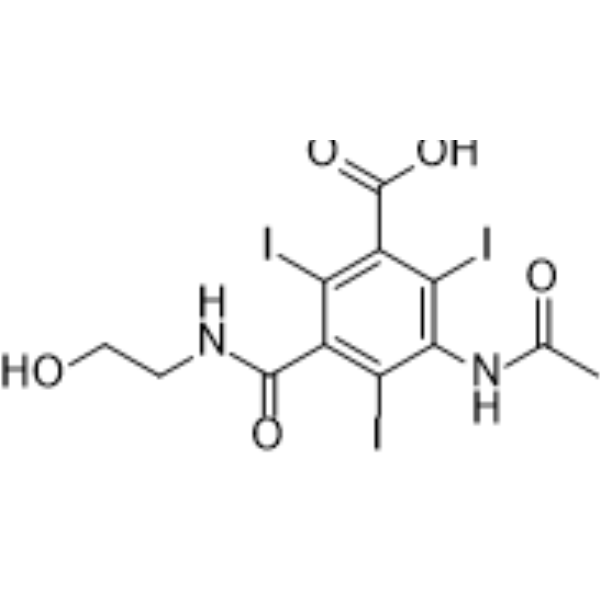
    Iodamide meglumine (Renovue 65) is a type of trityl ion contrast agent. Iodamide meglumine can block X-rays and is used in examinations such as cholangiography and cholecystography to display the gallbladder and bile ducts. Iodamide meglumine has the property of renal tubular active secretion. Iodamide meglumine can be used for intravenous urography .
    Iodamide meglumine
  • HY-B1410R

    MP-328 (Standard)

    Biochemical Assay Reagents Reference Standards Others Cancer
    Ioversol (Standard) is the analytical standard of Ioversol. This product is intended for research and analytical applications. Ioversol (MP-328) is a nonionic iodinated contrast medium (CM) that is used during a CT scan or x-ray in animal experiment. Ioversol does not damage the blood-brain barrier (BBB) in animal [4].
    Ioversol (Standard)
  • HY-B0684S

    Isotope-Labeled Compounds Others
    Iopamidol-d8 (B-15000-d8) is the deuterium labeled Iopamidol. Iopamidol is a nonionic, X-Ray iodinated contrast agent (CA) for a wide variety of diagnostic applications. Iopamidol contains amide and hydroxyl functionalities that can be exploited for the generation of the chemical exchange saturation transfer (CEST) contrast .
    Iopamidol-d8
  • HY-W130190R

    Biochemical Assay Reagents Reference Standards Others
    Iomeprol hydrolysate-1 (Standard) is the analytical standard of Iomeprol hydrolysate-1. This product is intended for research and analytical applications. Iomeprol hydrolysate-2 (compound A) is iomeprol hydrolyzate, a key intermediate in the production of Iodixanol (HY-B1426) and Iohexol (HY-B0594) X-ray contrast agents .
    Iomeprol hydrolysate-1 (Standard)
  • HY-111333

    Dioxapyrrolomycin; LL-F42248α; AL-R2081

    Bacterial Infection
    Pyrroxamycin is a novel antibiotic produced by Streptomyces, whose chemical structure was determined by chemical properties and X-ray crystallography and 13C NMR spectroscopy analysis. It is active against Gram-positive bacteria and dermatophytes. In this paper, the authors discuss the taxonomy, fermentation, isolation, physicochemical properties, chemical structure, and biological activity of the strain producing Pyrroxamycin.
    Pyrroxamycin
  • HY-106586A

    P-286 sodium

    Biochemical Assay Reagents Cardiovascular Disease Cancer
    Ioxaglate sodium (P-286 sodium) is an ionic, dimeric diagnostic contrast agent whose activity is mainly reflected in its ability to provide sufficient X-ray absorption to enhance visualization of blood vessels and other structures during imaging. Ioxaglate sodium is used to study the anatomical structure and functional status of cardiac vessels, especially in the diagnosis of coronary artery disease .
    Ioxaglate sodium
  • HY-P2138

    HIV Protease Others
    U-85548E is an HIV protease inhibitor with nanomolar affinity for HIV-1 aspartic protease. By studying its structure-activity relationship, a potent nanomolar inhibitor with inhibitory effects on both HIV-1 and HIV-2 proteases was designed, and its binding mode was studied by X-ray crystallography and molecular modeling.
    U-85548E
  • HY-120631A

    Dipeptidyl Peptidase Others
    BMS-538305 hydrochloride is a potent and selective inhibitor of dipeptidyl peptidase IV (DPP-IV), exhibiting strong biological activity by forming a reversible covalent complex with the enzyme. BMS-538305 hydrochloride demonstrates its mechanism of action through the covalent attachment between the nitrile carbon of the inhibitor and the enzyme residue S630, as unveiled by the X-ray crystal structure analysis.
    BMS-538305 hydrochloride
  • HY-B0684S1

    B-15000-d3; SQ-13396-d3

    Isotope-Labeled Compounds Biochemical Assay Reagents Cancer
    Iopamidol-d3 (B-15000-d3; SQ-13396-d3) is the deuterium labeled Iopamidol (HY-B0684). Iopamidol is a nonionic, X-Ray iodinated contrast agent (CA) for a wide variety of diagnostic applications. Iopamidol contains amide and hydroxyl functionalities that can be exploited for the generation of the chemical exchange saturation transfer (CEST) contrast .
    Iopamidol-d3
  • HY-109513R

    Biochemical Assay Reagents Reference Standards Others
    Ioxilan (Standard) is the analytical standard of Ioxilan. This product is intended for research and analytical applications. Ioxilan is a low-osmolar, nonionic and tri-iodinated diagnostic contrast agent. Ioxilan is also an X-ray contrast agent for excretory urography and contrast enhanced computed tomographic (CECT) imaging of the head and body. Intravascular injection results in opacification of vessels in the path of flow of the contrast medium, permitting radiographic visualization of the internal structures of the human body until significant hemodilution occurs .
    Ioxilan (Standard)
  • HY-W250179

    Polyoxyethylene (6) cetyl ether

    Biochemical Assay Reagents Others
    Hexaethylene glycol monohexadecyl ether, is a nonionic surfactant belonging to the polyethylene glycol (PEG) ether family. It has a hydrophilic head and a lipophilic tail, which makes it suitable for a wide range of applications. Specifically, Hexaethylene glycol monohexadecyl ether is commonly used in membrane protein research, for solubilization and stabilization of proteins, and for structural analysis techniques such as X-ray crystallography and electron microscopy. Additionally, Hexaethylene glycol monohexadecyl ether is used in a variety of other industrial and research applications, including drug delivery systems, nanotechnology, and diagnostic analysis. Its unique properties make it ideal for facilitating interactions between molecules with different physicochemical properties.
    Hexaethylene glycol monohexadecyl ether
  • HY-106317

    Glutathione isopropyl ester; YM 737

    Drug Derivative Neurological Disease Inflammation/Immunology Cancer
    Glutathione monoisopropyl ester (Glutathione isopropyl ester) is an ester derivative of glutathione. Glutathione monoisopropyl ester can increase glutathione concentrations in tissues such as the liver, lungs, heart, and brain of mice, exerting a dose-dependent protective effect against liver injury. Glutathione monoisopropyl ester effectively inhibits ultraviolet-induced lipid peroxidation, inflammatory responses, and tumorigenesis in the skin of hairless mice by maintaining epidermal glutathione levels. Glutathione monoisopropyl ester also inhibits the progression of X-ray-induced cataracts in rats .
    Glutathione monoisopropyl ester
  • HY-B1292B

    Adipiodone meglumine

    Biochemical Assay Reagents Others
    Iodipamide (Adipiodone) meglumine is an iodine-based contrast agent, mainly used for X-ray imaging, particularly for gallbladder and bile duct imaging.
    Iodipamide meglumine

Inquiry Online

Your information is safe with us. * Required Fields.

Salutation


Country or Region *

Applicant Name *


Organization Name *

Department *


Email Address *


Product Name *

Cat. No.


Requested quantity *

Phone Number *


Remarks

Inquiry Online

Inquiry Information

Product Name:
Cat. No.:
Quantity:
MCE Japan Authorized Agent:

