1. Search Result
Search Result
Results for "

agent scaffold

" in MedChemExpress (MCE) Product Catalog:

18

Inhibitors & Agonists

2

Screening Libraries

1

Biochemical Assay Reagents

1

Peptides

3

Natural
Products

Cat. No. Product Name Target Research Areas Chemical Structure
  • HY-Y0191

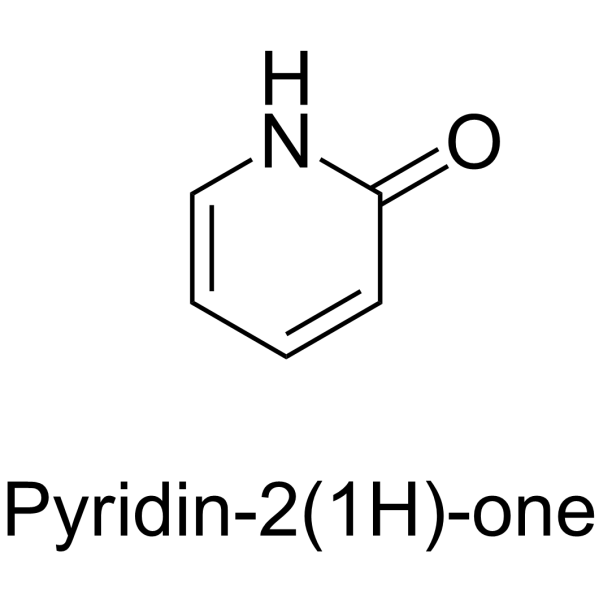
    2-Pyridone

    Endogenous Metabolite Bacterial Infection
    α-Pyridone (2-Pyridone) is an antibacterial agent that plays an important role in the field of biochemical research. α-Pyridone can serve as a scaffold compound to synthesize a variety of active compounds .
    α-Pyridone
  • HY-W010649

    HSP Epigenetic Reader Domain ATP-binding cassette (ABC) transporters Bacterial Fungal Antibiotic Infection Metabolic Disease Inflammation/Immunology Cancer
    Isoxazole is a member of the five-membered heterocycle drug scaffold. Isoxazole has been used as a BET bromodomain inhibitor and can improve β-cell function in a diabetic mouse model. Isoxazole and its derivatives exhibit broad biological activities (such as antimicrobial, antibacterial, antifungal, antiviral, anticancer, anti-inflammatory, immunomodulatory, analgesic, anti-tuberculosis, and anti-diabetic effects). For example, the bicyclic Isoxazole can act as an HSP90 inhibitor, and the tricyclic Isoxazole is promising as a selective multidrug resistance protein (MRP1) inhibitor​ .
    Isoxazole
  • HY-W015820

    Biochemical Assay Reagents Bacterial Infection Cardiovascular Disease Inflammation/Immunology Cancer
    Phthalide is a chemical scaffold. Phthalide can be used to synthesize a variety of phthalide derivatives including anti-inflammatory agent, antimicrobial, antioxidant and blood-tumor barrier modulators .
    Phthalide
  • HY-148255

    Apoptosis Autophagy Cancer
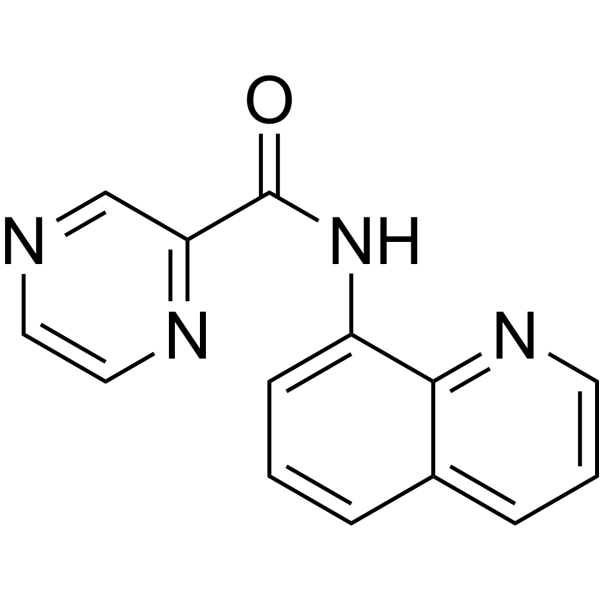
    QN523 is a novel scaffold with agent-like properties, showing potent in vitro cytotoxicity in a panel of 12 cancer cell lines. QN523 induces apoptosis and autophagy. QN523 can be used in research of cancer .
    QN523
  • HY-121462

    Quinoline Blue

    Fluorescent Dye Cancer
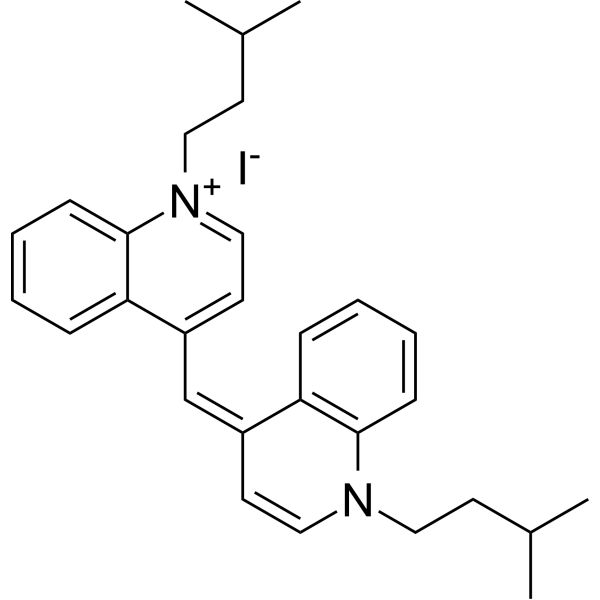
    Cyanine is an excellent fluorescent core scaffold for constructing fluorescent probes. Covalent conjugation of Cyanine with other potent compounds can not only enhance their efficacy but also expand their application modes. Cyanine supports the development of cancer theranostic agents. Cyanine can be used in cancer research .
    Cyanine
  • HY-156675

    Microtubule/Tubulin Cancer
    Plecstatin-1 is a potent organoruthenium anti-cancer agent . Plecstatin-1 selectively targets plectin (a scaffold protein and cytolinker) in tumour spheroids .
    Plecstatin-1
  • HY-146079

    Fungal Infection
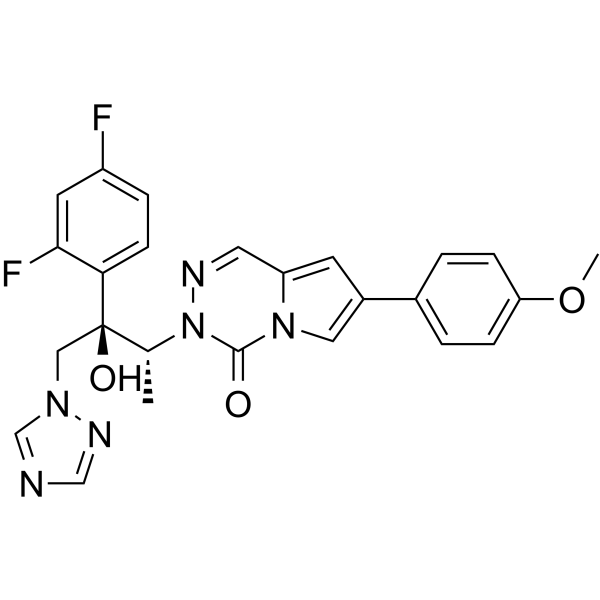
    Antifungal agent 31 (compound 12) is a potent and orally active triazole antifungal agents with a pyrrolotriazinone scaffold. Antifungal agent 31 shows antifungal activity against Candida spp. and filamentous fungi. Antifungal agent 31 significantly reduced mortality rates and kidney fungal burden in two murine models of lethal systemic infections .
    Antifungal agent 31
  • HY-W002297

    Biochemical Assay Reagents Infection
    (S)-3-Aminoazepan-2-one is the structural unit of the antitubercular peptide, serving as the core scaffold of a hexapeptide antibacterial agent. (S)-3-Aminoazepan-2-one is promising for research of tuberculosis .
    (S)-3-Aminoazepan-2-one
  • HY-W013376

    1-(Diphenylmethyl)piperazine; 1-Benzhydrylpiperazine

    Antibiotic Bacterial Penicillin-binding protein (PBP) Infection Cancer
    Norcyclizine is a piperazine compound that can be used for the synthesis of antimicrobial agents. 1-Benzhydrylpiperazine derivatives have been found to enhance the antibacterial activity of β-lactam antibiotics (Oxacillin, HY-B0925A) against Methicillin (HY-121544)-resistant Staphylococcus aureus (MRSA). This enhancement is likely achieved by inhibiting the allosteric site of PBP2a. Additionally, 1-Benzhydrylpiperazine can also serve as a pharmacological scaffold for the synthesis of anticancer agents .
    Norcyclizine
  • HY-P10556

    Bacterial Infection
    (KFF)3K is a cell penetrating peptide that can promote the absorption of other antibiotics by disrupting the outer membrane of bacteria. (KFF)3K can be introduced into a hydrocarbon scaffold to induce its antibacterial properties, making it an effective antimicrobial peptide. (KFF)3K can be used in the development of new antimicrobial agents .
    (KFF)3K
  • HY-149949

    Apoptosis Cancer
    Anticancer agent 105 is a compound based on thienopyrimidine scaffold, with with good safety and anticancer properties. Anticancer agent 105 shows selective toxicity towards melanoma cancer, and induces apoptosis. And Anticancer agent 105 significantly inhibits the metastatic nodules, even in pulmonary metastatic melanoma mouse model .
    Anticancer agent 105
  • HY-W015820R

    Bacterial Reference Standards Biochemical Assay Reagents Infection Cardiovascular Disease Inflammation/Immunology Cancer
    Phthalide (Standard) is an analytical standard of Phthalide. This product is intended for research and analytical applications. Phthalide is a chemical scaffold. Phthalide can be used to synthesize a variety of phthalate derivatives, including anti-inflammatory agents, antimicrobial agents, antioxidants and blood-tumor barrier regulators .
    Phthalide (Standard)
  • HY-121634

    Polo-like Kinase (PLK) Others
    DAP-81 is an inhibitory agent targeting Polo-like kinases (Plks), a class of evolutionarily conserved serine/threonine kinases. DAP-81 dose-dependently increases the number of monopolar spindles in treated cells. High-resolution live-cell microscopy revealed that Plk activity is required for the assembly and maintenance of bipolar mitotic spindles. Plk inhibition destabilizes centromeric microtubules while stabilizing other spindle microtubules, leading to the formation of monopolar spindles. Further testing of compounds based on "privileged scaffolds" such as the DAP scaffold may lead to the discovery of new cell division probes and anti-microtubule agents.
    DAP-81
  • HY-W010649R

    HSP Reference Standards Epigenetic Reader Domain ATP-binding cassette (ABC) transporters Bacterial Fungal Antibiotic Infection Metabolic Disease Inflammation/Immunology Cancer
    Amfenac (Sodium Hydrate) (Standard) is the analytical standard of Amfenac (Sodium Hydrate). This product is intended for research and analytical applications. Amfenac Sodium Hydrate is a COX-2 inhibitor.
    Isoxazole (Standard)
  • HY-144438

    Aurora Kinase LIM Kinase (LIMK) Cancer
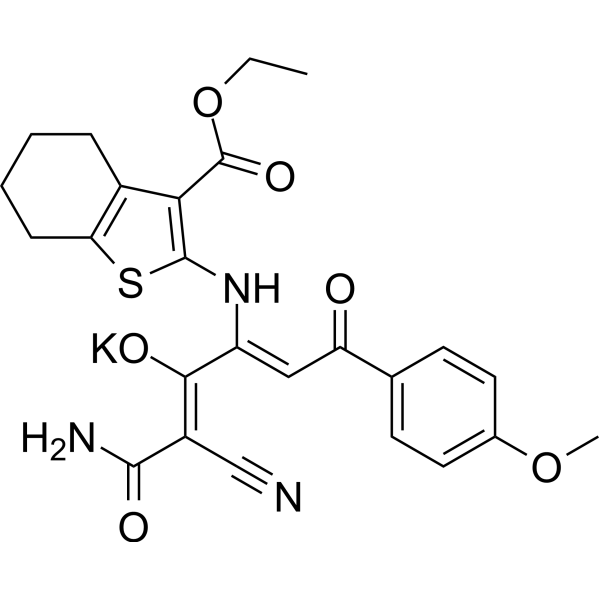
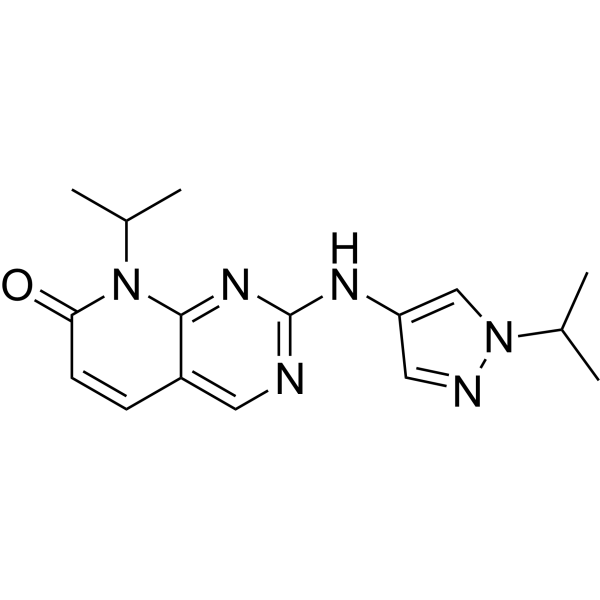
    Aurora/LIM kinase-IN-1 (Compound F114) is a potent and dual inhibitor of aurora and lim kinase. Aurora kinases and lim kinases are involved in neoplastic cell division and cell motility, respectively. Aurora/LIM kinase-IN-1 inhibits GBM proliferation and invasion. Aurora/LIM kinase-IN-1 is a promising new scaffold for dual aurora/lim kinase inhibitors that may be used in future agent development efforts for GBM, and potentially other cancers .
    Aurora/LIM kinase-IN-1
  • HY-179246

    COX Prostaglandin Receptor Cardiovascular Disease Neurological Disease Inflammation/Immunology
    CXT29 is an orally active COX-2 inhibitor and a thromboxane A2 receptor (TP) antagonist. CXT29 exhibits COX inhibitory activity and selectivity, with IC50 values of 13 and 722 nM for COX-2 and COX-1 respectively. CXT29 inhibits platelet aggregation induced by U-46619 (HY-108566) (a TP agonist), with an IC50 of 96 nM. CXT29 effectively inhibits the production of TXB₂ and PGE₂, significantly reducing platelet aggregation and inflammatory pain in mice. CXT29 can be used for research on inflammatory pain and cardiovascular diseases .
    CXT29
  • HY-W099339

    Drug Intermediate Cardiovascular Disease
    N-Ethylnicotinamide is a compound with weak vasodilatory activity. N-Ethylnicotinamide also serves as the core scaffold of the antianginal agent Nicorandil (HY-B0341) and its derivatives .
    N-Ethylnicotinamide
  • HY-183968

    Bacterial Infection
    BRD1554 is an inhibitor of the thioesterase domain of polyketide synthase 13 (Pks13) from Mycobacterium tuberculosis, and exhibits selective activity against Pks13-expressing strains. Pks13 is a polyketide synthase essential for the synthesis of branched-chain fatty acids in mycobacteria. BRD1554 serves as a scaffold molecule for anti-Mycobacterium tuberculosis agents. BRD1554 can be used in the research of tuberculosis .
    BRD1554

Inquiry Online

Your information is safe with us. * Required Fields.

Salutation


Country or Region *

Applicant Name *


Organization Name *

Department *


Email Address *


Product Name *

Cat. No.


Requested quantity *

Phone Number *


Remarks

Inquiry Online

Inquiry Information

Product Name:
Cat. No.:
Quantity:
MCE Japan Authorized Agent:

