1. Search Result
Search Result
Results for "

aldehyde groups

" in MedChemExpress (MCE) Product Catalog:

143

Inhibitors & Agonists

12

Fluorescent Dyes

67

Biochemical Assay Reagents

1

Inhibitory Antibodies

5

Natural
Products

1

Isotope-Labeled Compounds

16

Click Chemistry

10

Oligonucleotides

Cat. No. Product Name Target Research Areas Chemical Structure
  • HY-128692
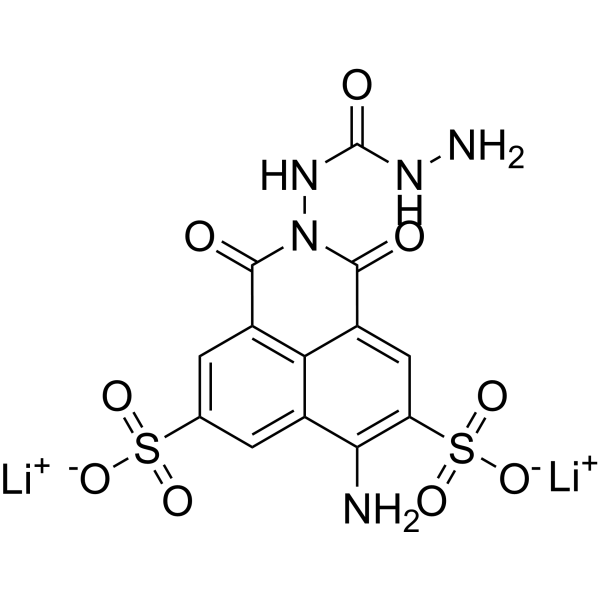
    Luc Yellow CH dilithium
    5 Publications Verification

    Fluorescent Dye Neurological Disease
    Luc Yellow CH dilithium is a high-intensity fluorescent probe containing free hydrazyl groups. Luc Yellow CH can react with fatty aldehydes at room temperature. Luc Yellow CH serves as a biological tracer to monitor neuronal branching, regeneration, gap junction detection and characterization, and selective ablation of cells after aldehyde fixation. Luc Yellow CH displays the maximum excitation/emission of 430 nm/540 nm, respectively .
    Luc Yellow CH dilithium
  • HY-W127715
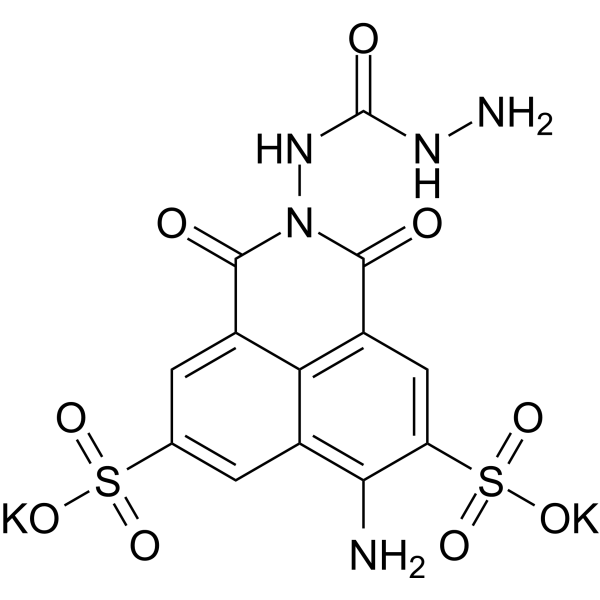
    Lucifer Yellow CH dipotassium salt
    5 Publications Verification

    Fluorescent Dye Others
    Lucifer Yellow CH dipotassium is a high-intensity fluorescent probe containing free hydrazyl groups. Lucifer Yellow CH can react with fatty aldehydes at room temperature. Lucifer Yellow CH serves as a biological tracer to monitor neuronal branching, regeneration, gap junction detection and characterization, and selective ablation of cells after aldehyde fixation. Lucifer yellow CH displays the maximum excitation/emission of 430 nm/540 nm, respectively .
    Lucifer Yellow CH dipotassium salt
  • HY-147168

    Biochemical Assay Reagents Others
    Biocytin hydrazide is a long-chain biotin-containing hydrazide, serving as a biotin-derived active coupling reagent, selective labeling agent and biotinylating reagent. Biocytin hydrazide targets aldehyde, carboxyl, amino and guanidino groups to biotinylate glycoconjugates, K99 lectin, peptides and proteins through its hydrazide moiety, and achieves nonradioactive detection of sialic acid- and galactose-containing glycoconjugates via the avidin–biotin system .
    Biocytin hydrazide
  • HY-W590569

    Biochemical Assay Reagents Others
    Azido-PEG12-amine is a water soluble PEG compound. The azide group enables Click Chemistry. The amine group is reactive with carboxylic acids, activated NHS esters, carbonyls (ketone, aldehyde), etc. The hydrophilic PEG arm increases solubility in aqueous media.
    Azido-PEG12-amine
  • HY-D1336

    Fluorescent Dye
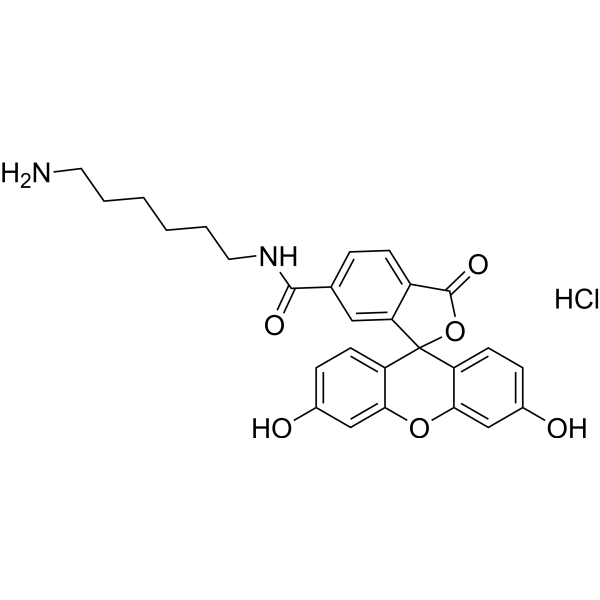
    FAM amine, 6-isomer is a fluorescein derivative with an amine group and contains an isomer of the fluorophore. Can be used to modify biomolecules through enzymatic transamination. Its fatty amine groups can also react with electrophiles such as activated esters. The amine can also be conjugated to carbonyl compounds (aldehydes and ketones) by reductive amination.
    FAM amine, 6-isomer
  • HY-W018829

    Undecylenic aldehyde

    Environmental Pollutants Biochemical Assay Reagents Others
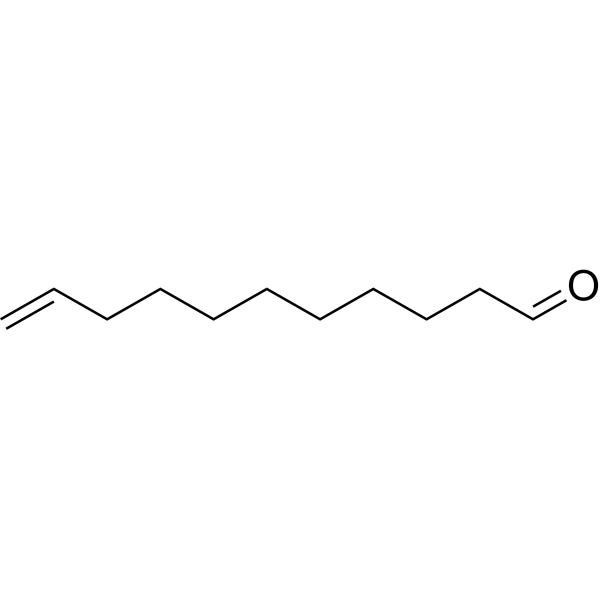
    10-Undecenal consists of an 11-carbon chain with a double bond between the 9th and 10th carbon atoms and an aldehyde group attached to the 1st carbon atom. This compound has a pungent or fatty smell and is commonly used as a flavoring commodity in foods such as bakery, confectionary and beverages.
    10-Undecenal
  • HY-W039943

    Molecular Glues Cancer
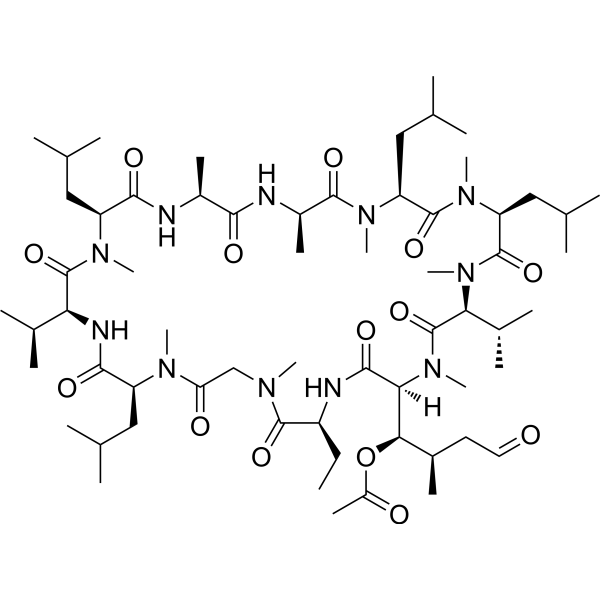
    Acetyl-cyclosporin A aldehyde is an acetylated Cyclosporin A (HY-B0579) derivative with a reducing aldehyde group. Cyclosporin A is a potent calmodulin inhibitor and cyclophilin binder that can target the nuclear translocation of NF-AT and cause mitochondrial damage.
    Acetyl-cyclosporin A aldehyde
  • HY-W017425

    Phenylhydrazine acetate

    Biochemical Assay Reagents Others
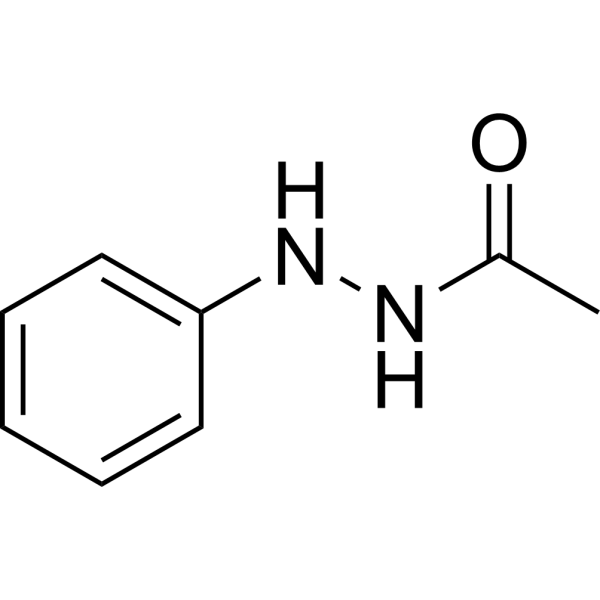
    N'-Phenylacetohydrazide consists of a phenyl group attached to the acetylhydrazide functional group via a hydrazine bond. This compound is commonly used as a reagent in organic chemistry for the determination of carbonyl compounds such as aldehydes and ketones.
    N'-Phenylacetohydrazide
  • HY-W012971

    Biochemical Assay Reagents Others
    5-Amino-1-pentanol is a linker containing a hydroxyl group and amine group. The hydroxyl group enables further derivatization or replacement with other reactive functional groups. The amine group is reactive with carboxylic acids, activated NHS esters, carbonyls (ketone, aldehyde) etc.
    5-Amino-1-pentanol
  • HY-42773

    1-Boc-1,8-diaminooctane

    PROTAC Linkers Cancer
    tert-Butyl (8-aminooctyl)carbamate (1-Boc-1,8-diaminooctane) can be used as a PROTAC linker in the synthesis of PROTACs. tert-butyl (8-aminooctyl)carbamate is an alkane chain with terminal amine and Boc-protected amino groups. Amine group is reactive with carboxylic acids, activated NHS esters, carbonyls (ketone, aldehyde) etc. The Boc group can be deprotected under mild acidic conditions to form the free amine.
    tert-Butyl (8-aminooctyl)carbamate
  • HY-W190915

    Biochemical Assay Reagents Others
    4,7,10,13,16–Pentaoxanonadecane-1,19-diamine is a PEG based linker with two terminal amine groups. The amine group is reactive with carboxylic acids, activated NHS esters, carbonyls (ketone, aldehyde) etc.
    4,7,10,13,16-Pentaoxanonadecane-1,19-diamine
  • HY-W142618

    Biochemical Assay Reagents Others
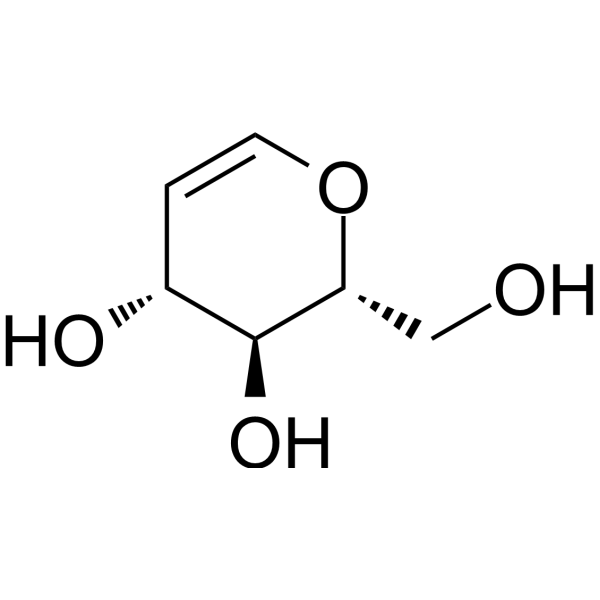
    D-Glucal is an organic compound belonging to the family of aldoses, which are monosaccharides containing an aldehyde functional group. It has a six-carbon structure and is derived from glucose by oxidation of the primary alcohol group at carbon 1 to an aldehyde group. D-Glucal is a white crystalline solid that is soluble in water and has a sweet taste. It is an important intermediate in the chemical synthesis of a wide variety of compounds, including pharmaceuticals, agrochemicals, and natural products. D-Glucal can be converted into other carbohydrate derivatives such as glycosides, glycoconjugates and amino sugars. It also plays a role in the study of carbohydrate chemistry, where it is used as a chiral building block for the synthesis of complex structures.
    D-Glucal
  • HY-W105744

    PROTAC Linkers Cancer
    10-Aminodecanoic acid is an alkane chain with terminal carboxlic acid and amine groups. 10-Aminodecanoic acid can be used as a PROTAC linker in the synthesis of PROTACs and other conjugation applications. The amino group (NH2) is reactive with carboxylic acids, activated NHS esters, carbonyls (ketone, aldehyde) etc. The terminal carboxylic acid can react with primary amine groups of activated NHS ester to form a stable amide bond.
    10-Aminodecanoic acid
  • HY-138518

    PROTAC Linkers Cancer
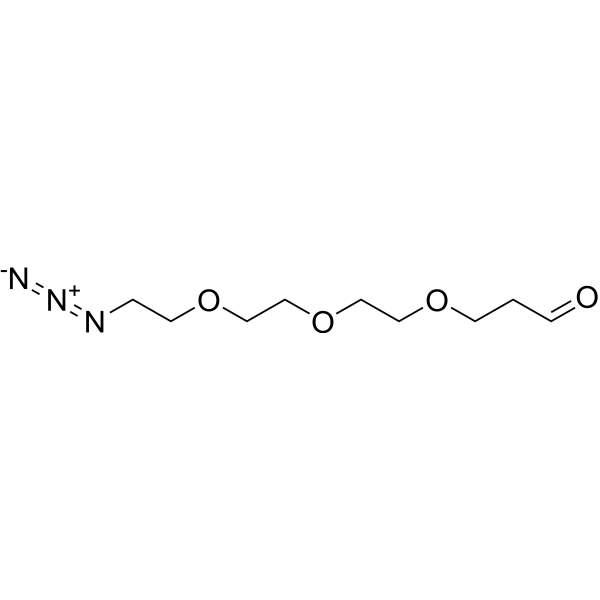
    Azido-PEG3-aldehyde is a PEG-based PROTAC linker that can be used in the synthesis of PROTACs . Azido-PEG3-aldehyde is a click chemistry reagent, it contains an Azide group and can undergo copper-catalyzed azide-alkyne cycloaddition reaction (CuAAc) with molecules containing Alkyne groups. It can also undergo strain-promoted alkyne-azide cycloaddition (SPAAC) reactions with molecules containing DBCO or BCN groups.
    Azido-PEG3-aldehyde
  • HY-176509A

    Liposome Others
    DSPE-PEG2000-CHO is a linear heterobifunctional PEGylation reagent with DSPE phospholipids and aldehyde groups. PEG linkers have good hydrophilicity and water solubility. Aldehyde-polyethylene glycol (DSPE) is one of the most commonly used reactive phospholipids to bind antibodies, peptides or other ligands to the surface of liposomes and other lipid-polyethylene glycol nanoparticles. DSPE-PEG2000-CHO can be used for drug delivery .
    DSPE-PEG2000-CHO
  • HY-W105727

    PROTAC Linkers Cancer
    9-Aminononanoic acid can be used as a PROTAC linker and other conjugation in the synthesis of PROTACs. 9-Aminononanoic acid is an alkane chain with terminal carboxlic acid and amine groups. The amino group (NH2) is reactive with carboxylic acids, activated NHS esters, carbonyls (ketone, aldehyde) etc. The terminal carboxylic acid can react with primary amine groups of activated NHS ester to form a stable amide bond.
    9-Aminononanoic acid
  • HY-172379A

    Biochemical Assay Reagents Others
    Alginate aldehyde, 35% aldehyde content is an anionic polysaccharide widely used in pharmaceutical and biomedical applications. Aldehyde-functionalized Alginate aldehyde can be used to prepare hydrogels by reacting with amine groups .
    Alginate aldehyde, 35% aldehyde content
  • HY-N15067

    Biochemical Assay Reagents Others
    7-O-methylluteone is a hydroxyisoflavone that is luteone in which the hydroxy group at position 7 is replaced by a methoxy group. 7-O-Methylluteone has a role as an EC (aldehyde reductase) inhibitor and a metabolite .
    7-O-Methylluteone
  • HY-W998707

    Fluorescent Dye Others
    TAMRA amine, 5-isomer hydrochloride is a rhodamine dye with excitation/emission maximum 553/575 nm. The amine group is reactive with carboxylic acids, activated NHS esters, carbonyls (ketone, aldehyde) etc.
    TAMRA amine, 5-isomer hydrochloride
  • HY-42222

    Biochemical Assay Reagents Others
    N1,N5-Bis-Boc-spermidine is a linker containing an amino group with two Boc-protected amino groups. The amino group is reactive with carboxylic acids, activated NHS esters, carbonyls (ketone, aldehyde) etc. The Boc group can be deprotected under mild acidic conditions to form the free amine.
    N1,N5-Bis-boc-spermidine
  • HY-176509C

    Liposome Others
    DSPE-PEG5000-CHO is a linear heterobifunctional PEGylation reagent with DSPE phospholipids and aldehyde groups. PEG linkers have good hydrophilicity and water solubility. Aldehyde-polyethylene glycol (DSPE) is one of the most commonly used reactive phospholipids to bind antibodies, peptides or other ligands to the surface of liposomes and other lipid-polyethylene glycol nanoparticles. DSPE-PEG5000-CHO can be used for drug delivery .
    DSPE-PEG5000-CHO
  • HY-176509

    Liposome Others
    DSPE-PEG1000-CHO is a linear heterobifunctional PEGylation reagent with DSPE phospholipids and aldehyde groups. PEG linkers have good hydrophilicity and water solubility. Aldehyde-polyethylene glycol (DSPE) is one of the most commonly used reactive phospholipids to bind antibodies, peptides or other ligands to the surface of liposomes and other lipid-polyethylene glycol nanoparticles. DSPE-PEG1000-CHO can be used for drug delivery .
    DSPE-PEG1000-CHO
  • HY-D2502

    Fluorescent Dye Others
    Cy7 hydrazide is a Cy7 (HY-D0825) dye derivative with hydrazine functionality. The hydrazide group of Cy7 hydrazide can form hydrazinone coupling with molecules containing aldehydes or ketones to form covalent bonds .
    Cy7 hydrazide
  • HY-176846

    Biochemical Assay Reagents Others
    HIPS probe-1 (Compound 1) is a click chemistry reagent containing a alkyne group. HIPS probe-1 can undergo copper-catalyzed azide-alkyne cycloaddition (CuAAc) with molecules containing Azide groups. HIPS probe-1 can be used as a chemical probe to specifically recognize and label aldehyde functional groups in DNA, especially abasic sites (AP sites) for DNA damage research .
    HIPS probe-1
  • HY-141147

    Drug-Linker Conjugates for ADC Cancer
    7-O-(Amino-PEG4)-paclitaxel is a PEG-class Drug-linker conjugates for ADC, containing a paclitaxel moiety and a amino group. The amine group is reactive with carboxylic acids, activated NHS esters, carbonyls (ketone, aldehyde) etc. 7-O-(Amino-PEG4)-paclitaxel can be used in the synthesis of Antibody-Drug Conjugates (ADCs) .
    7-O-(Amino-PEG4)-paclitaxel
  • HY-136054

    ADC Linker Cancer
    N3-PEG5-aldehyde is a cleavable 5 unit PEG ADC linker used in the synthesis of antibody-drug conjugates (ADCs) . N3-PEG5-aldehyde is a click chemistry reagent, it contains an Azide group and can undergo copper-catalyzed azide-alkyne cycloaddition reaction (CuAAc) with molecules containing Alkyne groups. It can also undergo strain-promoted alkyne-azide cycloaddition (SPAAC) reactions with molecules containing DBCO or BCN groups.
    N3-PEG5-aldehyde
  • HY-135977

    ADC Linker Cancer
    DBCO-SS-aldehyde is a cleavable ADC linker used in the synthesis of antibody-drug conjugates (ADCs) . DBCO-SS-aldehyde is a click chemistry reagent, it contains a DBCO group that can undergo strain-promoted alkyne-azide cycloaddition (SPAAC) with molecules containing Azide groups.
    DBCO-SS-aldehyde
  • HY-W588728

    Biochemical Assay Reagents Others
    DBCO-PEG8-amine is a PEG derivative consisting of DBCO, PEG units and an amino group (Amine). Maleimide forms a stable thioether bond with sulfhydryl (-SH). The amino group can react with other chemical groups (such as carboxyl, aldehyde, etc.) to form stable chemical bonds.
    DBCO-PEG8-amine
  • HY-W101722

    PROTAC Linkers Cancer
    tert-Butyl (9-aminononyl)carbamate is an alkane chain with terminal amine and Boc-protected amino groups. The compound can be used as a PROTAC linker in the synthesis of PROTACs and other conjugation applications. Amine group is reactive with carboxylic acids, activated NHS esters, carbonyls (ketone, aldehyde) etc. The Boc group can be deprotected under mild acidic conditions to form the free amine.
    tert-Butyl (9-aminononyl)carbamate
  • HY-W190918

    Biochemical Assay Reagents Others
    endo-BCN-PEG4-amine is a click chemistry crosslinker reagent. The BCN groupis very reactive with azide-tagged molecules. The amino group is reactive with carboxylic acids, activated NHS esters, carbonyls (ketone, aldehyde) etc.
    endo-BCN-PEG4-amine
  • HY-W1048547J

    HOOC-PEG40000-Amine

    PROTAC Linkers Others
    HOOC-PEG40000-NH2 (HOOC-PEG40000-Amine) is a heterobifunctional PEG crosslinker that can be used to attach functional PEG to biomolecules, particles, and other surface materials. The carboxyl group reacts with the amine group to form a stable amide bond. It can also react with the hydroxyl group to form an unstable ester bond. On the other hand, the amine group can be used to react with many amine-reactive groups, such as succinimidyl NHS esters, aldehydes, etc .
    HOOC-PEG40000-NH2
  • HY-174948

    NHS-PEG1000-aldehyde

    Biochemical Assay Reagents Others
    NHS-PEG1000-CHO (NHS-PEG1000-Aldehyde) is a PEG derivative consisting of an aldehyde group (-CHO), a PEG unit, and an NHS ester. NHS esters can be conjugated to amino acids or other molecules containing amino groups. Aldehyde groups are reactive functional groups that can react with compounds containing amino or hydroxyl groups .
    NHS-PEG1000-CHO
  • HY-174948C

    NHS-PEG5000-aldehyde

    Biochemical Assay Reagents Others
    NHS-PEG5000-CHO (NHS-PEG5000-Aldehyde) is a PEG derivative consisting of an aldehyde group (-CHO), a PEG unit, and an NHS ester. NHS esters can be conjugated to amino acids or other molecules containing amino groups. Aldehyde groups are reactive functional groups that can react with compounds containing amino or hydroxyl groups .
    NHS-PEG5000-CHO
  • HY-172379

    Biochemical Assay Reagents Others
    Alginate aldehyde, 20% aldehyde content is an anionic polysaccharide widely used in pharmaceutical and biomedical applications. Aldehyde-functionalized Alginate aldehyde can be used to prepare hydrogels by reacting with amine groups .
    Alginate aldehyde, 20% aldehyde content
  • HY-118118

    Fungal Infection
    Phlebiakauranol aldehyde is an antifungal and cytotoxic metabolite with strong antifungal activity. Phlebiakauranol aldehyde exhibits significant antibacterial and cytotoxic activities against a variety of plant pathogens. The aldehyde group and high number of hydroxyl groups of Phlebiakauranol aldehyde are considered to be the main reasons for its biological activity. The two acetic acid derivatives of Phlebiakauranol aldehyde only exhibit very weak antifungal and antibacterial activities and moderate cytotoxic activity .
    Phlebiakauranol aldehyde
  • HY-136074

    ADC Linker Cancer
    Methyltetrazine-PEG4-aldehyde is a cleavable 4 unit PEG ADC linker used in the synthesis of antibody-drug conjugates (ADCs) . Methyltetrazine-PEG4-aldehyde is a click chemistry reagent, it contains a Tetrazine group that can undergo an inverse electron demand Diels-Alder reaction (iEDDA) with molecules containing TCO groups.
    Methyltetrazine-PEG4-aldehyde
  • HY-136077

    ADC Linker Cancer
    (S)-TCO-PEG3-aldehyde is a cleavable 3 unit PEG ADC linker used in the synthesis of antibody-drug conjugates (ADCs) . (S)-TCO-PEG3-aldehyde is a click chemistry reagent, it contains a TCO group that can undergo an inverse electron demand Diels-Alder reaction (iEDDA) with molecules containing Tetrazine groups.
    (S)-TCO-PEG3-aldehyde
  • HY-136076

    ADC Linker Cancer
    TCO-PEG3-CH2-aldehyde is a cleavable 3 unit PEG ADC linker used in the synthesis of antibody-drug conjugates (ADCs) . TCO-PEG3-CH2-aldehyde is a click chemistry reagent, it contains a TCO group that can undergo an inverse electron demand Diels-Alder reaction (iEDDA) with molecules containing Tetrazine groups.
    TCO-PEG3-CH2-aldehyde
  • HY-W591969

    Biochemical Assay Reagents Others
    Benzyl (6-oxohexyl)carbamate is a linker containing an aldehyde group and a benzyl (Cbz) protecting group. The aldehyde can react with hydrazine or hydrazide to form a hydrolytic acyl hydrozone linkage. The benzyl protecting group can be removed via hydrogenolysis to form a free amine.
    Benzyl (6-oxohexyl)carbamate
  • HY-W591965

    Biochemical Assay Reagents Others
    t-Boc-Aminooxy-pentane-amine is a linker containing an aminooxy group and a primary amine. The aminooxy group can be used in bioconjugation. It reacts with an aldehyde to form an oxime bond. If a reductant is used, it will form a hydroxylamine linkage. The amino group is reactive with carboxylic acids, activated NHS esters, carbonyls (ketone, aldehyde) etc.
    t-Boc-aminooxy-pentane-amine
  • HY-138064

    Biochemical Assay Reagents Others
    4-APC hydrobromide is a highly sensitive and selective derivatization agent for aldehydes. 4-APC hydrobromide possesses an aniline moiety for a fast selective reaction with aliphatic aldehydes as well as a quaternary ammonium group for improved MS sensitivity. 4-APC hydrobromide allows highly sensitive and selective MS detection of aldehydes .
    4-APC hydrobromide
  • HY-136140

    PROTAC Linkers Cancer
    Aldehyde-benzyl-PEG5-alkyne is a PEG-based PROTAC linker that can be used in the synthesis of PROTACs . Aldehyde-benzyl-PEG5-alkyne is a click chemistry reagent, it contains an Alkyne group and can undergo copper-catalyzed azide-alkyne cycloaddition (CuAAc) with molecules containing Azide groups.
    Aldehyde-benzyl-PEG5-alkyne
  • HY-133465

    PROTAC Linkers Cancer
    Tetrazine-Ph-PEG4-Ph-aldehyde is a PEG-based PROTAC linker that can be used in the synthesis of PROTACs . Tetrazine-Ph-PEG4-Ph-aldehyde is a click chemistry reagent, it contains a Tetrazine group that can undergo an inverse electron demand Diels-Alder reaction (iEDDA) with molecules containing TCO groups.
    Tetrazine-Ph-PEG4-Ph-aldehyde
  • HY-W800649

    Biochemical Assay Reagents Others
    Aminooxy-PEG2-amine hydrochloride (compound L3) is an aqueous soluble crosslinker. The aminooxy group can be used in bioconjugation. It reacts with an aldehyde to form an oxime bond, if a reductant is used, it will form a hydroxylamine linkage. The amino group is reactive with carboxylic acids, activated NHS esters, carbonyls (ketone, aldehyde) etc. Aminooxy compounds are very reactive and sensitive; they cannot be stored for long term .
    Aminooxy-PEG2-amine hydrochloride
  • HY-174930

    Biochemical Assay Reagents Others
    Amino-PEG41-alcohol is a PEG derivative consisting of an alcohol, PEG unit and an amino group. The amino group can react with other chemical groups (such as carboxyl, aldehyde, etc.) to form stable chemical bonds .
    Amino-PEG41-alcohol
  • HY-W588736

    Biochemical Assay Reagents Others
    DBCO-PEG23-amine is a PEG derivative consisting of DBCO, PEG units and an amino group (Amine). Maleimide forms a stable thioether bond with sulfhydryl (-SH). The amino group can react with other chemical groups (such as carboxyl, aldehyde, etc.) to form stable chemical bonds.
    DBCO-PEG23-amine
  • HY-132263

    Fluorescent Dye Others
    FAM hydrazide, 5-isomer is a Fluorescein dye linker containing a hydrazide group. Fluorescein is a universal dye. Hydrazide moieties react with aldehydes to form semi-permanent hydrazone bonds.
    FAM hydrazide,5-isomer
  • HY-169763

    IRE1 Apoptosis Cancer
    D-F07 is a prodrug with an aldehyde shielding group and an IRE-1 inhibitor that induces Apoptosis. D-F07 has antitumor activity .
    D-F07
  • HY-W800657

    Biochemical Assay Reagents Others
    Azido-PEG1-hydrazide hydrochloride is a bifunctional PEG linker containing an azide group and a hydrazide group. The azide group can react with alkyne, BCN, DBCO via Click Chemistry to yield a stable triazole linkage. Hydrazine moiety reacts with an aldehyde to form semi-permanent hydrazone bonds.
    Azido-PEG1-hydrazide hydrochloride
  • HY-W800654

    Biochemical Assay Reagents Others
    Mal-PEG5-amine is a PEG linker containing a maleimide group and an amine group. The hydrophilic PEG spacer increases solubility in aqueous media. The amine group is reactive with carboxylic acids, activated NHS esters, carbonyls (ketone, aldehyde) etc. The maleimide group will react with a thiol group to form a covalent bond, enabling the connection of biomolecule with a thiol.
    Mal-PEG5-amine

Inquiry Online

Your information is safe with us. * Required Fields.

Salutation


Country or Region *

Applicant Name *


Organization Name *

Department *


Email Address *


Product Name *

Cat. No.


Requested quantity *

Phone Number *


Remarks

Inquiry Online

Inquiry Information

Product Name:
Cat. No.:
Quantity:
MCE Japan Authorized Agent:

