
51 Results for "

and S6 phosphorylation

" in MedChemExpress (MCE) Product Catalog:
Products (51)

51 Results for "and S6 phosphorylation" in MCE Product Catalog:

52
52 Publications Verification
Cat. No.: HY-15676
CAS No.: 1229705-06-9
Purity:  99.93%
Synonyms: RG7388
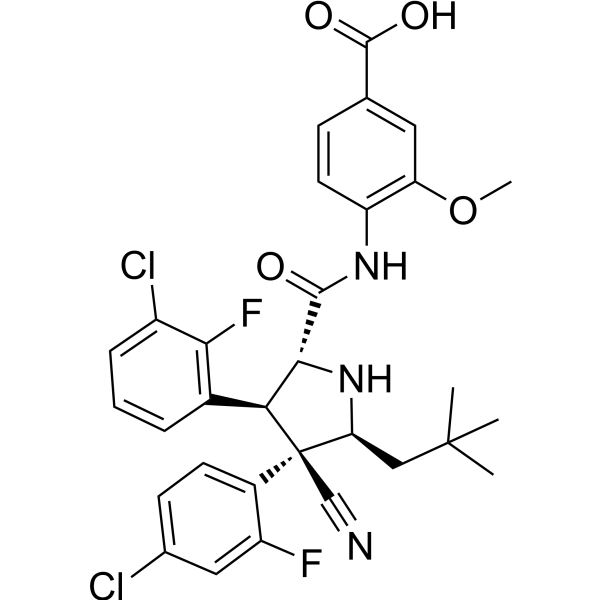
Idasanutlin (RG7388) is an orally bioavailable MDM2 inhibitor with an IC50 of 6 nM. Idasanutlin disrupts MDM2-p53 binding, stabilizes and activates p53, triggering cell cycle arrest, apoptosis, and reduced cancer cell viability. Idasanutlin reduces EGFR protein expression and phosphorylation, suppresses downstream SHP2, MEK1/2, ERK1/2, AKT, mTOR, p70(S6K1), and S6 signaling. Idasanutlin induces mitochondrial ROS production, drives p38 MAPK phosphorylation, upregulates NOXA, and mediates caspase-3-dependent apoptosis and gasdermin E-mediated pyroptosis. Idasanutlin can be used for the research of TP53-mutant non-small cell lung cancer, T-cell acute lymphoblastic leukemia, colorectal carcinoma, melanoma, diffuse large B-cell lymphoma, mantle cell lymphoma, non-Hodgkin lymphoma, severe fever with thrombocytopenia syndrome, neuroblastoma, acute lymphoblastic leukemia, relapsed or refractory acute myeloid leukemia, osteosarcoma, solid tumors, and hematological tumors .
loading...
    loading...
42
42 Cited Publications
Cat. No.: HY-10514
CAS No.: 702675-74-9
Purity:  99.84%
Target:  

PDK-1 IKK Autophagy

Research Areas:  

Cancer

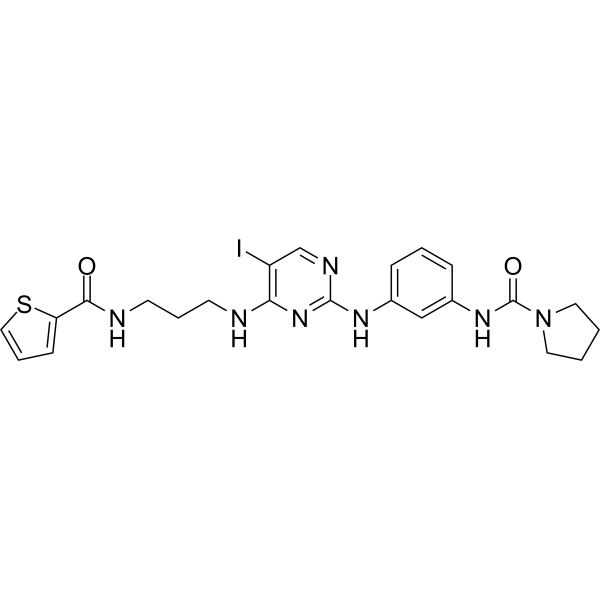
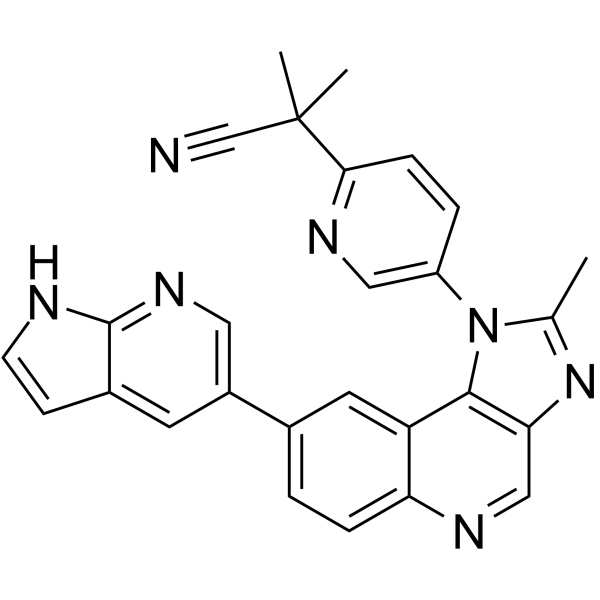
BX795 is a potent and selective inhibitor of PDK1, with an IC50 of 6 nM. BX795 is also a potent and relatively specific inhibitor of TBK1 and IKKε, with an IC50 of 6 and 41 nM, respectively. BX795 blocks phosphorylation of S6K1, Akt, PKCδ, and GSK3β, and has lower selectivity over PKA, PKC, c-Kit, GSK3β etc. BX795 modulates autophagy .
loading...
    loading...
12
12 Cited Publications
Cat. No.: HY-50908
CAS No.: 572924-54-0
Synonyms: MK-8669; Deforolimus; AP23573
Target:  

mTOR Autophagy Bacterial

Research Areas:  

Cancer

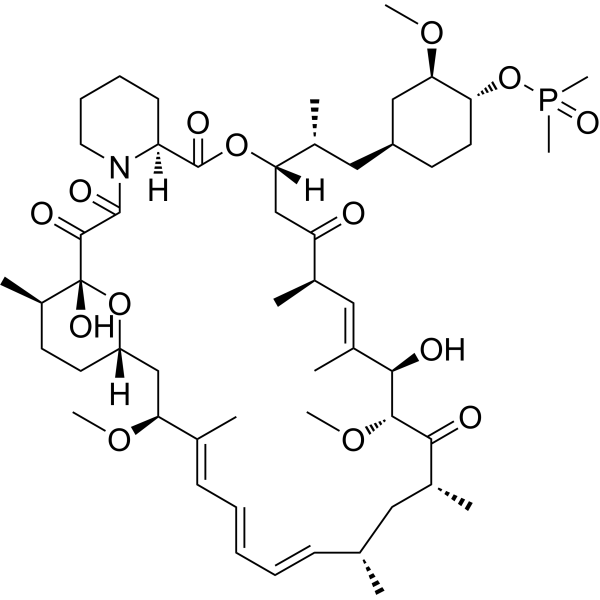
Ridaforolimus (MK-8669) is a potent and selective mTOR inhibitor; inhibits ribosomal protein S6 phosphorylation with an IC50 of 0.2 nM in HT-1080 cells .
loading...
    loading...
6
6 Cited Publications
Cat. No.: HY-13595
CAS No.: 481-74-3
Purity:  99.77%
Synonyms: Chrysophanic acid
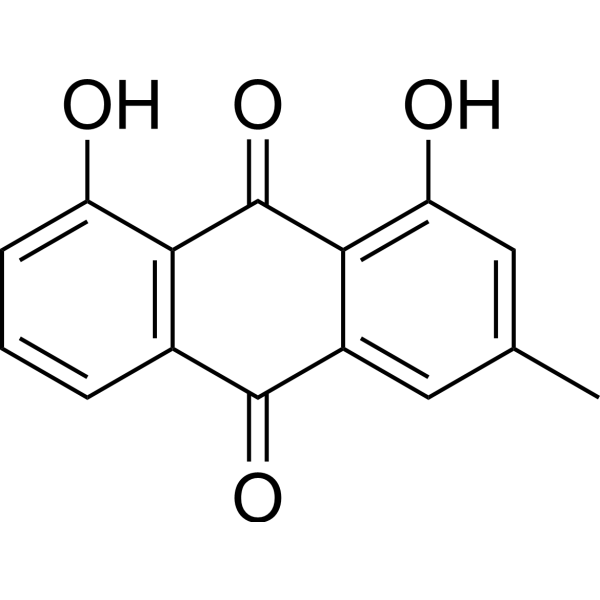
Chrysophanol (Chrysophanic acid) is a natural anthraquinone, which inhibits EGF-induced phosphorylation of EGFR and suppresses activation of AKT and mTOR/p70S6K.
loading...
    loading...
5
5 Cited Publications
Cat. No.: HY-19713
CAS No.: 1627709-94-7
Research Areas:  

Cancer

LJI308 is a potent pan-ribosomal S6 kinase (RSK) inhibitor, with IC50s of 6 nM, 4 nM, and 13 nM for RSK1, RSK2, and RSK3, respectively. LJI308 inhibits the phosphorylation of RSK (T359/S363) and YB-1 (S102) after irradiation, treatment with EGF, and in cells expressing a KRAS mutation .
loading...
    loading...
4
4 Cited Publications
Cat. No.: HY-14153
CAS No.: 145158-71-0
Purity:  99.89%
Target:  

5-HT Receptor Apoptosis

Research Areas:  

Metabolic Disease Cancer

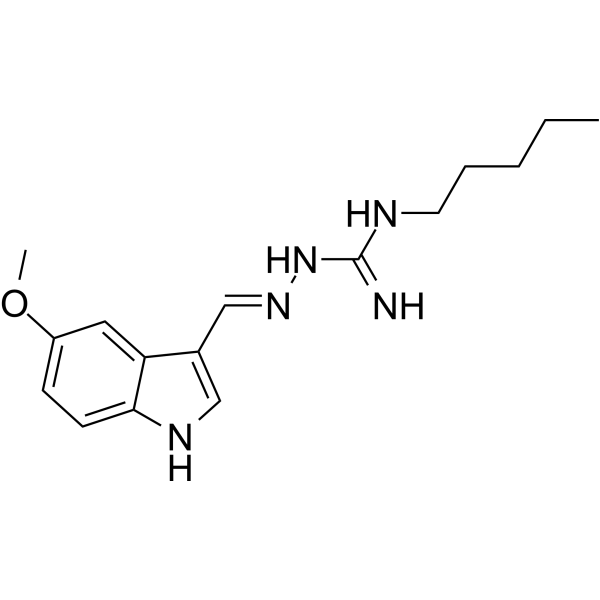
Tegaserod is an orally active serotonin receptor 4 (HTR4; 5-HT4R) agonist and a 5-HT2B receptor antagonist. Tegaserod has pKis of 7.5, 8.4 and 7.0 for human recombinant 5-HT2A, 5-HT2B and 5-HT2C receptors, respectively. Tegaserod causes tumor cell apoptosis, blunts PI3K/Akt/mTOR signaling and decreases S6 phosphorylation. Tegaserod has anti-tumor activity and has the potential for irritable bowel syndrome (IBS) research .
loading...
    loading...
4
4 Cited Publications
Cat. No.: HY-14153A
CAS No.: 189188-57-6
Purity:  99.90%
Synonyms: SDZ-HTF-919; HTF-919
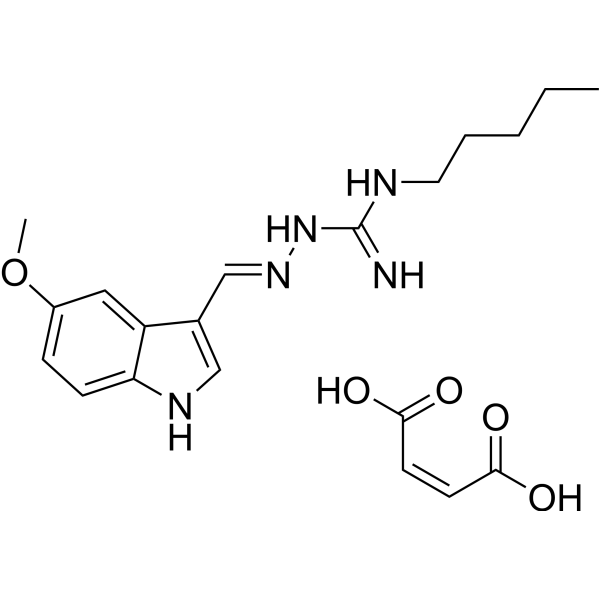
Tegaserod maleate (SDZ-HTF-919) is an orally active serotonin receptor 4 (HTR4; 5-HT4R) agonist and a 5-HT2B receptor antagonist. Tegaserod maleate has pKis of 7.5, 8.4 and 7.0 for human recombinant 5-HT2A, 5-HT2B and 5-HT2C receptors, respectively. Tegaserod maleate causes tumor cell apoptosis, blunts PI3K/Akt/mTOR signaling and decreases S6 phosphorylation. Tegaserod maleate has anti-tumor activity and has the potential for irritable bowel syndrome (IBS) research .
loading...
    loading...
3
3 Cited Publications
Cat. No.: HY-N0597
CAS No.: 32791-84-7
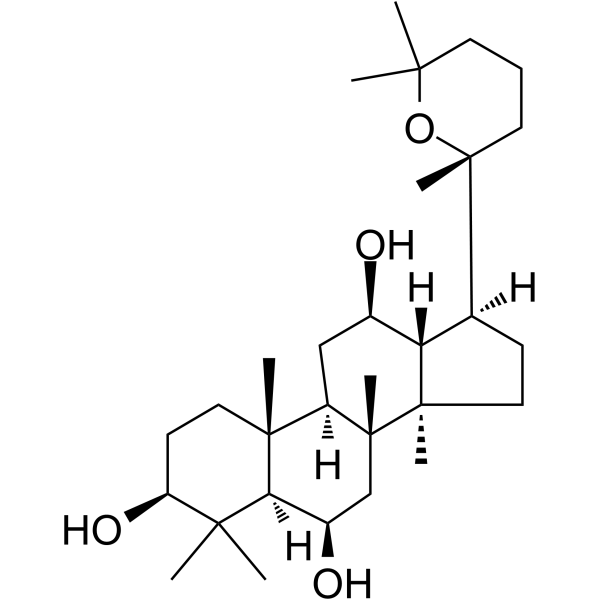
Panaxatriol is an orally active dammarane-type tetracyclic triterpene sapogenin. Panaxatriol enhances the phosphorylation levels of Akt, insulin receptor and p70S6K in skeletal muscle. Panaxatriol reduces the mRNA expression level of Atrogin1 in skeletal muscle. Panaxatriol induces apoptosis, pre-G1 cell cycle arrest and increased intracellular ROS levels in prostate cancer cells, decreases mitochondrial membrane potential, inhibits cell migration and reduces colony formation. Panaxatriol can be used in research related to insulin resistance, myocardial ischemia/reperfusion injury and prostate cancer [1][2][3].
loading...
    loading...
2
2 Cited Publications
Cat. No.: HY-P99507
CAS No.: 1969309-56-5
Synonyms: MCLA-128; PB4188; R040517

Target:  

EGFR

Research Areas:  

Cancer

Zenocutuzumab (MCLA-128) is a bispecific humanized IgG1 antibody containing two different Fab arms, targeting extracellular domains of HER2 and HER3 .
loading...
    loading...
2
2 Cited Publications
Cat. No.: HY-N0656A
CAS No.: 7562-61-0
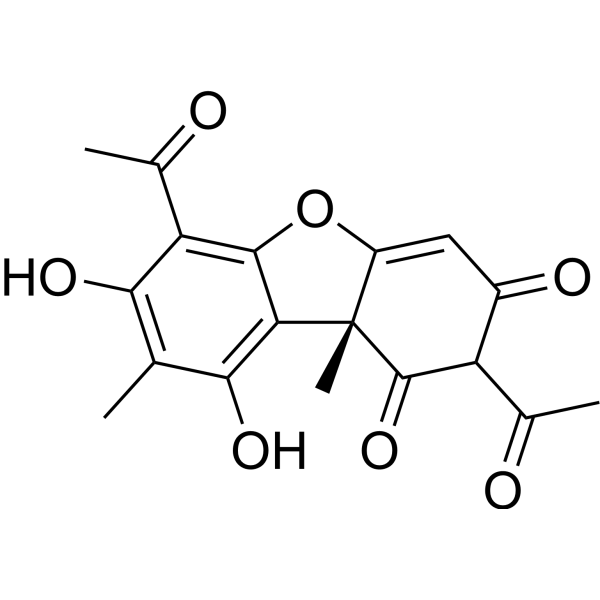
(+)-Usnic acid is isolated from isolated from lichens, binds at the ATP-binding pocket of mTOR, and inhibits mTORC1/2 activity. (+)-Usnic acid inhibits the phosphorylation of mTOR downstream effectors: Akt (Ser473), 4EBP1, S6K, induces autophay, with anti-cancer and anti-inflammatory activity. (+)-Usnic acid possesses antimicrobial activity against a number of planktonic gram-positive bacteria, including Staphylococcus aureus, Enterococcus faecalis, and Enterococcus faecium .
loading...
    loading...
2
2 Cited Publications
Cat. No.: HY-151622
CAS No.: 2845104-25-6
Purity:  98.74%
Target:  

PI3K mTOR

Research Areas:  

Cancer

PI3K/mTOR Inhibitor-11 is an orally active PI3K/mTOR inhibitor (IC50: 3.5, 4.6, and 21.3 nM for PI3Kα, PI3Kδ, and mTOR). PI3K/mTOR Inhibitor-11 regulates the PI3K/AKT/mTOR signaling pathway by inhibiting the phosphorylation of AKT and S6 proteins. PI3K/mTOR Inhibitor-11 can be used in the research of cancers .
loading...
    loading...
2
2 Cited Publications
Cat. No.: HY-111334
CAS No.: 105748-59-2
Purity:  99.74%
Synonyms: Brassinine
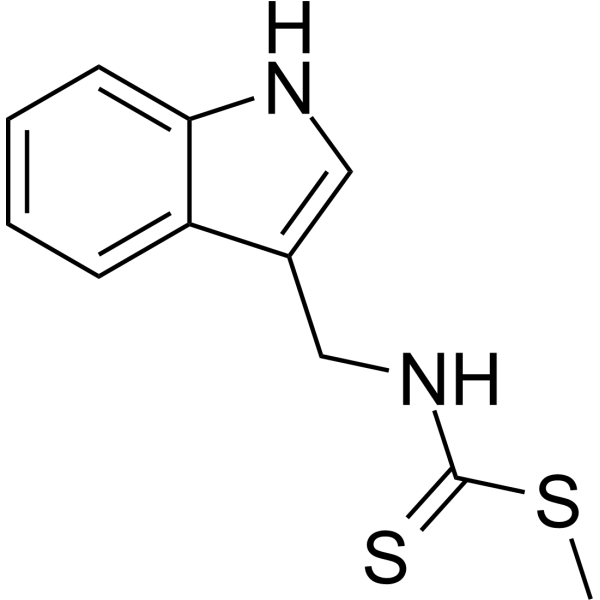
Brassinin is an indole derivative found in cruciferous plants. Brassinin acts as an IDO inhibitor (Ki = 97.7 μM). Brassinin inhibits angiogenesis and induces apoptosis, autophagy, paraptosis, ROS production, and ER stress. Brassinin selectively stimulates lysosomal degradation of Tie2 and promotes lysosomal and proteasomal degradation of FGFR1 in endothelial cells, downregulating AKT and ERK phosphorylation. Brassinin inhibits endothelial cell proliferation, migration, tube formation, spheroid sprouting, and angiogenesis. Brassinin inhibits PI3K/Akt/mTOR/S6K1 signaling, upregulates p21 and p27, and induces G1 phase cell cycle arrest through RB hypophosphorylation. Brassinin inhibits tyrosinase catalytic activity, reduces tyrosinase mRNA, and inhibits MITF nuclear translocation. Brassinin is used for research on triple-negative breast cancer, chronic myeloid leukemia, colon cancer, glioma, atherosclerosis, and skin cancer .
loading...
    loading...
1
1 Cited Publications
Cat. No.: HY-103100
CAS No.: 864741-95-7
Purity:  99.53%
SB-699551 is a selective and brain penetrant 5-HT5A receptor antagonist with a pKi of 8.2 nM. SB-699551 shows high selectivity over most other 5-HT receptor subtypes, dopamine receptors, and α1B adrenoceptor. SB-699551 disrupts Gαi/o-coupled and PI3K/AKT/mTOR signaling pathways, alters CREB, ATF1, AKT, PRAS40, S6K, and FOXO1 phosphorylation in breast tumor cells. SB-699551 can be used for the research of anxiety, breast cancer, and Alzheimer's disease .
loading...
    loading...
1
1 Cited Publications
Cat. No.: HY-N0008
CAS No.: 21082-33-7
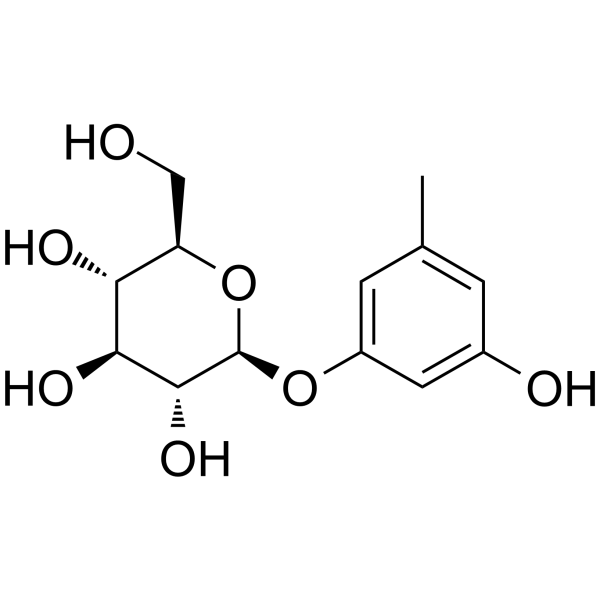
Orcinol glucoside is an orally active, blood-brain barrier permeable osteoblast proliferation promoter that targets the Nrf2/Keap1, mTOR and p38 signaling pathways. Orcinol glucoside promotes Nrf2 nuclear translocation, upregulates antioxidant enzyme levels, enhances the phosphorylation of mTOR and p70S6K, and inhibits the enzymatic activity of HAS2 as well as the nuclear translocation of GR. Orcinol glucoside also alleviates oxidative stress, inhibits autophagic flux, osteoclastogenesis and TGF-β1-induced M2 polarization, while reducing collagen deposition and effectively promoting the proliferation, differentiation and mineralization of osteoblasts. Orcinol glucoside also exhibits anti-pulmonary fibrosis, anxiolytic and antidepressant activities. Orcinol glucoside can be used in the research of senile and glucocorticoid-induced osteoporosis, idiopathic pulmonary fibrosis (IPF), anxiety and other related diseases .
loading...
    loading...
Cat. No.: HY-128574
CAS No.: 2253733-37-6
Purity:  99.71%
Synonyms: DS11252927
Target:  

GLUT PI3K Akt

Research Areas:  

Metabolic Disease

D927 (DS11252927) is an orally active glucose transporter type 4 (GLUT4) translocation activator with an EC50 of 0.14 μM. D927 enhances the binding affinity of PI3Kα catalytic subunit p110α to canonical RAS proteins (KRAS4A, KRAS4B) and RRAS, RRAS2, MRAS. D927 activates the PI3Kα-AKT pathway (increasing phosphorylation of AKT, p70S6 kinase) without affecting the RAF-ERK1/2 pathway. D927 improves hyperglycemia in type 1 and type 2 diabetes mice model. D927 can be used for the study of glucose homeostasis disorders and diabetes .
loading...
    loading...
Cat. No.: HY-121629
CAS No.: 1221962-86-2
Purity:  98.02%
Target:  

PDK-1

Research Areas:  

Cancer

PS210 is a potent and selective PDK1 activator with a Kd of 3 μM and targets the PIF-binding pocket of PDK1. PS210 is inactive against other protein kinases, including PDK1 downstream signaling components such as S6K, PKB/Akt or GSK3. In cells, the prodrug of PS210 (PS423) acts as a substrate-selective inhibitor of PDK1, inhibiting the phosphorylation and activation of S6K .
loading...
    loading...
Cat. No.: HY-N1677
CAS No.: 530-55-2
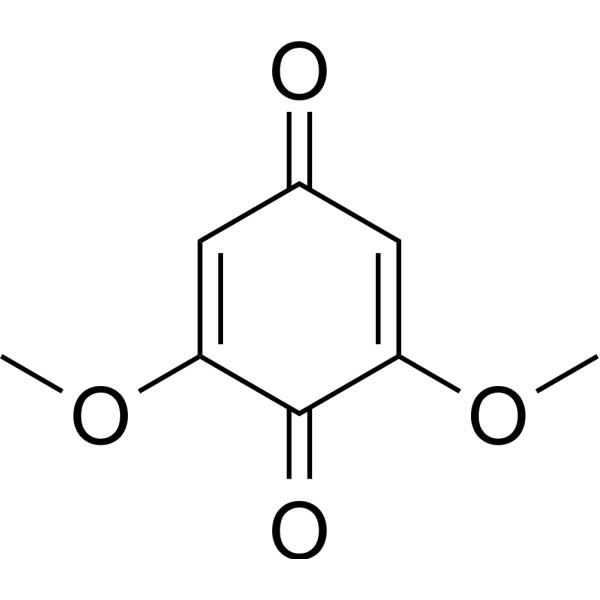
2,6-Dimethoxy-1,4-benzoquinone is a 1,4-benzoquinone derivative. 2,6-Dimethoxy-1,4-benzoquinone promotes phosphorylation of AKT, S6K, mTOR, 4E-BP1, and AMPK, and attenuates mTORC1 activity as part of the AKT/mTOR pathway. 2,6-Dimethoxy-1,4-benzoquinone stimulates myoblast differentiation, increases myotube size, elevates MHC protein expression, enhances mitochondrial biogenesis, respiration, and DNA content, and increases skeletal muscle weights, fiber size, grip strength, and treadmill performance. 2,6-Dimethoxy-1,4-benzoquinone exerts anti-cancer, anti-inflammatory, anti-adipogenic, antibacterial, and antimutagenic effects, inhibits adipogenic transcription factors, nitric oxide production, skin tumor development, Magnaporthe oryzae growth, spore germination, appressorium formation, and growth of select bacterial species, induces H2O2 generation and rice defense gene expression, and reduces rice blast lesion formation. 2,6-Dimethoxy-1,4-benzoquinone can be used for the research of obesity, skin tumorigenesis, rice blast disease, and food-borne illness .
loading...
    loading...
Cat. No.: HY-101955
CAS No.: 1430202-70-2
Purity:  99.30%
Synonyms: (2S,6S)-HNK hydrochloride
Target:  

mTOR nAChR

Research Areas:  

Neurological Disease

(2S,6S)-Hydroxynorketamine hydrochloride is a neurorelaxant with potential antidepressant and analgesic effects. (2S,6S)-Hydroxynorketamine hydrochloride can activate the mTOR pathway, increase the phosphorylation level of downstream targets, and antagonize α7-nicotinic acetylcholine receptor (nAChR) to exert neuroactive properties .
loading...
    loading...
Cat. No.: HY-134903
CAS No.: 2382768-55-8
Purity:  95.41%
Target:  

mTOR

Research Areas:  

Cancer

(32-Carbonyl)-RMC-5552 is a potent mTOR inhibitor. (32-Carbonyl)-RMC-5552 inhibits mTORC1 and mTORC2 substrate (p-P70S6K-(T389), p-4E-BP1-(T37/36), AND p-AKT1/2/3-(S473)) phosphorylation with pIC50s of > 9, >9 and between 8 and 9, respectively (patent WO2019212990A1, example 2) .
loading...
    loading...
Cat. No.: HY-W348485
CAS No.: 899937-47-4
Target:  

mTOR

Research Areas:  

Cancer

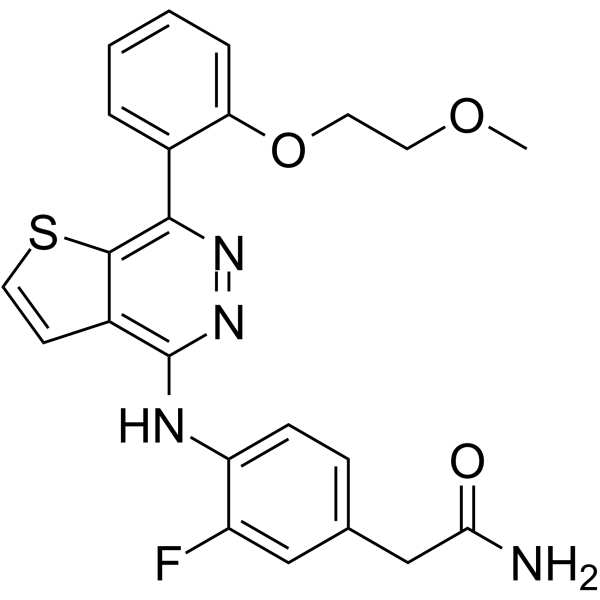
WRX606 is an orally active nonrapalog inhibitor for mTOR complex 1 (mTORC1M). WRX606 inhibits the phosphorylation of mTORC1 substrate S6 kinase 1 (S6K1) (IC50 = 10 nM) and eukaryotic translation initiation factor 4E binding protein (p-4E-BP1) (IC50 = 0.27 μM) in MCF-7 cells. WRX606 suppresses tumor growth in mice without promotion of metastasis. WRX606 can be studied in research as an antitumor agent .
loading...
    loading...

