
1. Search Result
Search Result
Results for "

anti-proliferative agent

" in MedChemExpress (MCE) Product Catalog:

235

Inhibitors & Agonists

2

Peptides

38

Natural
Products

3

Isotope-Labeled Compounds

2

Click Chemistry

Art. -Nr. Produktname Target Forschungsgebiete Chemical Structure
  • HY-B0360
    Rebamipide
    5+ Cited Publications

    OPC12759; Proamipide

    COX Inflammation/Immunology Cancer
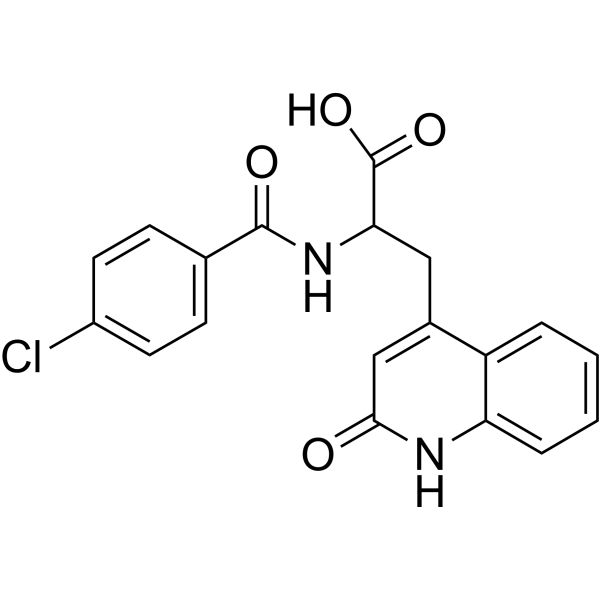
    Rebamipide (OPC12759) is an orally active gastroprotective agent that enhances the production of endogenous PGs (especially intragastric PGE2) by inducing COX-2 expression, thereby protecting the gastric mucosa from injury. Rebamipide exerts anti-proliferative activity against gastric cancer cells. Rebamipide can be used in studies of mucosal protection, gastroduodenal ulcer, gastritis and gastric cancer .
    Rebamipide
  • HY-148185

    KL610023

    ADC Payload Cancer
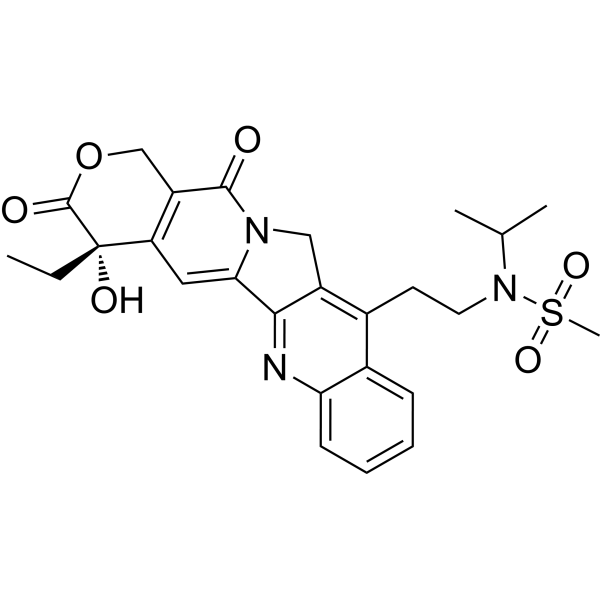
    T01-1 is an anticancer agent (camptothecin derivative) with good anti-proliferative activity .
    T01-1
  • HY-B0413
    Fenbendazole
    Maximum Cited Publications
    9 Publications Verification

    Parasite HIF/HIF Prolyl-Hydroxylase Microtubule/Tubulin Antibiotic Infection Cancer
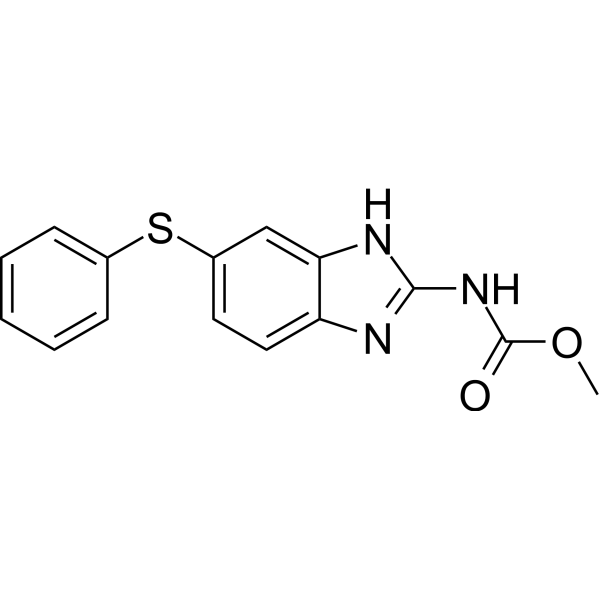
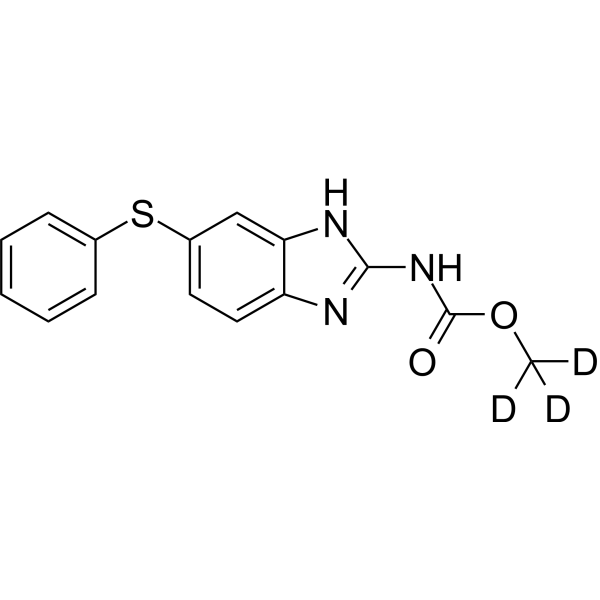
    Fenbendazole is an orally active benzimidazole anthelmintic agent, with a broad antiparasitic range. Fenbendazole is a microtubule destabilizing agent and acts on helminthes primarily by binding to tubulin and disrupting the tubulin microtubule equilibrium. Fenbendazole stabilizes the transcriptional activator HIF-1α. Fenbendazole possesses an efficient anti-proliferative activity and induces apoptosis. Fenbendazole causes cell-cycle arrest and mitotic cell death, and has antitumor activity in mice xenografted with wild-type p53 .
    Fenbendazole
  • HY-15995
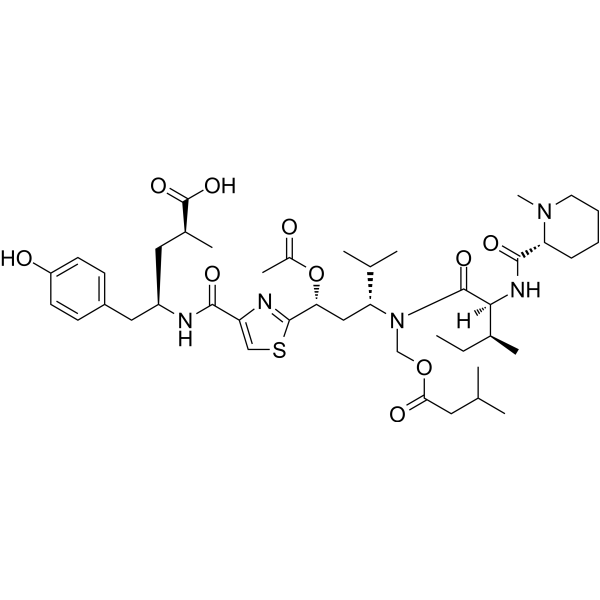
    Tubulysin A
    1 Publications Verification

    TubA

    Antibiotic Microtubule/Tubulin ADC Payload Mitosis Cancer
    Tubulysin A (TubA) is an anticancer and antiangiogenic agent with anti-microtubule, anti-mitosis and anti-proliferative activity against a variety of cancer cells with IC50 values in the pmol range. It can induce apoptosis of cancer cells and has no effect on normal cells. Tubulysins are a group of potent cytotoxins consisting of nine members (A-I). Tubulysin A can synthesize ADC as ADC Cytotoxin .
    Tubulysin A
  • HY-147298
    Plogosertib
    1 Publications Verification

    CYC140

    Polo-like Kinase (PLK) Cancer
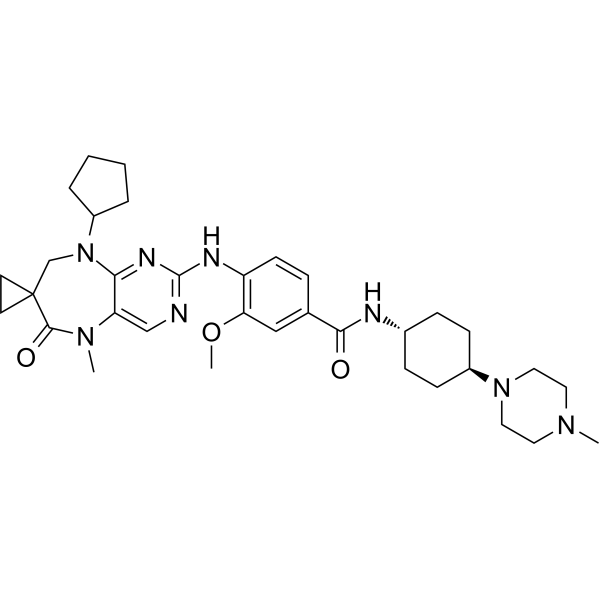
    Plogosertib (CYC140) is a selective, potent, and orally active ATP-competitive PLK1 inhibitor (IC50: 3 nM). Plogosertib is an anti-cancer agent with anti-proliferative activity. Plogosertib can be used in the research of several tumors, including esophageal, gastric, leukemia, non–small cell lung cancer, ovarian, and squamous cell cancers .
    Plogosertib
  • HY-N7085

    5,7-Dimethoxycoumarin; Limettin

    Environmental Pollutants ERK p38 MAPK JNK Neurological Disease Inflammation/Immunology Cancer
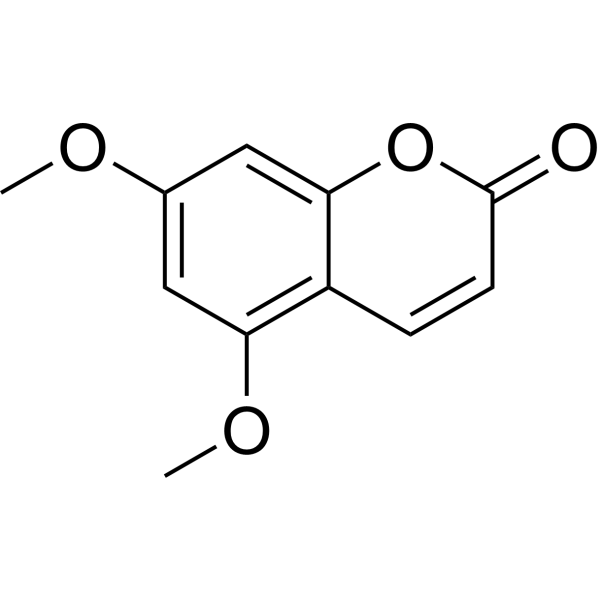
    Citropten (5, 7-dimethoxycoumarin) is one of the coumarin derivatives. Citropten is an effective oral anticancer agent. Citropten has anti-proliferative activity against A2058 and B16 melanoma cells. Citropten exerts anti-inflammatory effects through the NFκB and MAPK signaling pathways. Citropten acts as an antidepressant through heat shock protein-70, monoamine oxidase-A and inhibition of apoptosis .
    Citropten
  • HY-128224

    Drug Intermediate Cancer
    Antiproliferative agent-13 (compound 16c) shows an antiproliferative activity against human A375 cells with an IC50 value of 32.7 nM. Antiproliferative agent-13 can be used for the research of cancer .
    Antiproliferative agent-13
  • HY-B0413R

    Reference Standards Parasite HIF/HIF Prolyl-Hydroxylase Microtubule/Tubulin Antibiotic Infection
    Fenbendazole (Standard) is the analytical standard of Fenbendazole. This product is intended for research and analytical applications. Fenbendazole is an orally active benzimidazole anthelmintic agent, with a broad antiparasitic range. Fenbendazole is a microtubule destabilizing agent and acts on helminthes primarily by binding to tubulin and disrupting the tubulin microtubule equilibrium. Fenbendazole stabilizes the transcriptional activator HIF-1α. Fenbendazole possesses an efficient anti-proliferative activity and induces apoptosis. Fenbendazole causes cell-cycle arrest and mitotic cell death, and has antitumor activity in mice xenografted with wild-type p53 .
    Fenbendazole (Standard)
  • HY-147929

    Apoptosis Caspase Bcl-2 Family Cancer
    Apoptotic agent-3 (compound 15f) promotes apoptosis through the potential mitochondria-mediated Bcl-2/Bax pathway and activation of the Caspase 3 pathway. Apoptotic agent-3 exhibits anti-proliferative activities and can be used for cancer research .
    Apoptotic agent-3
  • HY-N0181A

    9β,10α-Ergosterol

    Endogenous Metabolite Metabolic Disease
    Lumisterol (9β,10α-Ergosterol), a steroid compound, is the (9β,10α)-stereoisomer of Ergosterol (HY-N0181). Lumisterol is a photoprotective agent against UVB-induced DNA damage and anti-proliferative activities .
    Lumisterol
  • HY-123656

    Apoptosis Cancer
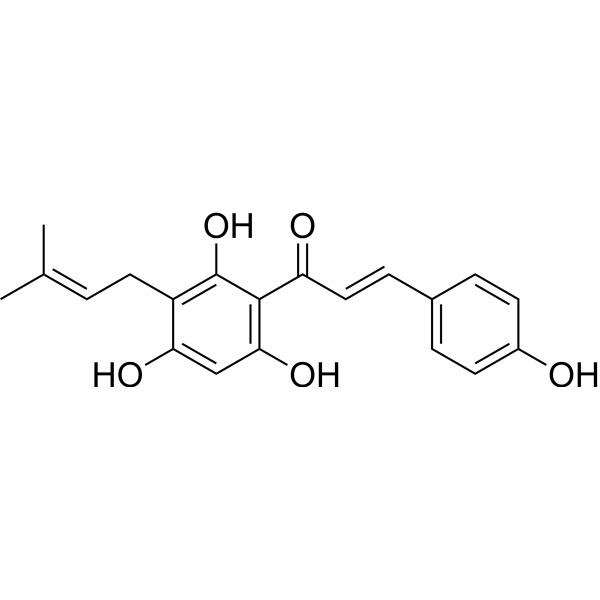
    Antiproliferative agent-61 is a synthetic β-carlinyl chalcone with significant antiproliferative activity. Antiproliferative agent-61 showed significant effects in a range of solid tumor cell lines, with the most prominent effects in breast cancer. Antiproliferative agent-61 showed IC50 values of 2.25 and 3.29 μM in the human breast cancer MCF-7 cell line. Antiproliferative agent-61 significantly induced DNA fragmentation and apoptosis in breast cancer cells. Antiproliferative agent-61 inhibited the interaction of MDM2 with p53 and promoted the degradation of MDM2 .
    Antiproliferative agent-61
  • HY-126423

    Isorhamnetin 3-O-glucuronide

    Apoptosis Cancer
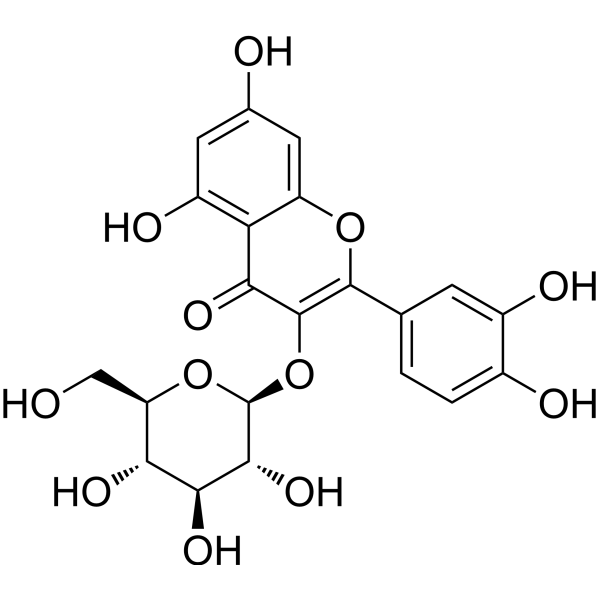
    Isorhamnetin 3-glucuronide is a potent anticancer agent. Isorhamnetin 3-glucuronide shows anti-proliferative activity. Isorhamnetin 3-glucuronide induces Apoptosis and cell cycle arrest at S-phase .
    Isorhamnetin 3-glucuronide
  • HY-152090

    Bacterial Sirtuin Infection Cancer
    Antiproliferative agent-17 is an antiproliferative agent. Antiproliferative agent-17 inhibits Gram-positive bacteria and has anticancer activity .
    Antiproliferative agent-17
  • HY-176538

    HSP Cancer
    Antiproliferative agent-72 (Compound 10) is a Hsp90 inhibitor with a Kd of 11 nM. Antiproliferative agent-72 has antiproliferative activity with IC50s of 1.5  μM and 1.1 μM for HCT116 and NCI-N87 cells, respectively. Antiproliferative agent-72 can be used for cancers research .
    Antiproliferative agent-72
  • HY-W278944

    Drug Derivative Cancer
    Antiproliferative agent-15 is an thienopyrimidine derivated anticancer agent. Antiproliferative agent-15 shows antiproliferative activity against human colon (HCT116 and HCT15) and brain (LN-229 and GBM-10) cancer cell lines .
    Antiproliferative agent-15
  • HY-N15577

    Drug Derivative Cancer
    Antiproliferative agent-69 (Compound 1) is a prenylated kaempferol derivative found in the fresh bud’s fur of Platanus acerifolia. Antiproliferative agent-69 shows significant antiproliferative effects against human breast cancer cells (MCF-7) and human hepatocellular carcinoma cells (Hep-G2) with IC50 values of 38.2 μM and 39.5 μM, respectively. Antiproliferative agent-69 is promising for research of breast cancer and liver cancer .
    Antiproliferative agent-69
  • HY-148453

    Drug Derivative Cancer
    Antiproliferative agent-16 is an indolyl hydrazide-hydrazone compound with anticancer activity. Antiproliferative agent-16 exhibits specificity toward breast cancer cells (IC50 of 6.94 μM for MCF-7 cells) .
    Antiproliferative agent-16
  • HY-169100

    VEGFR PI3K Akt mTOR p38 MAPK HIF/HIF Prolyl-Hydroxylase Cancer
    Antiproliferative agent-57 (compound M2) is a tumor angiogenesis inhibitor. Antiproliferative agent-57 inhibits the secretion of VEGF in SiHa cells under hypoxic conditions (IC50=0.68 μM) without inducing cytotoxicity. Antiproliferative agent-57 can modulate the PI3K/AKT/mTOR and MAPK signaling pathways in tumor cells to inhibit the expression of HIF-1α and VEGF in tumor tissues .
    Antiproliferative agent-57
  • HY-152091

    Fungal Infection Cancer
    Antiproliferative agent-18 (Compound 5k) is an anti-proliferative agent. Antiproliferative agent-18 also displays moderate anti-bacterial and anti-fungi activity .
    Antiproliferative agent-18
  • HY-162770

    Biochemical Assay Reagents Cancer
    Antiproliferative agent-55 (Compound 2d) is an anti-proliferative agent that can inhibit the growth of cancer cells. Antiproliferative agent-55 can be used in cancer research .
    Antiproliferative agent-55
  • HY-161089

    Others Cancer
    Antiproliferative agent-45 (compound 9) is a prodrug. Antiproliferative agent-45 exhibits significant anti-proliferative effects for human pancreatic cells in hypoxia but fewer effects in normoxia. Antiproliferative agent-45 can be used for cancer research .
    Antiproliferative agent-45
  • HY-156183

    MDM-2/p53 ERK Cancer
    Antiproliferative agent-37 (compound 10J) shows anti-proliferative effect by arresting the cells at the G2/M phase of the cell cycle .
    Antiproliferative agent-37
  • HY-152099

    Apoptosis Cancer
    Antiproliferative agent-19 (compound 4a) is an anti-cancer agent that exerts anti-proliferative effects on lung cancer cells by inducing apoptosis. antiproliferative agent-19 also induces cell cycle arrest in the G2/M phase .
    Antiproliferative agent-19
  • HY-155127

    Fungal Cancer
    Antiproliferative agent-33 (Compound 2g) is an anti-proliferative, antifungal, and antibacterial agent. Antiproliferative agent-33 inhibits MDA-MB-231 cell proliferation (IC50: 16.38 μM). Antiproliferative agent-33 inhibits gram-negative bacteria growth, and inhibits S. faecalis with an MIC value of 8 μg/mL .
    Antiproliferative agent-33
  • HY-158016

    EGFR Apoptosis Cancer
    Antiproliferative agent-49 (Compound 5a) is a EGFR-TK inhibitor with an IC50 of 0.09 μM. Antiproliferative agent-49 is a anti-proliferative agent. Antiproliferative agent-49 displays good activities against HER3 and HER4 with IC50 values 0.18 and 0.37 µM. Antiproliferative agent-49 induces mitochondrial apoptotic pathway and increased accumulation of ROS .
    Antiproliferative agent-49
  • HY-146354

    Apoptosis Reactive Oxygen Species (ROS) Cancer
    Antiproliferative agent-4 (compound 2y) has excellent anti-proliferative activity against certain cancer cell lines. Antiproliferative agent-4 reduces the mitochondrial membrane potential, and increases the apoptosis rate and the level of ROS on EC109. Antiproliferative agent-4 inhibits tumour growth in nude mice, with low toxicity .
    Antiproliferative agent-4
  • HY-152945

    NF-κB Cancer
    Antiproliferative agent-22 (compound 2) is an anticancer agent. Antiproliferative agent-22 shoes anti-proliferative activities against MCF-7, MDA-MB-231 and MDA-MB-468 cells with IC50 values of 6.2 μM, 3.3 μM and 3.3 μM, respectively .
    Antiproliferative agent-22
  • HY-146103

    Apoptosis Reactive Oxygen Species (ROS) Cancer
    Antiproliferative agent-7 (compound 8f) is a potent anti-proliferative agent. Antiproliferative agent-7 has antiproliferative activity against cancer cell lines MCF-7, MDA-MB-231, HCT-116 and FR-2 with IC50s of 3.5 μM, 15.54 μM, 30.43 μM and 34.8 μM, respectively. Antiproliferative agent-7 can increase ROS production and induce apoptosis .
    Antiproliferative agent-7
  • HY-121333

    Antibiotic Wnt β-catenin Bacterial Infection Neurological Disease Cancer
    Dinactin, an antibiotic ionophore produced by Streptomyces species, as an effective small molecule targeting Wnt/β-catenin signaling pathway in cancer cells. Dinactin shows marked inhibition of HCT-116 cell growth with an IC50 of 1.1 μM. Dinactin shows anti-proliferative activity against the cancer cells in apoptosis-independent manner. Dinactin is also an effective agent for the research of neuropathic pain .
    Dinactin
  • HY-N15657

    Apoptosis COX Caspase Microtubule/Tubulin Monoamine Oxidase Cancer
    Geiparvarin is an anticancer agent and an inhibitor of MAO-B (pIC50 = 6.84 μM). Geiparvarin exerts anti-tumor effects by downregulating COX2 expression and inhibiting angiogenesis. Geiparvarin blocks the cell cycle at the G1 phase and induces apoptosis of cancer cells. Geiparvarin has anti-microtubule activity and destroys the cytoskeleton to exert anti-proliferative effects. Geiparvarin has research significance for lung cancer, leukemia, and breast cancer .
    Geiparvarin
  • HY-125730

    Others Cancer
    Kibdelone A is a type of natural compound from the flavonoid family, and it has potential value as an anti-proliferative agent .
    Kibdelone A
  • HY-176485

    Ferroptosis Mitophagy Reactive Oxygen Species (ROS) Cancer
    Antiproliferative agent-70 (compound 23) is a potent antiproliferative agent. Antiproliferative agent-70 shows antiproliferative activities and induces MMP depolarization. Antiproliferative agent-70 induces mitochondrial dysfunction. Antiproliferative agent-70 induces mitophagy and ferroptosis. Antiproliferative agent-70 increases the protein expression of PINK1, p-Parkin, p53 and p21. Antiproliferative agent-70 increases intracellular ROS levels. Antiproliferative agent-70 shows anticancer activity .
    Antiproliferative agent-70
  • HY-147776

    MDM-2/p53 Cancer
    Antiproliferative agent-8 (Compound 5a) is an anti-cancer agent. Antiproliferative against-8 has antiproliferative activity. Antiproliferative agent-8 significantly increases the P53 levels .
    Antiproliferative agent-8
  • HY-142085

    VEGFR Cancer
    Antiproliferative agent-20 is a potent and orally active anticancer agent. Antiproliferative agent-20 exhibits antiproliferative and anti-angiogenic activities .
    Antiproliferative agent-20
  • HY-155380

    Others Others
    Antiproliferative agent-41 (compound 14) is a antiproliferative agent indanorine .
    Antiproliferative agent-41
  • HY-156777

    Drug Derivative Cancer
    Antiproliferative agent-36 (compound 8i) is a benzothiazolyl hydrazones derived compound with antiproliferative activity. Antiproliferative agent-36 has a broad-spectrum anticancer activity .
    Antiproliferative agent-36
  • HY-155069

    Apoptosis Cancer
    Antiproliferative agent-27 (compound 11) is an antiproliferative agent that significantly reduces the number of tumor cell colonies and induces apoptosis. Antiproliferative agent-27 has the potential to be used in the study of cancer .
    Antiproliferative agent-27
  • HY-N8676

    Others Cancer
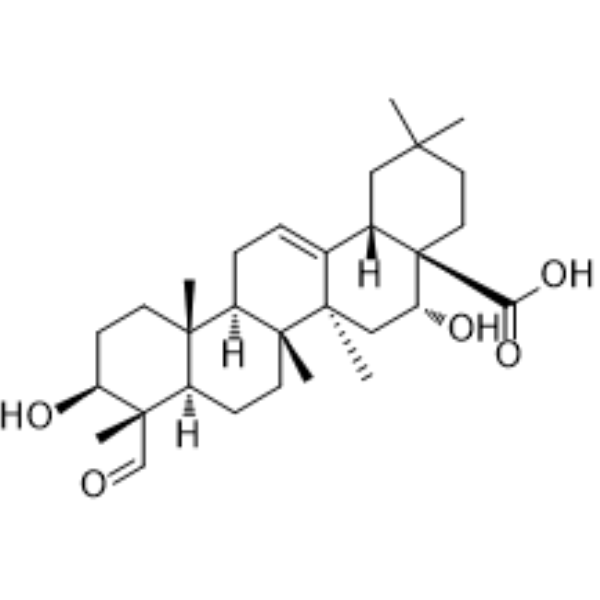
    Antiproliferative agent-29 (Compound 16) is a triterpenoid isolated from the seeds of Peganum harmala L. Antiproliferative agent-29 has antiproliferative activity and has potential for cancer research .
    Antiproliferative agent-29
  • HY-N8677

    Others Cancer
    Antiproliferative agent-28 (Compound 14) is a triterpenoid isolated from the seeds of Peganum harmala L. Antiproliferative agent-28 has antiproliferative activity and has potential for cancer research .
    Antiproliferative agent-28
  • HY-148265

    Microtubule/Tubulin Cancer
    Antiproliferative agent-14 (compound 3b) a potent tubulin polymerization inhibitor, with an IC50 of 3.41 μM. Antiproliferative agent-14 has excellent antiproliferative activity. Antiproliferative agent-14 possess the ability to arrest cells at G2/M phases of the cell cycle .
    Antiproliferative agent-14
  • HY-150968

    Apoptosis Cancer
    Antiproliferative agent-11 (compound 7) is an antiproliferative and selective Ruthenium(II)-Tris-pyrazolylmethane complex. Antiproliferative agent-11 shows antiproliferative activity towards MCF-7, HeLa, 518A2, HCT116 and RD with IC50s of 6, 10, 6.8, 6.7 and 6 μM, respectively. Antiproliferative agent-11 can be used for the research of cancer .
    Antiproliferative agent-11
  • HY-155051

    Apoptosis Histone Methyltransferase Cancer
    Antiproliferative agent-25 (Compound 3s4) is a selective PRMT5 inhibitor (IC50: 0.11 μM). Antiproliferative agent-25 up-regulates hnRNP E1 protein level. Antiproliferative agent-25 forms H-bond interactions with SAM and E444 residue of PRMT5. Antiproliferative agent-25 has antiproliferative effects against A549 cells by inducing apoptosis and inhibiting cell migration. Antiproliferative agent-25 has high clearances with T1/2 of only 21.8 and 4.7 min in human and rat liver microsomes .
    Antiproliferative agent-25
  • HY-155402

    Caspase Apoptosis Others
    Antiproliferative agent-42 (compound 7m) is a dihydrodipyrrolo compound. Antiproliferative agent-42 showed antiproliferative activity against Panc-1 cell line with an IC50 value of 12.54 μM .
    Antiproliferative agent-42
  • HY-175174

    Glutaminase Cancer
    Antiproliferative agent-73 (Compound 7) is an antiproliferative agent. Antiproliferative agent-73 significantly inhibits proliferation of human cancer cells with excellent cytotoxicity. Antiproliferative agent-73 has potent anticancer activity with IC50s of 15.20, 18.18, 20.20 and 13.23  μM for HepG2, MCF-7, HCT-116 and WI38 cells, respectively. Antiproliferative agent-73 can be used for cancers research, such as breast, colorectal and liver cancer .
    Antiproliferative agent-73
  • HY-161824

    Drug Intermediate Cancer
    Antiproliferative agent-52 (Compound 4a) is an antiproliferative agent that exhibits significant antiproliferative activity against four human tumor cell lines (A549, A2780, SKOV3, HCC827), with IC50 values ranging from 5.83 to 8.63 nM. Antiproliferative agent-52 can be used in cancer research .
    Antiproliferative agent-52
  • HY-146390

    Autophagy Reactive Oxygen Species (ROS) Cancer
    Antiproliferative agent-5 (compound 4o) can significantly and irreversibly inhibit proliferation of gastric cancer cells. Antiproliferative agent-5 causes the G2/M phase arrest, and induces ROS accumulation and activation of autophagy. Antiproliferative agent-5 can be used for researching anticancer .
    Antiproliferative agent-5
  • HY-162078

    Casein Kinase Cancer
    Antiproliferative agent-46 (compound 5e) is an inhibitor of the casein kinase-2 enzyme (CK2) receptor. Antiproliferative agent-46 has a potent antiproliferative activity with an IC50 value of 5.75 μM on the U87 cell line .
    Antiproliferative agent-46
  • HY-155112

    Microtubule/Tubulin FLT3 Bcr-Abl Cancer
    Antiproliferative agent-30 (Compound 8g) inhibits tubulin assembly and inhibits FLT3 and Abl1. Antiproliferative agent-30 has vascular-disrupting activity. Antiproliferative agent-30 has broad antiproliferative activities against cancer cell lines (IC50s: 0.054 nM, 0.008 nM, 0.144 nM for HCT-116, K562, MV-4-11 cells respectively). Antiproliferative agent-30 also has anticancer effect against AML with FLT3-ITD-TKD mutation .
    Antiproliferative agent-30
  • HY-168102

    Microtubule/Tubulin Apoptosis Cancer
    Antiproliferative agent-59 (Compound 14u) is an inhibitor for tubulin polymerization. Antiproliferative agent-59 exhibits antiproliferative activities against cancer cells Huh7, SGC-7901, and MCF-7 with IC50 of 0.03, 0.18, and 0.13μM. Antiproliferative agent-59 arrests the cell cycle at G2/M phase and induces apoptosis in Huh7 cell. Antiproliferative agent-59 exhibits antitumor efficacy against liver cancer in Huh7 xenograft mouse models, without significant toxicity .
    Antiproliferative agent-59
  • HY-155055

    Reactive Oxygen Species (ROS) Cancer
    Antiproliferative agent-26 (compound 4g) is an antiproliferative agent with much broad range of activity targeting Leukemia, CNS, Melanoma, Renal and Breast (at the concentration of 10 μM). Antiproliferative agent-26 inhibits colony forming and arrests cell cycle at G1 phase/S phase at 5 μM and 25 μM, respectively .
    Antiproliferative agent-26

Online-Anfrage

Your information is safe with us. * Required Fields.

Anrede


Country or Region *

Name des Antragstellers *


Name der Organisation *

Department *


E-Mail-Addresse *


Produktname *

Art. -Nr.


Requested quantity *

Telefonnummer *


Bemerkungen

Online-Anfrage

Inquiry Information

Produktname:
Art. -Nr.:
Menge:
MCE Japan Authorized Agent:

