
19 Results for "

anticoagulation

" in MedChemExpress (MCE) Product Catalog:
Products (19)

19 Results for "anticoagulation" in MCE Product Catalog:

1
1 Cited Publications
Cat. No.: HY-N8241
CAS No.: 103188-48-3
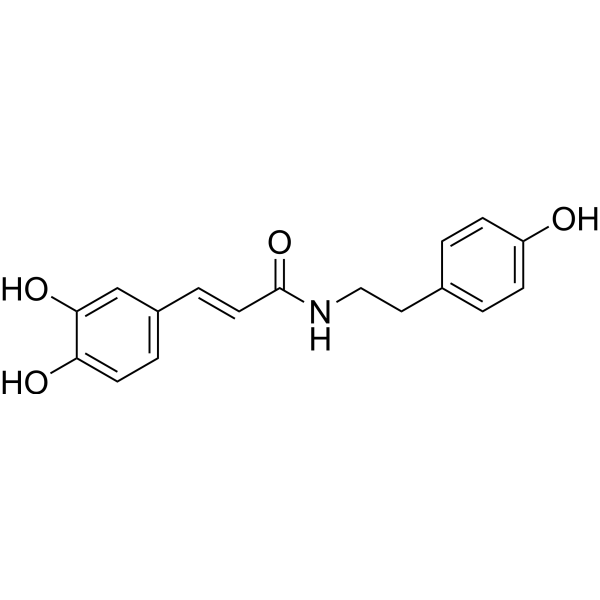
N-TRANS-CaffeoyLtyramine is an effective inflammatory response regulator, which has antioxidant activity and anticoagulation effects .
loading...
    loading...
1
1 Cited Publications
Cat. No.: HY-B0924
CAS No.: 117-37-3
Target:  

Thrombin

Research Areas:  

Cardiovascular Disease

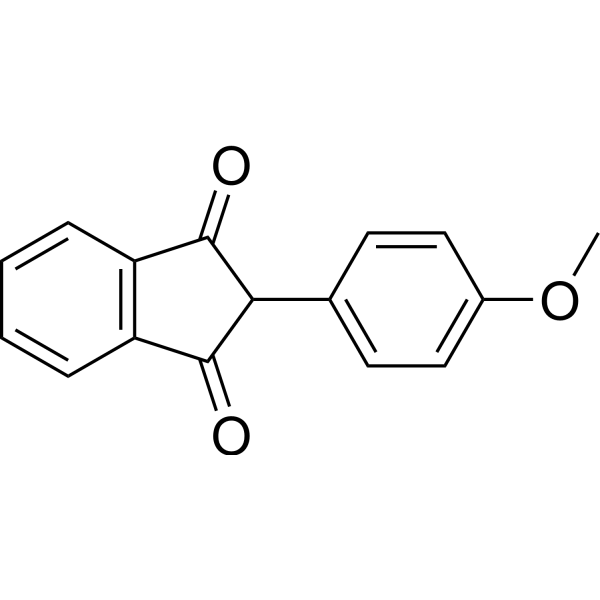
Anisindione is an oral indandione anticoagulant. Anisindione inhibits the formation of active procoagulant factors II, VII, IX and X. Anisindione can be used in anticoagulation-related research .
loading...
    loading...
1
1 Cited Publications
Cat. No.: HY-P991117
CAS No.: 3008610-20-3
Synonyms: REGN-9933

Target:  

Factor Xa

Research Areas:  

Cardiovascular Disease

Amrecibart is an anti-coagulation factor 11 human IgG4 κ monoclonal antibody. Recommend Isotype Controls: Human IgG4 kappa, Isotype Control (HY-P99003) .
loading...
    loading...
Cat. No.: HY-L136
1,525 compounds

Coagulation, also known as clotting, is the process in which blood changes from a liquid to a solid gel to form a blood clot. Thrombin, which is accurately and evenly generated in the injured part of blood vessels, is a key effector enzyme of the blood coagulation system and participates in many important biological processes, such as platelet activation, fibrinogen conversion to fibrin network, coagulation feedback amplification, etc. At the same time, to avoid the accidental formation of thrombus in the body, there is also an anticoagulant mechanism that inhibits blood coagulation.

Normal coagulation mechanism represents a balance between the pro-coagulant pathway in the injured site and anti-coagulant pathway beyond it. The blood coagulation system may be out of balance during the perioperative period or critical illness, which may lead to thrombosis or excessive bleeding. Therefore, the physiological study of coagulation balance is an important basis for clinical diagnosis and treatment of the abnormal coagulation process.

MCE supplies a unique collection of 1,525 compounds targeting key proteins in coagulation and anti-coagulation system. MCE Coagulation and Anti-coagulation Compound Library is a useful tool for study the mechanism of coagulation and anticoagulation.

Cat. No.: HY-105240
CAS No.: 872454-31-4
Synonyms: PMX-60056
Target:  

Factor Xa

Research Areas:  

Cardiovascular Disease

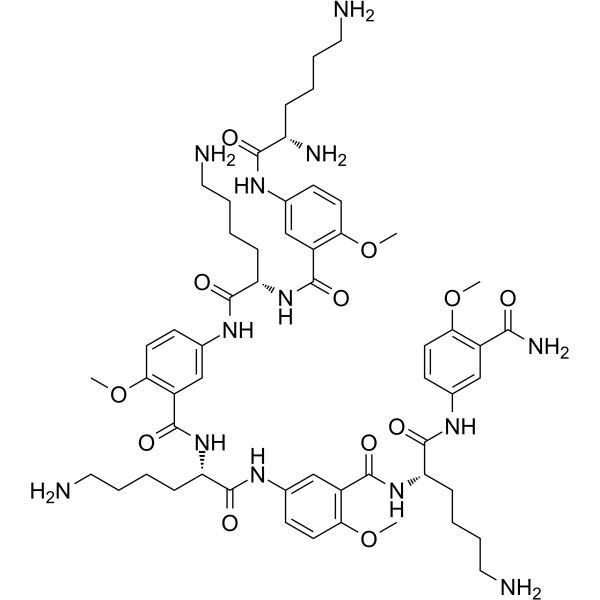
Delparantag (PMX-60056) is a salicylamide derivative and an effective unfractionated heparin (UFH) and low molecular weight heparin (LMWH) reversing agent. Delparantag shows ability to neutralize the anticoagulation and bleeding effects of UFH and LMWH .
loading...
    loading...
Cat. No.: HY-153836
CAS No.: 959716-29-1
Target:  

Factor Xa

Research Areas:  

Others

Anivamersen is an RNA aptamer to reverse the anticoagulant effect of the parenteral factor IXa inhibitor pegnivacogin. REG1 is a novel anticoagulation system consisting of pegnivacogin, an RNA aptamer inhibitor of coagulation factor IXa, and anivamersen, a complementary sequence reversal oligonucleotide.
loading...
    loading...
Cat. No.: HY-153836A
CAS No.: 959716-31-5
Target:  

Factor Xa

Research Areas:  

Others

Anivamersen sodium is an RNA aptamer to reverse the anticoagulant effect of the parenteral factor IXa inhibitor pegnivacogin. REG1 is a novel anticoagulation system consisting of pegnivacogin, an RNA aptamer inhibitor of coagulation factor IXa, and anivamersen, a complementary sequence reversal oligonucleotide.
loading...
    loading...
Cat. No.: HY-B0924R
CAS No.: 117-37-3
Research Areas:  

Cardiovascular Disease

Anisindione (Standard) is the analytical standard of Anisindione. This product is intended for research and analytical applications. Anisindione is an oral indandione anticoagulant. Anisindione inhibits the formation of active procoagulant factors II, VII, IX and X. Anisindione can be used in anticoagulation-related research.
loading...
    loading...
Cat. No.: HY-10275A
CAS No.: 433937-75-8
Synonyms: AR-H067637 TFA
Target:  

Thrombin

Research Areas:  

Cardiovascular Disease

Atecegatran TFA (AR-H067637 TFA) is an anticoagulant with selective direct thrombin inhibitory activity. Atecegatran TFA is commonly used to inhibit cardiovascular diseases. The biotransformation product of Atecegatran TFA, AR-H067637, is its active form and participates in the anticoagulation process .
loading...
    loading...
Cat. No.: HY-11090A
CAS No.: 292135-59-2
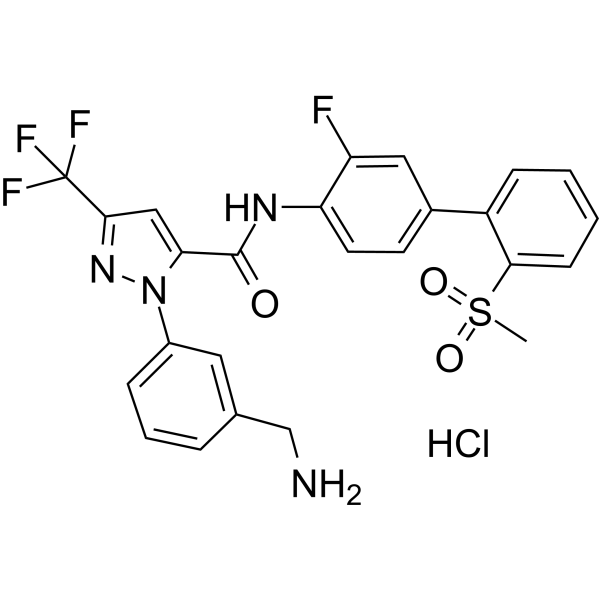
DPC423 is a selective and orally active factor Xa inhibitor with a Kis of 0.15 (human) and 0.3 (rabbit) nM. DPC423 exhibits Kis of 60, 61 and 6000 nM against human trypsin, plasma kallikrein and thrombin. DPC423 blocks the formation of prothrombinase complex, reduces thrombin production, inhibits fibrin formation and platelet activation. DPC423 can be used for the study of anticoagulation of arterial thrombosis .
loading...
    loading...
Cat. No.: HY-11090
CAS No.: 209957-47-1
DPC423 free base is a selective and orally active factor Xa inhibitor with a Kis of 0.15 (human) and 0.3 (rabbit) nM. DPC423 free base exhibits Kis of 60, 61 and 6000 nM against human trypsin, plasma kallikrein and thrombin. DPC423 free base blocks the formation of prothrombinase complex, reduces thrombin production, inhibits fibrin formation and platelet activation. DPC423 free base can be used for the study of anticoagulation of arterial thrombosis .
loading...
    loading...
Cat. No.: HY-14854A
CAS No.: 1004551-83-0
Synonyms: ATI-5923 sodium
Target:  

VKOR

Research Areas:  

Cardiovascular Disease

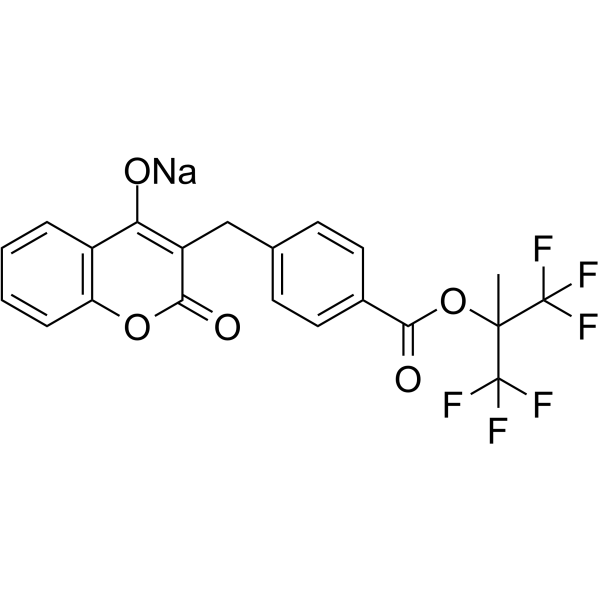
Tecarfarin (ATI-5923) sodium is an orally active VKOR inhibitor with an IC50 of 0.67 μM against VKORC1. Tecarfarin sodium blocks the post-translational modification of vitamin K-dependent coagulation factors II, VII, IX and X, reducing their levels and activities. Tecarfarin sodium prolongs prothrombin time, attenuates venous and arterial thrombosis, increases ear incision bleeding volume, and exerts reversible anticoagulant effects. Tecarfarin sodium is applicable to research related to arterial and venous thrombosis as well as other diseases requiring anticoagulation .
loading...
    loading...
Cat. No.: HY-14854R
CAS No.: 867257-26-9
Synonyms: ATI-5923 (Standard)
Research Areas:  

Cardiovascular Disease

Tecarfarin (ATI-5923) (Standard) is the analytical standard of Tecarfarin. This product is intended for research and analytical applications. Tecarfarin is an orally active VKOR inhibitor with an IC50 of 0.67 μM against VKORC1. Tecarfarin blocks the post-translational modification of vitamin K-dependent coagulation factors II, VII, IX and X, reducing their levels and activities. Tecarfarin prolongs prothrombin time, attenuates venous and arterial thrombosis, increases ear incision bleeding volume, and exerts reversible anticoagulant effects. Tecarfarin is applicable to research related to arterial and venous thrombosis as well as other diseases requiring anticoagulation .
loading...
    loading...
Cat. No.: HY-14854S
Synonyms: ATI-5923-13C,d3
Tecarfarin- 13C,d3 (ATI-5923- 13C,d3) is 13C labeled Tecarfarin. Tecarfarin is an orally active VKOR inhibitor with an IC50 of 0.67 μM against VKORC1. Tecarfarin blocks the post-translational modification of vitamin K-dependent coagulation factors II, VII, IX and X, reducing their levels and activities. Tecarfarin prolongs prothrombin time, attenuates venous and arterial thrombosis, increases ear incision bleeding volume, and exerts reversible anticoagulant effects. Tecarfarin is applicable to research related to arterial and venous thrombosis as well as other diseases requiring anticoagulation .
loading...
    loading...
Cat. No.: HY-116363
CAS No.: 121785-71-5
Target:  

Thrombin

Research Areas:  

Cardiovascular Disease

(21R)-Argatroban is a diastereoisomer of Argatroban (HY-B0375). (21R)-Argatroban is also an inhibitor of thrombin with anticoagulant activity. (21R)-Argatroban can be used for research related to anticoagulation .
loading...
    loading...
Cat. No.: HY-N8241R
CAS No.: 103188-48-3
N-trans-Caffeoyltyramine (Standard) is the analytical standard of N-trans-Caffeoyltyramine (HY-N8241). This product is intended for research and analytical applications. N-TRANS-CaffeoyLtyramine is an effective inflammatory response regulator, which has antioxidant activity and anticoagulation effects .
loading...
    loading...
Cat. No.: HY-187960
CAS No.: 247131-06-2
JTV-803 is a selective and competitive direct factor Xa (FXa) inhibitor with a Ki of 19 nM and an IC50 of 81 nM against human FXa, and its action is independent of antithrombin III (ATIII). JTV-803 exhibits significantly higher selectivity for human FXa than for thrombin, plasmin, and trypsin. JTV-803 produces sustained ex vivo anti-FXa inhibitory activity in vivo. JTV-803 prolongs aPTT and PT, prevents dialyzer thrombosis, and is cleared during dialysis. JTV-803 dose-dependently attenuates coagulation activation, maintains plasma ATIII activity, reduces glomerular fibrin deposition, and improves survival rate . JTV-803 can be used for research related to thrombosis and hemodialysis anticoagulation .
loading...
    loading...
Cat. No.: HY-L220
91 compounds

Biotoxins, also referred to as natural toxins, are chemical substances produced by plants, animals, or microorganisms that exert toxic effects on other living organisms. Due to unique biological activities, biotoxins have been widely applied in molecular biology, physiology, pharmacology, and the clinical diagnosis and treatment of various human diseases, becoming an important source of natural drug development. Biotoxins can specifically bind to and interfere with intracellular signaling molecules or receptors, thereby altering cellular signaling processes. Leveraging this characteristic, biotoxins can be used to study the regulatory mechanisms of cellular signaling pathways. For example, neurotoxins such as snake venom peptides can be used to investigate the functional regulation of neurotransmitter receptors and ion channels. Additionally, biotoxins have demonstrated significant potential in drug development across various fields, including neurological diseases, cardiovascular diseases, anticoagulation, and anti-cancer therapies. With advancements in high throughput screening, structural optimization, and antibody-toxin conjugation technologies, numerous biotoxins or their structural analogs have been successfully brought to market, such as Ziconotide, Captopril, Bivalirudin, and Eptifibatide.

MCE offers 91 types of biotoxins, including neurotoxins, cardiotoxins, mycotoxins, and more.

Cat. No.: HY-L193
1,006 compounds

Since ancient times, promoting blood circulation for removing blood stasis (PBCRBS) has been one of the most popular research contents in the area of traditional Chinese medicine (TCM) and integrated medicine. Rhizoma, Persicae Semen, Carthami Flos, Curcumae Longae Rhizoma and so on are common TCM with PBCRBS characteristic. Studies have shown that the mechanism of action of PBCRBS TCM is to promote blood circulation (improving cardiovascular and cerebrovascular functions, physical and chemical properties of blood, platelet and coagulation system and other physiological functions) and remove blood stasis (anti-myocardial ischemia, cerebral ischemia, inhibition of platelet aggregation, anti-coagulation, anti-thrombosis, etc.). Not only that, PBCRBS TCM has anti-infection, inhibit inflammation, regulate immune function, inhibit immune response, inhibit abnormal tissue proliferation and other functions. Therefore, PBCRBS TCM has high research value in all- field disease research fields.

MCE can supply 1,006 monomer component from more than a hundred sources of PBCRBS TCM, which can be used in TCM studies, drug development and mechanism-based studies.

  • 1

