1. Search Result
Search Result
Results for "

antituberculous

" in MedChemExpress (MCE) Product Catalog:

19

Inhibitors & Agonists

6

Natural
Products

2

Isotope-Labeled Compounds

Cat. No. Product Name Target Research Areas Chemical Structure
  • HY-I0447
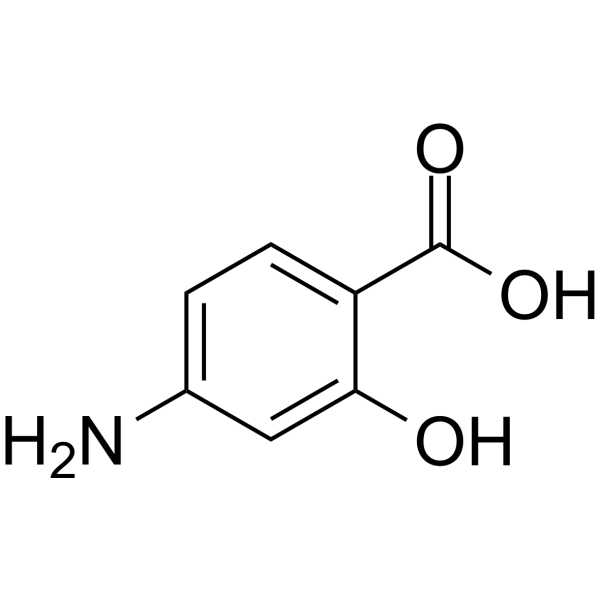
    4-Aminosalicylic acid
    1 Publications Verification

    Antibiotic Bacterial Infection Inflammation/Immunology
    4-Aminosalicylic acid is an inhibitor for dihydrofolate reductase (DHFR) and an antituberculous agent. 4-Aminosalicylic acid exhibits anti-inflammatory activity and can be used in research of inflammatory bowel disease (IBD). 4-Aminosalicylic acid is orally active .
    4-Aminosalicylic acid
  • HY-N0701
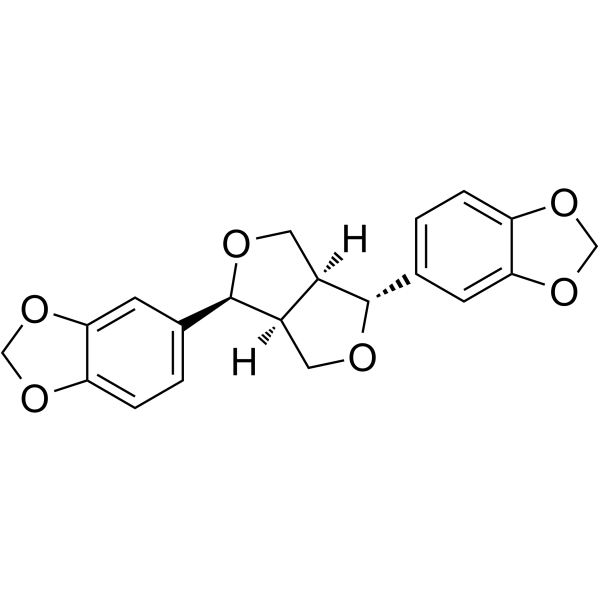
    (-)-Asarinin
    1 Publications Verification

    Apoptosis Reactive Oxygen Species (ROS) STAT Src Stearoyl-CoA Desaturase (SCD) Bacterial Infection Neurological Disease Inflammation/Immunology Cancer
    (-)-Asarinin is a tetrahydrofurofurano lignan with various biological activities. (-)-Asarinin induces apoptosis in cancer cells. (-)-Asarinin promotes mitochondrial ROS accumulation, inhibits the STAT3 signaling pathway and induces apoptosis in precancerous cells. (-)-Asarinin is a Src family kinase inhibitor that suppresses mast cell activation. (-)-Asarinin is a non-competitive Δ5-desaturase inhibitor with a Ki of 0.28 mM. (-)-Asarinin possesses pain relief, anti-viral, anti-allergic and anti-tuberculous bacilli, and anti-tumor effects .
    (-)-Asarinin
  • HY-I0447A
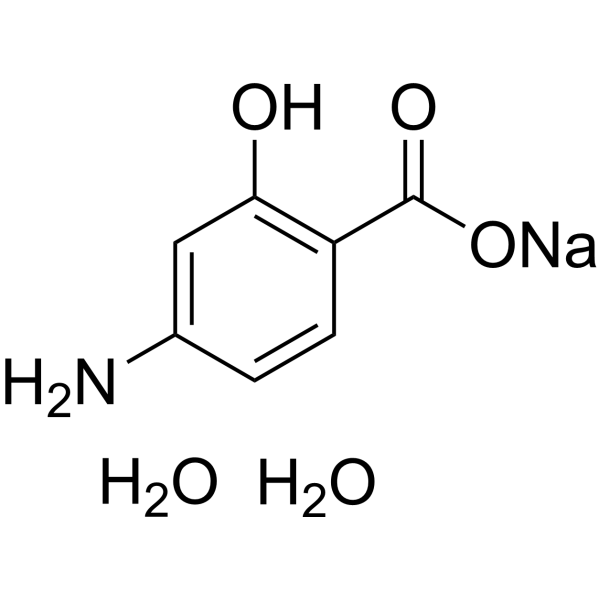
    Sodium 4-aminosalicylate dihydrate
    1 Publications Verification

    4-Aminosalicylic acid sodium salt dihydrate

    Antibiotic Bacterial Infection Inflammation/Immunology
    Sodium 4-aminosalicylate dihydrate (4-Aminosalicylic acid sodium salt dihydrate) is an inhibitor for dihydrofolate reductase (DHFR) and an antituberculous agent. Sodium 4-aminosalicylate dihydrate exhibits anti-inflammatory activity and can be used in research of inflammatory bowel disease (IBD). Sodium 4-aminosalicylate dihydrate is orally active .
    Sodium 4-aminosalicylate dihydrate
  • HY-W013186

    AG-1777

    Drug Metabolite Bacterial Inflammation/Immunology Cancer
    Lansoprazole sulfide is an active metabolite of Lansoprazole by cytochrome P450, possesses anti-cancer activity. Lansoprazole sulfide is an anti-tuberculous agent, with an IC50 of 0.59 µM for M. tb .
    Lansoprazole sulfide
  • HY-W004570

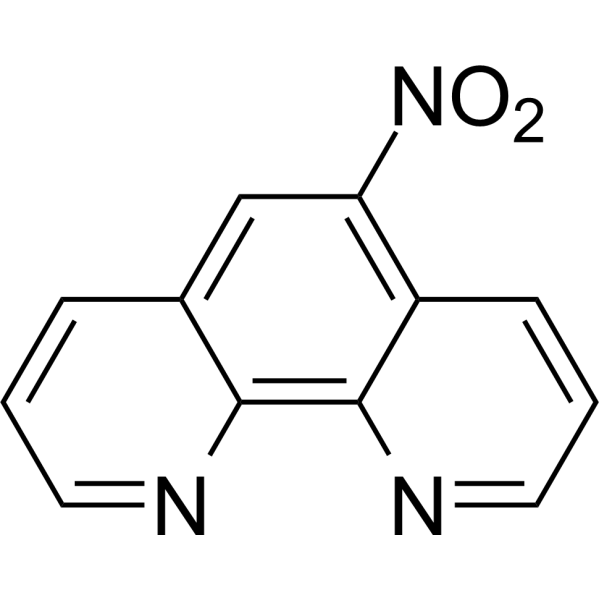
    5-NP

    Endogenous Metabolite Infection
    5-Nitro-1,10-phenanthroline (5-NP), is a o-Phenanthroline (HY-W004544) derivative, as a mediator of glucose oxidase (GOX) with antituberculous activity. 5-Nitro-1,10-phenanthroline can be applied as redox mediators for oxidases and is suitable for the development of reagent-less biosensors and biofuel cells .
    5-Nitro-1,10-phenanthroline
  • HY-W324882

    Bacterial Infection
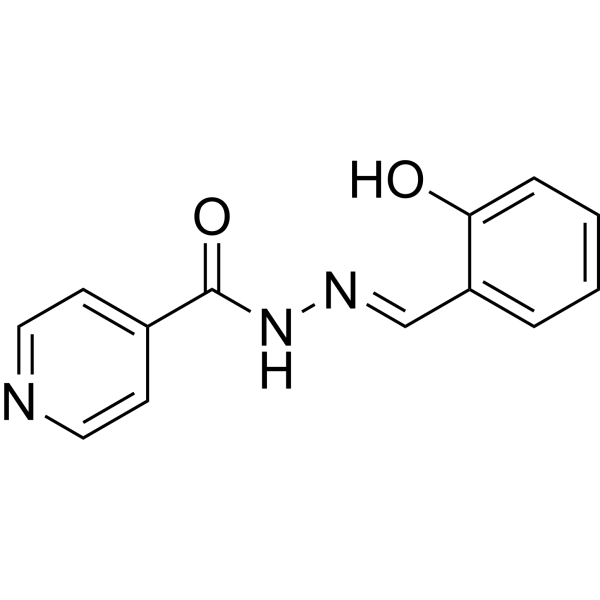
    Salinazid is an antituberculous compound .
    Salinazid
  • HY-126771

    Chr-A

    Antibiotic Bacterial Akt GSK-3 β-catenin c-Myc Infection Cancer
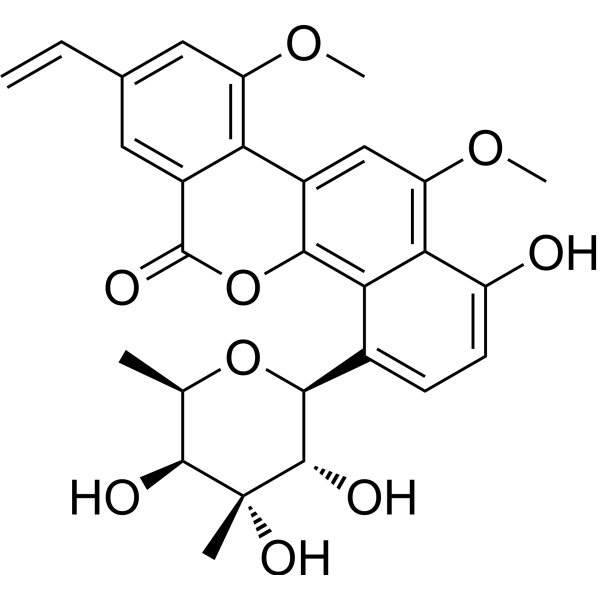
    Chrysomycin A (Chr-A), an antibiotic, can be obtained from Streptomyces. Chrysomycin A exhibits antitumor and anti-tuberculous and MRSA activities. As for glioblastoma, Chrysomycin A inhibits the proliferation, migration, and invasion of cancer cells through the Akt/GSK-3β/β-catenin signaling pathway .
    Chrysomycin A
  • HY-N3848

    Bacterial COX NO Synthase Influenza Virus Infection Cardiovascular Disease Inflammation/Immunology
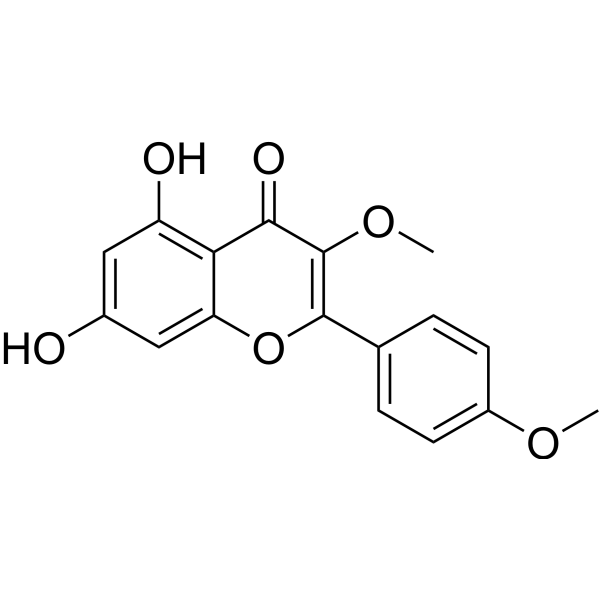
    Ermanin is a flavonoid isolated from Tanacetum microphyllum. Ermanin potently inhibits iNOS, COX-2 activities, and inhibits platelet aggregation. Ermanin has anti-inflammatory, anti-tuberculous and anti-viral/bacterial properties .
    Ermanin
  • HY-W131122

    Bacterial Others
    1,3,4-Oxadiazoles are a class of synthetic compounds with important medicinal value, which show a variety of biological activities such as anticonvulsant, antidepressant, analgesic, anti-inflammatory, antiallergic, antipsychotic, antimicrobial, antituberculous, antitumor, and antiviral. 1,3,4-Oxadiazole derivatives need to be further developed .
    1,3,4-Oxadiazole
  • HY-168849

    Topoisomerase Bacterial Infection
    Topoisomerase inhibitor 5 (compound 158) is a Bacterial Topoisomerase Inhibitor inhibitor with the lowest inhibitory concentration of 0.125 μg/mL. Topoisomerase inhibitor has antituberculous activity .
    Topoisomerase inhibitor 5
  • HY-22252

    Antibiotic Bacterial Infection Inflammation/Immunology
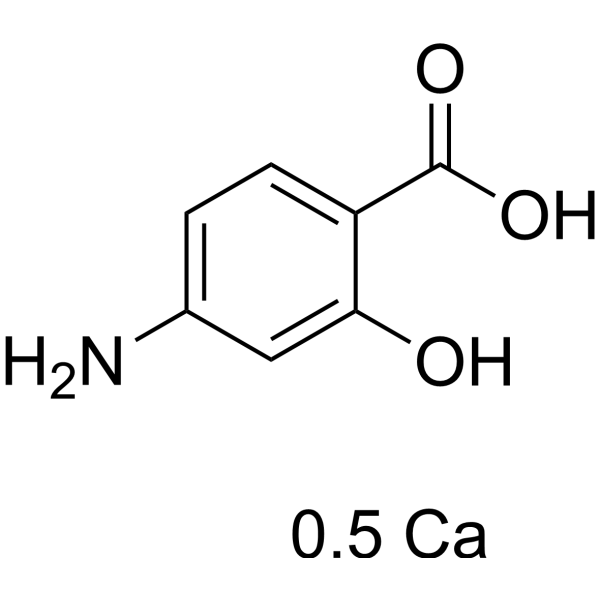
    4-Aminosalicylic acid hemicalcium is an inhibitor for dihydrofolate reductase (DHFR) and an antituberculous agent. 4-Aminosalicylic acid hemicalcium exhibits anti-inflammatory activity and can be used in research of inflammatory bowel disease (IBD). 4-Aminosalicylic acid hemicalcium is orally active .
    4-Aminosalicylic acid hemicalcium
  • HY-I0447R

    Reference Standards Antibiotic Bacterial Infection Inflammation/Immunology
    4-Aminosalicylic acid (Standard) is the analytical standard of 4-Aminosalicylic acid. This product is intended for research and analytical applications. 4-Aminosalicylic acid is an inhibitor for dihydrofolate reductase (DHFR) and an antituberculous agent. 4-Aminosalicylic acid exhibits anti-inflammatory activity and can be used in research of inflammatory bowel disease (IBD). 4-Aminosalicylic acid is orally active .
    4-Aminosalicylic acid (Standard)
  • HY-I0447AR

    4-Aminosalicylic acid sodium salt dihydrate (Standard)

    Reference Standards Antibiotic Bacterial Infection Inflammation/Immunology
    Sodium 4-aminosalicylate (dihydrate) (Standard) is the analytical standard of Sodium 4-aminosalicylate (dihydrate). This product is intended for research and analytical applications. Sodium 4-aminosalicylate dihydrate (4-Aminosalicylic acid sodium salt dihydrate) is an inhibitor for dihydrofolate reductase (DHFR) and an antituberculous agent. Sodium 4-aminosalicylate dihydrate exhibits anti-inflammatory activity and can be used in research of inflammatory bowel disease (IBD). Sodium 4-aminosalicylate dihydrate is orally active .
    Sodium 4-aminosalicylate dihydrate (Standard)
  • HY-N0701R

    Reference Standards Apoptosis Reactive Oxygen Species (ROS) STAT Src Stearoyl-CoA Desaturase (SCD) Bacterial Infection Neurological Disease Inflammation/Immunology Cancer
    (-)-Asarinin (Standard) is the analytical standard of (-)-Asarinin (HY-N0701). This product is intended for research and analytical applications. (-)-Asarinin is a tetrahydrofurofurano lignan with various biological activities. (-)-Asarinin induces apoptosis in cancer cells. (-)-Asarinin promotes mitochondrial ROS accumulation, inhibits the STAT3 signaling pathway and induces apoptosis in precancerous cells. (-)-Asarinin is a Src family kinase inhibitor that suppresses mast cell activation. (-)-Asarinin is a non-competitive Δ5-desaturase inhibitor with a Ki of 0.28 mM. (-)-Asarinin possesses pain relief, anti-viral, anti-allergic and anti-tuberculous bacilli, and anti-tumor effects.
    (-)-Asarinin (Standard)
  • HY-W778649

    Isotope-Labeled Compounds Herbicide Photosystem II Others
    Sarmentine-d8 is the deuterium labeled Sarmentine. Sarmentine is a broad-spectrum contact herbicide and PSII inhibitor, with an IC50 of 3.0 μM and a Ki of 1.5 μM against spinach, an IC50 of 1.72 μM against wild-type Amaranthus retroflexus, and an IC50 of 0.97 μM against triazine-resistant Amaranthus retroflexus. Sarmentine competitively binds to the QB binding site of plastoquinone on PSII, thereby blocking photosynthetic electron transport. Sarmentine inhibits enoyl-ACP reductase in Arabidopsis thaliana by targeting the early fatty acid synthesis process, with an IC50 of 18.3 μM. Sarmentine induces light-independent loss of plasma membrane integrity and electrolyte leakage. Sarmentine also exhibits antiplasmodial, antimycobacterial, antituberculous, and antiplatelet aggregation activities .
    Sarmentine-d8
  • HY-I0447S

    Isotope-Labeled Compounds Antibiotic Bacterial Infection Inflammation/Immunology
    4-Aminosalicylic acid-d6 is the deuterium labeled 4-Aminosalicylic acid (HY-I0447). 4-Aminosalicylic acid is an inhibitor for dihydrofolate reductase (DHFR) and an antituberculous agent. 4-Aminosalicylic acid exhibits anti-inflammatory activity and can be used in research of inflammatory bowel disease (IBD). 4-Aminosalicylic acid is orally active .
    4-Aminosalicylic acid-d6
  • HY-180854

    Bacterial Infection
    Antitubercular agent-55 (Compound 2e) is an anti-tuberculous agent. Antitubercular agent-55 exhibits significant inhibitory activity against the standard strain of Mycobacterium tuberculosis H37Rv and also has moderate inhibitory activity against multidrug-resistant TB (MDR-TB). Antitubercular agent-55 has a strong affinity for the key enzyme InhA involved in the biosynthesis of mycotic acids. Antitubercular agent-55 can be used for research on tuberculosis infection caused by Mycobacterium tuberculosis.
    Antitubercular agent-55
  • HY-W004570R

    5-NP (Standard)

    Endogenous Metabolite Reference Standards Infection
    5-Nitro-1,10-phenanthroline (Standard) (5-NP (Standard)) is the analytical standard of 5-Nitro-1,10-phenanthroline (HY-W004570). This product is intended for research and analytical applications. 5-Nitro-1,10-phenanthroline (5-NP), is a o-Phenanthroline (HY-W004544) derivative, as a mediator of glucose oxidase (GOX) with antituberculous activity. 5-Nitro-1,10-phenanthroline can be applied as redox mediators for oxidases and is suitable for the development of reagent-less biosensors and biofuel cells .
    5-Nitro-1,10-phenanthroline (Standard)
  • HY-W099725

    Herbicide Photosystem II Cardiovascular Disease Infection
    Sarmentine is a broad-spectrum contact herbicide and PSII inhibitor, with an IC50 of 3.0 μM and a Ki of 1.5 μM against spinach, an IC50 of 1.72 μM against wild-type Amaranthus retroflexus, and an IC50 of 0.97 μM against triazine-resistant Amaranthus retroflexus. Sarmentine competitively binds to the QB binding site of plastoquinone on PSII, thereby blocking photosynthetic electron transport. Sarmentine inhibits enoyl-ACP reductase in Arabidopsis thaliana by targeting the early fatty acid synthesis process, with an IC50 of 18.3 μM. Sarmentine induces light-independent loss of plasma membrane integrity and electrolyte leakage. Sarmentine also exhibits antiplasmodial, antimycobacterial, antituberculous, and antiplatelet aggregation activities .
    Sarmentine

Inquiry Online

Your information is safe with us. * Required Fields.

Salutation


Country or Region *

Applicant Name *


Organization Name *

Department *


Email Address *


Product Name *

Cat. No.


Requested quantity *

Phone Number *


Remarks

Inquiry Online

Inquiry Information

Product Name:
Cat. No.:
Quantity:
MCE Japan Authorized Agent:

