1. Search Result
Search Result
Results for "

autopalmitoylation

" in MedChemExpress (MCE) Product Catalog:

22

Inhibitors & Agonists

13

Peptides

1

Click Chemistry

Cat. No. Product Name Target Research Areas Chemical Structure
  • HY-400902

    YAP VEGFR Hippo (MST) Cancer
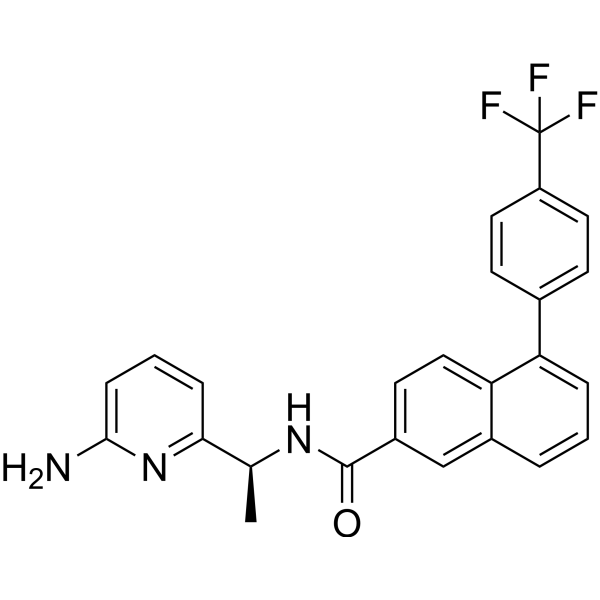
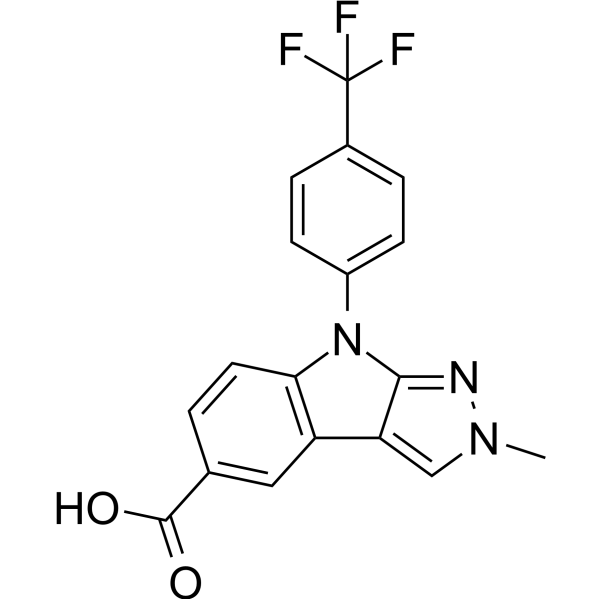
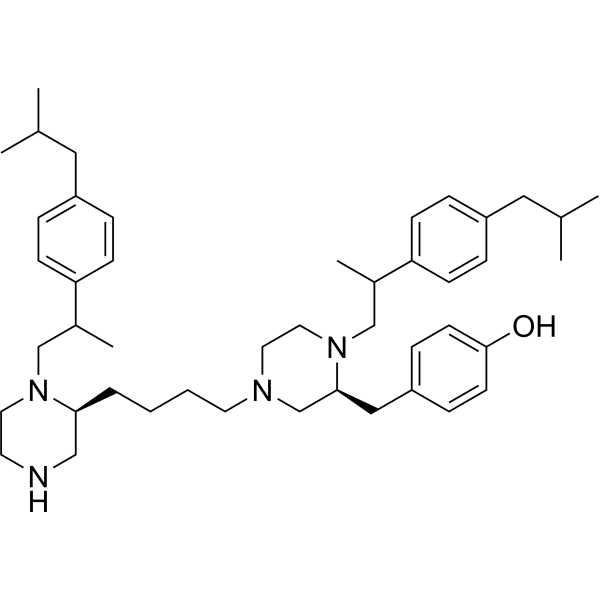
    VT3989 is an orally active pan-TEAD autopalmitoylation inhibitor that modulates the Hippo signaling pathway. VT3989 directly binds to TEAD transcription factors to block their palmitoylation modification, thereby disrupting the formation of YAP/TAZ-TEAD complexes and inhibiting downstream oncogenic transcriptional activity. VT3989 effectively inhibits the growth of NF2-deficient schwannoma and meningioma cells and reverses the Schwann cell phenotype. In addition, VT3989 exerts a synergistic effect when combined with Osimtinib (HY-15772) in EGFR-mutant non-small cell lung cancer models, significantly delaying tumor recurrence and prolonging survival. VT3989 can be used for the research of epithelioid hemangioendothelioma, malignant pleural mesothelioma, type 2 neurofibromatosis and related advanced solid tumors .
    VT3989
  • HY-134957
    VT107
    Maximum Cited Publications
    9 Publications Verification

    YAP Cancer
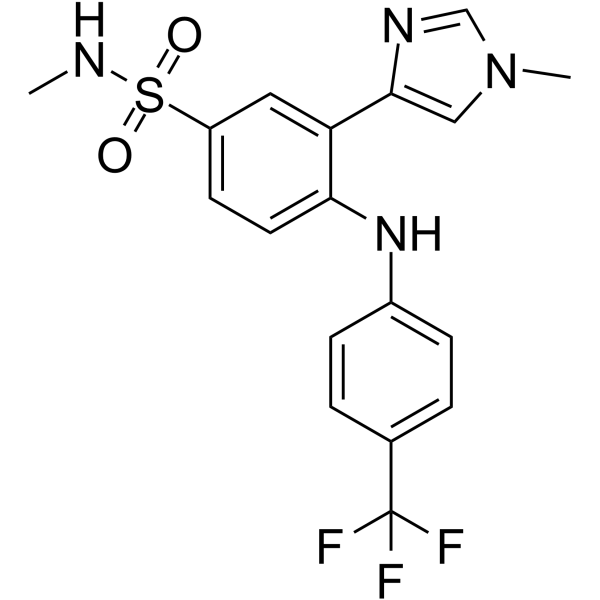
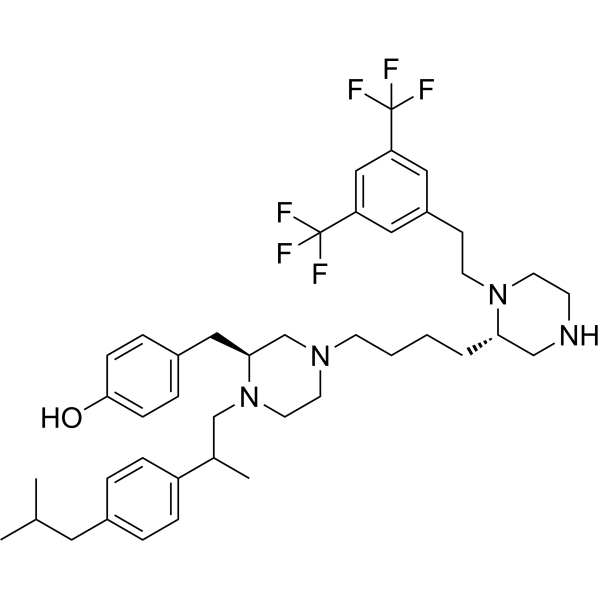
    VT-107, as an analogous to VT104, is an orally active and potent pan-TEAD auto-palmitoylation inhibitor. VT-107 can be used for the research of cancer .
    VT107
  • HY-134955
    VT103
    5 Publications Verification

    YAP Cancer
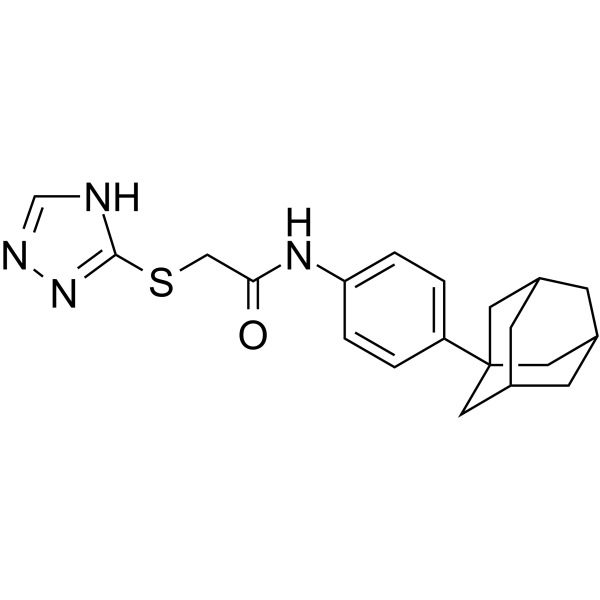
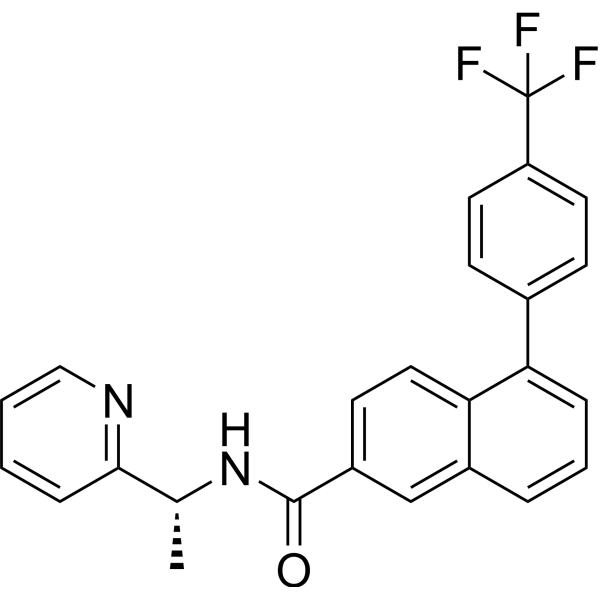
    VT103, an analog of VT101, is an orally active and selective TEAD1 protein palmitoylation inhibitor. VT103 inhibits YAP/TAZ-TEAD promoted gene transcription, blocks TEAD auto-palmitoylation, and disrupts interaction between YAP/TAZ and TEAD. VT103 can be used for the research of cancer .
    VT103
  • HY-139330
    MGH-CP1
    1 Publications Verification

    Apoptosis Cancer
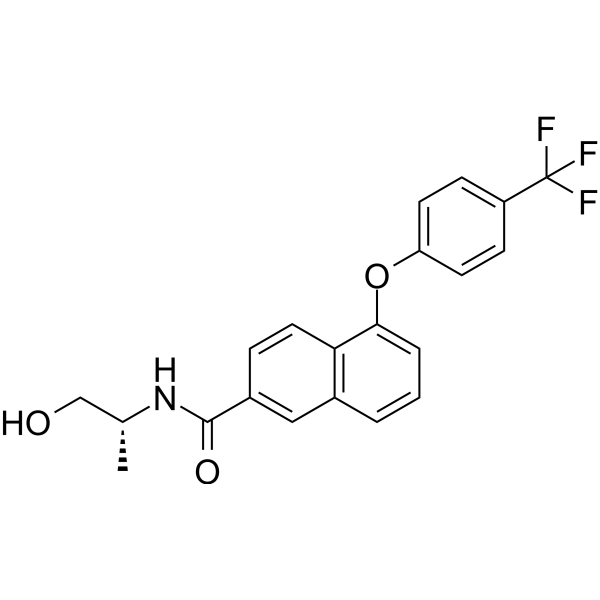
    MGH-CP1 is a potent and orally active TEAD2 and TEAD4 auto-palmitoylation inhibitor with IC50s of 710 nM and 672 nM, respectively. MGH-CP1 can decrease the palmitoylation levels of endogenous or ectopically expressed TEAD proteins in cells. MGH-CP1 can suppress Myc expression, inhibit epithelial over-proliferation, and induce apoptosis when together with Lats1/2 deletion .
    MGH-CP1
  • HY-P0064

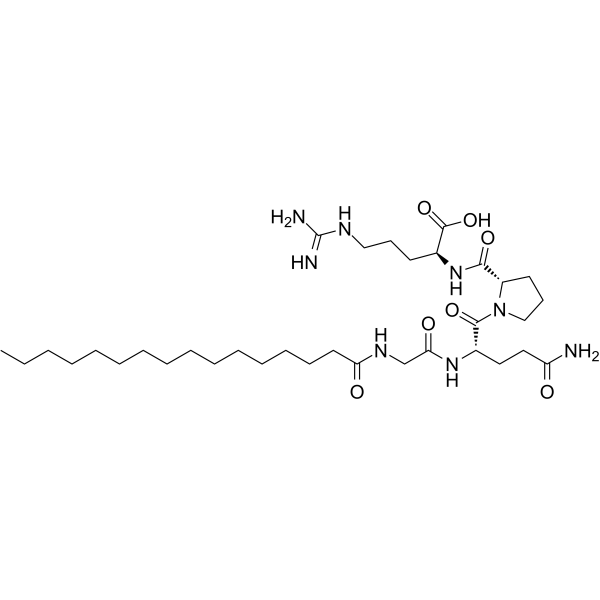
    Palmitoyl Tetrapeptide-7

    Interleukin Related Inflammation/Immunology
    Palmitoyl Tetrapeptide-3 (Palmitoyl Tetrapeptide-7) is a synthetic peptide corresponding to amino acids 341-344 of the human immunoglobulin heavy chain, with the ability to stimulate phagocytosis. Palmitoyl tetrapeptide-3 reduces interleukin-6 (IL-6) secretion in keratinocytes and inhibits the UVB radiation-exposure inflammatory response of skin. Palmitoyl tetrapeptide-3 It also has anti-inflammatory and anti-aging effects, reducing skin wrinkles by promoting the production of elastic fibers in the papillary dermis .
    Palmitoyl Tetrapeptide-3
  • HY-P10932A

    Fluorescent Dye Neurological Disease
    pGk13a TFA is an azide (azide group can be combined with fluorophore)-containing amphiphilic membrane labeling probe. pGk13a TFA enables high-resolution imaging of cell membranes in the ultrastructural membrane expansion microscopy (umExM) technique, facilitating the observation of membrane-associated structures and proteins. pGk13a TFA can be used for neuronal structural studies .
    pGk13a TFA
  • HY-P10031

    GLP Receptor GCGR Metabolic Disease
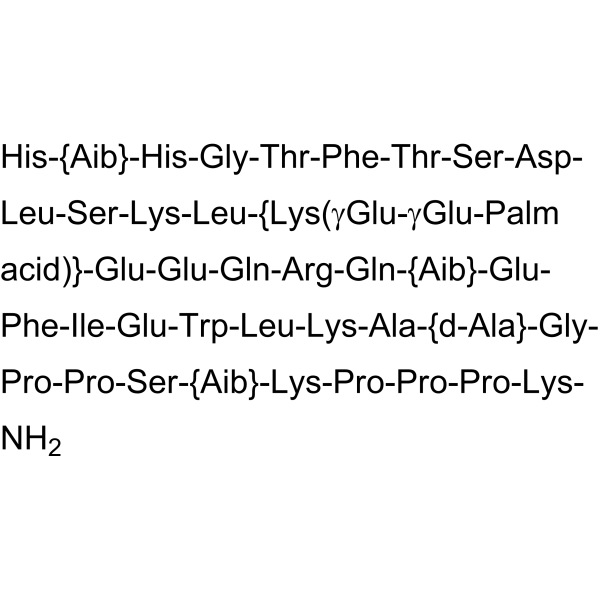
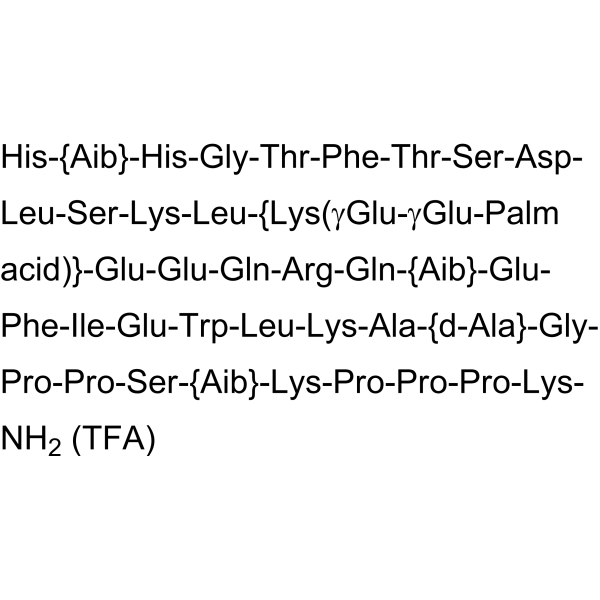
    SAR441255 is a potent unimolecular peptide GLP-1/GIP/GCG receptor triagonist. SAR441255 displays high potency with balanced activation of all three target receptors.?SAR441255 shows positive acute glucoregulatory effectss in diabetic obese monkeys .
    SAR441255
  • HY-137479

    YAP Cancer
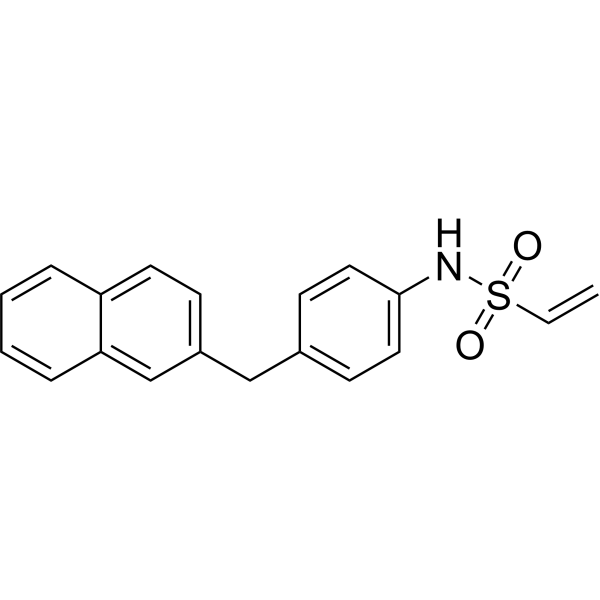
    TEAD-IN-1 (Compound 2) is potent TEAD autopalmitoylation inhibitor, with an IC50 of 603 nM. TEAD-IN-1 increases the interaction of TEAD and VGLL4. TEAD-IN-1 decreases the interaction of YAP and TEAD. TEAD-IN-1 can be used for the research of cancer .
    TEAD-IN-1
  • HY-147208

    YAP Cancer
    MSC-4106 is an orally active and potent inhibitor of YAP/TAZ-TEAD. MSC-4106 inhibits TEAD1 or TEAD3 auto-palmitoylation and shows inhibitory effect on NCI-H226 tumor xenograft model .
    MSC-4106
  • HY-126621

    YAP Cancer
    DC-TEADin02 is a potent TEAD autopalmitoylation inhibitor. DC-TEADin02 has TEAD autopalmitoylation inhibitory with the IC50 value of 197 nM. DC-TEADin02 can be used for the research of development, regeneration and tissue homeostasis .
    DC-TEADin02
  • HY-P10932

    Fluorescent Dye Neurological Disease
    pGk13a is an amphipathic membrane-labeling probe containing an azide group, which can bind to fluorophores. pGk13a enables high-resolution imaging of cell membranes in the ultrastructure expansion microscopy (umExM) technique, facilitating the observation of membrane-associated structures and proteins. pGk13a is applicable to neuronal structure research .
    pGk13a
  • HY-P10380

    Neuropeptide FF Receptor Neurological Disease Metabolic Disease
    palm11-PrRP31 is a lipidized endogenous appetite inhibitory neuropeptide (PrRP) analogue. palm11-PrRP31 is GPR10 (EC50=39 pM) and NPFF-R2 effective dual agonists. palm11-PrRP31 is able to mimic the natural function of PrRP by binding to these receptors to reduce food intake. palm11-PrRP31 can be used as a potential anti-obesity agent and for the study of neuropeptide-receptor interaction .
    palm11-PrRP31
  • HY-P10031A

    GLP Receptor GCGR Metabolic Disease
    SAR441255 TFA is a potent unimolecular peptide GLP-1/GIP/GCG receptor triagonist. SAR441255 TFA displays high potency with balanced activation of all three target receptors.?SAR441255 TFA shows positive acute glucoregulatory effectss in diabetic obese monkeys .
    SAR441255 TFA
  • HY-P10380A

    Neuropeptide FF Receptor Neurological Disease Metabolic Disease
    palm11-PrRP31 TFA is a lipidized endogenous appetite inhibitory neuropeptide (PrRP) analogue. palm11-PrRP31 TFA is GPR10 (EC50=39 pM) and NPFF-R2 effective dual agonists. palm11-PrRP31 TFA is able to mimic the natural function of PrRP by binding to these receptors to reduce food intake. palm11-PrRP31 TFA can be used as a potential anti-obesity agent and for the study of neuropeptide-receptor interaction .
    palm11-PrRP31 TFA
  • HY-153177

    Ras Cancer
    PAT-IN-2 is a protein acyl transferases (PAT) inhibitor. PAT-IN-2 competitively inhibits Erf2 autopalmitoylation (WO2017011518A1; compound 25) .
    PAT-IN-2
  • HY-153176

    Ras Cancer
    PAT-IN-1 is a protein acyl transferases (PAT) inhibitor. PAT-IN-1 competitively inhibits Erf2 autopalmitoylation (WO2017011518A1; compound 13) .
    PAT-IN-1
  • HY-134956B

    YAP Cancer
    (R)-VT104 is the R-enantiomer of VT104. (R)-VT104 shows an IC50 value of 0.1-1 μΜ for firefly luciferase. VT104 is an orally active and pan-TEAD auto-palmitoylation inhibitor .
    (R)-VT104
  • HY-P10379

    Neuropeptide FF Receptor Others Neurological Disease
    palm-PrRP31 is a potent dual receptor agonist for both GPR10 (EC50=72 pM) and NPFF-R2. palm-PrRP31 activates downstream signaling pathways through binding to its receptors, GPR10 and NPFF-R2, which results in reduced appetite and increased energy expenditure. Utilizing palm-PrRP31 facilitates the study of the mechanism of action in the nervous system, thereby elucidating the complex biological processes that regulate appetite and energy expenditure .
    palm-PrRP31
  • HY-P5954

    Calcium Channel Others
    PLTX-II is a calcium channel blocker. PLTX-II has a 44-residue peptide containing ten Cys residues and an O-palmitoylated threonine amide at the carboxy-terminus .
    PLTX-II
  • HY-179559

    YAP Cancer
    OPN-9643 is a covalent inhibitor targeting the central palmitate binding pocket of TEADs with an IC50 of 15 nM, preventing autopalmitoylation and reducing TEAD-driven luciferase activity and canonical TEAD targets, CTGF and CYR61. OPN-9643 can be used for the research of cancer, such as melanoma .
    OPN-9643
  • HY-182539

    CGRP Receptor Others Neurological Disease
    DD04107 is a neuronal exocytosis inhibitor with a rat Syt1-C2B domain binding Ka of 2.4 μM. DD04107 interferes with synaptobrevin-syntaxin-SNAP-25 complex formation and Syt1-SNARE complex interaction to block α-calcitonin gene-related peptide (α-CGRP) exocytotic release from primary sensory neurons. DD04107 blocks inflammatory ion channel recruitment to nociceptor plasma membranes. DD04107 can be used for the research of chronic inflammatory pain, neuropathic pain, osteosarcoma pain, chemotherapy-induced peripheral neuropathy, diabetic neuropathy, inflammatory pain .
    DD04107
  • HY-182673

    YAP Cancer
    VT102 is a TEAD1 inhibitor with a human IC50 of 391 nM. VT102 inhibits auto-palmitoylation, attenuates YAP/TEAD1 interaction, reduces expression of TEAD target genes, and inhibits YAP-mediated luciferase reporter activity. VT102 exerts weak cell growth inhibitory activity in cancer cells. VT102 can be used for the research of cancer .
    VT102

Inquiry Online

Your information is safe with us. * Required Fields.

Salutation


Country or Region *

Applicant Name *


Organization Name *

Department *


Email Address *


Product Name *

Cat. No.


Requested quantity *

Phone Number *


Remarks

Inquiry Online

Inquiry Information

Product Name:
Cat. No.:
Quantity:
MCE Japan Authorized Agent:

