

1. Search Result
Search Result
Results for "

blood-brain barrier penetrable

" in MedChemExpress (MCE) Product Catalog:

237

阻害剤およびアゴニスト

1

スクリーニングライブラリ

1

蛍光色素

1

生化学アッセイ試薬

16

ペプチド

22

天然物

49

同位体標識化合物

1

クリックケミストリー

2

オリゴヌクレオチド

製品番号 製品名 Target 研究分野 構造式
  • HY-13909
    RGFP966
    50+ Cited Publications

    HDAC Cancer
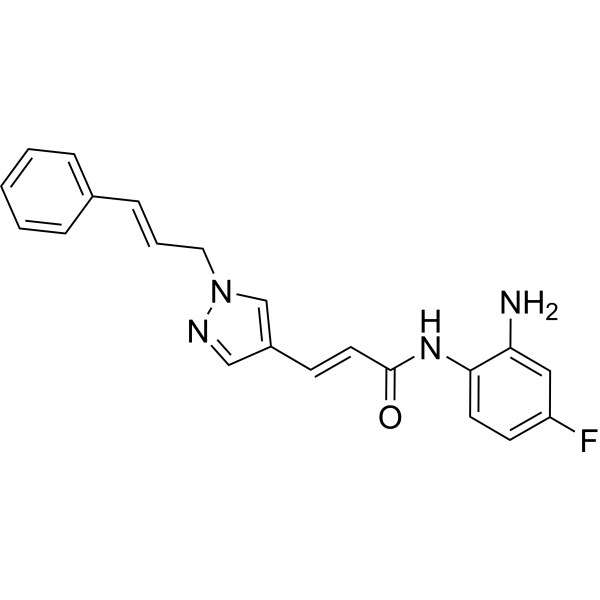
    RGFP966 is a highly selective HDAC3 inhibitor with an IC50 of 80 nM and shows no inhibition to other HDACs at concentrations up to 15 μM. RGFP966 can penetrate the blood brain barrier (BBB).
    RGFP966
  • HY-13318
    Oseltamivir acid
    70+ Cited Publications

    GS 4071; Ro 64-0802; Oseltamivir carboxylate

    Influenza Virus Drug Metabolite Infection Neurological Disease
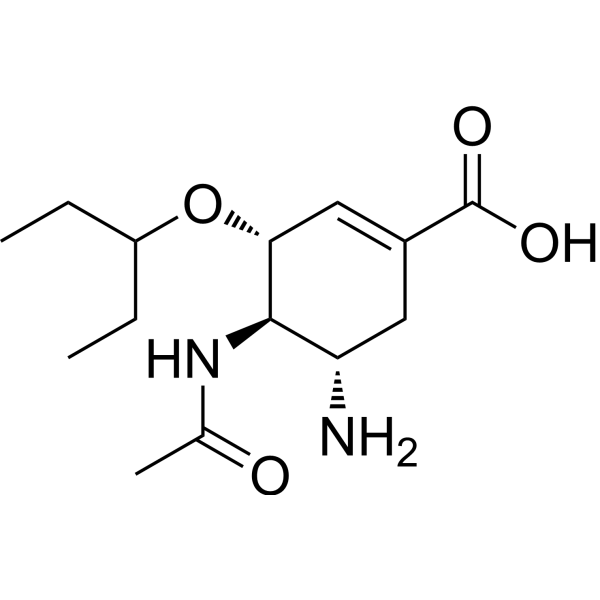
    Oseltamivir acid (GS 4071), the active metabolite of Oseltamivir phosphate, is an orally bioavailable, potent and selective inhibitor of influenza virus neuraminidase (IC50=2 nM) with activity against both influenza A and B viruses. Oseltamivir acid has an extremely weak ability to penetrate the BBB under normal physiological conditions, but its blood-brain barrier penetration is significantly enhanced under inflammatory conditions .
    Oseltamivir acid
  • HY-14842
    Givinostat
    10+ Cited Publications

    ITF-2357

    HDAC Inflammation/Immunology Cancer
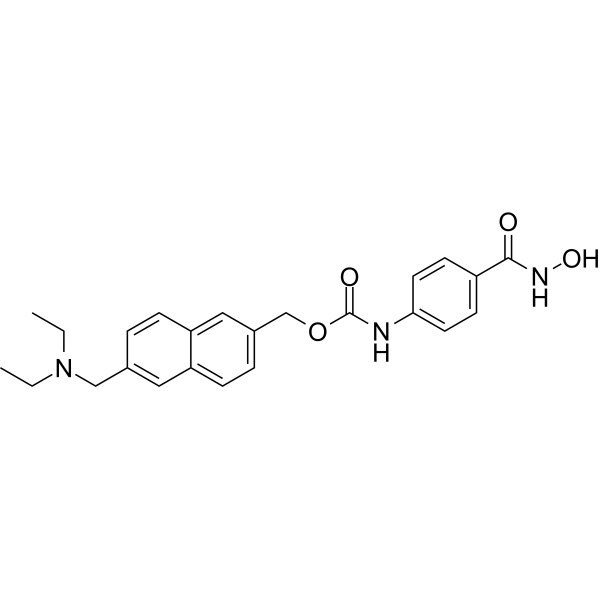
    Givinostat (ITF-2357) is a HDAC inhibitor with an IC50 of 198 and 157 nM for HDAC1 and HDAC3, respectively. Givinostat can be used for Duchenne muscular dystrophy (DMD) research. Givinostat can penetrate the blood-brain barrier (BBB) .
    Givinostat
  • HY-14842B

    ITF-2357 hydrochloride monohydrate

    HDAC Infection Neurological Disease Inflammation/Immunology Cancer
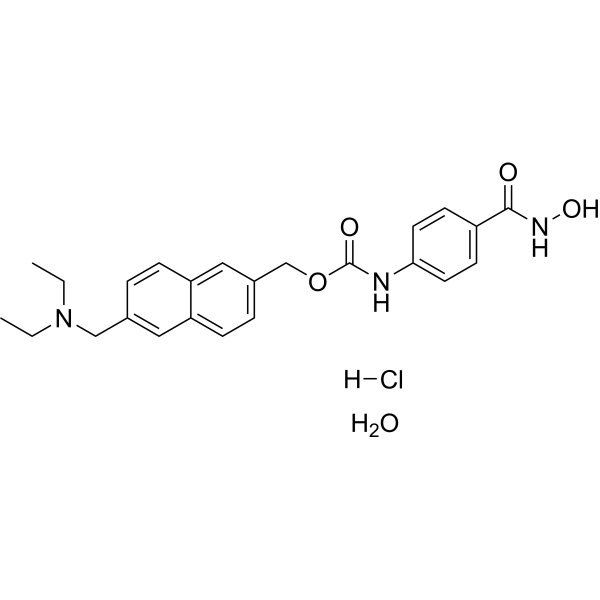
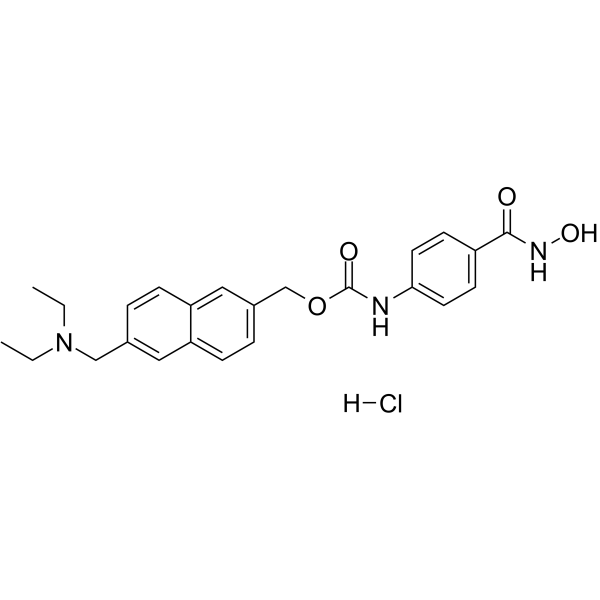
    Givinostat hydrochloride monohydrate (ITF-2357 hydrochloride monohydrate) is a HDAC inhibitor with an IC50 of 198 and 157 nM for HDAC1 and HDAC3, respectively. Givinostat hydrochloride monohydrate can penetrate the blood-brain barrier (BBB) .
    Givinostat hydrochloride monohydrate
  • HY-18236
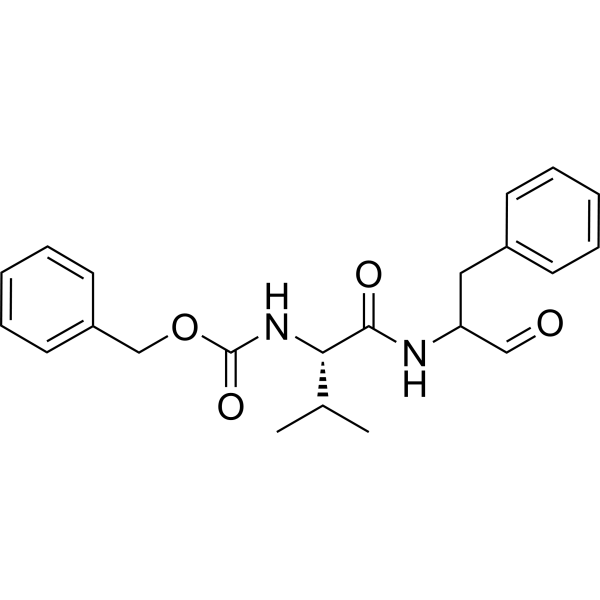
    MDL-28170
    15+ Cited Publications

    Calpain Inhibitor III

    Proteasome Neurological Disease Inflammation/Immunology
    MDL-28170 (Calpain Inhibitor III) is a potent, selective and membrane-permeable cysteine protease inhibitor of calpain that rapidly penetrates the blood-brain barrier following systemic administration . MDL-28170 also block γ-secretase .
    MDL-28170
  • HY-103242

    Amyloid-β Neurological Disease
    CRANAD-2 is a specific near-infrared (NIR) fluorescent probe for detecting plaques (unbound to Aβ: Ex=640 nm; Em=805 nm; after binding: Em=715 nm). CRANAD-2 penetrates the blood-brain barrier and has high affinity for Aβ aggregates, with a Kd value of 38 nM. CRANAD-2 is applicable to research related to Alzheimer's disease and neurodegenerative diseases .
    CRANAD-2
  • HY-171306

    Liposome Others
    MK16 is a lipid material that can be used to construct blood-brain barrier penetrable lipid nanoparticles for mRNA delivery. MK16 facilitates blood-brain barrier crossing via γ-secretase-mediated and caveolae-mediated transcytosis. MK16 can be used for drug delivery research .
    MK16
  • HY-P4073

    GRN1005; Paclitaxel trevatide

    Peptide-Drug Conjugates (PDCs) LDLR Cancer
    ANG1005 (Paclitaxel trevatide) is a brain-penetrating peptide-drug conjugate. ANG1005, a taxane derivative, consists of three paclitaxel (HY-B0015) molecules covalently linked to Angiopep-2, designed to cross the blood-brain and blood-cerebrospinal barriers and to penetrate malignant cells via low density lipoprotein receptor-related protein (LRP1) transport system .
    ANG1005
  • HY-119624

    PIKfyve Cancer
    MOMIPP, a macropinocytosis inducer, is a PIKfyve inhibitor. MOMIPP penetrates the blood-brain barrier (BBB) .
    MOMIPP
  • HY-B0206

    MK 462

    5-HT Receptor Neurological Disease
    Rizatriptan benzoate is the agonist for 5-HT1B and 5-HT1D. Rizatriptan benzoate has a peripheral vasoconstrictive effect, penetrates the intact blood-brain barrier, and inhibits pain neurotransmission in the central nervous system .
    Rizatriptan benzoate
  • HY-14842A
    Givinostat hydrochloride
    10+ Cited Publications

    ITF-2357 hydrochloride

    HDAC Inflammation/Immunology Cancer
    Givinostat (ITF-2357) hydrochloride is a HDAC inhibitor with an IC50 of 198 and 157 nM for HDAC1 and HDAC3, respectively. Givinostat hydrochloride can penetrate the blood-brain barrier (BBB). .
    Givinostat hydrochloride
  • HY-116477

    FAAH Neurological Disease Inflammation/Immunology
    URB937 is an orally active and peripherally restricted FAAH inhibitor (IC50=26.8 nM) and increases anandamide levels. URB937 fails to affect FAAH activity in the brain (not penetrate the blood-brain barrier) .
    URB937
  • HY-D0873

    EPPS

    Amyloid-β Neurological Disease
    HEPPS (EPPS) is a buffering agent with the useful pH range from 7.3 ~ 8.7. HEPPS reduces -aggregate-induced memory deficits and rescues cognitive deficits in mice. EPPS is orally active and penetrates the blood-brain barrier .
    HEPPS
  • HY-N0666S8

    Endogenous Metabolite Inflammation/Immunology
    L-Aspartic acid-d3 is the deuterium labeled L-Aspartic acid. L-Aspartic aicd is an amino acid that can penetrate the blood-brain barrier. L-Aspartic aicd is commonly used for preparing prodrugs to target colon and cecal tissues. L-Aspartic aicd commonly used in the study of inflammatory conditions .
    L-Aspartic acid-d3
  • HY-107531

    GSK-3 Neurological Disease Cancer
    A 1070722 is a potent and selective glycogen synthase kinase 3 (GSK-3) inhibitor, with a Ki of 0.6 nM for both GSK-3α and GSK-3β. A 1070722 can penetrate the blood-brain barrier (BBB) and accumulates in brain regions, thus potential for PET radiotracer for the quantification of GSK-3 in brain. A 1070722 decreases spontaneous locomotion .
    A 1070722
  • HY-128463
    N-tert-Butyl-α-phenylnitrone
    2 Publications Verification

    COX Reactive Oxygen Species (ROS) Neurological Disease Metabolic Disease Inflammation/Immunology
    N-tert-Butyl-α-phenylnitrone is a nitrone-based free radical scavenger that forms nitroxide spin adducts. N-tert-Butyl-α-phenylnitrone inhibits COX2 catalytic activity. N-tert-Butyl-α-phenylnitrone has potent ROS scavenging, anti-inflammatory, neuroprotective, anti-aging and anti-diabetic activities, and can penetrate the blood-brain barrier .
    N-tert-Butyl-α-phenylnitrone
  • HY-B1080
    Tilorone dihydrochloride
    2 Publications Verification

    HIF/HIF Prolyl-Hydroxylase Influenza Virus Infection Neurological Disease
    Tilorone dihydrochloride is an orally active interferon (IFN) inducer with broad-spectrum antiviral activities. Tilorone dihydrochloride possesses robust anti-Severe fever with thrombocytopenia syndrome virus (SFTSV) activity in vitro and in vivo through stimulation of host innate immunity. Tilorone dihydrochloride can penetrate the blood-brain barrier to activate HIF in the CNS .Tilorone dihydrochloride exhibits an inhibitory activity with EC50 of 230 nM against Ebola virus (EBOV) .
    Tilorone dihydrochloride
  • HY-152839

    BLU-263

    c-Kit Cancer
    Elenestinib (BLU-263) is an orally active inhibitor of Tyrosine kinase with an IC50 value of 6 nM for KIT D816V. Elenestinib minimally penetrates the blood-brain barrier. Elenestinib can be used in the study of systemic mastocytosis .
    Elenestinib
  • HY-B0186B

    FK-037

    Bacterial Antibiotic Infection
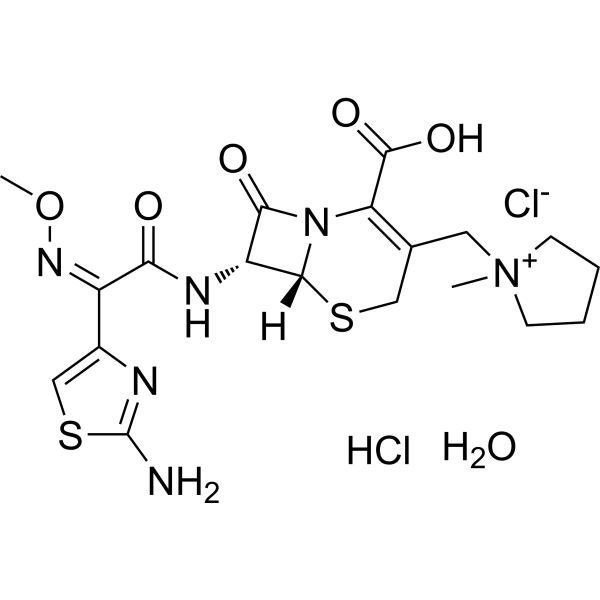
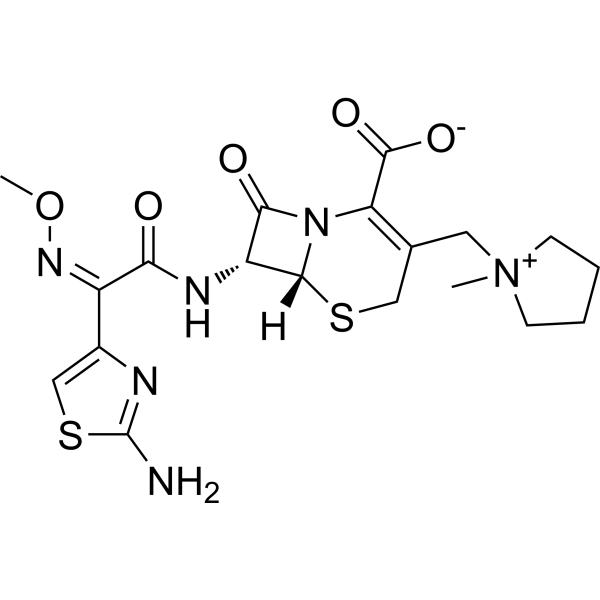
    Cefoselis sulfate (FK-037), the fourth gen-eration of cephalosporin, is a β-lactam antibiotic. Cefoselis sulfate exhibits good activity against a wide range of Gram-positive and Gram-negative organisms. Cefoselis sulfate penetrates the blood-brain barrier .
    Cefoselis sulfate
  • HY-15748

    ADX-71149

    mGluR Neurological Disease
    JNJ-40411813 (ADX-71149) is a novel positive allosteric modulator of the metabotropic Glutamate 2 receptor (mGlu2R) with EC50 of 147 nM. JNJ-40411813 has orally bioactivity and penetrate the blood-brain barriers. JNJ-40411813 has the potential property of anti-depression .
    JNJ-40411813
  • HY-N0666S4

    Endogenous Metabolite Inflammation/Immunology
    L-Aspartic acid- 13C4 is the 13C-labeled L-Aspartic acid. L-Aspartic aicd is an amino acid that can penetrate the blood-brain barrier. L-Aspartic aicd is commonly used for preparing prodrugs to target colon and cecal tissues. L-Aspartic aicd commonly used in the study of inflammatory conditions .
    L-Aspartic acid-13C4
  • HY-14423
    Velneperit
    1 Publications Verification

    S2367

    Neuropeptide Y Receptor Neurological Disease Metabolic Disease
    Velneperit (S-2367) is an orally active neuropeptide Y (NPY) Y5 receptor antagonist that can penetrate the blood-brain barrier. Velneperit inhibits the appetite-stimulating and metabolism-inhibiting effects mediated by NPY. Velneperit selectively improves diet-induced obesity in mice. Velneperit enhances the expression of fear acutely by removing the inhibition of CeA Drd2 neurons. Velneperit can be used for the study of obesity .
    Velneperit
  • HY-164284

    Sodium Channel Neurological Disease
    LK-2 is an antagonist for ASIC1a with a Kd of 1.9 μM. LK-2 reduces glutamate-induced ASIC1a current-enhancement with an IC50 of 6.6 μM. LK-2 exhibits neuroprotective efficacy in mouse ischemic stroke model, with improved motor and coordination skills. LK-2 is blood-brain barrier (BBB) penetrable .
    LK-2
  • HY-10900
    TCS 1102
    1 Publications Verification

    Orexin Receptor (OX Receptor) Neurological Disease Endocrinology
    TCS 1102 is a potent, dual orexin receptor antagonist, with Ki values of 0.2 nM and 3 nM for OX2 and OX1 receptors, respectively. TCS 1102 demonstrates excellent blood-brain barrier penetrability and moderate bioavailability in rats .
    TCS 1102
  • HY-P10216

    Biochemical Assay Reagents Neurological Disease
    CAQK peptide selectively binds to injured mouse brain. CAQK peptide selectively targets demyelinating areas and it is absent from healthy tissue. The CAQK peptide target is a proteoglycan complex upregulated in brain injuries and is used for drug delivery. CAQK peptide can penetrate the blood-brain barrier .
    CAQK peptide
  • HY-157227

    VPC4

    TRP Channel Inflammation/Immunology
    VPC01091.4 (VPC4) is a TRPM7 inhibitor and blocks TRPM7 current at low micromolar concentrations. VPC01091.4 can penetrate the blood-brain barrier. VPC01091.4 is an efficacious anti-inflammatory agent that arrests systemic inflammation in vivo .
    VPC01091.4
  • HY-N0666B
    Aspartic acid calcium
    4 Publications Verification

    Calcium L-aspartate

    Endogenous Metabolite Inflammation/Immunology
    Aspartic acid calcium (Calcium L-aspartate) is a chelate where calcium is attached to an amino acid naming L-Aspartic acid. L-Aspartic aicd calcium is an amino acid that can penetrate the blood-brain barrier. L-Aspartic aicd calcium is commonly used for preparing prodrugs to target colon and cecal tissues. L-Aspartic aicd calcium commonly used in the study of inflammatory conditions .
    Aspartic acid calcium
  • HY-114331

    MAP3K FLT3 PAK STK33 Trk Receptor Neurological Disease
    DLK-IN-1 (Compound 14) is an orally active, blood-brain barrier-penetrable and selective inhibitor of dual leucine zipper kinase (DLK, MAP3K12) with a Ki value of 3 nM. DLK-IN-1 inhibits Flt3, PAK4, STK33 and TrkA. DLK-IN-1 reduces p-c-Jun. DLK-IN-1 can be used in Alzheimer's disease research .
    DLK-IN-1
  • HY-105066
    Davunetide
    1 Publications Verification

    Microtubule/Tubulin Amyloid-β Neurological Disease
    Davunetide is an eight amino acid snippet derived from activity-dependent neuroprotective protein (ADNP), a neurotrophic factor that exists in the mammalian CNS. Davunetide possesses neuroprotective, neurotrophic and cognitive protective roperties. Davunetide, a microtubule-stabilizing peptide, interacts with and stabilises neuron-specific βIII-tubulin in vitro. Davunetide penetrates the blood-brain barrier and is non-toxic. Davunetide inhibits Aβ aggregation and Aβ-induced neurotoxicity .
    Davunetide
  • HY-101478

    mGluR Apoptosis Neurological Disease Cancer
    Fenobam is a selective and orally active mGluR5 antagonist (IC50=84 nM) that can penetrate the blood-brain barrier. Fenobam shows the Kd values of 54 nM and 31 nM on rat and human recombinant mGlu5 receptors, respectively. Fenobam has anxiolytic activity, inhibits self-administration behavior in mice, and induces apoptosis in cancer cells. Fenobam can be used for research on neurological diseases, cancer and drug addiction .
    Fenobam
  • HY-153175

    RET Neurological Disease
    BT44 is a selective RET activator. BT44 can penetrate through the blood-brain barrier and can be used for the research of neurodegenerative disorders and diabetes mellitus .
    BT44
  • HY-132310

    MAGL Neurological Disease
    MAGL-IN-4 is an orally active, selective and reversible monoacylglycerol lipase (MAGL) inhibitor with an IC50 of 6.2 nM. MAGL-IN-4 can penetrate the blood-brain barrier (BBB). MAGL-IN-4 enhances endocannabinoid signaling mostly by the increase in the level of 2-AG via selective MAGL inhibition in the brain .
    MAGL-IN-4
  • HY-N0666S

    Endogenous Metabolite Inflammation/Immunology
    L-Aspartic acid- 13C is a 13C labeled L-Aspartic acid. L-Aspartic aicd is an amino acid that can penetrate the blood-brain barrier. L-Aspartic aicd is commonly used for preparing prodrugs to target colon and cecal tissues. L-Aspartic aicd commonly used in the study of inflammatory conditions .
    L-Aspartic acid-13C
  • HY-134228

    Biochemical Assay Reagents Cancer
    4-Hydroperoxyifosfamide is an anticancer agent that can penetrate the blood-brain barrier (BBB) .
    4-Hydroperoxyifosfamide
  • HY-137279
    Naloxone methiodide
    1 Publications Verification

    Opioid Receptor Inflammation/Immunology
    Naloxone methiodide is a peripherally restricted, nonselective, and competitive opioid receptor antagonist. Naloxone methiodide does not penetrate the blood-brain barrier .
    Naloxone methiodide
  • HY-108295

    CXB-722

    GABA Receptor Neurological Disease
    Pivagabine (CXB 722) is a hydrophobic 4-aminobutyric acid derivative with neuromodulatory activity. Pivagabine penetrates the blood-brain barrier in rats. Pivagabine antagonizes the effects of foot shock on both GABAA receptor function and corticotropin-releasing factor (CRF) concentrations in rat brain .
    Pivagabine
  • HY-P10235

    Amylin Receptor Neurological Disease
    Cyclic AC253 is an antagonist for amylin receptor, with IC50 of 0.3 μM. Cyclic AC253 exhibits neuroprotective efficacy against Aβ toxicity and abrogates Aβ-induced impairment of hippocampal long-term potentiation. Cyclic AC253 penetrate blood-brain barrier (BBB) .
    Cyclic AC253
  • HY-N0666S3

    Endogenous Metabolite Inflammation/Immunology
    L-Aspartic acid- 15N is the 15N-labeled L-Aspartic acid. L-Aspartic aicd is an amino acid that can penetrate the blood-brain barrier. L-Aspartic aicd is commonly used for preparing prodrugs to target colon and cecal tissues. L-Aspartic aicd commonly used in the study of inflammatory conditions .
    L-Aspartic acid-15N
  • HY-N0666S2

    Isotope-Labeled Compounds Endogenous Metabolite Inflammation/Immunology
    DL-Aspartic acid-d3 is the deuterium labeled L-Aspartic acid. L-Aspartic aicd is an amino acid that can penetrate the blood-brain barrier. L-Aspartic aicd is commonly used for preparing prodrugs to target colon and cecal tissues. L-Aspartic aicd commonly used in the study of inflammatory conditions .
    DL-Aspartic acid-d3
  • HY-156331

    mGluR Neurological Disease
    VU6004909 is a blood-brain barrier penetrated mGlu1 positive allosteric modulator (PAM), with the EC50s of 25.7 nM and 31 nM for human mGlu1 and rat mGlu1, respectively. VU6004909 reduces dorsolateral striatal dopamine (DA) release in vivo and displays antipsychotic efficacy .
    VU6004909
  • HY-N0666S1

    Endogenous Metabolite Cardiovascular Disease
    L-Aspartic acid- 13C4, 15N is the 13C-labeled and 15N-labeled L-Aspartic acid. L-Aspartic aicd is an amino acid that can penetrate the blood-brain barrier. L-Aspartic aicd is commonly used for preparing prodrugs to target colon and cecal tissues. L-Aspartic aicd commonly used in the study of inflammatory conditions .
    L-Aspartic acid-13C4,15N
  • HY-163384

    Dopamine Transporter Neurological Disease
    (S)-CE-123 is a potent, selective, and novel atypical dopamine transporter (DAT) inhibitor with an EC50 of 2.76 μM in uptake inhibition assays conducted in HEK293 cells stably expressing human isoforms of DAT. (S)-CE-123, a Modafinil analogue, is able to penetrate the blood–brain barrier. (S)-CE-123 improves cognitive and motivational processes in experimental animals .
    (S)-CE-123
  • HY-103253

    Reactive Oxygen Species (ROS) Neurological Disease
    LY231617 is a potent and blood-brain barrier penetrable antioxidant. LY231617 is a neuroprotective agent in brain, it can be used for the research of nervous disease .
    LY231617
  • HY-152839A

    BLU-263 phosphate

    c-Kit Cancer
    Elenestinib (BLU-263) phosphate is an orally active inhibitor of Tyrosine kinase with an IC50 of 0.2 nM for KIT D816V. Elenestinib phosphate minimally penetrates the blood-brain barrier. Elenestinib phosphate can be used in the study of systemic mastocytosis .
    Elenestinib phosphate
  • HY-106756

    U-62066

    Opioid Receptor Neurological Disease
    Spiradoline (U-62066), an arylacetamide, is a selective kappa opioid receptor (KOR) agonist with a Ki of 8.6 nM in guinea pig. The Ki values of Spiradoline for μ and δ receptors are 252 nM and 9400 nM, respectively. Spiradoline has potent diuretic, analgesic, antiarrythmic, antitussive, neuroprotective properties and easily penetrates the blood-brain barrier .
    Spiradoline
  • HY-Z8890

    Cholinesterase (ChE) Neurological Disease
    Norneostigmine is a potent inhibitor of AChE that can penetrate the blood-brain barrier. Norneostigmine can achieve a 50% inhibition rate of mouse brain AChE after 10 min treatment, which is close to the inhibitory effect of tetrahydroaminoacridine (57% at 10 min). Norneostigmine can be used to study memory disorders related to Alzheimer's disease and other memory disorders .
    Norneostigmine
  • HY-155058

    Sodium Channel Neurological Disease
    Nav1.3 channel inhibitor 1 (compound 15b) is a state-dependent voltage-gated sodium channel Nav1.3 inhibitor (IC50=20 nM). Nav1.3 channel inhibitor 1 can penetrate the blood-brain barrier and can be used in the research of nervous system diseases .
    Nav1.3 channel inhibitor 1
  • HY-N0666S6

    Endogenous Metabolite Inflammation/Immunology
    L-Aspartic acid-1,4- 13C2 is the 13C-labeled L-Aspartic acid. L-Aspartic aicd is an amino acid that can penetrate the blood-brain barrier. L-Aspartic aicd is commonly used for preparing prodrugs to target colon and cecal tissues. L-Aspartic aicd commonly used in the study of inflammatory conditions .
    L-Aspartic acid-1,4-13C2
  • HY-W015824S6

    Isotope-Labeled Compounds Endogenous Metabolite Inflammation/Immunology
    L-Aspartic acid- 13C-2 is the 13C-labeled L-Aspartic acid (HY-N0666). L-Aspartic aicd is an amino acid that can penetrate the blood-brain barrier. L-Aspartic aicd is commonly used for preparing prodrugs to target colon and cecal tissues. L-Aspartic aicd commonly used in the study of inflammatory conditions .
    L-Aspartic acid-13C-2
  • HY-115681
    (2R/S)-6-PNG
    1 Publications Verification

    6-Prenylnaringenin; (±)-6-Prenylnaringenin

    Calcium Channel Neurological Disease
    (2R/S)-6-PNG (6-Prenylnaringenin) is a potent and reversible Cav3.2 T-type Ca 2+ channels (T-channels) blocker. (2R/S)-6-PNG can penetrate the blood-brain barrier (BBB). (2R/S)-6-PNG suppresses neuropathic and visceral pain in mice .
    (2R/S)-6-PNG

オンラインお問い合わせ

入力情報は安全に管理されます. 必須入力項目.

タイトル


国或いは地域 *

お名前 *


組纖名 *

デパートメント *


メールアドレス *


製品名 *

製品番号


カスタマ需要量 *

電話番号 *


必ず会社名を記載ください。個人への返信は行いません。

備考

バルクお問い合わせ

Inquiry Information

製品名:
製品番号:
数量:
MCE 日本正規代理店:

