31 Results for "

breast cancer therapy

" in MedChemExpress (MCE) Product Catalog:
Products (31)

31 Results for "breast cancer therapy" in MCE Product Catalog:

  • Categories Recommended:
    More
3
3 Cited Publications
Cat. No.: HY-12964
CAS No.: 1239875-86-5
Purity:  99.32%
Target:  

TAM Receptor

Research Areas:  

Cancer

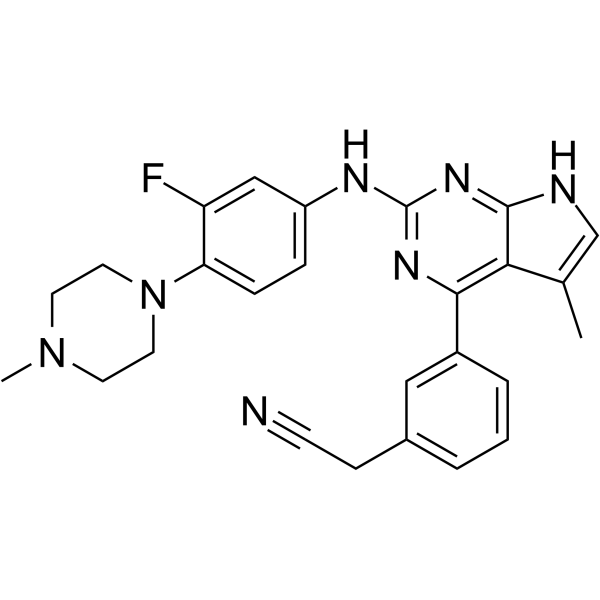
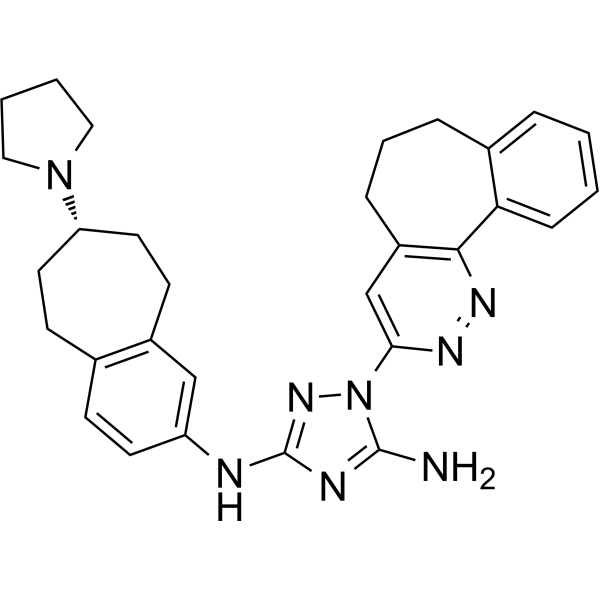
SGI-7079 is a selective, ATP-competitive, orally active inhibitor of the receptor tyrosine kinase Axl. SGI-7079 blocks Axl-mediated signaling pathways such as NF-κB activation and MMP-9 expression, thereby inhibiting tumor cell proliferation, migration and invasion. SGI-7079 is mainly used in the research of malignant tumors such as inflammatory breast cancer and bladder cancer, as well as in combination with immunization (used in combination with PD-1 therapy)[1][2][3].
loading...
    loading...
Cat. No.: HY-P990643
Target:  

Integrin

Research Areas:  

Neurological Disease Cancer

OS-2966 is a humanized neutralizing monoclonal antibody (huIgG1κ) targeting human CD29 (β1 integrin/ITGB1). OS-2966 blocks integrin β1 signaling, inhibits tumor cell proliferation, invasion, migration and mesenchymal phenotype, and enhances the efficacy of oncolytic herpes simplex virus-1 (oHSV) and anti-angiogenic therapies. OS-2966 can be used in research related to triple-negative breast cancer, high-grade meningioma, glioblastoma and ovarian cancer .
loading...
    loading...
Cat. No.: HY-169903
CAS No.: 1189710-20-0
Target:  

Apoptosis

Research Areas:  

Cancer

SMIP34 is a PELP1 inhibitor. SMIP34 binds to PELP1 with a Kd of 37.4 μM. SMIP34 inhibits cancer cell proliferation and tumor progression. SMIP34 can be used for breast cancer research, and is active against wild-type (WT), mutant (MT) ER+ and therapy-resistant (TR)-ER+ breast cancer .
loading...
    loading...
Cat. No.: HY-175020
Research Areas:  

Cancer

QNX-10 is a fatty acid synthase (FASN) inhibitor (IC50 = 0.7 μM) with anticancer activity. QNX-10 exhibits potent FASN inhibition and cytotoxicity against colorectal and breast cancer cells. QNX-10 induces apoptosis and cell cycle arrest in S phase by upregulating the pro-apoptotic protein Bax and downregulating the anti-apoptotic protein Bcl-xL. QNX-10 can be used to investigate anticancer therapies targeting FASN enzymes .
loading...
    loading...
Cat. No.: HY-146231
CAS No.: 2636072-62-1
Target:  

PROTACs MAP4K

Research Areas:  

Inflammation/Immunology Cancer

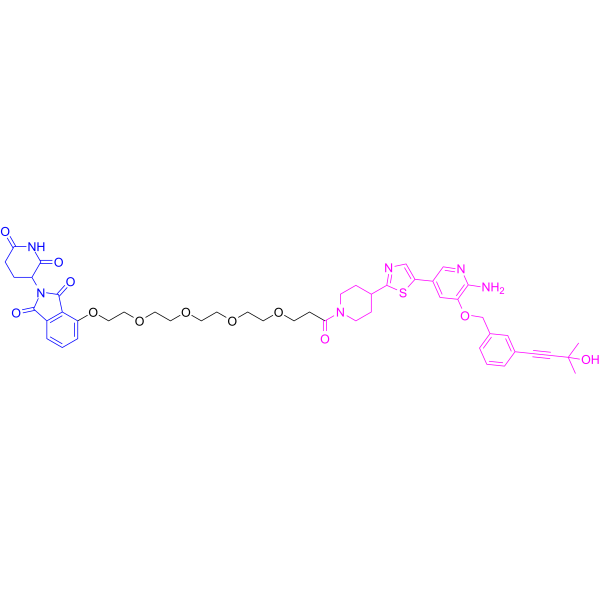
SS47 is a hematopoietic progenitor kinase HPK1 PROTAC-class degrader and immune activator. SS47 promotes the proliferation of CD4+ and CD8+ T cells as well as IFN-γ secretion, and enhances the anti-tumor cytotoxicity and in vivo efficacy of BCMA CAR-T cells. SS47 also inhibits tumor growth in mouse models, and when combined with anti-PD-1 therapy, it improves the immune response of 4T1 tumor-bearing mice. SS47 can be used in breast cancer-related research .
loading...
    loading...
Cat. No.: HY-146231A
Purity:  99.88%
Target:  

PROTACs MAP4K

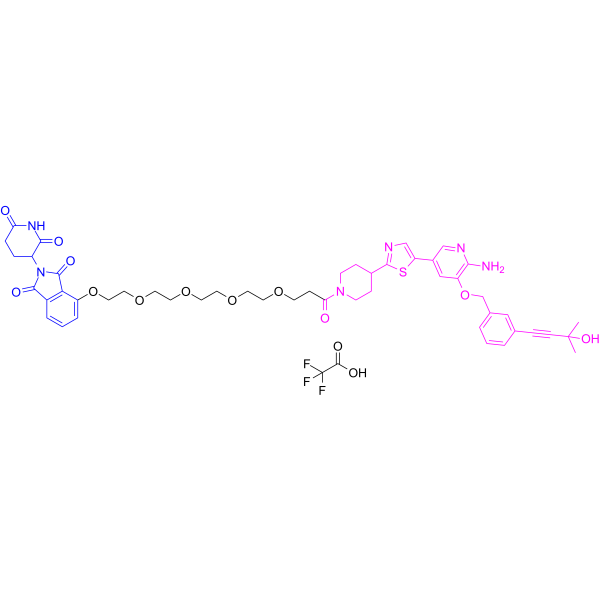
SS47 TFA is a hematopoietic progenitor kinase HPK1 PROTAC-class degrader and immune activator. SS47 TFA promotes the proliferation of CD4+ and CD8+ T cells as well as IFN-γ secretion, and enhances the anti-tumor cytotoxicity and in vivo efficacy of BCMA CAR-T cells. SS47 TFA also inhibits tumor growth in mouse models, and when combined with anti-PD-1 therapy, it improves the immune response of 4T1 tumor-bearing mice. SS47 TFA can be used in breast cancer-related research .
loading...
    loading...
Cat. No.: HY-W040270
CAS No.: 928292-69-7
Target:  

PROTAC Linkers

Research Areas:  

Cancer

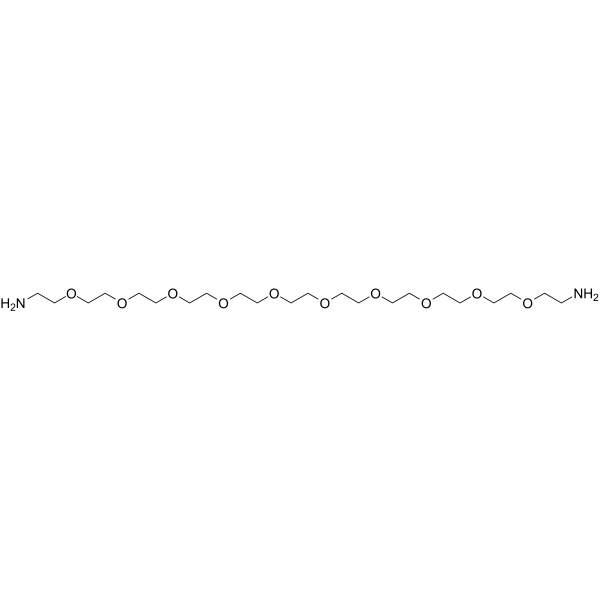
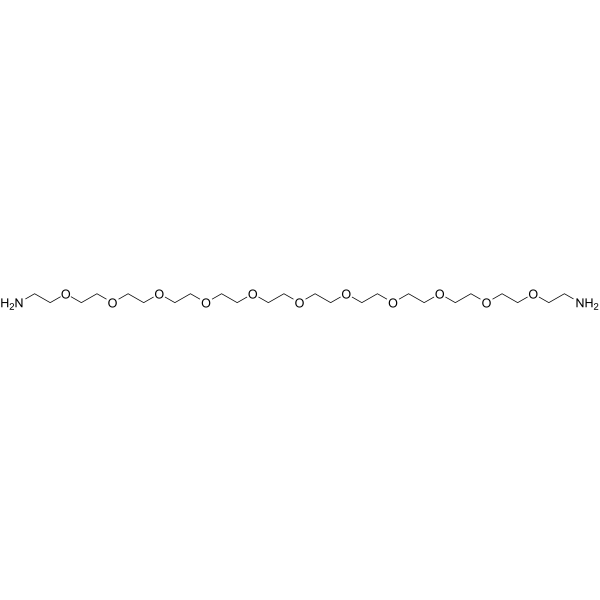
Amino-PEG10-amine, a PEG-based PROTAC linker used to combine two mono diethylstilbestrol (DES)-based ligands, provides an alternative strategy for preparing more selective and active ER antagonists for endocrine therapy of breast cancer .
loading...
    loading...
Cat. No.: HY-130411
CAS No.: 479200-82-3
Purity:  ≥95.0%
Target:  

PROTAC Linkers

Research Areas:  

Cancer

Amino-PEG11-amine, a PEG-based (12 units) PROTAC linker used to combine two mono diethylstilbestrol (DES)-based ligands, provides an alternative strategy for preparing more selective and active ER antagonists for endocrine therapy of breast cancer .
loading...
    loading...
Cat. No.: HY-141520G
CAS No.: 2603528-97-6
ART558 (GMP) is ART558 (HY-141520) produced by using GMP guidelines. GMP small molecules works appropriately as an auxiliary reagent for cell therapy manufacture. ART558 is a potent, selective and allosteric DNA polymerase theta (Polθ) inhibitor (IC50=7.9 nM). ART558 elicits BRCA-gene synthetic lethality and DNA damage. ART558 can be used for the research of cancer, such as breast cancer .
loading...
    loading...
Cat. No.: HY-15150G
CAS No.: 1037624-75-1
Synonyms: R428 (GMP); BGB324 (GMP)
Bemcentinib (R428) GMP is Bemcentinib (HY-15150) in GMP grade. GMP-grade small molecules can be used as auxiliary reagents in cell therapy.Bemcentinib (R428) is a selective and orally active Axl inhibitor with an IC50 of 14 nM. Bemcentinib retards cancer cell migration and invasion. Bemcentinib exhibits >100-fold selectivity for Axl versus Abl and 50- and >100-fold selectivity over TAM family kinases Mer and Tyro3, respectively, in cells. Bemcentinib blocks tumor spread and prolongs survival in models of metastatic breast cancer .
loading...
    loading...
Cat. No.: HY-116865
CAS No.: 517-09-9
Purity:  ≥95.0%
Equilenin is a B-ring unsaturated estrogen discovered in pregnant mare urine and is one of the major components of Premarin, a drug commonly used for estrogen replacement therapy. Equilenin binds to estrogen receptors in the body and exerts effects similar to endogenous estrogens. Equilenin weakly binds to and activates the aryl hydrocarbon receptor (AhR) to induce CYP1A1 expression. Equilenin exhibits high affinity for sex hormone-binding globulin (SHBG/SBP) and is metabolized by CYP1A1/1B1 to 4-hydroxy and 17β-dihydro derivatives. Equilenin is used in breast cancer-related research .
loading...
    loading...
Cat. No.: HY-162575
CAS No.: 128519-30-2
Target:  

ERK

Research Areas:  

Cancer

Anticancer agent 231 (Compound P5) is a tyrosine protein kinase inhibitor with a IC50 value of 3.95 μM. Anticancer agent 231 inhibits the cell viability, cell proliferation, cell migration and cancer dryness of triple negative breast cancer (TNBC) cells by targeting EGFR-ERK 1/2 signaling pathway, and is expected to play an important role in the field of TNBC disease therapy .
loading...
    loading...
Cat. No.: HY-D2620
CAS No.: 3030055-40-1
CAR-2 is a BODIPY-based photosensitizer that induces ferroptosis in photodynamic therapy (PDT) by targeting the endoplasmic reticulum (ER) and lipid droplets (LDs). CAR-2 exhibits phototoxicity in breast cancer cells with IC50 of 0.01-0.02 μM. CAR-2 exhibits antitumor efficacy in 4T1 xenograft mouse models .
loading...
    loading...
Cat. No.: HY-169122
Target:  

Drug Derivative

Research Areas:  

Cancer

LLC1 is an Amiloride (HY-B0285) derivative with cytotoxicity against breast cancer cells, particularly those resistant to treatment. The IC50 values of LLC1 for MCF7, MCF7 MX-100, MCF7 TS, MCF7 TR-1, and MCF7 TR-5 are 13, 12, 25, 26, and 19 mM, respectively. LLC1 shows potential for research in the field of cancer therapy .
loading...
    loading...
Cat. No.: HY-170999
CAS No.: 2705841-17-2
Research Areas:  

Cancer

Antitumor agent-196 (Compound 6a (β, β, β)) is an artemisinin-based oligomer with anticancer activity, showing an IC50 of 90 nM against MCF-7 breast cancer cells. Antitumor agent-196 promotes Apoptosis by regulating the Bax-caspase 3 signaling pathway, and induces Ferroptosis through the modulation of key signaling molecules, including GPX4. Antitumor agent-196 holds promising potential for further research in the field of cancer therapy .
loading...
    loading...
Cat. No.: HY-167854
CAS No.: 904899-25-8
Research Areas:  

Cancer

KW-2450 Free base is a potent multikinase inhibitor targeting Aurora A and B kinases, demonstrating significant antitumor activity against triple-negative breast cancer (TNBC). KW-2450 Free base effectively reduces cell viability, promotes apoptosis, and inhibits colony formation and mammosphere formation in TNBC cells. KW-2450 Free base significantly suppresses the growth of TNBC xenografts, leading to tetraploid accumulation followed by apoptosis or the survival of octaploid cells. KW-2450 Free base enhances the efficacy of combination therapy with the MEK inhibitor selumetinib, resulting in a synergistic antitumor effect in TNBC models. KW-2450 Free base also acts as an orally bioavailable inhibitor of IGF-1R and IR tyrosine kinases, contributing to its potential antineoplastic activity by inhibiting tumor cell proliferation and inducing apoptosis.
loading...
    loading...
Cat. No.: HY-L074
3,404 compounds

Breast cancer is the most frequent cancer among women, impacting 2.1 million women each year, and also causes the greatest number of cancer-related deaths among women. Surgery is usually the first type of treatment for breast cancer, which is usually followed by chemotherapy or radiotherapy or, in some cases, hormone or targeted therapies, especially for metastatic breast cancer (MBC).

Breast cancer is a heterogeneous disease, which is categorized into 3 major subtypes based on the presence or absence of molecular markers for estrogen or progesterone receptors and human epidermal growth factor 2 (ERBB2; formerly HER2): hormone receptor positive/ERBB2 negative (70% of patients), ERBB2 positive (15%-20%), and triple-negative (tumors lacking all 3 standard molecular markers; 15%). Different intrinsic subtypes exhibit different tumor behavior with different prognoses, and may require specific targeted therapies to maximize treatment effectiveness. Otherwise, some signaling pathways also play important roles in the development of breast cancer, such as NF-κB Signaling Pathway, TGF-beta Signaling Pathway, PI3K/AKT/mTOR signaling pathway and Notch Signaling Pathway. These signaling pathways offer ideal targets for development of new targeted therapies for breast cancer.

MCE supplies a unique collection of 3,404 compounds with identified and potential anti-breast cancer activity. MCE Anti-Breast Cancer Compound Library is a useful tool for anti-breast cancer drugs screening.

Cat. No.: HY-184451
CAS No.: 2825003-94-7
BSS-Et is a near-infrared phototheranostic agent that serves as one of the two release units of hypoxia-responsive prodrug BNNC, responsible for generating photodynamic therapy (PDT) and photothermal therapy (PTT) effects at tumor sites. BSS-Et produces reactive oxygen species and singlet oxygen upon irradiation, inducing oxidative stress and DNA damage. When combined with (R)-CR8 (HY-18340), BSS-Et enhances DNA damage and apoptosis in breast cancer cells. BSS-Et can be used in breast cancer-related research .
loading...
    loading...
Cat. No.: HY-187225
Research Areas:  

Cancer

NCP07 is a PROTAC degrader targeting the coactivator-binding site (CBS) of ERα. NCP07 induces the formation of the ERα-NCP07-VHL ternary complex and promotes ERα degradation via the ubiquitin-proteasome system. NCP07 induces apoptosis and cell cycle arrest in endocrine therapy-resistant breast cancer cells. NCP07 inhibits the proliferation of wild-type and ESR1-mutant breast cancer cells. NCP07 is applicable to breast cancer-related research .
loading...
    loading...
Cat. No.: HY-W248590
CAS No.: 199444-11-6
Synonyms: IR-775 chloride
IR-775 chloride is a cyanine dye with near-infrared absorption (Ex/Em = 775/795 nm). IR-775 chloride acts as a photosensitizer or photothermal agent, and induces apoptosis via generating ROS or exerting photothermal effects upon irradiation; its combination with 2-methoxyestradiol (HY-12033) inhibits SOD2 to enhance photodynamic therapy (PDT) efficacy, and its liposomal encapsulation enables phytotherapy-photothermal therapy (PTT) synergy. IR-775 chloride is applicable for investigating PDT/PTT and near-infrared fluorescence imaging in ovarian cancer and breast cancer .
loading...
    loading...

