19 Results for "

camera-based readers

" in MedChemExpress (MCE) Product Catalog:
Products (19)

19 Results for "camera-based readers" in MCE Product Catalog:

14
14 Publications Verification
Cat. No.: HY-111330
CAS No.: 359010-69-8
Purity:  99.91%
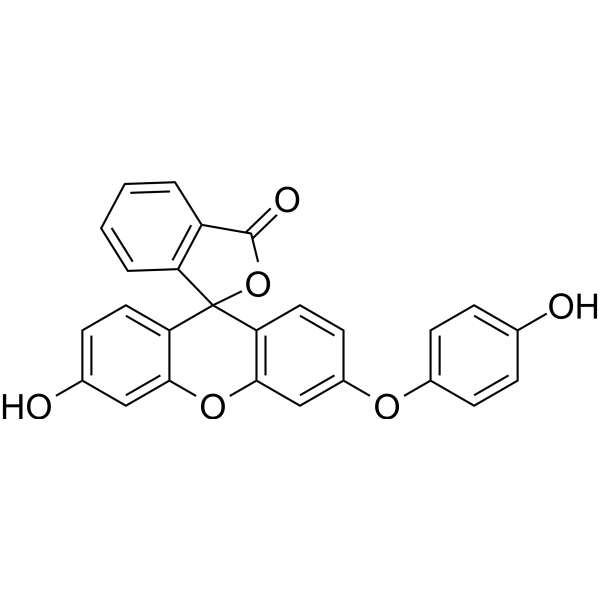
Synonyms: HPF; 3'-p-(Hydroxyphenyl) fluorescein
Hydroxyphenyl Fluorescein (HPF) is a stable ROS fluorescent probe dye. Hydroxyphenyl Fluorescein has stronger specificity and stability than H2DCFDA (HY-D0940). Hydroxyphenyl Fluorescein can produce strong green fluorescence through hydroxyl radical reaction with intracellular peroxynitroso. Hydroxyphenyl Fluorescein can be applied for fluorescence microscopy, high-throughput imager, luciferase microplate reader or flow cytometry. Ex/Em=490/515 nm .
loading...
    loading...
3
3 Cited Publications
Cat. No.: HY-100832
CAS No.: 1872382-47-2
Purity:  99.50%
연구분야:  

Cancer

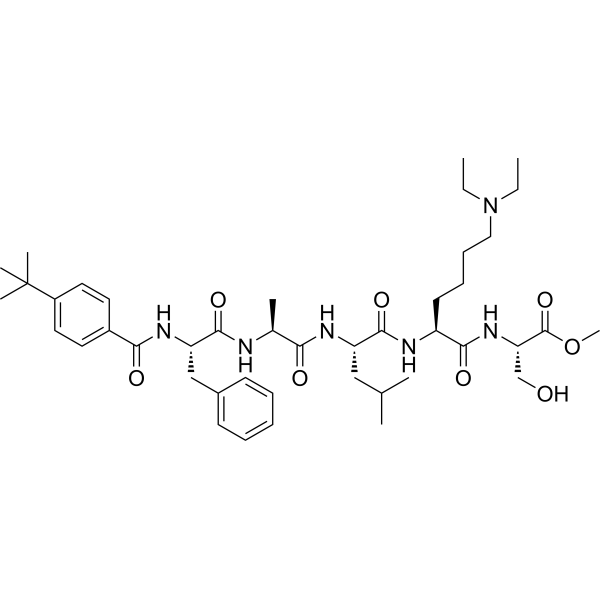
UNC3866 is a potent antagonist of the CBX7-H3 interaction as determined by AlphaScreen (IC50=66±1.2 nM) and is more than 100-fold selective for CBX7 over the other nine members of this methyl-lysine (Kme) reader panel.
loading...
    loading...
3
3 Cited Publications
Cat. No.: HY-125837A
CAS No.: 2748239-18-9
Purity:  ≥98.0%
연구분야:  

Cancer

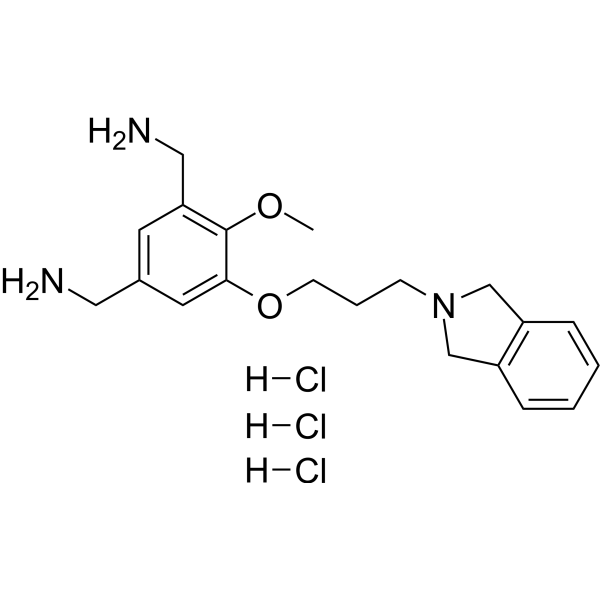
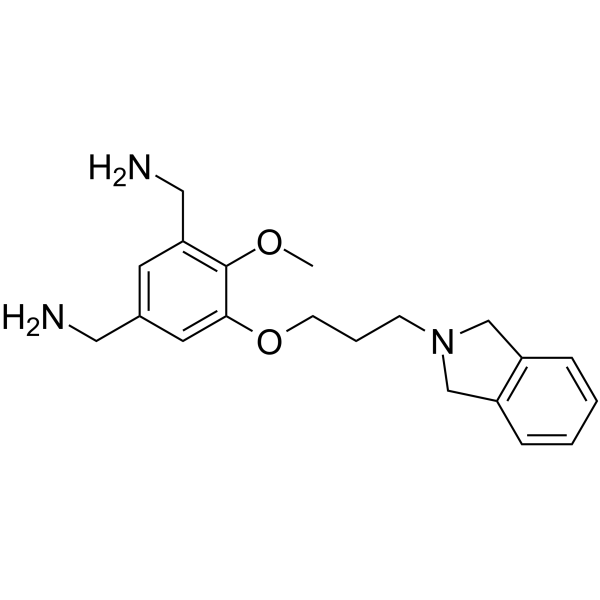
MS31 trihydrochloride is a potent, highly affinity and selective fragment-like methyllysine reader protein spindlin 1 (SPIN1) inhibitor. MS31 trihydrochloride potently inhibits the interactions between SPIN1 and H3K4me3 (IC50=77 nM, AlphaLISA; 243 nM, FP). MS31 trihydrochloride selectively binds Tudor domain II of SPIN1 (Kd=91 nM). MS31 trihydrochloride potently inhibits binding of trimethyllysine-containing peptides to SPIN1, and is not toxic to nontumorigenic cells .
loading...
    loading...
2
2 Cited Publications
Cat. No.: HY-120166
CAS No.: 214491-43-7
Purity:  99.05%
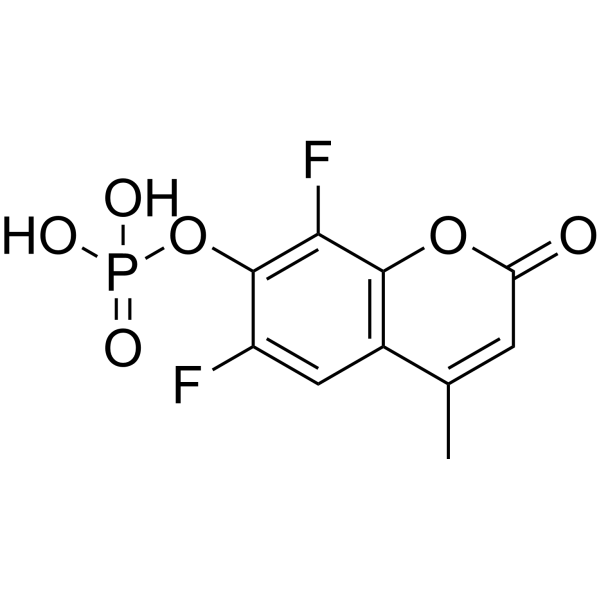
Synonyms: 6,8-Difluoro-4-methylumbelliferyl phosphate
Target:  

Phosphatase

연구분야:  

Others

DiFMUP is a fluorogenic substrate, and has been widely used for the continuous detection of phosphatase activities. DiFMUP is hydrolysis by a phosphatase results in the release of Xuorescent DIFMU, which can be easily followed in continuous mode by a Xuorescence reader .
loading...
    loading...
Cat. No.: HY-16510
CAS No.: 1184136-10-4
연구분야:  

Cancer

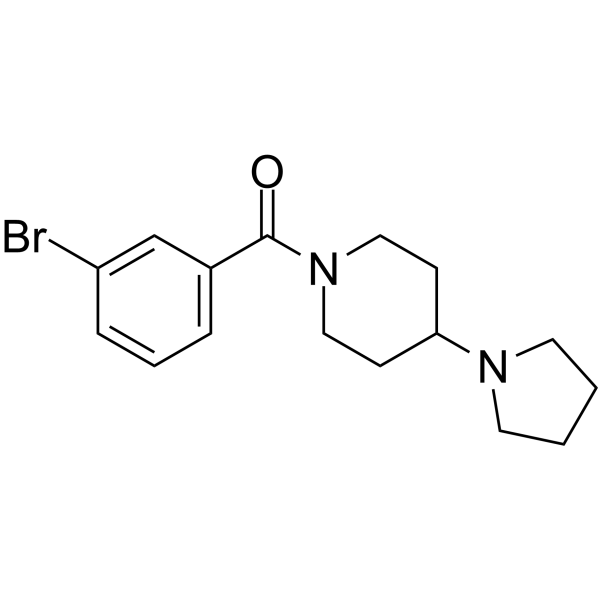
UNC926 is a methyl-lysine (Kme) reader domain inhibitor that inhibits L3MBTL1 with an IC50 of 3.9 μM .
loading...
    loading...
Cat. No.: HY-E0225
Target:  

Others

연구분야:  

Others

The 0.5 mL SBS Rack is a 96-well biobank storage rack suitable for -80°C environments. It can hold 0.5 mL externally threaded cryogenic vials with 2D codes on the bottom, and supports automated sample tracking, detection, and laboratory information system integration. The 0.5 mL SBS Rack can be used with camera-based reading devices to scan and log biobank vials with 2D codes into databases, enabling rapid identification of aliquoted samples .
loading...
    loading...
Cat. No.: HY-115531
CAS No.: 1648707-58-7
Purity:  98.84%
Target:  

DNA/RNA Synthesis

연구분야:  

Cancer

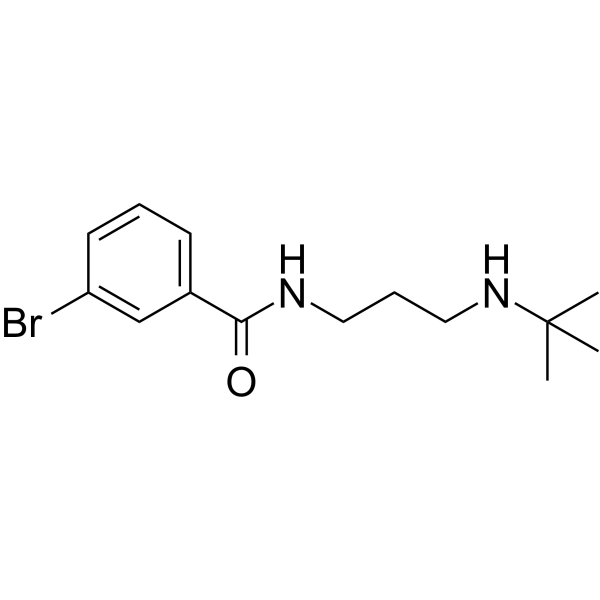
UNC-2170 is a functionally active, fragment-like ligand for 53BP1 (IC50=29 µM; Kd=22 µM). UNC-2170 shows at least 17-fold selectivity for 53BP1 as compared to nine other methyl-lysine (Kme) reader proteins. 53BP1 is a Kme binding protein that plays a central role in DNA Damage Repair (DDR) pathways and is recruited to sites of double-strand breaks (DSB) .
loading...
    loading...
Cat. No.: HY-DY1035
CAS No.: 359010-69-8
Hydroxyphenyl Fluorescein (HPF) (solution) is a stable ROS fluorescent probe dye. Hydroxyphenyl Fluorescein has stronger specificity and stability than H2DCFDA (HY-D0940). Hydroxyphenyl Fluorescein can produce strong green fluorescence through hydroxyl radical reaction with intracellular peroxynitroso. Hydroxyphenyl Fluorescein can be applied for fluorescence microscopy, high-throughput imager, luciferase microplate reader or flow cytometry. Ex/Em=490/515 nm .
Solvent and concentration: DMSO: 10 mM
loading...
    loading...
Cat. No.: HY-16510A
CAS No.: 1782573-49-2
연구분야:  

Cancer

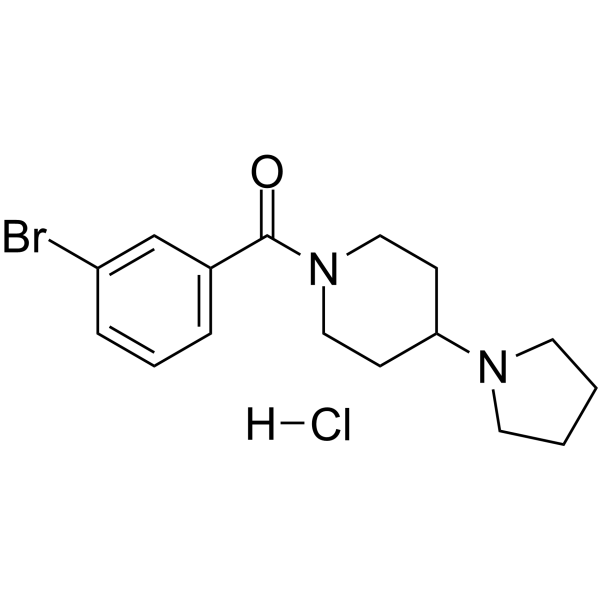
UNC926 hydrochloride is a methyl-lysine (Kme) reader domain inhibitor that inhibits L3MBTL1 with an IC50 of 3.9 μM .
loading...
    loading...
Cat. No.: HY-122703
CAS No.: 1995867-02-1
BETi-211 is an orally active, selective BET inhibitor with a Ki < 1 nM. BETi-211 inhibits BET function as epigenetic readers by binding to BET proteins (BRD2, BRD3, and BRD4). BETi-211 suppresses the growth of various triple-negative breast cancer (TNBC) cell lines, with an IC50 < 1 μM. BETi-211 can be utilized to synthesize PROTAC molecules designed to degrade BET proteins. BETi-211 is applicable for research into TNBC .
loading...
    loading...
Cat. No.: HY-125837
CAS No.: 2366264-12-0
연구분야:  

Cancer

MS31 is a potent, highly affinity and selective fragment-like methyllysine reader protein spindlin 1 (SPIN1) inhibitor. MS31 potently inhibits the interactions between SPIN1 and H3K4me3 (IC50=77 nM, AlphaLISA; 243 nM, FP). MS31 selectively binds Tudor domain II of SPIN1 (Kd=91 nM). MS31 potently inhibits binding of trimethyllysine-containing peptides to SPIN1. MS31 is not toxic to nontumorigenic cells .
loading...
    loading...
Cat. No.: HY-118897
CAS No.: 2173992-60-2
Target:  

DNA/RNA Synthesis

연구분야:  

Cancer

UNC-2170 maleate is the maleate salt form of UNC-2170 (HY-115531). UNC-2170 maleate is a selective inhibitor for the methyl-lysine binding protein 53BP1, with IC50 of 29 µM and Kd of 22 µM. UNC-2170 maleate shows at least 17-fold selectivity for 53BP1 as compared to nine other methyl-lysine (Kme) reader proteins. 53BP1 is a Kme binding protein that plays a central role in DNA Damage Repair (DDR) pathways and is recruited to sites of double-strand breaks (DSB) .
loading...
    loading...
Cat. No.: HY-100832A
CAS No.: 1872382-48-3
연구분야:  

Cancer

UNC3866 TFA is a potent antagonist of the CBX7-H3 interaction as determined by AlphaScreen (IC50=66±1.2 nM) and is more than 100-fold selective for CBX7 over the other nine members of this methyl-lysine (Kme) reader panel.
loading...
    loading...
Cat. No.: HY-P4900
CAS No.: 1926163-65-6
Target:  

Caspase

연구분야:  

Others

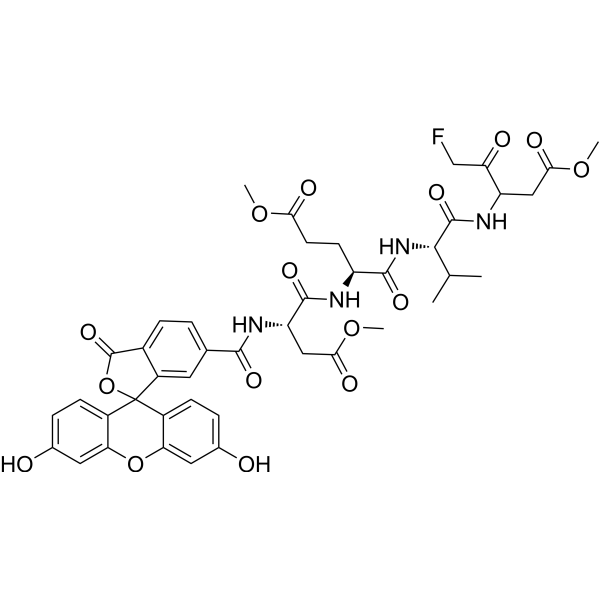
Fluorescein-6-carbonyl-Asp(OMe)-Glu(OMe)-Val-DL-Asp(OMe)-fluoromethylketone is a cell-permeable, non-toxic inhibitor that binds irreversibly to activated caspase-3 in apoptotic cells. The fluorescence intensity can be measured by flow cytometry, microwell plate reader, or fluorescence microscopy .
loading...
    loading...
Cat. No.: HY-161670
연구분야:  

Cancer

NSD2-PWWP1 ligand 1 (compound 34) is a small molecule ligand targeting the NSD2-PWWP1 domain (pIC50: 8.2). NSD2 is a large multidomain protein with histone writer and histone reader functions. Dysregulation of the levels of histone methyltransferase nuclear receptor binding SET domain 2 (NSD2) may lead to a variety of hematological and solid malignancies. NSD2-PWWP1 ligand 1 binds to NSD2, reducing its enzymatic activity and inhibiting tumorigenesis .
loading...
    loading...
Cat. No.: HY-L024
935 compounds

A histone modification, a covalent post-translational modification (PTM) to histone proteins, includes methylation, phosphorylation, acetylation, ubiquitylation, and sumoylation, etc. In general, histone modifications are catalyzed by specific enzymes that act predominantly at the histone N-terminal tails involving amino acids such as lysine or arginine, as well as serine, threonine, tyrosine, etc. The PTMs made to histones can impact gene expression by altering chromatin structure or recruiting histone modifiers. Histone modifications act in diverse biological processes such as transcriptional activation/inactivation, chromosome packaging, and DNA damage/repair. Deregulation of histone modification contributes to many diseases, including cancer and autoimmune diseases.

MCE owns a unique collection of 935 bioactive compounds targeting Epigenetic Reader Domain, HDAC, Histone Acetyltransferase, Histone Demethylase, Histone Methyltransferase, Sirtuin, etc. Histone Modification Research Compound Library is a useful tool for histone modification research and drug screening.

Cat. No.: HY-181065
CAS No.: 3099617-79-2
연구분야:  

Cancer

LS-170 is a YEATS2 YEATS domain inhibitor with an IC50 of 0.14 μM. LS-170 displays selectivity for the YEATS2 YEATS domain over other YEATS domain family members and other epigenetic 'reader' and 'eraser' proteins. LS-170 reduces chromatin occupancy of the Ada-two-A-containing (ATAC) complex, decreases ATAC-dependent histone acetylation levels, and downregulates expression of ATAC-governed genes. LS-170 suppresses tumor growth in a lung cancer mouse model. LS-170 can be used for the research of non-small cell lung cancer .
loading...
    loading...
Cat. No.: HY-L005M
295 compounds

Epigenetics involves heritable phenotypic changes that occur without alterations to the underlying DNA sequence. Key mechanisms include DNA methylation, histone modifications, and regulation by small non-coding RNAs such as microRNAs. By modifying DNA, histones, or RNA—while leaving their primary sequences intact—these processes influence molecular function and regulation, thereby playing critical roles in cellular differentiation, embryonic development, gene expression control, aging, and diseases such as cancer.

MCE provide a unique collection of 295 epigenetics-related compounds. For each regulatory target and its subtype, 3 to 5 highly specific representative compounds have been retained, which can be used in epigenetic and related disease research.

Cat. No.: HY-L005
2,048 compounds

Epigenetics refers to changes in phenotype that are not rooted in DNA sequence. Many types of epigenetic processes have been identified, including DNA methylation, alteration in the structure of histone proteins and gene regulation by small noncoding microRNAs. Modification of DNA, protein, or RNA, resulting in changes to the function and/or regulation of these molecules, without altering their primary sequences, reveals the complexities of cellular differentiation, embryology, the regulation of gene expression, aging, cancer, and other diseases.

MCE provide a unique collection of 2,048 epigenetics-related compounds that can be used in the research of the related diseases.

  • 1

