

1. Search Result
Search Result
Pathways Recommended: Stem Cell/Wnt Cell Cycle/DNA Damage
Results for "

cell culture

" in MedChemExpress (MCE) Product Catalog:

401

Inhibitors & Agonists

1

Screening Libraries

6

Fluorescent Dyes

147

Biochemical Assay Reagents

26

Peptides

87

MCE Kits

3

Inhibitory Antibodies

56

Natural
Products

28

Isotope-Labeled Compounds

2

Click Chemistry

14

Oligonucleotides

1

GMP Molecules

Cat. No. 상품명 Target 연구분야 Chemical Structure
  • HY-P1156
    Insulin(cattle)
    Maximum Cited Publications
    13 Publications Verification

    Insulin Receptor Metabolic Disease Endocrinology
    Insulin cattle is a two-chain polypeptide hormone produced in vivo in the pancreatic β cells. Insulin cattle has often been used as growth supplement in culturing cells.
    Insulin(cattle)
  • HY-Y0406E

    Calcium dichloride anhydrous, for cell culture

    Environmental Pollutants Biochemical Assay Reagents Infection Cancer
    Calcium chloride anhydrous, for cell culture is an inorganic salt for the preparation of various buffers . Calcium chloride anhydrous, for cell culture can be used for animal modeling, to construct abdominal aortic aneurysm models .
    Calcium chloride anhydrous, for cell culture
  • HY-Y1269C
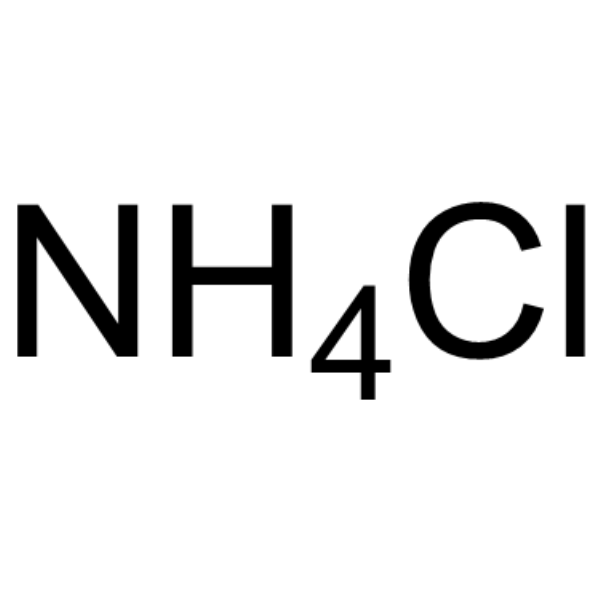
    Ammonium chloride, for cell culture
    Maximum Cited Publications
    47 Publications Verification

    Salmiac, for cell culture

    Environmental Pollutants Biochemical Assay Reagents Autophagy Cancer
    Ammonium chloride, for cell culture (Salmiac, for cell culture) is a reagent that can be used in cell culture to provide a source of nitrogen. Ammonium chloride can be used as a heteropolar compound to regulate pH value, which can cause intracellular alkalination and metabolic acidosis, thus affecting the activity of enzymes and affecting the process of biological systems. Ammonium chloride acts as an autophagy inhibitor.Ammonium chloride is also a lysosome inhibitor.
    Ammonium chloride, for cell culture
  • HY-Y0344D
    Sodium chloride, for cell culture
    3 Publications Verification

    Halite, for cell culture

    Environmental Pollutants Biochemical Assay Reagents Interleukin Related Na+/K+ ATPase Inflammation/Immunology Cancer
    Sodium chloride, for cell culture is an orally active salt. Sodium chloride, for cell culture induces the expression of ATP1A1. Sodium chloride, for cell culture induces the pro-inflammatory cytokines IL-2, TNFα, IL-9 and several chemokines. Sodium chloride, for cell culture enhances the anti-tumor activities of Digoxin (HY-B1049) against small cell lung cancer. Sodium chloride, for cell culture drives autoimmune disease by the induction of pathogenic Th17 cells .
    Sodium chloride, for cell culture
  • HY-D0857
    HEPES
    5+ Cited Publications

    Biochemical Assay Reagents Others
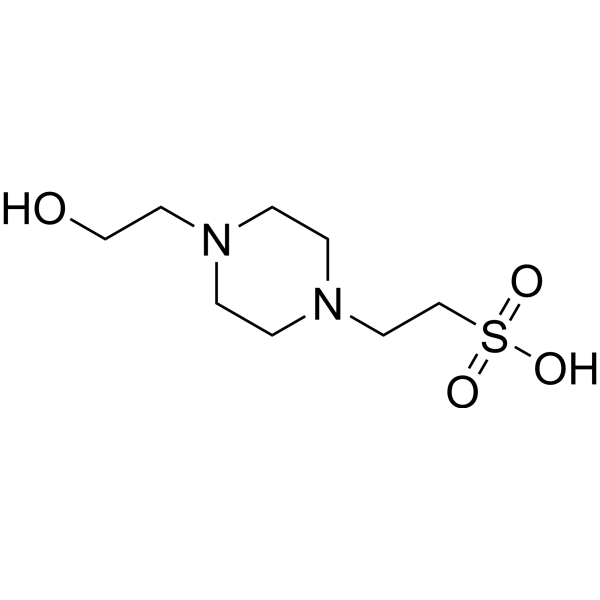
    HEPES, a nonvolatile zwitterionic chemical buffering agent, is broadly applied in cell culture. HEPES is effective at pH 6.8 to 8.2. HEPES is also a potent inducer of lysosome biogenesis .
    HEPES
  • HY-Y1365

    Environmental Pollutants Biochemical Assay Reagents Metabolic Disease Cancer
    Gelatins is a non-toxic, non carcinogenic, biodegradable, and non irritating natural polymer derived from partial hydrolysis of collagen. Due to its strong liquid absorption and swelling ability, Gelatins has excellent hemostatic properties and can be used as a matrix material for the reduction, growth, and stability of metal nanoparticles. Gelatins can also be used for tumor cell culture and tumor therapy .
    Gelatins
  • HY-W019981C

    MgCl2 hexahydrate, for cell culture

    Calcium Channel Biochemical Assay Reagents Metabolic Disease
    Magnesium chloride hexahydrate (MgCl2 hexahydrate), for cell culture is the hexahydrate form of magnesium dichloride. Magnesium chloride hexahydrate, for cell culture can be used as a source of magnesium ion and a co-foactor for many enzymes. Magnesium chloride hexahydrate, for cell culture increases the activity of Ca 2+ ATPase .
    Magnesium chloride hexahydrate, for cell culture
  • HY-Y1881B

    Environmental Pollutants Biochemical Assay Reagents Reactive Oxygen Species (ROS) Caspase MyD88 SOD Others
    Copper sulfate pentahydrate, for cell culture, 98% is a biochemical reagent. Copper sulfate pentahydrate, for cell culture, 98% reduces the production of ROS and the expression levels of MyD88 as well as c-Rel genes. Copper sulfate pentahydrate, for cell culture, 98% decreases the activities of T-SOD, CAT, and GSH, increases the activities of caspase-3, caspase-8, and caspase-9. Copper sulfate pentahydrate, for cell culture, 98% is cytotoxic to various cells .
    Copper sulfate pentahydrate, for cell culture, 98%
  • HY-150287

    ITS-G

    Biochemical Assay Reagents Endocrinology
    Insulin-Transferrin-Selenium, 100X (ITS-G) is a mixture of Insulin, transferrin, and sodium selenite that is a general supplement designed for use in classic media such as DMEM, RPMI-1640, and nutrient media such as Ham's F-12, DMEM/F-12. Insulin-Transferrin-Selenium is added to basal medium to reduce the amount of fetal calf serum required to culture cells .
    Insulin-Transferrin-Selenium, 100X
  • HY-W134423

    Environmental Pollutants Biochemical Assay Reagents Others Cancer
    Agar, microbiology tested, for cell culture (powder) is a jelly like substance that contains agarose and agar gel. Agar, microbiology tested, for cell culture (powder) can be isolated from the cell walls of red algae species such as Gelidium and Gracilaria (Ogonori). The gelation and melting of Agar, microbiology tested, for cell culture (powder) is based on the hydrogen bridge (physical gels), so the gelation is reversible. Agar, microbiology tested, for cell culture (powder) is widely used in food additives, plant tissue culture, microorganisms culture media, fingerprint recognition, and medical fields .
    Agar, microbiology tested, for cell culture (powder)
  • HY-P1956A

    HSA (cell culture grade, Endotoxin<0.125 EU/mg)

    NF-κB NO Synthase Cardiovascular Disease Inflammation/Immunology
    Human serum albumin (Cell culture grade, Endotoxin<0.125 EU/mg) (HSA) is the most abundant protein in plasma and is a major determinant of plasma oncotic pressure. Human serum albumin (Cell culture grade, Endotoxin<0.125 EU/mg) exhibits antioxidant, anticoagulant, anti-inflammatory, anti-platelet aggregation activities as well as colloid osmotic action. Human serum albumin (Cell culture grade, Endotoxin<0.125 EU/mg) can block the inhibitory effect of GML on human T cells, providing protective function for T cells. Human serum albumin (Cell culture grade, Endotoxin<0.125 EU/mg) is also associated with cardiovascular diseases and can partially prevent the LPS (HY-D1056) induced oxidative stress, as well as the upregulation of NF-κB, iNOS, and peroxynitrite (ONOO ) in the vascular wall, contributing to the reduction of blood pressure. Human serum albumin (Cell culture grade, Endotoxin<0.125 EU/mg) can be used for in vitro cell culture .
    This product is human serum albumin recombinantly expressed in an Escherichia coli expression system.
    Human serum albumin (Cell culture grade, Endotoxin<0.125 EU/mg)
  • HY-108535
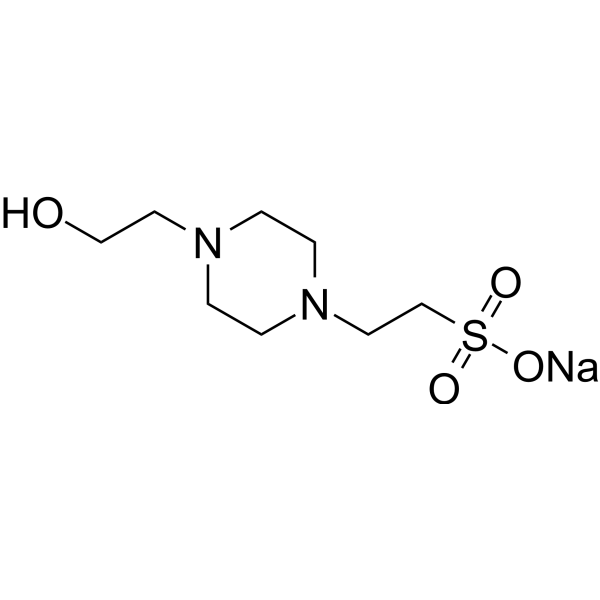
    HEPES sodium
    5+ Cited Publications

    Biochemical Assay Reagents Others
    HEPES sodium, a nonvolatile zwitterionic chemical buffering agent, is broadly applied in cell culture. HEPES sodium is effective at pH 6.8 to 8.2. HEPES sodium is also a potent inducer of lysosome biogenesis .
    HEPES sodium
  • HY-Y0537E
    Potassium chloride, for cell culture
    1 Publications Verification

    Environmental Pollutants Calcium Channel Potassium Channel Biochemical Assay Reagents Neurological Disease
    Potassium chloride, for cell culture is potassium chloride that can be used for cell culture. Potassium chloride, for cell culture increases extracellular potassium ion concentration to induce cellular depolarization, thereby activating voltage-gated calcium channels and regulating intracellular calcium signaling. Potassium chloride, for cell culture upregulates Brn-5. Potassium chloride, for cell culture inhibits the proliferation of neurons and some plant cells .
    Potassium chloride, for cell culture
  • HY-W251598C

    Sodium hydrogen carbonate for cell culture; Soda bicarbonate for cell culture

    Environmental Pollutants Bacterial Inflammation/Immunology Cancer
    Sodium bicarbonate, for cell culture (Sodium hydrogen carbonate for cell culture; Soda bicarbonate for cell culture) is an inorganic salt that is neutral to slightly alkaline and easily decomposes when exposed to moisture in the air. Sodium bicarbonate, for cell culture can maintain the pH of the culture medium, thereby affecting the expression of inducible nitric oxide synthase (iNOS) and nitric oxide (NO) production in macrophages and reversing the acidosis of the tumor microenvironment. Sodium bicarbonate is widely used in the fields of food, medicine, cosmetics, etc. Its main uses include buffers, flavoring agents, disinfectants, pharmaceuticals, and proton gradient regulators. Sodium bicarbonate is also commonly used as an antacid to inhibit gastrointestinal diseases, neutralize gastric acid, and reduce gastric discomfort .
    Sodium bicarbonate, for cell culture
  • HY-Y1110I

    Magnogene, for insect cell culture, 97%

    Environmental Pollutants Biochemical Assay Reagents Infection
    Magnesium chloride, for insect cell culture, 97% is an orally active inorganic mineral salt. Magnesium chloride combined with Potassium chloride (HY-Y0537E) increases the fat body glycogen, protein, total lipids and haemolymph protein and trehalose in the silkworm, Bombyx mori L .
    Magnesium chloride, for insect cell culture, 97%
  • HY-170230

    ECGS,Bovine

    Biochemical Assay Reagents Others
    Bovine Endothelial cell growth supplement, suitable for cell culture (ECGS, Bovine) is a culture medium supplement, endothelial cell growth supplement (ECGS), which promotes the proliferation of human saphenous vein endothelial cells (HSVEC) and human umbilical vein endothelial cells (HUVEC) .
    Bovine Endothelial cell growth supplement,suitable for cell culture
  • HY-W015240

    Endogenous Metabolite Metabolic Disease Inflammation/Immunology
    N-Acetyl-L-glutamic acid is a type of glutamic acid that can serve as a component of cell culture media. When combined with media containing inorganic salts, carbohydrates, vitamins, and amino acids, N-Acetyl-L-glutamic acid plays roles in promoting cell growth, enhancing antibody production, etc. N-Acetyl-L-glutamic acid is also an endogenous metabolite that can be found in the brain. Additionally, as an IgE blocker, N-Acetyl-L-glutamic acid can be used in the research of allergic diseases .
    N-Acetyl-L-glutamic acid
  • HY-129047E

    Ser/Thr Protease Others
    Trypsin, porcine pancreas (Cell culture grade) is a serine protease that hydrolyzes proteins at the carboxyl side of lysine or arginine residues. Trypsin, porcine pancreas (Cell culture grade) exhibits excellent protein digestibility for α-lactalbumin and β-casein. Trypsin, porcine pancreas (Cell culture grade) removes cellular components while preserving extracellular matrix structures to achieve uniform decellularization of porcine pancreas .
    Trypsin, porcine pancreas (Cell culture grade)
  • HY-18569B

    IAA

    Endogenous Metabolite Infection
    3-Indoleacetic acid, suitable for plant cell culture (IAA), is a naturally occurring plant growth hormone that is widely present in plants, bacteria, and fungi. 3-Indoleacetic acid, suitable for plant cell culture, is a plant growth-promoting hormone that not only promotes plant growth but also protects bacteria from the toxic damage to cell membrane potential caused by other indole intermediate products (such as I3P) produced during their own metabolic processes. 3-Indoleacetic acid, suitable for plant cell culture, can be used in plant cell culture .
    3-Indoleacetic acid,suitable for plant cell culture
  • HY-126436A

    L-Ornithine homopolymer hydrobromide (MW 30000-70000)

    Biochemical Assay Reagents Neurological Disease
    Poly-L-ornithine hydrobromide (MW 30000-70000) is a poly-lysine derivative with a molecular weight of 30000-70000. Poly-L-ornithine hydrobromide (MW 30000-70000) binds to the surface of cell culture vessels through positively charged amino acid residues to form a coating that promotes cell adhesion and provides cells with a matrix environment required for growth. Poly-L-ornithine hydrobromide (MW 30000-70000) is used as a coating agent in cell culture and can be used for the study of primary culture of neurons (such as dopaminergic neurons and oligodendrocytes) .
    Poly-L-ornithine hydrobromide (MW 30000-70000)
  • HY-W094475C

    Epsom salts, for cell culture

    Environmental Pollutants Biochemical Assay Reagents Others
    Magnesium sulfate heptahydrate, for cell culture (Epsom salts, for cell culture) is a hydrate of Magnesium sulfate (HY-Y1267), suitable for cell culture .
    Magnesium sulfate heptahydrate, for cell culture
  • HY-Y0317H

    Disodium sulfate, for cell culture

    Environmental Pollutants Biochemical Assay Reagents Cancer
    Sodium sulfate anhydrous, for cell culture is a drying agent in organic synthesis, which can be used for cell culture .
    Sodium sulfate anhydrous, for cell culture
  • HY-Y0308E

    Disodium hydrogen phosphate, for cell culture

    Environmental Pollutants Biochemical Assay Reagents Others
    Sodium phosphate dibasic (Disodium hydrogen phosphate), for cell culture is a buffer and chelating agent. Sodium phosphate dibasic is used to adjust the pH of liquids. Sodium phosphate dibasic can be used in cell culture .
    Sodium phosphate dibasic, for cell culture
  • HY-Y0332K

    Potassium phosphate monobasic, for cell culture

    Biochemical Assay Reagents Inflammation/Immunology
    Potassium dihydrogen phosphate, for cell culture is a commonly used bioanalytical buffer.
    Potassium dihydrogen phosphate, for cell culture
  • HY-Y1365D

    Biochemical Assay Reagents Others
    Bovine Gelatin, suitable for cell culture can be used for cell culture to induce cell attachment .
    Bovine Gelatin,suitable for cell culture
  • HY-Y1103A

    Ferrous sulfate heptahydrate, for cell culture, 99%

    Environmental Pollutants Biochemical Assay Reagents Cardiovascular Disease Cancer
    Iron(II) sulfate heptahydrate, for cell culture, 99% (Ferrous sulfate heptahydrate, for cell culture, 99%) is an orally active iron salt. Iron(II) sulfate heptahydrate, for cell culture, 99% replaces iron found in hemoglobin and myoglobin, allowing for the transportation of oxygen via hemoglobin. Iron(II) sulfate heptahydrate, for cell culture, 99% is mainly used for the prevention of iron-deficiency anemia. Iron(II) sulfate heptahydrate, for cell culture, 99% also has anti-tumor effects on chronic myeloid leukemia and breast cancer .
    Iron(II) sulfate heptahydrate, for cell culture, 99%
  • HY-108536D

    Biochemical Assay Reagents Others
    Calcium chloride dihydrate, for cell culture, 99% is a biochemical reagent. Calcium chloride dihydrate, for cell culture, 99% enhances the dentinogenic differentiation potential of WMTA on cells. Calcium chloride dihydrate, for cell culture, 99% can be used as a biological material or organic compound for life science related research [2.
    Calcium chloride dihydrate, for cell culture, 99%
  • HY-Y1365L

    Biochemical Assay Reagents Others
    Porcine skin Gelatin,suitable for cell culture(high gel strength) can be used to coat cells to improve cell attachment .
    Porcine skin Gelatin,suitable for cell culture(high gel strength)
  • HY-126437H

    Biochemical Assay Reagents Others
    Poly-L-lysine hydrobromide (MW 4000-15000) is a positively charged amino acid polymer that acts as a non-specific attachment factor for cells. Poly-L-lysine hydrobromide (MW 4000-15000) enhances the electrostatic interaction between the negative ions of the cell membrane and the surface of the culture medium, thereby promoting the adhesion of cells to solid substrates. Poly-L-lysine hydrobromide (MW 4000-15000) can be used for gene delivery .
    Poly-L-lysine hydrobromide (MW 4000-15000)
  • HY-Y1110H

    Magnogene, suitable for insect cell culture

    Environmental Pollutants Biochemical Assay Reagents Others
    Magnesium chloride anhydrous, suitable for insect cell culture is an inorganic salt and cell culture medium component that can be used to prepare Tris buffer. Magnesium chloride anhydrous, suitable for insect cell culture is a component of Hunter's Thrips medium, which supports the in vitro culture of western flower thrip embryonic cells, and promotes the adhesion of tissue fragments/cells as well as the growth of fibroblast-like and epithelial-like cells .
    Magnesium chloride anhydrous, suitable for insect cell culture
  • HY-126437J

    PLL solution 0.01%, sterile-filtered, hydrobromide, MW 150000-300000, for cell culture

    Biochemical Assay Reagents Others
    Poly-L-lysine solution (0.01%, sterile-filtered, MW 150000-300000), a positively charged amino acid polymer, is a nonspecific attachment factor for cells. Poly-L-lysine solution (0.01%, sterile-filtered, MW 150000-300000) has good biocompatibility. Poly-L-lysine solution (0.01%, sterile-filtered, MW 150000-300000) is used to increase cell adhesion to solid substrates by enhancing electrostatic interaction between negatively charged ions of the cell membrane and the culture surface .
    Poly-L-lysine solution (0.01%, sterile-filtered, MW 150000-300000)
  • HY-W048825

    Amino Acid Derivatives Others
    Fmoc-Ala-Ala-OH is a self-assembling fluorenylmethoxycarbonyl dipeptide, a small amphiphilic building block composed of a dipeptide linked to a fluorenylmethoxycarbonyl (Fmoc) group. Under conditions of pH < 4, Fmoc-Ala-Ala-OH spontaneously assembles to form a nanofiber network, constructing a hydrogel scaffold with a water content exceeding 99% (w/w). The fibers have a diameter of approximately 22 nm, matching the size of extracellular matrix (ECM) components. Fmoc-Ala-Ala-OH supports cell adhesion, proliferation, and maintains of cell phenotype. Fmoc-Ala-Ala-OH's function is to mimic the ECM, providing a 3D growth microenvironment for cells, and Fmoc-Ala-Ala-OH is primarily used in tissue engineering and 3D cell culture, particularly suitable for in vitro culture studies of cells such as chondrocytes[1] .
    Fmoc-Ala-Ala-OH
  • HY-B2243D

    Sodium phosphate monobasic, for cell culture; Monosodium dihydrogen orthophosphate, for cell culture; Monosodium phosphate, for cell culture

    Environmental Pollutants Biochemical Assay Reagents Others
    Anhydrous sodium dihydrogen phosphate, for cell culture is an inorganic salt compound that can be used as a buffer and nutritional supplement. Anhydrous sodium dihydrogen phosphate, for cell culture can be used in cell culture .
    Anhydrous sodium dihydrogen phosphate, for cell culture
  • HY-126437E

    Biochemical Assay Reagents Others
    Poly-L-lysine hydrobromide (with a molecular weight of 15,000 - 30,000) is an amino acid polymer with positive charge, and it serves as a non-specific attachment factor for cells. Poly-L-lysine hydrobromide (with a molecular weight of 15,000 - 30,000) can be used for gene delivery and the construction of nano-delivery systems .
    Poly-L-lysine hydrobromide (MW 15000-30000)
  • HY-18570B

    NAA

    Biochemical Assay Reagents Others
    1-Naphthaleneacetic acid,suitable for plant cell culture (NAA) is a plant growth hormone. 1-Naphthaleneacetic acid,suitable for plant cell culture promotes plant growth and induces root cluster formation. Naphthaleneacetic acid,suitable for plant cell culture is applicable for plant cell culture .
    1-Naphthaleneacetic acid,suitable for plant cell culture
  • HY-126437K

    PLL solution 0.01%, sterile-filtered, hydrobromide, MW 70000-150000, for cell culture

    Biochemical Assay Reagents Others
    Poly-L-lysine solution (0.01%, sterile-filtered, MW 70000-150000) (PLL solution (0.01%, sterile-filtered, hydrobromide, MW 70000-150000, for cell culture)) is a polycationic electrolyte polymer solution polymerized from L-lysine monomers and can be used for cell culture .
    Poly-L-lysine solution (0.01%, sterile-filtered, MW 70000-150000)
  • HY-125870

    Agar substitute gelling agent, for cell culture

    Environmental Pollutants Biochemical Assay Reagents Inflammation/Immunology
    Gellan gum is a linear microbial exopolysaccharide that can be used as a cell scaffold for both soft tissue and load bearing applications. Gellan gum has many advantages such as biocompatibility, biodegradability, nontoxic in nature, and physical stability in the presence of cations .
    Gellan gum, for cell culture
  • HY-N0729D

    Glutathione Peroxidase SOD Cardiovascular Disease
    Linoleic acid is a critical component of polyunsaturated fatty acids. Linoleic acid reduces GSH-PX and T-SOD activities. Linoleic acid functions as a structural component to maintain a certain level of membrane fluidity of the transdermal water barrier of the epidermis. Linoleic acid can cause acute oxidative damage to red blood cells, ultimately leading to partial acute anemia. Linoleic acid can be used in the research of skin diseases associated with linoleic acid deficiency .
    Linoleic acid,suitable for cell culture
  • HY-Y1365C

    Biochemical Assay Reagents Others
    Fish Gelatin,suitable for cell culture is an essential natural biopolymer. Fish Gelatin,suitable for cell culture can be isolated from fish processing by-products, such as fish skin, scales, bones and fish maw. Fish Gelatin,suitable for cell culture has been considered as a feasible substitute for mammalian gelatin. Modified Fish gelatin shows significant promise across various industries, including nanomaterials, 3D printing, thin films, coatings, and biopharmaceuticals. Fish Gelatin,suitable for cell culture can be used for cell culture .
    Fish Gelatin,suitable for cell culture
  • HY-N1428CA

    Apoptosis Endogenous Metabolite Bacterial Cardiovascular Disease Infection Metabolic Disease Inflammation/Immunology Cancer
    Ferric citrate, suitable for cell culture is a natural preservative and food tartness enhancer. Ferric citrate, suitable for cell culture induces apoptosis and cell cycle arrest at G2/M phase and S phase in HaCaT cells. Ferric citrate, suitable for cell culture causes oxidative damage of the liver by means of the decrease of antioxidative enzyme activities. Ferric citrate, suitable for cell culture is also an acidulant, emulsifier, sequestrant and buffering agent widely used across many industries .
    Ferric citrate,suitable for cell culture
  • HY-NP156

    Biochemical Assay Reagents Others
    Type I Collagen, for cell culture, from Bovine plays an important role in the structure and function of skin, bones, tendons, etc. Type I Collagen, for cell culture, from Bovine can mimic the extracellular matrix (ECM) and is suitable for 2D/3D cell culture .
    Type I Collagen, for cell culture, from Bovine
  • HY-Y1267D

    Environmental Pollutants Biochemical Assay Reagents COX Interleukin Related NO Synthase Calcium Channel Phospholipase NF-κB Cardiovascular Disease Neurological Disease Inflammation/Immunology
    Magnesium sulfate, for cell culture is a bioreagent. Magnesium sulfate is a calcium antagonist and a potent L-type calcium channel inhibitor, as well as a tocolytic. Magnesium sulfate has anti-inflammatory, anticonvulsant, vasodilatory, and neuroprotective effects. Magnesium sulfate can be used in the research of diseases such as preeclampsia/eclampsia .
    Magnesium sulfate, for cell culture
  • HY-B0400B

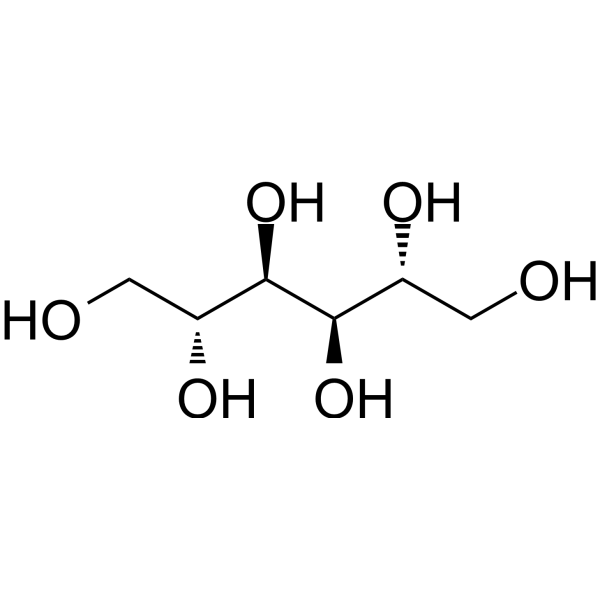
    Sorbito, for cell culture; D-Glucitol, for cell culture

    Environmental Pollutants Biochemical Assay Reagents Others
    D-Sorbitol (D-Glucitol), for cell culture is a six-carbon sugar alcohol that can be used as a sugar substitute. D-Sorbitol, for cell culture serves as an osmotic regulator, cryoprotectant and carbon source in various plant and microbial cell culture media .
    D-Sorbitol, for cell culture
  • HY-N2188
    Beta-Acetoxyisovalerylshikonin
    1 Publications Verification

    HIV Infection
    Beta-Acetoxyisovalerylshikonin is a naturally occurring naphthoquinone-type shikonin derivative that is widely distributed in the roots and cell suspension cultures of *Arnebia euchroma*, *Arnebia guttata*, *Onosma hispidum* and *Lithospermum erythrorhizon*. Beta-Acetoxyisovalerylshikonin exhibits favorable antibacterial, anti-inflammatory, wound-healing promoting and antioxidant activities, and also possesses potential anti-tumor and anti-HIV properties .
    Beta-Acetoxyisovalerylshikonin
  • HY-150287A

    ITS-X

    Biochemical Assay Reagents Others
    Insulin-Transferrin-Selenium-Ethanolamine (ITS-X) is a cell culture supplement as well as a cell growth and adhesion promoter. Insulin-Transferrin-Selenium-Ethanolamine supports adhesion, pseudopodium formation, pseudopodium elongation and proliferation of adherent cancer cells in serum-free culture systems .
    Insulin-Transferrin-Selenium-Ethanolamine
  • HY-D0227J

    Tris HCl (≥99%, for cell culture); Tris hydrochloride (≥99%, for cell culture)

    Biochemical Assay Reagents Metabolic Disease
    THAM hydrochloride (≥99%, for cell culture) is a low-toxicity amino alcohol buffer, a specific CO2-consuming proton acceptor that buffers carbon dioxide and acid both in vitro and in vivo. THAM hydrochloride (≥99%, for cell culture) binds protons to form bicarbonate, reduces PaCO2, and induces intracellular alkalization, thereby ameliorating hypercapnia-induced elevation of pulmonary blood vessels and pulmonary arterial pressure. THAM hydrochloride (≥99%, for cell culture) may cause PaCO2 rebound, hypoglycemia, and respiratory depression. THAM hydrochloride (≥99%, for cell culture) removes amniotic epithelium and preserves the basement membrane, but depletes extracellular matrix and reduces the adhesion rate of limbal epithelial cells. THAM hydrochloride (≥99%, for cell culture) can act as a CO2 carrier to enhance the productivity and carbon utilization rate of Scenedesmus obliquus. THAM hydrochloride (≥99%, for cell culture) is a key component of buffer solutions used in various biological, cell culture, biochemical, and molecular biology applications .
    THAM hydrochloride (≥99%, for cell culture)
  • HY-Y1365E

    Biochemical Assay Reagents Others
    Porcine skin Gelatin, suitable for cell culture (medium gel strength) can be used to coat cells to improve cell attachment .
    Porcine skin Gelatin,suitable for cell culture(medium gel strength)
  • HY-W243408D

    Limestone, for cell culture

    Biochemical Assay Reagents Others
    Calcium carbonate, for cell culture (Limestone, for cell culture) is a thickener and acidity regulator. Calcium carbonate, for cell culture is a kind of biological materials or organic compounds that are widely used in life science research .
    Calcium carbonate, for cell culture
  • HY-144012H

    16:0 PEG5000 PE; 1,2-Dipalmitoyl-sn-glycero-3-phosphoethanolamine-N-[methoxy(polyethylene glycol)-5000] ammonium

    Liposome Others
    DPPE-PEG5000 (16:0 PEG5000 PE) is a polymer-lipid conjugate and LipoParticle stabilizer with a PEG chain of 5,000 g/mol molecular weight attached to its polar head, and it can be internalized by biological membranes. DPPE-PEG5000 enables LipoParticle to maintain colloidal stability after 20-fold dilution in PBS or cell culture medium, and prevents aggregate formation during lyophilization and rehydration. DPPE-PEG5000 helps enhance the non-cytotoxic property of LipoParticle formulations against human osteoblasts. DPPE-PEG5000 serves as a PEG lipid functional end group for synthesizing liposomes (LPs), is used in the design of conjugated polymer nanoparticles, and applies to research related to bone and joint infections .
    DPPE-PEG5000
  • HY-Y1369C

    Manganous sulfate monohydrate, for cell culture

    Biochemical Assay Reagents Others
    Manganese sulfate monohydrate, for cell culture (Manganous sulfate monohydrate, for cell culture) can be used to prepare micronutrients. Manganese sulfate monohydrate, for cell culture is a biomaterial or organic compound that can be used as a life science research-related material .
    Manganese sulfate monohydrate, for cell culture

온라인 문의

Your information is safe with us. * Required Fields.

호칭


Country or Region *

고객명 *


회사명 *

Department *


메일주소 *


상품명 *

Cat. No.


Requested quantity *

전화번호 *


비고

온라인 문의

Inquiry Information

상품명:
Cat. No.:
수량:
MCE Japan Authorized Agent:

