48 Results for "

coffee

" in MedChemExpress (MCE) Product Catalog:
Products (48)

48 Results for "coffee" in MCE Product Catalog:

8
8 Publications Verification
Cat. No.: HY-W017389
CAS No.: 69-89-6
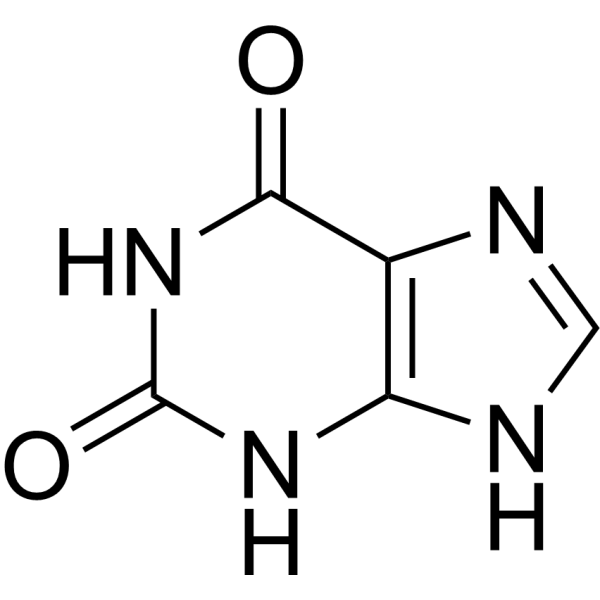
Xanthine, a plant alkaloid found in tea, coffee, and cocoa, is a mild stimulant of the central nervous system. Xanthine also acts as an intermediate product on the pathway of purine degradation .
loading...
    loading...
1
1 Cited Publications
Cat. No.: HY-N6258
CAS No.: 6894-43-5
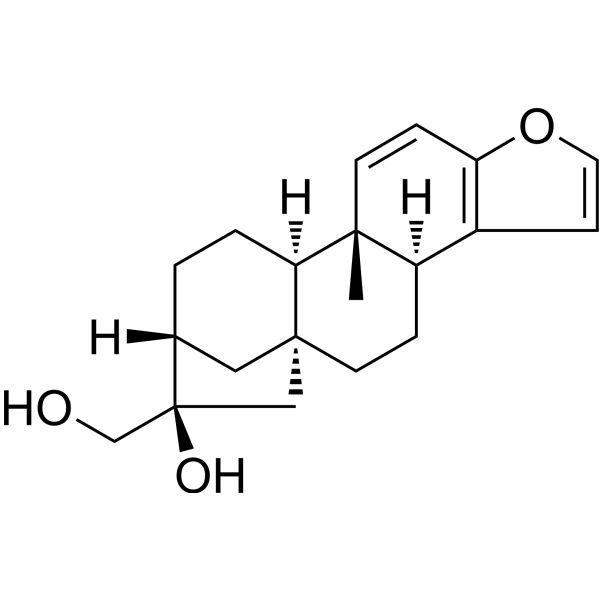
Kahweol is one of the consituents of the coffee from Coffea Arabica with anti-inflammatory anti-angiogenic, and anti-cancerous activities. Kahweol inhibits adipogenesis and increase glucose uptake by AMP-activated protein kinase (AMPK) activation. Kahweol induces apoptosis.
loading...
    loading...
1
1 Cited Publications
Cat. No.: HY-76210
CAS No.: 34604-60-9
Research Areas:  

Infection

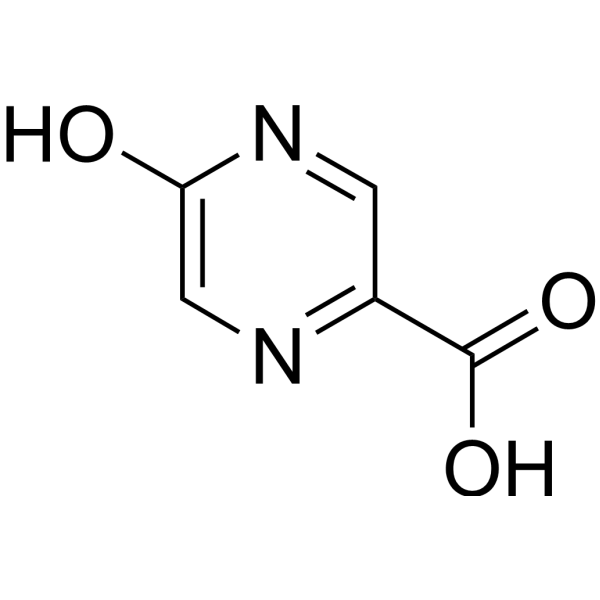
5-Hydroxypyrazine-2-Carboxylic Acid is a dibasic acid and also a urinary metabolite of coffee-derived 2-methylpyrazine (HY-W067358). 5-Hydroxypyrazine-2-Carboxylic Acid serves as an intermediate in the production of anti-tuberculosis reagents. It can be used in research related to tuberculosis [1] [2].
loading...
    loading...
Cat. No.: HY-Y1426
CAS No.: 118-93-4
Synonyms: o-Hydroxyacetophenone; o-Acetylphenol
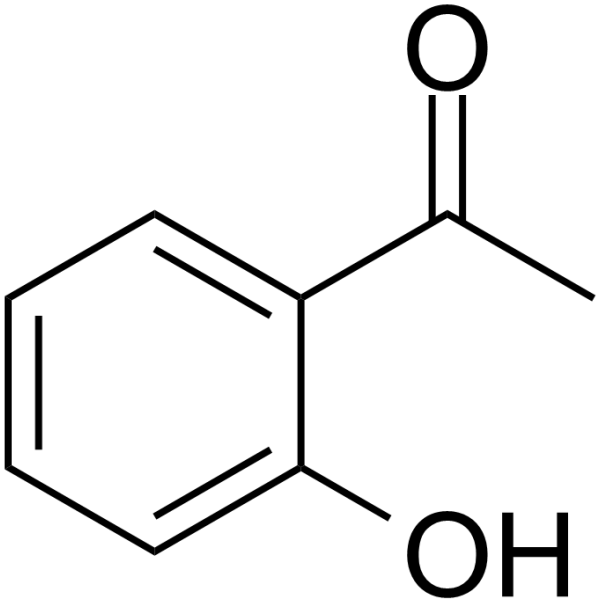
2'-Hydroxyacetophenone is found in alcoholic beverages. 2'-Hydroxyacetophenone is present in tomato, cassia, fried beef, rum, whiskey, cocoa, coffee and black tea. 2'-Hydroxyacetophenone is a flavouring ingredient. Building block in chemical synthesis.
loading...
    loading...
Cat. No.: HY-W016278
CAS No.: 104-67-6
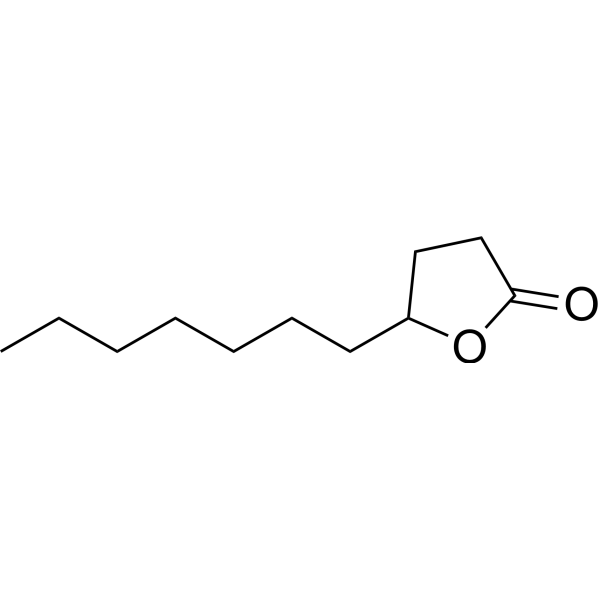
Gamma-undecalactone consists of a five-membered dihydrofuran ring with an ester group and a heptyl chain. This compound has a fruity smell and is commonly used as a flavor additive in various food and beverage products such as coffee, tea and baked goods.
loading...
    loading...
Cat. No.: HY-W010608
CAS No.: 3188-00-9
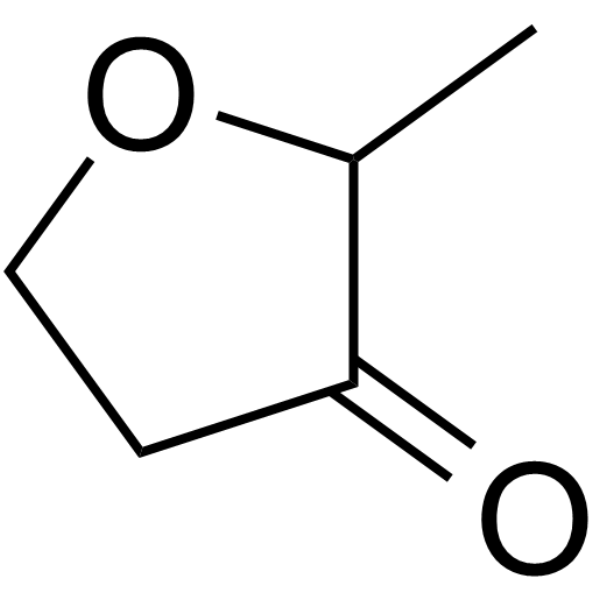
2-Methyltetrahydrofuran-3-one is a quorum sensing inhibitor that can inhibit biofilm formation by H. alvei. 2-Methyltetrahydrofuran-3-one is one of the volatile constituents of roasted coffee .
loading...
    loading...
Cat. No.: HY-N7929
CAS No.: 40242-06-6
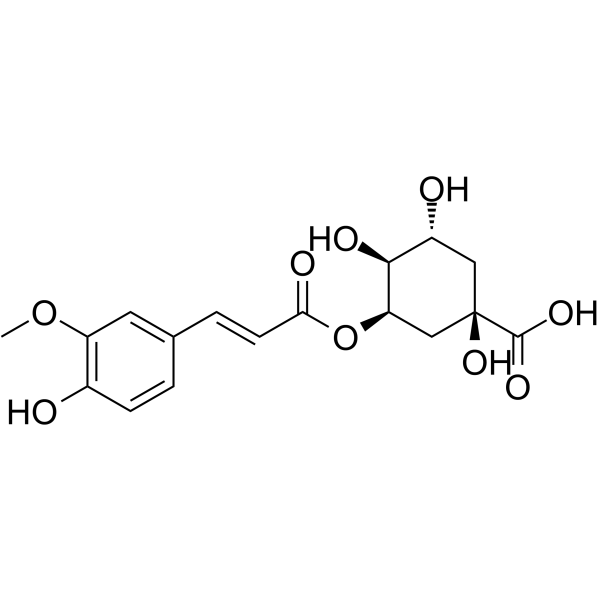
5-Feruloylquinic acid (5-FQA) is a hydroxycinnamic acid derivative. 5-Feruloylquinic acid can be isolated from green coffee beans. 5-Feruloylquinic acid inhibits tyrosinase activity. 5-Feruloylquinic acid has antioxidant properties. 5-Feruloylquinic acid has anticancer activity against lymphoma, oral epidermal cancer, and breast cancer .
loading...
    loading...
Cat. No.: HY-W012998
CAS No.: 600-14-6
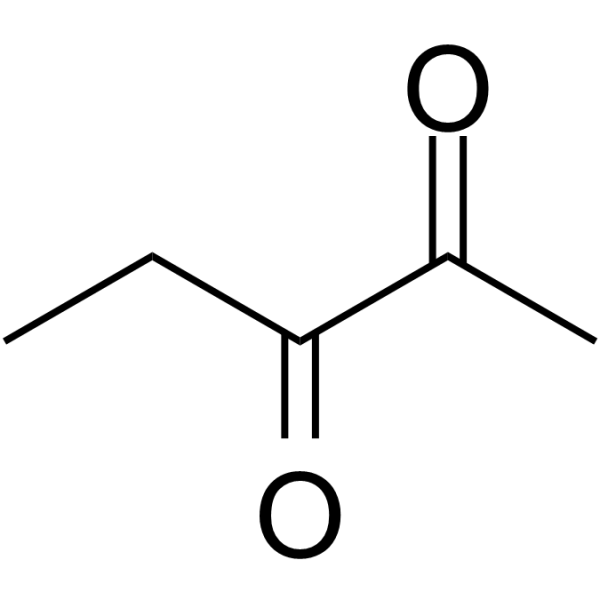
2,3-Pentanedione is a common constituent of synthetic flavorings and is used to impart a butter, strawberry, caramel, fruit, rum, or cheese flavor in beverages, ice cream, candy, baked goods, gelatins, and puddings. 2,3-Pentanedione also occurs naturally as a fermentation product in beer, wine, and yogurt and is releasedduring roasting of coffee beans .
loading...
    loading...
Cat. No.: HY-W001663
CAS No.: 876-02-8
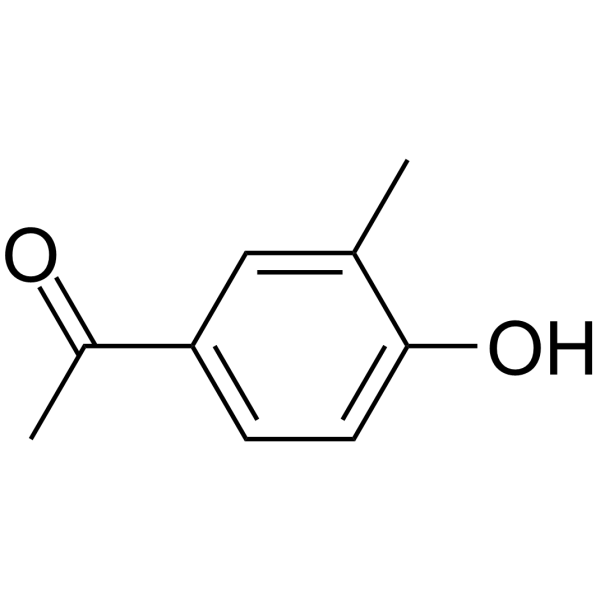
4'-Hydroxy-3'-methylacetophenone is a phenolic volatile compound. 4'-Hydroxy-3'-methylacetophenone can be isolated from Hawaiian green coffee beans (Coffea Arabica L.). 4'-Hydroxy-3'-methylacetophenone is believed to possess potent antioxidant activity similar to that of other phenolic volatile compounds, Thymol (HY-N6810) and Eugenol (HY-N0337). 4'-Hydroxy-3'-methylacetophenone also can be used to synthesize heterocyclic compounds which have antimycobacterial activity .
loading...
    loading...
Cat. No.: HY-113340
CAS No.: 5657-19-2
Purity:  99.93%
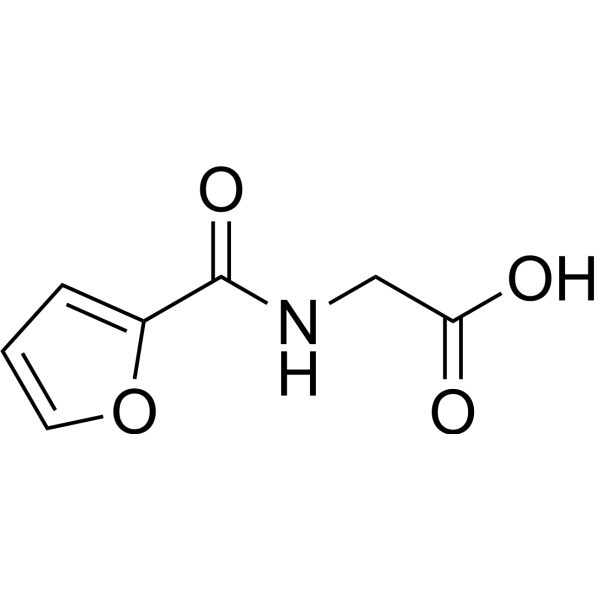
2-Furoylglycine, a urinary metabolite in human, is a putative biomarker for coffee consumption .
loading...
    loading...
Cat. No.: HY-N0415S
Synonyms: Trigonelline-d3 hydrochloride
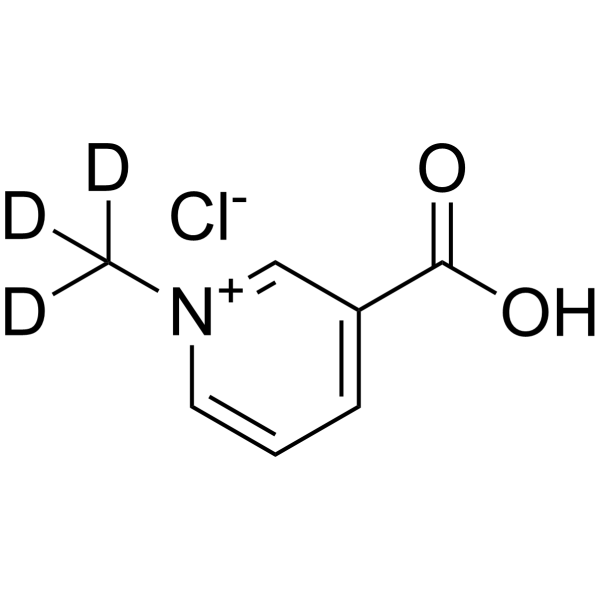
Trigonelline-d3 (chloride) is the deuterium labeled Trigonelline chloride. Trigonelline chloride, an alkaloid with potential antidiabetic activity, is present in considerable amounts in coffee. Trigonelline chloride has anti-HSV-1 , antibacterial, and antifungal activities.
loading...
    loading...
Cat. No.: HY-W017389R
CAS No.: 69-89-6
Xanthine (Standard) is the analytical standard of Xanthine. This product is intended for research and analytical applications. Xanthine, a plant alkaloid found in tea, coffee, and cocoa, is a mild stimulant of the central nervous system. Xanthine also acts as an intermediate product on the pathway of purine degradation . In Vitro: A number of stimulants are derived from Xanthine including caffeine and theobromine. Xanthine is a product on the pathway of purine degradation. Xanthine is subsequently converted to uric acid by the action of the Xanthine oxidase enzyme.
loading...
    loading...
Cat. No.: HY-116056
CAS No.: 108214-28-4
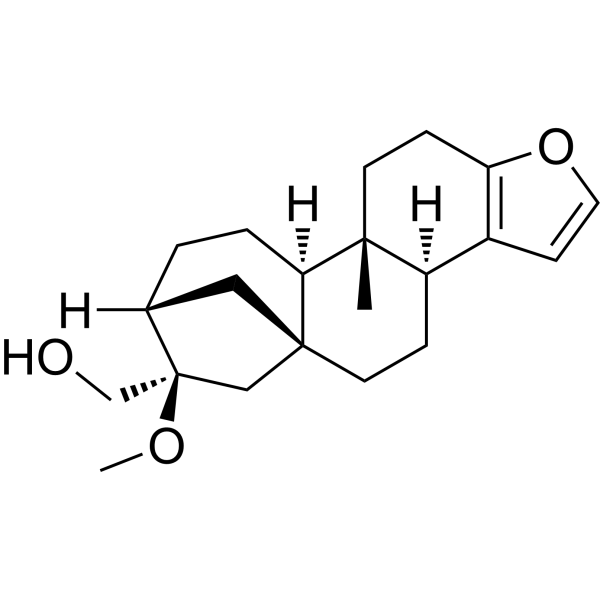
16-O-Methylcafestol is a derivative of cafestol that can be isolated from green coffee beans .
loading...
    loading...
Cat. No.: HY-W017389S1
CAS No.: 161770-53-2
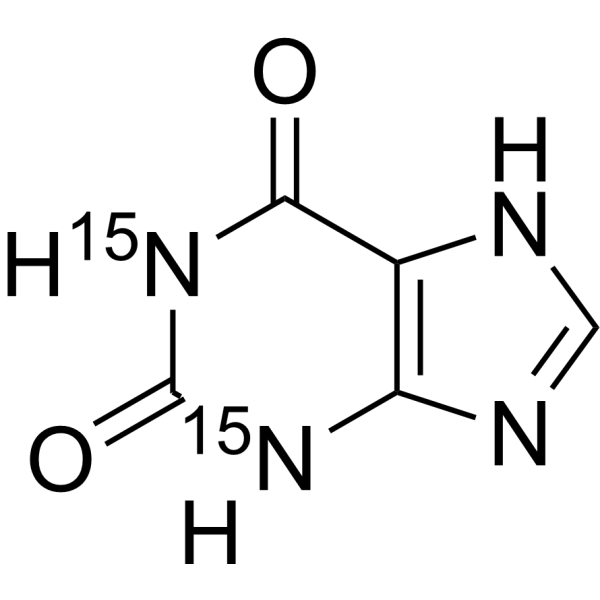
Xanthine- 15N2 is a 15N-labeled Xanthine (HY-W017389) . Xanthine, a plant alkaloid found in tea, coffee, and cocoa, is a mild stimulant of the central nervous system. Xanthine also acts as an intermediate product on the pathway of purine degradation .
loading...
    loading...
Cat. No.: HY-138164
CAS No.: 81760-46-5
Cafestol palmitate is an orally active diterpene ester. Cafestol palmitate can be isolated from raw coffee beans. Cafestol palmitate enhances the activity of Glutathione S-transferase. Cafestol palmitate downregulates the expression of Akt and VEGFR2. Cafestol palmitate can be used in the research of inflammatory diseases and cardiovascular diseases .
loading...
    loading...
Cat. No.: HY-126386A
CAS No.: 9032-75-1
Research Areas:  

Others

Pectinase, aspergillus aculeatus is a pectin-degrading enzyme with the activity of catalyzing the decomposition of pectin into galacturonic acid. Pectinase, aspergillus aculeatus can be applied in a variety of industrial fields, including juice extraction and clarification, vegetable oil extraction, wine clarification, cocoa and coffee fermentation, paper bleaching, plant fiber degumming, cotton bioscouring, bioenergy production, wastewater treatment, and use as a poultry feed additive to reduce feed viscosity .
loading...
    loading...
Cat. No.: HY-W012998R
CAS No.: 600-14-6
2,3-Pentanedione (Standard) is the analytical standard of 2,3-Pentanedione. This product is intended for research and analytical applications. 2,3-Pentanedione is a common constituent of synthetic flavorings and is used to impart a butter, strawberry, caramel, fruit, rum, or cheese flavor in beverages, ice cream, candy, baked goods, gelatins, and puddings. 2,3-Pentanedione also occurs naturally as a fermentation product in beer, wine, and yogurt and is releasedduring roasting of coffee beans .
loading...
    loading...
Cat. No.: HY-W749852
CAS No.: 1196-43-6
Xanthine sodium, 98%, a plant alkaloid found in tea, coffee, and cocoa, is a mild stimulant of the central nervous system. Xanthine sodium, 98% also acts as an intermediate product on the pathway of purine degradation .
loading...
    loading...
Cat. No.: HY-W097929
CAS No.: 87-40-1
Synonyms: 2,4,6-Trichloroanisole
Tyrene (2,4,6-Trichloroanisole) is an off-flavor compound, cyclic nucleotide-gated (CNG) channel inhibitor, and olfactory transduction attenuator. Tyrene is formed by microbial O-methylation of 2,4,6-trichlorophenol. Tyrene inhibits channel activity in olfactory receptor cells by partitioning into the plasma membrane lipid bilayer, and also suppresses odorant- and cAMP-induced currents in individual olfactory receptor cells. Tyrene causes cork taint in wine. Tyrene also produces off-flavors in potato chips, dried fruits, coffee, and drinking water .
loading...
    loading...
Cat. No.: HY-139898
CAS No.: 1217341-48-4
Target:  

Taste Receptor

Research Areas:  

Others

S7958 is a selective and orally active antagonist of the TAS2R8 bitter taste receptor, with its IC50 being 0.06 μM. S7958 only has a weak inhibitory effect on TASR8 and TAS2R39, and has no significant impact on other receptors. S7958 significantly inhibits the perception of bitterness caused by substances such as coffee and drug active ingredients (API) by selectively antagonizing the human bitter taste receptor TAS2R8. S7958 can be used in the medical field to improve the research on the bitterness of oral preparations .
loading...
    loading...

