
4 Results for "

complex-IV

" in MedChemExpress (MCE) Product Catalog:
Products (4)

4 Results for "complex-IV" in MCE Product Catalog:

Cat. No.: HY-W012145
CAS No.: 637-01-4
Target:  

Others

Research Areas:  

Metabolic Disease

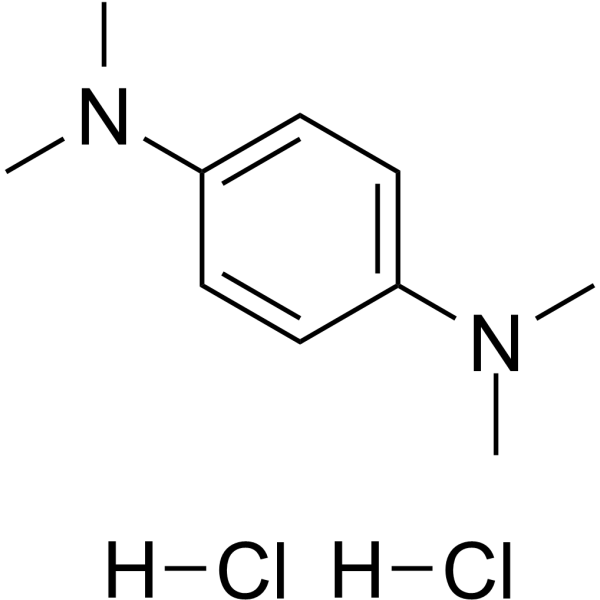
TMPD dihydrochloride, a readily oxidizable compound, is an enzymatically convert redox active substrate molecule. TMPD dihydrochloride is also an electron donor and serves as a reducing cosubstrate for heme peroxidases . TMPD dihydrochloride is also a complex IV substrate .
loading...
    loading...
Cat. No.: HY-125857B
CAS No.: 9007-43-6
Cytochrome C (Saccharomyces cerevisiae) is a type C cytochrome located in the intermembrane space of the mitochondria. As an electron carrier, Cytochrome C (Saccharomyces cerevisiae) transfers electrons between complex III (cytochrome c reductase) and complex IV (cytochrome c oxidase, CIV) of the respiratory chain. Cytochrome C (Saccharomyces cerevisiae) can play a crucial role in triggering apoptosis by being released from the mitochondria into the cytosol .
loading...
    loading...
Cat. No.: HY-118075
CAS No.: 606-06-4
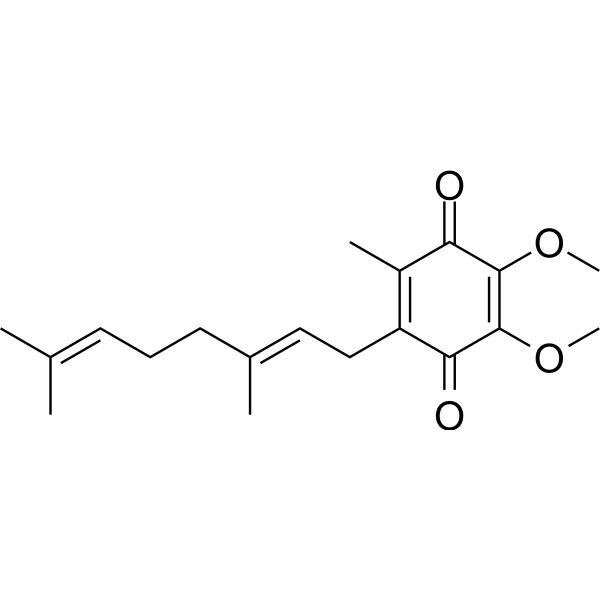
Coenzyme Q2 is a benzoquinone electron carrier in the mitochondrial electron transport chain and a p53-dependent apoptosis inducer. Coenzyme Q2 induces p53 phosphorylation at Ser15, promoting p53 accumulation and functional activation. Coenzyme Q2 induces ROS generation, caspase-3 activation, DNA fragmentation, phosphatidylserine externalization, mitochondrial permeability transition pore opening, and oxidative phosphorylation uncoupling. Coenzyme Q2 inhibits Complex I, Complex III, and Complex IV activities, disrupting electron transport and membrane potential generation. Coenzyme Q2 induces excessive mitochondrial proton leak in forebrain mitochondria. Coenzyme Q2 causes loss of righting reflex in mice, accompanied by slow-wave delta EEG activity and reversible loss of wakefulness. Coenzyme Q2 inhibits lipid peroxidation and scavenges superoxide radicals. Coenzyme Q2 is used in research on leukemia, myocardial ischemia-reperfusion injury, and mitochondrial encephalomyopathy .
The product specifications provided below refer solely to the active content of Coenzyme Q2.
loading...
    loading...
Cat. No.: HY-190512
CAS No.: 3101626-89-2
Copper chelator is a copper chelator with anticancer activity. Copper chelator inhibits mitochondrial complex IV through copper depletion, triggering ROS/RNS stress and activating ERK/JNK/p38/AMPK, while suppressing the NRF2 antioxidant response through Keap1 upregulation. Copper chelator induces paraptosis-like death, endoplasmic reticulum stress, mitochondrial dysfunction, and ATP depletion, and inhibits cancer cell invasion and metastasis by downregulating MMP and FOSL1. Copper chelator chelates Cu (I) to form Cu complexes and releases NO with glutathione. Copper chelator inhibits the proliferation of Cu-sensitive melanoma cells and organoids as well as melanoma tumor growth in mice. Copper chelator can be used for research on melanoma .
loading...
    loading...
