1. Search Result
Search Result
Results for "

conformations

" in MedChemExpress (MCE) Product Catalog:

347

Inhibitors & Agonists

11

Screening Libraries

8

Fluorescent Dye

18

Biochemical Assay Reagents

45

Peptides

1

MCE Kits

16

Inhibitory Antibodies

19

Natural
Products

8

Isotope-Labeled Compounds

5

Click Chemistry

8

Oligonucleotides

1

GMP Molecules

Cat. No. Product Name Target Research Areas Chemical Structure
  • HY-109176
    Giredestrant
    5 Publications Verification

    GDC-9545; RG6171

    Estrogen Receptor/ERR Cancer
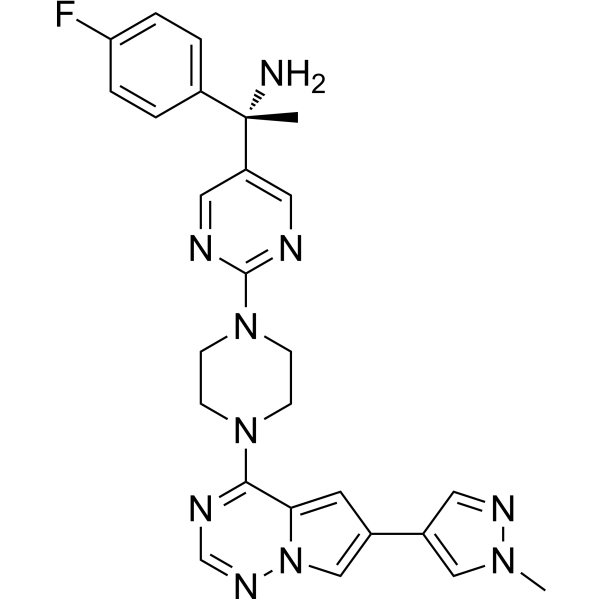
    Giredestrant (GDC-9545), a non-steroidal estrogen receptor (ER) ligand, is an orally active and selective ER antagonist. Giredestrant potently competes with Estradiol for binding and induces a conformational change within the ER ligand binding domain. Giredestrant has anti-tumor activity .
    Giredestrant
  • HY-P99415

    MAA868

    Factor Xa Cardiovascular Disease
    Abelacimab (MAA868) is a fully human IgG1 monoclonal antibody that binds with high affinity to the catalytic structural domain of FXI and locks it in the zymogen conformation, thereby preventing its activation by FXIIa or thrombin. Abelacimab can be used in thromboembolic disease studies .
    Abelacimab
  • HY-149652

    Toll-like Receptor (TLR) Inflammation/Immunology
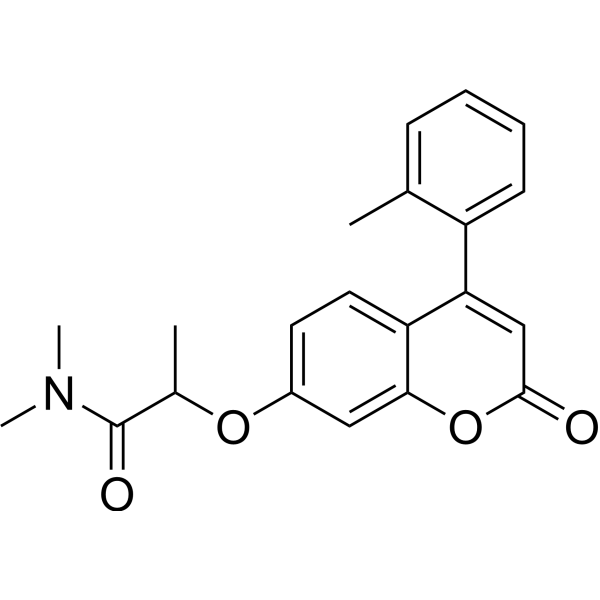
    IRF5-IN-1 (Compound C5) is a conformationally locked inhibitor for SLC15A4. IRF5-IN-1 blocks the downstream IRF5 activation, inhibits the TLR7/8 signaling pathway. IRF5-IN-1 exhibits anti-inflammatory responses .
    IRF5-IN-1
  • HY-18669
    ML346
    5+ Cited Publications

    HSP Cancer
    ML346 is an activator of Hsp70 expression and HSF-1 activity, with an EC50 of 4.6 μM for Hsp70. ML346 restores protein folding in conformational disease models, without significant cytotoxicity or lack of specificity. ML346 induces specific increases in genes and protein effectors of the heat shock response (HSR), including chaperones such as Hsp70, Hsp40, and Hsp27 .
    ML346
  • HY-106723A
    AMP-PCP disodium
    2 Publications Verification

    HSP Cancer
    AMP-PCP disodium is an ATP analogue and can bind to Hsp90 N-terminal domain with a Kd value of 3.8 μM. AMP-PCP disodium binding favors the formation of the active homodimer of Hsp90 .
    AMP-PCP disodium
  • HY-127111
    NDI-091143
    2 Publications Verification

    ATP Citrate Lyase Cancer
    NDI-091143 is a potent and high-affinity human ATP-citrate lyase (ACLY) inhibitor with an IC50 of 2.1 nM (ADP-Glo assay), a Ki of 7.0 nM and a Kd of 2.2 nM. NDI-091143 inhibits ACLY catalysis allosterically, by stabilizing large conformational changes in the citrate domain that indirectly block the binding and recognition of citrate .
    NDI-091143
  • HY-113306

    Endogenous Metabolite Others
    1-Methyladenine is a gonad maturation-promoting regulator. 1-Methyladenine is produced in testes and ovarian follicle cells of starfish under the induction of gonad-stimulating substance (GSS). 1-Methyladenine promotes starfish oocyte maturation and spawning, and modifies bases that regulate DNA structure. 1-Methyladenine converts T-A base pairs in double-stranded DNA into non-disruptive T (anti)m1A (syn) Hoogsteen conformation. If this conformational base is not repaired in a timely manner, 1-Methyladenine transforms into cytotoxic DNA damage and blocks the replication process .
    1-Methyladenine
  • HY-W019033

    Nucleoside Antimetabolite/Analog Others
    8-Bromoguanosine is a purine nucleoside, a brominated derivative of guanosine. 8-Bromoguanosine can reduce the conformational heterogeneity of RNA to enhance its function .
    8-Bromoguanosine
  • HY-117389

    PK4C9

    DNA/RNA Synthesis Others
    Homocarbonyltopsentin (PK4C9) is a small-molecule TSL2-binding compound, binds to pentaloop conformations of TSL2 and promotes a shift to triloop conformations that display enhanced SMN2 exon 7 (E7) splicing with EC50 value of 16 μM .
    Homocarbonyltopsentin
  • HY-W039897
    Methyl α-D-mannopyranoside
    1 Publications Verification

    α-Methyl-D-mannoside

    Environmental Pollutants Bacterial Infection
    Methyl α-D-mannopyranoside (α-Methyl-D-mannoside) is a methyl glycoside derivative and conformational stabilizer of α-D-mannopyranose. The glycosidic bond conformation of Methyl α-D-mannopyranoside is significantly affected by the environment. In aqueous solution, Methyl α-D-mannopyranoside stabilizes into a trans conformation via intermolecular hydrogen bonds; in the gas phase, however, steric interactions drive Methyl α-D-mannopyranoside to prefer a clockwise gauche conformation. Methyl α-D-mannopyranoside also serves as a major component of secondary cell wall polymers in some bacteria and an active precursor site for virus-targeted glycoproteins. Methyl α-D-mannopyranoside acts as an acceptor substrate for alternansucrase, mediating the transfer of D-glucopyranosyl groups to generate a variety of glycosylated oligosaccharide products, with methyl α-D-glucopyranosyl-(1→6)-α-D-mannopyranoside as the main component. Methyl α-D-mannopyranoside is applicable to studies on bacterial pathogenic mechanisms associated with mannose-specific fimbrial lectins .
    Methyl α-D-mannopyranoside
  • HY-W250727
    TNS sodium
    1 Publications Verification

    6-(p-Tolylamino)naphthalene-2-sulfonate sodium

    Fluorescent Dye Others
    TNS (6-(p-Tolylamino) naphthalene-2-sulfonate) sodium is a fluorescent probe used to detect the conformational state of proteins. TNS sodium binds to the central hydrophobic calyx of β-lactoglobulin (β-LG) to form a 1:1 complex, which stabilizes the folded conformation of β-LG. TNS sodium shows weak fluorescent signals in aqueous solution, but its fluorescence intensity increases significantly upon binding to the hydrophobic domains of proteins, with the maximum excitation wavelength and maximum emission wavelength located at 321 nm and 446 nm, respectively .
    TNS sodium
  • HY-123054
    BTSA1
    1 Publications Verification

    Bcl-2 Family Apoptosis Cancer
    BTSA1 is a potent, high affinity and orally active BAX activator with an IC50 of 250 nM and an EC50 of 144 nM. BTSA1 binds with high affinity and specificity to the N-terminal activation site and induces conformational changes to BAX leading to BAX-mediated apoptosis .
    BTSA1
  • HY-125176
    G907
    1 Publications Verification

    Bacterial Infection
    G907 is a selective antagonist of ATP-binding cassette (ABC) transporter MsbA with anti-microbial activity. G907 inhibits E. coli MsbA with an IC50 value of 18 nM. G907 traps MsbA in an inward-facing, lipopolysaccharide-bound conformation by wedging into an architecturally conserved transmembrane pocket .
    G907
  • HY-P10856

    P-glycoprotein Cancer
    CPI1 is a multidrug resistance protein 1 (MRP1) inhibitor with a Ki value of 100 nM. CPI1 binds to the same substrate-binding site as leukotriene C4, stabilizes MRP1 in an apo-like inward-facing conformation, blocks the conformational changes required for ATP hydrolysis and substrate transport, and inhibits the ATPase activity of human and bovine MRP1. CPI1 serves as a tool for investigating the substrate transport mechanism of MRP1. CPI1 is applicable to research related to cancer multidrug resistance .
    CPI1
  • HY-18343A

    MDM-2/p53 Cancer
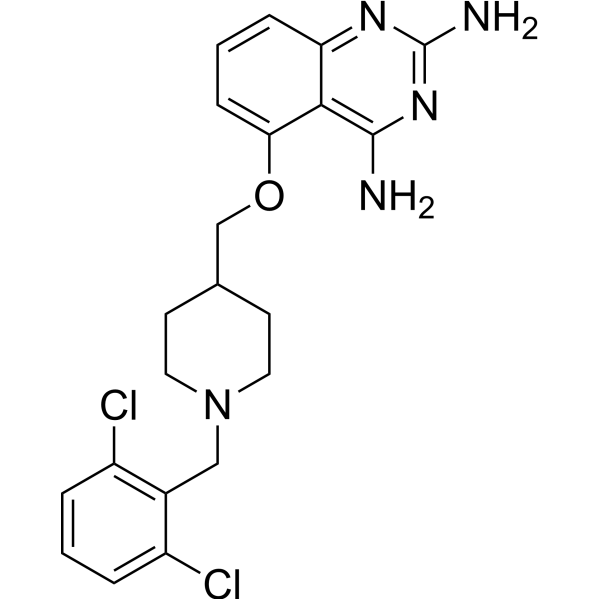
    CP-31398 dihydrochloride stabilizes the active conformation of p53 and promotes p53 activity in cancer cell lines with mutant or wild-type p53 .
    CP-31398 dihydrochloride
  • HY-174801

    Cyclic GMP-AMP Synthase Inflammation/Immunology
    XL-3156 is a cGAS inhibitor. XL-3156 occupies both allosteric and orthosteric sites simultaneously, and inhibits the interaction and phase separation between cGAS and DNA by stabilizing the closed conformation of the activation loop. XL-3156 can be used in the research of diseases such as autoimmune diseases and inflammation .
    XL-3156
  • HY-122743
    Iperoxo
    2 Publications Verification

    mAChR Neurological Disease
    Iperoxo is a potent superagonist of muscarinic acetylcholine receptor (mAChR) that activates M1, M2 and M3 receptors with pEC50 of 9.87, 10.1 and 9.78. Iperoxo can be used for direct probing activation-related conformational transitions of muscarinic receptors when labeled with tritium .
    Iperoxo
  • HY-112273
    CD532
    1 Publications Verification

    Aurora Kinase Cancer
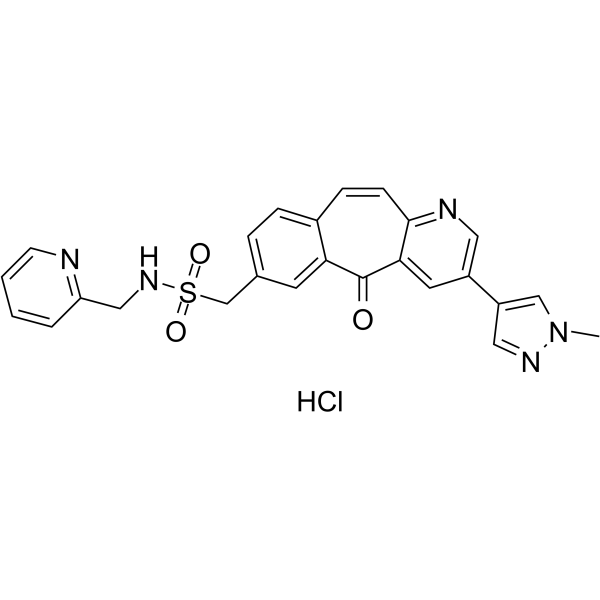
    CD532 is a potent Aurora A kinase inhibitor with an IC50 of 45 nM. CD532 has the dual effect of blocking Aurora A kinase activity and driving degradation of MYCN. CD532 also can directly interact with AURKA and induces a global conformational shift. CD532 can be used for the research of cancer .
    CD532
  • HY-10432G

    Anaplastic lymphoma kinase (ALK) Cancer
    A 83-01 (GMP) is A 83-01 (HY-10432) produced by using GMP guidelines. GMP small molecules works appropriately as an auxiliary reagent for cell therapy manufacture. A 83-01 is a potent ALK4/5/7 inhibitor .
    A 83-01
  • HY-162865

    FGFR Cancer
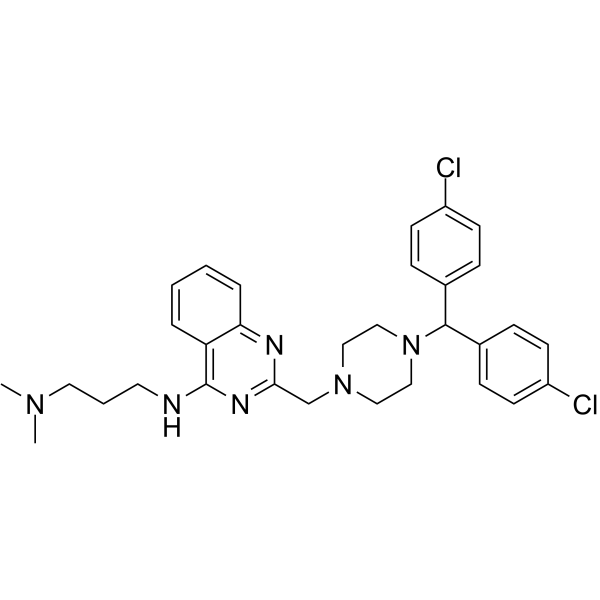
    FGFR2-IN-3 is an inhibitor of fibroblast growth factor receptor 2 (FGFR2). FGFR2-IN-3 has good binding properties, forming key interactions and inducing conformational changes in FGFR2. FGFR2-IN-3 can be used for research on tumors .
    FGFR2-IN-3
  • HY-150784

    SARS-CoV Infection
    XR8-89 is a potent papain-like protease (PL pro) inhibitor with an IC50 value of 0.1 μM. XR8-89 induces conformational changes in SARS-COV-2 papain-like protease, inhibiting SARS-CoV-2 replication. XR8-89 can be used for SARS-CoV-2 research .
    XR8-89
  • HY-141667

    7-(p-Methoxybenzylamino)-4-nitrobenz-2,1,3-oxadiazole

    Fluorescent Dye Others
    MBD (7-(p-Methoxybenzylamino)-4-nitrobenz-2,1,3-oxadiazole), a new fluorescent probe for protein and nucleoprotein conformation, is applied to bacterial ribosomes and to bovine trypsinogen and trypsin. MBD is strongly fluorescent upon binding to a hydrophobic area of a macromolecule .
    MBD
  • HY-132203

    RIP kinase Inflammation/Immunology Cancer
    Necrostatin-34 (Nec-34), a RIPK1 kinase inhibitor, stabilizes RIPK1 kinase in an inactive conformation by occupying a distinct binding pocket in the kinase domain .
    Necrostatin-34
  • HY-139984

    Btk Neurological Disease Inflammation/Immunology
    BIIB091 is a potent, selective, orally active and reversible BTK inhibitor, with an IC50 of <0.5 nM. BIIB091 binds the BTK protein to sequester TYR-551 into an inactive conformation with excellent affinity. BIIB091 can be used for the research of multiple sclerosis .
    BIIB091
  • HY-W008129

    Drug Intermediate Bacterial Infection
    H-D-cis-Hyp-OH is a proline derivative and also a substrate of cis-4-hydroxy-D-proline dehydrogenase from Sinorhizobium meliloti. H-D-cis-Hyp-OH serves as a starting material for the synthesis of conformationally constrained pyrrolidine PNA adenine monomers .
    H-D-cis-Hyp-OH
  • HY-W570888

    LNA-C(Bz)

    Nucleoside Antimetabolite/Analog Cancer
    2'-O,4'-C-Methylenecytidine (LNA-C(Bz)) is a bicyclic nucleoside analogue with fixed N-type conformation. 2'-O,4'-C-Methylenecytidine can be used to synthesize oligonucleotides. 2'-O,4'-C-Methylenecytidine forms duplexes with complementary DNA and RNA strands .
    2'-O,4'-C-Methylenecytidine
  • HY-P1454
    Fz7-21
    3 Publications Verification

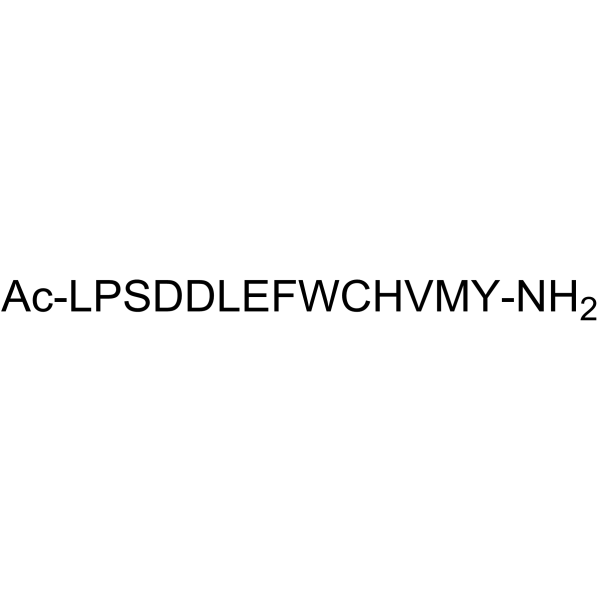
    Ac-LPSDDLEFWCHVMY-NH2

    Wnt Cancer
    Fz7-21 (Ac-LPSDDLEFWCHVMY-NH2) is a potent peptide antagonist of FZD7 receptors , selectively binds to FZD7 CRD subclass and alters the conformation of the CRD and the architecture of its lipid-binding groove. The EC50 values are 58 and 34 nM for human and mouse FZD7 CRD, respectively. Fz7-21 impairs the function of FZD7 in Wnt–β-catenin signalling and stem cell function in intestinal organoids .
    Fz7-21
  • HY-D0193A

    Acid Red 18 (85%); New Coccine (85%)

    Environmental Pollutants Drug Derivative Neurological Disease Inflammation/Immunology
    Ponceau 4R (85%) (Acid Red 18 (85%); New Coccine (85%)) is an orally active synthetic food colorant and a HSA-binding aggregator. Ponceau 4R (85%) binds to HSA, inducing its partial unfolding, conformational changes and aggregation. Ponceau 4R (85%) serves as a food colorant and can be used in research on diseases including type Ⅱ diabetes, Parkinson's disease, Huntington's disease and spongiform encephalopathy .
    Ponceau 4R (85%)
  • HY-18563

    HCV Infection
    4-Phenoxybenzylamine inhibits the function of the NS3 protein by stabilizing an inactive conformation with an IC50 of about 500 μM against FL NS3/4a.
    4-Phenoxybenzylamine
  • HY-W012908

    Biochemical Assay Reagents Infection Cancer
    DL-Proline is a racemic mixture of D-Proline and L-Prolin. DL-Proline is a cyclic imino acid with a five-membered ring structure. DL-Proline is a key structural unit in peptide synthesis. DL-Proline can stabilize the β-turn conformation and affect the secondary structure of the peptide. DL-Proline has biological activities such as regulating peptide conformation and enhancing the stability of cyclic peptides. DL-Proline can be used to study diseases related to peptide structure and function, such as cancer and bacterial infection .
    DL-Proline
  • HY-P99164

    LY3303560

    Tau Protein Neurological Disease
    Zagotenemab (LY3303560) is a humanized anti-tau antibody that selectively binds and neutralises tau deposits in the brain. Zagotenemab can be used in Alzheimer's disease research .
    Zagotenemab
  • HY-32884

    Drug Intermediate Others
    2,5-Difluorophenylboronic acid is a phenylboronic acid substituted with 2,5-difluorine groups. 2,5-Difluorophenylboronic acid serves as an organic synthesis intermediate belonging to the fluorinated phenylboronic acid class .
    2,5-Difluorophenylboronic acid
  • HY-145657

    BQQ

    Biochemical Assay Reagents Others
    Benzoquinoquinoxaline (BQQ) is a heterocyclic compound with an aminoalkyl side chain. Benzoquinoquinoxaline preferentially binds to DNA triplex structures, intercalates between the bases, thus, stabilising the triplex conformation. Conjugation of Benzoquinoquinoxaline to 1,10-phenanthroline specifically binds and cleaves double strand DNA at the site of formation of a triplex structure .
    Benzoquinoquinoxaline
  • HY-108574

    Potassium Channel HCN Channel Neurological Disease
    CP 339818 hydrochloride is a non-peptide Kv1.3 channel (IC50 = 200 nM) and Kv1.4 channel blocker. CP 339818 hydrochloride inhibits HCN channel with IC50s of 18.9 μM and 43.4 μM against HCN1 and HCN4 (high Cl -). CP 339818 hydrochloride has significantly weaker blocking effects on Kv1.1, Kv1.2, Kv1.5, Kv1.6, Kv3.1-4, and Kv4.2 channels. CP 339818 hydrochloride selectively blocked Kv1.3, thereby inhibiting the activation process of human T cells. CP 339818 hydrochloride can be used to study the physiological functions of HCN and Kv channels .
    CP 339818 hydrochloride
  • HY-146127A

    Src Others
    Grb2 SH2 domain inhibitor 1 TFA is a conformationally restricted cyclic cell penetrating peptide (CPP) containing d-pro-l-pro motif ring (AF Φ Rpprrfq) (where Φ It is L-naphthylalanine, R is D-arginine, P is D-proline), which is mainly used as a cyclic peptide inhibitor.
    Grb2 SH2 domain inhibitor 1 TFA
  • HY-163213
    Psoralen-triethylene glycol azide
    1 Publications Verification

    Biochemical Assay Reagents Others
    Psoralen-triepthylene glycol azide is a compound used to probe the structure and conformation of RNA in living cells, using matching RNA crosslinking and deep sequencing or comradery methods .
    Psoralen-triethylene glycol azide
  • HY-P1454A
    Fz7-21 TFA
    3 Publications Verification

    Ac-LPSDDLEFWCHVMY-NH2 TFA

    Wnt Cancer
    Fz7-21 (Ac-LPSDDLEFWCHVMY-NH2) TFA is a potent peptide antagonist of FZD7 receptors , selectively binds to FZD7 CRD subclass and alters the conformation of the CRD and the architecture of its lipid-binding groove. The EC50 values are 58 and 34 nM for human and mouse FZD7 CRD, respectively. Fz7-21 TFA impairs the function of FZD7 in Wnt-β-catenin signalling and stem cell function in intestinal organoids .
    Fz7-21 TFA
  • HY-177425

    Cannabinoid Receptor Metabolic Disease
    AM11542 is a cannabinoid receptor 1 (CB1) agonist with a human CB1 Ki of 0.11 nM. AM11542 stabilizes the active conformational state of the CB1 receptor. AM11542 can be used for the research of obesity .
    AM11542
  • HY-W025438

    Nucleoside Antimetabolite/Analog Drug Intermediate Others
    5’-O-(4,4’-Dimethoxytrityl)-2’-O-methyluridine is a 2'-O-methyluridine derivative bearing a 5'-O-(4,4'-dimethoxytrityl) protecting group.5’-O-(4,4’-Dimethoxytrityl)-2’-O-methyluridine serves as a starting material for synthesis of a conformationally rigid cyclic uridylic acid derivative .
    5’-O-(4,4’-Dimethoxytrityl)-2’-O-methyluridine
  • HY-B0178B

    6M Guanidinium chloride Solution; 6M Aminoformamidine hydrochloride Solution

    Biochemical Assay Reagents Others
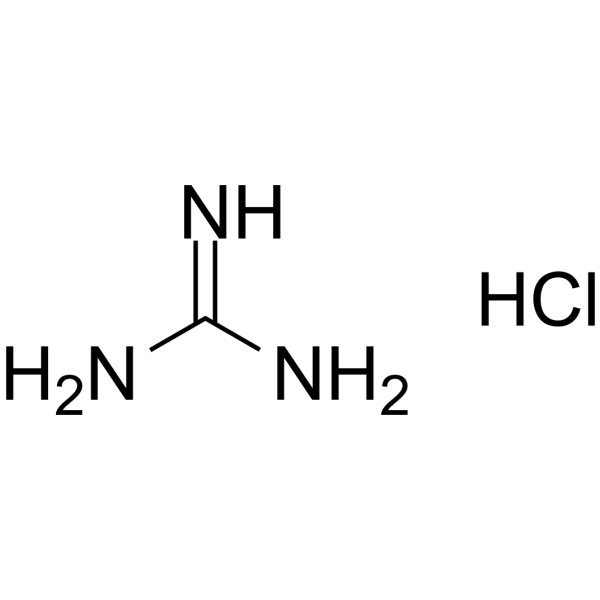
    6M Guanidine hydrochloride Solution (6M Guanidinium chloride Solution) is a strong protein denaturant. 6M Guanidine hydrochloride Solution causes proteins to assume a random coil conformation .
    6M Guanidine hydrochloride Solution
  • HY-122106

    MMP Others
    RS-104966 is a potent collagenase-1 (MMP-1) inhibitor. RS-104966 induces a conformational change in the side chains of the S10 pocket of MMP-1 .
    RS-104966
  • HY-W046071

    Drug Intermediate Others
    N-Boc-trans-4-fluoro-L-proline is a non-natural amino acid substitute used to construct monoclonal antibodies that specifically target the seed conformation of tau protein .
    N-Boc-trans-4-fluoro-L-proline
  • HY-111233

    WIN-51711

    Enterovirus Infection
    Disoxaril (WIN-51711) is an antivirus agent with activity against poliovirus types 1 and 2. Disoxaril inserts into the hydrophobic interior of virus capsid protein VP1 to stabilize virion conformation, inhibits poliovirus uncoating, and prevents viral RNA release and synthesis. Disoxaril can be used for the research of poliovirus infection .
    Disoxaril
  • HY-106723

    HSP Cancer
    AMP-PCP is an ATP analogue and can bind to Hsp90 N-terminal domain with a Kd value of 3.8 μM. AMP-PCP binding favors the formation of the active homodimer of Hsp90 .
    AMP-PCP
  • HY-W012911

    Biochemical Assay Reagents Others
    2,6-Difluoropyridine is a fluorinated pyridine derivative. 2,6-Difluoropyridine adopts a planar conformation in its S0 electronic ground state and S1(π,π) excited state .
    2,6-Difluoropyridine
  • HY-135865

    Ras Cancer
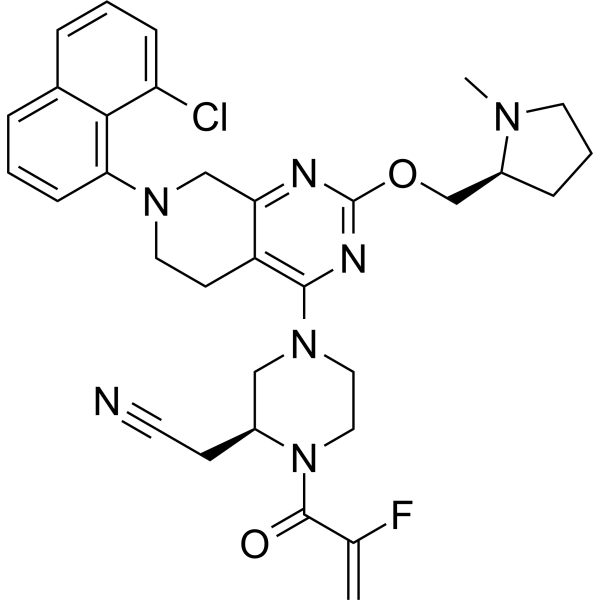
    KRAS inhibitor-7 is a potent KRAS G12C inhibitor, extracted from patent WO2017087528A1, compound B .
    KRAS inhibitor-7
  • HY-112273A
    CD532 hydrochloride
    1 Publications Verification

    Aurora Kinase Cancer
    CD532 hydrochloride is a potent Aurora A kinase inhibitor with an IC50 of 45 nM. CD532 hydrochloride has the dual effect of blocking Aurora A kinase activity and driving degradation of MYCN. CD532 hydrochloride also can directly interact with AURKA and induces a global conformational shift. CD532 hydrochloride can be used for the research of cancer .
    CD532 hydrochloride
  • HY-P3962

    Thyroid Hormone Receptor Endocrinology
    [Phe2]-TRH is a thyrotropin releasing hormone analogue, equipping a conformational similarity with Leu5-enkephalin .
    [Phe2]-TRH
  • HY-P3218A

    Drug Derivative Endocrinology
    [Glu4]-Oxytocin acetate is an appropriate derivative of oxytocin for conducting a comprehensive investigation by a variety of methods of the conformation of oxytocin-like molecules in aqueous solution .
    [Glu4]-Oxytocin acetate
  • HY-P1441

    Sodium Channel Others
    Mambalgin-1 is a toxin isolated from black mamba venom. Mambalgin-1 is a disulfide-rich polypeptide consisting of 57 amino acids and belongs to the family of three-finger toxins. Mambalgin-1 can bind to and stabilize ASICs (acid-sensing ion channels) in a physiologically relevant closed-channel conformation .
    Mambalgin 1

Inquiry Online

Your information is safe with us. * Required Fields.

Salutation


Country or Region *

Applicant Name *


Organization Name *

Department *


Email Address *


Product Name *

Cat. No.


Requested quantity *

Phone Number *


Remarks

Inquiry Online

Inquiry Information

Product Name:
Cat. No.:
Quantity:
MCE Japan Authorized Agent:

