1. Search Result
Search Result
Results for "

cyanide

" in MedChemExpress (MCE) Product Catalog:

41

Inhibitors & Agonists

3

Fluorescent Dyes

3

Biochemical Assay Reagents

12

Natural
Products

3

Isotope-Labeled Compounds

Cat. No. Product Name Target Research Areas Chemical Structure
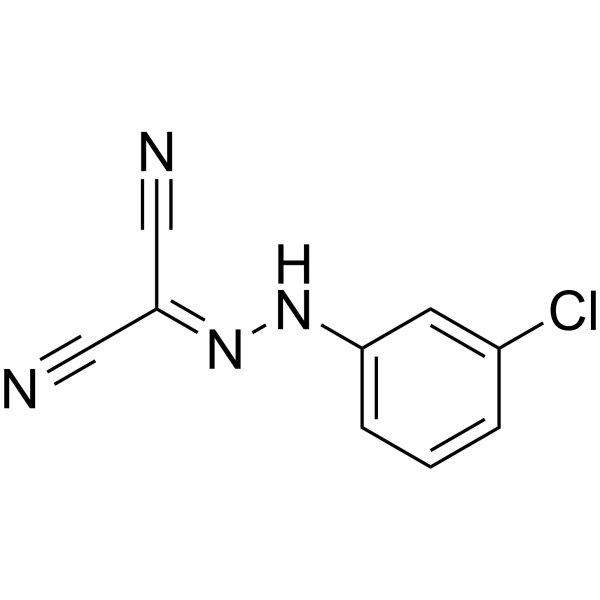
  • HY-100941
    CCCP
    Maximum Cited Publications
    176 Publications Verification

    Carbonyl cyanide 3-chlorophenylhydrazone; Carbonyl cyanide m-Chlorophenylhydrazone

    Oxidative Phosphorylation PINK1/Parkin STING IFNAR Mitochondrial Metabolism Bacterial Apoptosis Inflammation/Immunology Cancer
    CCCP is an oxidative phosphorylation (OXPHOS) uncoupler. CCCP induces activation of PINK1 leading to Parkin Ser65 phosphorylation .
    CCCP
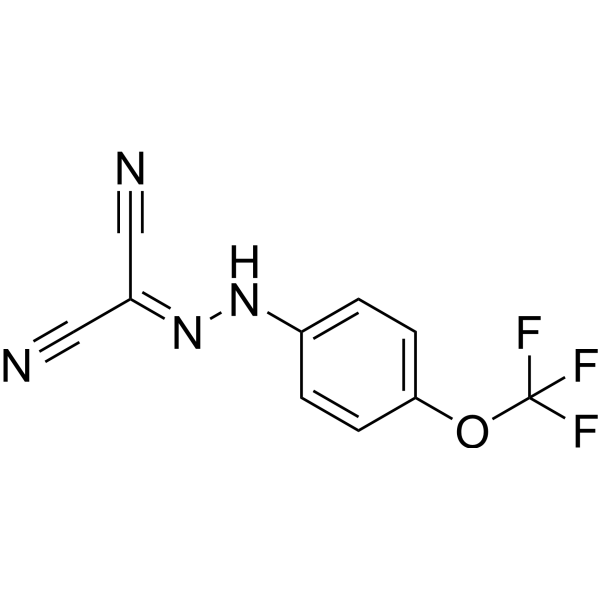
  • HY-100410
    FCCP
    105+ Cited Publications

    Carbonyl cyanide 4-(trifluoromethoxy)phenylhydrazone

    Oxidative Phosphorylation PINK1/Parkin Mitochondrial Metabolism Cancer
    FCCP is an uncoupler of oxidative phosphorylation (OXPHOS) in mitochondria. FCCP induces activation of PINK1 leading to Parkin Ser65 phosphorylation .
    FCCP
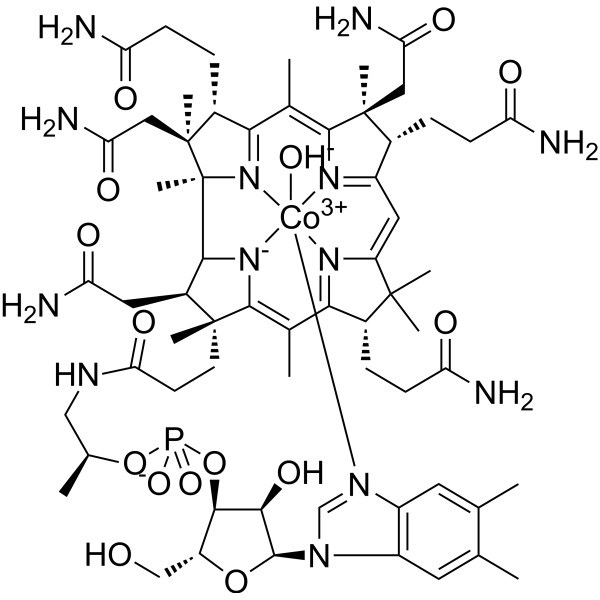
  • HY-B2209
    Hydroxocobalamin
    3 Publications Verification

    Vitamin B12a

    Endogenous Metabolite Neurological Disease Metabolic Disease
    Hydroxocobalamin (Vitamin B12a) is a cyanide antidote. Hydroxocobalamin can decrease the cell and plasma cyanide concentrations and increase survival rate in acute cyanide poisoning. Hydroxocobalamin can improve newborn Cbl-C defect-induced metabolic profile and neurocognitive outcome. Hydroxocobalamin can normalize Vitamin B12 deficiency. Hydroxocobalamin can induce acute kidney injury. Hydroxocobalamin can be used for the researches of metabolic and neurological disease .
    Hydroxocobalamin
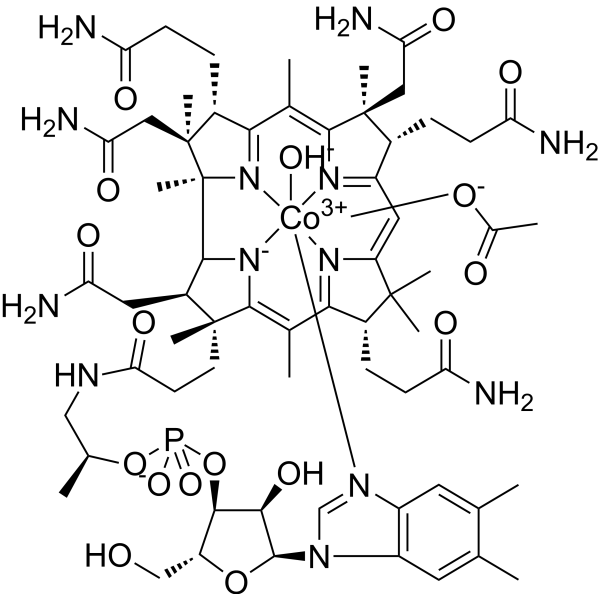
  • HY-B2209B
    Hydroxocobalamin acetate
    3 Publications Verification

    Vitamin B12a acetate

    NO Synthase Cardiovascular Disease Metabolic Disease
    Hydroxocobalamin acetate is an injectable natural vitamin B12. Hydroxocobalamin acetate binds to NO. Hydroxocobalamin acetate detoxifies Cyanide and NaSH. Hydroxocobalamin acetate reduces hypotension. Hydroxocobalamin acetate is used in research related to vitamin B12 deficiency, including pernicious anemia .
    Hydroxocobalamin acetate
  • HY-125773

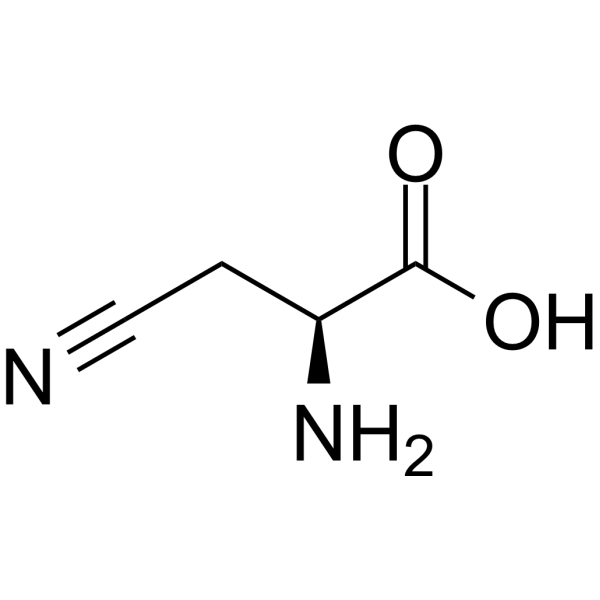
    Beta-cyano-l-alanine

    Endogenous Metabolite Neurological Disease
    β-cyano-L-Alanine (Beta-cyano-l-alanine), a nitrile of widespread occurrence in higher plants, is enzymatically produced by cyanoalanine synthase from cyanide and cysteine as substrates . β-cyano-L-Alanine abolishes the protective effect of ethanol on cerebral ischemia/reperfusion (I/R) injury .
    β-cyano-L-Alanine
  • HY-128454

    Environmental Pollutants Biochemical Assay Reagents Infection Neurological Disease
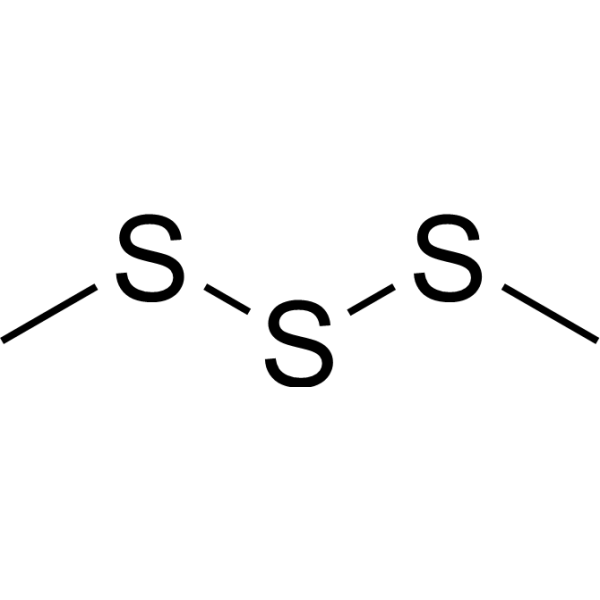
    Dimethyl trisulfide is a cyanide scavenger. Dimethyl trisulfide can be isolated from garlic, onions, broccoli and similar plants. Dimethyl trisulfide converts cyanide into thiocyanate. Dimethyl trisulfide is used by saprophagous insects to locate breeding sites (decaying organic matter), and is also used by deceptive flowers in brood sites to attract such insects. Dimethyl trisulfide induces electrophysiological responses in houseflies .
    Dimethyl trisulfide
  • HY-D1122

    Fluorescent Dye Others
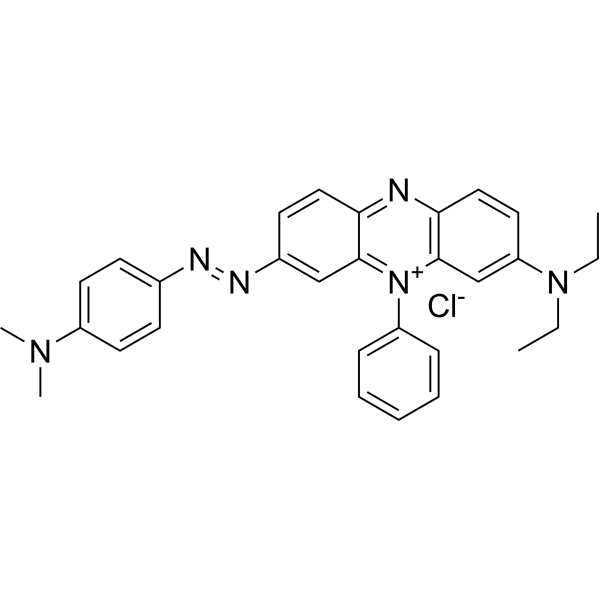
    Janus green B is a supravital stain. Janus green B staining reaction is oxygen dependent, and is reversibly inhibited by cyanide. Janus green B has been used for staining peripheral nerves in live insects, lymphatic vessels of rabbits and mitochondria .
    Janus green B
  • HY-W015823

    Endogenous Metabolite Others
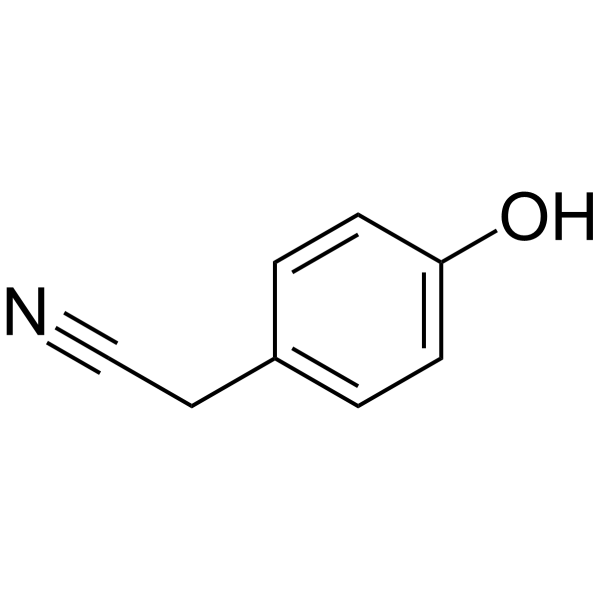
    4-Hydroxybenzyl cyanide is an aromatic nitrile compound and also a precursor for tyramine synthesis. 4-Hydroxybenzyl cyanide exhibits strong antioxidant activity .
    4-Hydroxybenzyl cyanide
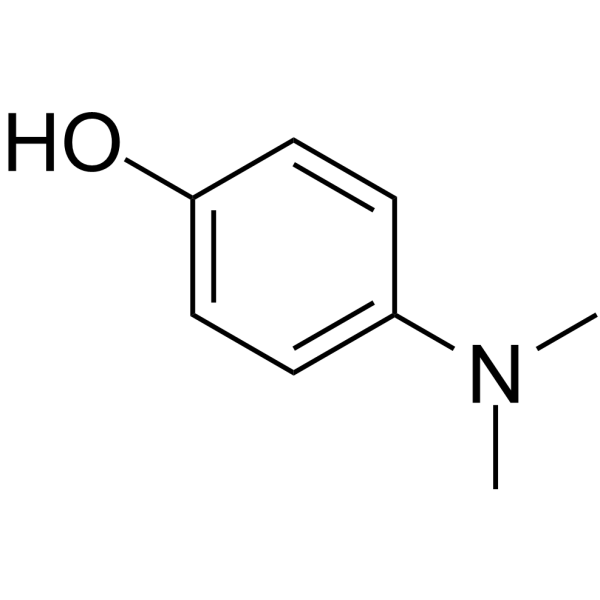
  • HY-34154

    Lactate Dehydrogenase Others
    4-(Dimethylamino)phenol is a potent cyanide antidote. 4-(Dimethylamino)phenol increases the extracellular lactate dehydrogenase (LDH) without markedly affecting gluconeogenesis. 4-(Dimethylamino)phenol cannot decreases the ATP content until the membrane becomes permeable to LDH. 4-(Dimethylamino)phenol’s toxicity is related to its reaction with glutathione and formation of covalent complexes, leading to impaired cellular function .
    4-(Dimethylamino)phenol
  • HY-100941R

    Carbonyl cyanide 3-chlorophenylhydrazone (Standard); Carbonyl cyanide m-Chlorophenylhydrazone (Standard)

    Oxidative Phosphorylation PINK1/Parkin Reference Standards STING IFNAR Mitochondrial Metabolism Bacterial Apoptosis Inflammation/Immunology Cancer
    CCCP (Standard) is the analytical standard of CCCP. This product is intended for research and analytical applications. CCCP is an oxidative phosphorylation (OXPHOS) uncoupler. CCCP induces activation of PINK1 leading to Parkin Ser65 phosphorylation .
    CCCP (Standard)
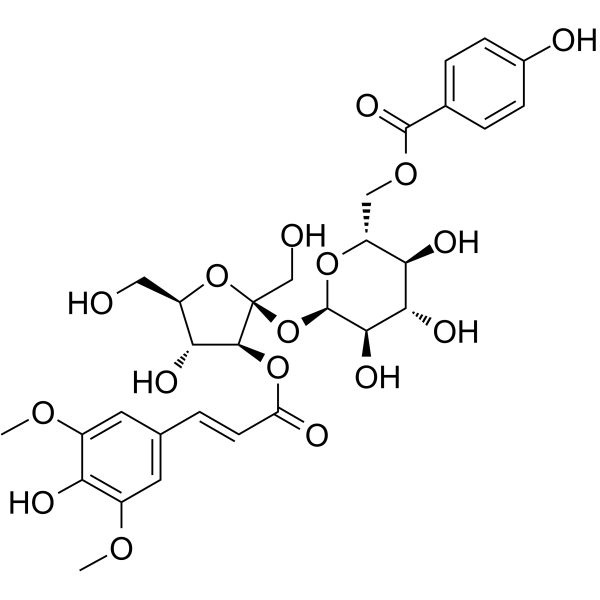
  • HY-N4268

    Others Neurological Disease
    Tenuifoliside B, a component isolated from Polygalae Radix, inhibits potassium cyanide (KCN)-induced hypoxia and scopolamine-induced memory impairment. Tenuifoliside B shows potential cognitive improvement and cerebral protective effects. Tenuifoliside B has potential to become an anti-AD lead compound .
    Tenuifoliside B
  • HY-P3182

    Endogenous Metabolite Cancer
    NADH oxidase is a cyanide-resistant oxidase located on the plasma membrane of animals and plants, which is regulated by growth factors and hormones. NADH oxidase catalyzes the electron transfer from NADH to oxygen, and its activity is closely related to cell growth. The hormone response of NADH oxidase is attenuated in tumor-transformed cells, and it can serve as an anti-tumor target .
    NADH oxidase
  • HY-122330

    Kelocyanor

    Cytochrome P450 Others
    Dicobalt edetate (Kelocyanor) is a cobalt compound that is an antidote for hydrocyanic acid (cyanide) poisoning. Dicobalt edetate can form a stable complex with cyanide ions, thereby reducing the binding of cyanide ions to cytochrome oxidase, thereby preventing cyanide from inhibiting cellular respiration .
    Dicobalt edetate
  • HY-100410R

    Carbonyl cyanide 4-(trifluoromethoxy)phenylhydrazone (Standard)

    Oxidative Phosphorylation PINK1/Parkin Reference Standards Mitochondrial Metabolism Cancer
    FCCP (Standard) is the analytical standard of FCCP. This product is intended for research and analytical applications. FCCP is an uncoupler of oxidative phosphorylation (OXPHOS) in mitochondria. FCCP induces activation of PINK1 leading to Parkin Ser65 phosphorylation .
    FCCP (Standard)
  • HY-128454S

    Endogenous Metabolite Others
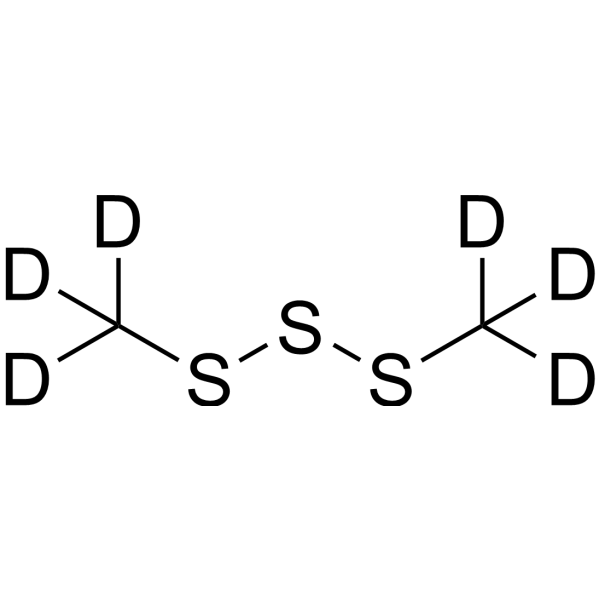
    Dimethyl trisulfide-d6 is deuterium labeled Dimethyl trisulfide (HY-128454). Dimethyl trisulfide is a cyanide antidote .
    Dimethyl trisulfide-d6
  • HY-W698586

    Drug Isomer Others
    (R)-Lotaustralin is a cyanogenic compound derived from Manihot Utilissima, playing a role in the plant's biological defense mechanism. When plant tissue is damaged, (R)-Lotaustralin is hydrolyzed by enzymes such as linamarase, releasing cyanide and thereby exerting a toxic defensive effect .
    (R)-Lotaustralin
  • HY-Y0661

    Biochemical Assay Reagents Others
    4-Methylbenzyl cyanide is an organic chemical probe used to study intramolecular rotation properties. 4-Methylbenzyl cyanide is promising for research of NMR spectroscopy and physical chemistry research on molecular dynamics .
    4-Methylbenzyl cyanide
  • HY-W017390

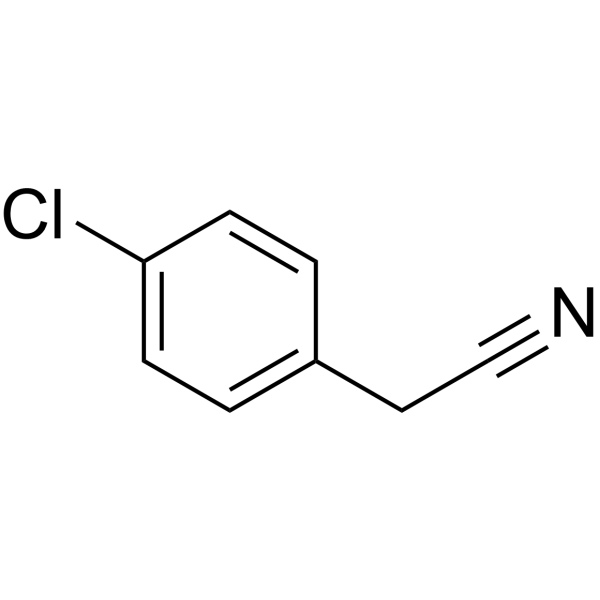
    (4-Chlorophenyl)acetonitrile; 4-Chlorobenzyl cyanide

    Biochemical Assay Reagents Others
    4-Chlorobenzyl cyanide is a biochemical reagent that can be used as a biological material or organic compound for life science related research.
    4-Chlorobenzyl cyanide
  • HY-116726

    Glutathione S-transferase Cancer
    Crambene is an orally active cyanide compound isolated from cruciferous vegetables. Crambene has a cancer-preventive effect and induces significant upregulation of quinone reductase and glutathione S-transferase in vitro and in vivo .
    Crambene
  • HY-W015627

    Drug Intermediate Inflammation/Immunology Cancer
    3,5-dichloropyridine is a drug intermediate that can be used to synthesize metal-organic framework (MOF) materials and P2X7 receptor antagonists .
    3,5-Dichloropyridine
  • HY-W140852

    Nonyl cyanide

    Others Others
    Decanenitrile (Nonyl Cyanide) is a natural product that can be isolated from Mentha suaveolens .
    Decanenitrile
  • HY-W317470

    Biochemical Assay Reagents Infection Cancer
    2,3,5-Tri-O-benzoyl-β-D-ribofuranosyl cyanide is a nucleoside analogue with the activity of inhibiting viral replication and inhibiting tumor growth. 2,3,5-Tri-O-benzoyl-β-D-ribofuranosyl cyanide is mainly used in nucleoside synthesis to interfere with biological processes in cells. 2,3,5-Tri-O-benzoyl-β-D-ribofuranosyl cyanide shows potential application value in antiviral and antitumor research.
    2,3,5-Tri-O-benzoyl-β-D-ribofuranosyl cyanide
  • HY-D0061

    DACB-CN

    Fluorescent Dye Others
    4-(7-Diethylaminocoumarin-3-yl)benzoyl cyanide (DACB-CN) is a multifunctional dye. Dyes are important tools in biological experiments. They can help researchers observe and analyze cell structures, track biomolecules, evaluate cell functions, distinguish cell types, detect biomolecules, study tissue pathology and monitor microorganisms. Their applications range from basic scientific research to clinical A wide range of diagnostics. Dyes are also widely used in traditional fields such as textile dyeing, as well as in emerging fields such as functional textile processing, food pigments and dye-sensitized solar cells.
    4-(7-Diethylaminocoumarin-3-yl)benzoyl cyanide
  • HY-169832

    Drug Intermediate Others
    Sulfanegen is a 3-mercaptopyruvate prodrug and cyanide antidote. Sulfanegen converts toxic cyanide into a relatively non-toxic substance. Sulfanegen, alone or in combination with Cobinamide, has detoxification effect in mouse models of cyanide poisoning .
    Sulfanegen
  • HY-114735

    Antibiotic Infection
    Mandelonitrile benzoate is a defensive secretion of millipedes that releases other chemicals during the cyanidation process in addition to hydrocyanic acid (HCN) and benzaldehyde. Several families of millipedes, including Polydesmidae, Paradoxosomatidae, and Euryuridae, have been shown to secrete phenols and guaiaeol, with one Paradoxosomatid also producing ethylbenzoic acid and benzoic acid. In addition, members of the Xystodesmidae family commonly produce three compounds: benzoic acid, mandelonitrile benzoate, and benzoyl cyanide. Benzoyl cyanide has not been previously discovered as a natural product. These additional natural products are discussed as defensive antipredator and antibiotic agents. Benzoyl cyanide appears to have anesthetic properties for some predators. The study provides a preliminary chemotaxonomic basis for distinguishing various taxonomic groups of millipedes.
    Mandelonitrile benzoate
  • HY-P2864

    Biochemical Assay Reagents Metabolic Disease
    Rhodanese is the detoxification enzyme in sulfur metabolism for cyanide detoxification. Rhodanese is a mitochondrial protein .
    Rhodanese
  • HY-D1757

    LYen; PAsp- LY

    Fluorescent Dye Others
    Lucifer yellow ethylenediamine (LYen; PAsp- LY) is a polar tracer that can be coupled with aldehydes and ketones to form Schiff bases, which can be reduced to stable amine derivatives by sodium borohydride (NaBH4) or sodium cyanide borohydride (NaCNH3).
    Lucifer yellow ethylenediamine
  • HY-117445

    Fluorescent Dye Others
    Oxazole yellow is a cyanine dye composed of benzoxazole and quinoline rings connected by a linker. It is almost non-luminescent in water, but its green fluorescence is significantly enhanced after intercalation in double-stranded DNA. Oxazole yellow can be used to detect cell apoptosis .
    Oxazole yellow
  • HY-128454R

    Reference Standards Endogenous Metabolite Others
    Dimethyl trisulfide (Standard) is the analytical standard of Dimethyl trisulfide. This product is intended for research and analytical applications. Dimethyl trisulfide is an organic chemical compound and the simplest organic trisulfide found in garlic, onion, broccoli, and similar plants. Dimethyl trisulfide is a cyanide antidote. Dimethyl trisulfide formation requires the thermal degradation of Met .
    Dimethyl trisulfide (Standard)
  • HY-125773R

    Beta-cyano-l-alanine (Standard)

    Endogenous Metabolite Reference Standards Neurological Disease
    β-cyano-L-Alanine (Standard) is the analytical standard of β-cyano-L-Alanine. This product is intended for research and analytical applications. β-cyano-L-Alanine (Beta-cyano-l-alanine), a nitrile of widespread occurrence in higher plants, is enzymatically produced by cyanoalanine synthase from cyanide and cysteine as substrates . β-cyano-L-Alanine abolishes the protective effect of ethanol on cerebral ischemia/reperfusion (I/R) injury .
    β-cyano-L-Alanine (Standard)
  • HY-123189

    Dopamine Receptor Neurological Disease
    LY 171859 is a D2 receptor agonist with significant reductase activity. LY 171859 exhibits enzymatic activity in the cytoplasm of liver, lung, and kidney, and also contains significant reductase activity in rat and human blood. LY 171859 has higher hepatic reductase activity in guinea pigs, followed by hamsters, rabbits, rats, and mice. The substrate of LY 171859 shows an apparent Km of 5.6 μM. The reduction reaction of LY 171859 is NADPH-dependent with an apparent Km of 14.8 μM. Only the A-side hydrogen of NADPH is incorporated in the reduction product of LY 171859. The reaction of LY 171859 is inhibited by cyanide and thiol reagents, and phenobarbital does not induce its activity in rats .
    LY 171859
  • HY-W044686

    Biochemical Assay Reagents Others
    4-(Dimethylamino)phenol hydrochloride is a potent cyanide antidote. 4-(Dimethylamino)phenol hydrochloride binds to hemoglobin, and form methemoglobin. 4-(Dimethylamino)phenol hydrochloride can be used in cyanide poisoning research .
    4-(Dimethylamino)phenol hydrochloride
  • HY-186039

    Drug Derivative Cancer
    Demethyl-lurbinectedin-cyanide is an ecteinascidin compound with anti-tumor activity .
    Demethyl-lurbinectedin-cyanide
  • HY-W015823R

    Reference Standards Endogenous Metabolite Metabolic Disease
    4-Hydroxybenzyl cyanide is an endogenous metabolite.
    4-Hydroxybenzyl cyanide (Standard)
  • HY-W338839

    Decyl cyanide

    Biochemical Assay Reagents Others
    Undecanenitrile (Decyl cyanide) is a low molecular weight amine solvent that can be used as a reducing agent in debenzylation reactions .
    Undecanenitrile
  • HY-W017390S

    (4-Chlorophenyl)acetonitrile-d4

    Isotope-Labeled Compounds Others
    4-Chlorobenzyl cyanide-d4 is the deuterium labeled 4-Chlorobenzyl cyanide .
    4-Chlorobenzyl cyanide-d4
  • HY-N19425

    Apoptosis Metabolic Disease
    Pulsatilloside A is an anti-Apoptotic agent. Pulsatilloside A can be isolated from the roots of P. chinensis. Pulsatilloside A exerts a protective effect against apoptosis induced by sodium cyanide and glucose deprivation .
    Pulsatilloside A
  • HY-E71120

    Biochemical Assay Reagents Others
    (S)-Hydroxynitrile lyase (EC 4.1.2.47) catalyses the the cleavage of hydroxynitriles into cyanide and the corresponding aldehyde or ketone.
    (S)-Hydroxynitrile lyase
  • HY-E71103

    Biochemical Assay Reagents Others
    (R)-Mandelonitrile oxidase (EC 1.1.3.49) , characterized from the millipede Chamberlinius hualienensis, is segregated from its substrate, which is contained in special sacs. The sacs are ruptured during defensive behavior, allowing the enzyme and substrate to mix in special reaction chambers leading to production of the defensive chemical benzoyl cyanide.
    (R)-Mandelonitrile oxidase
  • HY-Y0149S1

    NSC 6324-d8; Veratryl cyanide-d8

    Isotope-Labeled Compounds Others
    Homoveratronitrile-d8 (NSC 6324-d8) is the deuterium labeled Homoveratronitrile.
    Homoveratronitrile-d8
  • HY-34154R

    Reference Standards Others
    4-(Dimethylamino)phenol (Standard) is the analytical standard of 4-(Dimethylamino)phenol. This product is intended for research and analytical applications. 4-(Dimethylamino)phenol is a potent cyanide antidote. 4-(Dimethylamino)phenol increases the extracellular lactate dehydrogenase (LDH) without markedly affecting gluconeogenesis. 4-(Dimethylamino)phenol cannot decreases the ATP content until the membrane becomes permeable to LDH. 4-(Dimethylamino)phenol’s toxicity is related to its reaction with glutathione and formation of covalent complexes, leading to impaired cellular function .
    4-(Dimethylamino)phenol (Standard)

Inquiry Online

Your information is safe with us. * Required Fields.

Salutation


Country or Region *

Applicant Name *


Organization Name *

Department *


Email Address *


Product Name *

Cat. No.


Requested quantity *

Phone Number *


Remarks

Inquiry Online

Inquiry Information

Product Name:
Cat. No.:
Quantity:
MCE Japan Authorized Agent:

