







Search Result
Results for "
cytotoxic T lymphocyte (CTL)
" in MedChemExpress (MCE) Product Catalog:
1
Biochemical Assay Reagents
| Cat. No. |
Product Name |
Target |
Research Areas |
Chemical Structure |
-
- HY-P99762
-
|
MGD009
|
CD3
|
Cancer
|
|
Obrindatamab is a humanized anti-B7-H3/CD3 bispecific antibody. Obrindatamab binds to B7-H3 and CD3, thereby mediating redirected cytotoxic T-lymphocyte (CTL) activity against B7-H3-expressing cancer cells. Obrindatamab can be used in research of cancer .
|
-
-
- HY-163028
-
|
|
Tim3
|
Cancer
|
|
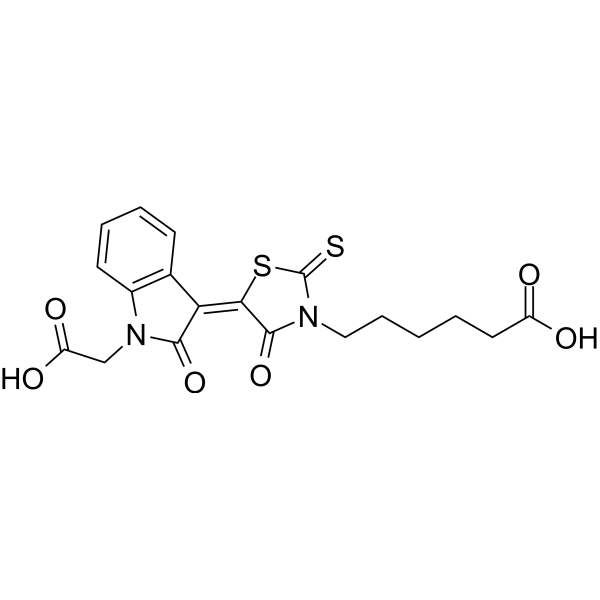
ML-T7 is a potent Tim-3 inhibitor. ML-T7 blocks Tim-3 interactions with PtdSer and CEACAM1. ML-T7 not only enhances the antitumor activity of adoptive transfer therapy with cytotoxic T lymphocytes (CTLs) and CAR T cells but also increases the effector function of T cell. ML-T7 promotes NK cells’ killing activity against tumor cells and DC antigen-presenting capacity. ML-T7 directly exerts antitumor efficacy in preclinical tumor models either alone or in combination with Nivolumab (HY-P9903A). ML-T7 can be used for tumor immunotherapy research .
|
-
-
- HY-172240
-
|
TU2218 free base
|
Anaplastic lymphoma kinase (ALK)
VEGFR
|
Inflammation/Immunology
Cancer
|
|
Tosposertib (TU2218 free base) is an ALK5/VEGFR2 dual inhibitor (IC50 = 1.2 nM/4.9 nM). Tosposertib directly restores the activity of damaged cytotoxic T lymphocytes (CTLs) and natural killer cells inhibited by TGFβ and suppresses the activity and viability of regulatory T cells. Tosposertib can be used for the study of melanoma and colon cancer .
|
-
-
- HY-P1907
-
|
|
HPV
|
Cancer
|
|
Human Papillomavirus (HPV) E7 protein (49-57) is a cytotoxic T lymphocyte (CTL) epitope peptide derived from HPV16 E7 protein (sequence: RAHYNIVTF). Human Papillomavirus (HPV) E7 protein (49-57) induces E749-57-specific CTL responses. Human Papillomavirus (HPV) E7 protein (49-57) can be used for the research of cervical cancer .
|
-
-
- HY-P990795
-
|
|
Osteopontin
|
Inflammation/Immunology
Cancer
|
|
Anti-Mouse osteopontin/SPP1 Antibody (100D3) is an anti-mouse osteopontin/SPP1 IgG2c monoclonal antibody. Anti-Mouse osteopontin/SPP1 Antibody (100D3) can reverse the inhibition of osteopontin (OPN) on T cells and enhance cytotoxic T lymphocyte (CTL) killing ability. Anti-Mouse osteopontin/SPP1 Antibody (100D3) can improve dentin density. Anti-Mouse osteopontin/SPP1 Antibody (100D3) can be used for researches on cancer and dental related conditions such as colon cancer. The recommend isotype control of Anti-Mouse osteopontin/SPP1 Antibody (100D3): Mouse IgG2c kappa, Isotype Control (HY-P99981) .
|
-
-
- HY-P5470
-
|
|
EBV
IFNAR
|
Inflammation/Immunology
|
|
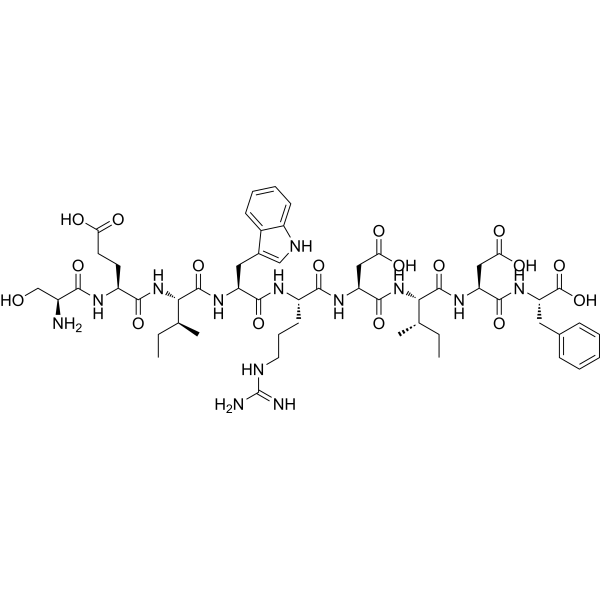
LMP2A (426-434) is a HLA-A2-restricted cytotoxic T lymphocyte (CTL) epitope of Epstein-Barr virus (EBV) latent membrane protein 2A (LMP2A). LMP2A (426-434) can trigger an immune response in individuals expressing different HLA-A*02 subtypes (A*02:01, A*02:03, A*02:06 and A*02:07). LMP2A (426-434) can induce a strong IFN-γ secretion response, stimulating the production of a high proportion of CD8 + IFN-γ + T cells. LMP2A (426-434) induces specific CTLs to effectively kill target cells expressing LMP2A. LMP2A (426-434) can be used to study EBV-related malignant tumors (such as Hodgkin's disease and nasopharyngeal carcinoma) .
|
-
-
- HY-156871
-
|
|
CaMK
|
Cancer
|
|
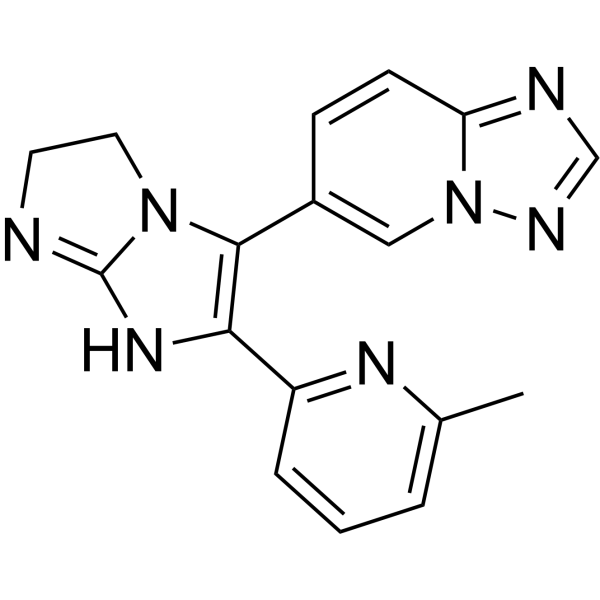
CAMK1D-IN-1 (compound I) is an inhibitor of CAMK1D, targeting cytotoxic T lymphocyte (CTL)-resistant tumor cells. CAMK1D impairs CTL-induced death receptor signaling and apoptosis by inhibiting caspases, making it a key and effective target for PD-L1-refractory tumors .
|
-
-
- HY-160768
-
|
|
Deubiquitinase
|
Inflammation/Immunology
Cancer
|
|
OTUB2-IN-1, a specific inhibitor of OTUB2 (KD: ~12 μM), reduces PD-L1 protein expression in tumor cells and inhibits tumor growth by promoting robust intra-tumor infiltration of cytotoxic T lymphocytes (CTL) .
|
-
-
- HY-P2495A
-
-
-
- HY-P3742
-
|
|
Tyrosinase
MHC
|
Cancer
|
|
Tyrosinase (192-200), human mouse is a HLA-B*4403-restricted tyrosinase epitope with affinity for HLA-B4403 and HLA-B4402. Tyrosinase (192-200), human mouse binds to HLA-B*4403 to form a complex, which is recognized by the autologous cytotoxic T lymphocyte clone 22/31 derived from melanoma. Tyrosinase (192-200), human mouse binds to HLA-B4402 to form a complex, which is recognized by the CTL clone 329B/5 derived from healthy HLA-B4402 donors. Tyrosinase (192-200), human mouse is applicable to melanoma-related research .
|
-
-
- HY-106374
-
|
|
VEGFR
|
Cancer
|
|
Elpamotide is an epitope peptide derived from VEGFR2. Elpamotide induces cytotoxic T lymphocytes (CTLs) to kill VEGFR2-expressing endothelial cells. Elpamotide has potential immunostimulatory and antineoplastic activities. Elpamotide can be used in the research of cancer, such as pancreatic cancer .
|
-
-
- HY-P1855
-
|
|
EGFR
|
Cancer
|
|
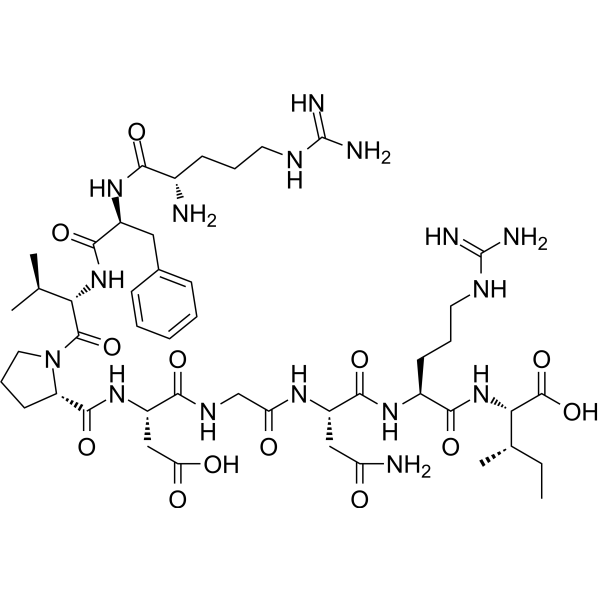
HER2/neu (654-662) GP2 is a nine amino acid peptide derived from the human epidermal growth factor receptor 2 (HER2/nue, 654–662), induces HLA-A2-restricted cytotoxic T lymphocytes (CTL) reactive to various epithelial cancers .
|
-
-
- HY-P2495
-
-
-
- HY-P1881
-
|
|
HPV
|
Cancer
|
|
HPV16-E711-20 epitope is a well-known HLA-A *0201-restricted human cytotoxic T lymphocyte (CTL) epitope of the HPV16 E7 protein that shows high-affinity binding to HLA-A2 in vitro. HPV16 CTL epitopes may be good candidates for the development of an effective peptide-based antitumor vaccine .
|
-
-
- HY-P990928
-
|
APVO-436
|
CD3
Interleukin Related
|
Inflammation/Immunology
Cancer
|
|
Mipletamig (APVO-436) is a bispecific CD123 x CD3 monoclonal antibody. Mipletamig simultaneously binds to both CD3-expressing T cells and CD123-expressing cancer cells, thereby crosslinking CD123-expressing tumor cells and cytotoxic T lymphocytes (CTLs). This results in the activation and proliferation of T-cells and causes CTL-mediated cell lysis of CD123-expressing tumor cells. Mipletamig can be used for the study of acute myeloid leukemia (AML) .
|
-
-
- HY-P10593
-
|
|
Transmembrane Glycoprotein
Influenza Virus
|
Cancer
|
|
Influenza A NP (383-391) (HLA-B27) is a peptide sequence derived from tetanus toxin. Influenza A NP (383-391) (HLA-B27) is a broadly immunogenic CD4+ T helper cell epitope that enhances CD8+ cytotoxic T lymphocyte (CTL) responses. Influenza A NP (383-391) (HLA-B27) can be used in breast cancer research .
|
-
-
- HY-P10245
-
|
|
RSV
|
Inflammation/Immunology
|
|
Fusion glycoprotein 92-106 is a polypeptide from fusion protein of respiratory syncytial virus (RSV). Fusion glycoprotein 92-106 acts as MHC class I-restricted CTL epitope, that all 15 amino acids are required for efficient recognition by cytotoxic T lymphocyte (CTL) .
|
-
-
- HY-153209
-
|
|
Biochemical Assay Reagents
|
Others
|
|
Adjuvant-4 is a vaccine adjuvant that enhances antigen-specific antibody titers and cytotoxic T lymphocyte (CTL) responses . Adjuvant is generally an oil-in-water emulsifier of mineral oil and mannitol monooleate.
|
-
-
- HY-153209G
-
|
|
Biochemical Assay Reagents
|
Others
|
|
Adjuvant-4 (GMP) is a GMP grade Adjuvant-4. Adjuvant-4 is a vaccine adjuvant that enhances antigen-specific antibody titers and cytotoxic T lymphocyte (CTL) responses . Adjuvant is generally an oil-in-water emulsifier of mineral oil and mannitol monooleate.
|
-
-
- HY-P2521
-
|
|
Influenza Virus
|
Infection
Inflammation/Immunology
|
|
NS2 (114-121), Influenza, the 114-121 fragment of influenza nonstructural protein 2 (NS2), is a influenza-derived epitope. NS2 (114-121), Influenza can be used for the research of CD8 + cytotoxic T lymphocyte (CTL) in antiviral immune responses .
|
-
-
- HY-P5742
-
|
|
EGFR
|
Cancer
|
|
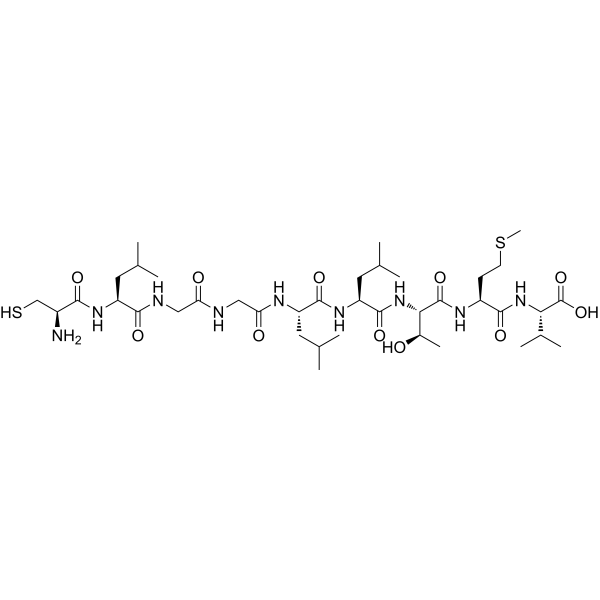
ELAAWCRWGFLLALLPPGIAG (P5) is derived from rat HER2/neu protein with 21 amino acid length (aa 5-25). ELAAWCRWGFLLALLPPGIAG can induce cytotoxic T lymphocyte (CTL) responses in mice bearing HER2-positive tumours .
|
-
-
- HY-P5742A
-
|
|
EGFR
|
Cancer
|
|
ELAAWCRWGFLLALLPPGIAG TFA (P5) is derived from rat HER2/neu protein with 21 amino acid length (aa 5-25). ELAAWCRWGFLLALLPPGIAG TFA can induce cytotoxic T lymphocyte (CTL) responses in mice bearing HER2-positive tumours .
|
-
-
- HY-P1862
-
|
|
HSV
|
Infection
|
|
HSV-gB2 (498-505) is an immunodominant epitope from herpes simplex virus (HSV) glycoprotein B residues 498-505, acts as H-2Kb-restricted and HSV-1/2-cross-reactive cytotoxic T-lymphocyte (CTL) recognition epitope .
|
-
-
- HY-P3070
-
|
|
MHC
|
Infection
Others
|
|
H2-D b restricted epitopes VSV Nucleoprotein (52-59) is a 9-mer peptide derived from the nucleoprotein of Vesicular Stomatitis Virus (VSV). H2-D b restricted epitopes VSV Nucleoprotein (52-59) binds to MHC class I molecules and presents itself to CD8+ T cells, thereby activating cytotoxic T lymphocytes (CTLs), which can recognize and kill cells expressing the corresponding antigen. H2-D b restricted epitopes VSV Nucleoprotein (52-59) can be used in the development of CTL vaccines against Ebola virus .
|
-
-
- HY-P10607
-
|
|
EBV
|
Cancer
|
|
IALYLQQNW is a specific nonapeptide sequence derived from the tumor-associated antigen latent membrane protein 1 (LMP1) encoded by Epstein-Barr virus (EBV). As a latent T-cell epitope, IALYLQQNW is able to activate EBV-specific cytotoxic T lymphocytes (CTLs), which are able to recognize and kill EBV-infected cells expressing LMP1. IALYLQQNW plays an important role in the immune response against EBV-associated tumors and can be used in the study of Hodgkin's disease and nasopharyngeal carcinoma .
|
-
-
- HY-P991354
-
|
|
PD-1/PD-L1
|
Cancer
|
|
GR-1405 is a human monoclonal antibody (mAb) targeting B7-H1/PD-L1/CD274. GR-1405 enhances cytotoxic T lymphocyte (CTL)-mediated antitumor immune responses against PD-L1-expressing tumor cells. GR-1405 can be used in Lymphoma and Solid tumours research .
|
-
-
- HY-P11145
-
|
|
Influenza Virus
|
Infection
Inflammation/Immunology
|
Influenza HA (529-537) is the amino acid sequence (IYATVAGSL) at positions 529-537 of the hemagglutinin (HA) of the influenza A virus. Influenza HA (529-537) can be recognized by three different specificities (H1-specific, H2-specific, H1/H2 cross-reactive) of CD8 + cytotoxic T-lymphocyte (CTL) clones. Influenza HA (529-537) can be used to understand T-cell immune specificity and to design new vaccines .
|
-
-
- HY-P1920
-
|
|
EBV
|
Inflammation/Immunology
|
|
CEF19, Epstein-Barr Virus latent NA-3A (458-466) is a single peptide epitope, YPLHEQHGM, representing residues 458-466 of the type 1 Epstein-Barr Virus (EBV) nuclear antigen 3A protein (B95.8 strain). CEF19, Epstein-Barr Virus latent NA-3A (458-466) can significantly affect cytotoxic T-lymphocyte (CTL) recognition .
|
-
-
- HY-P991530
-
|
|
Biochemical Assay Reagents
|
Inflammation/Immunology
Cancer
|
|
YH004 is an anti-CD137 agonistic monoclonal antibody, with immunostimulating and antineoplastic activities. YH004 activates CD137 expressed on a variety of leukocyte subsets including activated T lymphocytes and natural killer cells. YH004 enhances CD137-mediated signaling and induces cytotoxic T-lymphocyte (CTL) proliferation, cytokine production and promotes anti-tumor response mediated by CTL. YH004 induces NK-mediated tumor cell killing and suppresses the immunosuppressive activity of regulatory T cells. YH004 can be studied in anticancer research .
|
-
-
- HY-P10838A
-
|
|
PD-1/PD-L1
Apoptosis
|
Cancer
|
|
PL120131 acetate is a PD-1 antagonist, can specifically blocking the interaction between PD-1 and PD-L1, thereby effectively inhibiting the PD-1-mediated apoptosis signaling pathway. PL120131 acetate rescues lymphocytes from apoptosis, maintains the survival and activity of T cells, and induces cytotoxic T lymphocytes to exert killing effects and recognize macrophages and dendritic cells. PL120131 acetate can be used in research related to breast cancer and various malignant tumors .
|
-
-
- HY-P11397
-
|
|
MHC
|
Cancer
|
|
VLPDVFIRCV, a melanoma antigen-derived peptide, is the intron sequence (nt 38-67) of the N-acetylglucosamine transferase V (GnT-V) gene. VLPDVFIRCV has a high affinity for MHC-I class molecules, but it cannot activate the immune response against natural tumor cells. The cytotoxic T lymphocytes (CTL) induced by VLPDVFIRCV can specifically lyse T2 cells loaded with this peptide in the chromium release experiment. VLPDVFIRCV can be used for vaccine design research .
|
-
| Cat. No. |
Product Name |
Type |
-
- HY-153209G
-
|
|
Fluorescent Dyes
|
|
Adjuvant-4 (GMP) is a GMP grade Adjuvant-4. Adjuvant-4 is a vaccine adjuvant that enhances antigen-specific antibody titers and cytotoxic T lymphocyte (CTL) responses . Adjuvant is generally an oil-in-water emulsifier of mineral oil and mannitol monooleate.
|
| Cat. No. |
Product Name |
Type |
-
- HY-153209G
-
|
|
Biochemical Assay Reagents
|
|
Adjuvant-4 (GMP) is a GMP grade Adjuvant-4. Adjuvant-4 is a vaccine adjuvant that enhances antigen-specific antibody titers and cytotoxic T lymphocyte (CTL) responses . Adjuvant is generally an oil-in-water emulsifier of mineral oil and mannitol monooleate.
|
| Cat. No. |
Product Name |
Target |
Research Area |
-
- HY-P1907
-
|
|
HPV
|
Cancer
|
|
Human Papillomavirus (HPV) E7 protein (49-57) is a cytotoxic T lymphocyte (CTL) epitope peptide derived from HPV16 E7 protein (sequence: RAHYNIVTF). Human Papillomavirus (HPV) E7 protein (49-57) induces E749-57-specific CTL responses. Human Papillomavirus (HPV) E7 protein (49-57) can be used for the research of cervical cancer .
|
-
- HY-P5470
-
|
|
EBV
IFNAR
|
Inflammation/Immunology
|
|
LMP2A (426-434) is a HLA-A2-restricted cytotoxic T lymphocyte (CTL) epitope of Epstein-Barr virus (EBV) latent membrane protein 2A (LMP2A). LMP2A (426-434) can trigger an immune response in individuals expressing different HLA-A*02 subtypes (A*02:01, A*02:03, A*02:06 and A*02:07). LMP2A (426-434) can induce a strong IFN-γ secretion response, stimulating the production of a high proportion of CD8 + IFN-γ + T cells. LMP2A (426-434) induces specific CTLs to effectively kill target cells expressing LMP2A. LMP2A (426-434) can be used to study EBV-related malignant tumors (such as Hodgkin's disease and nasopharyngeal carcinoma) .
|
-
- HY-P2495A
-
-
- HY-P3742
-
|
|
Tyrosinase
MHC
|
Cancer
|
|
Tyrosinase (192-200), human mouse is a HLA-B*4403-restricted tyrosinase epitope with affinity for HLA-B4403 and HLA-B4402. Tyrosinase (192-200), human mouse binds to HLA-B*4403 to form a complex, which is recognized by the autologous cytotoxic T lymphocyte clone 22/31 derived from melanoma. Tyrosinase (192-200), human mouse binds to HLA-B4402 to form a complex, which is recognized by the CTL clone 329B/5 derived from healthy HLA-B4402 donors. Tyrosinase (192-200), human mouse is applicable to melanoma-related research .
|
-
- HY-106374
-
|
|
VEGFR
|
Cancer
|
|
Elpamotide is an epitope peptide derived from VEGFR2. Elpamotide induces cytotoxic T lymphocytes (CTLs) to kill VEGFR2-expressing endothelial cells. Elpamotide has potential immunostimulatory and antineoplastic activities. Elpamotide can be used in the research of cancer, such as pancreatic cancer .
|
-
- HY-P1855
-
|
|
EGFR
|
Cancer
|
|
HER2/neu (654-662) GP2 is a nine amino acid peptide derived from the human epidermal growth factor receptor 2 (HER2/nue, 654–662), induces HLA-A2-restricted cytotoxic T lymphocytes (CTL) reactive to various epithelial cancers .
|
-
- HY-P2495
-
-
- HY-P1881
-
|
|
HPV
|
Cancer
|
|
HPV16-E711-20 epitope is a well-known HLA-A *0201-restricted human cytotoxic T lymphocyte (CTL) epitope of the HPV16 E7 protein that shows high-affinity binding to HLA-A2 in vitro. HPV16 CTL epitopes may be good candidates for the development of an effective peptide-based antitumor vaccine .
|
-
- HY-P10593
-
|
|
Transmembrane Glycoprotein
Influenza Virus
|
Cancer
|
|
Influenza A NP (383-391) (HLA-B27) is a peptide sequence derived from tetanus toxin. Influenza A NP (383-391) (HLA-B27) is a broadly immunogenic CD4+ T helper cell epitope that enhances CD8+ cytotoxic T lymphocyte (CTL) responses. Influenza A NP (383-391) (HLA-B27) can be used in breast cancer research .
|
-
- HY-105039
-
|
G209-2M; GP100:209-217(210M); MPS-22
|
Peptides
|
Cancer
|
|
Disomotide (G209-2M) is a melanoma antigen that enhances the generation of cytotoxic T lymphocytes (CTL) recognizing native G209 as well as melanoma .
|
-
- HY-P10245
-
|
|
RSV
|
Inflammation/Immunology
|
|
Fusion glycoprotein 92-106 is a polypeptide from fusion protein of respiratory syncytial virus (RSV). Fusion glycoprotein 92-106 acts as MHC class I-restricted CTL epitope, that all 15 amino acids are required for efficient recognition by cytotoxic T lymphocyte (CTL) .
|
-
- HY-P2521
-
|
|
Influenza Virus
|
Infection
Inflammation/Immunology
|
|
NS2 (114-121), Influenza, the 114-121 fragment of influenza nonstructural protein 2 (NS2), is a influenza-derived epitope. NS2 (114-121), Influenza can be used for the research of CD8 + cytotoxic T lymphocyte (CTL) in antiviral immune responses .
|
-
- HY-P5742
-
|
|
EGFR
|
Cancer
|
|
ELAAWCRWGFLLALLPPGIAG (P5) is derived from rat HER2/neu protein with 21 amino acid length (aa 5-25). ELAAWCRWGFLLALLPPGIAG can induce cytotoxic T lymphocyte (CTL) responses in mice bearing HER2-positive tumours .
|
-
- HY-P5742A
-
|
|
EGFR
|
Cancer
|
|
ELAAWCRWGFLLALLPPGIAG TFA (P5) is derived from rat HER2/neu protein with 21 amino acid length (aa 5-25). ELAAWCRWGFLLALLPPGIAG TFA can induce cytotoxic T lymphocyte (CTL) responses in mice bearing HER2-positive tumours .
|
-
- HY-P1862
-
|
|
HSV
|
Infection
|
|
HSV-gB2 (498-505) is an immunodominant epitope from herpes simplex virus (HSV) glycoprotein B residues 498-505, acts as H-2Kb-restricted and HSV-1/2-cross-reactive cytotoxic T-lymphocyte (CTL) recognition epitope .
|
-
- HY-P3070
-
|
|
MHC
|
Infection
Others
|
|
H2-D b restricted epitopes VSV Nucleoprotein (52-59) is a 9-mer peptide derived from the nucleoprotein of Vesicular Stomatitis Virus (VSV). H2-D b restricted epitopes VSV Nucleoprotein (52-59) binds to MHC class I molecules and presents itself to CD8+ T cells, thereby activating cytotoxic T lymphocytes (CTLs), which can recognize and kill cells expressing the corresponding antigen. H2-D b restricted epitopes VSV Nucleoprotein (52-59) can be used in the development of CTL vaccines against Ebola virus .
|
-
- HY-P10607
-
|
|
EBV
|
Cancer
|
|
IALYLQQNW is a specific nonapeptide sequence derived from the tumor-associated antigen latent membrane protein 1 (LMP1) encoded by Epstein-Barr virus (EBV). As a latent T-cell epitope, IALYLQQNW is able to activate EBV-specific cytotoxic T lymphocytes (CTLs), which are able to recognize and kill EBV-infected cells expressing LMP1. IALYLQQNW plays an important role in the immune response against EBV-associated tumors and can be used in the study of Hodgkin's disease and nasopharyngeal carcinoma .
|
-
- HY-P11145
-
|
|
Influenza Virus
|
Infection
Inflammation/Immunology
|
Influenza HA (529-537) is the amino acid sequence (IYATVAGSL) at positions 529-537 of the hemagglutinin (HA) of the influenza A virus. Influenza HA (529-537) can be recognized by three different specificities (H1-specific, H2-specific, H1/H2 cross-reactive) of CD8 + cytotoxic T-lymphocyte (CTL) clones. Influenza HA (529-537) can be used to understand T-cell immune specificity and to design new vaccines .
|
-
- HY-P1920
-
|
|
EBV
|
Inflammation/Immunology
|
|
CEF19, Epstein-Barr Virus latent NA-3A (458-466) is a single peptide epitope, YPLHEQHGM, representing residues 458-466 of the type 1 Epstein-Barr Virus (EBV) nuclear antigen 3A protein (B95.8 strain). CEF19, Epstein-Barr Virus latent NA-3A (458-466) can significantly affect cytotoxic T-lymphocyte (CTL) recognition .
|
-
- HY-P10496A
-
|
|
Peptides
|
Cancer
|
|
MAGE-A1-derived peptide acetate is a short peptide sequence derived from MAGE-A1 protein. As a tumor-specific antigen, MAGE-A1-derived peptide acetate can be recognized and activated by cytotoxic T lymphocytes (CTLs), thereby generating an immune response to tumor cells expressing MAGE-A1. This immune response can lead to the lysis and death of tumor cells. MAGE-A1-derived peptide acetate can be used in the study of tumor immunity .
|
-
- HY-P10496
-
|
|
Peptides
|
Cancer
|
|
MAGE-A1-derived peptide is a short peptide sequence derived from MAGE-A1 protein. As a tumor-specific antigen, MAGE-A1-derived peptide can be recognized and activated by cytotoxic T lymphocytes (CTLs), thereby generating an immune response to tumor cells expressing MAGE-A1. This immune response can lead to the lysis and death of tumor cells. MAGE-A1-derived peptide can be used in the study of tumor immunity .
|
-
- HY-P10838A
-
|
|
PD-1/PD-L1
Apoptosis
|
Cancer
|
|
PL120131 acetate is a PD-1 antagonist, can specifically blocking the interaction between PD-1 and PD-L1, thereby effectively inhibiting the PD-1-mediated apoptosis signaling pathway. PL120131 acetate rescues lymphocytes from apoptosis, maintains the survival and activity of T cells, and induces cytotoxic T lymphocytes to exert killing effects and recognize macrophages and dendritic cells. PL120131 acetate can be used in research related to breast cancer and various malignant tumors .
|
-
- HY-P11397
-
|
|
MHC
|
Cancer
|
|
VLPDVFIRCV, a melanoma antigen-derived peptide, is the intron sequence (nt 38-67) of the N-acetylglucosamine transferase V (GnT-V) gene. VLPDVFIRCV has a high affinity for MHC-I class molecules, but it cannot activate the immune response against natural tumor cells. The cytotoxic T lymphocytes (CTL) induced by VLPDVFIRCV can specifically lyse T2 cells loaded with this peptide in the chromium release experiment. VLPDVFIRCV can be used for vaccine design research .
|
| Cat. No. |
Product Name |
Target |
Research Area |
Image |
-
- HY-P99762
-
|
MGD009
|
CD3
|
Cancer
|
|
Obrindatamab is a humanized anti-B7-H3/CD3 bispecific antibody. Obrindatamab binds to B7-H3 and CD3, thereby mediating redirected cytotoxic T-lymphocyte (CTL) activity against B7-H3-expressing cancer cells. Obrindatamab can be used in research of cancer .
|
-
(5)
-
- HY-P990795
-
|
|
Osteopontin
|
Inflammation/Immunology
Cancer
|
|
Anti-Mouse osteopontin/SPP1 Antibody (100D3) is an anti-mouse osteopontin/SPP1 IgG2c monoclonal antibody. Anti-Mouse osteopontin/SPP1 Antibody (100D3) can reverse the inhibition of osteopontin (OPN) on T cells and enhance cytotoxic T lymphocyte (CTL) killing ability. Anti-Mouse osteopontin/SPP1 Antibody (100D3) can improve dentin density. Anti-Mouse osteopontin/SPP1 Antibody (100D3) can be used for researches on cancer and dental related conditions such as colon cancer. The recommend isotype control of Anti-Mouse osteopontin/SPP1 Antibody (100D3): Mouse IgG2c kappa, Isotype Control (HY-P99981) .
|
-
(5)
-
- HY-P990928
-
|
APVO-436
|
CD3
Interleukin Related
|
Inflammation/Immunology
Cancer
|
|
Mipletamig (APVO-436) is a bispecific CD123 x CD3 monoclonal antibody. Mipletamig simultaneously binds to both CD3-expressing T cells and CD123-expressing cancer cells, thereby crosslinking CD123-expressing tumor cells and cytotoxic T lymphocytes (CTLs). This results in the activation and proliferation of T-cells and causes CTL-mediated cell lysis of CD123-expressing tumor cells. Mipletamig can be used for the study of acute myeloid leukemia (AML) .
|
-
(5)
-
- HY-P991354
-
|
|
PD-1/PD-L1
|
Cancer
|
|
GR-1405 is a human monoclonal antibody (mAb) targeting B7-H1/PD-L1/CD274. GR-1405 enhances cytotoxic T lymphocyte (CTL)-mediated antitumor immune responses against PD-L1-expressing tumor cells. GR-1405 can be used in Lymphoma and Solid tumours research .
|
-
(5)
-
- HY-P991530
-
|
|
Biochemical Assay Reagents
|
Inflammation/Immunology
Cancer
|
|
YH004 is an anti-CD137 agonistic monoclonal antibody, with immunostimulating and antineoplastic activities. YH004 activates CD137 expressed on a variety of leukocyte subsets including activated T lymphocytes and natural killer cells. YH004 enhances CD137-mediated signaling and induces cytotoxic T-lymphocyte (CTL) proliferation, cytokine production and promotes anti-tumor response mediated by CTL. YH004 induces NK-mediated tumor cell killing and suppresses the immunosuppressive activity of regulatory T cells. YH004 can be studied in anticancer research .
|
-
(5)
| Cat. No. |
Compare |
Product Name |
Species |
Source |
Image |
Compare Products
|
| Products |
|
| Cat. No. |
|
| Species |
|
| Source |
|
| Tag |
|
| Accession |
|
| Gene ID |
|
| Molecular Weight |
|
| Purity |
|
| Endotoxin Level |
|
| Biological Activity |
|
| Appearance |
|
| Formulation |
|
| Storage & Stability |
|
| Shipping |
|
| Free Sample |
Yes
No
|
| Size |
* This product has been "discontinued".
Optimized version of product available:
|
| Cat. No. |
Product Name |
|
Classification |
-
- HY-153209
-
|
|
|
Adjuvant
|
|
Adjuvant-4 is a vaccine adjuvant that enhances antigen-specific antibody titers and cytotoxic T lymphocyte (CTL) responses . Adjuvant is generally an oil-in-water emulsifier of mineral oil and mannitol monooleate.
|
Your information is safe with us. * Required Fields.
Inquiry Information
- Product Name:
- Cat. No.:
- Quantity:
- MCE Japan Authorized Agent:

