
33 Results for "

electrical activity

" in MedChemExpress (MCE) Product Catalog:
Products (33)

33 Results for "electrical activity" in MCE Product Catalog:

77
77 Cited Publications
Cat. No.: HY-B0470
CAS No.: 1405-10-3
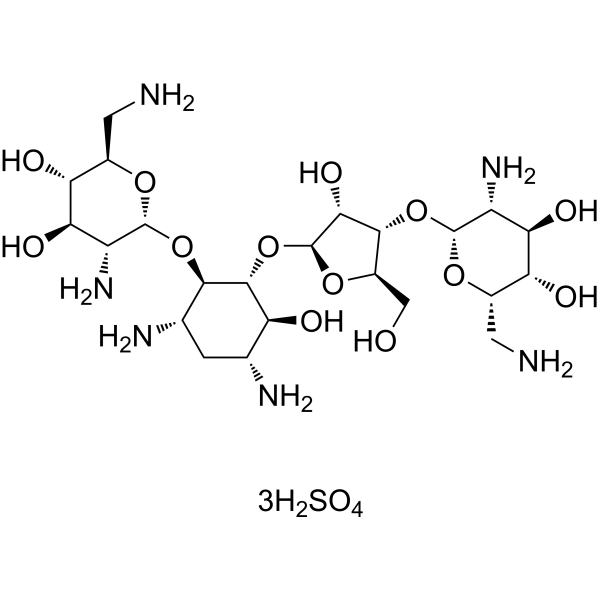
Neomycin sulfate, an aminoglycoside antibiotic, exerts antibacterial activity through irreversible binding of the nuclear 30S ribosomal subunit, thereby blocking bacterial protein synthesis. Neomycin sulfate is a known phospholipase C (PLC) inhibitor. Neomycin sulfate potently inhibits both the nuclear translocation of angiogenin and angiogenin-induced cell proliferation and angiogenesis. Neomycin sulfate inhibits IP3-mediated Ca 2+ release, MgATP-dependent Ca 2+ uptake, and electrical excitation-evoked skeletal muscle Ca 2+ transients. Neomycin sulfate depletes gut microbiota in specific mouse models, causes hearing impairment, and kidney damage with prolonged exposure. Neomycin sulfate can be used for the research of cancer .
loading...
    loading...
Cat. No.: HY-W017277
CAS No.: 15356-60-2
Synonyms: D-Menthol
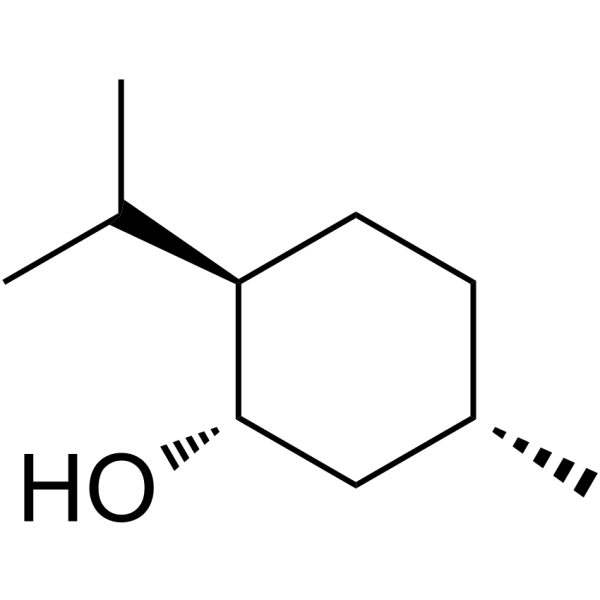
(+)-Menthol (D-Menthol) is one of the optical isomers of Menthol. (+)-Menthol can reduce the electrically evoked contractions of rat phrenic hemidiaphragm in vitro. Local anaesthetic activity. (+)-Menthol inhibits fungal growth and sporulation. (+)-Menthol can also inhibit the growth of Microcystis aeruginosa cells .
loading...
    loading...
Cat. No.: HY-150520
CAS No.: 1404-04-2
Research Areas:  

Infection Cancer

Neomycin, an aminoglycoside antibiotic, exerts antibacterial activity through irreversible binding of the nuclear 30S ribosomal subunit, thereby blocking bacterial protein synthesis. Neomycin is a known phospholipase C (PLC) inhibitor. Neomycin potently inhibits both the nuclear translocation of angiogenin and angiogenin-induced cell proliferation and angiogenesis. Neomycin inhibits IP3-mediated Ca 2+ release, MgATP-dependent Ca 2+ uptake, and electrical excitation-evoked skeletal muscle Ca 2+ transients. Neomycin depletes gut microbiota in specific mouse models, causes hearing impairment, and kidney damage with prolonged exposure. Neomycin can be used for the research of cancer .
loading...
    loading...
Cat. No.: HY-B1804
CAS No.: 538-23-8
Synonyms: Trioctanoin; Glyceryl trioctanoate
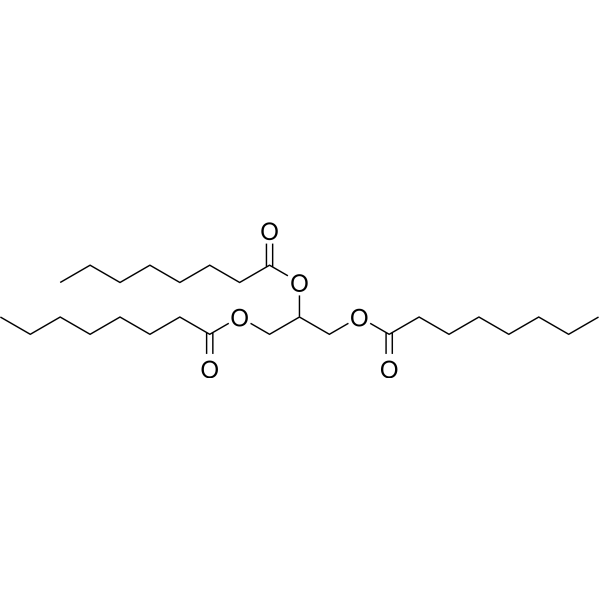
Tricaprilin (Trioctanoin) is an orally active and well tolerated ketogenic agent that safely induces ketosis. Tricaprilin restores brain electrical activity and metabolism to help counteract neuroinflammation in migraine. Tricaprilin is promising for research of migraine prevention and Alzheimer’s disease (AD). Tricaprilin is a pure C8 medium chain triglyceride (MCT) .
loading...
    loading...
Cat. No.: HY-168773
CAS No.: 2506367-95-7
Target:  

EAAT

Research Areas:  

Neurological Disease

(R)-AS-1 is a selective positive allosteric modulator of the excitatory amino acid transporter 2 (EAAT2), with an EC50 of 11 nM. (R)-AS-1 (at doses of 60 and 90 mg/kg) increases spontaneous locomotor activity in mice. Additionally, it demonstrates anticonvulsant activity in mouse models of seizures induced by maximal electroshock (MES), pentylenetetrazole (PTZ), or electrical stimuli (32 or 44 mA), with ED50s of 66.3, 36.3, 15.6, and 41.6 mg/kg, respectively. (R)-AS-1 can be used in neurological disease research .
loading...
    loading...
Cat. No.: HY-108511
CAS No.: 172907-03-8
Purity:  99.63%
Research Areas:  

Infection Cancer

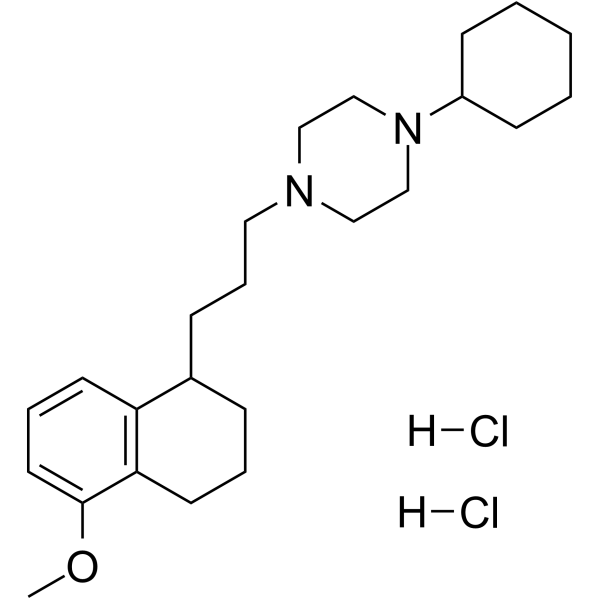
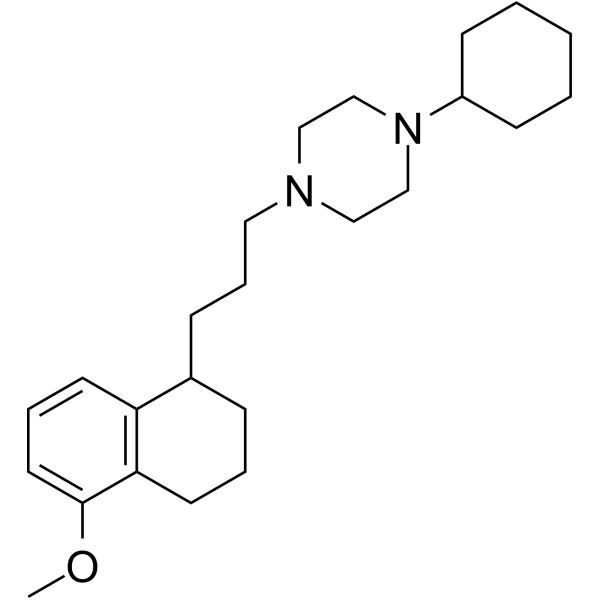
PB28 dihydrochloride, a cyclohexylpiperazine derivative, is a high affinity and selective sigma 2 (σ2) receptor agonist with a Ki of 0.68 nM. PB28 dihydrochloride is also a σ1 antagonist with a Ki of 0.38 nM. PB28 dihydrochloride is less affinity for other receptors. PB28 dihydrochloride inhibits electrically evoked twitch in guinea pig bladder and ileum with EC50 values of 2.62 μM and 3.96 μM, respectively. PB28 dihydrochloride can modulate SARS-CoV-2-human protein-protein interaction. PB28 dihydrochloride induces caspase-independent apoptosis and has antitumor activity .
loading...
    loading...
Cat. No.: HY-B1804S
CAS No.: 65402-55-3
Synonyms: Trioctanoin-13C3; Glyceryl trioctanoate-13C3
Tricaprilin- 13C3 (Trioctanoin- 13C3) is a 13C-labeled Tricaprilin (HY-B1804) . Tricaprilin is an orally active and well tolerated ketogenic agent that safely induces ketosis. Tricaprilin restores brain electrical activity and metabolism to help counteract neuroinflammation in migraine. Tricaprilin is promising for research of migraine prevention and Alzheimer’s disease (AD). Tricaprilin is a pure C8 medium chain triglyceride (MCT) .
loading...
    loading...
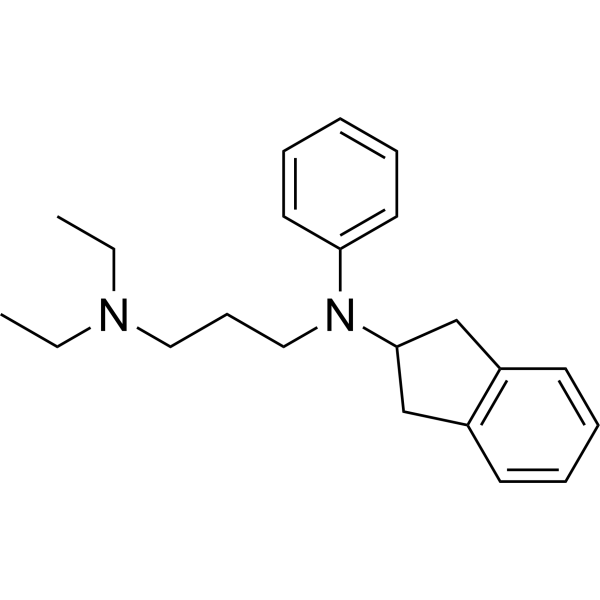
Cat. No.: HY-A0236
CAS No.: 37640-71-4
Aprindine is an Ib-class anti-arrhythmic agent. Aprindine mainly exerts its effect by blocking sodium channels (INa), thereby reducing the excitability and conduction velocity of cardiac muscle cells. Aprindine significantly inhibits delayed potassium currents, which helps to prolong the atrial effective refractory period (AERP) and inhibit the occurrence of atrial fibrillation. Aprindine can also regulate intracellular calcium ion concentration by inhibiting Na +/Ca 2+ exchange current (INCX), thereby further stabilizing cardiac electrical activity. Aprindine can be used for the study of atrial fibrillation (AF) and ventricular arrhythmias .
loading...
    loading...
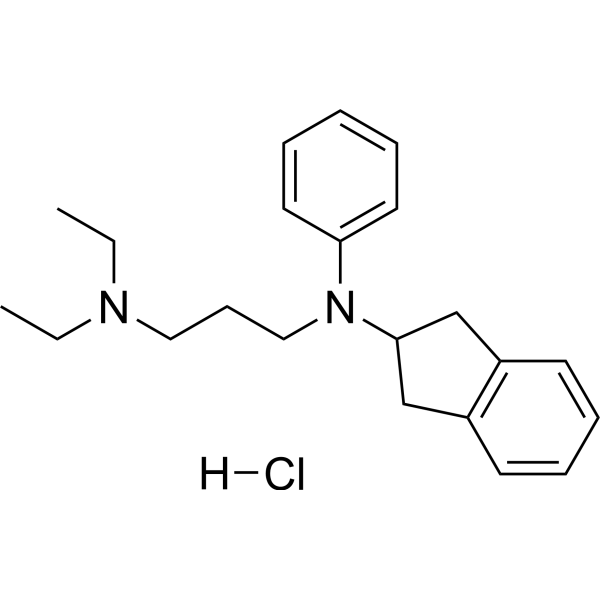
Cat. No.: HY-A0236A
CAS No.: 33237-74-0
Aprindine hydrochloride is an Ib-class anti-arrhythmic agent. Aprindine hydrochloride mainly exerts its effect by blocking sodium channels (INa), thereby reducing the excitability and conduction velocity of cardiac muscle cells. Aprindine hydrochloride significantly inhibits delayed potassium currents, which helps to prolong the atrial effective refractory period (AERP) and inhibit the occurrence of atrial fibrillation. Aprindine hydrochloride can also regulate intracellular calcium ion concentration by inhibiting Na +/Ca 2+ exchange current (INCX), thereby further stabilizing cardiac electrical activity. Aprindine hydrochloride can be used for the study of atrial fibrillation (AF) and ventricular arrhythmias .
loading...
    loading...
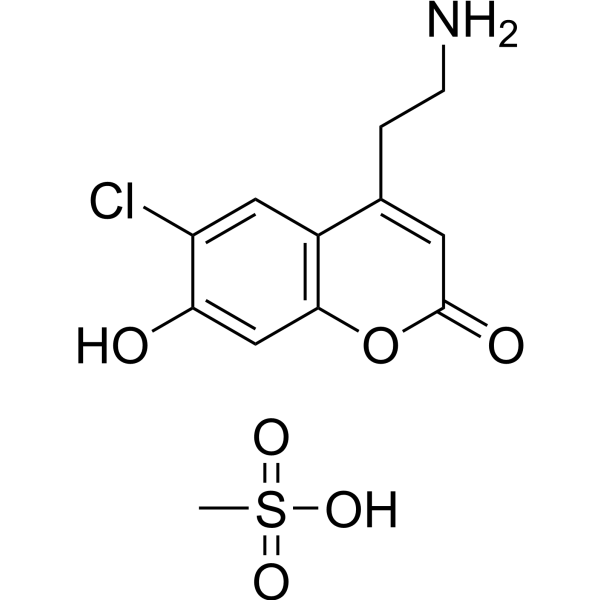
Cat. No.: HY-110337
CAS No.: 1883548-92-2
Purity:  99.00%
Target:  

Fluorescent Dye

Research Areas:  

Others

FFN 102 mesylate is a synthetic biogenic neurotransmitter analogue with PH-dependent fluorescence and electrical activity .
loading...
    loading...
Cat. No.: HY-120927A
CAS No.: 170098-43-8
Target:  

Opioid Receptor

Research Areas:  

Neurological Disease

Alvimopan metabolite hydrochloride is a peripherally restricted Opioid Receptor antagonist that inhibits the amplitude of electrically evoked contractions and spontaneous mechanical activity in guinea pig ileum .
loading...
    loading...
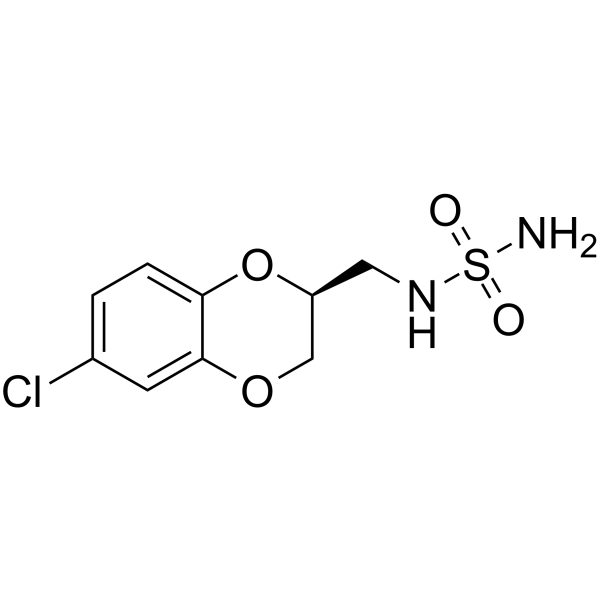
Cat. No.: HY-177361
CAS No.: 68876-74-4
Target:  

Sodium Channel

Research Areas:  

Cardiovascular Disease

Zocainone is an antiarrhythmic agent. Zocainone blocks sodium channels in cardiac tissue, stabilizing the cardiac action potential and reducing abnormal electrical activity. Zocainone is promising for research of cardiac arrhythmias .
loading...
    loading...
Cat. No.: HY-12596
CAS No.: 871824-55-4
JNJ-26489112, a CNS-active agent, exhibits broad-spectrum anticonvulsant activity in rodents against audiogenic, electrically-induced, and chemically-induced seizures. JNJ-26489112 inhibits voltage-gated Na + channels and N-type Ca 2+ channels, and is effective as a K + channel opener. JNJ-26489112 has very weak inhibition of CA-II (IC50=35 μM) and CA-I (18 μM) .
loading...
    loading...
Cat. No.: HY-108511A
CAS No.: 172906-90-0
Research Areas:  

Infection Cancer

PB28 is a cyclohexylpiperazine derivative and a high affinity and selective sigma 2 (σ2) receptor agonist with a Ki of 0.68 nM. PB28 is also a σ1 antagonist with a Ki of 0.38 nM. PB28 is less affinity for other receptors. PB28 inhibits electrically evoked twitch in guinea pig bladder and ileum with EC50 values of 2.62 μM and 3.96 μM, respectively. PB28 can modulate SARS-CoV-2-human protein-protein interaction. PB28 induces caspase-independent apoptosis and has antitumor activity .
loading...
    loading...
Cat. No.: HY-171782
CAS No.: 90405-00-8
Target:  

Others

Research Areas:  

Cardiovascular Disease

Amidepin is a new type of antiarrhythmic compound. Amidepin has the activity of regulating cardiac electrical activity. The main regulatory mechanism of amidepin involves ion channel or receptor interaction. Amidepin can be used for the study of arrhythmias .
loading...
    loading...
Cat. No.: HY-P3593
CAS No.: 88280-21-1
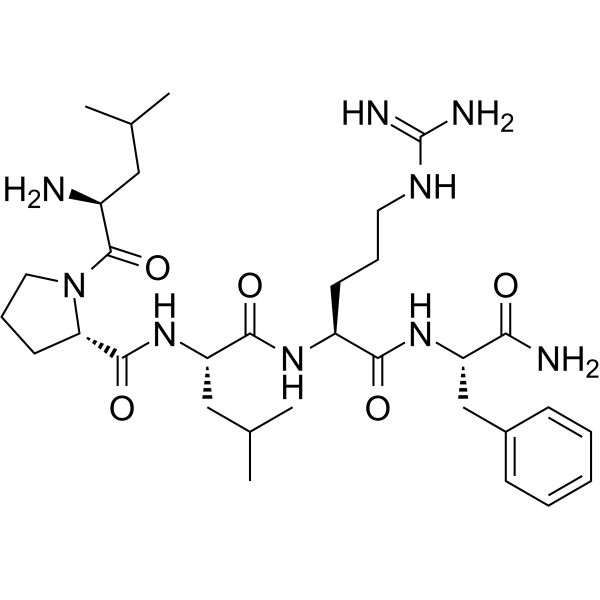
LPLRF-NH2 is a member of RFamide peptide with anorexigenic effect. LPLRF-NH2 increases arterial blood pressure and modulates the electrical activity of brainstem neurons .
loading...
    loading...
Cat. No.: HY-115856
CAS No.: 790633-59-9
Target:  

GABA Receptor

Research Areas:  

Neurological Disease

Sch 50910 is a GABA(B) receptor antagonist with some activity in inhibiting GABA(B) autoreceptors. Sch 50910 had no effect on electrically stimulated release at a concentration of 100 μM. The activity of Sch 50910 suggests that it may not have a significant role in studies of GABA(B) receptor function .
loading...
    loading...
Cat. No.: HY-111189
CAS No.: 896117-64-9
Target:  

GlyT

Research Areas:  

Neurological Disease

GSK931145 is a glycine transporter 1 (GlyT1) inhibitor with anti-epileptic activity. GSK931145 exhibits a low minimum effective dose in the maximum electrical stimulation threshold test, indicating that it has a significant anti-epileptic effect. GSK931145 is also suitable as a positron emission tomography (PET) radioligand for quantifying the availability of glycine transporters in the living brain .
loading...
    loading...
Cat. No.: HY-W017277R
CAS No.: 15356-60-2
Synonyms: D-Menthol (Standard)
(+)-Menthol (Standard) is the analytical standard of (+)-Menthol. This product is intended for research and analytical applications. (+)-Menthol (D-Menthol) is one of the optical isomers of Menthol. (+)-Menthol can reduce the electrically evoked contractions of rat phrenic hemidiaphragm in vitro. Local anaesthetic activity. (+)-Menthol inhibits fungal growth and sporulation. (+)-Menthol can also inhibit the growth of Microcystis aeruginosa cells .
loading...
    loading...
Cat. No.: HY-125452
CAS No.: 169211-45-4
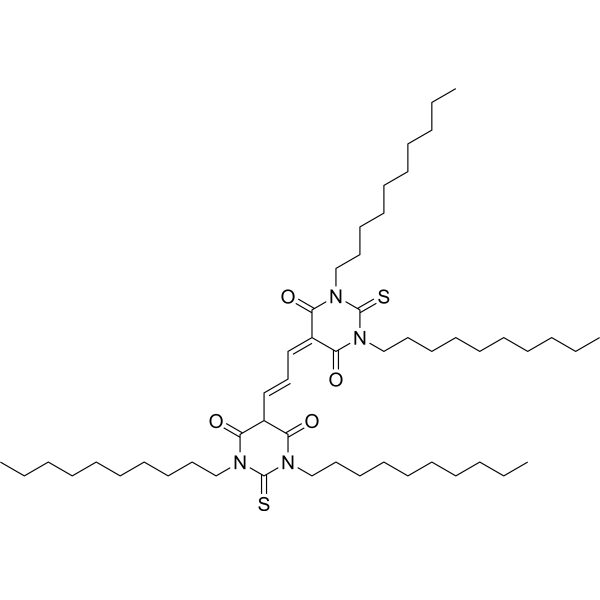
DiSBAC10 is a voltage-sensitive fluorescent probe used to study cell membrane electrical activity in FRET assays. In a resting polarized cell, DiSBAC10 resides on the outer leaflet of the membrane where it accepts photons from excited fluorescein-labeled proteins and re-emits the photons at a higher wavelength. Depolarization of the cell causes rapid translocation of DiSBAC10 to the inner leaflet of the membrane, thereby increasing the distance between fluorophores and reducing the FRET signal.
loading...
    loading...

