12 Results for "

hemoglobin oxygen affinity

" in MedChemExpress (MCE) Product Catalog:
Products (12)

12 Results for "hemoglobin oxygen affinity" in MCE Product Catalog:

1
1 Cited Publications
Cat. No.: HY-153182
CAS No.: 1628799-51-8
Purity:  99.37%
Target:  

Drug Derivative

Research Areas:  

Cardiovascular Disease

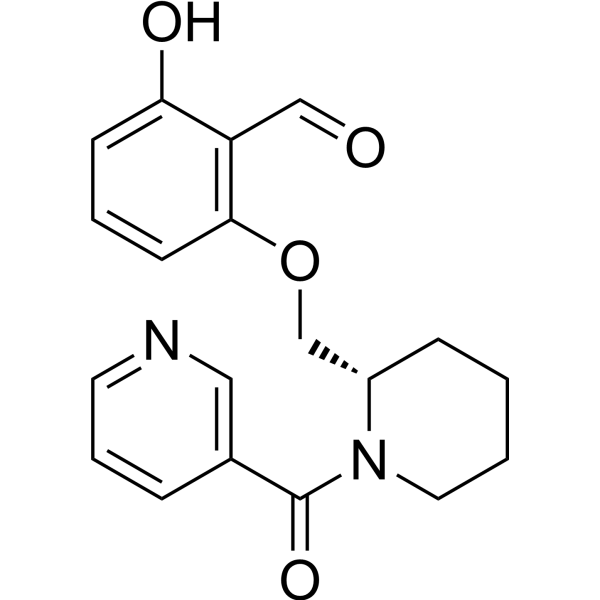
GBT1118 is a potent and orally active allosteric modifier of hemoglobin oxygen affinity. GBT1118 increases tolerance to severe hypoxia .
loading...
    loading...
Cat. No.: HY-172371
CAS No.: 2414508-40-8
Hypoxystat is an orally active hypoxia mimetic. HypoxyStat increases Hemoglobin’s oxygen affinity, limiting oxygen offloading to the tissues and inducing local tissue hypoxia. Hypoxystat reduces Iba1 + cells. HypoxyStat causes systemic hypoxia. Hypoxystat effectively rescues hyperglycemia in mouse models of type 1 and type 2 diabetes. HypoxyStat not only extends lifespan but also rescues key neuropathological and behavioral deficits in the premier mouse model of Leigh syndrome .
loading...
    loading...
Cat. No.: HY-141510
CAS No.: 23103-35-7
Purity:  ≥95.0%
Synonyms: ITPP hexasodium
Research Areas:  

Cardiovascular Disease Cancer

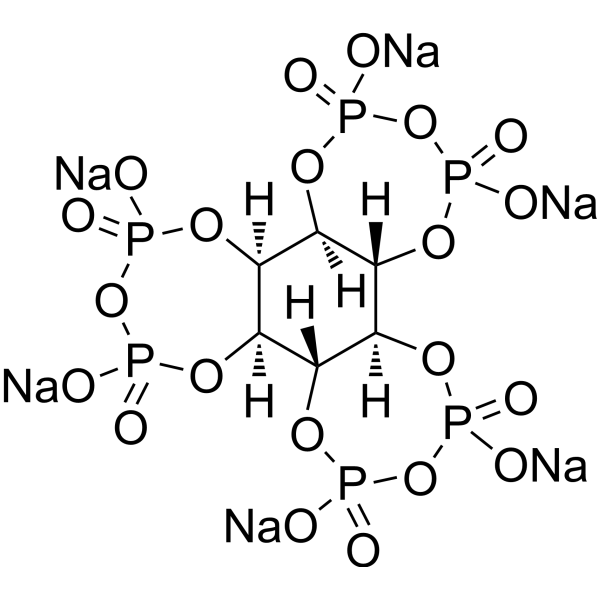
myo-Inositol trispyrophosphate (ITPP) hexasodium is a salt form of inositol triphosphate (ITPP). myo-Inositol trispyrophosphate (ITPP) hexasodium is a membrane-permeant hemoglobin allosteric regulator. myo-Inositol trispyrophosphate (ITPP) hexasodium enhances the oxygen release capacity of red blood cells by reducing the affinity of hemoglobin to oxygen. myo-Inositol trispyrophosphate (ITPP) hexasodium can be used in the study of cardiovascular disease and cancer .
loading...
    loading...
Cat. No.: HY-169798
CAS No.: 23481-50-7
Target:  

Fluorescent Dye VSV

Research Areas:  

Infection

1,9-Dimethylmethylene blue is a photosensitizer, virus inactivator and hemoglobin oxidant derived from methylene blue. When activated, 1,9-Dimethylmethylene blue generates reactive oxygen species including singlet oxygen, and acts as a metachromatic dye. When activated in monomeric or dimeric form, 1,9-Dimethylmethylene blue induces photoinactivation of R17 phage and vesicular stomatitis virus and oxidizes hemoglobin via non-singlet oxygen reactive oxygen species or singlet oxygen-mediated pathways, respectively. The monomeric form, with higher nucleic acid affinity, achieves virus inactivation under specific conditions without forming methemoglobin. 1,9-Dimethylmethylene blue binds to substances such as glycosaminoglycans to produce color changes. Although it is susceptible to interference from non-glycosaminoglycan components in urine, it is still applicable to spectrophotometric analysis for glycosaminoglycan quantification. With these unique photochemical and binding properties, 1,9-Dimethylmethylene blue is widely used in studies of viral infections and related biochemical analyses .
loading...
    loading...
Cat. No.: HY-113050
CAS No.: 138-81-8
Synonyms: 2,3-DPG
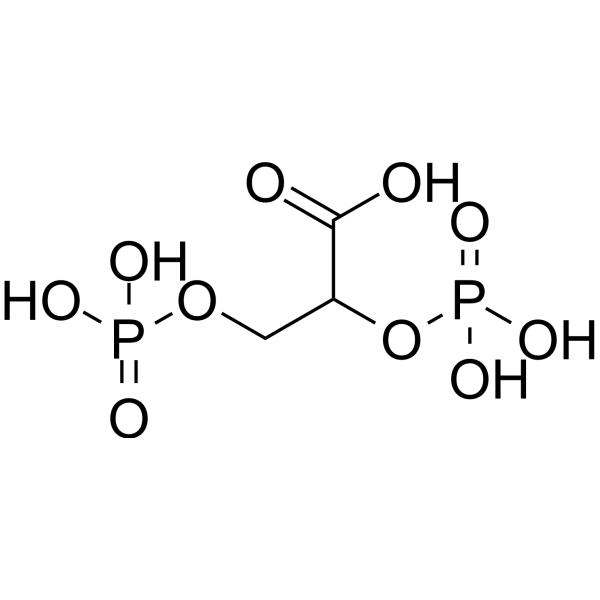
2,3-Diphosphoglyceric acid (2,3-DPG) is an intermediate metabolite of the 2,3-BPG shunt in erythrocytes, capable of binding to hemoglobin and modulating oxygen affinity. 2,3-Diphosphoglyceric acid stabilizes the deoxyhemoglobin T-state conformation, reduces hemoglobin oxygen affinity, and promotes oxygen release in tissues. 2,3-Diphosphoglyceric acid inhibits the growth of Plasmodium falciparum within erythrocytes without causing hemolysis or a decrease in ATP levels. 2,3-Diphosphoglyceric acid is useful for research related to malaria and Alzheimer's disease .
loading...
    loading...
Cat. No.: HY-141510A
CAS No.: 851086-77-6
Purity:  ≥98.0%
Synonyms: ITPP hexa-triethylamine
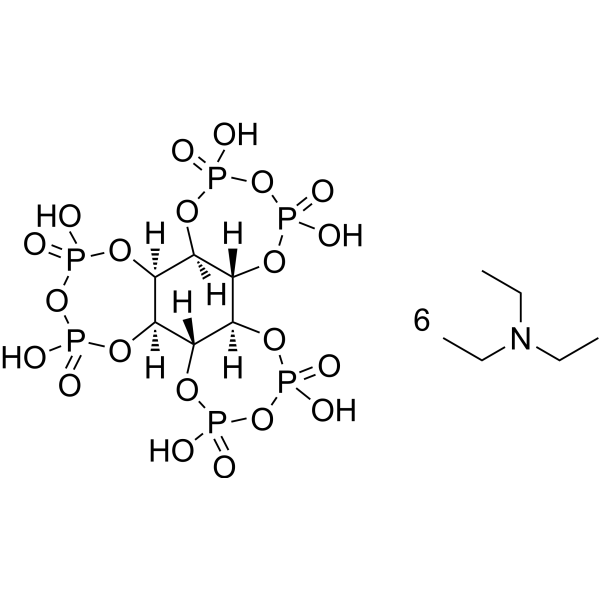
myo-Inositol trispyrophosphate (ITPP) hexa-triethylamine is a salt form of inositol triphosphate (ITPP). myo-Inositol trispyrophosphate hexa-triethylamine is a membrane-permeant hemoglobin allosteric regulator. myo-Inositol trispyrophosphate hexa-triethylamine enhances the oxygen release capacity of red blood cells by reducing the affinity of hemoglobin to oxygen. myo-Inositol trispyrophosphate hexa-triethylamine can be used in the study of cardiovascular disease and cancer .
loading...
    loading...
Cat. No.: HY-138822
CAS No.: 102783-53-9
Purity:  ≥95.0%
Synonyms: 2,3-DPG pentasodium salt
Target:  

Endogenous Metabolite

Research Areas:  

Cardiovascular Disease

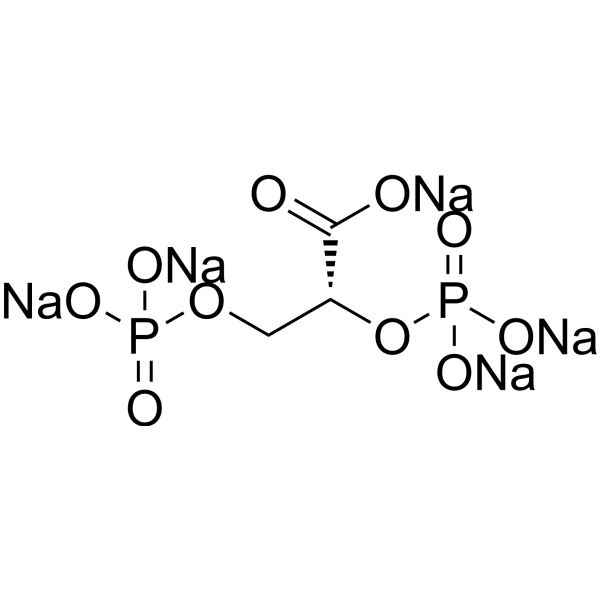
2,3-Diphospho-D-glyceric acid (2,3-DPG) pentasodium salt is a hemoglobin binder and vascular calcification inhibitor that reduces the oxygen affinity of hemoglobin. 2,3-Diphospho-D-glyceric acid pentasodium salt also specifically delays the transformation of colloidal calciprotein particles into crystalline forms, thereby effectively inhibiting vascular smooth muscle cell calcification without affecting the normal formation of osteoid nodules in osteoblast-like cells. 2,3-Diphospho-D-glyceric acid pentasodium salt shows no cytotoxicity to tested cell lines and only weakly interferes with β-hematin formation mediated by glyceryl monopalmitate. 2,3-Diphospho-D-glyceric acid pentasodium salt can be used to study the pathological mechanisms of vascular calcification and malaria-related conditions .
loading...
    loading...
Cat. No.: HY-113050A
CAS No.: 1287756-01-7
Purity:  ≥98.0%
Synonyms: 2,3-DPG pentasodium
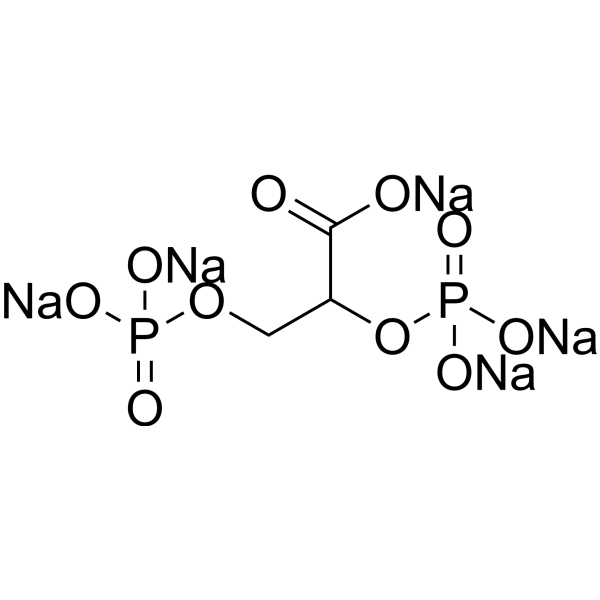
2,3-Diphosphoglyceric acid (2,3-DPG) pentasodium is an intermediate metabolite of the 2,3-BPG shunt in erythrocytes, capable of binding to hemoglobin and modulating oxygen affinity. 2,3-Diphosphoglyceric acid pentasodium stabilizes the deoxyhemoglobin T-state conformation, reduces hemoglobin oxygen affinity, and promotes oxygen release in tissues. 2,3-Diphosphoglyceric acid pentasodium inhibits the growth of Plasmodium falciparum within erythrocytes without causing hemolysis or a decrease in ATP levels. 2,3-Diphosphoglyceric acid pentasodium is useful for research related to malaria and Alzheimer's disease .
loading...
    loading...
Cat. No.: HY-P2995A
CAS No.: 9008-02-0
Hemoglobin porcine is an oxygen-transporting protein present in the blood of domestic pigs, and also an oxygen carrier with higher oxygen affinity than human hemoglobin. Hemoglobin porcine exhibits cooperative oxygen-binding properties, with weaker heme-heme interactions than those of human hemoglobin .
loading...
    loading...
Cat. No.: HY-113050B
CAS No.: 62868-79-5
Synonyms: 2,3-DPG (pentacyclohexylamine)
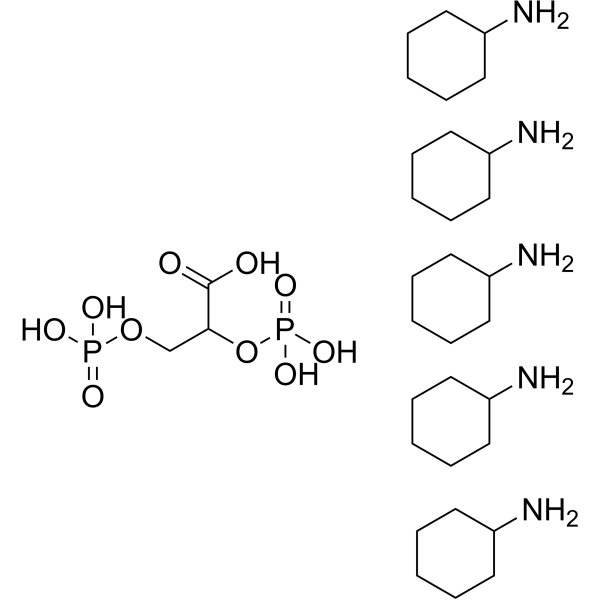
2,3-Diphosphoglyceric acid (2,3-DPG) pentacyclohexylamine is an intermediate metabolite of the 2,3-BPG shunt in erythrocytes, capable of binding to hemoglobin and modulating oxygen affinity. 2,3-Diphosphoglyceric acid pentacyclohexylamine stabilizes the deoxyhemoglobin T-state conformation, reduces hemoglobin oxygen affinity, and promotes oxygen release in tissues. 2,3-Diphosphoglyceric acid pentacyclohexylamine inhibits the growth of Plasmodium falciparum within erythrocytes without causing hemolysis or a decrease in ATP levels. 2,3-Diphosphoglyceric acid pentacyclohexylamine is useful for research related to malaria and Alzheimer's disease .
loading...
    loading...
Cat. No.: HY-165517
CAS No.: 14777-29-8
Target:  

Others

Research Areas:  

Cardiovascular Disease

Methyl acetimidate is an imidoester that can inhibit the formation of sickle cells. Methyl acetimidate enhances the oxygen affinity and gelling properties of high molecular weight hemoglobin (HMW Hb) by modifying the amino groups of hemoglobin, thereby suppressing the formation of sickle cells. Methyl acetimidate can be used in research related to anemia .
loading...
    loading...
Cat. No.: HY-W305227
CAS No.: 923255-75-8
Target:  

Hemoglobin

Research Areas:  

Cardiovascular Disease

INN-312 is a sickle hemoglobin (Hb S) inhibitor capable of penetrating red blood cell membranes. INN-312 inhibits sickling of sickle red blood cells under hypoxic conditions, increases the oxygen affinity of Hb, and moderately improves the solubility of deoxygenated Hb S. INN-312 can be used in research related to sickle cell disease .
loading...
    loading...
  • 1

