

1. Search Result
Search Result
Results for "

human eNOS

" in MedChemExpress (MCE) Product Catalog:

31

Inhibitors & Agonists

1

Biochemical Assay Reagents

3

Peptides

1

Inhibitory Antibodies

6

Natural
Products

2

Recombinant Proteins

1

Isotope-Labeled Compounds

1

Antibodies

4

Oligonucleotides

Cat. No. Product Name Target Research Areas Chemical Structure
  • HY-18732A
    L-NMMA acetate
    10+ Cited Publications

    Tilarginine acetate; Methylarginine acetate

    NO Synthase Endogenous Metabolite Cardiovascular Disease Cancer
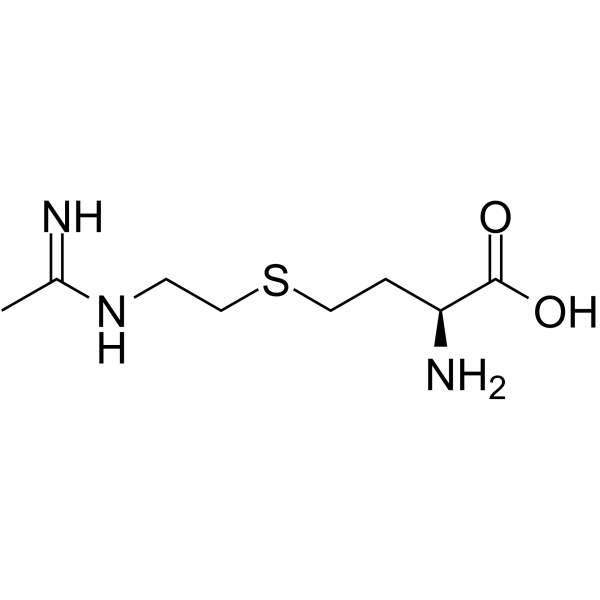
    L-NMMA acetate is a nitric oxide synthase inhibitor of all NOS isoforms including NOS1, NOS2, and NOS3. The Ki values for nNOS (rat), eNOS (human), and iNOS (mouse) are approximately 0.18, 0.4, and 6 μM, respectively.
    L-NMMA acetate
  • HY-15731

    Estrogen Receptor/ERR Endogenous Metabolite NO Synthase Cardiovascular Disease Cancer
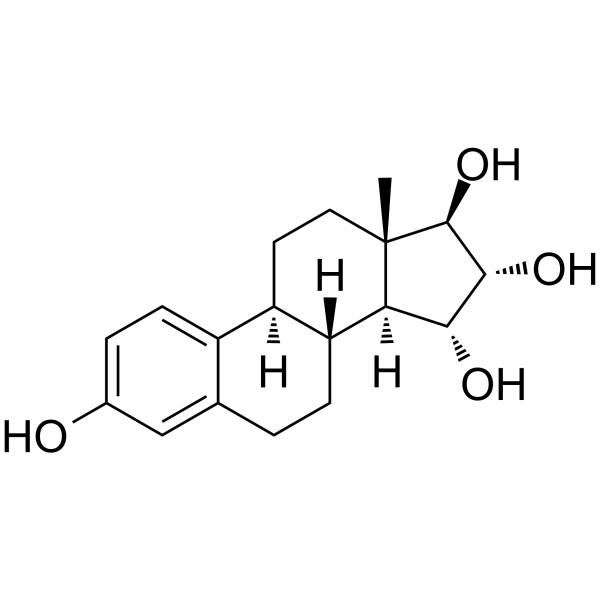
    Estetrol, an orally active estrogen synthesized exclusively during pregnancy by the human fetal liver, is a selective nuclear estrogen receptor modulator. Estetrol binds ERα as well as ERβ (with a fourfold lower affinity). Estetrol increases eNOS expression/activity and NO synthesis in endothelial cells. Estetrol exerts estrogenic actions on the endometrium or the central nervous system but presents antagonistic effects on the breast. Estetrol can be used in contraception and menopausal hormone research .
    Estetrol
  • HY-117778

    Enolase Bacterial Antibiotic Infection Cancer
    SF2312, a natural phosphonate antibiotic (Antibiotic), is a highly potent Enolase inhibitor with IC50s of 37.9 nM and 42.5 nM for human recombinant ENO1 and ENO2, respectively. SF2312 is active against bacteria under anaerobic conditions .
    SF2312
  • HY-B0531

    COX Phosphodiesterase (PDE) NF-κB NO Synthase Prostaglandin Receptor Infection Neurological Disease Inflammation/Immunology Cancer
    Triflusal is an orally bioavailable, blood-brain barrier-permeable dual Cyclooxygenase-1 (COX-1)/cAMP phosphodiesterase inhibitor. Triflusal inhibits platelet aggregation, NF-κB activation, iNOS activity, and prostaglandin synthesis in ischaemic tissue. Triflusal stimulates neutrophil nitric oxide production, eNOS protein expression, and cNOS activity. Triflusal alleviates cerebral ischemic injury in rats and ameliorates pathological lesions and related gene expression in transgenic Alzheimer’s disease models. Triflusal can be used for the research of thromboembolic/ischemic cardiovascular and cerebrovascular diseases, and Alzheimer’s disease .
    Triflusal
  • HY-12119
    GW274150
    2 Publications Verification

    NO Synthase Neurological Disease Inflammation/Immunology
    GW274150 is a potent, selective, orally active and NADPH-dependent inhibitor of human inducible nitric oxide synthase (iNOS) (IC50=2.19 μM; Kd=40 nM) and rat iNOS (ED50=1.15 μM). GW274150 also displays less potency for both humans or rats endothelial NOS (eNOS) and neuronal NOS (nNOS). GW274150 exerts a protective role in an acute model of lung injury inflammation .
    GW274150
  • HY-NP203

    HDL (human)

    Apolipoprotein NO Synthase LPL Receptor Akt PI3K p38 MAPK Neurological Disease Metabolic Disease Inflammation/Immunology Cancer
    High density lipoprotein (human) (HDL (human)) is a human-derived high-density lipoprotein. High density lipoprotein can cross the blood-brain barrier, and partially acts on endothelial nitric oxide synthase (eNOS) by activating surface receptors such as SR-B1 and S1P3R, as well as intracellular signaling cascades involving Akt, PI3K and MAPK, thereby inducing the production of NO in endothelial cells. High density lipoprotein (human) can be used in research related to type 2 diabetes, Alzheimer's disease, cancer and atherosclerosis .
    High density lipoprotein (human)
  • HY-W003969

    Ascensil; 2-Amino-4-methylpyridine

    NO Synthase Inflammation/Immunology
    Aminopicoline (Ascensil) is a potent and non-selective inhibitor of nitric oxide synthase (NOS) isoenzymes (iNOS, nNOS, eNOS). Aminopicoline competes with arginine at the substrate-binding site of nitric oxide synthase, reduces cellular nitric oxide production, inhibits the elevation of plasma nitrate, increases mean arterial pressure at high doses, and also serves as a basis for radiolabeled ligands to localize nitric oxide synthase binding sites. Aminopicoline can be used in the research of diseases associated with septic shock, joint inflammation, intestinal inflammation, and CNS inflammation .
    Aminopicoline
  • HY-108136A
    Bisindolylmaleimide X hydrochloride
    2 Publications Verification

    BIM-X hydrochloride; Ro31-8425 hydrochloride

    PKC CDK Cardiovascular Disease Inflammation/Immunology Cancer
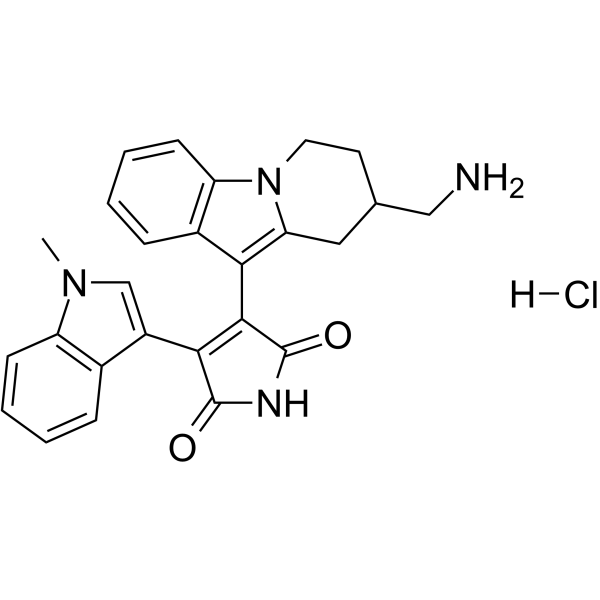
    Bisindolylmaleimide X hydrochloride(Ro 31-8425 hydrochloride, BIM-X hydrochloride) is a cell-penetrating PKC inhibitor. Bisindolylmaleimide X hydrochloride is a potent cyclin-dependent kinase 2 (CDK2) antagonist with an IC50 of 200 nM. Bisindolylmaleimide X hydrochloride inhibits the proliferation of CD4 T cells in vitro. Bisindolylmaleimide X hydrochloride inhibits eNOS-Ser1177 phosphorylation in human embryonic vein endothelial cells. Bisindolylmaleimide X hydrochloride can be used for research on the immune system and cardiovascular diseases .
    Bisindolylmaleimide X hydrochloride
  • HY-118060

    N-Valyltryptophan; Val-Trp

    Angiotensin-converting Enzyme (ACE) Calcium Channel NO Synthase Cardiovascular Disease
    Dipeptide 2 (N-Valyltryptophan) is an orally active, competitive angiotensin-converting enzyme (ACE) inhibitory peptide with an IC50 of 10.50 μM. Dipeptide 2 reduces intracellular Calcium ions. Dipeptide 2 significantly increases the content of NO, inhibits the production of ET-1, and induces the phosphorylation of eNOS. Dipeptide 2 decreases the systolic and diastolic blood pressure of spontaneously hypertensive rats .
    Dipeptide 2
  • HY-N7690

    Calcium Channel Cardiovascular Disease Metabolic Disease
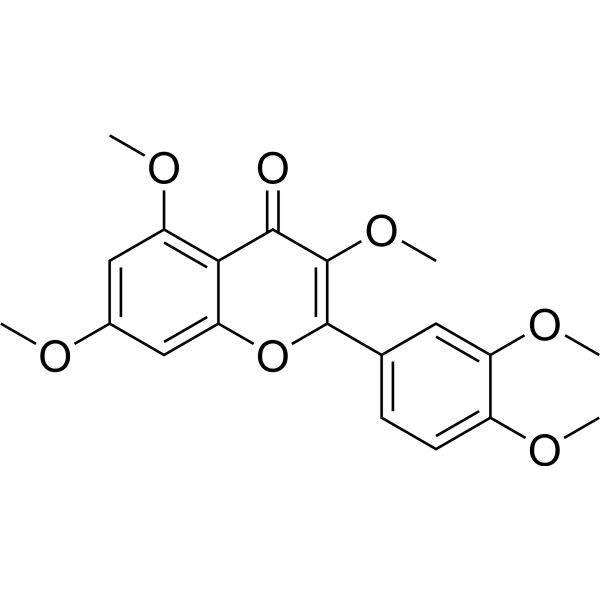
    3,5,7,3’,4’-Pentamethoxyflavone is a Ca 2+ channel inhibitor. 3,5,7,3’,4’-Pentamethoxyflavone can protect DNA from oxidative damage. 3,5,7,3’,4’-Pentamethoxyflavone can induce relaxation of the human corpus cavernosum through calcium mobilization-related mechanisms. 3,5,7,3’,4’-Pentamethoxyflavone can promote the expression of eNOS and cystathionine gamma lyase CSE proteins in middle-aged male rats and regulate vascular function. 3,5,7,3’,4’-Pentamethoxyflavone can be used in research related to diabetes and cardiovascular diseases .
    3,5,7,3′,4′-Pentamethoxyflavone
  • HY-12119A
    GW274150 phosphate
    2 Publications Verification

    NO Synthase Neurological Disease Inflammation/Immunology
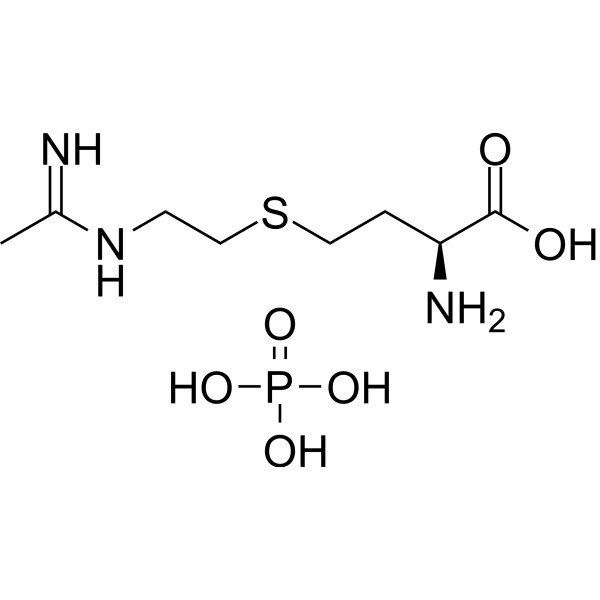
    GW274150 phosphate is a potent, selective, orally active and NADPH-dependent inhibitor of human inducible nitric oxide synthase (iNOS) (IC50=2.19 μM; Kd=40 nM) and rat iNOS (ED50=1.15 μM). GW274150 phosphate displays less potency for both humans or rats endothelial NOS (eNOS) and neuronal NOS (nNOS). GW274150 phosphate exerts a protective role in an acute model of lung injury inflammation .
    GW274150 phosphate
  • HY-W007524
    2-Aminoquinoline
    1 Publications Verification

    2-Quinolinamine

    NO Synthase Orthopoxvirus Infection Neurological Disease
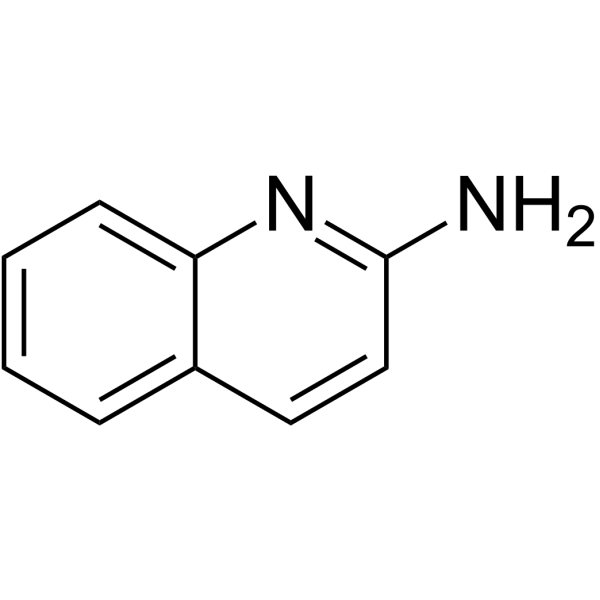
    2-Aminoquinoline (2-Quinolinamine) is a promising compound as bioavailable nNOS inhibitor but suffers from low human nNOS inhibition, low selectivity versus human eNOS, and significant binding to other CNS targets. 2-Aminoquinoline exhibits antiviral activity against the vaccinia virus. 2-Aminoquinoline has the potential for the research of antineurodegenerative agents .
    2-Aminoquinoline
  • HY-168376

    9(10)-Nitrated oleic acid

    PPAR ERK Akt NO Synthase Metabolic Disease Inflammation/Immunology
    9 (10)-Nitrooleate (9(10)-Nitrated oleic acid) is an endogenous lipid signaling mediator with vasoprotective effects. 9 (10)-Nitrooleate enhances enzymatic activity and improves nitric oxide bioavailability by inducing phosphorylation of Akt and ERK1/2, regulating the multi-site phosphorylation status of eNOS and optimizing its interaction with Hsp90. 9 (10)-Nitrooleate also activates PPARα, PPARδ and PPARγ receptors, thereby regulating adipogenesis, glucose uptake and inflammation-related gene expression, and exhibits immunosuppressive effects by inhibiting neutrophil migration and cytokine secretion. 9 (10)-Nitrooleate is widely used in studies of sepsis and related inflammatory diseases .
    9(10)-Nitrooleate
  • HY-P0316

    Thrombin NO Synthase Cardiovascular Disease
    TP508 is a 23-amino acid nonproteolytic thrombin peptide that represents a portion of the receptor-binding domain of thrombin molecule. TP508 activates endothelial NO synthase (eNOS) and stimulates production of NO in human endothelial cells. TP508 activates endothelial cells and stem cells to revascularize and regenerate tissues .
    TP508
  • HY-P0316A

    Thrombin NO Synthase Cardiovascular Disease
    TP508 TFA is a 23-amino acid nonproteolytic thrombin peptide that represents a portion of the receptor-binding domain of thrombin molecule. TP508 TFA activates endothelial NO synthase (eNOS) and stimulates production of NO in human endothelial cells. TP508 TFA activates endothelial cells and stem cells to revascularize and regenerate tissues .
    TP508 TFA
  • HY-W007524R

    2-Quinolinamine (Standard)

    Reference Standards NO Synthase Orthopoxvirus Infection Neurological Disease
    2-Aminoquinoline (2-Quinolinamine) is a promising compound as bioavailable nNOS inhibitor but suffers from low human nNOS inhibition, low selectivity versus human eNOS, and significant binding to other CNS targets. 2-Aminoquinoline exhibits antiviral activity against the vaccinia virus. 2-Aminoquinoline has the potential for the research of antineurodegenerative agents .
    2-Aminoquinoline (Standard)
  • HY-N7690R

    Reference Standards Calcium Channel Cardiovascular Disease Metabolic Disease
    3,5,7,3’,4’-Pentamethoxyflavone is a Ca2+ channel inhibitor. 3,5,7,3’,4’-Pentamethoxyflavone can protect DNA from oxidative damage. 3,5,7,3’,4’-Pentamethoxyflavone can induce relaxation of the human corpus cavernosum through calcium mobilization-related mechanisms. 3,5,7,3’,4’-Pentamethoxyflavone can promote the expression of eNOS and cystathionine gamma lyase CSE proteins in middle-aged male rats and regulate vascular function. 3,5,7,3’,4’-Pentamethoxyflavone can be used in research related to diabetes and cardiovascular diseases .
    3,5,7,3′,4′-Pentamethoxyflavone (Standard)
  • HY-RS04381

    Small Interfering RNA (siRNA) Others

    ENO4 Human Pre-designed siRNA Set A contains three designed siRNAs for ENO4 gene (Human), as well as a negative control, a positive control, and a FAM-labeled negative control.

    ENO4 Human Pre-designed siRNA Set A
    ENO4 Human Pre-designed siRNA Set A
  • HY-RS04380

    Small Interfering RNA (siRNA) Others

    ENO3 Human Pre-designed siRNA Set A contains three designed siRNAs for ENO3 gene (Human), as well as a negative control, a positive control, and a FAM-labeled negative control.

    ENO3 Human Pre-designed siRNA Set A
    ENO3 Human Pre-designed siRNA Set A
  • HY-RS04378

    Small Interfering RNA (siRNA) Others

    ENO1 Human Pre-designed siRNA Set A contains three designed siRNAs for ENO1 gene (Human), as well as a negative control, a positive control, and a FAM-labeled negative control.

    ENO1 Human Pre-designed siRNA Set A
    ENO1 Human Pre-designed siRNA Set A
  • HY-120865

    NO Synthase Inflammation/Immunology
    1,3-PBIT is a potent inhibitor of iNOS with a Ki of 47 nM compared to Ki values for eNOS and nNOS are 9 and 0.25 μM, respectively, for the purified human enzymes. Its inhibition in whole cells is greatly diminished, presumably to poor membrane permeability.
    1,3-PBIT dihydrobromide
  • HY-170236

    NO Synthase Neurological Disease
    nNOS-IN-5 (Compound 9) is a potent human neuronal NOS (nNOS) inhibitor (Ki = 22 nM). nNOS-IN-5 exhibits excellent selectivity, with a 900-fold preference for human nNOS over human endothelial NOS (eNOS). nNOS-IN-5 can be used for neurodegenerative diseases study, such as Alzheimer's disease and Parkinson’s disease .
    nNOS-IN-5
  • HY-18732AR

    Tilarginine acetate (Standard); Methylarginine acetate (Standard)

    NO Synthase Endogenous Metabolite Reference Standards Cardiovascular Disease Cancer
    L-NMMA (acetate) (Standard) is the analytical standard of L-NMMA (acetate). This product is intended for research and analytical applications. L-NMMA acetate is a nitric oxide synthase inhibitor of all NOS isoforms including NOS1, NOS2, and NOS3. The Ki values for nNOS (rat), eNOS (human), and iNOS (mouse) are approximately 0.18, 0.4, and 6 μM, respectively.
    L-NMMA acetate (Standard)
  • HY-12119B

    NO Synthase Neurological Disease Inflammation/Immunology
    GW274150 (dihydrochloride) is a potent, selective, orally active and NADPH-dependent inhibitor of human inducible nitric oxide synthase (iNOS) (IC50=2.19 μM; Kd=40 nM) and rat iNOS (ED50=1.15 μM). GW274150 (dihydrochloride) displays less potency for both humans or rats endothelial NOS (eNOS) and neuronal NOS (nNOS). GW274150 (dihydrochloride) exerts a protective role in an acute model of lung injury inflammation .
    GW274150 dihydrochloride
  • HY-15731S1

    Isotope-Labeled Compounds NO Synthase Endogenous Metabolite Estrogen Receptor/ERR Cardiovascular Disease
    Estetrol-d4 (Major) is the deuterium labeled Estetrol (HY-15731). Estetrol, an orally active estrogen synthesized exclusively during pregnancy by the human fetal liver, is a selective nuclear estrogen receptor modulator. Estetrol binds ERα as well as ERβ (with a fourfold lower affinity). Estetrol increases eNOS expression/activity and NO synthesis in endothelial cells. Estetrol exerts estrogenic actions on the endometrium or the central nervous system but presents antagonistic effects on the breast. Estetrol can be used in contraception and menopausal hormone research .
    Estetrol-d4 (Major)
  • HY-181711

    NO Synthase Neurological Disease Cancer
    nNOS-IN-6 is a human neuronal nitric oxide synthase (hnNOS) inhibitor with a human hnNOS Ki of 16 nM, ~1800-fold selectivity over human eNOS, ~2900-fold selectivity over human iNOS, and a rat nNOS Ki of 34 nM.nNOS-IN-6 exhibits high effective permeability in PAMPA-BBB assays, crosses the blood-brain barrier, and shows sustained systemic exposure, low clearance, and robust brain penetration in mouse in vivo pharmacokinetic studies.nNOS-IN-6 can be used for the research of neurodegenerative diseases, melanoma .
    nNOS-IN-6
  • HY-RS04379

    Small Interfering RNA (siRNA) Others

    ENO2 Human Pre-designed siRNA Set A contains three designed siRNAs for ENO2 gene (Human), as well as a negative control, a positive control, and a FAM-labeled negative control.

    ENO2 Human Pre-designed siRNA Set A
    ENO2 Human Pre-designed siRNA Set A
  • HY-P991972

    Enolase Cancer
    Anti-ENO1 Antibody is an anti-ENO1 antibody. Recommend Isotype Controls: Human IgG1 kappa, Isotype Control (HY-P99001).
    Anti-ENO1 Antibody
  • HY-181545A

    NO Synthase IFNAR Cancer
    nNOS-IN-2 trihydrochloride is a blood-brain barrier-permeable nitric oxide synthase (nNOS) inhibitor. nNOS-IN-2 trihydrochloride exhibits Ki values of 1.7 nM and 2.3 nM against human and rat nNOS, respectively, and shows high selectivity for human eNOS and iNOS. nNOS-IN-2 trihydrochloride also effectively reduces PD-L1 expression in human melanoma cells under both basal conditions and IFN-γ exposure. nNOS-IN-2 trihydrochloride can be used for the study of melanoma and related signaling pathways .
    nNOS-IN-2 trihydrochloride
  • HY-108136

    BIM-X; Ro31-8425

    PKC CDK Cardiovascular Disease Inflammation/Immunology
    Bisindolylmaleimide X (Ro 31-8425, BIM-X) is a cell-penetrating PKC inhibitor. Bisindolylmaleimide X is a potent cyclin-dependent kinase 2 (CDK2) antagonist with an IC50 of 200 nM. Bisindolylmaleimide X inhibits the proliferation of CD4 T cells in vitro. Bisindolylmaleimide X inhibits eNOS-Ser1177 phosphorylation in human embryonic vein endothelial cells. Bisindolylmaleimide X can be used for research on the immune system and cardiovascular diseases .
    Bisindolylmaleimide X
  • HY-182519

    NO Synthase Neurological Disease
    HMN-1180 is a selective, competitive neuronal nitric oxide synthase (nNOS) inhibitor with a Ki value of 5.4 μM against rat nNOS. HMN-1180 exerts no significant effect on endothelial nitric oxide synthase (eNOS) or inducible nitric oxide synthase (iNOS). HMN-1180 inhibits nitric oxide production. HMN-1180 can be used for the study of nNOS-related neuronal functional physiology .
    HMN-1180

Inquiry Online

Your information is safe with us. * Required Fields.

Salutation


Country or Region *

Applicant Name *


Organization Name *

Department *


Email Address *


Product Name *

Cat. No.


Requested quantity *

Phone Number *


Remarks

Inquiry Online

Inquiry Information

Product Name:
Cat. No.:
Quantity:
MCE Japan Authorized Agent:

