



1. Search Result
Search Result
Pathways Recommended: Stem Cell/Wnt Cell Cycle/DNA Damage
Results for "

human lymphocytic cells

" in MedChemExpress (MCE) Product Catalog:

21

Inhibitors & Agonists

5

Inhibitory Antibodies

4

Natural
Products

2

Oligonucleotides

Cat. No. Product Name Target Research Areas Chemical Structure
  • HY-150105

    BMF-219; Menin-MLL inhibitor 21

    Epigenetic Reader Domain Metabolic Disease Inflammation/Immunology Cancer
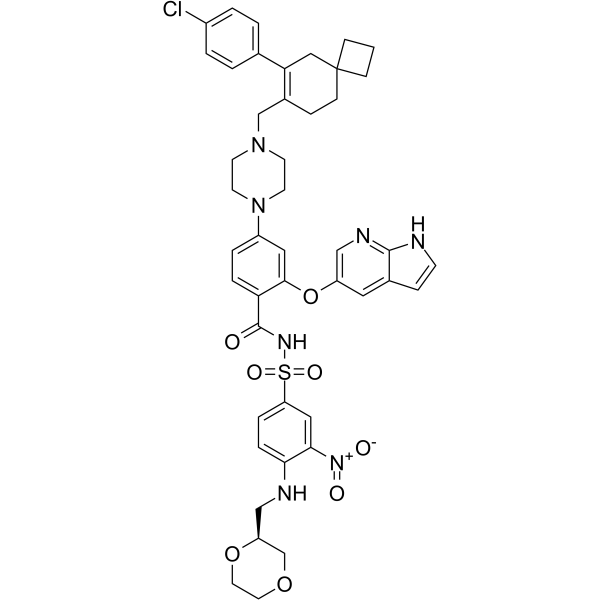
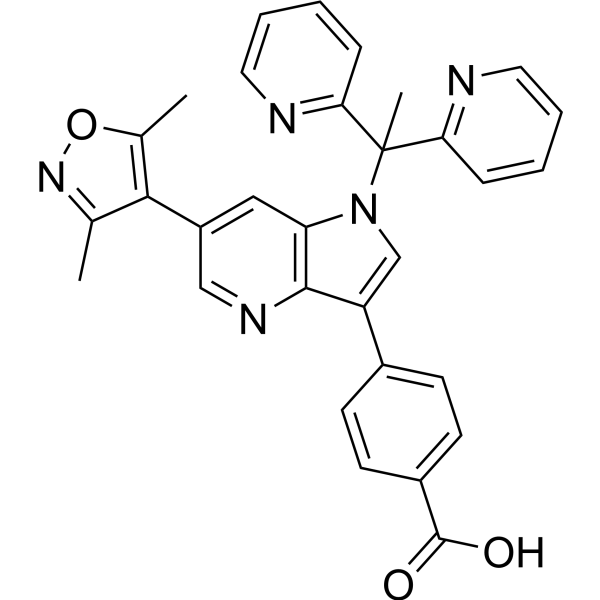
    Icovamenib (BMF-219) is a selective, orally active, irreversible Menin inhibitor. Icovamenib forms a stable and irreversible covalent bond with Menin. Icovamenib promotes selective and controlled proliferation of beta cells and improvement of beta cell function in ex vivo human islet cultures. Icovamenib enhances glycemic control in animal diabetic models. Icovamenib induces a dose-dependent enhancement in insulin secretion potentiated by the GLP-1 RA. Icovamenib can be used for the study of multiple hematologic malignancies, solid tumors, and diabetes mellitus, such as diffuse large B-cell lymphoma (DLBCL), multiple myeloma (MM) and chronic lymphocytic leukemia and type 2 diabetes .
    Icovamenib
  • HY-P9961

    GSK1841157; OMB-157

    CD20 Cancer
    Ofatumumab is a fully human anti-CD20 monoclonal antibody that induces antibody-dependent cell-mediated cytotoxicity (ADCC) and complement-dependent cytotoxicity (CDC) in CD20-expressing B lymphocytes. Ofatumumab has strong lytic activity against CD20-positive B lymphocytes and eliminates CD20-positive tumor cells through ADCC and CDC. Ofatumumab is particularly effective against drug-resistant cells with low CD20 expression and can be applied to the research of chronic lymphocytic leukemia (CLL) .
    Ofatumumab
  • HY-160041

    NOX-A12

    CXCR Cancer
    Olaptesed pegol (NOX-A12) is a L-oligoribonucleotide aptamer targeting CXCL12 based on a pegylated structure. Olaptesed pegol neutralizes CXCL12, and CXCL12 inhibition mobilizes chronic lymphocytic leukemia cells into the circulation and prevents their homing into the protective microenvironment. Olaptesed pegol can enhances the infiltration of human primary T cells and NK cells and inhibit tumor growth companied with anti-PD-1 antibody. Olaptesed pegol can be used for researches of colon cancer and lymphocytic leukemia .
    Olaptesed pegol
  • HY-160041A

    NOX-A12 sodium

    CXCR Cancer
    Olaptesed pegol (NOX-A12) sodium is a L-oligoribonucleotide aptamer targeting CXCL12 based on a pegylated structure. Olaptesed pegol sodium neutralizes CXCL12, and CXCL12 inhibition mobilizes chronic lymphocytic leukemia cells into the circulation and prevents their homing into the protective microenvironment. Olaptesed pegol sodium can enhances the infiltration of human primary T cells and NK cells and inhibit tumor growth companied with anti-PD-1 antibody. Olaptesed pegol sodium can be used for researches of colon cancer and lymphocytic leukemia .
    Olaptesed pegol sodium
  • HY-137438

    TG-1701

    Btk Cancer
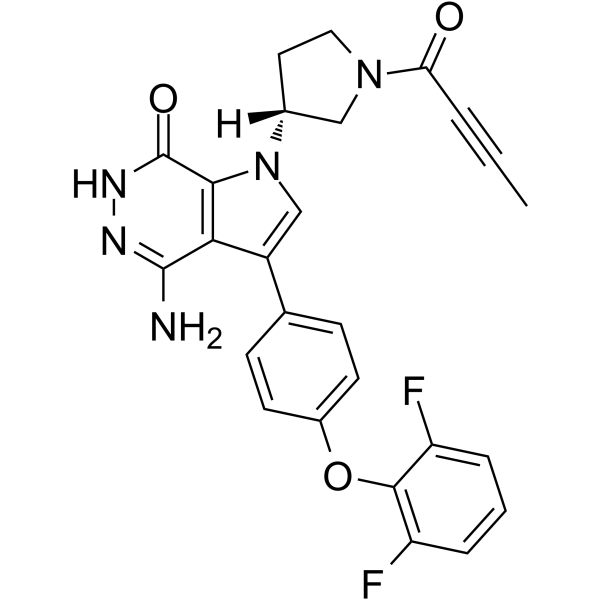
    Edralbrutinib (TG-1701) is a highly selective, orally available irreversible BTK inhibitor, with an EC50 of 6.70 nM and a Kd of 3 nM against human BTK. Edralbrutinib inhibits downstream signaling of the B cell receptor, induces dephosphorylation of Ikaros Ser442/445, promotes nuclear exclusion of Ikaros, attenuates Ikaros gene signatures, and exerts anti-tumor activity. Edralbrutinib can be used in research related to B-cell non-Hodgkin lymphoma, chronic lymphocytic leukemia, mantle cell lymphoma, follicular lymphoma, and diffuse large B-cell lymphoma .
    Edralbrutinib
  • HY-172918

    Influenza Virus Arenavirus Infection
    VV261 is an orally active prodrug of 4'-fluorouridine. VV261 inhibits viral RNA-dependent RNA polymerase. VV261 exhibits antiviral activity against CCHFV, SFTSV and LCMV. VV261 can be used in research related to viral infections .
    VV261
  • HY-N6065
    Praeruptorin A
    3 Publications Verification

    (+)-Praeruptorin A

    Calcium Channel Drug Isomer Cytochrome P450 iGluR Apoptosis Cardiovascular Disease Neurological Disease
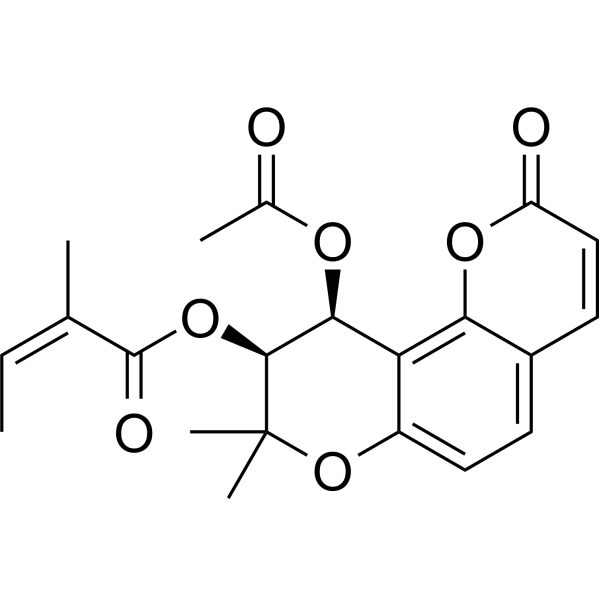
    Praeruptorin A ((+)-Praeruptorin A) is an orally active isomer of (±)-Praeruptorin A (HY-N0081). Praeruptorin A also acts as a Calcium channel blocker. Praeruptorin A can be isolated from Peucedanum. Praeruptorin A serves as a substrate for CYP3A4. Praeruptorin A downregulates NMDA receptors containing GluN2B and inhibits neuronal Apoptosis. Praeruptorin A mediates vasodilation, inhibits vascular hypertrophy and reduces blood pressure. Praeruptorin A can be used in research related to neurological diseases, myocardial ischemia, heart failure, exertional angina, renovascular hypertension and spontaneous hypertension .
    Praeruptorin A
  • HY-P99442

    Hu1D10

    Apoptosis Inflammation/Immunology Cancer
    Apolizumab (Hu1D10) is a humanized monoclonal anti-Human leukocyte antigen-DR beta-chain antibody. Apolizumab can mediate apoptosis of chronic lymphocytic leukemia (CLL) cells in vitro .
    Apolizumab
  • HY-113700

    Antibiotic Cancer
    PD 116779 is an Antibiotic with anticancer activity. PD 116779 demonstrates moderate cytotoxicity against L1210 lymphocytic leukemia and HCT-8 human colon adenocarcinoma cell lines with IC50 values of 3.55x10 -7 and 4.08x10 -7 M, respectively .
    PD 116779
  • HY-113578

    Antibiotic Bacterial Infection Cancer
    PD 116152 is a phenazine Antibiotic with antimicrobial and antitumor activity. PD 116152 possesses cytotoxic activity against L1210 lymphocytic leukemia and human colon adenocarcinoma (HCT-8) cells with IC50 values of 5.2 x 10 -7 M and 7.1 x 10 -7 M, respectively. PD 116152 is promising for research of P388 lymphocytic leukemia .
    PD 116152
  • HY-161335

    MAP4K Interleukin Related IFNAR Cancer
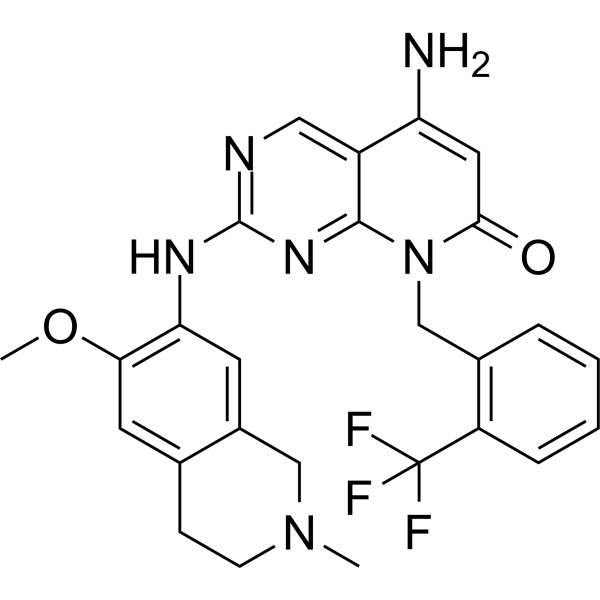
    HPK1-IN-43 (compound 9f) is a HPK1 kinase inhibitor with the IC50 value of 0.32 nM. HPK1-IN-43 inhibits the phosphorylation of the downstream protein SLP-76 and enhances the secretion of interleukin-2 (IL-2) and interferon-γ (IFN-γ). HPK1-IN-43 can be used in cancer research .
    HPK1-IN-43
  • HY-P991590

    MHC Apoptosis JNK Reactive Oxygen Species (ROS) Cancer
    1D09C3 is a fully human anti-HLA-DR monoclonal antibody. 1D09C3 induces apoptosis and cell death involving a cascade of events, including ROS generation, JNK activation, mitochondrial membrane depolarization, and AIF release from mitochondria. 1D09C3 shows potent anti-tumor activity and increases overall survival and median survival in JVM-2 cells and GRANTA-519 cells xenograft mice models. 1D09C3 can be used for the researches of cancer, such as chronic lymphocytic leukemia (CLL) .
    1D09C3
  • HY-139090

    28-O-Acetyl-3-Oxobetulin; 3-oxo-28-O-Acetylbetulin

    Bacterial HIV Drug Derivative Cancer
    3-Oxobetulin acetate (28-O-Acetyl-3-Oxobetulin; 3-oxo-28-O-Acetylbetulin) is a derivative of betulin (HY-N0083), a cholesterol biosynthesis inhibitor. 3-Oxobetulin acetate inhibits the growth of P388 murine lymphocytic leukemia cells (EC50=0.12 μg/mL) and human MCF-7 breast cancer, SF-268 CNS cancer, H460 lung cancer, and KM20L2 colon cancer cells (GI50s=8, 10.6, 5.2, and 12.7 μg/mL), but not BxPC-3 pancreatic cancer cells or DU145 prostate cancer cells (GI50s=>10 μg/mL for both). 3-Oxobetulin acetate inhibits the replication of X4-tropic recombinant HIV (NL4.3-Ren) in MT-2 lymphoblastoid cells (IC50=13.4 μM). 3-Oxobetulin acetate is also effective against Listeria donovani amastigotes.
    3-Oxobetulin acetate
  • HY-N18086

    Others Cancer
    Bruceanic acid D is a quassinoid compound and cytotoxic agent that can be isolated from the xylem powder of Brucea antidysenterica. Bruceanic acid D specifically inhibits P-388 lymphocytic leukemia cells but shows no activity against human lung cancer cells and human colon cancer cells. Bruceanic acid D can be used in studies related to P-388 lymphocytic leukemia .
    Bruceanic acid D
  • HY-N11719

    Bacterial Infection
    Clusin is a lignan that can be found in Hernandia nymphaeifolia. Clusin inhibits growth of the Gram-negative pathogen Neisseria gonorrhoeae. Clusin is inactive against murine lymphocytic leukemia cells and human cancer cells .
    Clusin
  • HY-165375

    Others Cancer
    Plenolin is an anticancer agent. Plenolin exhibits inhibitory activity against human epidermoid carcinoma cells. Plenolin shows in vivo antitumor activity against ascites carcinosarcoma and lymphocytic leukemia in rodent models. Plenolin can be used for research related to ascites tumors and leukemia .
    Plenolin
  • HY-P992439

    CXCR Cancer
    PF-06747143 is recombinant anti-human antibody targeting CXCR4. PF-06747143 blocks CXCL12-induced calcium flux, F-actin polymerization, chemotaxis, cell migration, and leukemic cell bone marrow homing. PF-06747143 reduces tumor burden and improves survival in mouse models of hematologic malignancies. PF-06747143 can be used for the research of chronic lymphocytic leukemia, acute myeloid leukemia, and hematologic malignancies .
    PF-06747143
  • HY-N19744

    HIV Reverse Transcriptase Infection
    (-)-Calanolide B is a non-nucleoside reverse transcriptase (NNRT) inhibitor with an IC50 of 0.5 mM against HIV-1 RT. (-)-Calanolide B inhibits the replication of HIV-1 IIIb/LAV. (-)-Calanolide B is applicable to research related to HIV-1 infection .
    (-)-Calanolide B-1
  • HY-111165

    HSP NF-κB ERK JNK PDGFR c-Myc DNA/RNA Synthesis Apoptosis Inflammation/Immunology Cancer
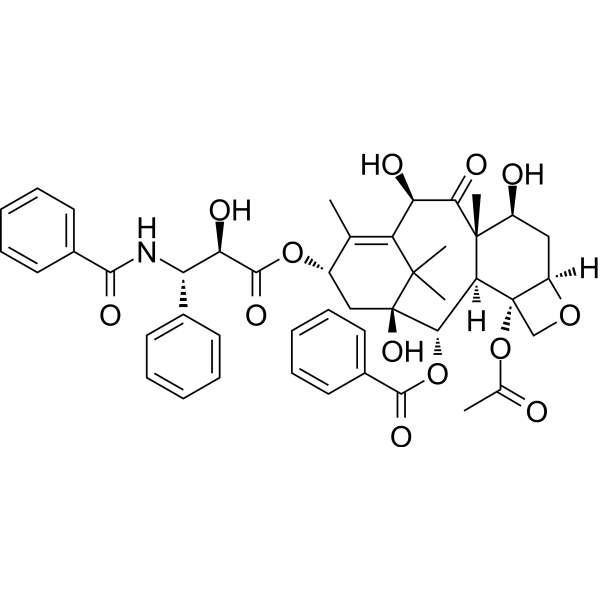
    SNX-7081 is an Hsp90 inhibitor with Ki and IC50 values of 26 nM and 44 nM, respectively. SNX-7081 blocks the nuclear translocation of NF-κB, inhibits the production of pro-inflammatory cytokines, attenuates the ERK/JNK and PDGF signaling pathways, and suppresses LPS (HY-D1056)-induced nitric oxide production. SNX-7081 inhibits DNA repair, induces G2/M cell cycle arrest, and triggers apoptosis via downregulation of MYC/nucleolin and activation of Fas. SNX-7081 can be used in research related to rheumatoid arthritis and cancer .
    SNX-7081
  • HY-182374

    Dipeptidyl Peptidase Apoptosis Cancer
    AX8819 is a selective dipeptidyl peptidase II (DPP II) inhibitor with an IC50 of 0.88 nM. AX8819 induces caspase-dependent apoptosis. AX8819 exhibits low non-specific toxicity toward proliferating T cells. AX8819 can be used for the research of B cell chronic lymphocytic leukemia .
    AX8819
  • HY-P991896

    AT14-012

    Transmembrane Glycoprotein Inflammation/Immunology Cancer
    AT1412 is a CD9-binding antibody. AT1412 binds to the tetraspanin protein CD9 and modulates CD9 function by enhancing T cell adhesion to endothelial cells (HUVECs) and transendothelial migration. AT1412 binds to B-ALL cell lines but not to T-ALL. AT1412 induces antibody-dependent cellular cytotoxicity in B-ALL cell lines. AT1412 binds to melanoma cells, B-ALL, gastric cancer, colorectal cancer, and pancreatic cancer cells [1] .
    AT1412

Inquiry Online

Your information is safe with us. * Required Fields.

Salutation


Country or Region *

Applicant Name *


Organization Name *

Department *


Email Address *


Product Name *

Cat. No.


Requested quantity *

Phone Number *


Remarks

Inquiry Online

Inquiry Information

Product Name:
Cat. No.:
Quantity:
MCE Japan Authorized Agent:

