

23 Results for "

hyperoxaluria

" in MedChemExpress (MCE) Product Catalog:
Products (23)

23 Results for "hyperoxaluria" in MCE Product Catalog:

1
1 Cited Publications
Cat. No.: HY-W018035
CAS No.: 473-81-4
Synonyms: Glyceric Acid (20% in Water,ca.2 mol/L)
DL-Glyceric Acid (20% in water) is a metabolite of plants and mammals and exists in two configurations, D and L .
loading...
    loading...
1
1 Cited Publications
Cat. No.: HY-132588
CAS No.: 1834610-13-7
Synonyms: ALN-G01
Lumasiran (ALN-G01), a siRNA product, reduces hepatic oxalate production by targeting glycolate oxidase. By silencing the gene encoding glycolate oxidase, Lumasiran depletes glycolate oxidase and thereby inhibits the synthesis of oxalate, which is the toxic metabolite that is directly associated with the clinical manifestations of Primary hyperoxaluria type 1 (PH1) .
loading...
    loading...
1
1 Cited Publications
Cat. No.: HY-132606A
CAS No.: 2247026-22-6
Synonyms: DCR-PHXC sodium
Nedosiran (DCR-PHXC) sodium is an RNA interference (RNAi) targeting lactate dehydrogenase (LDH). Nedosiran sodium represents an impactful potential therapeutic for primary hyperoxaluria (PH) with end-stage renal disease (ESRD). Nedosiran sodium is a GalNAc-dsRNA conjugate .
loading...
    loading...
1
1 Cited Publications
Cat. No.: HY-132613
CAS No.: 1834612-06-4
Purity:  99.21%
Lumasiran sodium, an investigational RNA interference (RNAi) therapeutic agent, reduces hepatic oxalate production by targeting glycolate oxidase. Lumasiran sodium reduces urinary oxalate excretion, the cause of progressive kidney failure in primary hyperoxaluria type 1 (PH1) .
loading...
    loading...
1
1 Cited Publications
Cat. No.: HY-142035
CAS No.: 58160-95-5
Purity:  99.70%
N-Propargylglycine is a brain-penetrant and orally active PRODH inhibitor. N-Propargylglycine covalently modifies enzyme-bound FAD and active site lysine, causing enzyme structural distortion, protein decay, and irreversible inhibition of proline and 4-hydroxyproline catabolism. N-Propargylglycine induces UPRmt, upregulates mitochondrial chaperones and YME1L1, enhances mitochondrial proteostasis, blocks astrocytic L-proline consumption, and abolishes L-proline’s ATP-maintaining and viability-protective effects. N-Propargylglycine stimulates neural processes, increases brain proline, hydroxyproline, and sarcosine levels, partially normalizes Huntington’s disease whole brain transcriptomes. N-Propargylglycine reduces hyperoxaluria, prevents calcium oxalate stone formation, reduces kidney tubular damage, and restores weight and survival in Grhpr knockout mice. N-Propargylglycine can be used for the research of breast cancer, neurodegenerative disorders, Huntington’s disease, and primary hyperoxaluria type 2 .
loading...
    loading...
1
1 Cited Publications
Cat. No.: HY-132606
CAS No.: 2266591-83-5
Synonyms: DCR-PHXC
Nedosiran (DCR-PHXC) is an RNA interference (RNAi) targeting lactate dehydrogenase (LDH). Nedosiran represents an impactful potential therapeutic for primary hyperoxaluria (PH) with end-stage renal disease (ESRD). Nedosiran is a GalNAc-dsRNA conjugate .
loading...
    loading...
Cat. No.: HY-W019724
CAS No.: 563-96-2
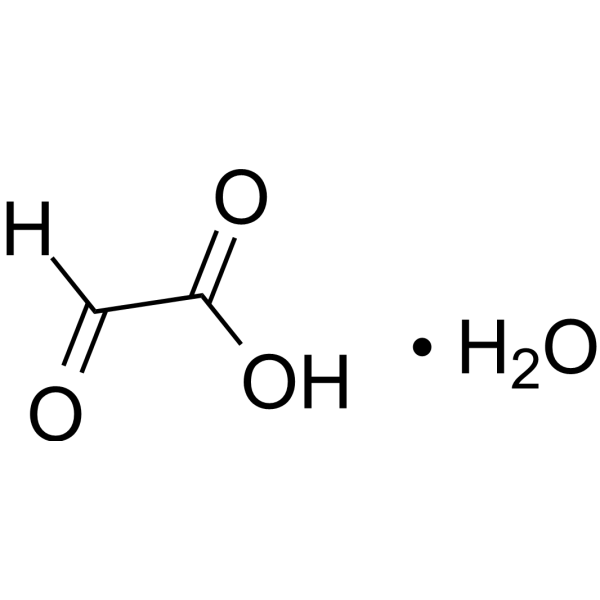
2,2-Dihydroxyacetic acid is an endogenous metabolite, which is the monohydrate of Glyoxylic Acid. 2,2-Dihydroxyacetic acid may participate in the microbial glyoxylate cycle, induce an increase in reactive oxygen species, promote cell differentiation, and modify proteins to form advanced glycation end products (AGEs) (HY-NP165). 2,2-Dihydroxyacetic acid is associated with metabolic diseases such as primary hyperoxaluria .
loading...
    loading...
Cat. No.: HY-156683
CAS No.: 2743436-86-2
Purity:  98.05%
Target:  

Lactate Dehydrogenase

Research Areas:  

Metabolic Disease

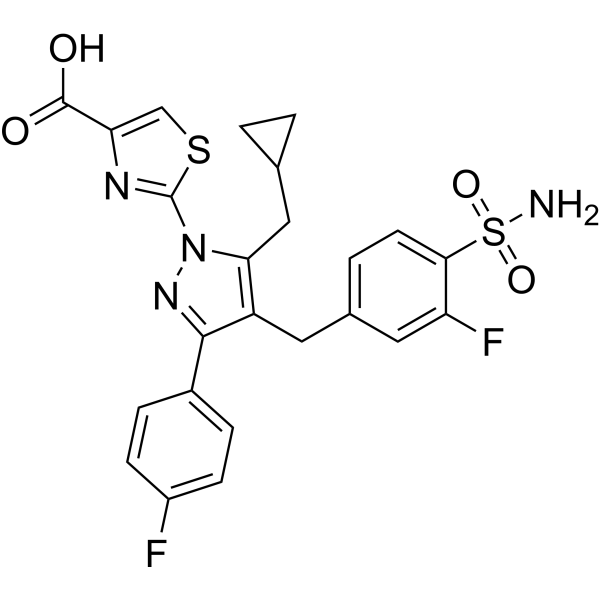
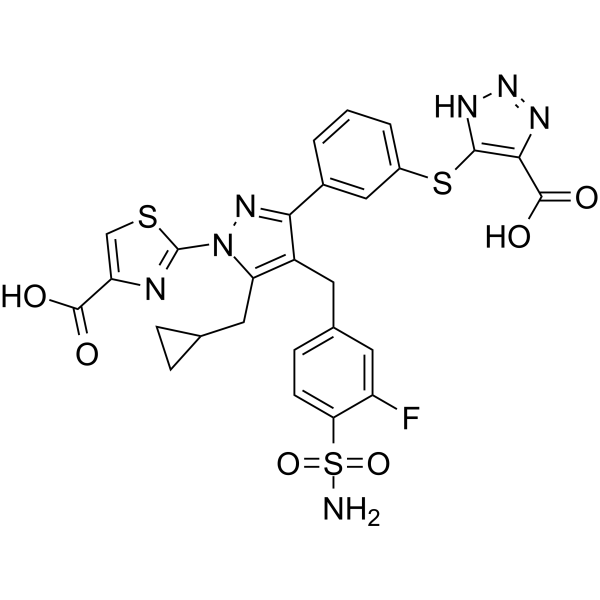
CHK-336 (Example 1) is an orally active LDHA inhibitor (IC50<1 nM). CHK-336 inhibits lactate production in mouse hepatocytes. CHK-336 can be used in the study of hyperoxaluria .
loading...
    loading...
Cat. No.: HY-W088011B
CAS No.: 2836-32-0
Synonyms: Sodium hydroxyacetate, 98%
Sodium glycolate, 98% (Sodium hydroxyacetate, 98%) is an orally active, versatile organic salt . Sodium glycolate, 98% acts as an enzyme activity regulator that increases the activities of glycolate oxidase (GAO) and lactate dehydrogenase (LDH), while reducing the activity of glycolate dehydrogenase (GAD). Sodium glycolate, 98% induces oxalate biosynthesis and causes hyperoxaluria in rats. Sodium glycolate, 98% reduces urinary calcium excretion in male albino rats. Sodium glycolate, 98% can be used in studies related to calcium oxalate urolithiasis and hyperoxaluria .
loading...
    loading...
Cat. No.: HY-139070A
CAS No.: 109175-64-6
Purity:  ≥99.0%
Target:  

Endogenous Metabolite

Research Areas:  

Metabolic Disease

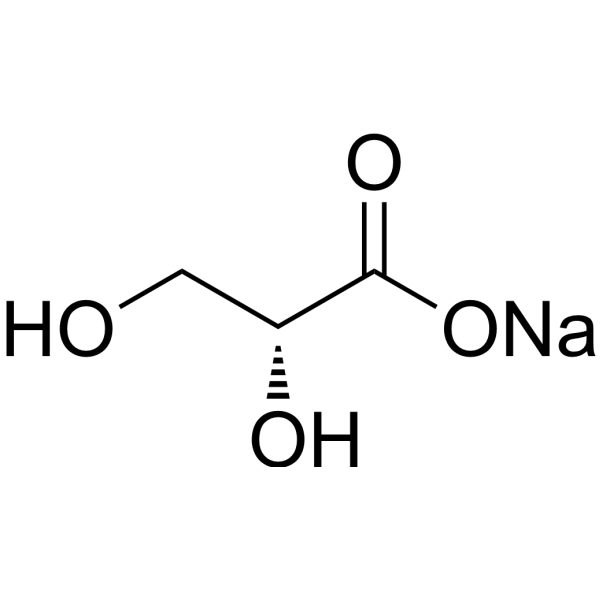
D-Glyceric acid sodium is the sodium form of D-Glyceric acid (HY-139070A). D-Glyceric acid is an endogenous metabolite present in urine that can be used for the research of primary hyperoxaluria type I and glutaric acidemia type 2 .
loading...
    loading...
Cat. No.: HY-113377
CAS No.: 28305-26-2
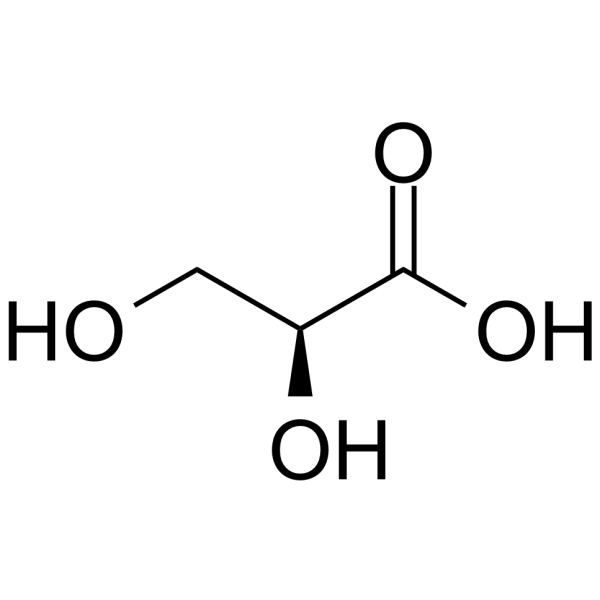
L-Glyceric acid is a mainly urinary metabolite accumulating in rare inherited metabolic disease L-glyceric aciduria. L-Glyceric acid can be used to diagnose primary hyperoxaluria type 2 (PH2). L-Glyceric acid excretion to distinguish PH1 from PH2 .
loading...
    loading...
Cat. No.: HY-147064A
CAS No.: 1187-99-1
DL-4-Hydroxy-2-ketoglutarate is one of the metabolites that is characteristically elevated in the urine of patients with type 3 primary hyperoxaluria (PH3), and it is produced by the accumulation of substrates of mitochondrial 4-hydroxy-2-oxoglutarate aldolase (HOGA). DL-4-Hydroxy-2-ketoglutarate can be used in studies related to PH3 .
loading...
    loading...
Cat. No.: HY-139070
CAS No.: 6000-40-4
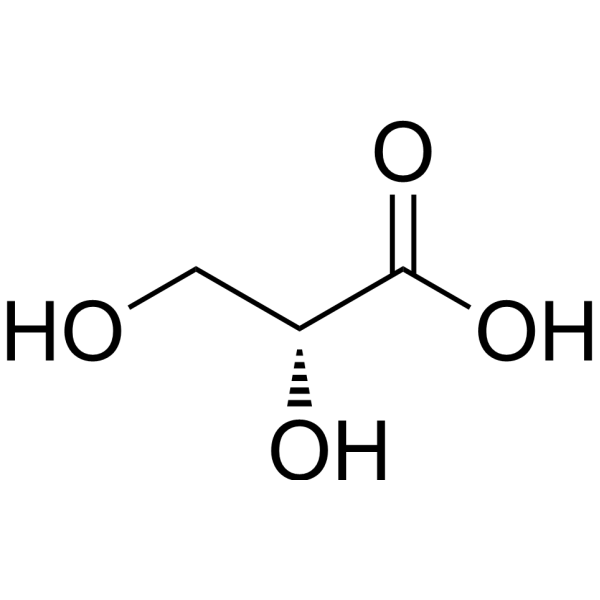
D-Glyceric acid is an endogenous metabolite present in urine that can be used for the research of primary hyperoxaluria type I and glutaric acidemia type 2 .
loading...
    loading...
Cat. No.: HY-147064
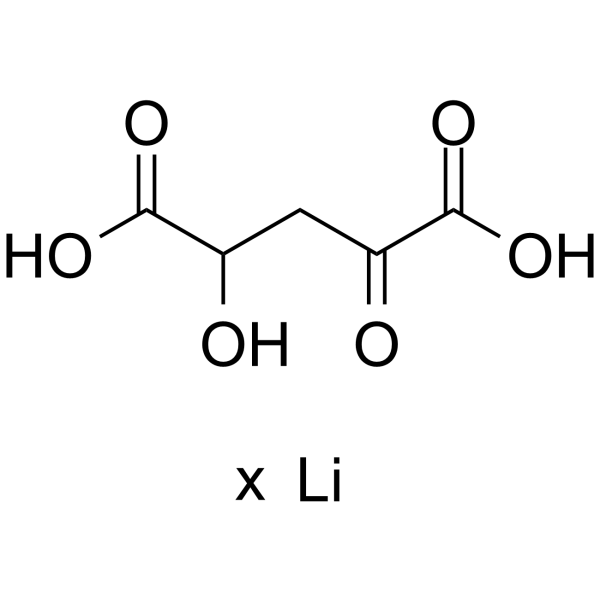
DL-4-Hydroxy-2-ketoglutarate lithium is one of the metabolites that is characteristically elevated in the urine of patients with type 3 primary hyperoxaluria (PH3), and it is produced by the accumulation of substrates of mitochondrial 4-hydroxy-2-oxoglutarate aldolase (HOGA). DL-4-Hydroxy-2-ketoglutarate lithium can be used in studies related to PH3 .
loading...
    loading...
Cat. No.: HY-148610
CAS No.: 893739-96-3
Target:  

Others

Research Areas:  

Metabolic Disease

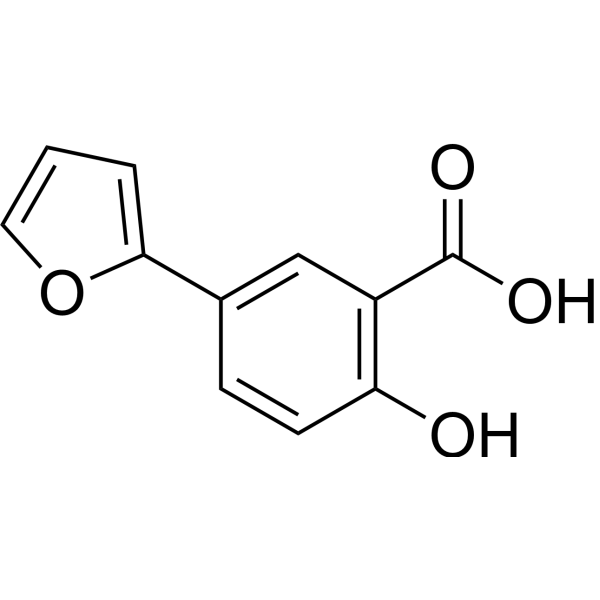
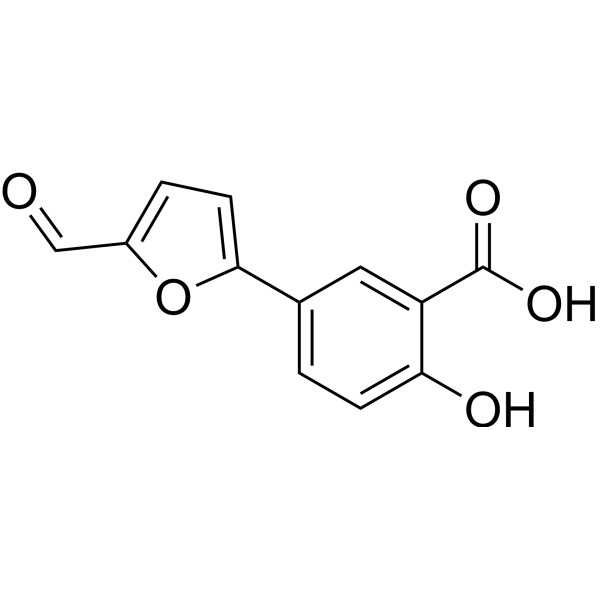
LDH-IN-2, a salicylic acid derivative, is an inhibitor of glycolate oxidase (GO). LDH-IN-2 decreases oxalate output in hyperoxaluric hepatocytes. LDH-IN-2 can be used for research of primary hyperoxaluria type 1 (PH1) .
loading...
    loading...
Cat. No.: HY-W176012
CAS No.: 330977-65-6
Target:  

Others

Research Areas:  

Metabolic Disease

Glycolate oxidase-IN-1(compound 26), a salicylic acid derivative, is a glycolate oxidase (GO) inhibitor with an IC50 of 38.2 μM. Glycolate oxidase-IN-1 has the ability to reduce oxalate production in hyperoxalate hepatocytes and can be used in the study of primary hyperoxaluria type 1 (PH1) .
loading...
    loading...
Cat. No.: HY-115875
CAS No.: 2776148-90-2
Target:  

Lactate Dehydrogenase

Research Areas:  

Metabolic Disease

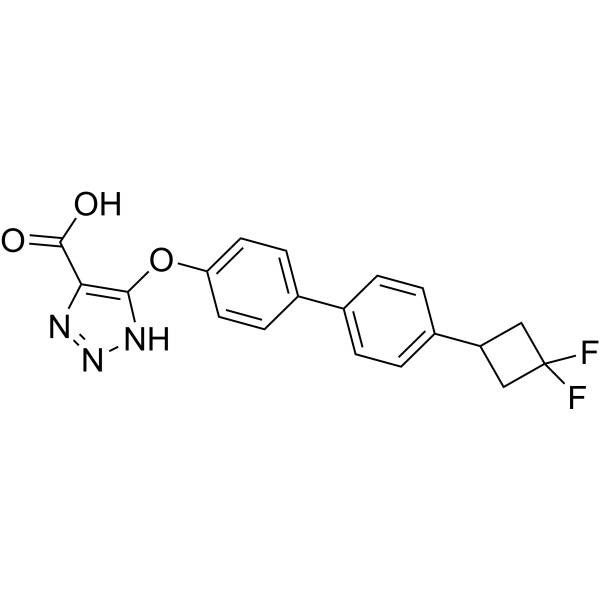
LDHA-IN-5 is a novel, potent, dual GO/LDHA inhibitor for primary hyperoxaluria.
loading...
    loading...
Cat. No.: HY-156648
CAS No.: 2408241-62-1
Target:  

Others

Research Areas:  

Metabolic Disease

Vamagloxistat is glycolate oxidase inhibitor, used to inhibit hyperoxaluria and kidney stones .
loading...
    loading...
Cat. No.: HY-113377A
CAS No.: 146298-95-5
Purity:  ≥99.0%
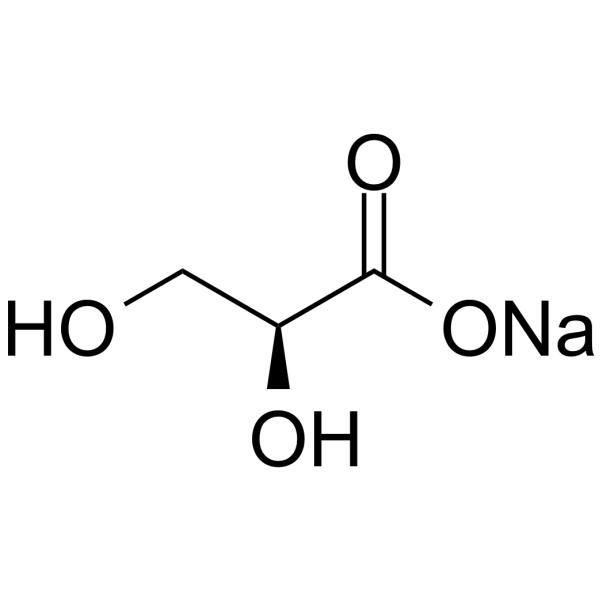
L-Glyceric acid sodium is a mainly urinary metabolite accumulating in rare inherited metabolic disease L-glyceric aciduria. L-Glyceric acid sodium can be used to diagnose primary hyperoxaluria type 2 (PH2). L-Glyceric acid sodium excretion to distinguish PH1 from PH2 .
loading...
    loading...
Cat. No.: HY-159910
Research Areas:  

Cancer

LH1513 is a dioxalate derivative of l-lysine (HY-N0469) that inhibits CaOx crystallization with better activity than citrate and pyruvate. LH1513 has potential preventive activity in hyperoxaluria models and effectively prevents urinary CaOx crystal formation in Agxt knockout mice. AGXT-1 is a mitochondrial protein involved in metabolism .
loading...
    loading...

