1. Search Result
Search Result
Results for "

hyperpigmentation disorders

" in MedChemExpress (MCE) Product Catalog:

7

Inhibitors & Agonists

3

Natural
Products

Cat. No. Product Name Target Research Areas Chemical Structure
  • HY-N3002

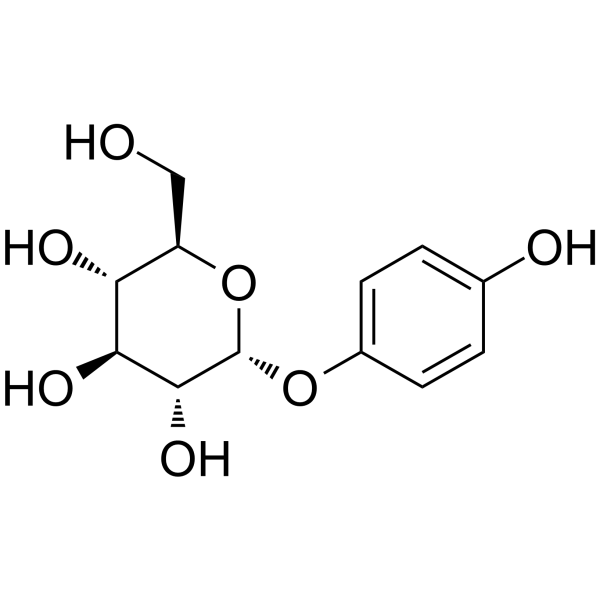
    4-Hydroxyphenyl α-D-glucopyranoside

    Tyrosinase Neurological Disease Metabolic Disease Cancer
    α-Arbutin (4-Hydroxyphenyl α-D-glucopyranoside) is a tyrosinase inhibitor, which is used as an effective skin whiteners. α-Arbutin is promising for research of various diseases such as hyperpigmentation disorders, types of cancers, central nervous system disorders, osteoporosis, diabetes .
    α-Arbutin
  • HY-N3266

    Tyrosinase Phosphatase Cholinesterase (ChE) SARS-CoV PERK JNK p38 MAPK TGF-beta/Smad Apoptosis Reactive Oxygen Species (ROS) AMPK MMP Cardiovascular Disease Infection Neurological Disease Inflammation/Immunology Cancer
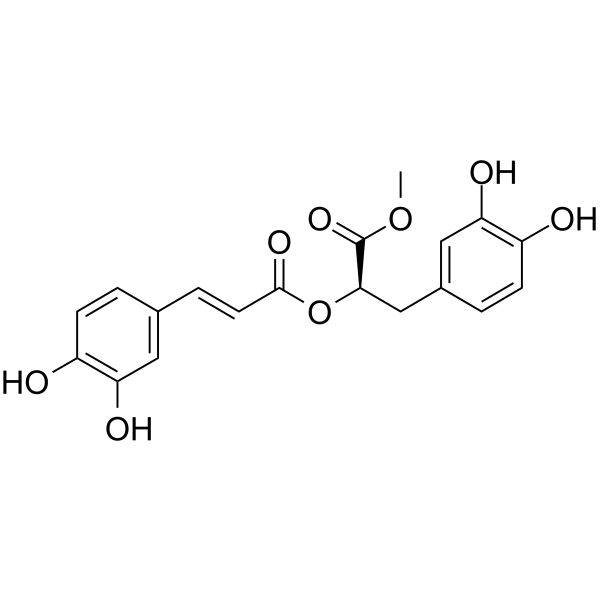
    Methyl rosmarinate is an orally active hydroxycinnamic acid. Methyl rosmarinate exhibits an IC50 of 24.70 μM and a Ki of 15.29 μM against PTP1B, an IC50 of 41.46 μg/mL against BChE, a Ki of 0.61 mM against mushroom tyrosinase, and an IC50 of 2.50 μM against SARS-CoV-2 3CLpro. Methyl rosmarinate downregulates the phosphorylation levels of ERK, JNK, p38, Smad2 and Smad3. Methyl rosmarinate activates erythrocyte BPGM and promotes the production of 2,3-BPG. Methyl rosmarinate induces apoptosis of fibroblasts. Methyl rosmarinate prolongs the survival time of hypoxic mice. Methyl rosmarinate improves insulin sensitivity. Methyl rosmarinate binds to SARS-CoV-2 3CLpro and inhibits viral replication. Methyl rosmarinate induces glioblastoma cell death. Methyl rosmarinate activates the TGR5/AMPK axis and reduces the levels of ROS and MDA. Methyl rosmarinate shows inhibitory activity against MMP-1. Methyl rosmarinate can be used in research related to pulmonary fibrosis, hypoxia-induced injury, type 2 diabetes, Alzheimer's disease, hyperpigmentation disorders, COVID-19, glioblastoma and myocardial ischemia-reperfusion injury .
    Methyl rosmarinate
  • HY-N7717

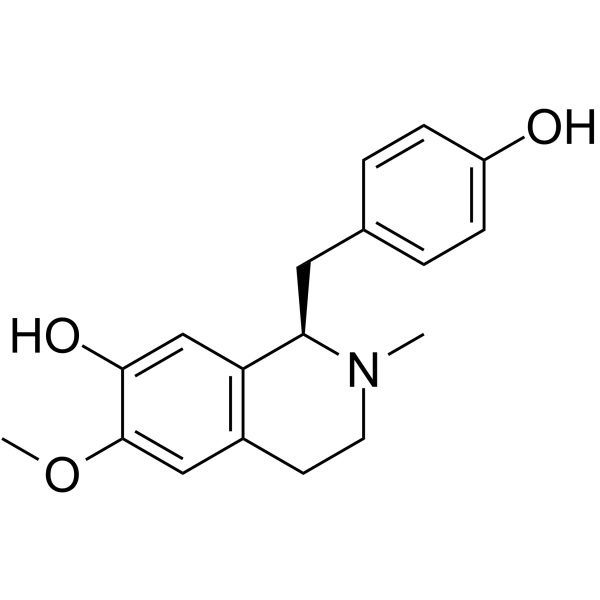
    (–)-(1R)-N-methylcoclaurine

    Drug Derivative Metabolic Disease
    (-)-N-methylcoclaurine is a benzylisoquinoline alkaloid and melanogenesis inhibitor with an IC50 of 6.5 μM that can be found in the flower buds of Nelumbo nucifera. (-)-N-methylcoclaurine inhibits theophylline-stimulated melanogenesis in melanoma cells. (-)-N-methylcoclaurine can be used for the research of skin hyperpigmentation disorders .
    (-)-N-methylcoclaurine
  • HY-148400

    TXC hydrochloride

    Ser/Thr Protease Drug Derivative Metabolic Disease
    Cetyl tranexamate (TXC) hydrochloride is an ester derivative of Tranexamic acid (HY-B0149). Cetyl tranexamate hydrochloride is an inhibitor of fibrinogen activation and can reduce the production of fibrinogen in keratinocytes induced by ultraviolet rays or damage, indirectly inhibiting the melanin production pathway. Cetyl tranexamate hydrochloride also targets melanin (dark spots) and hemoglobin (red spots), reducing vascular dilation and pigmentation by inhibiting inflammatory mediators (such as prostaglandins, platelet activating factors). Cetyl tranexamate hydrochloride can be used as a cosmetic ingredient and is suitable for epidermal pigment disorders such as photoaging, post-inflammatory hyperpigmentation (PIH), and melasma .
    Cetyl tranexamate hydrochloride
  • HY-155189

    Melanocortin Receptor Others
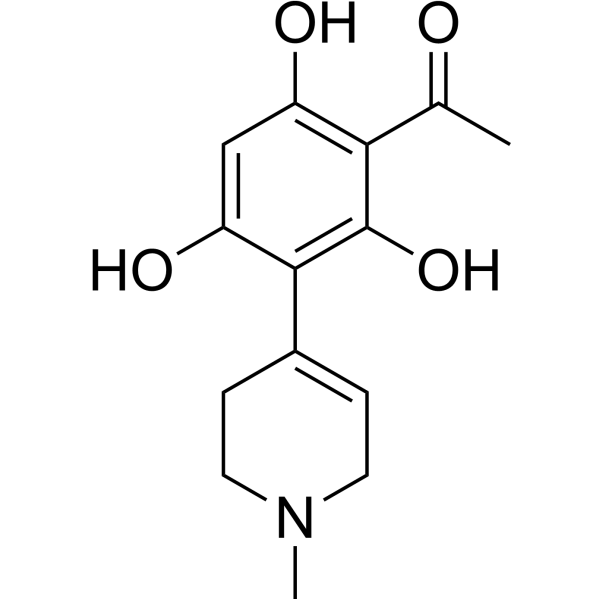
    IIIM-8 is a melanogenesis inhibitor. IIIM-8 inhibits pigment production both in vitro and in vivo without incurring any cytotoxicity in Human Adult Epidermal Melanocytes (HAEM). IIIM-8 can be used for hyperpigmentation disorders research .
    IIIM-8
  • HY-168436

    Tyrosinase Endocrinology
    Tyrosinase-IN-40 (Compound 9r) is a competitive-type tyrosinase inhibitor, with an IC50 value of 17.02  µM, a Ki value of 14.87 µM. Tyrosinase-IN-40 displays antioxidant activity. Tyrosinase-IN-40 can be used in melanin-related studies .
    Tyrosinase-IN-40
  • HY-182989

    Tyrosinase Metabolic Disease Inflammation/Immunology
    Tyrosinase-IN-50 (Compound 14) is a Tyrosinase inhibitor (IC50 is 0.06 μM or 0.16 μM). Tyrosinase-IN-50 inhibits melanogenesis in multiple cell types. Tyrosinase-IN-50 can be used for the research of hyperpigmentation-related diseases and inflammatory diseases .
    Tyrosinase-IN-50

Inquiry Online

Your information is safe with us. * Required Fields.

Salutation


Country or Region *

Applicant Name *


Organization Name *

Department *


Email Address *


Product Name *

Cat. No.


Requested quantity *

Phone Number *


Remarks

Inquiry Online

Inquiry Information

Product Name:
Cat. No.:
Quantity:
MCE Japan Authorized Agent:

