1. Search Result
Search Result
Results for "

induce cell cycle arrest and apoptosis

" in MedChemExpress (MCE) Product Catalog:

1186

Inhibitors & Agonists

1

Fluorescent Dyes

13

Biochemical Assay Reagents

9

Peptides

8

Inhibitory Antibodies

227

Natural
Products

34

Isotope-Labeled Compounds

7

Click Chemistry

4

Oligonucleotides

1

GMP Molecules

Cat. No. Product Name Target Research Areas Chemical Structure
  • HY-13629
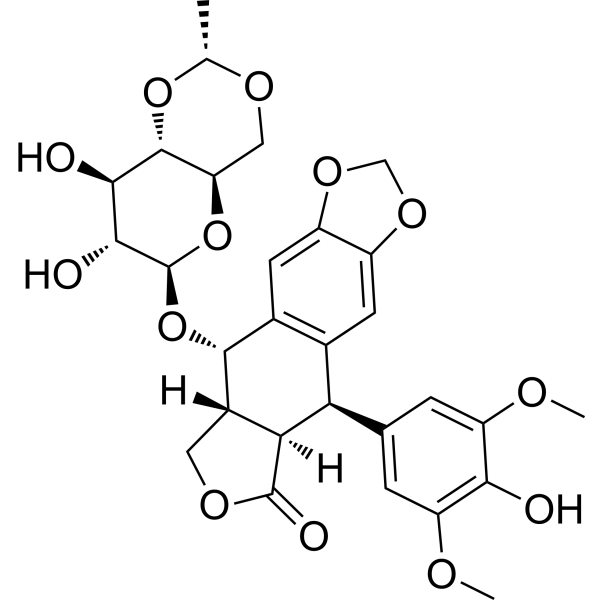
    Etoposide
    Maximum Cited Publications
    174 Publications Verification

    VP-16; VP-16-213

    Topoisomerase Autophagy Mitophagy Bacterial Apoptosis Antibiotic Infection Cancer
    Etoposide (VP-16; VP-16-213) is an anti-cancer chemotherapy agent. Etoposide inhibits topoisomerase II, thus stopping DNA replication. Etoposide induces cell cycle arrest, apoptosis and autophagy .
    Etoposide
  • HY-N0036
    Costunolide
    5+ Cited Publications

    (+)-Costunolide; Costus lactone

    Apoptosis Endogenous Metabolite Cancer
    Costunolide ((+)-Costunolide) is a naturally occurring sesquiterpene lactone, with antioxidative, anti-inflammatory, antiallergic, bone remodeling, neuroprotective, hair growth promoting, anticancer, and antidiabetic properties. Costunolide can induce cell cycle arrest and apoptosis on breast cancer cells .
    Costunolide
  • HY-13216
    Pyroxamide
    5+ Cited Publications

    HDAC Apoptosis Cancer
    Pyroxamide is a potent inhibitor of histone deacetylase 1 (HDAC1) with an ID50 of 100 nM. Pyroxamide can induce apoptosis and cell cycle arrest in leukemia .
    Pyroxamide
  • HY-13566
    Belotecan
    2 Publications Verification

    CKD-602 free base

    Topoisomerase Apoptosis Cancer
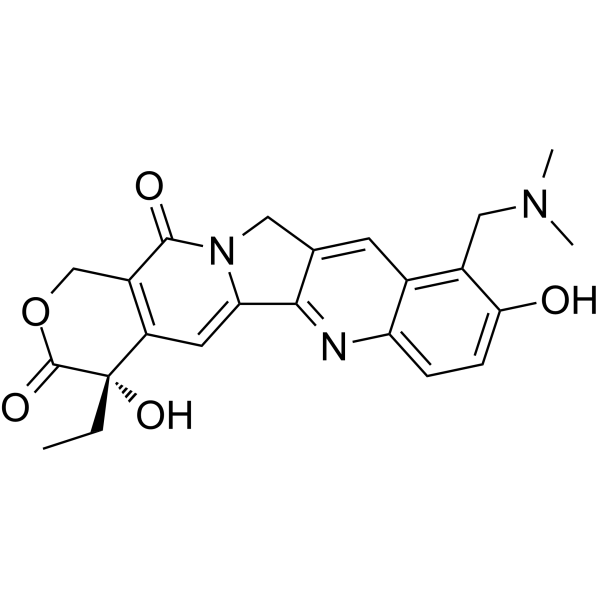
    Belotecan (CKD-602 free base) is a DNA topoisomerase I inhibitor. Belotecan induces cell apoptosis and cell-cycle arrest. Belotecan is a camptothecin analogue with anti-tumor effects, it can be used for the research of cancer .
    Belotecan
  • HY-10222
    Ixabepilone
    5+ Cited Publications

    BMS-247550; Aza-epothilone B

    Microtubule/Tubulin Apoptosis Bacterial Cancer
    Ixabepilone (BMS-247550) is an orally bioavailable microtubule inhibitor, which binds to tubulin and promotes tubulin polymerization and microtubule stabilization, thereby arrests cells in the G2-M phase of the cell cycle and induces tumor cell apoptosis.
    Ixabepilone
  • HY-N0800
    Protosappanin B
    2 Publications Verification

    (-)-Protosappanin B

    Apoptosis Cancer
    Protosappanin B is a phenolic compound extracted from Caesalpinia sappan. Anti-cancer activity . Protosappanin B induces apoptosis and causes G1 cell cycle arrest in human bladder cancer cells .
    Protosappanin B
  • HY-N5074

    Apoptosis VEGFR Inflammation/Immunology Cancer
    Terrestrosin D is an orally active apoptosis inducer. Terrestrosin D induces cell cycle arrest at the G1 and S phases, reduces mitochondrial membrane potential, and inhibits the growth of cancer cells and endothelial cells. Terrestrosin D is studied in castration-resistant prostate cancer and pulmonary fibrosis .
    Terrestrosin D
  • HY-13721
    Phenoxodiol
    3 Publications Verification

    Idronoxil; Dehydroequol; Haginin E

    Caspase Apoptosis Topoisomerase Cancer
    Phenoxodiol (Idronoxil), a synthetic analog of Genestein, activates the mitochondrial caspase system, inhibits XIAP (an apoptosis inhibitor), and sensitizes the cancer cells to Fas-mediated apoptosis. Phenoxodiol also inhibits DNA topoisomerase II by stabilizing the cleavable complex. Phenoxodiol induces cell cycle arrest in the G1/S phase of the cell cycle and upregulates p21 WAF1 via a p53 independent manner .
    Phenoxodiol
  • HY-18621
    OTS514
    3 Publications Verification

    TOPK Apoptosis Cancer
    OTS514 is a highly potent TOPK inhibitor with an IC50 of 2.6 nM. OTS514 strongly suppresses the growth of TOPK-positive cancer cells . OTS514 induces cell cycle arrest and apoptosis .
    OTS514
  • HY-N6012
    (-)-Alkannin
    2 Publications Verification

    Apoptosis Inflammation/Immunology Cancer
    (-)-Alkannin, found in Alkanna tinctoria, is used as a food coloring. (-)-Alkannin shows anticancer activity, arrests cell cycle, and induces apoptosis. (-)-Alkannin improves hepatic inflammation in a Rho-kinase pathway .
    (-)-Alkannin
  • HY-120836
    AOH1160
    1 Publications Verification

    DNA/RNA Synthesis Apoptosis Cancer
    AOH1160 is a potent oral small molecule proliferating cell nuclear antigen (PCNA) inhibitor that interferes with DNA replication, blocks homologous recombination-mediated DNA repair, leads to cell cycle arrest and induces apoptosis .
    AOH1160
  • HY-W020955

    Chloro(triphenylphosphine)gold(I)

    Biochemical Assay Reagents Apoptosis DNA Alkylator/Crosslinker Lipoxygenase Cancer
    Triphenylphosphinechlorogold (Chloro(triphenylphosphine)gold(I)) is a gold complex, Apoptosis inducer, and catalyst. Triphenylphosphinechlorogold exhibits high LOX inhibitory activity. Triphenylphosphinechlorogold induces cell cycle arrest and apoptosis. Triphenylphosphinechlorogold catalyzes the peroxidation of linoleic acid. A weak interaction exists between Triphenylphosphinechlorogold and DNA. Triphenylphosphinechlorogold displays antiproliferative activity against breast cancer cells .
    Triphenylphosphinechlorogold
  • HY-N6843
    Arnicolide D
    2 Publications Verification

    Caspase PI3K Akt mTOR STAT Apoptosis NF-κB Reactive Oxygen Species (ROS) Cancer
    Arnicolide D is a sesquiterpene lactone that can be isolated from Centipeda minima. Arnicolide D is cytotoxic to tumor cells and can induce cell cycle arrest, apoptosis, and oncosis in tumor cells. Arnicolide D has anti-tumor activity .
    Arnicolide D
  • HY-N7526
    Naphthazarin
    1 Publications Verification

    DHNQ; 5,8-Dihydroxy-1,4-naphthoquinone

    Apoptosis Autophagy PI3K Akt Neurological Disease Inflammation/Immunology Cancer
    Naphthazarin (DHNQ) is a microtubule depolymerizing agent. Naphthazarin can improve motor function and reduce neuroinflammation in mouse models of Parkinson's disease. Naphthazarin can induce tumor cell apoptosis, autophagy, and cell cycle arrest. Naphthazarin can also induce erythrocyte apoptosis. Naphthazarin can be used in the research of tumors and neurodegenerative diseases .
    Naphthazarin
  • HY-120140
    Ganoderic acid DM
    1 Publications Verification

    Apoptosis PI3K Metabolic Disease Inflammation/Immunology Cancer
    Ganoderic acid DM, a natural triterpenoid isolated from Ganoderma lucidum, induces DNA damage, G1 cell cycle arrest and apoptosis in human breast cancer cells. Ganoderic acid DM as a specific inhibitor of osteoclastogenesis .
    Ganoderic acid DM
  • HY-146754
    MMP2-IN-1
    1 Publications Verification

    MMP Apoptosis Cancer
    MMP2-IN-1 is a moderate potenet MMP2 inhibitor with IC50 of 6.8 µM. MMP2-IN-1 exhibits remarkable antiproliferative activity in certain cancer cells by arresting the cell cycle and inducing apoptosis .
    MMP2-IN-1
  • HY-118034
    MTBT
    1 Publications Verification

    p38 MAPK Apoptosis Cancer
    MTBT is an anticancer agent and p38 MAPK activator. MTBT can inhibit tumor cell proliferation, induce cell cycle arrest and apoptosis. MTBT increases the phosphorylation of histone H3 serine in cancer cells, thereby arresting the cell cycle in the M phase. The specific inhibitor of p38 MAPK, Adezmapimod (HY-10256), can abrogate the cell cycle arrest induced by MTBT .
    MTBT
  • HY-N7707

    Environmental Pollutants Apoptosis Cancer
    Sandacanol is a specific agonist of olfactory receptor (OR10H1). Sandacanol induces cell cycle arrest and some apoptosis in bladder cancer cells .
    Sandacanol
  • HY-N1516

    Apoptosis Cancer
    Ganoderenic acid D is a triterpene identified from the effective compounds of Ganoderma lucidum extract (GLE). Ganoderenic acid D inhibits the proliferation of cancer cells by inducing cell cycle arrest and apoptosis .
    Ganoderenic acid D
  • HY-N11774

    Apoptosis Caspase Cancer
    Euphornin is a anticaner agent, that can be isolated from E. helioscopia. Euphornin induces apoptosis via caspase-mediated pathways. Euphornin induces cell cycle arrest by increasing the level of the phospho-CDK1 (Tyr15) protein .
    Euphornin
  • HY-179152

    Apoptosis Topoisomerase Cancer
    Apoptosis inducer 54 is an apoptosis inducer that interacts with topoisomerase II-DNA. Apoptosis inducer 54 induces cell cycle arrest at the S phase in cancer cells. Apoptosis inducer 54 significantly induces early and late apoptosis in A549 cells. Topoisomerase I-IN-20 can be used for the research of lung cancer and colon cancer .
    Apoptosis inducer 54
  • HY-136489

    PARP Apoptosis Cancer
    KU-0058948 is a specific and potent PARP1 inhibitor with an IC50 of 3.4 nM. KU-0058948 induces cell cycle arrest and apoptosis of primary myeloid leukemic cells and myeloid leukemic cell lines .
    KU-0058948
  • HY-125612

    5'-Hydroxymorusin

    Apoptosis Cancer
    Artonin E (5'-Hydroxymorusin) is a known prenylated flavonoid that induces apoptosis and arrests the cell cycle in S phase. Artonin E can induce anti-proliferative effects through mitochondrial pathway dysregulation and can be used in cancer research .
    Artonin E
  • HY-113471

    Apoptosis HSV Infection Inflammation/Immunology Cancer
    Perillic acid is the metabolite of Perillyl alcohol (HY-N7000). Perillic acid induces lung cancer cell cycle arrest and apoptosis. Perillic acid shows anti-HSV-1 and immunomodulatory activities .
    Perillic acid
  • HY-18952A

    FLT3 Apoptosis Cancer
    (Z)-SU5614 is a potent FLT3 inhibitor and selectively induces growth arrest, apoptosis, and cell cycle arrest in Ba/F3 and AML cell lines expressing a constitutively activated FLT3 .
    (Z)-SU5614
  • HY-178908

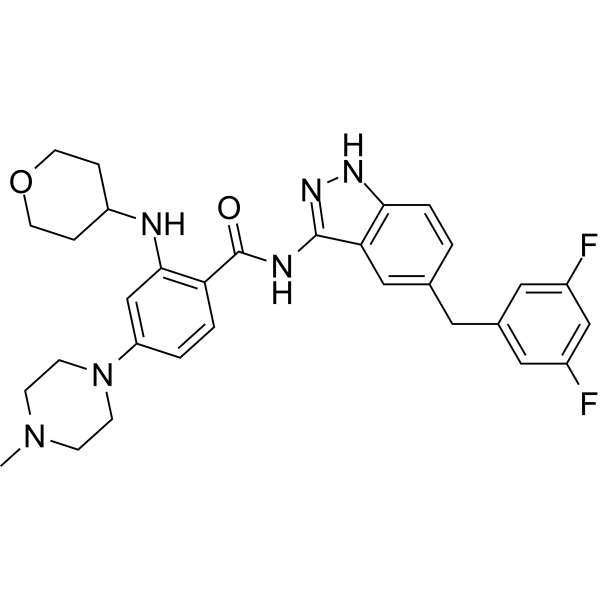
    FLT3 Apoptosis Cancer
    FLT3-IN-35 (Compound 4K) is an orally active, covalent, irreversible FLT3 inhibitor. FLT3-IN-35 inhibits the phosphorylation of FLT3 and its downstream signaling factors, as well as induces cell cycle arrest and apoptosis. FLT3-IN-35 inhibits the phosphorylation of FLT3 and its downstream signaling factors, as well as induced cell cycle arrest and apoptosis. FLT3-IN-35 can be used for the study of acute myeloid leukemia (AML) .
    FLT3-IN-35
  • HY-N11645

    GA-Mf

    Apoptosis Cancer
    Ganoderic acid Mf is an antitumor triterpenoid. Ganoderic acid Mf causes cell cycle arrest in the G1 phase. Ganoderic acid Mf shows high selectivity between normal and cancer cells and induces cell apoptosis via mitochondria mediated pathway .
    Ganoderic acid Mf
  • HY-126412

    Apoptosis Cancer
    Neochamaejasmine A is a biflavonoid that can be isolated from the roots of Stellera chamaejasme L.. Neochamaejasmine A inhibits proliferation, induces cell cycle arrest and apoptosis in tumor cells. Neochamaejasmine A can be used in the research of cancers such as prostate cancer, hepatoma cancer .
    Neochamaejasmine A
  • HY-126423

    Isorhamnetin 3-O-glucuronide

    Apoptosis Cancer
    Isorhamnetin 3-glucuronide is a potent anticancer agent. Isorhamnetin 3-glucuronide shows anti-proliferative activity. Isorhamnetin 3-glucuronide induces Apoptosis and cell cycle arrest at S-phase .
    Isorhamnetin 3-glucuronide
  • HY-108164

    Apoptosis Bcl-2 Family Caspase Cancer
    Aspidin BB is a phloroglucinol derivative, which can be isolated from the aerial part of Dryopteris championii. Aspidin BB has anticancer activity. Aspidin BB induces cell cycle arrest and apoptosis in human ovarian HO-8910 cells .
    Aspidin BB
  • HY-N1342

    Apoptosis Cancer
    Rocaglaol induces apoptosis and cell cycle arrest in LNCaP cells .
    Rocaglaol
  • HY-124261

    Apoptosis Cancer
    Sampangine is an alkaloid that induces apoptosis by inducing cell cycle arrest in the G0/G1 phase. Sampangine can inhibit the biosynthesis of heme .
    Sampangine
  • HY-111896A

    (-)-7-O-Methoxyrosmanol

    Others Others
    (-)-7-Methoxyrosmanol ((-)-7-O-Methoxyrosmanol) is a phenolic diterpene with antioxidant activity. (-)-7-Methoxyrosmanol is produced from carnosic acid by oxidation and cyclization, can induce cell cycle arrest and apoptosis in neuroblastoma cells .
    (-)-7-Methoxyrosmanol
  • HY-178132

    Apoptosis NF-κB Cancer
    Apoptosis inducer 46 is an apoptosis inducer. Apoptosis inducer 46 exhibits potent and selective growth inhibitory effects on metastatic triple-negative breast cancer (TNBC) cells. Apoptosis inducer 46 induces G2/M phase cell cycle arrest and apoptotic cell death in MDA-MB-231 cells, and blocks NF-κB nuclear translocation. Apoptosis inducer 46 can be used for the study of TNBC .
    Apoptosis inducer 46
  • HY-179054

    Apoptosis Reactive Oxygen Species (ROS) DNA/RNA Synthesis Cancer
    Apoptosis inducer 51 (Compound 5d) is an apoptosis inducer. Apoptosis inducer 51 exhibits strong inhibitory activity against MDA-MB-231 cells. Apoptosis inducer 51 inhibits cell invasion and migration, induces G2/M phase cell cycle arrest and cell apoptosis. Apoptosis inducer 51 causes DNA damage, ROS burst and mitochondrial membrane potential (MMP) collapse. Apoptosis inducer 51 can be used for the study of triple-negative breast cancer.
    Apoptosis inducer 51
  • HY-112314

    Src Bcr-Abl Apoptosis Cancer
    AZD0424 is an orally active, and dual selective Src/Abl kinase inhibitor with potential antineoplastic activity . AZD0424 induces apoptosis and cell cycle arrest in lymphoma cells .
    AZD0424
  • HY-125132

    (-)-Agelastatin A; AglA

    Apoptosis Cancer
    Agelastatin A ((-)-Agelastatin A; AglA), a tetracyclic alkaloid isolated from the sponge Agelas dendromorpha, induces apoptosis and arrests cells in the G2/M phase of the cell cycle, exhibiting antitumor activity .
    Agelastatin A
  • HY-136489A

    PARP Apoptosis Cancer
    KU-0058948 hydrochloride is a specific and potent PARP1 inhibitor with an IC50 of 3.4 nM. KU-0058948 hydrochloride induces cell cycle arrest and apoptosis of primary myeloid leukemic cells and myeloid leukemic cell lines .
    KU-0058948 hydrochloride
  • HY-151905

    c-Met/HGFR Cancer
    D6808 is a highly selective and potent c‑Met inhibitor with an IC50 value of 2.9 nM. D6808 induces cell apoptosis and cell cycle arrest. D6808 can be used for the research of NSCLC and gastric cancers .
    D6808
  • HY-150655

    HSP Cancer
    Hsp90-IN-15 is an Hsp90 inhibitor with anticancer activity. Hsp90-IN-15 induces cell apoptosis, arrests the cell cycle at S phase and decreases the expression level of Hsp90 in Hela cell .
    Hsp90-IN-15
  • HY-135217

    Apoptosis Cancer
    Apiole is an anti-tumor agent that induces apoptosis and inhibits human colon cancer cells by inducing G0/G1 cell cycle arrest. Apiole also significantly inhibited colon tumor development in an in vivo mouse xenograft model .
    Apiole
  • HY-N6012R

    Reference Standards Apoptosis Inflammation/Immunology Cancer
    (-)-Alkannin, found in Alkanna tinctoria, is used as a food coloring. (-)-Alkannin shows anticancer activity, arrests cell cycle, and induces apoptosis. (-)-Alkannin improves hepatic inflammation in a Rho-kinase pathway .
    (-)-Alkannin (Standard)
  • HY-179124

    Apoptosis Caspase Cancer
    Apoptosis inducer 52 is a derivative of flutamide that induces apoptosis in prostate cancer cells. Apoptosis inducer 52 promotes apoptosis by activating both intrinsic and extrinsic apoptotic pathways, without generating reactive oxygen species (ROS). Apoptosis inducer 52 triggers caspase 3/7 activity and the externalization of phosphatidylserine, leading to cell cycle arrest at the G0/G1 phase. Apoptosis inducer 52 can be used for the research of androgen receptor (AR)-dependent and -independent prostate cancers and leukemia .
    Apoptosis inducer 52
  • HY-W154265

    Glutathione S-transferase Apoptosis Cancer
    2,2′-Dihydroxychalcone, a flavonoid, is a glutathione S-transferase (GST) inhibitor with an IC50 of 28.9 μM in human colon cancer cells. 2,2′-Dihydroxychalcone induces cell cycle arrest and apoptosis in prostate cancer cells. 2,2′-Dihydroxychalcone has anticancer and anti-inflammatory properties .
    2,2′-Dihydroxychalcone
  • HY-163444

    Apoptosis Cancer
    Apoptosis inducer 15 (Compound 3) induces cell apoptosis and cell cycle arrest at G2/M phase. Apoptosis inducer 15 is cytotoxicitic without causing DNA fragmentation .
    Apoptosis inducer 15
  • HY-163451

    Apoptosis Cancer
    Apoptosis inducer 17 is a Curcumin-Piperlongumine hybrid molecule that increases cell cycle arrest and apoptosis through activating JNK signaling pathway in lung cancer cells .
    Apoptosis inducer 17
  • HY-W965550

    Apoptosis Cancer
    Apoptosis inducer 40 is an apoptosis inducer. Apoptosis inducer 40 exhibits potent cytotoxic effects against jurkat and NB4 cells with IC50 values of 4.5 μM and 3.6μM. Apoptosis inducer 40 induces apoptosis and arrests cell cycle. Apoptosis inducer 40 can be used for the research of cancer, such as acute myeloid leukemia (AML) .
    Apoptosis inducer 40
  • HY-172110

    EGFR Akt p38 MAPK ERK Apoptosis Cancer
    Apoptosis inducer 35 (Compound 6) is a multi-targeted inhibitor, that reduces the expressions of EGFR, AKT, ERK and P38-MAPKα. Apoptosis inducer 35 inhibits the proliferation of cancer cell A549 and Jurkat, arrests the cell cycle at S phase, and induces apoptosis .
    Apoptosis inducer 35
  • HY-169101

    Apoptosis Cancer
    KSRP-IN-1 (compound 8) is a KSRP inhibitor that induces Apoptosis and cell cycle arrest. KSRP-IN-1 has antitumor activity .
    KSRP-IN-1
  • HY-149343

    Apoptosis Autophagy Cancer
    Anticancer agent 132 (compound Rh1) is an inducer of apoptosis and autophagy with antitumor and antimetastasis activity. Anticancer agent 132 arrests cell cycle and inhibits cell proliferation .
    Anticancer agent 132

Inquiry Online

Your information is safe with us. * Required Fields.

Salutation


Country or Region *

Applicant Name *


Organization Name *

Department *


Email Address *


Product Name *

Cat. No.


Requested quantity *

Phone Number *


Remarks

Inquiry Online

Inquiry Information

Product Name:
Cat. No.:
Quantity:
MCE Japan Authorized Agent:

