35 Results for "

leg

" in MedChemExpress (MCE) Product Catalog:
Products (35)

35 Results for "leg" in MCE Product Catalog:

14
14 Publications Verification
Cat. No.: HY-17355
CAS No.: 104632-25-9
Target:  

Dopamine Receptor

Research Areas:  

Neurological Disease

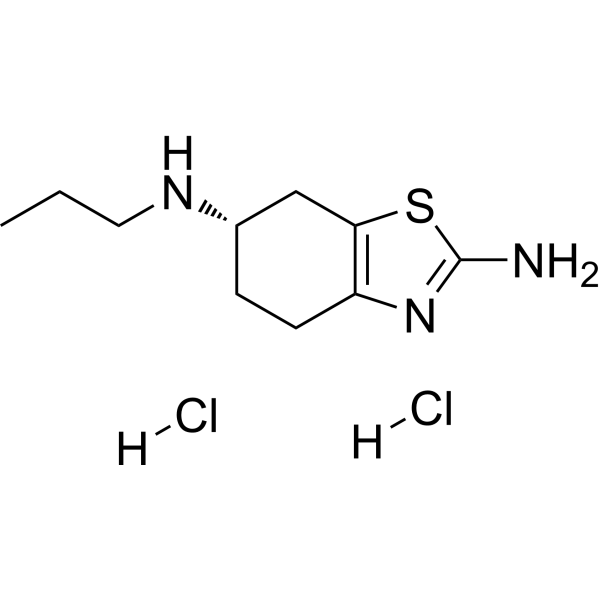
Pramipexole dihydrochloride is a selective and blood-brain barrier (BBB) penetrant dopamine D2-type receptor agonist, with Kis of 2.2 nM, 3.9 nM, 0.5 nM and 1.3 nM for D2-type receptor, D2, D3 and D4 receptors, respectively. Pramipexole dihydrochloride can be used for the research of Parkinson's disease (PD) and restless legs syndrome (RLS) .
loading...
    loading...
14
14 Publications Verification
Cat. No.: HY-B0410
CAS No.: 104632-26-0
Target:  

Dopamine Receptor

Research Areas:  

Neurological Disease

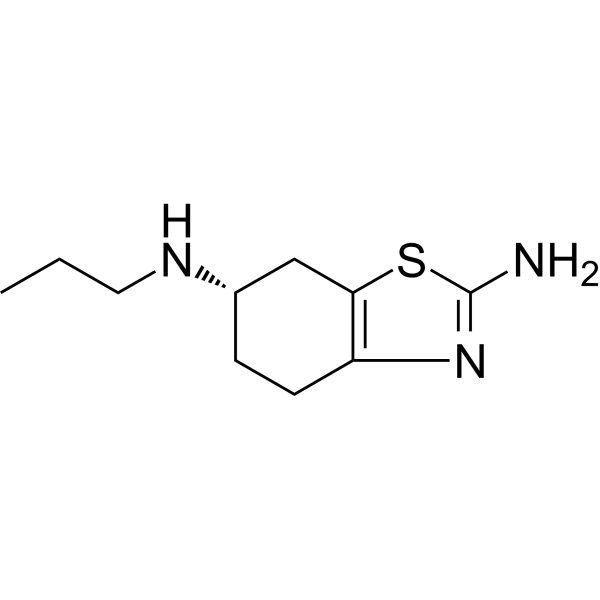
Pramipexole is a selective and blood-brain barrier (BBB) penetrant dopamine D2-type receptor agonist, with Kis of 2.2 nM, 3.9 nM, 0.5 nM and 1.3 nM for D2-type receptor, D2, D3 and D4 receptors, respectively. Pramipexole can be used for the research of Parkinson's disease (PD) and restless legs syndrome (RLS) .
loading...
    loading...
14
14 Publications Verification
Cat. No.: HY-B0410A
CAS No.: 191217-81-9
Target:  

Dopamine Receptor

Research Areas:  

Neurological Disease

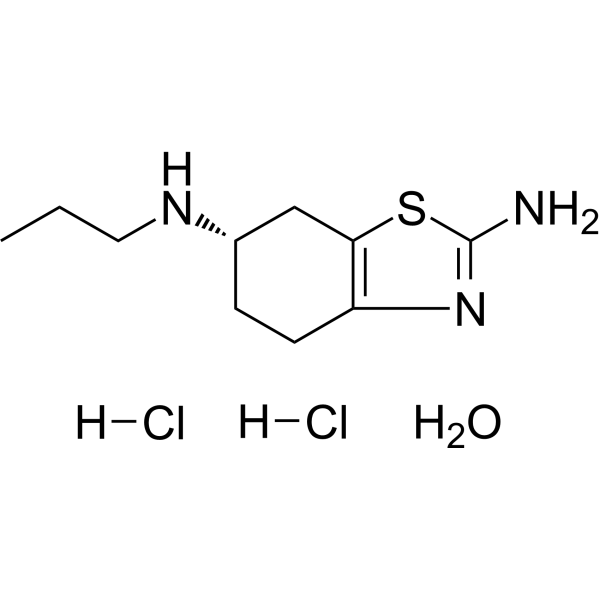
Pramipexole dihydrochloride hydrate is a selective and blood-brain barrier (BBB) penetrant dopamine D2-type receptor agonist, with Kis of 2.2 nM, 3.9 nM, 0.5 nM and 1.3 nM for D2-type receptor, D2, D3 and D4 receptors, respectively. Pramipexole dihydrochloride hydrate can be used for the research of Parkinson's disease (PD) and restless legs syndrome (RLS) .
loading...
    loading...
13
13 Cited Publications
Cat. No.: HY-B0715
CAS No.: 6493-05-6
Synonyms: BL-191; PTX; Oxpentifylline
Pentoxifylline (BL-191), a haemorheological agent, is an orally active non-selective phosphodiesterase (PDE) inhibitor, with immune modulation, anti-inflammatory, hemorheological, anti-fibrinolytic and anti-proliferation effects. Pentoxifylline can be used for the research of peripheral vascular disease, cerebrovascular disease and a number of other conditions involving a defective regional microcirculation .
loading...
    loading...
7
7 Cited Publications
Cat. No.: HY-110082
CAS No.: 130-89-2
Quinine hydrochloride is an alkaloid extracted from cinchona bark and exhibits oral activity, acting as a potassium channel inhibitor. Quinine hydrochloride modulates the tolerance of red blood cells and presents dose-dependent toxicity and embryonic effects. Quinine hydrochloride is a typical hemolysin that directly lyses red blood cells, with cellular components of red blood cell membranes as its action targets. Quinine hydrochloride disrupts red blood cell membranes and induces hemolysis at high concentrations, while merely weakening the anti-hemolytic capacity of red blood cells at low concentrations. Quinine hydrochloride continuously reduces red blood cell tolerance after in vivo administration, and high doses can also alter blood cell counts. Quinine hydrochloride can be applied to researches related to red blood cell hemolysis, cancer and malaria .
loading...
    loading...
3
3 Cited Publications
Cat. No.: HY-136626
CAS No.: 149697-16-5
Purity:  99.43%
Synonyms: Cbz-Ala-Ala-Asn-AMC
Target:  

Fluorescent Dye

Research Areas:  

Cancer

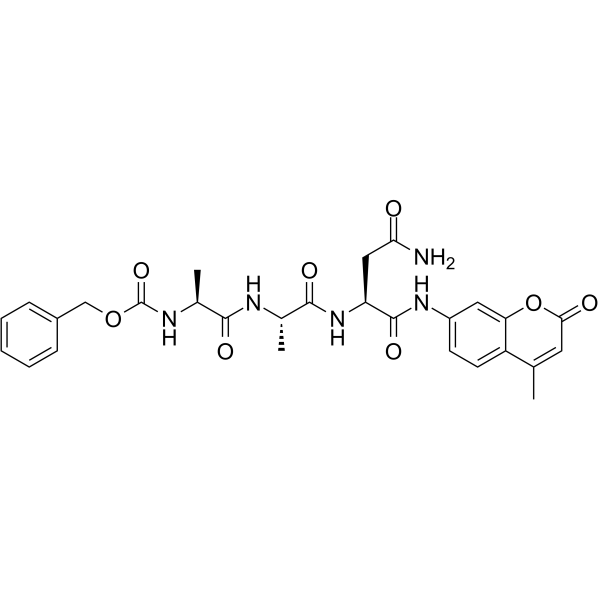
Z-Ala-Ala-Asn-AMC (Cbz-Ala-Ala-Asn-AMC) is the legumain substrate. Overexpressed legumain in 293 HEK-Leg cells potently cleaved CBZ-Ala-Ala-Asn-AMC .
loading...
    loading...
2
2 Cited Publications
Cat. No.: HY-70081A
CAS No.: 179386-44-8
Synonyms: U-95666E; PNU-95666
Target:  

Dopamine Receptor

Research Areas:  

Neurological Disease

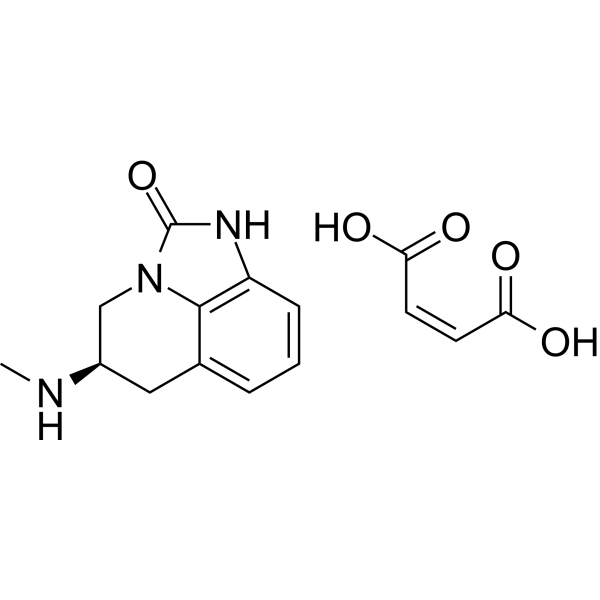
Sumanirole maleate (U-95666E; PNU-95666E) is a highly selective D2 receptor full agonist with an ED50 of about 46 nM. Sumanirole plays an important role in the research of Parkinson's disease and restless leg syndrome .
loading...
    loading...
1
1 Cited Publications
Cat. No.: HY-13720
CAS No.: 66104-22-1
Synonyms: LY127809 free base
Pergolide (LY127809 free base), an Ergoline derivative, is a potent and orally active dopamine D1 and D2 receptor agonist. Pergolide can be used for Parkinson's disease and hyperprolactinaemia research .
loading...
    loading...
Cat. No.: HY-N0658A
CAS No.: 80-68-2
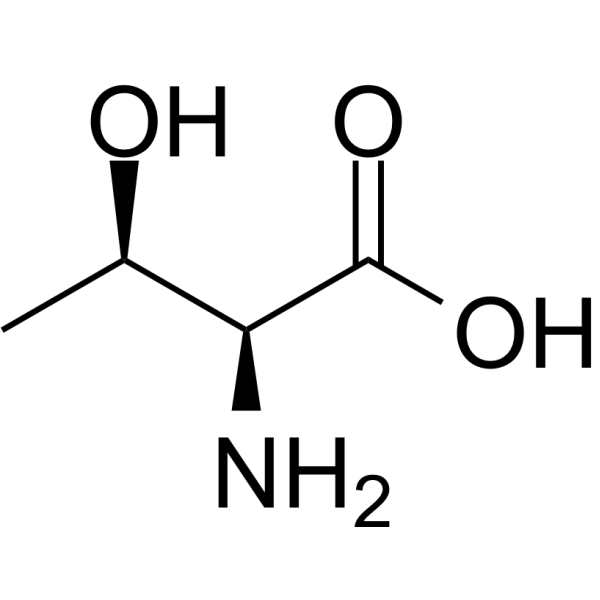
DL-Threonine, an essential amino acid, is a precursor of Glycine (HY-Y0966). DL-Threonine has the potential for the study of hypostatic leg ulceration .
loading...
    loading...
Cat. No.: HY-16216
CAS No.: 478296-72-9
Synonyms: XP-13512
Target:  

Calcium Channel

Research Areas:  

Neurological Disease

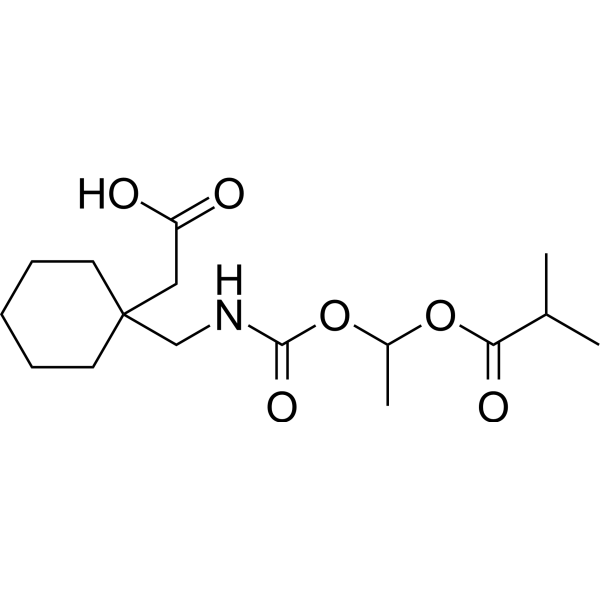
Gabapentin enacarbil (XP-13512) is a prodrug of Gabapentin (HY-A0057) designed to be absorbed throughout the intestine by high-capacity nutrient transporters. Gabapentin is a potent, orally active P/Q type Ca 2+ channel blocker. Gabapentin enacarbil can be used for the study of Restless Legs Syndrome (RLS) and postherpetic neuralgia (PHN) .
loading...
    loading...
Cat. No.: HY-B1170
CAS No.: 456-59-7
Synonyms: 3,5,5-Trimethylcyclohexyl mandelate
Target:  

Calcium Channel

Research Areas:  

Cardiovascular Disease

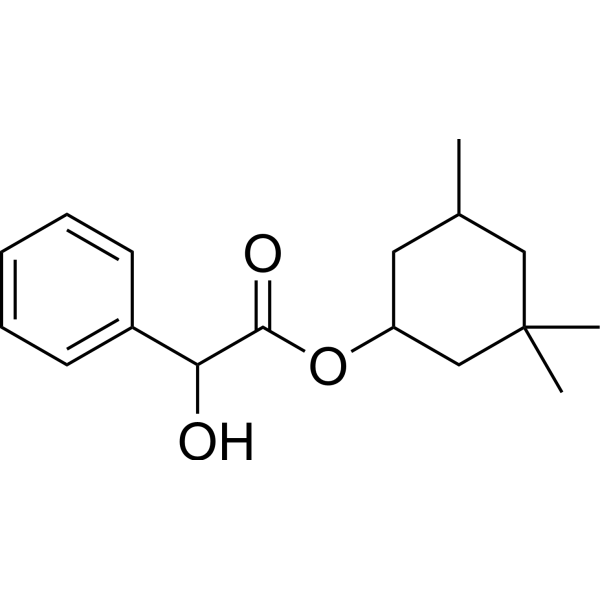
Cyclandelate is a vasodilator that can be used in the study of claudication, arteriosclerosis, Raynaud's disease, nocturnal leg cramps, and migraines.
loading...
    loading...
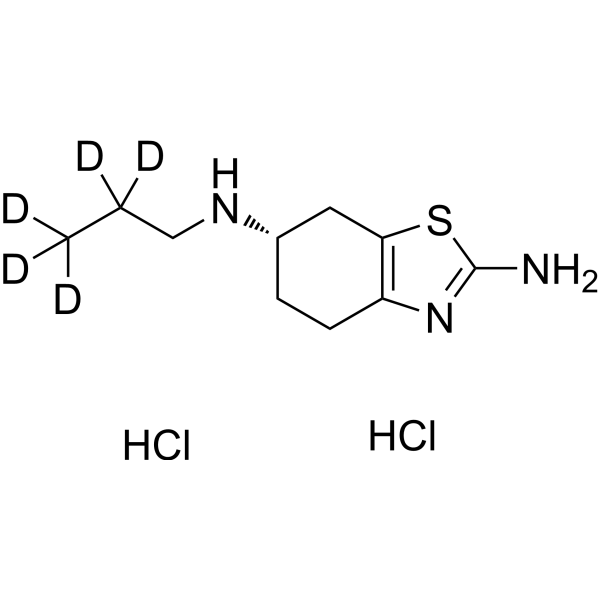
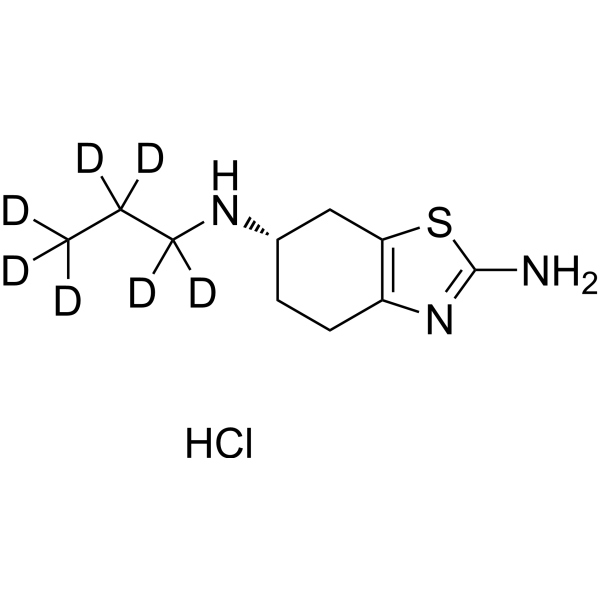
Cat. No.: HY-17355S1
CAS No.: 1217601-58-5
Pramipexole-d5 dihydrochloride is deuterium labeled Pramipexole dihydrochloride. Pramipexole dihydrochloride is a selective and blood-brain barrier (BBB) penetrant dopamine D2-type receptor agonist, with Kis of 2.2 nM, 3.9 nM, 0.5 nM and 1.3 nM for D2-type receptor, D2, D3 and D4 receptors, respectively. Pramipexole dihydrochloride can be used for the research of Parkinson's disease (PD) and restless legs syndrome (RLS) .
loading...
    loading...
Cat. No.: HY-137273
CAS No.: 74135-10-7
Purity:  ≥98.0%
Research Areas:  

Inflammation/Immunology

Sucrose octasulfate sodium, a derivative of sulfated oligosaccharides, is a matrix metalloproteinase (MMP) inhibitor. Sucrose octasulfate sodium stimulates the release of somatostatin-like immunoreactivity (SLI) from the stomach by acting directly on D cells in the gastric mucosa. Sucrose octasulfate sodium exerts its ulcer-healing effect by releasing endogenous gastric somatostatin. Sucrose octasulfate sodium can be used as a pharmaceutical excipient and significantly improves wound closure in diabetic foot ulcers caused by nerve ischemia and venous leg ulcers. Sucrose octasulfate sodium can be used in the study of chronic wound healing .
loading...
    loading...
Cat. No.: HY-101490
CAS No.: 1904611-63-7
Purity:  ≥98.0%
Research Areas:  

Neurological Disease

PDE1-IN-2 is a PDE1 inhibitor extracted from patent WO2016/55618 A1, example 31. PDE1-IN-2 has IC50 values of 6 nM, 140 nM and 164 nM for PDE1C, PDE1B and PDE1A, respectvely. PDE1-IN-2 is developed for the research of neurodegenerative disorders and psychiatric disorders .
loading...
    loading...
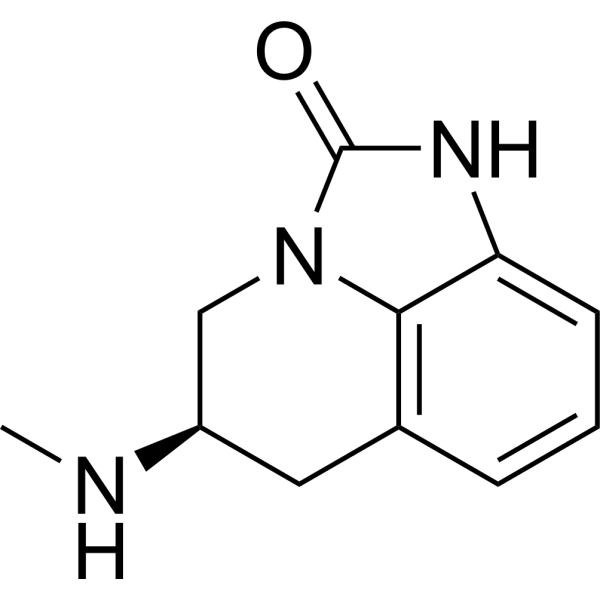
Cat. No.: HY-70081
CAS No.: 179386-43-7
Synonyms: PNU-95666E
Target:  

Dopamine Receptor

Research Areas:  

Neurological Disease

Sumanirole (PNU-95666E) is a highly selective D2 receptor full agonist with an ED50 of about 46 nM. Sumanirole plays an important role in the research of Parkinson's disease and restless leg syndrome .
loading...
    loading...
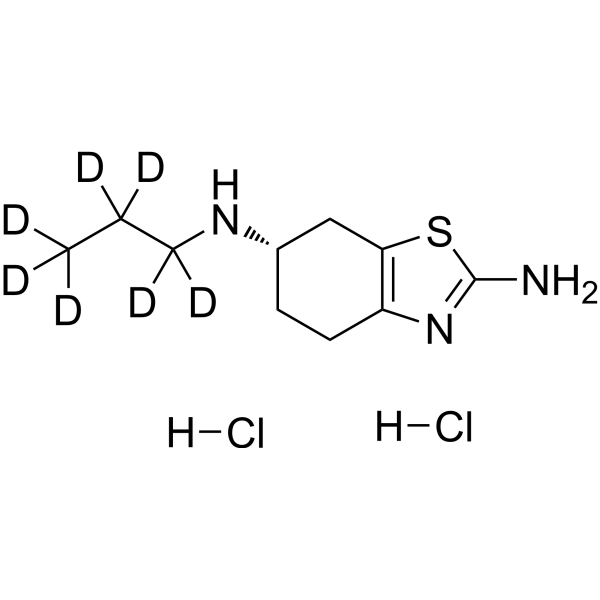
Cat. No.: HY-17355S
Pramipexole-d7 dihydrochloride is the deuterium labeled Pramipexole dihydrochloride. Pramipexole dihydrochloride is a selective and blood-brain barrier (BBB) penetrant dopamine D2-type receptor agonist, with Kis of 2.2 nM, 3.9 nM, 0.5 nM and 1.3 nM for D2-type receptor, D2, D3 and D4 receptors, respectively. Pramipexole dihydrochloride can be used for the research of Parkinson's disease (PD) and restless legs syndrome (RLS) .
loading...
    loading...
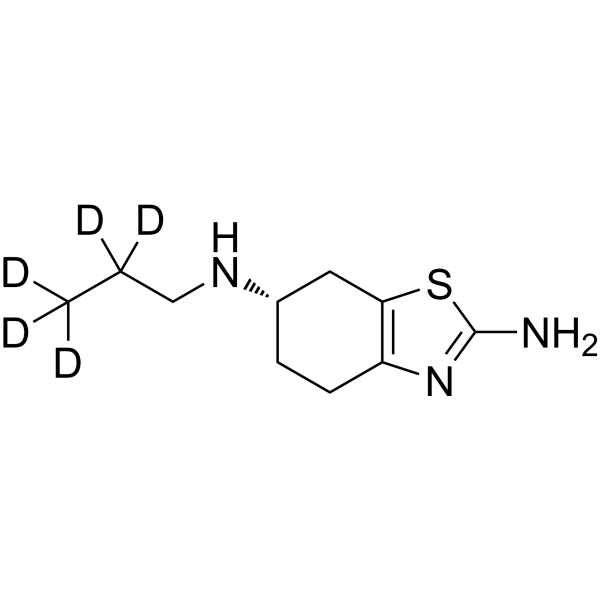
Cat. No.: HY-B0410S1
CAS No.: 1217975-28-4
Pramipexole-d5 is the deuterium labeled Pramipexole . Pramipexole is a selective and blood-brain barrier (BBB) penetrant dopamine D2-type receptor agonist, with Kis of 2.2 nM, 3.9 nM, 0.5 nM and 1.3 nM for D2-type receptor, D2, D3 and D4 receptors, respectively. Pramipexole can be used for the research of Parkinson's disease (PD) and restless legs syndrome (RLS) .
loading...
    loading...
Cat. No.: HY-B0715R
CAS No.: 6493-05-6
Synonyms: BL-191 (Standard); PTX (Standard); Oxpentifylline (Standard)
Pentoxifylline (Standard) is the analytical standard of Pentoxifylline. This product is intended for research and analytical applications. Pentoxifylline (BL-191), a haemorheological agent, is an orally active non-selective phosphodiesterase (PDE) inhibitor, with immune modulation, anti-inflammatory, hemorheological, anti-fibrinolytic and anti-proliferation effects. Pentoxifylline can be used for the research of peripheral vascular disease, cerebrovascular disease and a number of other conditions involving a defective regional microcirculation .
loading...
    loading...
Cat. No.: HY-B0410AR
CAS No.: 191217-81-9
Pramipexole (dihydrochloride hydrate) (Standard) is the analytical standard of Pramipexole (dihydrochloride hydrate). This product is intended for research and analytical applications. Pramipexole dihydrochloride hydrate is a selective and blood-brain barrier (BBB) penetrant dopamine D2-type receptor agonist, with Kis of 2.2 nM, 3.9 nM, 0.5 nM and 1.3 nM for D2-type receptor, D2, D3 and D4 receptors, respectively. Pramipexole dihydrochloride hydrate can be used for the research of Parkinson's disease (PD) and restless legs syndrome (RLS) .
loading...
    loading...
Cat. No.: HY-B0410R
CAS No.: 104632-26-0
Pramipexole (Standard) is the analytical standard of Pramipexole. This product is intended for research and analytical applications. Pramipexole is a selective and blood-brain barrier (BBB) penetrant dopamine D2-type receptor agonist, with Kis of 2.2 nM, 3.9 nM, 0.5 nM and 1.3 nM for D2-type receptor, D2, D3 and D4 receptors, respectively. Pramipexole can be used for the research of Parkinson's disease (PD) and restless legs syndrome (RLS) .
loading...
    loading...

