1. Search Result
Search Result
Results for "

lymphocyte growth

" in MedChemExpress (MCE) Product Catalog:

17

Inhibitors & Agonists

1

Biochemical Assay Reagents

1

Peptides

4

Inhibitory Antibodies

3

Natural
Products

3

Recombinant Proteins

1

Isotope-Labeled Compounds

1

Antibodies

Cat. No. Product Name Target Research Areas Chemical Structure
  • HY-N6739

    Bacterial Apoptosis Fungal PI3K Akt TNF Receptor Interleukin Related Infection Cancer
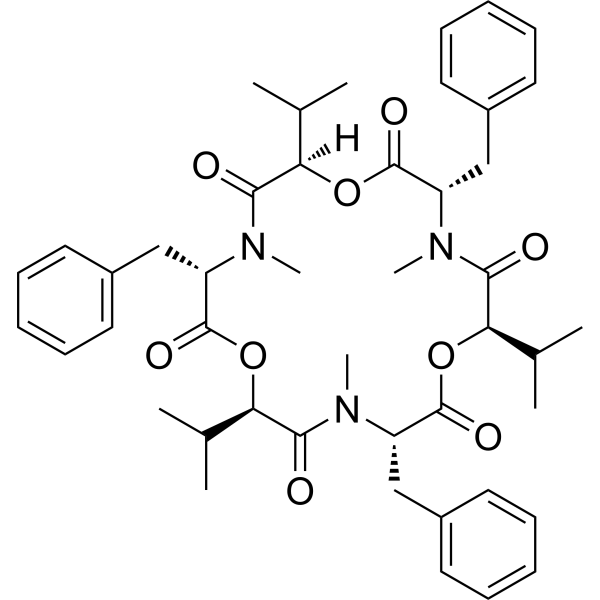
    Beauvericin is a cyclohexapeptide Fusarium toxin with insecticidal, antibacterial, anticancer, antiviral and cytotoxic activities. Beauvericin causes cellular genotoxicity by producing DNA breaks, chromosomal aberrations and micronuclei, and inhibits the PI3K/AKT pathway to induce apoptosis, thereby inhibiting the growth of HCC. In addition, Beauvericin affects immune function by inhibiting lymphocyte proliferation and interfering with the differentiation process of human monocytes into macrophages .
    Beauvericin
  • HY-P990116

    Osteopontin Inflammation/Immunology
    Anti-Mouse osteopontin/SPP1 Antibody (103D6) is a mouse-derived anti-mouse osteopontin/SPP1 IgG2c κ type antibody inhibitor. Anti-Mouse osteopontin/SPP1 Antibody (103D6) increases cytotoxic T lymphocyte lytic activity and suppresses colon tumor growth. Anti-Mouse osteopontin/SPP1 Antibody (103D6) ameliorates liver injury in common bile duct ligation (CBDL)-induced primary sclerosing cholangitis mice models .
    Anti-Mouse osteopontin/SPP1 Antibody (103D6)
  • HY-104037
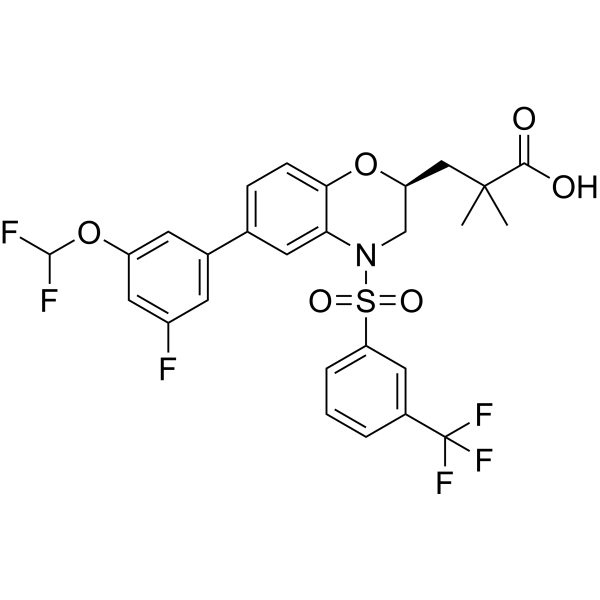
    Cintirorgon
    5+ Cited Publications

    LYC-55716

    ROR Cancer
    Cintirorgon (LYC-55716) is a first-in-class, selective and orally bioavailable RORγ agonist. Cintirorgon (LYC-55716) modulates gene expression of RORγ expressing T lymphocyte immune cells, resulting in enhanced effector function, as well as decreased immunosuppression, resulting in decreased tumor growth, and improved survival .
    Cintirorgon
  • HY-123885

    TNF Receptor Cancer
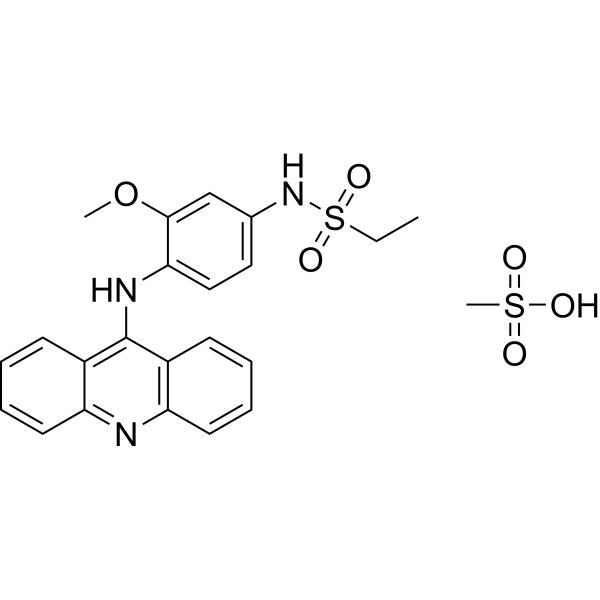
    NSC243928 mesylate is a human lymphocyte antigen 6 (LY6) binder, which also acts as an inhibitor of cell growth and has anticancer activity .
    NSC243928 mesylate
  • HY-160768

    Deubiquitinase Inflammation/Immunology Cancer
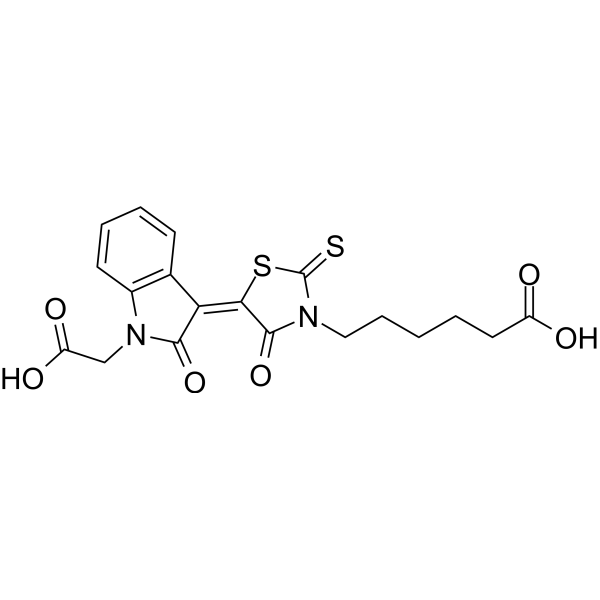
    OTUB2-IN-1, a specific inhibitor of OTUB2 (KD: ~12 μM), reduces PD-L1 protein expression in tumor cells and inhibits tumor growth by promoting robust intra-tumor infiltration of cytotoxic T lymphocytes (CTL) .
    OTUB2-IN-1
  • HY-20559

    Drug Intermediate Cancer
    4-Chloro-3-nitrobenzoic acid is a benzoic acid derivative and an important intermediate for the synthesis of anticancer agents. 4-Chloro-3-nitrobenzoic acid shows low cytotoxicity against HepG2, A549 and HeLa cancer cells in vitro (>10,000 μM). 4-Chloro-3-nitrobenzoic acid can block thymidine uptake and inhibit lymphocyte growth. 4-Chloro-3-nitrobenzoic acid serves as a ligand for Cu (II) complexes and is used in the preparation of 10H-pyrazino[2,3-b][1,4]benzothiazine derivatives .
    4-Chloro-3-nitrobenzoic acid
  • HY-P1855

    EGFR Cancer
    HER2/neu (654-662) GP2 is a nine amino acid peptide derived from the human epidermal growth factor receptor 2 (HER2/nue, 654–662), induces HLA-A2-restricted cytotoxic T lymphocytes (CTL) reactive to various epithelial cancers .
    HER2/neu (654-662) GP2
  • HY-N6739S

    Acyltransferase Isotope-Labeled Compounds Infection
    Beauvericin- 13C45 is 13C labeled Beauvericin (HY-N6739). Beauvericin is a cyclohexapeptide Fusarium toxin with insecticidal, antibacterial, anticancer, antiviral and cytotoxic activities. Beauvericin causes cellular genotoxicity by producing DNA breaks, chromosomal aberrations and micronuclei, and inhibits the PI3K/AKT pathway to induce apoptosis, thereby inhibiting the growth of HCC. In addition, Beauvericin affects immune function by inhibiting lymphocyte proliferation and interfering with the differentiation process of human monocytes into macrophages .
    Beauvericin-13C45
  • HY-175604

    PD-1/PD-L1 Cancer
    SCL-1 is an orally active anti-PD-1/PD-L1 inhibitor. SCL-1 can inhibit PD-1/PD-L1 binding. SCL-1 increases T cells, B cells and natural killer cells. SCL-1 exerts strong tumor growth inhibitory effects that were mediated by effector T-cell induction inside tumors and the up-regulated expression of long non-coding RNAs as neoantigens leading to cytotoxic T lymphocyte activation. SCL-1 can be used for the research of cancer, such as triple-negative breast cancer .
    SCL-1
  • HY-N3700

    Rutaceline

    Bacterial HIV TNF Receptor Interleukin Related Infection Inflammation/Immunology
    Decarine (Rutaceline) is a benzophenanthridine alkaloid found in Zanthoxylum species. Decarinewith shows anti-inflammatory, antimycobacterial, and anti-HIV activity. Decarine inhibits NO, TNF-α, IL-1β, IL-6, and IL-8 production in inflammatory cell models. Decarine inhibits growth of Mycobacterium tuberculosis strains, reduces intracellular Mycobacterium tuberculosis survival, and shows low cytotoxicity toward human macrophages. Decarine inhibits HIV replication in acutely infected lymphocytes. Decarine can be used for the researches of inflammation, tuberculosis, and HIV infection .
    Decarine
  • HY-P991566

    CTLA-4 Cancer
    KD6001 is a humanized IgG1κ monoclonal antibody, targeting CTLA4. KD6001 significantly disrupts CTLA-4 interactions with CD80 (IC50: 16 ng/mL) and CD86. KD6001 enhances IL-2 and IFNγ expression in PHA-activated human lymphocytes and exhibits potent antitumor effects. KD6001 effectively inhibits tumor growth in MC38, B16, and Hepa1-6 tumor mice model. KD6001 can be used for cancers research, such as advanced melanoma, hepatocellular carcinoma and liver cancer .
    KD6001
  • HY-104037A

    LYC-55716 sodium

    ROR Cancer
    Cintirorgon sodium is a first-in-class, selective and orally bioavailable RORγ agonist. Cintirorgon sodium (LYC-55716) modulates gene expression of RORγ expressing T lymphocyte immune cells, resulting in enhanced effector function, as well as decreased immunosuppression, resulting in decreased tumor growth, and improved survival .
    Cintirorgon sodium
  • HY-162264

    Microtubule/Tubulin Proton Pump Apoptosis Inflammation/Immunology Cancer
    Tubulin polymerization/V-ATPase-IN-1 (compound F10) is a Tubulin polymerization/V-ATPase inhibitor. Tubulin polymerization/V-ATPase-IN-1 shows robust antiproliferation activity against four human cancer cell lines, and exerts antiproliferative activity by inhibiting tubulin and V-ATPase. Tubulin polymerization/V-ATPase-IN-1 induces immunogenic cell death in addition to apoptosis, and inhibits tumor growth in an RM-1 homograft model with enhanced T lymphocyte infiltration .
    Tubulin polymerization/V-ATPase-IN-1
  • HY-P992511

    PD-1/PD-L1 CTLA-4 VEGFR Cancer
    CS2009 is a trispecific antibody targeting PD-1, CTLA-4 and VEGFA. CS2009 blocks the interactions of PD-1/PD-L1, CTLA-4/CD80 and VEGFA/VEGFR2, mediates checkpoint inhibition, and suppresses tumor angiogenesis. CS2009 reactivates PD-1/CTLA-4 double-positive tumor-infiltrating T lymphocytes, induces T cell activation, enhances tumor growth inhibition, promotes vascular normalization, improves T lymphocyte infiltration, and converts the immunosuppressive tumor microenvironment into an immunocompetent one. CS2009 can be used for the research of various advanced solid tumors .
    CS2009
  • HY-104037R

    LYC-55716 (Standard)

    Reference Standards ROR Cancer
    Cintirorgon (Standard) is the analytical standard of Cintirorgon (HY-104037). This product is intended for research and analytical applications. Cintirorgon (LYC-55716) is a first-in-class, selective and orally bioavailable RORγ agonist. Cintirorgon (LYC-55716) modulates gene expression of RORγ expressing T lymphocyte immune cells, resulting in enhanced effector function, as well as decreased immunosuppression, resulting in decreased tumor growth, and improved survival .
    Cintirorgon (Standard)
  • HY-N18080

    Parasite DNA Alkylator/Crosslinker Bacterial Infection Inflammation/Immunology Cancer
    Parthenin is a pseudoguaianolide-type sesquiterpene lactone present in Parthenium hysterophorus L. Parthenin induces chromosomal aberrations, mainly chromatid breaks, in human peripheral blood lymphocytes. Parthenin exhibits toxicity against Salmonella typhimurium and Escherichia coli strains, with reduced toxicity in the presence of a metabolic activation system (S9). Parthenin acts as an antifeedant against the 6th instar larvae of the tobacco cutworm (Spodoptera litura). Parthenin shows insecticidal activity against adult cowpea weevils (Callosobruchus maculatus). Parthenin inhibits seed germination and seedling growth of sicklepod (Cassia tora). Parthenin possesses nematicidal activity against the 2nd instar larvae of the southern root-knot nematode (Meloidogyne incognita). Parthenin serves as a research agent for studies related to cancer, malaria, amoebiasis, inflammatory diseases, and bacterial infections .
    Parthenin
  • HY-P991911

    Scavenger Receptor Class B type I (SR-BI) Cancer
    PLT012 is a humanized IgG4 antibody targeting CD36. PLT012 inhibits the lipid-binding domain of CD36. PLT012 blocks CD36-mediated metabolic adaptation in regulatory T cells (Tregs) and CD8 + tumor-infiltrating lymphocytes (TILs), thereby inhibiting tumor growth and shifting the tumor microenvironment from immunosuppressive to immunosupportive. PLT012 reduces intratumoral Tregs, enhances CD8 + T cell infiltration and cytotoxic function, and increases the abundance of progenitor-exhausted T cells. PLT012 exerts robust antitumor activity and synergizes with anti-PD-L1 or standard-of-care regimens (anti-VEGF + anti-PD-L1). PLT012 can be used for hepatocellular carcinoma, colorectal cancer and solid tumor research .
    PLT012

Inquiry Online

Your information is safe with us. * Required Fields.

Salutation


Country or Region *

Applicant Name *


Organization Name *

Department *


Email Address *


Product Name *

Cat. No.


Requested quantity *

Phone Number *


Remarks

Inquiry Online

Inquiry Information

Product Name:
Cat. No.:
Quantity:
MCE Japan Authorized Agent:

