

1. Search Result
Search Result
Results for "

lymphoma xenograft models

" in MedChemExpress (MCE) Product Catalog:

37

Inhibitors & Agonists

1

Peptides

10

Inhibitory Antibodies

Cat. No. Product Name Target Research Areas Chemical Structure
  • HY-131328
    Pirtobrutinib
    5 Publications Verification

    LOXO-305

    Btk Cancer
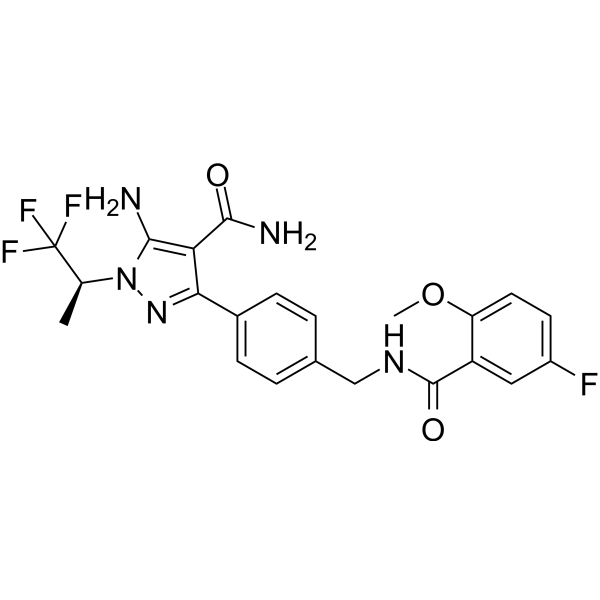
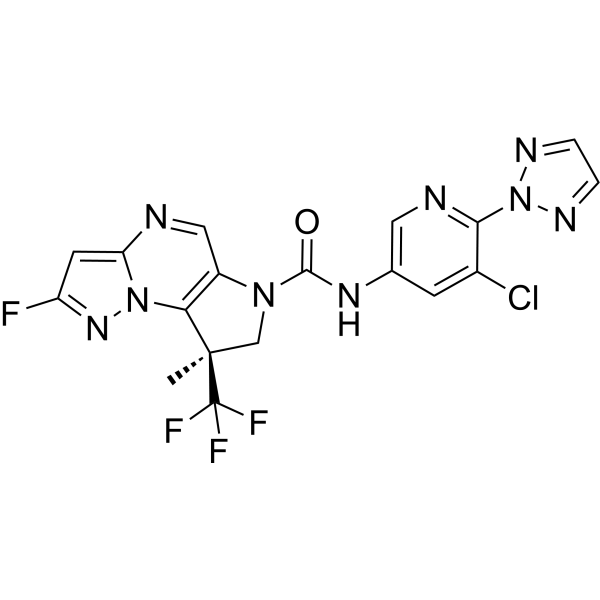
    Pirtobrutinib (LOXO-305), a highly selective and non-covalent next generation BTK inhibitor, inhibits diverse BTK C481 substitution mutations. Pirtobrutinib causes regression of BTK-dependent lymphoma tumors in mouse xenograft models. Pirtobrutinib is also more than 300-fold selective for BTK versus 370 other kinases tested and shows no significant inhibition of non-kinase off-targets at 1 μM .
    Pirtobrutinib
  • HY-P99272
    Ulocuplumab
    1 Publications Verification

    BMS 936564; MDX 1338; Anti-Human CXCR4 Recombinant Antibody

    CXCR Cancer
    Ulocuplumab (Anti-Human CXCR4 Recombinant Antibody/BMS-936564/MDX1338) is a fully human IgG4 anti-CXCR4 antibody. Ulocuplumab induces apoptosis and inhibits CXCL12 mediated CXCR4 activation-migration of chronic lymphocytic leukemia (CLL). Ulocuplumab exhibits antitumor activity in established tumors including acute myeloid leukemia (AML), non-Hodgkin lymphoma (NHL), and multiple myeloma xenograft models .
    Ulocuplumab
  • HY-160698

    MALT1 Apoptosis Cancer
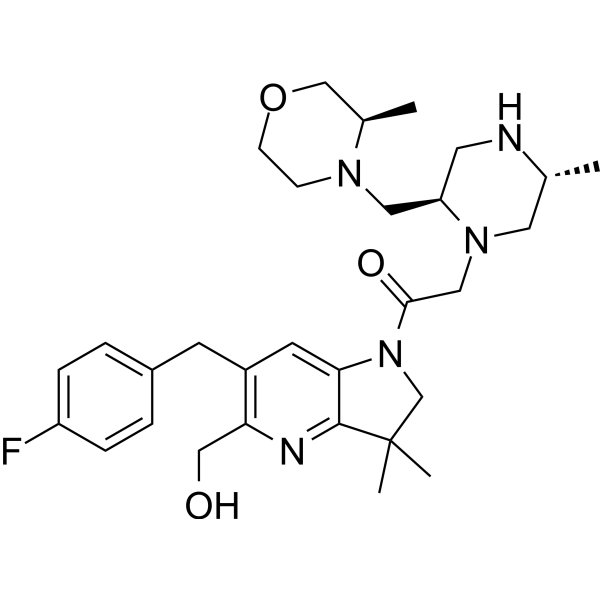
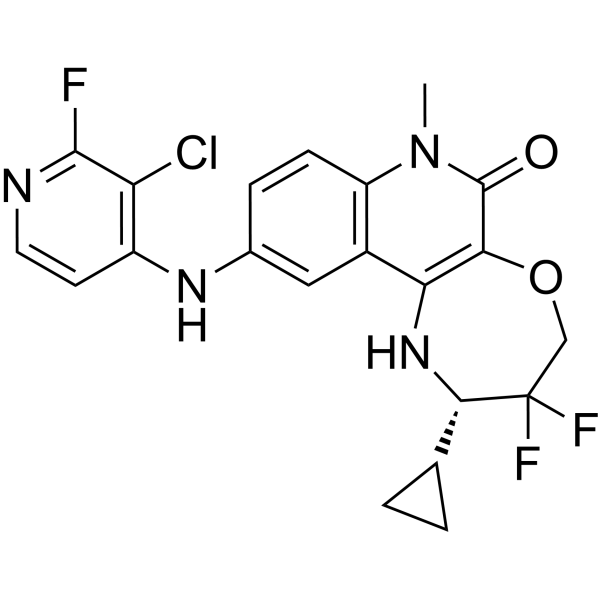
    SGR-1505 is an oral small molecule MALT1 inhibitor with anti-proliferative and antitumor activity.SGR-1505 inhibits MALT1 enzymatic activity to modulate NF-κB pathway gene expression.SGR-1505 induces modulation of cell cycle, DNA damage, and apoptosis-related genes in in vivo tumor samples.SGR-1505 exerts tumorostatic and regressive activity in ABC-DLBCL xenograft models.SGR-1505 can be used for the research of activated B cell-like diffuse large B cell lymphoma, non-Hodgkin B-cell lymphomas, chronic lymphocytic leukemia, and mature B cell neoplasms .
    SGR-1505
  • HY-15163
    Zotiraciclib
    2 Publications Verification

    TG02; SB1317

    JAK CDK FLT3 Cancer
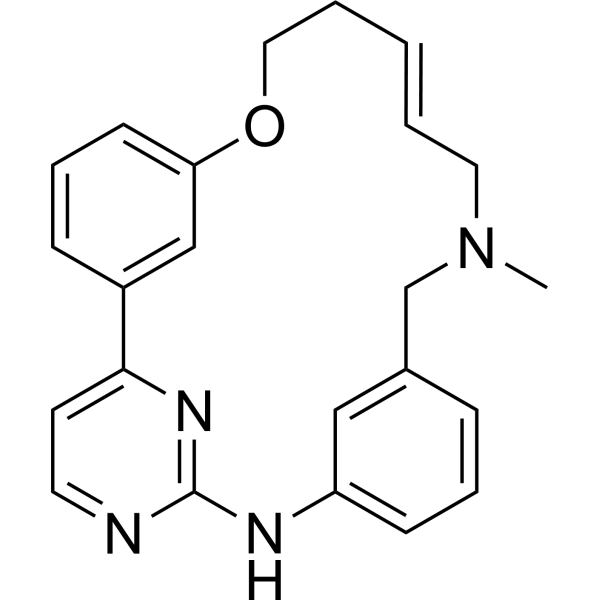
    Zotiraciclib (TG02; SB1317) is an orally active JAK2/FLT3/CDK2 inhibitor with IC50 values of 13 nM, 73 nM and 56 nM , respectively. Zotiraciclib inhibits cancer cell proliferation, tumor growth and the activity of CYP2D6. Zotiraciclib exhibits high plasma protein binding rate, Caco-2 permeability and tissue distribution capacity, as well as metabolic stability in human and canine liver microsomes. Zotiraciclib achieves tumor growth inhibition in nude mouse models of colon cancer and lymphoma xenografts. Zotiraciclib can be used for research related to colon cancer, B-cell lymphoma, advanced leukemia, acute leukemia and multiple myeloma .
    Zotiraciclib
  • HY-P991550

    CD22 Cancer
    RFB4 is an anti-CD22 monoclonal antibody. RFB4 can be fused with Pseudomonas aeruginosa exotoxin (PE38) via disulfide bonds to construct recombinant immunotoxins, such as RFB4 (dsFv)-PE38. RFB4 is applicable to the research of cancers including lymphoma .
    RFB4
  • HY-160142

    PROTACs Btk Syk MEK ERK Cancer
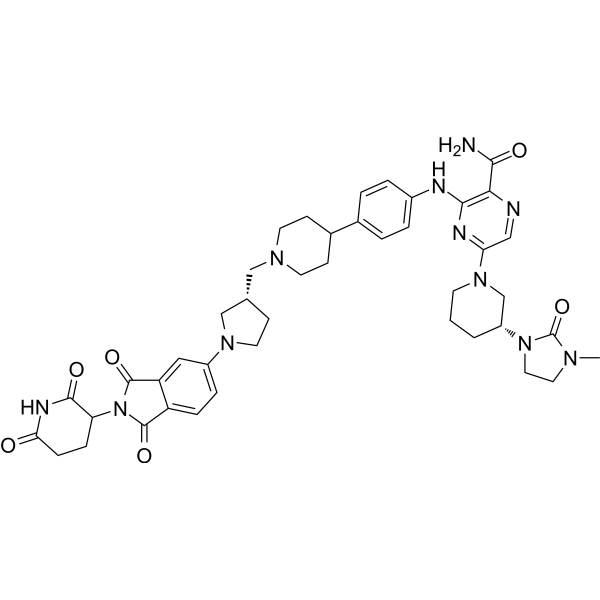
    UBX-382 is an orally active BTK PROTAC degrader with a DC50 of 4.56 nM. UBX-382 inhibits B-cell receptor signaling by targeting BTK. UBX-382 shows superior degradation activity for wild-type and mutant BTK proteins. UBX-382 inhibits tumor growth in murine xenograft models harboring wild-type or C481S mutant BTK-expressing TMD-8 cells. UBX-382 can be used for the study of B-cell-related blood cancers .
    UBX-382
  • HY-153521

    BCL6 Cancer
    CCT374705 is an orally active BCL6 inhibitor (IC50 = 4.8 nM) with potent antiproliferative effects in vitro. CCT374705 effectively inhibits tumor growth in a lymphoma xenograft mouse model .
    CCT374705
  • HY-P99922

    LAG-3 Cancer
    Encelimab is an anti-LAG3 antibody. Encelimab blocks the interaction between LAG-3 and MHC II, and enhances T-cell activation. Encelimab alone or in combination with an anti-PD-1 antibody reduces tumor size in a lymphoma mice model (A20 cell xenograft) .
    Encelimab
  • HY-174371

    Molecular Glues Casein Kinase MDM-2/p53 MALT1 Neurological Disease Cancer
    INNO-220 is an orally active, CRBN-dependent molecular glue degrader targeting CK1α. INNO-220 induces cell cycle arrest at G0/G1 phase and triggers apoptosis by degrading CK1α. INNO-220 disrupts the assembly and function of the CARD11/BCL10/MALT1 complex, thereby inhibiting NF-κB signaling in stimulated T cells and lymphoma cells that harbor an activating mutation in CARD11. INNO-220 provides a new direction for lymphoma research.
    INNO-220
  • HY-119715

    CDK Apoptosis Inflammation/Immunology Cancer
    AG-012986 is a pan-CDK inhibitor with Ki values of 44 nM (CDK1), 9.2 nM (CDK4), 94 nM (CDK2), and IC50 values of 22 nM (CDK5), 4 nM (CDK9). AG-012986 causes apoptosis of T-cells by targeting upstream kinases in the p38 Mitogen-activated protein kinase (MAPK) pathway and impairing cellular survival. AG-012986 induces cell cycle arrest, retinoblastoma protein hypophosphorylation, and reduces Ki-67 expression. AG-012986 exerts antiproliferative activity in tumor cells, demonstrates antitumor efficacy in human xenograft models, and causes retinal and peripheral neurotoxicity, plus immune cell toxicity. AG-012986 can be used for the research of colon carcinoma, non-small cell lung carcinoma, lung carcinoma, breast carcinoma, ovarian tumor, pancreatic carcinoma, osteosarcoma, lymphoma, leukemia, retinotoxicity .
    AG-012986
  • HY-156566

    PROTACs Epigenetic Reader Domain HSP Cancer
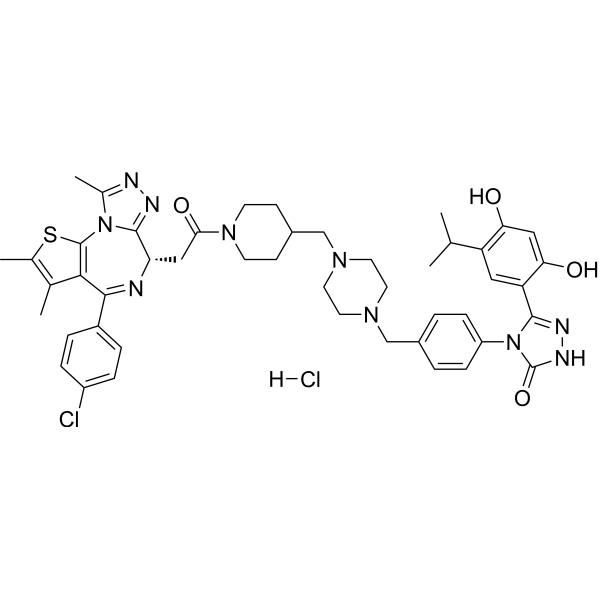
    PROTAC BRD4 Degrader-21 is a BRD4-targeting PROTAC degrader with an IC50 value of 59 nM. PROTAC BRD4 Degrader-21 induces ubiquitination of BRD4, leading to its degradation via the proteasome. PROTAC BRD4 Degrader-21 binds to recombinant HSP90α protein with moderate affinity, having an IC50 of 100-1000 nM. PROTAC BRD4 Degrader-21 induces cancer cell death. PROTAC BRD4 Degrader-21 inhibits tumor growth in xenograft mouse models. PROTAC BRD4 Degrader-21 can be used for the research of acute myeloid leukemia, diffuse large B-cell lymphoma .
    PROTAC BRD4 Degrader-21
  • HY-P991057

    CD47 Cancer
    STI-6643 is a fully human IgG4 antibody that targets CD47. STI-6643 blocks CD47-SIRPα interaction, and enables macrophage-mediated phagocytosis of tumor cells. STI-6643 shows anti-tumor activity in mouse lymphoma xenograft models. STI-6643 can be used for the research of Burkitt's lymphoma, solid tumors, relapsed or refractory tumors, and lymphoma. The isotype control for STI-6643 can refer to Human IgG4 (S228P) kappa, Isotype Control (HY-P99003) .
    STI-6643
  • HY-162651

    PROTACs Epigenetic Reader Domain Apoptosis Cancer
    PROTAC BRD9 Degrader-8 is a selective, orally active BRD9 PROTAC degrader with a DC50 of 16 pM.\nPROTAC BRD9 Degrader-8 induces cell cycle arrest at the G1 phase and promotes apoptosis. PROTAC BRD9 Degrader-8 can be used for research on acute myeloid leukemia and diffuse large B-cell lymphoma .
    PROTAC BRD9 Degrader-8
  • HY-177750

    Molecular Glues Apoptosis Cancer
    TD-522 is a potent and selective molecular glue GSPT1 degrader, with a DC50 of 0.269 nM. TD-522 exhibits strong anti-proliferative effects and induces apoptosis in acute myeloid leukemia (AML) and diffuse large B-cell lymphoma (DLBCL) cells. TD-522 suppresses tumor growth in a TMD-8 xenograft model. TD-522 can be used for AML and DLBCL research .
    TD-522
  • HY-175342

    LOXO-338

    Bcl-2 Family Cancer
    FCN-338 (LOXO-338) is an orally active and selective Bcl-2 inhibitor with an IC50 of 4.5 nM for Bcl-2/BAK interaction. FCN-338 potently inhibits tumor growth in follicular lymphoma (FL), acute myeloid leukemia (AML), and acute lymphoblastic leukemia (ALL) xenograft mice model without significant weight loss. FCN-338 has a broad-spectrum anti-cancer activity, such as FL, CLL/SLL, AML, and ALL .
    FCN-338
  • HY-178777

    PROTACs BCL6 Cancer
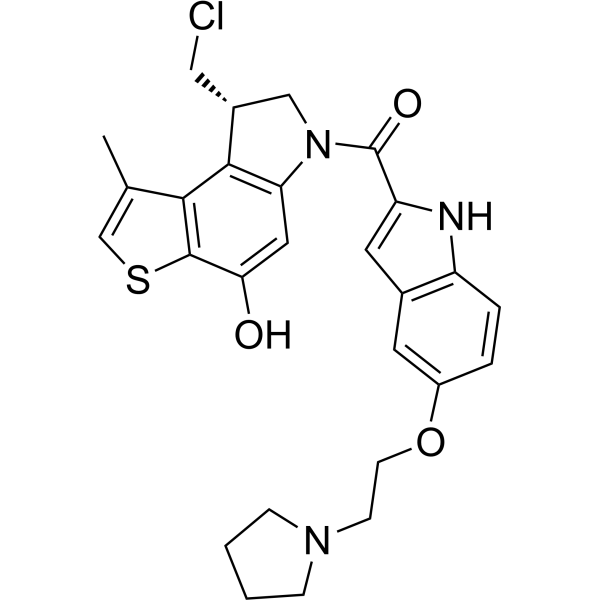
    BCL6-760 is an orally active BCL-6 PROTAC degrader with an EC50 of 0.8 nM. BCL6-760 only degrades BCL6 and has no effect on other CRBN substrates. BCL6-760 demonstrates significant efficacy in the orthotopic xenograft mouse model of OCI-LY-1 tumors. BCL6-760 can be used in the research of diffuse Large B-cell Lymphoma (DLBCL) (Pink: BCL-6 ligand (HY-179317); Blue: CRBN ligand (HY-179305); Black: Linker) .
    BCL6-760
  • HY-178343

    Aurora Kinase Apoptosis Cancer
    Aurora A-IN-5 is a potent and highly selective Aurora A inhibitor (IC50 = 0.02 μM), showing 362-fold selectivity for over Aurora B. Aurora A-IN-5 shows its selectivity through unique C−H/π interactions, enhanced hydrophobic contacts, an open binding pocket, and tighter protein packing. Aurora A-IN-5 suppresses Aurora A autophosphorylation, thereby inhibiting cancer cell proliferation by inducing G2/M phase arrest, triggering apoptosis, and suppressing colony formation. Aurora A-IN-5 inhibits tumor growth in MDA-MB-231 xenograft mouse models. Aurora A-IN-5 can be used for breast, cervical, prostate, and lymphoma cancer research .
    Aurora A-IN-5
  • HY-131902

    MALT1 Cancer
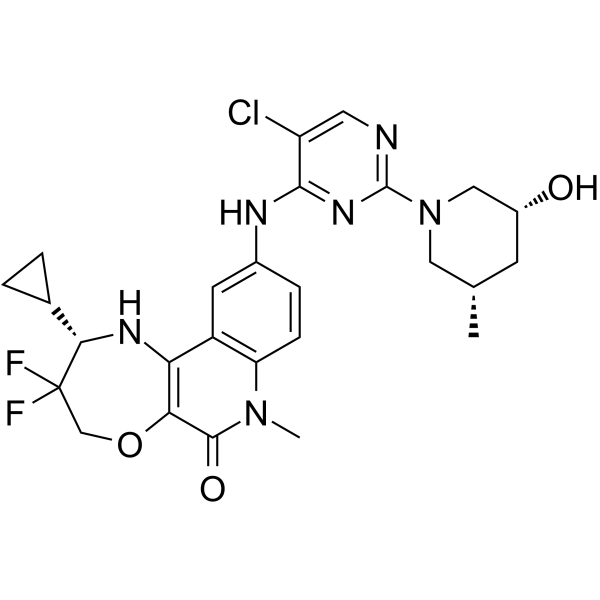
    MLT-231 is a potent, highly selective allosteric MALT1 Inhibitor with an IC50 of 9 nM. MLT-231 specifically prevents endogenous BCL10 cleavage with IC50 of 160 nM. MLT-231 shows antitumor activity in an ABC-DLBCL type xenograft model in mouse .
    MLT-231
  • HY-P991561

    CD47 Cancer
    AO-176 is a humanized anti-CD47 IgG2 monoclonal antibody. AO-176 induces tumor phagocytosis through blocking the CD47-SIRPα interaction. AO-176 preferentially binds to tumor versus normal cells and directly kills tumor by a cell autonomous mechanism not ADCC (antibody-dependent cell-mediated cytotoxicity). AO-176 demonstrates dose-dependent antitumor activity in tumor xenograft models. AO-176 can be used for the researches of cancer, such as lymphoma .
    AO-176
  • HY-120406

    Btk Akt mTOR p38 MAPK ERK CCR Apoptosis Cancer
    LPS-123 is a covalently irreversible BTK inhibitor with an IC50 of < 5 nM. LPS-123 simultaneously inhibits the catalytic activity of BTK at Tyr551 and its self-activation at Tyr223. LPS-123 inhibits phosphorylation of the AKT/mTOR and MAPK signaling pathways, activation of PLCγ2, ERK1/2, p38, AKT, and mTOR, and blocks the production of CCL3 and CCL4 chemokines. LPS-123 exhibits significant anti-proliferative activity against various B-cell lymphoma cell lines and effectively induces apoptosis via a caspase-dependent pathway. LPS-123 also demonstrates significant antitumor activity in the OCI-Ly7 xenograft model. LPS-123 can be used for lymphoma research .
    PLS-123
  • HY-151808

    Btk Neurological Disease Inflammation/Immunology Cancer
    JS25 is a selective and covalent inhibitor of BTK that inactivates BTK with an IC50 value of 5.8 nM by chelating Tyr551. JS25 inhibits cancer cells proliferation, pronounces cell death, and promotes murine xenograft model of Burkitt’s lymphoma. JS25 effectively crosses the blood-brain barrier .
    JS25
  • HY-183103

    Bcr-Abl Src Btk Cancer
    PDD-87 is an orally active, blood-brain barrier permeable kinase inhibitor, with IC50 values ranging from 0.07 nM to 0.72 nM against ABL, SRC family, BTK kinases and their key mutants. PDD-87 induces antiproliferative effects in leukemia and lymphoma cells, and inhibits tumor growth in mouse xenograft models. PDD-87 can be used for the research of leukemia and lymphoma .
    PDD-87
  • HY-182922

    PROTACs STAT Cancer
    SD-965 is a selective STAT3 PROTAC degrader with a DC50 of 0.14 μM. SD-965 promotes the ubiquitination and degradation of STAT3. SD-965 induces rapid, complete and persistent depletion of STAT3 protein. SD-965 induces tumor regression in mouse xenograft models of leukemia and lymphoma .
    SD-965
  • HY-P992032

    BAY-943 antibody

    Interleukin Related Cancer
    TPP-9476 (BAY-943 antibody) is an anti-human IL3RA (CD123) monoclonal antibody with human IL3RA Kd of 11 nM and cynomolgus monkey IL3RA Kd of 16 nM. TPP-9476 binds specifically to human and cynomolgus monkey IL3RA, undergoes target-dependent internalization into lysosomes of IL3RA-positive cells.TPP-9476 exerts antiproliferative effects in IL3RA-expressing acute myeloid leukemia and classical Hodgkin lymphoma cells, reduces tumor burden, improves survival, and induces complete tumor remission in relevant xenograft mouse models .
    TPP-9476
  • HY-183643

    DNA/RNA Synthesis Cancer
    RUVBL1/2-IN-1 is an orally active RUVBL1/2 complex inhibitor with an EC50 of 0.012 μM against human targets. RUVBL1/2-IN-1 impairs ATPase-related functions, thereby reducing nuclear MYC protein levels, impairing DNA damage response and inhibiting cancer cell proliferation. In a MYC-dependent Burkitt's lymphoma xenograft model, RUVBL1/2-IN-1 effectively inhibits tumor growth and suppresses the activity of RUVBL1 R117H mutant cells. RUVBL1/2-IN-1 has been applied in research related to MYC-dependent Burkitt's lymphoma .
    RUVBL1/2-IN-1
  • HY-P992404

    TNF Receptor Cancer
    MDX-1401 is a fully human IgG1 (κ isotype) monoclonal antibody against CD30, with a Kd value of 0.83 nmol/L. MDX-1401 induces antibody-dependent cellular cytotoxicity in CD30-expressing cells and inhibits tumor growth in CD30 + lymphoma xenograft models. MDX-1401 can be used in research related to malignant lymphoma and Hodgkin lymphoma .
    MDX-1401
  • HY-148640

    BCL6 MDM-2/p53 Histone Methyltransferase CXCR Apoptosis Cancer
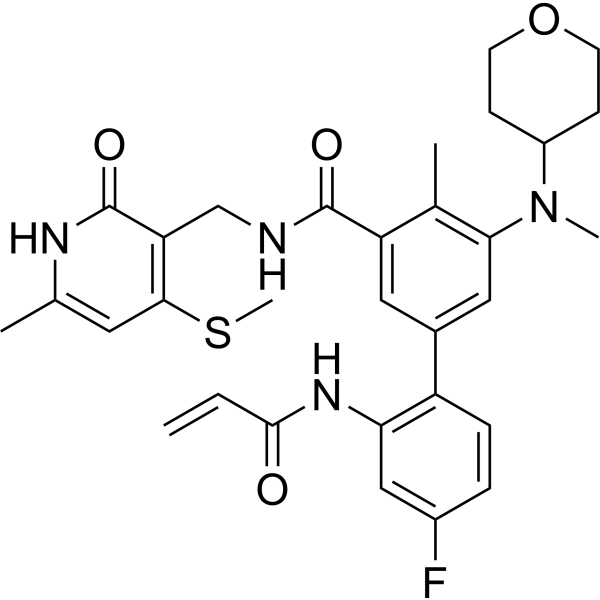
    WK500B is a potent and orally active BCL6 inhibitor with a KD of 1.61 μM. WK500B engages intracellular BCL6 and disrupts BCL6‑corepressor interactions to reactivate BCL6 target genes. WK500B exerts cytotoxicity against diffuse large B‑cell lymphoma cells and induces apoptosis and cell cycle arrest. WK500B suppresses germinal center formation in C57BL/6 mice and DLBCL tumor growth in SCID xenograft models without observable toxicity. WK500B can be used for the study of diffuse large B‑cell lymphoma (DLBCL) .
    WK500B
  • HY-182009

    DNA Methyltransferase Apoptosis Caspase Mitochondrial Metabolism Cancer
    DNMT-IN-6 is a DNA methyltransferase inhibitor with activity against DNMT1, DNMT3A, and DNMT3B. DNMT-IN-6 drives demethylation, and restores TMS1 tumor suppressor gene expression. DNMT-IN-6 induces apoptosis, causes G2/M phase arrest, disrupts mitochondrial integrity, and activates the intrinsic caspase cascade (3/7/9). DNMT-IN-6 inhibits tumor growth, and improves survival in xenograft models. DNMT-IN-6 can be used for the research of cancer, such as diffuse large B-cell lymphoma .
    DNMT-IN-6
  • HY-185488

    DNA Alkylator/Crosslinker ADC Payload Cancer
    seco-CBI dimer is a DNA alkylating agent and a prodrug of Duocarmycin, which can serve as a payload for synthesizing antibody-drug conjugates (ADCs). seco-CBI dimer binds to the minor groove of A-T-rich regions in DNA, alkylates the N3 position of adenine residues, and induces DNA strand breaks. seco-CBI dimer can be used in the research of non-Hodgkin's lymphoma .
    seco-CBI dimer
  • HY-185492

    Drug-Linker Conjugates for ADC DNA Alkylator/Crosslinker Cancer
    MC-cBu-Cit-seco-CBI dimer (Compound 10) is a conjugate of an ADC drug toxin molecule and a linker, which consists of a DNA alkylating agent connected to a reactive maleimide via a protease-cleavable peptidomimetic linker .
    MC-cBu-Cit-seco-CBI dimer
  • HY-180818

    Anaplastic lymphoma kinase (ALK) Apoptosis Cancer
    ALK-IN-33 (Compound 8q) is an orally active ALK inhibitor with an IC50 of 1.61 nM. ALK-IN-33 exhibits significant selective killing effect on ALK-positive cancer cells. ALK-IN-33 induces cell cycle arrest and apoptosis, effectively weakening the migration, invasion and long-term survival ability of cancer cells. ALK-IN-33 can be used for research on non-small cell lung cancer
    ALK-IN-33
  • HY-P992211

    Fc Receptor (FcR) Cancer
    Anti-CD32b/FCGR2B Antibody (2B6) is a human monoclonal antibody targeting CD32B. Anti-CD32b/FCGR2B Antibody (2B6) can be used for research on B-cell lymphoma .
    Anti-CD32b/FCGR2B Antibody (2B6)
  • HY-P11779

    Drug-Linker Conjugates for ADC Microtubule/Tubulin Cancer
    Ac-RKAA-PABC-MMAE is a Drug-Linker Conjugates for ADC. Ac-RKAA-PABC-MMAE consists of the ADC Cytotoxin MMAE (HY-15162) and a linker. Ac-RKAA-PABC-MMAE can be used for synthesis of ADCs .
    Ac-RKAA-PABC-MMAE
  • HY-182470

    CDK
    AG-012986 (dihydrochloride) is a pan-CDK inhibitor with Ki values of 44 nM (CDK1), 9.2 nM (CDK4), 94 nM (CDK2), and IC50 values of 22 nM (CDK5), 4 nM (CDK9). AG-012986 (dihydrochloride) causes apoptosis of T-cells by targeting upstream kinases in the p38 Mitogen-activated protein kinase (MAPK) pathway and impairing cellular survival. AG-012986 (dihydrochloride) induces cell cycle arrest, retinoblastoma protein hypophosphorylation, and reduces Ki-67 expression. AG-012986 (dihydrochloride) exerts antiproliferative activity in tumor cells, demonstrates antitumor efficacy in human xenograft models, and causes retinal and peripheral neurotoxicity, plus immune cell toxicity. AG-012986 (dihydrochloride) can be used for the research of colon carcinoma, non-small cell lung carcinoma, lung carcinoma, breast carcinoma, ovarian tumor, pancreatic carcinoma, osteosarcoma, lymphoma, leukemia, retinotoxicity .
    AG-012986 dihydrochloride
  • HY-P992417

    CD20 Apoptosis Cancer
    MT-3724 is a CD20-targeted endotoxin B. MT-3724 binds to CD20, triggers receptor internalization, traffics to the endoplasmic reticulum, and induces permanent ribosomal inactivation to mediate cell killing. MT-3724 can inhibit protein synthesis and promote tumor cell apoptosis. MT-3724 can be used for the research of relapsed or refractory B-cell non-Hodgkin’s lymphomas and diffuse large B-cell lymphoma .
    MT-3724
  • HY-185484

    BMS-936561

    Antibody-Drug Conjugates (ADCs) Transmembrane Glycoprotein Cancer
    MDX-1203 (BMS-936561) is an antibody-drug conjugate targeting CD70. MDX-1203 binds to CD70 and mediates the specific delivery of its conjugated cytotoxic payload to tumors. MDX-1203 delivers a DNA alkylating payload into cells. MDX-1203 can be used in research related to advanced clear cell renal cell carcinoma and relapsed/refractory B-cell non-Hodgkin lymphoma .
    MDX-1203
  • HY-P991935

    Apoptosis Cancer
    ANT1034 is humanized anti-CD52 antibody. ANT1034 directs antibody dependent and complement dependent cell cytotoxicity, induces Apoptosis when cross-linked or in the presence of a cross-linking antibody. ANT1034 leads to increased survival in a SCID CD52 tumour xenograft model. ANT1034 can be used for the research of B cell malignancies .
    ANT1034

Inquiry Online

Your information is safe with us. * Required Fields.

Salutation


Country or Region *

Applicant Name *


Organization Name *

Department *


Email Address *


Product Name *

Cat. No.


Requested quantity *

Phone Number *


Remarks

Inquiry Online

Inquiry Information

Product Name:
Cat. No.:
Quantity:
MCE Japan Authorized Agent:

