






19 Results for "

membrane internalization

" in MedChemExpress (MCE) Product Catalog:
Products (19)

19 Results for "membrane internalization" in MCE Product Catalog:

2
2 Cited Publications
Cat. No.: HY-P2259
CAS No.: 1404188-93-7
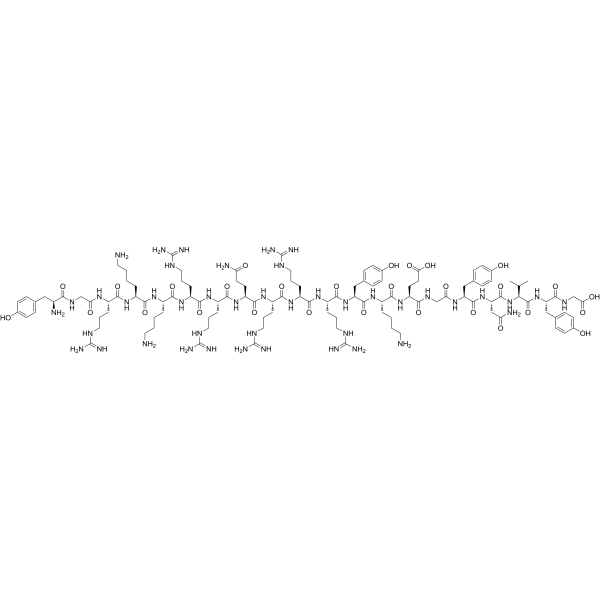
TAT-GluA2 3Y is a blood-brain barrier-permeable AMPA receptor inhibitory peptide that crosses cell membranes via the HIV-1 TAT protein domain. TAT-GluA2 3Y blocks the endocytosis of AMPA receptors, including the internalization of GluA1/GluA2 subunits, by disrupting interactions with the AP2, Brag2 and Syt3-GluA2 complexes, while also inhibiting long-term depression. TAT-GluA2 3Y blocks hypoxia-mediated AMPAR internalization, alleviates A1R-induced persistent synaptic inhibition, and reduces cerebral ischemic volume, neurological deficits and spatial memory deficits. TAT-GluA2 3Y blocks the effect of NLRP3 deficiency on fear generalization, inhibits amphetamine-induced behavioral/neurochemical sensitization, weakens the unconditioned stimulus-conditioned stimulus association of morphine, and promotes the extinction of morphine CPP. TAT-GluA2 3Y can be used in studies related to fear generalization, ischemic stroke, hypoxia, drug addiction and opioid addiction .
loading...
    loading...
2
2 Cited Publications
Cat. No.: HY-D1746
CAS No.: 162303-59-5
Synonyms: EDTA acetoxymethyl ester; Ethylenediaminetetraacetic acid acetoxymethyl ester
EDTA-AM (ethylenediaminetetraacetic acid, acetoxymethyl ester) is the membrane-permeant form of the metal chelator EDTA (HY-Y0682). Live cells passively load EDTA-AM by incubating with EDTA-AM. Once internalized, cytoplasmic esterase decomposes AM esters, releasing the active ligand EDTA, which isolates metal ions within the cell. EDTA-AM induces an arrest of mitotic progression and chromosome decondensation .
loading...
    loading...
1
1 Cited Publications
Cat. No.: HY-P99813
CAS No.: 2227102-46-5
Synonyms: HER3-DXd; U3-1402
Research Areas:  

Cancer

Patritumab deruxtecan (HER3-DXd) is an antibody-drug conjugate (ADC) targeting HER3, consisting of the anti-HER3 IgG1 antibody Patritumab (HY-P99275), a cleavable tetrapeptide linker, and the membrane-permeable topoisomerase I (Topoisomerase Ⅰ) inhibitor DXd (HY-13631D). After binding to membrane-localized HER3, Patritumab deruxtecan is internalized into lysosomes, where the linker is cleaved to release DXd. DXd enters the nucleus to induce DNA damage and cell death, and exerts a bystander effect via transmembrane diffusion. Patritumab deruxtecan reduces the viability of HER3-positive cells and induces features of immunogenic cell death including CALR membrane exposure, ATP and HMGB1 release, and can be used in studies related to HER3-positive breast cancer and non-small cell lung cancer .
loading...
    loading...
1
1 Cited Publications
Cat. No.: HY-131683
CAS No.: 55854-43-8
Purity:  99.87%
Target:  

Dynamin Clathrin

Research Areas:  

Others

ES9-17 is an analog of ES9 (endosidin9), which is an inhibitor of clathrin heavy chain (CHC). ES9-17 is an inhibitor of clathrin-mediated endocytosis (CME), a major route for internalization of plasma membrane proteins and molecules from the extracellular environment in plants. ES9-17 inhibits the uptake of transferrin and FM4-64. ES9-17 also inhibits root growth of Arabidopsis seedings .
loading...
    loading...
Cat. No.: HY-P9990
CAS No.: 2407378-48-5
Synonyms: BIIB059
Litifilimab (BIIB059) is a humanized IgG1 monoclonal antibody targeting BDCA2. Litifilimab induces internalization of BDCA2 receptors on the membrane of plasmacytoid dendritic cells, inhibits the TLR7/TLR9 signaling pathway, and suppresses the production of type I interferons. Litifilimab can be used in the research of systemic and cutaneous lupus erythematosus .
loading...
    loading...
Cat. No.: HY-144012
CAS No.: 474922-84-4
Purity:  99.83%
Synonyms: 16:0 PEG2000 PE ammonium; 1,2-Dipalmitoyl-sn-glycero-3-phosphoethanolamine-N-[methoxy(polyethylene glycol)-2000] ammonium
Target:  

Liposome

Research Areas:  

Others

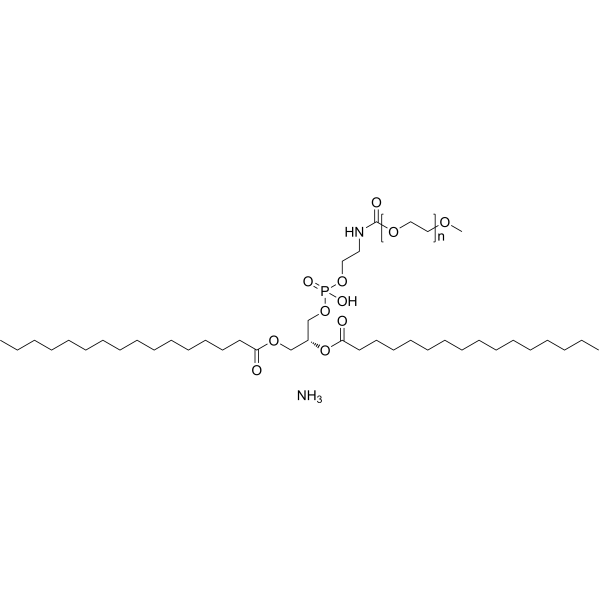
DPPE-PEG2000 ammonium (16:0 PEG5000 PE) is a polymer-lipid conjugate and LipoParticle stabilizer with a PEG chain of 5,000 g/mol molecular weight attached to its polar head, and it can be internalized by biological membranes. DPPE-PEG2000 ammonium enables LipoParticle to maintain colloidal stability after 20-fold dilution in PBS or cell culture medium, and prevents aggregate formation during lyophilization and rehydration. DPPE-PEG2000 ammonium helps enhance the non-cytotoxic property of LipoParticle formulations against human osteoblasts. DPPE-PEG2000 ammonium serves as a PEG lipid functional end group for synthesizing liposomes (LPs), is used in the design of conjugated polymer nanoparticles, and applies to research related to bone and joint infections .
loading...
    loading...
Cat. No.: HY-P1889
CAS No.: 721885-31-0
Target:  

Bcl-2 Family Amyloid-β

Research Areas:  

Neurological Disease

Bim BH3, Peptide IV is an 42-binding peptide and the pro-apoptotic BH3 domain of the BIM protein. Bim BH3, Peptide IV binds 42 with a Kd of 7.1 μM. Bim BH3, Peptide IV modulates 42 structure, fibrillization pathways, aggregate morphology, and membrane interactions, inhibiting fibril formation while enhancing protofibril assembly. Bim BH3, Peptide IV promotes 42 β-sheet formation and accelerates aggregation. Bim BH3, Peptide IV enhances 42 membrane internalization and bilayer stiffening. Bim BH3, Peptide IV induces neuronal cell death by enhancing BH3-induced membrane interactions of 42 prefibrillar species. Bim BH3, Peptide IV can be used for research on Alzheimer's disease .
loading...
    loading...
Cat. No.: HY-144012H
CAS No.: 474922-84-4
Synonyms: 16:0 PEG5000 PE; 1,2-Dipalmitoyl-sn-glycero-3-phosphoethanolamine-N-[methoxy(polyethylene glycol)-5000] ammonium
Target:  

Liposome

Research Areas:  

Others

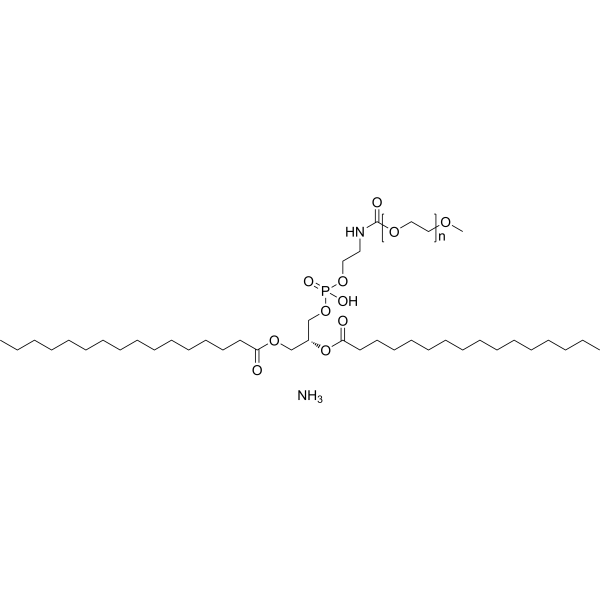
DPPE-PEG5000 (16:0 PEG5000 PE) is a polymer-lipid conjugate and LipoParticle stabilizer with a PEG chain of 5,000 g/mol molecular weight attached to its polar head, and it can be internalized by biological membranes. DPPE-PEG5000 enables LipoParticle to maintain colloidal stability after 20-fold dilution in PBS or cell culture medium, and prevents aggregate formation during lyophilization and rehydration. DPPE-PEG5000 helps enhance the non-cytotoxic property of LipoParticle formulations against human osteoblasts. DPPE-PEG5000 serves as a PEG lipid functional end group for synthesizing liposomes (LPs), is used in the design of conjugated polymer nanoparticles, and applies to research related to bone and joint infections .
loading...
    loading...
Cat. No.: HY-129615
CAS No.: 949575-20-6
Research Areas:  

Cancer

MIP-1072 is a competitive prostate-specific membrane antigen (PSMA) inhibitor with a Ki value of 4.6 nM. MIP-1072 specifically binds to PSMA and is internalized into PSMA-expressing prostate cancer cells. MIP-1072 accumulates in PSMA-expressing prostate cancer xenografts. MIP-1072 specifically blocks the uptake of 68Ga-NOTA-GUL by PSMA-positive prostate cancer xenografts. When radiolabeled with 123I, MIP-1072 functions as a SPECT/CT molecular imaging agent. MIP-1072 can be used in prostate cancer-related research .
loading...
    loading...
Cat. No.: HY-P3852
CAS No.: 153607-26-2
Synonyms: SPR393-407
Neurokinin Receptor (393-407), rat (SPR393–407) is a rat neurokinin 1 receptor (NK1R) fragment. NK1R is rapidly internalized by endocytosis and recycled to the plasma membrane when binding to substance P (SP). Neurokinin Receptor (393-407), rat can be used in the research of neurogenic inflammation .
loading...
    loading...
Cat. No.: HY-177345A
CAS No.: 913816-12-3
Research Areas:  

Cancer

SV119 hydrochloride is a sigma-2 ligand with a Ki value of 5.2 nM. SV119 hydrochloride enhances the efficient transport of drugs across the plasma membrane of cancer cells. The conjugation of dm-Erastin with SV119 hydrochloride successfully overcomes the internalization barrier observed in pancreatic cancer, while preserving the inherent anti-tumor activity of Erastin (HY-15763). Additionally, SV119 hydrochloride demonstrates cytotoxic effects on triple-negative breast cancer (TNBC) cells and induces apoptosis .
loading...
    loading...
Cat. No.: HY-P1889A
Target:  

Bcl-2 Family Amyloid-β

Research Areas:  

Neurological Disease

Bim BH3, Peptide IV TFA is an 42-binding peptide and the pro-apoptotic BH3 domain of the BIM protein. Bim BH3, Peptide IV TFA binds 42 with a Kd of 7.1 μM. Bim BH3, Peptide IV TFA modulates 42 structure, fibrillization pathways, aggregate morphology, and membrane interactions, inhibiting fibril formation while enhancing protofibril assembly. Bim BH3, Peptide IV TFA promotes 42 β-sheet formation and accelerates aggregation. Bim BH3, Peptide IV TFA enhances 42 membrane internalization and bilayer stiffening. Bim BH3, Peptide IV TFA induces neuronal cell death by enhancing BH3-induced membrane interactions of 42 prefibrillar species. Bim BH3, Peptide IV TFA can be used for research on Alzheimer's disease .
loading...
    loading...
Cat. No.: HY-121364
CAS No.: 1416130-06-7
Research Areas:  

Others

Bodilisant is a histamine H3 receptor (hH3R) ligand and imaging/labeling agent, with a Ki value of 6.51 nM for hH3R. Bodilisant binds to hH3R to produce strong green fluorescence, localizes to the extracellular membrane without internalization, and generates clear, displaceable fluorescent labeling of hH3R in native human brain tissues. Bodilisant serves as a pharmacological tool to visualize the distribution of hH3R via fluorescence confocal laser scanning microscopy .
loading...
    loading...
Cat. No.: HY-D3385
Target:  

Fluorescent Dye

Research Areas:  

Others

AM4-66 is a fluorescent dye used for cell membrane surface labeling. AM4-66 serves as a cell membrane surface marker and can label intact plasma membranes; when used sequentially with fluid-phase endocytosis markers such as fluorescent dextran, it does not stain dextran-positive intracellular structures that have detached from the cell surface, thus confirming that these internalized membranes no longer belong to the intact cell membrane surface (Ex/Em = 510/750 nm) .
loading...
    loading...
Cat. No.: HY-P992094
CAS No.: 151763-64-3

Target:  

PSMA

Research Areas:  

Cancer

Capromab is an anti-human PSMA-targeting monoclonal antibody. Capromab binds specifically to the intracellular domain of PSMA, does not undergo internalization after binding, and targets necrotic cells with disrupted membranes. Capromab can be used for the research of prostate cancer .
loading...
    loading...
Cat. No.: HY-D3419
Neuro-DiO 4-chlorobenzenesulfonate is a hydrophobic C18 alkyl chain carbocyanine dye with green fluorescence, commonly used as a vascular marker, cell internalizer and deposition agent. Neuro-DiO 4-chlorobenzenesulfonate inserts its alkyl chain into the endothelial plasma membrane via liposome-mediated perfusion to achieve vascular labeling. Neuro-DiO chlorobenzenesulfonate can also stain the cell membrane and cytoplasm of cancer cells to assist in confocal microscopy observations. Neuro-DiO chlorobenzenesulfonate can be released from nanosponges and accumulate on the surface of mouse retina, then internalize into retinal ganglion cells, which is applicable to researches related to glaucoma and other diseases. It should be noted that during liposome-mediated vascular staining in mice, Neuro-DiO 4-chlorobenzenesulfonate may cause leakage of airway lavage fluid .
loading...
    loading...
Cat. No.: HY-D3383
Target:  

Fluorescent Dye

Research Areas:  

Neurological Disease

AM4-64 is a fixable cationic styryl fluorescent dye for nerve terminals, which can be used for vesicle cycle evaluation, endocytic pathway tracing and endocytosis detection. AM4-64 inserts into the plasma membrane, is internalized via activity- or energy-dependent endocytosis, and accumulates in vesicles, endosomal compartments, vacuolar membranes, mitochondria and endolysosomal structures. The fluorescence of AM4-64 is enhanced in the membrane-bound state. AM4-64 is applicable to relevant studies on neurons, plant and fungal cells and tissues (Ex/Em = 510/750 nm) .
loading...
    loading...
Cat. No.: HY-P10370B
Target:  

Apoptosis Caspase

Research Areas:  

Cancer

d-(KLAKLAK)2, Proapoptotic Peptide acetate is a pro-Apoptotic peptide whose core mechanism of action is to disrupt organelle membranes, especially mitochondrial membranes, thereby inducing apoptosis. d-(KLAKLAK)2, Proapoptotic Peptide acetate activates the activity of caspase 3/7 in cancer cells. Although d-(KLAKLAK)2 Proapoptotic Peptide acetate exhibits very low toxicity to eukaryotic cells extracellularly, it cannot effectively penetrate cell membranes to enter the cytoplasm on its own. d-(KLAKLAK)2, Proapoptotic Peptide acetate must be conjugated with a carrier capable of "homing" and "internalization" to exert its anti-cancer effects .
loading...
    loading...
Cat. No.: HY-D3573
Research Areas:  

Others

AF488 C5 Maleimide is a thiol-reactive Fluorescent dye used to label target proteins and bacterial structures. AF488 C5 Maleimide irreversibly forms covalent thioether conjugates with cysteine ​​thiol groups. AF488 C5 Maleimide stabilizes pre-formed globular low-molecular-weight Tau protein oligomers by blocking cysteine-dependent tau protein aggregation, allowing observation of the internalization process of tau protein oligomers into neuronal cells via confocal microscopy. AF488 C5 Maleimide can label cysteine-modified pili; the outer membrane permeability varies among different bacterial species, allowing imaging via epifluorescence microscopy using a FITC filter set .
loading...
    loading...
  • 1

