


1. Search Result
Search Result
Results for "

metastatic inhibition

" in MedChemExpress (MCE) Product Catalog:

14

Inhibitors & Agonists

3

Fluorescent Dyes

1

Biochemical Assay Reagents

4

Inhibitory Antibodies

3

Natural
Products

1

Recombinant Proteins

4

Antibodies

1

GMP Molecules

Cat. No. Product Name Target Research Areas Chemical Structure
  • HY-P99016B
    Enfortumab vedotin-ejfv (solution)
    1 Publications Verification

    Antibody-Drug Conjugates (ADCs) Nectin-4 Cancer
    Enfortumab vedotin-ejfv (solution) is an anti-Nectin-4 antibody-drug conjugate (ADC). Enfortumab vedotin-ejfv (solution) is a fully humanized IgG1 antibody conjugated to the microtubule disrupting agent MMAE (HY-15162) via a protease-cleavable Val-Cit linker. The antibody portion is Enfortumab (HY-P99016), and the drug-linker conjugate for ADC is VcMMAE (HY-15575). Nectin-4 is an adhesion protein involved in cellular processes and tumorigenesis, and Enfortumab vedotin-ejfv (solution) is indicated for the inhibition of locally advanced or metastatic urothelial carcinoma .
    Enfortumab vedotin-ejfv (solution)
  • HY-P99016A
    Enfortumab vedotin-ejfv
    1 Publications Verification

    Antibody-Drug Conjugates (ADCs) Nectin-4 Cancer
    Enfortumab vedotin-ejfv is an anti-Nectin-4 antibody-drug conjugate. Enfortumab vedotin-ejfv is a fully humanized IgG1 antibody conjugated to the microtubule disrupting agent MMAE (HY-15162) via a protease-cleavable Val-Cit linker. The antibody portion is Enfortumab (HY-P99016), and the drug-linker conjugate for ADC is VcMMAE (HY-15575). Nectin-4 is an adhesion protein involved in cellular processes and tumorigenesis, and Enfortumab vedotin-ejfv is indicated for the inhibition of locally advanced or metastatic urothelial carcinoma .
    Enfortumab vedotin-ejfv
  • HY-P991097

    PM-8002; BNT-327

    VEGFR PD-1/PD-L1 Cancer
    Pumitamig (PM-8002, BNT-327) is a bispecific antibody targeting PD-L1 and VEGF-A, with immune activation and anti-angiogenic activities. By binding to PD-L1, Pumitamig restores the function of effector T cells, while neutralizing VEGF-A in the tumor microenvironment to reverse its inhibition on the infiltration and activation of immune cells and normalize tumor blood vessels. Pumitamig can also be combined with various ADCs targeting TROP2, B7H3, HER2, HER3 for the research of advanced/metastatic solid tumors, including non-small cell lung cancer, ovarian cancer, triple-negative breast cancer, cervical cancer, etc. Pumitamig also exhibits potential efficacy in "cold" tumors with low PD-L1 expression that are insensitive to immunotherapy .
    Pumitamig
  • HY-159642

    TYRA-300

    FGFR ERK Metabolic Disease Cancer
    Dabogratinib (TYRA-300) is an orally active, selective FGFR3 inhibitor with an IC50 of 11 nM. Dabogratinib exhibits antitumor activity against urothelial carcinoma and solid tumors. Dabogratinib downregulates the FGFR3 and ERK1/2 signaling pathways, and induces tumor growth inhibition and regression in FGFR3-altered xenograft models. Dabogratinib promotes chondrocyte proliferation and differentiation, drives endochondral bone formation and overall body growth, partially restores long bone proportions, and improves craniofacial and spinal morphology. Dabogratinib can be used for the research of metastatic urothelial carcinoma, achondroplasia and hypochondroplasia .
    Dabogratinib
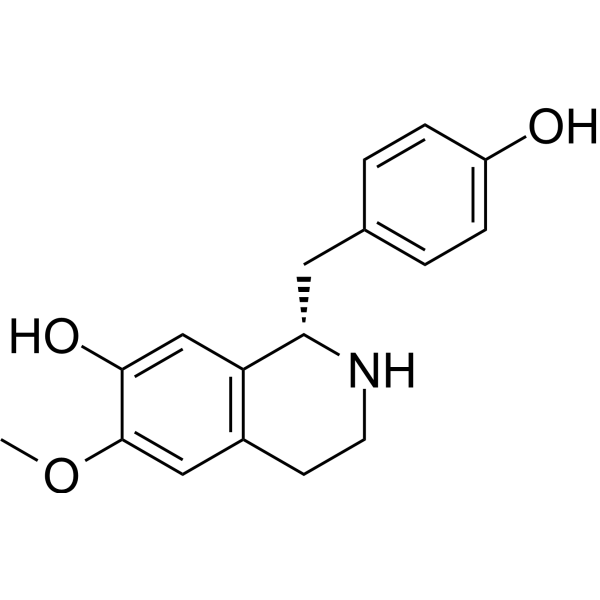
  • HY-N3610
    Coclaurine
    1 Publications Verification

    nAChR Cancer
    Coclaurine is a class of tetrahydroisoquinoline alkaloids that can be isolated from Sarcopetalum harveyanum with anticancer activity. Coclaurine is a nicotinic acetylcholine receptor (nAChRs) antagonist. Coclaurine is a key molecule in S. tetrandra responsible for EFHD2 inhibition. Coclaurine can downregulate EFHD2-related NOX4-ABCC1 signaling and enhanced Cisplatin (HY-17394) sensitivity. Coclaurine suppresses the stemness and metastatic properties of NSCLC cells. Coclaurine disrupts the interaction between the transcription factor FOXG1 and the EFHD2 promoter, leading to a reduction in EFHD2 transcription .
    Coclaurine
  • HY-P99291

    LM609; MEDI-522

    Integrin Apoptosis Akt Cancer
    Etaracizumab (LM 609) is an αvβ3 integrin IgG mAb. Etaracizumab is developed to target αvβ3+ cancer cells via NK cell-mediated cytotoxicity. Etaracizumab sterically hinders access of large ligands to the RGD-binding pocket, without obstructing it. Etaracizumab decreases p-Akt in vitro. Etaracizumab can decrease cancer proliferation and invasion. Etaracizumab induces tumor cell apoptosis, and inhibition ofαvβ3-mediated cell adhesion, endothelial cell migration and osteoclast-mediated bone resorption. Etaracizumab can be studied in anti-tumor research against cancers such as ovarian cancer, metastatic melanoma as well as advanced solid tumors. Recommend Isotype Control: Human IgG1 kappa, Isotype Control (HY-P99001) .
    Etaracizumab
  • HY-P990704

    AZD-2936

    PD-1/PD-L1 Transmembrane Glycoprotein Cancer
    Rilvegostomig (AZD-2936) is a bispecific humanized IgG1 antibody targeting PD-1 and TIGIT. Rilvegostomig induces tumor growth inhibition and modulates the tumor immune microenvironment. Rilvegostomig exhibits anti-tumor activity in metastatic non-small cell lung cancer (without prior immune checkpoint inhibitor treatment). Rilvegostomig can be used in research related to metastatic non-small cell lung cancer and endometrial cancer .
    Rilvegostomig
  • HY-130326

    Ru(η6-p-cymene)Cl2(pta)

    Apoptosis Caspase Cardiovascular Disease Cancer
    RAPTA-C (Ru(η6-p-cymene)Cl2(pta)) acts as an anti-cancer and anti-angiogenic agent. RAPTA-C exhibits anti-metastatic, anti-angiogenic, and anti-tumoral activities through protein and histone-deoxyribonucleic acid alterations. RAPTA-C exhibits cell growth inhibition by triggering G(2)/M phase arrest in cancer cells. RAPTA-C also enhances the levels of p53 and triggers the mitochondrial Apoptotic pathway, resulting in cytochrome C release and caspase-9 activation. RAPTA-C reduces the growth of tumors with the inhibition of angiogenesis in a ovarian carcinoma model .
    RAPTA-C
  • HY-158119A

    Felivotide mopaxetan

    PSMA Cancer
    PSMA-trillium (Felivotide mopaxetan) is a PSMA-targeted molecule that contains a highly specific PSMA-binding motif, an albumin-binding domain optimized for tumor uptake and retention, and a Macropa chelator conjugated to the α-emitter 225Ac. PSMA-trillium binds to albumin to prolong plasma retention time and binds to PSMA via its specific motif. 225Ac-PSMA-Trillium exhibits dose-dependent inhibition of LNCaP tumor growth in mice. PSMA-trillium can be used in research related to prostate cancer and metastatic castration-resistant prostate cancer .
    PSMA-trillium
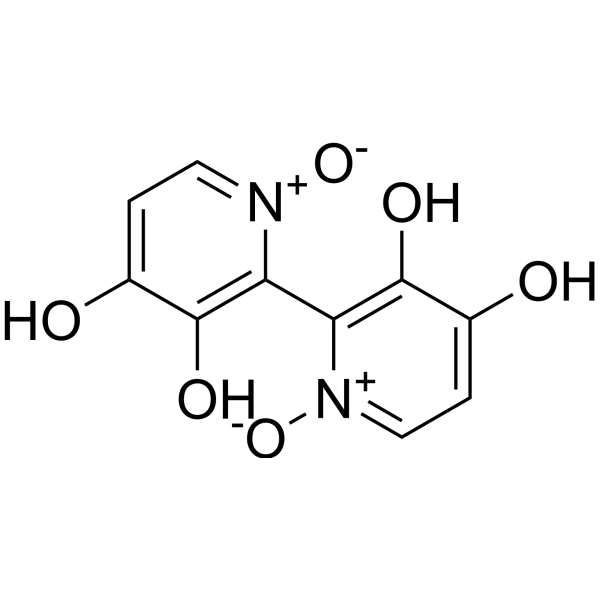
  • HY-W661499

    Phosphatase Apoptosis Reactive Oxygen Species (ROS) Caspase Cancer
    Orellanine, a nephrotoxic alkaloid found in Cortinarius orellanus, is an orally active and selective non-competitive inhibitor of alkaline phosphatase. Orellanine chelates iron, generates reactive oxygen species (ROS), induces DNA scission, forms ortho-semiquinone radicals, downregulates antioxidant defenses, and inhibits mitochondrial function. Orellanine induces caspase 8/9-mediated apoptosis. Orellanine inhibits synthesis of proteins, RNA, DNA, and mitochondrial protein synthesis, with metabolic activation required for cell-free protein synthesis inhibition. Orellanine can be used for the research of metastatic clear cell renal cell carcinoma, acute renal failure, chronic renal insufficiency, and kidney damage .
    Orellanine
  • HY-159642G

    TYRA-300

    FGFR ERK Metabolic Disease Cancer
    Dabogratinib (TYRA-300) (GMP) is Dabogratinib (HY-159642) produced by using GMP guidelines. GMP small molecules work appropriately as an auxiliary reagent for cell therapy manufacture. Dabogratinib is an orally active, selective FGFR3 inhibitor with an IC50 of 11 nM. Dabogratinib exhibits antitumor activity against urothelial carcinoma and solid tumors. Dabogratinib downregulates the FGFR3 and ERK1/2 signaling pathways, and induces tumor growth inhibition and regression in FGFR3-altered xenograft models. Dabogratinib promotes chondrocyte proliferation and differentiation, drives endochondral bone formation and overall body growth, partially restores long bone proportions, and improves craniofacial and spinal morphology. Dabogratinib can be used for the research of metastatic urothelial carcinoma, achondroplasia and hypochondroplasia .
    Dabogratinib
  • HY-136271

    Phospholipase NADPH Oxidase p38 MAPK Akt NF-κB AP-1 Reactive Oxygen Species (ROS) Cardiovascular Disease Inflammation/Immunology Cancer
    MJ-33 is a competitive phospholipase A₂ (PLA₂) inhibitor with an IC50 of 0.3 μM. MJ-33 inhibits the activation of NOX2 by blocking the PLA₂ activity of Prdx6, thereby reducing the production of ROS. MJ-33 effectively inhibits the activity of acidic PLA₂ (pH 4.0), reduces the degradation of pulmonary surfactant phosphatidylcholine (PC), but has no effect on alkaline PLA₂ (pH 8.5). MJ-33 significantly alleviates lung oxidative damage induced by ischemia-reperfusion (I/R). MJ-33 significantly inhibits the invasive, migratory and adhesive abilities of prostate cancer cells by suppressing the MAPK, AKT, NF-κB and AP-1 signaling pathways. MJ-33 can be used to study ROS-related diseases and prostate cancer .
    MJ33
  • HY-122757

    Curcumin pyrazole

    Others Cancer
    Hydrazinocurcumin (Curcumin pyrazole) is a potent endothelial cell proliferation inhibitor (IC50=520 nM). Hydrazinocurcumin disrupts angiogenic signaling pathways and inhibits endothelial cell migration and tube formation, exerting anti-angiogenic activity. Hydrazinocurcumin is promising for research of tumor angiogenesis inhibition, metastatic cancer, and vascular-dependent diseases such as retinopathies .
    Hydrazinocurcumin
  • HY-N8230

    HIV HIV Protease Infection Inflammation/Immunology Cancer
    Ganosinensic acid C is a triterpenoid compound that can be extracted from Ganoderma lucidum. Ganosinensic acid C has important biological activities such as anti-tumor, anti-prostate cancer, anti-inflammatory, and inhibition of HIV-I protease. Ganosinensic acid C has an IC50 value of 10.5 μM against human highly metastatic lung cancer cell line 95D. Ganosinensic acid C has an IC50 value of Ganosinensic acid C against cervical cancer cell line Hela is 13.2 μM .
    Ganosinensic acid C

Inquiry Online

Your information is safe with us. * Required Fields.

Salutation


Country or Region *

Applicant Name *


Organization Name *

Department *


Email Address *


Product Name *

Cat. No.


Requested quantity *

Phone Number *


Remarks

Inquiry Online

Inquiry Information

Product Name:
Cat. No.:
Quantity:
MCE Japan Authorized Agent:

