1. Search Result
Search Result
Results for "

motion

" in MedChemExpress (MCE) Product Catalog:

20

Inhibitors & Agonists

2

Fluorescent Dye

1

Peptides

3

Natural
Products

3

Isotope-Labeled Compounds

5

Oligonucleotides

Cat. No. Product Name Target Research Areas Chemical Structure
  • HY-W010892

    Hyoscine hydrobromide trihydrate

    mAChR 5-HT Receptor Neurological Disease
    Scopolamine (Hyoscine) hydrobromide trihydrate is a high-affinity muscarinic antagonist that can cross the blood-brain barrier. Scopolamine hydrobromide trihydrate competitively antagonizes 5-HT3 receptors with an IC50 of 2.09 μM. Scopolamine hydrobromide trihydrate can induce cognitive and memory deficits in animals. Scopolamine hydrobromide trihydrate can be used in the research of preventing postoperative nausea and vomiting, motion sickness, nervous system diseases, etc .
    Scopolamine hydrobromide trihydrate
  • HY-B0349
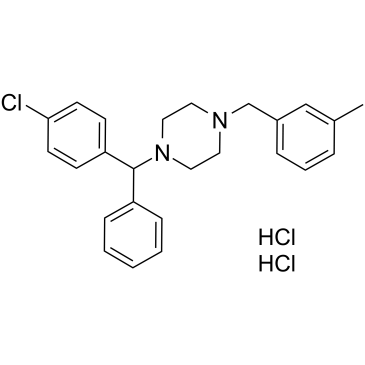
    Meclizine dihydrochloride
    4 Publications Verification

    Meclozine dihydrochloride

    Histamine Receptor Apoptosis Neurological Disease Endocrinology Cancer
    Meclizine (Meclozine) dihydrochloride, an antihistamine, reversibly inhibits the interaction of histamine at the H1 receptors. Meclizine dihydrochloride is a member of the piperazine class of H1 antagonists. Meclizine dihydrochloride is an effective anti-motion sickness agent. Meclizine dihydrochloride crosses the blood-brain barrier. Meclizine dihydrochloride can be used for the research of polyQ toxicity disorders, such as Huntington's disease. Meclizine dihydrochloride is an agonist ligand for mouse constitutive androstane receptor (CAR) and an inverse agonist for Human CAR .
    Meclizine dihydrochloride
  • HY-B1215

    Histamine Receptor Neurological Disease Endocrinology
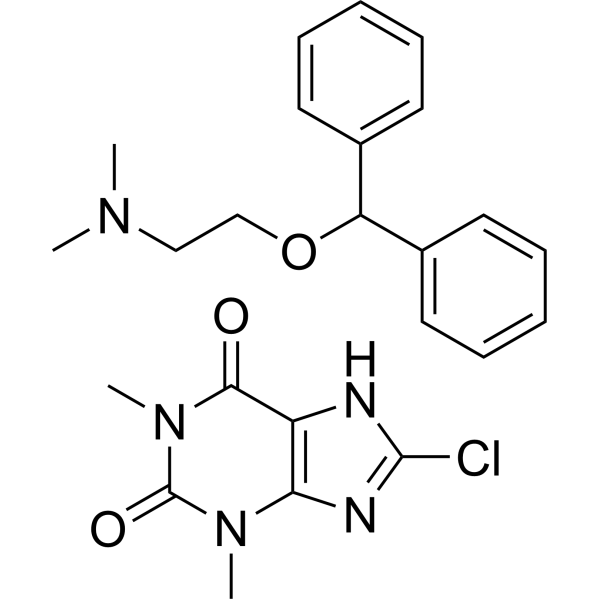
    Dimenhydrinate is an orally active H1-antihistamine consisting of Diphenhydramine (HY-B0303) and 8-Chlorotheophylline. Dimenhydrinate is used to prevent nausea, vomiting, dizziness, and vertigo associated with motion sickness .
    Dimenhydrinate
  • HY-B2065
    Scopolamine hydrochloride
    20+ Cited Publications

    (-)-Scopolamine hydrochloride; Hyoscine hydrochloride

    mAChR 5-HT Receptor Neurological Disease
    Scopolamine (Hyoscine) hydrochloride is a high-affinity muscarinic antagonist that can cross the blood-brain barrier. Scopolamine hydrochloride competitively antagonizes 5-HT3 receptors with an IC50 of 2.09 μM. Scopolamine hydrochloride can induce cognitive and memory deficits in animals. Scopolamine hydrochloride can be used in the research of preventing postoperative nausea and vomiting, motion sickness, nervous system diseases, etc .
    Scopolamine hydrochloride
  • HY-D0947

    DNA Stain Others
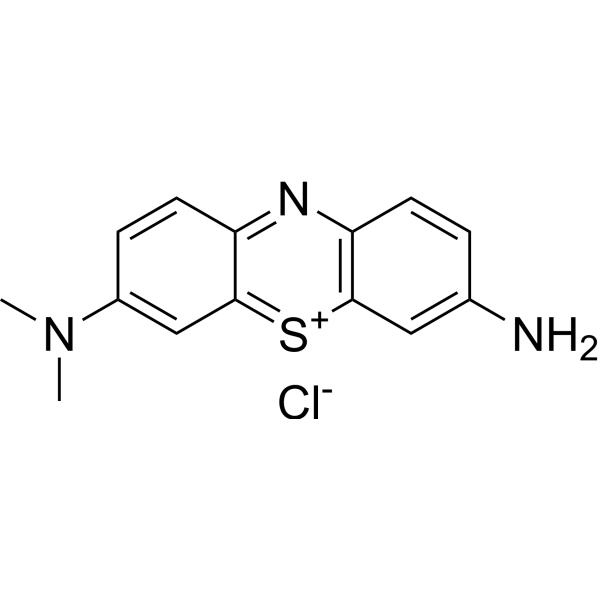
    Azure A chloride is a phenothiazine dye. Azure A chloride is an alternative DNA dye used for the separation of DNA and protein fragments in agarose gel electrophoresis and PAGE. Azure A chloride can be chemisorbed on the surface of mild steel according to the Langmuir adsorption isotherm to form a protective film. Azure A chloride binds to double-stranded DNA in a non-cooperative manner via weak intercalation, triggering molecular conformational disturbance, restricted rotational motion, and changes in optical activity .
    Azure A chloride
  • HY-W089353
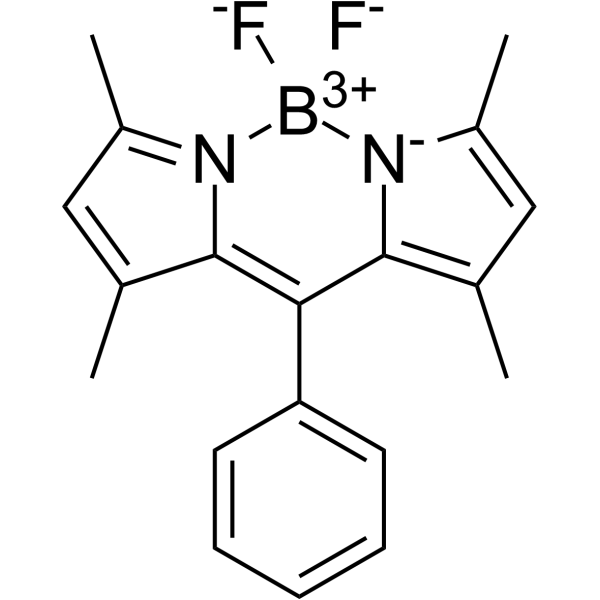
    8-Phenyl-BODIPY 505/515
    1 Publications Verification

    MOFs Fluorescent Dye Others
    8-Phenyl-BODIPY 505/515 is a molecular rotor based on the BODIPY scaffold, specifically used as a microviscosity probe. The working principle of 8-Phenyl-BODIPY 505/515 is based on the restriction of molecular motion by viscosity: in a high-viscosity environment, the rotational freedom of its chemical bonds is inhibited, which leads to a significant extension of fluorescence lifetime. This property makes 8-Phenyl-BODIPY 505/515 an effective tool for monitoring changes in the viscosity of intracellular microenvironments via fluorescence lifetime imaging (FLIM) technology .
    8-Phenyl-BODIPY 505/515
  • HY-P11430

    Biochemical Assay Reagents Infection
    UBI (31-38) is a Ubiquicidin-derived octapeptide and anti-bacterial agent. UBI (31-38) selectively interacts with anionic phospholipid membranes and restricts lipid lateral motion. UBI (31-38) induces anionic vesicle aggregation via electrostatic repulsion screening, and undergoes conformational changes in membrane-mimicking environments. UBI (31-38) can be used for the research of infection imaging probes .
    UBI (31-38)
  • HY-B0349A

    Meclozine

    Histamine Receptor Apoptosis Neurological Disease Inflammation/Immunology
    Meclizine (Meclozine), an antihistamine, reversibly inhibits the interaction of histamine at the H1 receptors. Meclizine is a member of the piperazine class of H1 antagonists. Meclizine is an effective anti-motion sickness agent. Meclizine crosses the blood–brain barrier. Meclizine is an agonist ligand for mouse constitutive androstane receptor (CAR) and an inverse agonist for Human CAR. Meclizine can be used for the research of polyQ toxicity disorders, such as Huntington's disease .
    Meclizine
  • HY-B1215R

    Reference Standards Histamine Receptor Neurological Disease Endocrinology
    Dimenhydrinate (Standard) is the analytical standard of Dimenhydrinate. This product is intended for research and analytical applications. Dimenhydrinate is an orally active H1-antihistamine consisting of Diphenhydramine (HY-B0303) and 8-Chlorotheophylline. Dimenhydrinate is used to prevent nausea, vomiting, dizziness, and vertigo associated with motion sickness .
    Dimenhydrinate (Standard)
  • HY-W010892S

    Hyoscine-d3 hydrobromide

    Isotope-Labeled Compounds mAChR 5-HT Receptor Neurological Disease
    Scopolamine-d3 hydrobromide is the deuterium labeled Scopolamine hydrobromide (HY-B2065). Scopolamine (Hyoscine) hydrochloride is a high-affinity muscarinic antagonist that can cross the blood-brain barrier. Scopolamine hydrochloride competitively antagonizes 5-HT3 receptors with an IC50 of 2.09 μM. Scopolamine hydrochloride can induce cognitive and memory deficits in animals. Scopolamine hydrochloride can be used in the research of preventing postoperative nausea and vomiting, motion sickness, nervous system diseases, etc .
    Scopolamine-d3 hydrobromide
  • HY-W010892R

    Hyoscine hydrobromide trihydrate (Standard)

    mAChR Reference Standards 5-HT Receptor Neurological Disease
    Scopolamine hydrobromide trihydrate (Standard) is the analytical standard of Scopolamine hydrobromide trihydrate (HY-W010892). This product is intended for research and analytical applications. Scopolamine (Hyoscine) hydrobromide is a high-affinity muscarinic antagonist that can cross the blood-brain barrier. Scopolamine hydrobromide competitively antagonizes 5-HT3 receptors with an IC50 of 2.09 μM. Scopolamine hydrobromide can induce cognitive and memory deficits in animals. Scopolamine hydrobromide can be used in the research of preventing postoperative nausea and vomiting, motion sickness, nervous system diseases, etc .
    Scopolamine hydrobromide trihydrate (Standard)
  • HY-B0349S

    Meclozine-d8

    Isotope-Labeled Compounds Histamine Receptor Apoptosis Inflammation/Immunology
    Meclizine-d8 is a deuterium labeled Meclizine. Meclizine is a histamine H1 receptor antagonist and has the potential to treat nausea and motion sickness. Meclizine is an agonist ligand for mouse constitutive androstane receptor (CAR) and an inverse agonist for Human CAR .
    Meclizine-d8
  • HY-B1296S1

    (±)-Promethazine-d4; N,N-dimethyl-1-phenothiazin-10-yl-propan-2-amine-d4

    Isotope-Labeled Compounds Adrenergic Receptor mAChR Histamine Receptor Neurological Disease
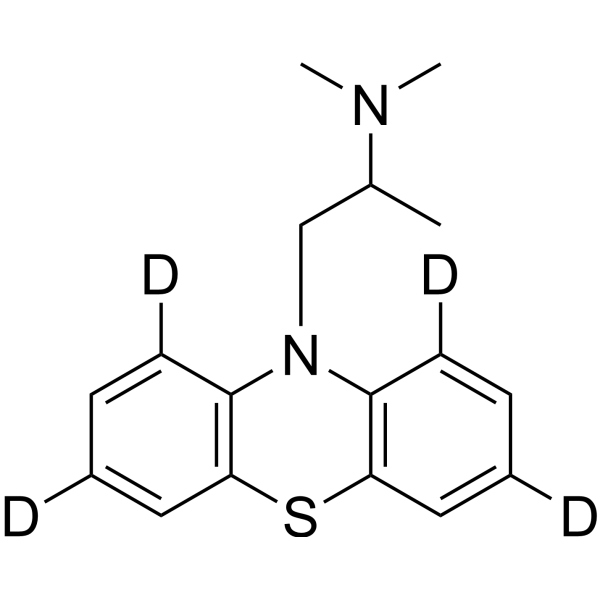
    Promethazine-d4 is a deuterated-labeled promethazine (HY-B0781). Promethazine is an orally active H1 receptor and mAChR antagonist with antihistamine (H1), sedative, antiemetic, anticholinergic, and anti-motion sickness properties .
    Promethazine-d4
  • HY-174686

    mRNA Cancer
    Human FGFRL1 mRNA encodes the human fibroblast growth factor receptor like 1 (FGFRL1) protein, a member of the fibroblast growth factor receptor (FGFR) family. The extracellular portion of FGFRL1 protein can interact with fibroblast growth factors, setting in motion a cascade of downstream signals, ultimately influencing mitogenesis and differentiation.
    Human FGFRL1 mRNA
  • HY-174689

    mRNA Cancer
    Human FGFR2 mRNA encodes the human fibroblast growth factor receptor 2 (FGFR2) protein, a member of the fibroblast growth factor receptor (FGFR) family. The extracellular portion of FGFR2 protein can interact with fibroblast growth factors, setting in motion a cascade of downstream signals, ultimately influencing mitogenesis and differentiation.
    Human FGFR2 mRNA
  • HY-174690

    mRNA Cancer
    Human FGFR1 mRNA encodes the human fibroblast growth factor receptor 1 (FGFR1) protein, a member of the fibroblast growth factor receptor (FGFR) family. The extracellular portion of FGFR1 protein can interact with fibroblast growth factors, setting in motion a cascade of downstream signals, ultimately influencing mitogenesis and differentiation.
    Human FGFR1 mRNA
  • HY-160043

    Biochemical Assay Reagents Cancer
    AL6 aptamer sodium is a short-chain nucleic acid aptamer chemically synthesized in vitro. AL6 aptamer sodium specifically targets Angiopoietin (Ang) for the specific detection of Ang. The AL6 aptamer binds to Ang, causing the rotational motion of the fluorophore on the AL6 aptamer to become slower. The concentration of Ang in the test solution can be quantified by detecting the anisotropy of AL6 aptamer/Ang .
    AL6 aptamer sodium
  • HY-B0349B

    Meclozine dihydrochloride monohydrate

    Histamine Receptor Apoptosis Neurological Disease Inflammation/Immunology
    Meclizine (Meclozine) dihydrochloride monohydrate, an antihistamine, reversibly inhibits the interaction of histamine at the H1 receptors. Meclizine dihydrochloride is a member of the piperazine class of H1 antagonists. Meclizine dihydrochloride monohydrate is an effective anti-motion sickness agent. Meclizine dihydrochloride monohydrate crosses the blood-brain barrier. Meclizine dihydrochloride monohydrate is an agonist ligand for mouse constitutive androstane receptor (CAR) and an inverse agonist for Human CAR. Meclizine dihydrochloride monohydrate can be used for the research of polyQ toxicity disorders, such as Huntington's disease .
    Meclizine dihydrochloride monohydrate
  • HY-B0349R

    Meclozine dihydrochloride (Standard)

    Reference Standards Histamine Receptor Apoptosis Neurological Disease Endocrinology Cancer
    Meclizine (dihydrochloride) (Standard) is the analytical standard of Meclizine (dihydrochloride). This product is intended for research and analytical applications. Meclizine (Meclozine) dihydrochloride, an antihistamine, reversibly inhibits the interaction of histamine at the H1 receptors. Meclizine dihydrochloride is a member of the piperazine class of H1 antagonists. Meclizine dihydrochloride is an effective anti-motion sickness agent. Meclizine dihydrochloride crosses the blood-brain barrier. Meclizine dihydrochloride can be used for the research of polyQ toxicity disorders, such as Huntington's disease. Meclizine dihydrochloride is an agonist ligand for mouse constitutive androstane receptor (CAR) and an inverse agonist for Human CAR .
    Meclizine dihydrochloride (Standard)
  • HY-174688

    mRNA Cancer
    Human FGFR3 mRNA encodes the human fibroblast growth factor receptor 3 (FGFR3) protein, a member of the fibroblast growth factor receptor (FGFR) family. The extracellular portion of FGFR3 protein can interact with fibroblast growth factors, setting in motion a cascade of downstream signals, ultimately influencing mitogenesis and differentiation.
    Human FGFR3 mRNA

Inquiry Online

Your information is safe with us. * Required Fields.

Salutation


Country or Region *

Applicant Name *


Organization Name *

Department *


Email Address *


Product Name *

Cat. No.


Requested quantity *

Phone Number *


Remarks

Inquiry Online

Inquiry Information

Product Name:
Cat. No.:
Quantity:
MCE Japan Authorized Agent:

