34 Results for "

perception

" in MedChemExpress (MCE) Product Catalog:
Products (34)

34 Results for "perception" in MCE Product Catalog:

2
2 Cited Publications
Cat. No.: HY-W014971
CAS No.: 343-94-2
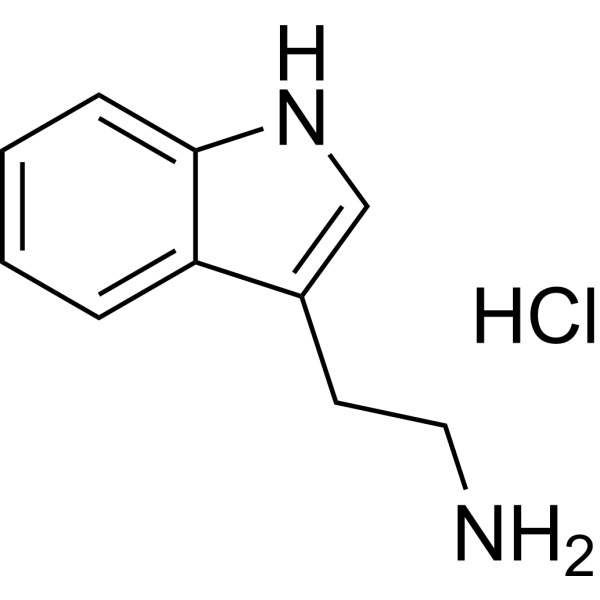
Tryptamine hydrochloride belongs to the class of indole alkaloids and is a derivative of the amino acid tryptophan. Tryptamine hydrochloride is psychoactive and acts as a neurotransmitter in the body, affecting mood, perception and cognition. In its hydrochloride form, Tryptamine hydrochloride hydrochloride, it is commonly used as a research chemical and as a starting material for the synthesis of other organic compounds. It can also occur naturally in certain plants and animals, including fungi and mammals. Due to the psychoactive properties of Tryptamine hydrochloride and its derivatives, its use and possession are controlled substances in many countries.
loading...
    loading...
2
2 Cited Publications
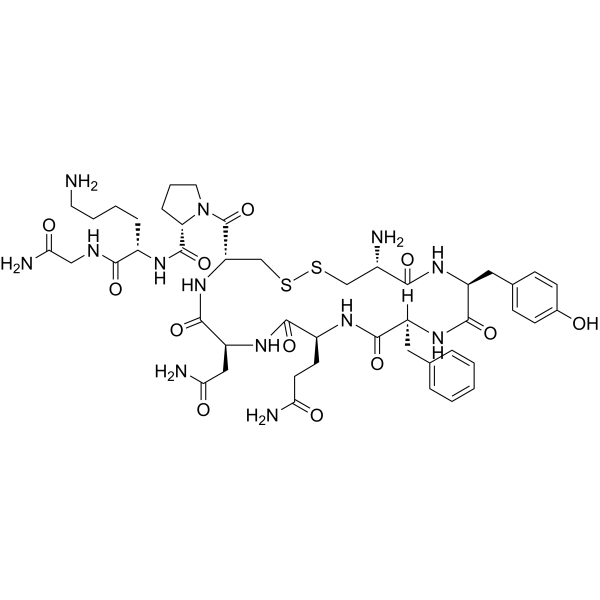
Cat. No.: HY-P0004
CAS No.: 50-57-7
Synonyms: Lysine vasopressin; [Lys8]-Vasopressin
Lysipressin (Lysine vasopressin ; [Lys8]-Vasopressin ) is a neurohypophyseal nonapeptide with dual cardiovascular regulatory activities of peripheral pressor action and central hypotensive action, and it also regulates pain perception in the body. Lysipressin is an Oxytocin Receptor agonist, with a Ki value of 10.2 nM for porcine OT receptor. Lysipressin stimulates contraction of rabbit bladder smooth muscle via V1-vasopressin receptor. The central hypotensive effect of Lysipressin depends on the sympathetic tone pathway. Lysipressin dose-dependently prolongs tail-flick latency in rats, producing a stable central antinociceptive effect. Lysipressin can be used in studies related to cardiovascular regulation, hypertension and pain .
loading...
    loading...
2
2 Cited Publications
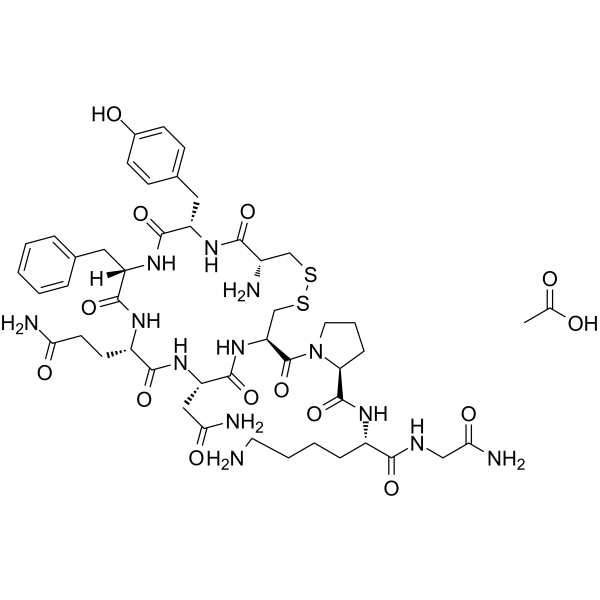
Cat. No.: HY-P0004A
CAS No.: 83968-49-4
Synonyms: Lysine vasopressin acetate; [Lys8]-Vasopressin acetate
Lysipressin acetate (Lysine vasopressin acetate; [Lys8]-Vasopressin acetate) is a neurohypophyseal nonapeptide with dual cardiovascular regulatory activities of peripheral pressor action and central hypotensive action, and it also regulates pain perception in the body. Lysipressin acetate is an Oxytocin Receptor agonist, with a Ki value of 10.2 nM for porcine OT receptor. Lysipressin acetate stimulates contraction of rabbit bladder smooth muscle via V1-vasopressin receptor. The central hypotensive effect of Lysipressin acetate depends on the sympathetic tone pathway. Lysipressin acetate dose-dependently prolongs tail-flick latency in rats, producing a stable central antinociceptive effect. Lysipressin acetate can be used in studies related to cardiovascular regulation, hypertension and pain .
loading...
    loading...
1
1 Cited Publications
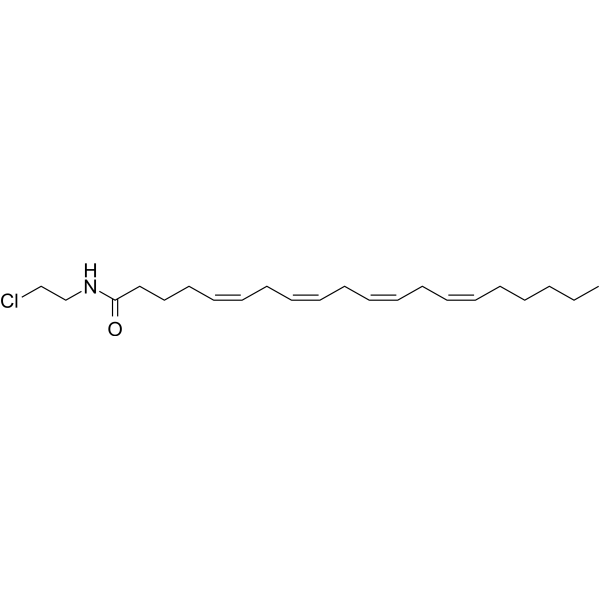
Cat. No.: HY-110004
CAS No.: 220556-69-4
Purity:  ≥96.0%
Synonyms: Arachidonyl-2-chloroethylamide
ACEA (short for arachidonyl-2'-chloroacetamide) is a synthetic organic compound that acts as an agonist of the cannabinoid receptor CB1. It is a chemical that affects the endocannabinoid system in the body, which regulates various physiological processes such as appetite, pain perception, mood, and memory .
loading...
    loading...
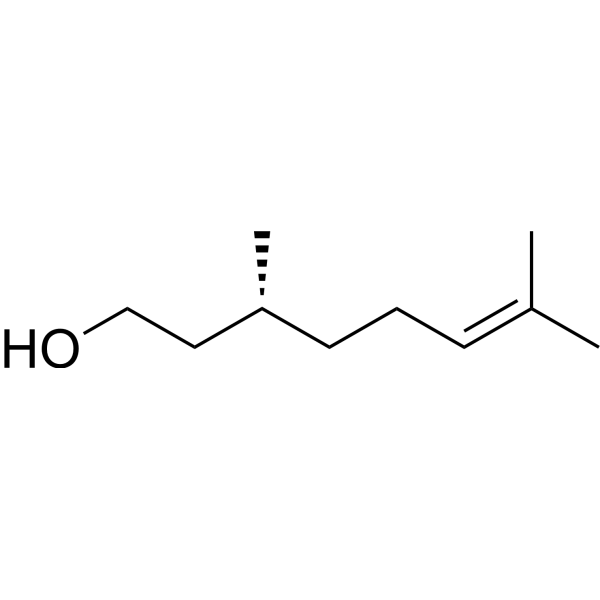
Cat. No.: HY-124257
CAS No.: 1117-61-9
Purity:  99.78%
Synonyms: D-Citronellol; (R)-(+)-β-Citronellol
(R)-Citronellol (D-Citronellol) is an alcoholic monoterpene found in geranium essential oil. (R)-Citronellol inhibits degranulation of mast cells and does not affect caffeine bitterness perception. (R)-Citronellol can be used in decorative cosmetics, toiletries as well as in non-cosmetic products .
loading...
    loading...
Cat. No.: HY-N0467
CAS No.: 63550-99-2
Synonyms: Dulcoside B
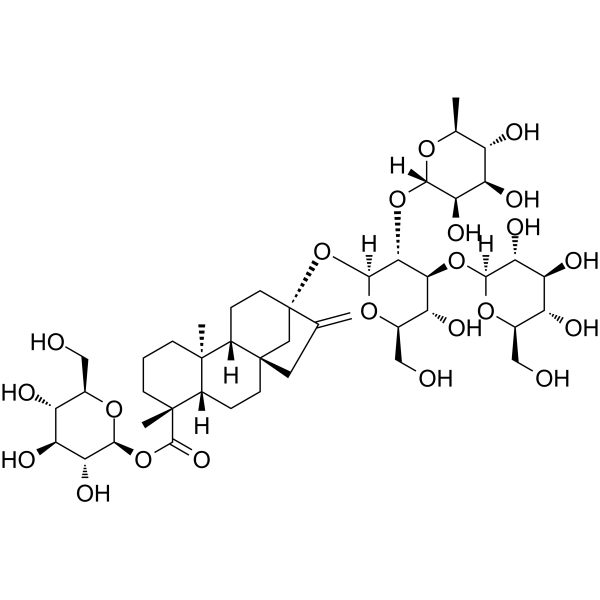
Rebaudioside C (Dulcoside B) is an orally effective natural sweetener that cannot pass the blood-brain barrier and selectively binds to human sweet taste receptors (TAS1R2/TAS1R3). The sweetness of Rebaudioside C is about 20-30 times that of sucrose, and its sweetness activity depends on the C-16/C-17 double bond structure and specific aglycones. The glycoside structure in the Rebaudioside C molecule can bind to the sweet taste receptor, activate the taste signal transduction pathway, and produce sweetness perception .
loading...
    loading...
Cat. No.: HY-110302
CAS No.: 2410327-94-3
Target:  

Opioid Receptor

Research Areas:  

Neurological Disease

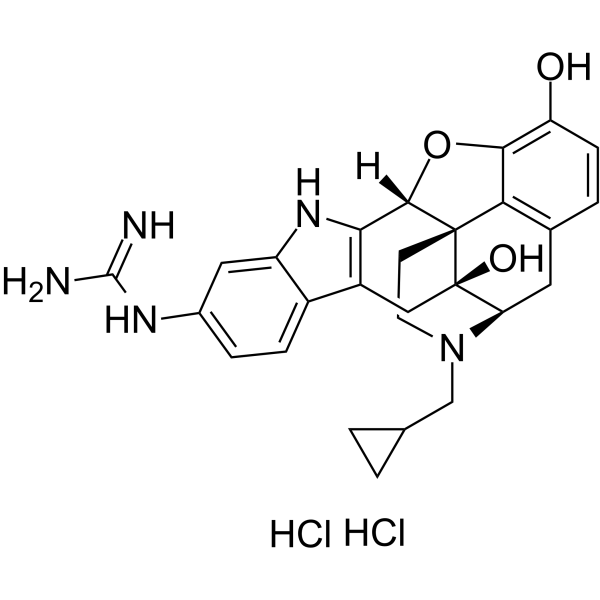
6'-GNTI dihydrochloride, a κ-opioid receptor (KOR) agonist, displays bias toward the activation of G protein-mediated signaling over β-arrestin2 recruitment. 6'-GNTI 6'-GNTI dihydrochloride only activates the Akt pathway in striatal neurons .
loading...
    loading...
Cat. No.: HY-130074
CAS No.: 1374760-95-8
Purity:  99.25%
Target:  

TRP Channel

Research Areas:  

Neurological Disease

FEMA 4809 is a TRPM8 receptor agonist (EC50=0.2 nM) for use as a cooling agent. TRPM8 is the ion channel responsible for the cool perception .
loading...
    loading...
Cat. No.: HY-P10654
CAS No.: 2861260-80-0
Target:  

TRP Channel

Research Areas:  

Neurological Disease

RhTx is a transient receptor potential vanillin-1 (TRPV1) activator. RhTx can be used to study pain perception .
loading...
    loading...
Cat. No.: HY-121947
CAS No.: 80749-33-3
Target:  

Cannabinoid Receptor

Research Areas:  

Neurological Disease

1'-Naphthoyl-2-methylindole (Compound 88) is a cannabinoid mimetics and an inhibitor for Win 55212-2, that inhibits 34% of [3H]Win 55212-2 binding to cannabinoid receptors at 3 μM .
loading...
    loading...
Cat. No.: HY-138985
CAS No.: 22913-17-3
Synonyms: Santinamide
CAY10568 is a compound based on QX-314 (HY-101350). CAY10568 is physically smaller and less hydrophobic than the QX-314. CAY10568 can be used in studies of inflammation and pain perception .
loading...
    loading...
Cat. No.: HY-14753
CAS No.: 861151-12-4
Rosonabant is a selective antagonist for cannabinoid receptor (CB1 receptor), which reduces body weight and improves improves the risk of obesity-related cardiovascular metabolic diseases. Rosonabant exhibits adverse side effect, such as nausea and mental disorder .
loading...
    loading...
Cat. No.: HY-167862
CAS No.: 2411412-36-5
Target:  

Endogenous Metabolite

Research Areas:  

Neurological Disease

UCM-05194 is a selective LPA1 receptor agonist with activity to improve neuropathic pain. UCM-05194 is a LPA1 agonist that exhibits potent and selective properties in its pharmacologically similar properties. UCM-05194 triggers LPA1-mediated cellular effects and leads to internalization of the receptor, resulting in functional inactivation in primary sensory neurons. UCM-05194 effectively reduces pain perception in in vivo models. UCM-05194 can be used to conduct research on progressive systemic diseases .
loading...
    loading...
Cat. No.: HY-161511
CAS No.: 2641630-97-7
Target:  

5-HT Receptor

Research Areas:  

Neurological Disease

LPH-5 is a selective 5-HT2A receptor agonist (EC50=190 nM). LPH-5 works by selectively activating the 5-HT2A receptor, which may be involved in regulating mood, perception, and other central nervous system functions associated with the 5-HT2A receptor. LPH-5 can be used to further explore the 5-HT2A receptor in psychiatric disorders, including depression, anxiety, and substance abuse disorders .
loading...
    loading...
Cat. No.: HY-W009708
CAS No.: 28588-75-2
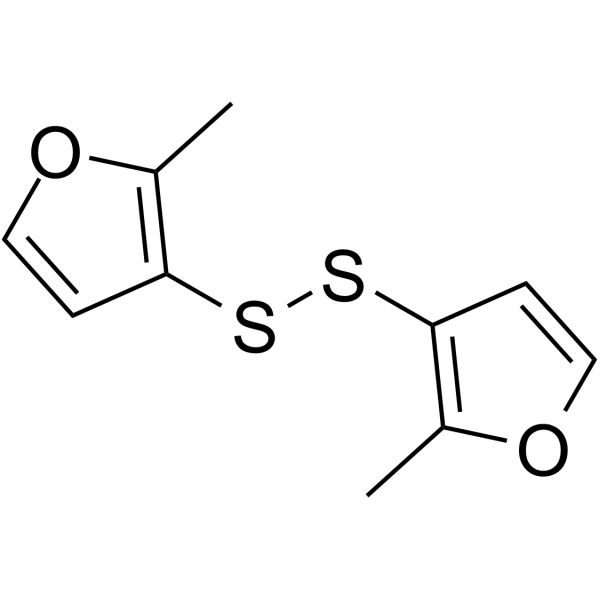
Bis (2-methyl-3-furyl) disulfide is a meat-characteristic aroma compound that binds to oral mucins. Bis (2-methyl-3-furyl) disulfide interacts with oral mucins via hydrogen bonding, hydrophobic interactions and van der Waals forces to form stable spontaneous 1:1 complexes, and the interaction strength varies with pH. Bis (2-methyl-3-furyl) disulfide contributes to the production of unique meat aroma and flavor, and its binding to oral mucins alters aroma perception .
loading...
    loading...
Cat. No.: HY-139898
CAS No.: 1217341-48-4
Target:  

Taste Receptor

Research Areas:  

Others

S7958 is a selective and orally active antagonist of the TAS2R8 bitter taste receptor, with its IC50 being 0.06 μM. S7958 only has a weak inhibitory effect on TASR8 and TAS2R39, and has no significant impact on other receptors. S7958 significantly inhibits the perception of bitterness caused by substances such as coffee and drug active ingredients (API) by selectively antagonizing the human bitter taste receptor TAS2R8. S7958 can be used in the medical field to improve the research on the bitterness of oral preparations .
loading...
    loading...
Cat. No.: HY-125979
CAS No.: 882286-32-0
Purity:  98.09%
Target:  

Phytohormone

Research Areas:  

Others

TSPC is a phytohormone gibberellin (GA) perception inhibitor with an IC50 value of 10 μM in vitro .
loading...
    loading...
Cat. No.: HY-141468
CAS No.: 67025-98-3
Synonyms: β-CNA dihydrochloride
Target:  

Opioid Receptor

Research Areas:  

Neurological Disease

β-Chlornaltrexamine dihydrochloride (β-CNA dihydrochloride) is a potent long-term opioid receptor blocker. β-Chlornaltrexamine dihydrochloride can effectively block the inhibitory effect of κ opioid receptor agonists on dopamine release. β-Chlornaltrexamine dihydrochloride can be used to study the mechanism of pain perception .
loading...
    loading...
Cat. No.: HY-163895
Research Areas:  

Neurological Disease

δ opioid receptor antagonist 1 (compound 6-Cy3) is a fluorescent antagonist probe with high selectivity for δ opioid receptor (DOR) (Ki=1.7 nM). δ opioid receptor antagonist 1 can be used to study the mechanism of pain perception .
loading...
    loading...
Cat. No.: HY-P3517
CAS No.: 77761-27-4
Synonyms: β-EP (6-31), human
Target:  

Opioid Receptor

Research Areas:  

Neurological Disease Endocrinology

β-Endorphin, an endogenous opioid neuropeptide, is an opioid receptor agonist. β-Endorphin binds preferentially to μ-opioid receptors and is produced in certain neurons of the central and peripheral nervous system and is one of three endorphins produced in humans. β-Endorphin can be used to reduce stress and maintain homeostasis in the body and is involved in neurological pain perception regulation .
loading...
    loading...