
1. Search Result
Search Result
Pathways Recommended: Stem Cell/Wnt Cell Cycle/DNA Damage
Results for "

pheochromocytoma cells

" in MedChemExpress (MCE) Product Catalog:

14

Inhibitors & Agonists

4

Peptides

5

Natural
Products

Cat. No. Product Name Target Research Areas Chemical Structure
  • HY-W008646
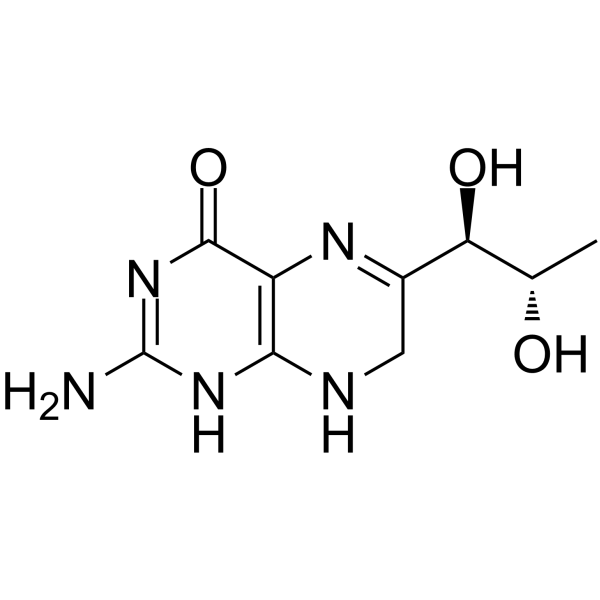
    7,8-Dihydro-L-biopterin
    1 Publications Verification

    SOD Apoptosis NO Synthase Cardiovascular Disease Neurological Disease
    7,8-Dihydro-L-biopterin is a NOS uncoupling inducer with blood-brain barrier permeability, and it is a reduced non-conjugated pteridine. 7,8-Dihydro-L-biopterin is the main metabolite of 4-amino-tetrahydro-L-biopterin, and it undergoes photooxidation to form biopterin. 7,8-Dihydro-L-biopterin promotes the conversion of nitric oxide synthase to a superoxide-producing form, thereby increasing oxidative stress levels in the renal outer medulla and inducing apoptosis. 7,8-Dihydro-L-biopterin is sensitive to the inhibitory effect of SOD, and it can be applied to research related to salt-sensitive hypertension, moderate to severe traumatic brain injury, and neurodegenerative diseases .
    7,8-Dihydro-L-biopterin
  • HY-14604
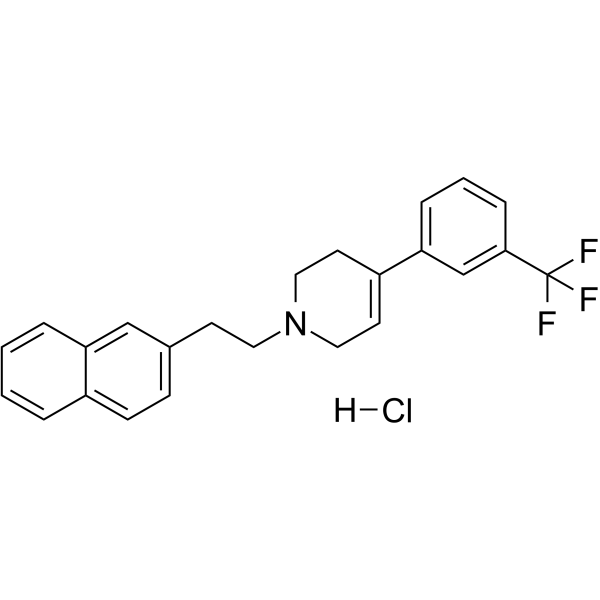
    Xaliproden hydrochloride
    1 Publications Verification

    SR57746A; SR57746 hydrochloride

    5-HT Receptor Dopamine Receptor Trk Receptor PKC ERK Akt JNK Neurological Disease Metabolic Disease
    Xaliproden (SR57746) hydrochloride (SR57746A) is an orally active, highly selective 5-HT1A receptor agonist. Xaliproden hydrochloride activates pertussis toxin-sensitive G protein-coupled signaling cascades, as well as the PKC, ERK1/ERK2, Akt and p21 Ras/MEK-1 pathways. Xaliproden hydrochloride also downregulates the JNK/p66/c-Jun signaling pathway, induces phosphorylation of the shc adaptor protein, regulates extracellular dopamine and 5-HT levels, and induces [ 35S]GTPγS labeling in rat brain structures rich in 5-HT1A receptors. Xaliproden hydrochloride exerts neurotrophic, neuroprotective, renoprotective, anti-inflammatory, anti-apoptotic, anti-fibrotic and analgesic effects. Xaliproden hydrochloride also enhances NGF-induced neurite outgrowth, promotes motor neuron survival, attenuates renal tubular injury and inhibits chemotherapy-induced mechanical allodynia, without activating or altering NGF-induced TrkA receptor activation. Xaliproden hydrochloride can be used in the research of motor neuron disease, diabetic nephropathy, chemotherapy-induced peripheral neuropathy, amyotrophic lateral sclerosis, Alzheimer's disease, acute tonic nociceptive pain, inflammatory pain, depression and anxiety .
    Xaliproden hydrochloride
  • HY-P1831

    ProAM N20, Human; PAMP-20, human

    nAChR Sodium Channel Calcium Channel Cardiovascular Disease Neurological Disease
    Proadrenomedullin (1-20), human is a potent hypotensive and catecholamine release–inhibitory peptide released from chromaffin cells. Proadrenomedullin (1-20) inhibits catecholamine secretion in PC12 pheochromocytoma cells (IC50 ≈ 350 nM) by suppressing Na +/Ca 2+ influx and blocking desensitization. Proadrenomedullin (1-20), human specifically acts on nicotinic cholinergic receptors in a non competitive manner. Proadrenomedullin (1-20), human can be used for research on conditions such as hypertension .
    Proadrenomedullin (1-20), human
  • HY-14196
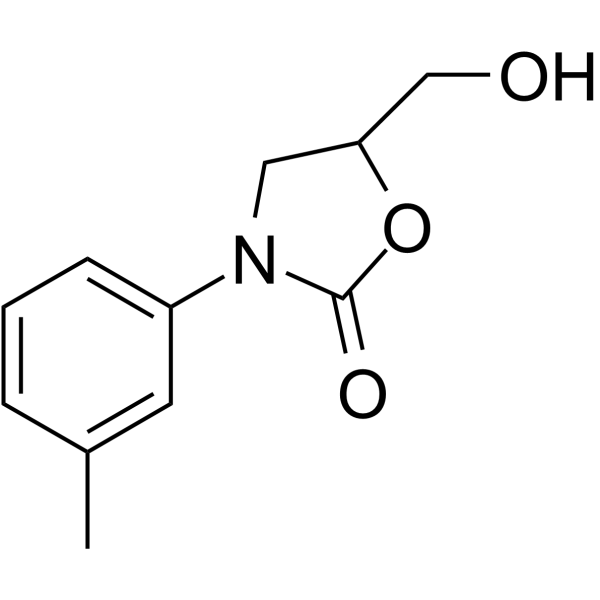
    Toloxatone
    1 Publications Verification

    MD 69276

    Monoamine Oxidase Neurological Disease
    Toloxatone (MD 69276) is a reversible, selective MAO-A inhibitor that can cross the blood-brain barrier. Toloxatone increases the levels of serotonin (5-HT) and norepinephrine in the brain. Toloxatone reduces the immobility time in the forced swimming test in mice, inhibits killing behavior in rats without causing sedation, and shows a correlation between its free plasma concentration and cerebrospinal fluid concentration. Toloxatone is widely used in research related to depression, depressive disorders and Parkinson's disease .
    Toloxatone
  • HY-117517

    Trk Receptor Cancer
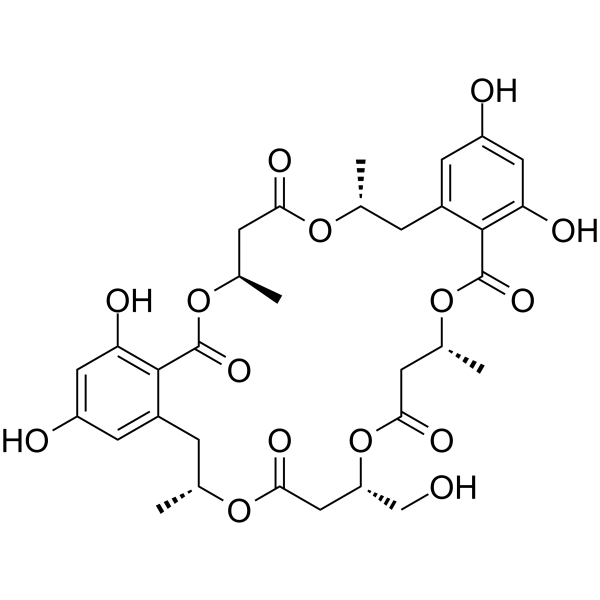
    NG-012, potentiator of nerve growth factor (NGF), were isolated from the culture broth of Penicillium verruculosum F-4542. NG-012 potentiates the neurite outgrowth induced by NGF in rat pheochromocytoma cell line (PC12) .
    NG-012
  • HY-133101

    Endogenous Metabolite Cancer
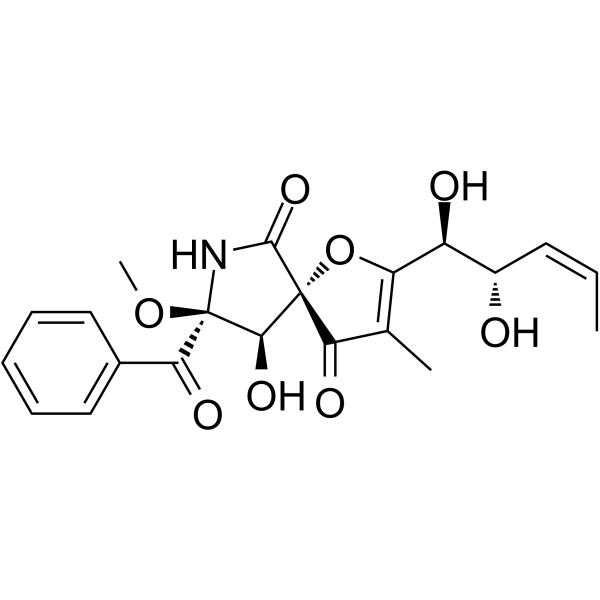
    14-Norpseurotin is a compound isolated from the culture of Aspergillus fumigatus. 14-Norpseurotin significantly induces neurite outgrowth of rat pheochromocytoma cells (PC12) at a 10.0 microM concentration .
    14-Norpseurotin
  • HY-P11313

    Rat chromogranin A367–387

    nAChR Akt Cardiovascular Disease
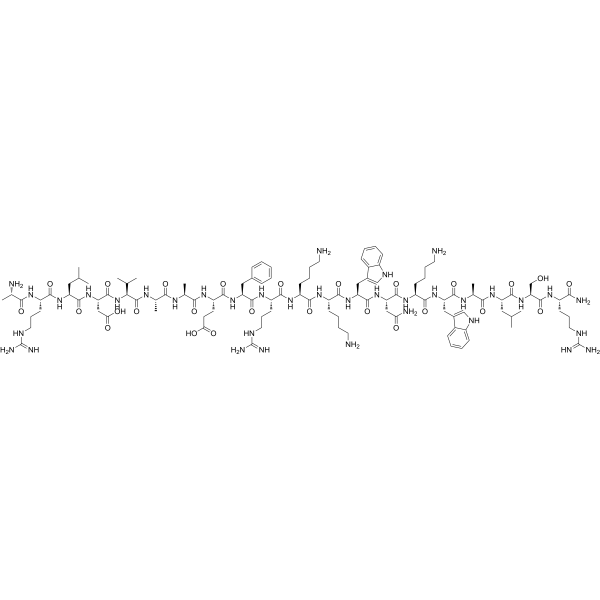
    Catestatin (rat) (Rat chromogranin A367–387) is a potent, reversible, noncompetitive, and noncooperative nicotinic cholinergic antagonist derived from chromogranin A (A367-387). Catestatin (rat) inhibits norepinephrine release in rat PC12 pheochromocytoma cells (IC50 = 1.2 μM), and blocks desensitization of norepinephrine release (IC50 = 0.62 μM). Catestatin (rat) exerts antiadrenergic effects through the endothelial PI3K-AKT-eNOS pathway in rat papillary muscles and isolated cardiomyocytes. Catestatin (rat) maintains mitochondrial membrane potential in I/R cardiomyocytes and increases phosphorylation of AKT at S473, GSK3β at S9, PLB at T17, and eNOS at S1179. Catestatin (rat) reverses desensitization of 22Na + uptake. Catestatin (rat) can be used for the study of nicotinic cholinergic receptor regulation and catecholamine release control mechanisms .
    Catestatin (rat)
  • HY-P5876

    ProADM N20(bovine, porcine); PAMP-20(bovine, porcine)

    nAChR Neurological Disease
    Proadrenomedullin (N-20) (ProADM N20) (bovine, porcine) is a potent and noncompetitive hypotensive and catecholamine release-inhibitory peptide released from chromaffin cells. Proadrenomedullin (N-20) (bovine, porcine) inhibits catecholamine secretion with an IC50 of 350 nM in PC12 pheochromocytoma cells. Proadrenomedullin (N-20) (bovine, porcine) also blocks (EC50≈270 nM) nicotinic cholinergic agonist desensitization of catecholamine release, as well as desensitization of nicotinic signal transduction ( 22Na + uptake) .
    Proadrenomedullin (N-20) (bovine, porcine)
  • HY-N14417

    Others Neurological Disease
    Indocarbazostatin against Neurite outgrowth induced by NGF is 6 nM in rat pheochromocytoma PC12 cells .
    Indocarbazostatin
  • HY-N14424

    Others Neurological Disease
    Indocarbazostatin B against Neurite outgrowth induced by NGF is 24 nM in rat pheochromocytoma PC12 cells .
    Indocarbazostatin B
  • HY-123357

    Apoptosis Neurological Disease
    IMM-H004, a coumarin derivative, possesses neuroprotective and potent free radical scavenging abilities. IMM-H004 significantly inhibits amyloid-β (Aβ)-induced cytotoxicity and apoptosis, offering potential value for research into neurodegenerative diseases such as Alzheimer's disease. Additionally, IMM-H004 is also capable of effectively blocking the calcium mobilization and chemotaxis induced by CKLF1-C27 (HY-P3418), thereby alleviating asthmatic pathological changes in the lung tissue of CKLF1 transgenic mice .
    IMM-H004
  • HY-N17920

    Others Neurological Disease
    6α-Methoxygeniposide is a geniposide-type iridoid compound present in the leaves of Gardenia jasminoides cv. fortuneana HARA. 6α-Methoxygeniposide induces neurite outgrowth in pheochromocytoma cells .
    6α-Methoxygeniposide
  • HY-P11753

    TGF-beta/Smad Neurological Disease Inflammation/Immunology
    IKVAVC is a derivative peptide of IKVAV with an artificially added cysteine (Cys) at its C-terminus. IKVAVC retains all the biological activities of the original IKVAV, mainly acting as a neural adhesion/differentiation signaling peptide, and is equipped with an engineered linker arm that enables covalent conjugation to molecular materials. IKVAV inhibits the migration and activation of fibroblasts, downregulates the TGF-β1 signaling pathway and endoplasmic reticulum stress, and promotes nerve repair. IKVAV regulates the phenotype of macrophages, shifting them from the pro-inflammatory M1 type to the pro-reparative M2 type .
    IKVAVC
  • HY-182401

    ERK Akt Neurological Disease
    NS-417 free base is an ERK1, ERK2, and Akt kinase activator with neuroprotective, neurite outgrowth potentiating, and dopaminergic cell population enhancing activity. NS-417 free base enhances activation of ERK1, ERK2, and Akt kinase via growth factor stimulation. NS-417 free base rescues cells from growth factor withdrawal-induced death, stimulates neurite outgrowth, increases tyrosine hydroxylase-positive cell counts, and displays neurotrophic-like activity in in vitro models. NS-417 free base can be used for the research of parkinson’s disease .
    NS-417 free base

Inquiry Online

Your information is safe with us. * Required Fields.

Salutation


Country or Region *

Applicant Name *


Organization Name *

Department *


Email Address *


Product Name *

Cat. No.


Requested quantity *

Phone Number *


Remarks

Inquiry Online

Inquiry Information

Product Name:
Cat. No.:
Quantity:
MCE Japan Authorized Agent:

