1. Search Result
Search Result
Results for "

phosphate buffer solutions

" in MedChemExpress (MCE) Product Catalog:

65

Inhibitors & Agonists

3

Fluorescent Dye

41

Biochemical Assay Reagents

2

Peptides

35

MCE Kits

3

Natural
Products

7

Isotope-Labeled Compounds

3

Oligonucleotides

Cat. No. Product Name Target Research Areas Chemical Structure
  • HY-Y0842
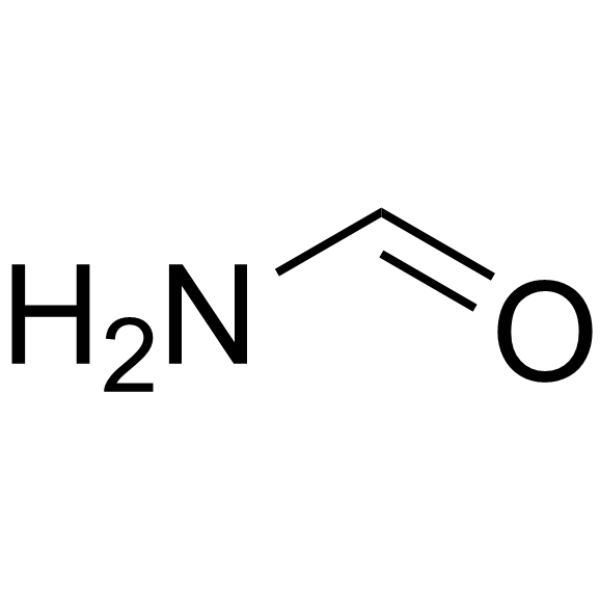
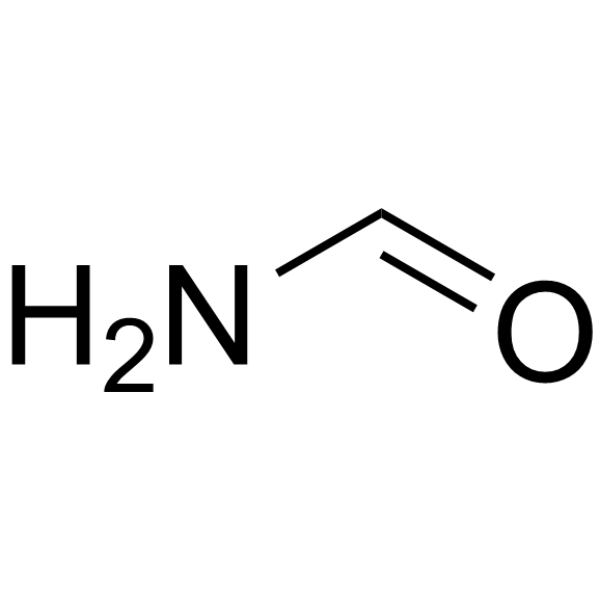
    Formamide
    3 Publications Verification

    Methanamide; Formimidic acid

    Biochemical Assay Reagents Cardiovascular Disease Cancer
    Formamide is an effective DNA denaturant that significantly reduces the stability of DNA in buffer solutions. Formamide can also be used as a decalcifying agent for rat cardiac cells. Additionally, formamide is widely used as a solvent or chemical raw material for ion compounds, resins, and plasticizers.
    Formamide
  • HY-D0227
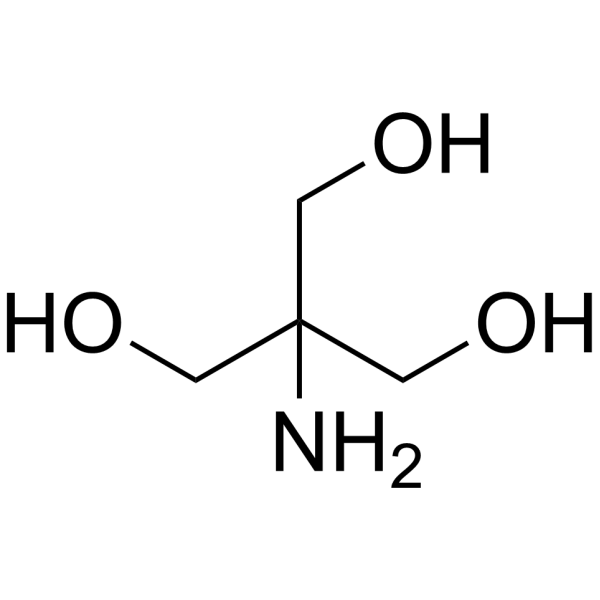
    THAM
    1 Publications Verification

    Tris; Tris(hydroxymethyl)aminomethane

    Biochemical Assay Reagents Metabolic Disease
    THAM (Tris) is a low-toxicity amino alcohol buffer, a specific CO2-consuming proton acceptor that buffers carbon dioxide and acid both in vitro and in vivo. THAM binds protons to form bicarbonate, reduces PaCO2, and induces intracellular alkalization, thereby ameliorating hypercapnia-induced elevation of pulmonary blood vessels and pulmonary arterial pressure. THAM may cause PaCO2 rebound, hypoglycemia, and respiratory depression. THAM removes amniotic epithelium and preserves the basement membrane, but depletes extracellular matrix and reduces the adhesion rate of limbal epithelial cells. THAM can act as a CO2 carrier to enhance the productivity and carbon utilization rate of Scenedesmus obliquus. THAM is a key component of buffer solutions used in various biological, cell culture, biochemical, and molecular biology applications .
    THAM
  • HY-Y0332B

    Environmental Pollutants Biochemical Assay Reagents Others
    Potassium phosphate monobasic (DiA) is a commonly used in biological assay buffers. Potassium phosphate monobasic is moderate to highly concentrated aqueous solutions of potassium phosphate monobasic for the production of phosphate buffers and other laboratory applications .
    Potassium dihydrogen phosphate, AR,99.5%
  • HY-B2243
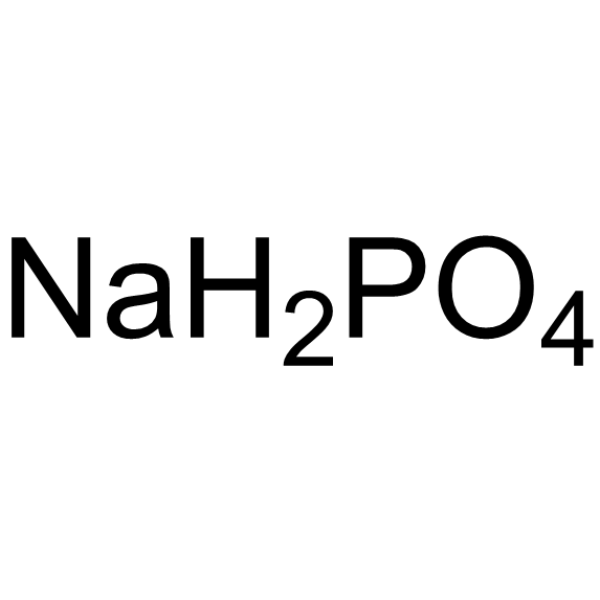
    Anhydrous sodium dihydrogen phosphate
    1 Publications Verification

    Sodium phosphate monobasic; Monosodium dihydrogen orthophosphate; Monosodium phosphate

    Environmental Pollutants Biochemical Assay Reagents Others
    Dihydrogen monosodium phosphate (Monosodium phosphate) is an inorganic salt compound commonly used in industry and laboratories. It can be used as a buffer, nutritional supplement, cleaning agent, etc., and plays a role in certain metal processing, pharmaceutical and chemical industries. In addition, Dihydrogen monosodium phosphate can also be used in the field of water treatment and environmental protection, for example as a purifying agent or precipitating agent for solutions.
    Anhydrous sodium dihydrogen phosphate
  • HY-Y1977

    Biochemical Assay Reagents Others
    100 mM Pro-Ac, 20 mM Arg, pH 5.0 buffer is a buffer solution and can be used as a reconstitution buffer for ADC products.
    100 mM Pro-Ac, 20 mM Arg, pH 5.0 buffer
  • HY-Y1968A

    Sterile 10 mM His-HCl, pH 5.5 buffer

    Biochemical Assay Reagents Others
    Sterile 10 mM Histidine, pH 5.5 buffer is a sterile solution using 10 mM histidine as the solute with its pH adjusted to 5.5, possessing both buffering capacity and biocompatibility. Sterile 10 mM Histidine, pH 5.5 buffer is widely applied in laboratory research, pharmaceutical production, cosmetics and other fields .
    Sterile 10 mM Histidine, pH 5.5 buffer
  • HY-B1610N
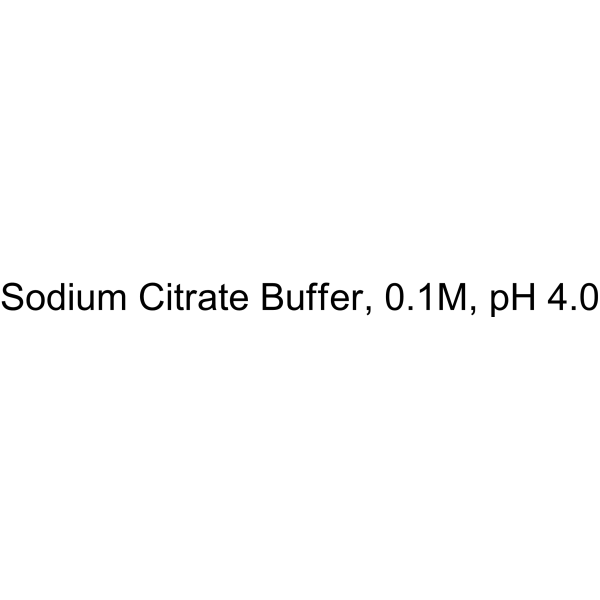
    Sodium Citrate Buffer, 0.1M, pH 4.0
    Maximum Cited Publications
    8 Publications Verification

    Biochemical Assay Reagents Others
    Sodium Citrate Buffer, 0.1M, pH 4.0 is an acidic, aqueous buffer solution. Sodium Citrate Buffer, 0.1M, pH 4.0 resists pH fluctuations, chelates metal ions, and regulates the redox potential of the system. Sodium Citrate Buffer, 0.1M, pH 4.0 is widely used in molecular biology, immunohistochemistry (IHC), and biochemistry .
    Sodium Citrate Buffer, 0.1M, pH 4.0
  • HY-Y0842B
    Formamide (deionized)
    3 Publications Verification

    Methanamide (deionized); Formimidic acid (deionized)

    Biochemical Assay Reagents Cardiovascular Disease Cancer
    Formamide deionized (Methanamide deionizde) is an effective DNA denaturant that significantly reduces the stability of DNA in buffer solutions. Formamide deionized can also be used as a decalcifying agent for rat cardiac cells. Additionally, Formamide deionized is widely used as a solvent or chemical raw material for ion compounds, resins, and plasticizers .
    Formamide (deionized)
  • HY-Y0308

    Environmental Pollutants Biochemical Assay Reagents Others
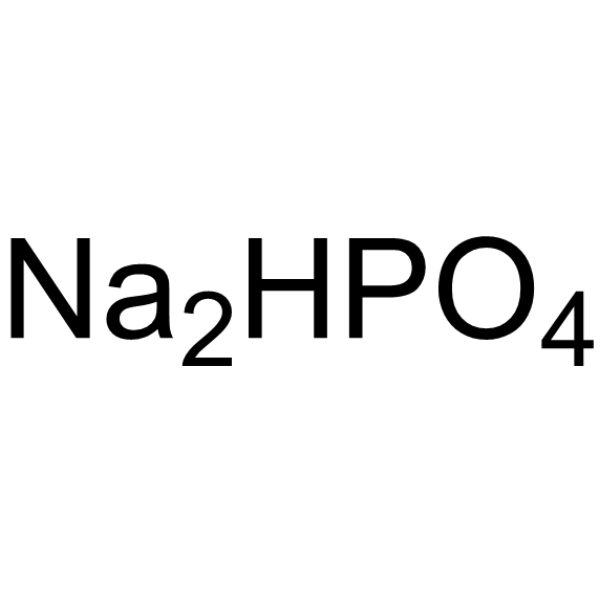
    Disodium phosphate is commonly used as a food additive, buffer and laboratory reagent. Disodium phosphate has unique chemical properties that make it an important ingredient in the manufacture of fertilizers, detergents and water treatment products. Additionally, it is used in various medical applications such as osmotic laxatives and electrolyte replacement solutions.
    Disodium phosphate
  • HY-W014837

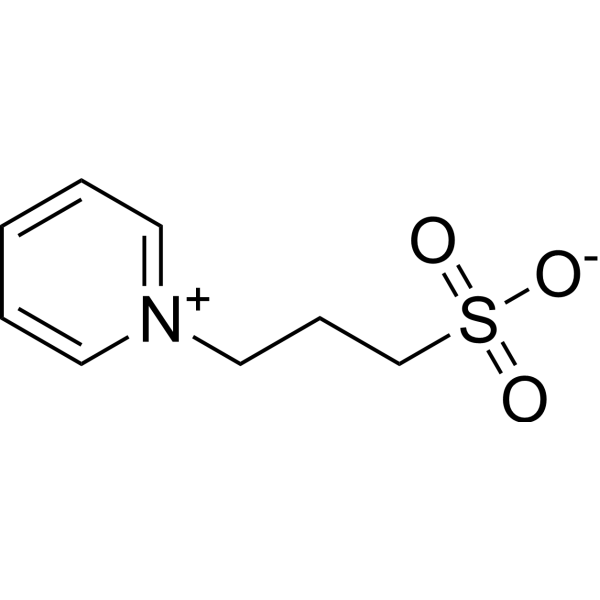
    3-(1-Pyridinio)-1-propanesulfonate

    Biochemical Assay Reagents Others
    NDSB-201 consists of a pyridine group attached to a propane chain, which in turn is attached to a sulfonate group. This compound is commonly used as a buffer in biochemical and biological research, especially in electrophoretic applications. It maintains a stable pH in aqueous solutions and has low UV absorption, making it suitable for use in the UV spectrum. Furthermore, due to its ability to form stable complexes with DNA and other biomolecules, 3-(pyridin-1-ium-1-yl)propane-1-sulfonate has been investigated for its potential in drug delivery and genetic research.
    NDSB-201
  • HY-W694629

    Biochemical Assay Reagents Others
    Triethylammonium bicarbonate is a biochemical reagent that can be used to prepare buffer solutions that maintains the stable pH environment required for processes such as enzyme-catalyzed reactions .
    Triethylammonium bicarbonate buffer (1.0M pH 8.5)
  • HY-D0874

    Biochemical Assay Reagents Others
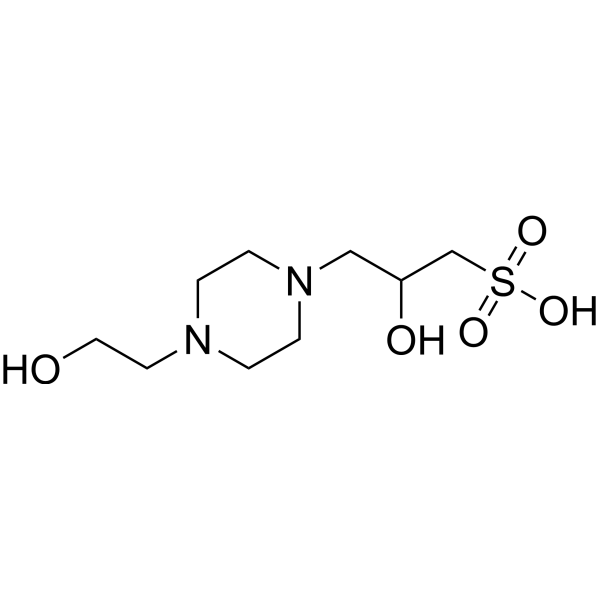
    HEPPSO is a zwitterionic Good's buffer suitable for physiological pH conditions. HEPPSO forms high-order oligomers in aqueous solutions and can form a 1:1 complex with Cu 2+ via its hydroxyalkyl and tertiary amine groups. However, HEPPSO contains a structurally similar trace impurity lacking an alkanesulfonic acid side chain. The complex formed by this impurity and Cu 2+ has a very low Ka; therefore, HEPPSO may interfere with studies on copper speciation analysis in natural water bodies .
    HEPPSO
  • HY-Y0286

    Hartshorn salt, 99%

    Environmental Pollutants Biochemical Assay Reagents Others
    Ammonium carbonate (Ammonium carbonate), 99% is a solid amino compound that functions as a buffer, pH regulator, pore-forming agent, and electrocatalytic oxidation substrate. Ammonium carbonate, 99% is a GRAS-grade direct food additive with no restricted daily intake specified by FAO/WHO, and it shows no acute skin toxicity, clinical signs of toxicity, or effects on body weight in rats. Ammonium carbonate, 99% undergoes electrocatalytic oxidation in alkaline solutions with a Pt/C catalyst (carbonate adsorption interferes with activity). Ammonium carbonate, 99% can serve as a fuel for low-temperature polymer fuel cells and anion exchange membrane fuel cells (with performance superior to pure ammonia), and can also form pores in the carrier-free Pt cathode catalyst layer after low-temperature decomposition, thereby enhancing catalyst activity under low-humidity conditions and the performance of proton exchange membrane fuel cells .
    Ammonium carbonate, 99%
  • HY-D0227J

    Tris HCl (≥99%, for cell culture); Tris hydrochloride (≥99%, for cell culture)

    Biochemical Assay Reagents Metabolic Disease
    THAM hydrochloride (≥99%, for cell culture) is a low-toxicity amino alcohol buffer, a specific CO2-consuming proton acceptor that buffers carbon dioxide and acid both in vitro and in vivo. THAM hydrochloride (≥99%, for cell culture) binds protons to form bicarbonate, reduces PaCO2, and induces intracellular alkalization, thereby ameliorating hypercapnia-induced elevation of pulmonary blood vessels and pulmonary arterial pressure. THAM hydrochloride (≥99%, for cell culture) may cause PaCO2 rebound, hypoglycemia, and respiratory depression. THAM hydrochloride (≥99%, for cell culture) removes amniotic epithelium and preserves the basement membrane, but depletes extracellular matrix and reduces the adhesion rate of limbal epithelial cells. THAM hydrochloride (≥99%, for cell culture) can act as a CO2 carrier to enhance the productivity and carbon utilization rate of Scenedesmus obliquus. THAM hydrochloride (≥99%, for cell culture) is a key component of buffer solutions used in various biological, cell culture, biochemical, and molecular biology applications .
    THAM hydrochloride (≥99%, for cell culture)
  • HY-179669C

    Biochemical Assay Reagents Others
    1M Tris-HCl Buffer, pH 7.6 is a buffer solution commonly used in various biochemical and molecular biological applications to maintain a stable pH environment. The pH value of Tris-HCl changes with temperature; generally, the pH decreases by 0.03 units for every degree Celsius increase in temperature. The pH values indicated on the product are the pH values of the Tris-HCl buffer solution at 25°C.
    1M Tris-HCl Buffer, pH 7.6
  • HY-179669

    Biochemical Assay Reagents Others
    1M Tris-HCl Buffer, pH 6.8 is a buffer solution commonly used in various biochemical and molecular biological applications to maintain a stable pH environment. The pH value of Tris-HCl changes with temperature; generally, the pH decreases by 0.03 units for every degree Celsius increase in temperature. The pH values indicated on the product are the pH values of the Tris-HCl buffer solution at 25°C.
    1M Tris-HCl Buffer, pH 6.8
  • HY-179669I

    Biochemical Assay Reagents Others
    1M Tris-HCl Buffer, pH 8.8 is a buffer solution commonly used in various biochemical and molecular biological applications to maintain a stable pH environment. The pH value of Tris-HCl changes with temperature; generally, the pH decreases by 0.03 units for every degree Celsius increase in temperature. The pH values indicated on the product are the pH values of the Tris-HCl buffer solution at 25°C.
    1.5M Tris-HCl Buffer, pH 8.8
  • HY-N2054

    Kaempferol 4'-β-glucoside

    Drug Derivative Others
    Kaempferol 4'-glucoside (Kaempferol 4'-β-glucoside) is a glycosylated form of Kaempferol (HY-14590). Kaempferol 4'-glucoside interacts with SBE-β-CD (HY-17031). Kaempferol 4'-glucoside can be used in the food and active compound industries .
    Kaempferol 4'-glucoside
  • HY-Y0537K

    Biochemical Assay Reagents Cardiovascular Disease
    Potassium chloride, ACS, 99.0% is a metal halide salt composed of potassium and chlorine. Potassium chloride, ACS, 99.0% replenishes electrolytes, corrects water-electrolyte imbalance, and is used in hypokalemia research. Potassium chloride, ACS, 99.0% is also used to prepare buffer solutions and produce fertilizers, with applications in the fields of medicine, scientific research and food processing. Potassium chloride, ACS, 99.0% plays a key role in protein extraction and dissolution .
    Potassium chloride, ACS, 99.0%
  • HY-Y0842S1

    Methanamide-d3; Formimidic acid-d3

    Isotope-Labeled Compounds Biochemical Assay Reagents Apoptosis Cardiovascular Disease Cancer
    Formamide-d3 is the deuterium labeled Formamide (HY-Y0842). Formamide is an effective DNA denaturant that significantly reduces the stability of DNA in buffer solutions. Formamide can also be used as a decalcifying agent for rat cardiac cells. Additionally, formamide is widely used as a solvent or chemical raw material for ion compounds, resins, and plasticizers.
    Formamide-d3
  • HY-W127629

    Biochemical Assay Reagents Others
    MOBS is a zwitterionic compound and biological buffer. MOBS is compatible with common biological media .
    MOBS
  • HY-Y1977A

    Biochemical Assay Reagents Others
    100 mM Pro-Ac, pH 5.0 buffer is a buffer solution and can be used as a reconstitution buffer for ADC products.
    100 mM Pro-Ac, pH 5.0 buffer
  • HY-179669E

    Biochemical Assay Reagents Others
    1M Tris-HCl Buffer, pH 8.0 is a buffer solution commonly used in various biochemical and molecular biological applications to maintain a stable pH environment. The pH value of Tris-HCl changes with temperature; generally, the pH decreases by 0.03 units for every degree Celsius increase in temperature. The pH values indicated on the product are the pH values of the Tris-HCl buffer solution at 25°C.
    1M Tris-HCl Buffer, pH 8.0
  • HY-179669A

    Biochemical Assay Reagents Others
    1M Tris-HCl Buffer, pH 7.0 is a buffer solution commonly used in various biochemical and molecular biological applications to maintain a stable pH environment. The pH value of Tris-HCl changes with temperature; generally, the pH decreases by 0.03 units for every degree Celsius increase in temperature. The pH values indicated on the product are the pH values of the Tris-HCl buffer solution at 25°C.
    1M Tris-HCl Buffer, pH 7.0
  • HY-W040173

    Biochemical Assay Reagents Others
    MOPSO sodium can be used for the preparation of buffer solution. MOPSO sodium is used as a biochemical reagent .
    MOPSO sodium
  • HY-B1610K

    Biochemical Assay Reagents Others
    Sodium citrate buffer, 0.5M, pH 5.5, is a commonly used buffer with main components are citric acid and sodium hydrogen phosphate. Sodium citrate buffer 0.5M pH 5.5 is used in heat induced epitope retrieval (HIER) methods to reverse the loss of antigenicity that occurs with some epitopes in formalin-fixed paraffin embedded tissues. Sodium citrate buffer 0.5M pH 5.5 is the preferred solution for most antibodies. .
    Sodium Citrate Buffer, 0.5M, pH 5.5
  • HY-D0227B
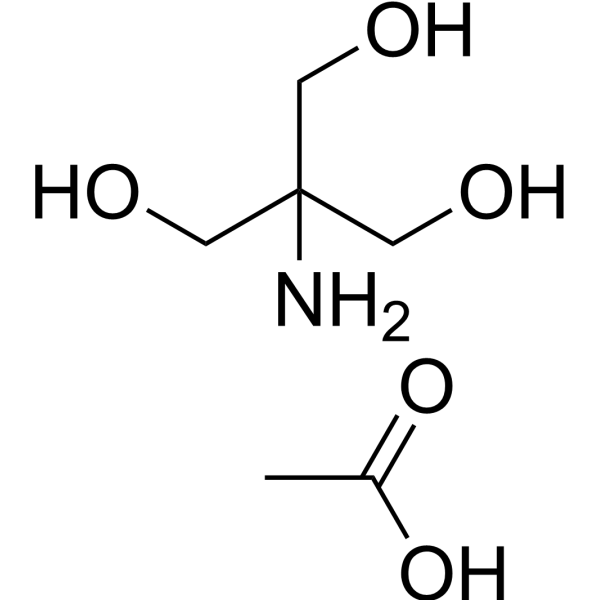
    THAM acetate
    1 Publications Verification

    Tris acetate; Tris(hydroxymethyl)aminomethane acetate

    Biochemical Assay Reagents Metabolic Disease
    THAM acetate is a low-toxicity amino alcohol buffer, a CO2-consuming proton acceptor that buffers carbon dioxide and acid both in vitro and in vivo. THAM acetate binds protons to form bicarbonate, reduces PaCO2, and induces intracellular alkalization, thereby ameliorating hypercapnia-induced elevation of pulmonary blood vessels and pulmonary arterial pressure. THAM acetate may cause PaCO2 rebound, hypoglycemia, and respiratory depression. THAM acetate removes amniotic epithelium and preserves the basement membrane, but depletes extracellular matrix and reduces the adhesion rate of limbal epithelial cells. THAM acetate can act as a CO2 carrier to enhance the productivity and carbon utilization rate of Scenedesmus obliquus. THAM acetate is a key component of buffer solutions used in various biological, cell culture, biochemical, and molecular biology applications .
    THAM acetate
  • HY-Y0842S3

    Methanamide-15N; Formimidic acid-15N

    Isotope-Labeled Compounds Biochemical Assay Reagents Apoptosis Cardiovascular Disease Cancer
    Formamide- 15N is the 15N labeled Formamide (HY-Y0842). Formamide is an effective DNA denaturant that significantly reduces the stability of DNA in buffer solutions. Formamide can also be used as a decalcifying agent for rat cardiac cells. Additionally, formamide is widely used as a solvent or chemical raw material for ion compounds, resins, and plasticizers.
    Formamide-15N
  • HY-179669J

    Biochemical Assay Reagents Others
    1M Tris-HCl Buffer, pH 6.8 is a buffer solution commonly used in various biochemical and molecular biological applications to maintain a stable pH environment. The pH value of Tris-HCl changes with temperature; generally, the pH decreases by 0.03 units for every degree Celsius increase in temperature. The pH values ??indicated on the product are the pH values ??of the Tris-HCl buffer solution at 25°C.
    1.5M Tris-HCl Buffer, pH 6.8
  • HY-179669H

    Biochemical Assay Reagents Others
    1M Tris-HCl Buffer, pH 8.8 is a buffer solution commonly used in various biochemical and molecular biological applications to maintain a stable pH environment. The pH value of Tris-HCl changes with temperature; generally, the pH decreases by 0.03 units for every degree Celsius increase in temperature. The pH values indicated on the product are the pH values of the Tris-HCl buffer solution at 25°C.
    1M Tris-HCl Buffer, pH 8.8
  • HY-Y0332BS

    Isotope-Labeled Compounds Others
    Phosphate monobasic-d2 (potassium) is the deuterium labeled Potassium phosphate monobasic . Potassium phosphate monobasic (DiA) is a commonly used in biological assay buffers. Potassium phosphate monobasic is moderate to highly concentrated aqueous solutions of potassium phosphate monobasic for the production of phosphate buffers and other laboratory applications.
    Phosphate monobasic-d2 potassium
  • HY-D2956

    CLIP-GLA-NHS

    Biochemical Assay Reagents Others
    BC-GLA-NHS (CLIP-GLA-NHS) is a NHS-labeled CLIP tag, which is an amine-reactive crosslinker and can achieve site-specific protein labeling. The NHS ester of BC-GLA-NHS reacts with the primary amine of the target molecule (such as antibodies, quantum dots) in a pH 7.5-8.5 buffer solution to form a stable amide bond. After coupling, the BC molecule undergoes a nucleophilic substitution reaction with the active site (Cys) of the CLIP-tagged fusion protein, releasing benzylcytosine and forming an irreversible thioether bond, achieving covalent labeling. BC-GLA-NHS can be used for click chemistry labeling .
    BC-GLA-NHS
  • HY-W241345

    Radionuclide-Drug Conjugates (RDCs) Cancer
    DOTA-bis(tert-butyl)ester is a DOTA-based metal chelator that can bind to radionuclides and is used to prepare radionuclide conjugates (RDCs). DOTA-bis(tert-butyl)ester can be conjugated with different salts to form different metal chelators, such as (HY-B1244) hydrochloride to obtain DOTA-MN2. DOTA-MN2 can be reacted with [67]Ga-citrate to obtain radiolabeling. When (67)Ga-DOTA-MN2 is incubated in phosphate buffer solution or mouse plasma for 24 hours, it does not undergo significant decomposition. In the biodistribution experiment of NFSa tumor mice, it has high tumor uptake and rapid plasma clearance, and is a good material for SPECT and PET studies.
    DOTA-bis(tert-butyl)ester
  • HY-Y1175A

    Biochemical Assay Reagents Others
    Calcium acetate monohydrate, ACS, 99% is a monohydrate form of calcium acetate used to precipitate oxalates in solution; it also serves as a stabilizer, buffer, and chelating agent.
    Calcium acetate monohydrate,ACS, 99%
  • HY-16387

    VEGFR Others
    PF-00337210 is a potent and selective inhibitor of VEGFRs, designed for treating age-related macular degeneration via intravitreal injection. The formulation strategy focused on developing an ophthalmic solution that would precipitate upon injection into the vitreous, ensuring sustained drug delivery. Challenges included maintaining low dosing volumes, selecting safe excipients for intravitreal use, and addressing the drug's unique physicochemical properties. The final formulation, an isotonic solution in a citrate-buffered vehicle with NaCl, demonstrated stability, potency, and recovery through intravitreal dosing syringes. It formed a depot upon injection into vitreous humor, representing a novel nonpolymeric in situ-forming depot formulation for intravitreal drug delivery .
    PF 00337210
  • HY-111141

    Free Fatty Acid Receptor Metabolic Disease
    AM-3189 is an orally active and selective GPR40 agonist with EC50 values in buffer solution and in 100% human serum of 33 nM and 10 μM respectively. AM-3189 shows no significant activity on GPR41 and GPR43, and no agonistic activity on PPAR-α, -δ, and -γ. AM-3189 enhances glucose-stimulated insulin secretion by activating GPR40 on pancreatic β cells. AM-3189 has extremely low penetration into the central nervous system and significantly reduces blood glucose levels in two humanized GPR40 mouse models. AM-3189 can be used for the study of type 2 diabetes .
    AM-3189
  • HY-W342700

    Biochemical Assay Reagents Others
    PIPPS is a kind of buffer commonly used in biological and biochemical research to maintain the acidity and alkalinity (pH value) of solutions .
    PIPPS
  • HY-W097000

    Biochemical Assay Reagents Others
    1-Propanesulfonic acid (sodium hydrate) is a versatile biochemical reagent used in synthesis reagents, experimental buffer solutions, etc. 1-Propanesulfonic acid (sodium hydrate) is a kind of biological materials or organic compounds that are widely used in life science research .
    1-Propanesulfonic acid sodium hydrate
  • HY-W579346

    Biochemical Assay Reagents Others
    POPSO sesquisodium is a water-soluble zwitterionic buffer. POPSO sesquisodium is commonly used in biological and biochemical studies to maintain the acidity or alkalinity (pH value) of solutions, especially within the physiological pH range of 7.0 to 8.5 .
    POPSO sesquisodium
  • HY-D2984

    SNAP-PEG-NH2

    Fluorescent Dye Others
    BG-PEG-NH2 is an amine terminated phenylguanine derivative with a polyethylene glycol (PEG) chain. BG-PEG-NH2 is an important building block for synthesizing SNAP tag labeled probes. BG-PEG-NH2 is suitable for coupling reactions in aqueous or buffer solutions, coupling of markers, and labeling of intracellular or cell surface proteins .
    BG-PEG-NH2
  • HY-Y0842S5

    Isotope-Labeled Compounds Biochemical Assay Reagents Apoptosis Cardiovascular Disease Cancer
    Formamide-d2 is the deuterium labeled Formamide (HY-Y0842). Formamide is an effective DNA denaturant that significantly reduces the stability of DNA in buffer solutions. Formamide can also be used as a decalcifying agent for rat cardiac cells. Additionally, formamide is widely used as a solvent or chemical raw material for ion compounds, resins, and plasticizers.
    Formamide-d2
  • HY-Y0842S4

    Isotope-Labeled Compounds Biochemical Assay Reagents Apoptosis Cardiovascular Disease Cancer
    Formamide-d1 is the deuterium labeled Formamide (HY-Y0842). Formamide is an effective DNA denaturant that significantly reduces the stability of DNA in buffer solutions. Formamide can also be used as a decalcifying agent for rat cardiac cells. Additionally, formamide is widely used as a solvent or chemical raw material for ion compounds, resins, and plasticizers.
    Formamide-d1
  • HY-Y0842S

    Methanamide-13C; Formimidic acid-13C

    Isotope-Labeled Compounds Biochemical Assay Reagents Apoptosis Cardiovascular Disease Cancer
    Formamide- 13C is the 13C-labeled Formamide (HY-Y0842). Formamide is an effective DNA denaturant that significantly reduces the stability of DNA in buffer solutions. Formamide can also be used as a decalcifying agent for rat cardiac cells. Additionally, formamide is widely used as a solvent or chemical raw material for ion compounds, resins, and plasticizers.
    Formamide-13C
  • HY-P1474

    Amyloid β-Protein (22-35)

    Amyloid-β Neurological Disease
    β-Amyloid 22-35 (Amyloid β-Protein 22-35), the residues 22-35 fragment ofβ-amyloid protein, has a cytotoxic effect on cultured neurons from the rat hippocampus in serum-free medium. β-Amyloid 22-35 forms aggregates and typical amyloid fibrils resembling those of the β-amyloid protein in neutral buffer solution) .
    β-Amyloid (22-35)
  • HY-P1474A

    Amyloid β-Protein (22-35) TFA

    Amyloid-β Neurological Disease
    β-Amyloid 22-35 (Amyloid β-Protein 22-35) TFA, the residues 22-35 fragment ofβ-amyloid protein, has a cytotoxic effect on cultured neurons from the rat hippocampus in serum-free medium. β-Amyloid 22-35 TFA forms aggregates and typical amyloid fibrils resembling those of the β-amyloid protein in neutral buffer solution) .
    β-Amyloid (22-35) TFA
  • HY-Y0842R

    Methanamide (Standard); Formimidic acid (Standard)

    Reference Standards Biochemical Assay Reagents Apoptosis Cancer
    Formamide (Standard) is the analytical standard of Formamide. This product is intended for research and analytical applications. Formamide is an effective DNA denaturant that significantly reduces the stability of DNA in buffer solutions. It induces apoptosis by promoting the formation of cyclic nucleotides and the phosphorylation and dephosphorylation processes of nucleotides, making it useful in cancer research. Formamide can also be used as a decalcifying agent for rat cardiac cells. Additionally, formamide is widely used as a solvent or chemical raw material for ion compounds, resins, and plasticizers. [4]
    Formamide (Standard)
  • HY-Y0842S2

    Isotope-Labeled Compounds Biochemical Assay Reagents Apoptosis Cardiovascular Disease Cancer
    Glycine- 13C, 15N is the 13C and 15N labeled Glycine (HY-Y0842). Formamide is an effective DNA denaturant that significantly reduces the stability of DNA in buffer solutions. It induces apoptosis by promoting the formation of cyclic nucleotides and the phosphorylation and dephosphorylation processes of nucleotides, making it useful in cancer research. Formamide can also be used as a decalcifying agent for rat cardiac cells. Additionally, formamide is widely used as a solvent or chemical raw material for ion compounds, resins, and plasticizers. .
    Formamide-13C,15N
  • HY-W103773

    Biochemical Assay Reagents Fungal Bacterial Infection
    2-Phenylphenol sodium is a phenolic disinfectant and toxic agent with bactericidal, fungicidal and growth-inhibiting activities. 2-Phenylphenol sodium serves as a post-harvest agricultural fungicide and food preservative. At specific concentrations, 2-Phenylphenol sodium inhibits the growth of E. coli strains, while at high concentrations, 2-Phenylphenol sodium completely blocks their proliferation. 2-Phenylphenol sodium acts as a substrate for biocatalytic conversion, and is converted to 3-phenylcatechol by 2-hydroxybiphenyl 3-monooxygenase in recombinant E. coli. 2-Phenylphenol sodium also undergoes electrochemical oxidation in phosphate buffer solution .
    2-Phenylphenol sodium
  • HY-182590C

    Biochemical Assay Reagents Others
    Boric Acid Buffer Solution, 0.05 M, pH 8.0 is a standard buffer solution, also known as borate buffer. It is mainly composed of boric acid and borax, with a pH of 8.0 and a final borate concentration of 0.05 M.
    Boric Acid Buffer Solution, 0.05 M, pH 8.0
  • HY-182590B

    Biochemical Assay Reagents Others
    Boric Acid Buffer Solution, 0.05 M, pH 7.8 is a standard buffer solution, also known as borate buffer. It is mainly composed of boric acid and borax, with a pH of 7.8 and a final borate concentration of 0.05 M.
    Boric Acid Buffer Solution, 0.05 M, pH 7.8

Inquiry Online

Your information is safe with us. * Required Fields.

Salutation


Country or Region *

Applicant Name *


Organization Name *

Department *


Email Address *


Product Name *

Cat. No.


Requested quantity *

Phone Number *


Remarks

Inquiry Online

Inquiry Information

Product Name:
Cat. No.:
Quantity:
MCE Japan Authorized Agent:

