
1. Search Result
Search Result
Results for "

polycationic

" in MedChemExpress (MCE) Product Catalog:

12

Inhibitors & Agonists

1

Fluorescent Dye

5

Biochemical Assay Reagents

3

Peptides

Cat. No. Product Name Target Research Areas Chemical Structure
  • HY-103311
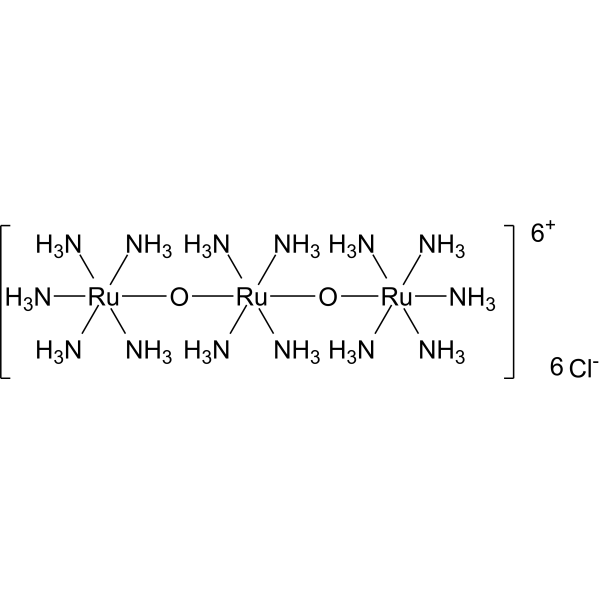
    Ruthenium red
    10+ Cited Publications

    Ammoniated ruthenium oxychloride

    Calcium Channel Cardiovascular Disease
    Ruthenium red (Ammoniated ruthenium oxychloride) is a polycationic dye widely used for electron microscopy (EM) of cells, tissues and vegetative bacteria. Ruthenium red strongly reacts with phospholipids and fatty acids and binds to acidic mucopolysaccharides. Ruthenium red is a L-type calcium current (ICa) blocker .
    Ruthenium red
  • HY-107911
    Protamine sulfate
    3 Publications Verification

    Thrombin Metabolic Disease
    Protamine sulfate, polycationic peptide and a antiheparin agent, could neutralize the anticoagulant action of heparin and enhances lipid-mediated gene transfer .
    Protamine sulfate
  • HY-B2144A
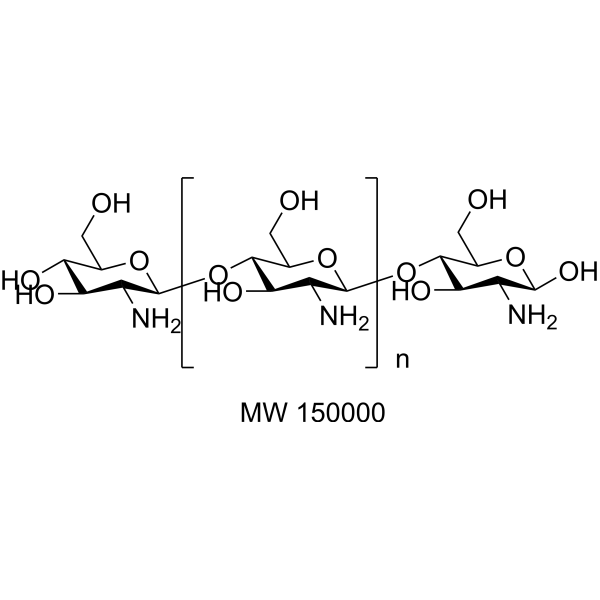
    Chitosan (MW 150000)
    2 Publications Verification

    Deacetylated chitin (MW 150000); Poly(D-glucosamine) (MW 150000)

    Environmental Pollutants Fungal Bacterial Infection Cancer
    Chitosan (MW 150000) (Deacetylated chitin (MW 150000)) is a polycationic linear polysaccharide derived from chitin with the molecular weight of 150000. Chitosan is an versatile biomaterial because of its non-toxicity, low allergenicity, biocompatibility and biodegradability. Chitosan also has antitumor, antibacterial, antifungal, and antioxidant activities .
    Chitosan (MW 150000)
  • HY-B2144B

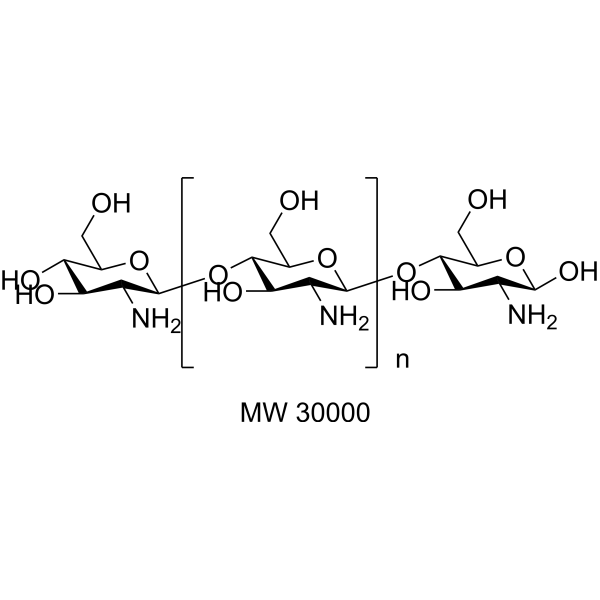
    Deacetylated chitin (MW 30000); Poly(D-glucosamine) (MW 30000)

    Environmental Pollutants Bacterial Fungal Infection Cancer
    Chitosan (MW 30000) (Deacetylated chitin (MW 30000)) is a polycationic linear polysaccharide derived from chitin with the molecular weight of 30000. Chitosan is an versatile biomaterial because of its non-toxicity, low allergenicity, biocompatibility and biodegradability. Chitosan also has antitumor, antibacterial, antifungal, and antioxidant activities .
    Chitosan (MW 30000)
  • HY-126437K

    PLL solution 0.01%, sterile-filtered, hydrobromide, MW 70000-150000, for cell culture

    Biochemical Assay Reagents Others
    Poly-L-lysine solution (0.01%, sterile-filtered, MW 70000-150000) (PLL solution (0.01%, sterile-filtered, hydrobromide, MW 70000-150000, for cell culture)) is a polycationic electrolyte polymer solution polymerized from L-lysine monomers and can be used for cell culture .
    Poly-L-lysine solution (0.01%, sterile-filtered, MW 70000-150000)
  • HY-126437I

    Biochemical Assay Reagents DNA Alkylator/Crosslinker Amino Acid Derivatives Cancer
    Poly-L-lysine hydrobromide (MW 1000-5000) is a homopolymer of L-lysine and a polycationic non-viral gene delivery vector. Poly-L-lysine hydrobromide (MW 1000-5000) forms complexes with plasmid DNA. Poly-L-lysine hydrobromide (MW 1000-5000) is applicable to relevant research on lung cancer .
    Poly-L-lysine hydrobromide (MW 1000-5000)
  • HY-127032

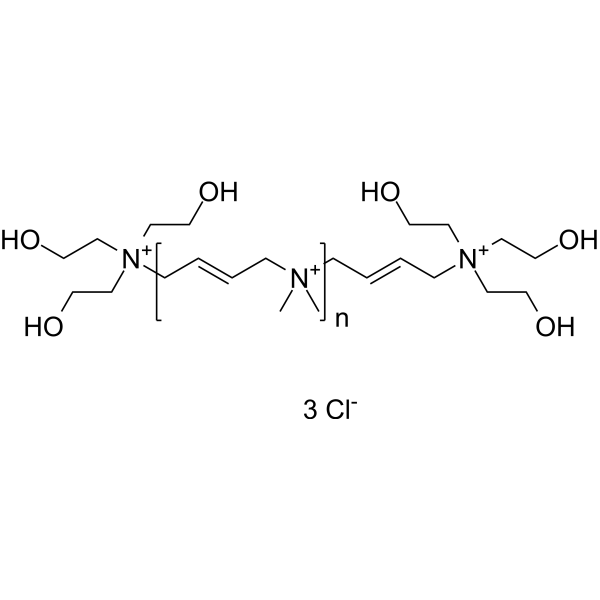
    Polidronium chloride

    Biochemical Assay Reagents Infection
    Polyquaternium-1 (Polidronium chloride; PQ-1) is an antimicrobial preservative and an activator of NF-κB. Polyquaternium-1 targets bacterial cell membranes, commonly used in ophthalmic surgery. Polyquaternium-1 adsorbs to the surface of microbial membranes through its polycationic properties, destroying membrane integrity and inducing potassium ion leakage, leading to bacterial death. Polyquaternium-1 exerts antimicrobial effects at a concentration of 0.001% and has low toxicity to mammalian cells. Polyquaternium-1 can be used to prepare products such as glaucoma eye drops (Travoprost preparations containing PQ-1), artificial tears, and contact lens solutions to reduce the ocular surface toxicity of traditional preservatives such as benzalkonium chloride (HY-B2232) .
    Polyquaternium-1
  • HY-W250308A

    Epsilon-polylysine hydrochloride (MV 2000-5000); ε-Polylysine hydrochloride (MV 2000-5000); ε-PL hydrochloride (MV 2000-5000)

    Bacterial Fungal Reactive Oxygen Species (ROS) Infection
    ε-Poly-L-lysine (Epsilon-polylysine; ε-Polylysine) hydrochloride (MV 2000-5000) is a polycationic antibacterial agent with broad-spectrum activity against Gram-positive bacteria, Gram-negative bacteria, fungi, yeasts and specific bacteriophages. ε-Poly-L-lysine hydrochloride (MV 2000-5000) exerts bactericidal effects through mechanisms such as disrupting microbial membranes, inducing ROS production, inhibiting metabolism and spore germination. ε-Poly-L-lysine hydrochloride (MV 2000-5000) also regulates the expression of multiple key genes including sodA, oxyR and recA. ε-Poly-L-lysine hydrochloride (MV 2000-5000) exhibits properties such as low eukaryotic cytotoxicity, thermal stability and pH stability, and supports tissue regeneration and anti-tumor applications. ε-Poly-L-lysine hydrochloride (MV 2000-5000) can be applied in research fields including bacterial and fungal infections, diabetic ulcers, and methicillin-resistant Staphylococcus aureus infections .
    ε-Poly-L-lysine hydrochloride (MV 2000-5000)
  • HY-126436D

    L-Ornithine homopolymer hydrochloride (MW 15000-30000)

    Biochemical Assay Reagents Metabolic Disease Endocrinology
    Poly-L-ornithine hydrochloride (MW 15000-30000) is a polycationic homopolymer composed of L-ornithine. Poly-L-ornithine hydrochloride (MW 15000-30000) adsorbs negatively charged species through electrostatic interactions. Poly-L-ornithine hydrochloride (MW 15000-30000) can be used as a key component of polyelectrolyte complexes to construct core-shell structure carriers to achieve controlled delivery of growth factors (such as rhBMP-2, FGF-1). Poly-L-ornithine hydrochloride (MW 15000-30000) is used in the study of diabetes and bone regeneration related diseases .
    Poly-L-ornithine hydrochloride (MW 15000-30000)
  • HY-P4247

    Amino Acid Derivatives Others
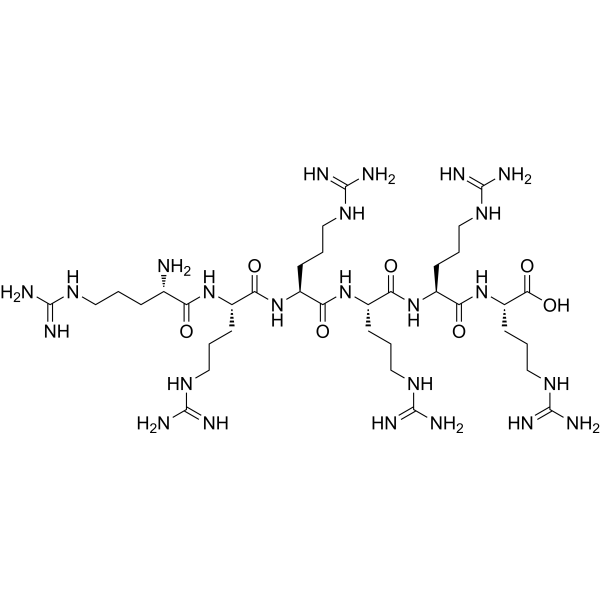
    Hexa-arginine, consisting of six arginines, is a polycationic peptide that can penetrate cells efficiently and is mainly used for the intracellular delivery of low-molecular-weight agents, biomolecules, and particles .
    Hexaarginine
  • HY-P10618

    Bacterial Infection
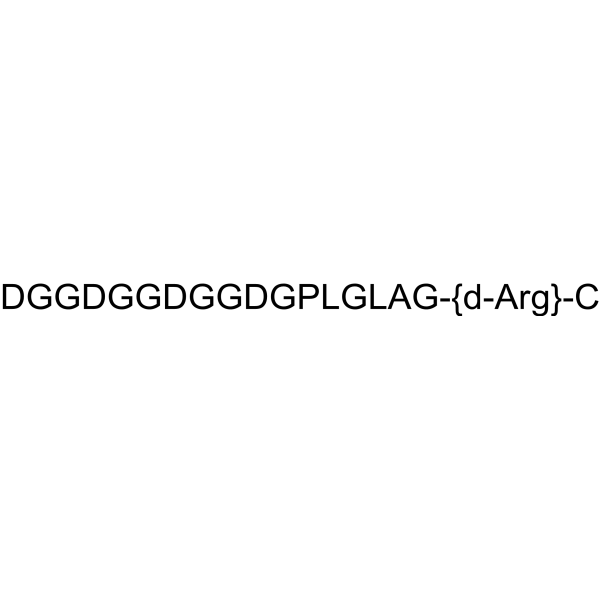
    BTM-P1 is a polycationic peptide that exhibits antibacterial activity against both Gram-positive and Gram-negative bacteria. BTM-P1 can form ion-permeable channels in the inner mitochondrial membrane to interfere with mitochondrial energy processes .
    BTM-P1
  • HY-P3025

    Biochemical Assay Reagents Bacterial Cancer
    Salmine sulfate is an antimicrobial protein. Salmine sulfate is a polycationic coacervate embolic agent that can be used in tumor research .
    Salmine sulfate

Inquiry Online

Your information is safe with us. * Required Fields.

Salutation


Country or Region *

Applicant Name *


Organization Name *

Department *


Email Address *


Product Name *

Cat. No.


Requested quantity *

Phone Number *


Remarks

Inquiry Online

Inquiry Information

Product Name:
Cat. No.:
Quantity:
MCE Japan Authorized Agent:

