98 Results for "

pyrrole

" in MedChemExpress (MCE) Product Catalog:
Products (98)

98 Results for "pyrrole" in MCE Product Catalog:

1
1 Cited Publications
Cat. No.: HY-B0840
CAS No.: 122453-73-0
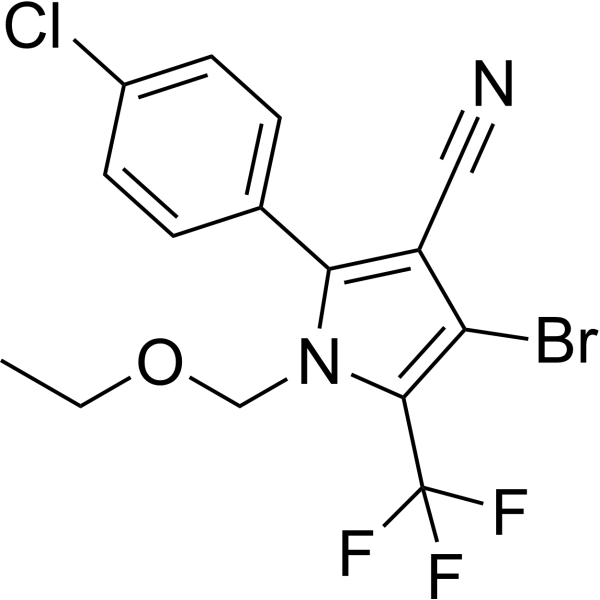
Chlorfenapyr is a pyrrole insecticide. Chlorfenapyr has a mode of action: the mixed function oxidase oxidizes and removes the Nethoxymethyl group to form the active metabolite, CL 303268. Chlorfenapyr is used for termite control and crop protection against a variety of insect and mite pests .
loading...
    loading...
Cat. No.: HY-Y1134
CAS No.: 147-71-7
Synonyms: D-(-)-Tartaric acid
D-Tartaric acid (D-(-)-Tartaric acid) serves as an additive in beverages and other food products. When combined with pyrrole, D-Tartaric acid is used to construct a D-TA/polypyrrole-based bacterial imprinted polymer sensor for the detection of Vibrio parahaemolyticus. D-Tartaric acid enhances the sensitivity of polypyrrole-based bacterial imprinted polymer sensors for detecting Vibrio parahaemolyticus. D-Tartaric acid is applicable to research on Vibrio parahaemolyticus infection .
loading...
    loading...
Cat. No.: HY-W013040
CAS No.: 290-37-9
Synonyms: 1,4-Diazine
Pyrazine (1,4-Diazine) is an aromatic nitrogen-containing heterocyclic compound with two nitrogen atoms, and is well known for its electron-deficient property. Pyrazine serves as a key pharmacophore in a variety of drugs, and also acts as the core skeleton of derivatives with anticancer, antimycobacterial, antithrombotic and anti-inflammatory activities .
loading...
    loading...
Cat. No.: HY-W001963
CAS No.: 634-97-9
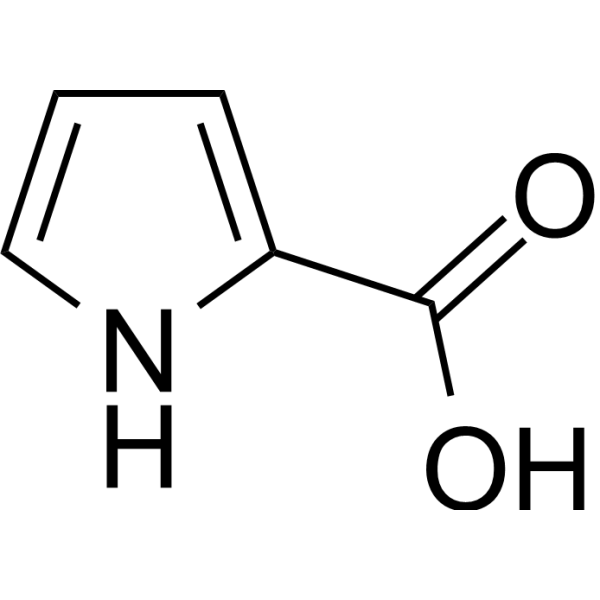
Pyrrole-2-carboxylic acid is a natural alkaloid from the marine bacterium Pelomonas puraquae sp. Nov. Pyrrole-2-carboxylic acid is a biological form of pyrrole that is often encountered in natural compounds. Pyrrole-2-carboxylic acid serves as a precursor for various pyrrole derivatives like clorobiocin, coumermycin A1, pyoluteorin, leupyrrins, and undecylprodigiosin in biosynthetic processes .
loading...
    loading...
Cat. No.: HY-W004756
CAS No.: 1122-10-7
Synonyms: Dibromomaleinimide
3,4-Dibromo-1H-pyrrole-2,5-dione (Dibromomaleinimide) is a biochemical reagent that can be used as a biological material or organic compound for life science related research .
loading...
    loading...
Cat. No.: HY-77817
CAS No.: 1003-29-8
Synonyms: 2-Formylpyrrole
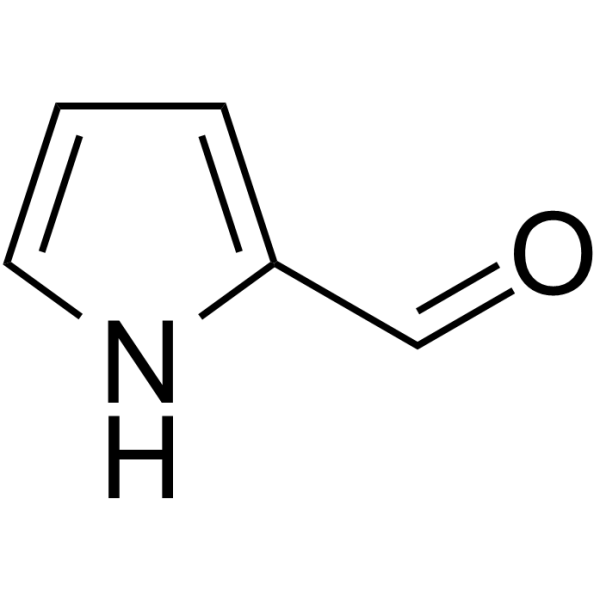
Pyrrole-2-carboxaldehyde (2-Formylpyrrole) is a heterocyclic organic compound that serves as a scaffold for the synthesis of various bioactive compounds .
loading...
    loading...
Cat. No.: HY-N6794
CAS No.: 82005-12-7
Synonyms: (Z)-Hymenialdisine; Hymenialdisine
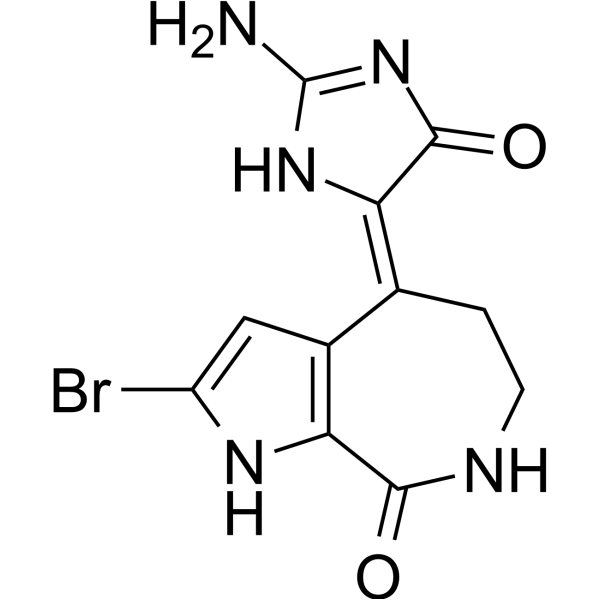
10Z-Hymenialdisine ((Z)-Hymenialdisine) is a natural bioactive pyrrole alkaloid. 10Z-Hymenialdisine is a pan kinase inhibitor, and has anticancer activities .
loading...
    loading...
Cat. No.: HY-W012956
CAS No.: 1072-83-9
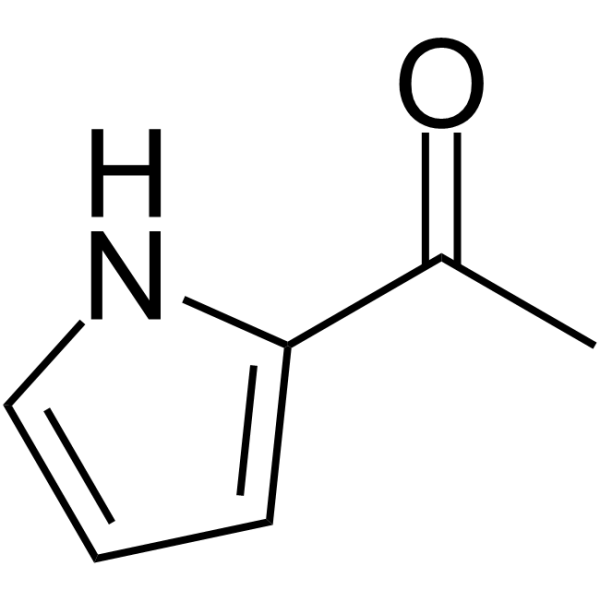
2-Acetylpyrrole is an organic compound containing a pyrrole ring. 2-Acetylpyrrole is one of the products of the Maillard browning reaction and can serve as a major flavor component in many foods. As an intermediate, 2-acetylpyrrole can also be used in the synthesis of other active compounds, such as the flavor compound 2-acetyl-1-pyrroline .
loading...
    loading...
Cat. No.: HY-W075603
CAS No.: 1031443-55-6
Synonyms: 2,6-Diiodo-Pyrromethene 546
2,6-Diiodo-BODIPY 493/503 is an F-Bodipy fluorescent dye with diiodo substitution at the (pyrrole) 2,6 position. 2,6-Diiodo-BODIPY 493/503 has a pyrrole iodine substituent that turns it red .
loading...
    loading...
Cat. No.: HY-59307
CAS No.: 7126-39-8
Synonyms: 3-Formylpyrrole
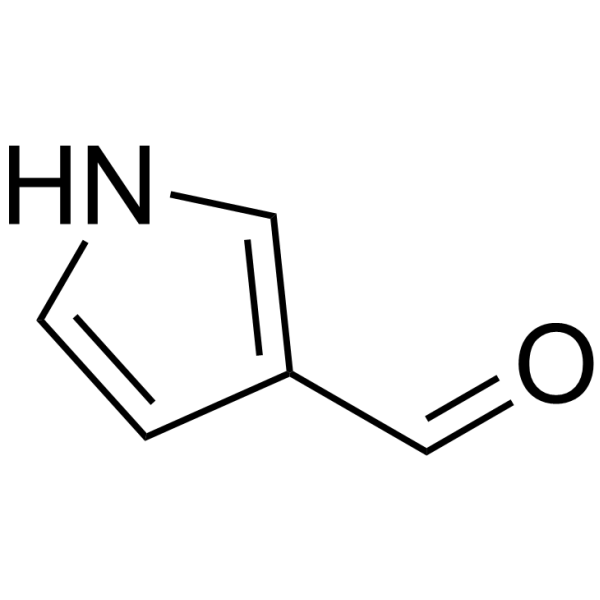
Pyrrole-3-carboxaldehyde (3-Formylpyrrole) is an important intermediate and can be used in the synthesis of other compounds .
loading...
    loading...
Cat. No.: HY-W102907
CAS No.: 4551-72-8
Research Areas:  

Infection

Pyrrole-2-carboxamide (Compound 26) is a secondary metabolite. Pyrrole-2-carboxamide can be produced by two mangrove-derived actinomycetes Streptomyces sp. WHUA03072 and Streptomyces sp. WHUA03267 .
loading...
    loading...
Cat. No.: HY-W007392
CAS No.: 934-05-4
Synonyms: Methyl 4-bromopyrrole-2-carboxylate
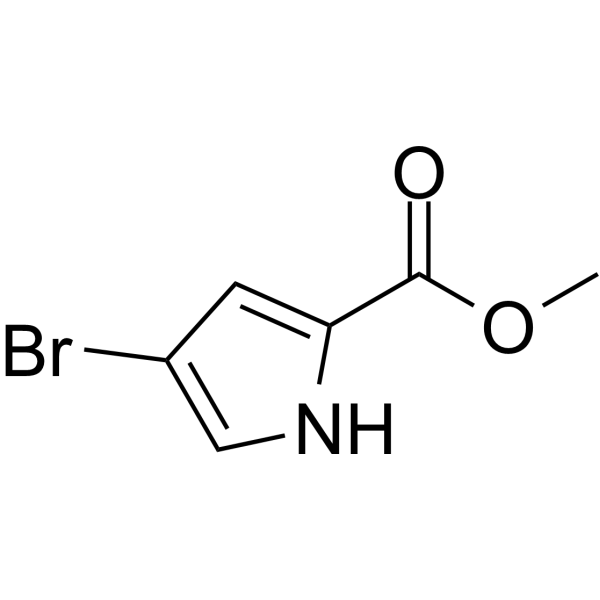
Methyl 4-bromo-1H-pyrrole-2-carboxylate (Methyl 4-bromopyrrole-2-carboxylate) is a biologically active pyrrole derivative. Methyl 4-bromo-1H-pyrrole-2-carboxylate can be used in studies on the development of pyrrole-related biosensors .
loading...
    loading...
Cat. No.: HY-W006646
CAS No.: 934-07-6
Methyl 5-bromo-1H-pyrrole-2-carboxylate (Compound 7) is a pyrrole that can be isolated from marine sponges Lissodendotyx sp.
loading...
    loading...
Cat. No.: HY-W013430
CAS No.: 116-63-2
Target:  

Fluorescent Dye

Research Areas:  

Others

4-Amino-3-hydroxynaphthalene-1-sulfonic acid is utilized as a fluorescent dye. 4-Amino-3-hydroxynaphthalene-1-sulfonic acid forms polypyrrole (PPy) conducting film with pyrrole, and is utilized in electrochemie .
loading...
    loading...
Cat. No.: HY-W057815
CAS No.: 863600-81-1
Target:  

PROTAC Linkers

Research Areas:  

Cancer

cis-5-Amino-2-Boc-hexahydro-cyclopenta[c]pyrrole is a PROTAC linker that can be used in the synthesis of PROTACs.
loading...
    loading...
Cat. No.: HY-W026277
CAS No.: 930-88-1
Synonyms: 1-Methyl-1H-pyrrole-2,5-dione
N-Methylmaleimide (1-Methyl-1H-pyrrole-2,5-dione) is an electron-deficient alkene that can be used as a thiol blocking agent .
loading...
    loading...
Cat. No.: HY-N9279
CAS No.: 23291-96-5
Synonyms: Monocrotaline pyrrole; MCTP; 3,8-Didehydromonocrotaline
Dehydromonocrotaline is a mitochondrial respiratory chain complex I NADH oxidase inhibitor, with a IC50 of 62.06 μM and a Ki of 8.1 μM in rats. Dehydromonocrotaline exerts non-competitive inhibitory effects by modifying cysteine thiol groups on complex I, and does not bind to the NADH-binding site. Dehydromonocrotaline dissipates mitochondrial membrane potential and reduces ATP levels. Dehydromonocrotaline can be used in studies related to hepatotoxicity, pulmonary hypertension and liver tumors .
loading...
    loading...
Cat. No.: HY-32959
CAS No.: 135884-31-0
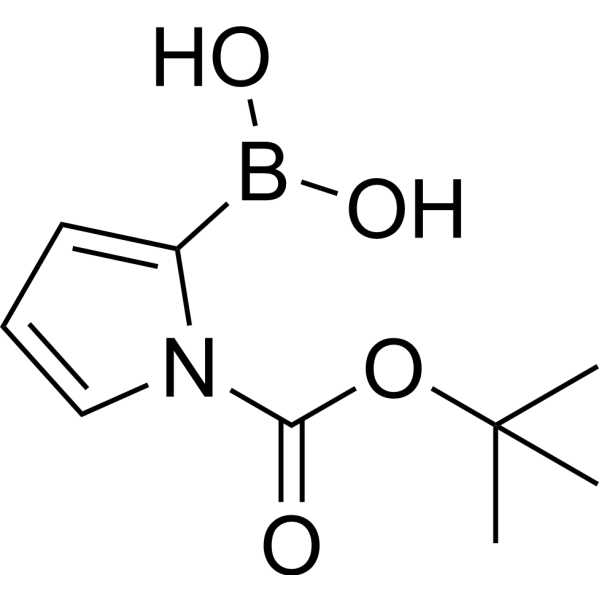
N-Boc-2-pyrroleboronic acid is an organic synthesis intermediate used primarily in the synthesis of chiral pharmaceutical molecules and biologically active molecules. The boronic acid on the pyrrole ring can participate in Suzuki coupling reactions. The boronic acid can be oxidized to a hydroxyl group under the action of nitrogen oxides, and after tautomerization, it can be further transformed into 2-oxo-2,5-dihydro-1-pyrrolecarboxylic acid tert-butyl ester .
loading...
    loading...
Cat. No.: HY-W035133
CAS No.: 14527-51-6
Synonyms: 5,10,15,20-Tetra-p-tolyl-21H,23H-porphine
5,10,15,20-Tetrakis(p-tolyl)porphyrin (TTP) is an organic compound belonging to the class of porphyrins, a cyclic molecule composed of four pyrrole rings linked together. TTP is a synthetic porphyrin commonly used as a sensitizer for dye-sensitized solar cells and a catalyst for organic reactions. Due to its unique structure, TTP has a series of interesting properties, including at specific wavelengths and its potential as a catalyst for various chemical reactions. In dye-sensitized solar cells, TTPs help convert sunlight into electricity by absorbing photons and transferring electrons to the semiconductor layer of the device. In organic chemistry, TTP is often used as a catalyst for various organic compounds in reactions such as oxidation and reduction. Its ability to selectively bind certain substrates makes it a useful tool for synthesizing complex molecules and studying their properties.
loading...
    loading...
Cat. No.: HY-W076794
CAS No.: 98026-79-0
Target:  

Bacterial

Research Areas:  

Infection

3-Bromo-1H-pyrrole-2,5-dione (compound 2c) is a 3-substituted pyrrole-2,5-dione compound with antibacterial activity. 3-Bromo-1H-pyrrole-2,5-dione inhibits pathogenic strains of S. aureus ATCC 25923, E. coli ATCC 25922, P. aeruginosa ATCC 27853, with MIC values of 32 μg/mL, 32 μg/mL, and 64 μg/mL, respectively .
loading...
    loading...