1. Search Result
Search Result
Isoforms Recommended: D3 Receptor
Results for "

rat D3 receptor

" in MedChemExpress (MCE) Product Catalog:

31

Inhibitors & Agonists

6

Isotope-Labeled Compounds

Cat. No. Nombre del producto Target Áreas de investigación Chemical Structure
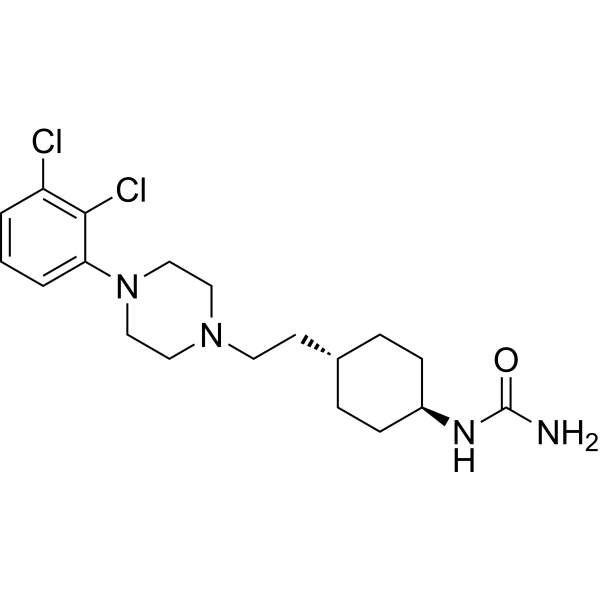
  • HY-100656

    Dopamine Receptor 5-HT Receptor Neurological Disease
    Desmethyl cariprazine is a major active metabolite of cariprazine, with activities at human dopamine receptors and serotonin receptors, showing a pEC50 of 8.90 at human D2 receptors, a pEC50 of 8.09 at D3 receptors, and a pEC50 of 6.28 at 5-HT1A receptors. Desmethyl cariprazine inhibits forskolin-induced cAMP production at D2, D3 and 5-HT1A receptors, and suppresses serotonin-induced Ca 2+ release at 5-HT2B receptors. Desmethyl cariprazine is applicable to research related to schizophrenia, bipolar disorder type I and bipolar disorder.
    Desmethyl cariprazine
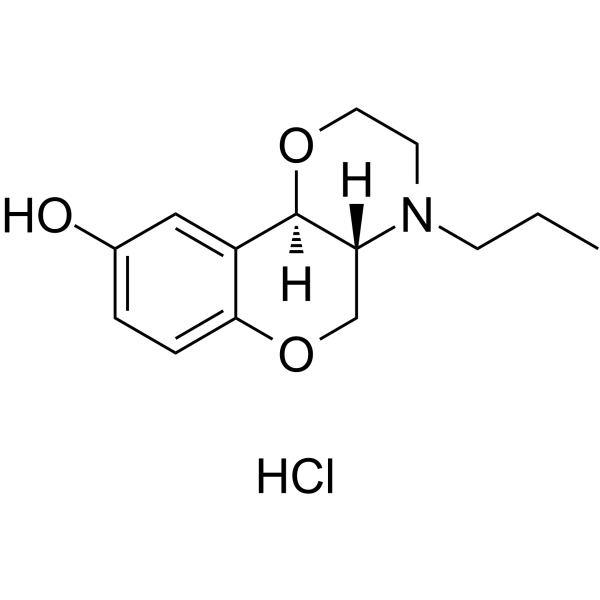
  • HY-110000

    Dopamine Receptor Neurological Disease
    (+)-PD 128907 hydrochloride is a selective dopamine D2/D3 receptor agonist, with Kis of 1.7, 0.84 nM for human and rat D3 receptors, 179, 770 n M for human and rat D3 receptors, respectively.
    (+)-PD 128907 hydrochloride
  • HY-100658

    5-HT Receptor Dopamine Receptor Neurological Disease
    Didesmethyl cariprazine is an orally active, BBB-permeable metabolite of Cariprazine (HY-14763). Didesmethyl cariprazine is a partial agonist at the D2 and D3 receptors, full agonist at the 5-HT1A receptor, and antagonist at the human 5-HT2B receptor (Ki: 1.41 nM (human D2L), 0.056 nM (human D3), 1.7 nM (human 5-HT1A), 0.52 nM (human 5-HT2B)). Didesmethyl cariprazine dose-dependently inhibits the spontaneous activity of rat midbrain dopaminergic neurons .
    Didesmethyl cariprazine
  • HY-100820
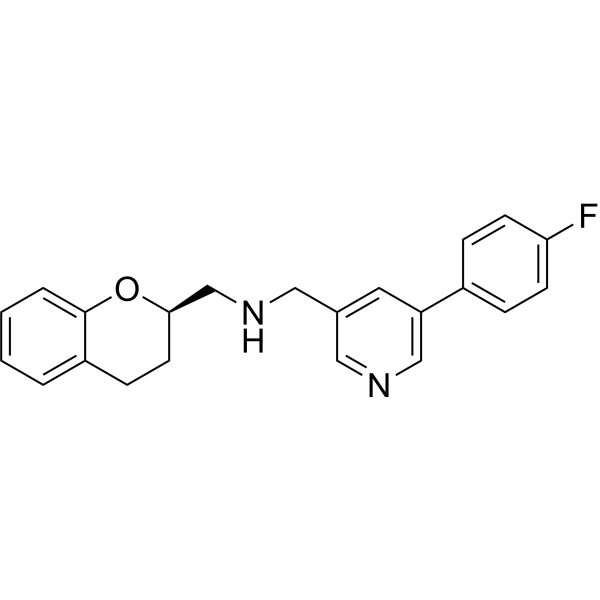
    Sarizotan
    1 Publications Verification

    EMD 128130

    5-HT Receptor Dopamine Receptor Neurological Disease
    Sarizotan (EMD 128130) is an orally active serotonin 5-HT1A receptor and dopamine receptor agonist. Sarizotan (EMD 128130) exhibits IC50 values of 6.5 nM (rat 5-HT1A), 0.1 nM (human 5-HT1A), 15.1 nM (rat D2), 17 nM (human D2), 6.8 nM (human D3) and 2.4 nM (human D4.2), respectively .
    Sarizotan
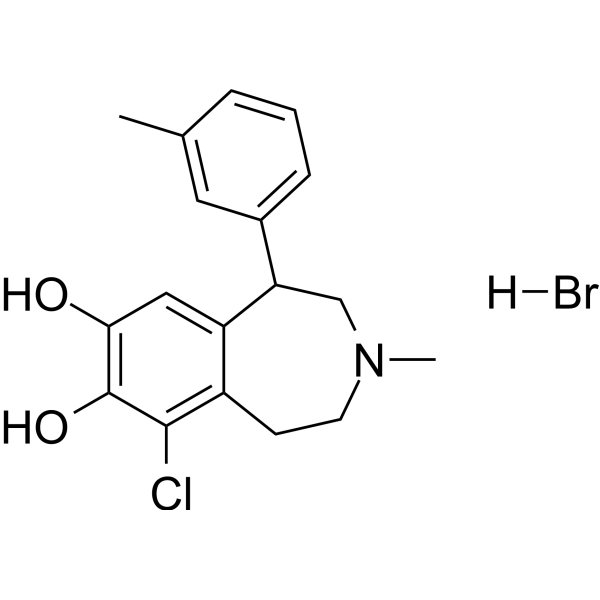
  • HY-130344
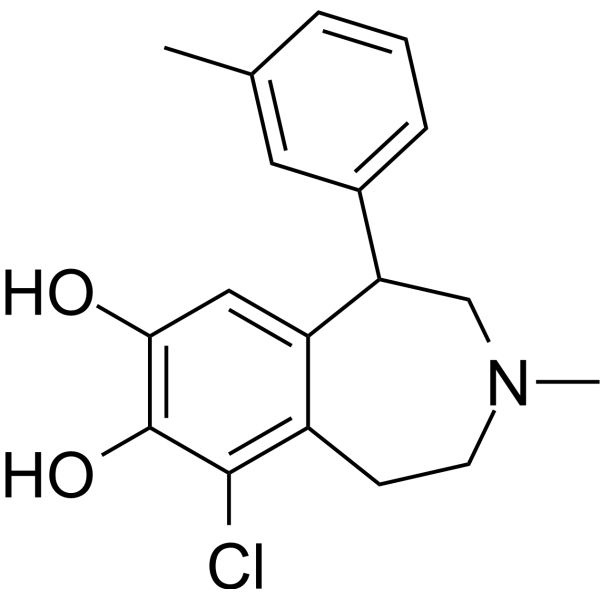
    SKF 83959
    1 Publications Verification

    Dopamine Receptor Sigma Receptor Neurological Disease
    SKF83959 is a potent and selective dopamine D1-like receptor partial agonist. SKF83959 Ki values for rat D1, D5, D2 and D3 receptors are 1.18, 7.56, 920 and 399 nM, respectively. SKF83959 is a potent allosteric modulator of sigma (σ)-1 receptor. SKF83959 belongs to benzazepine family and has improvements on cognitive dysfunction. SKF83959 can be used for the research of Alzheimer's disease and depression .
    SKF 83959
  • HY-14840

    Carphedon

    nAChR Dopamine Transporter GABA Receptor iGluR Neurological Disease
    Phenylpiracetam (Carphedon) is a positive allosteric modulator of nicotinic acetylcholine receptors (nAChR) with an IC50 of 5.86 μM. Phenylpiracetam is applicable to studies on scopolamine (Scopolamine) (HY-N0296)-induced amnesia, depression and immune stress .
    Phenylpiracetam
  • HY-154825

    20(OH)D3; 20S-Hydroxyvitamin D3

    VD/VDR Aryl Hydrocarbon Receptor NF-κB Cytochrome P450 Inflammation/Immunology Cancer
    20-Hydroxyvitamin D3 (20(OH)D3), a product of vitamin D3 hydroxylation, is a noncalcemic immunomodulator. 20-Hydroxyvitamin D3 binds to vitamin D receptor (VDR), activates VDR and aryl hydrocarbon receptor (AhR) signaling, stimulates CYP24A1 expression, and drives VDR nuclear translocation. 20-Hydroxyvitamin D3 inhibits NF-κB activity via IκBα upregulation. 20-Hydroxyvitamin D3 acts as a substrate for CYP27B1 and rat CYP24A1, undergoing hydroxylation to form dihydroxy-derivatives. 20-Hydroxyvitamin D3 inhibits cell proliferation, colony formation, migration, and tumor growth, and induces cell differentiation in cancer cells. 20-Hydroxyvitamin D3 can be used for the research of inflammatory and autoimmune diseases, melanoma, breast carcinomas, and hepatocarcinoma .
    20-Hydroxyvitamin D3
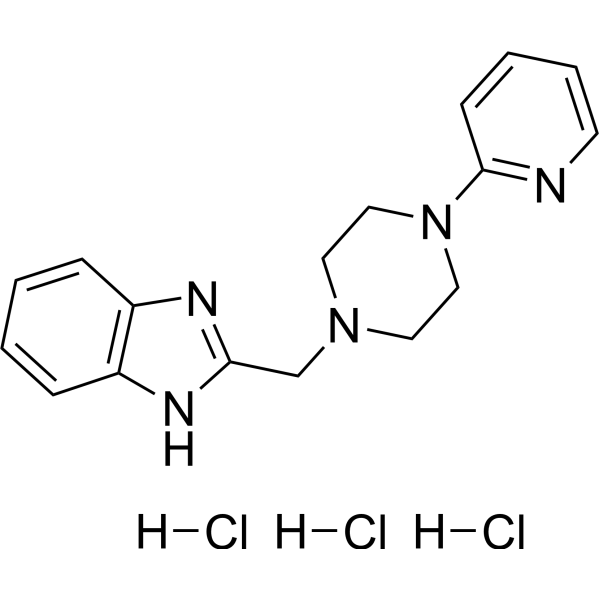
  • HY-103409

    Dopamine Receptor Neurological Disease
    ABT-724 trihydrochloride is a potent and highly selective dopamine D4 receptor agonist with an EC50 of 12.4 nM for human dopamine D4 receptor. ABT-724 trihydrochloride is a potent partial agonist at the rat D4 (EC50 of 14.3 nM) and the ferret D4 receptor (EC50 of 23.2 nM), and has no effect on dopamine D1, D2, D3, or D5 receptors. ABT-724 trihydrochloride could be useful for the treatment of erectile dysfunction and has favorable side-effect profile .
    ABT-724 trihydrochloride
  • HY-103412
    SKF 83959 hydrobromide
    1 Publications Verification

    Dopamine Receptor Sigma Receptor Neurological Disease
    SKF83959 hydrobromide is a potent and selective dopamine D1-like receptor partial agonist. SKF83959 hydrobromide Ki values for rat D1, D5, D2 and D3 receptors are 1.18, 7.56, 920 and 399 nM, respectively. SKF83959 hydrobromide is a potent allosteric modulator of sigma (σ)-1 receptor. SKF83959 hydrobromide belongs to benzazepine family and has improvements on cognitive dysfunction. SKF83959 hydrobromide can be used for the research of Alzheimer's disease and depression .
    SKF 83959 hydrobromide
  • HY-14330

    Dopamine Receptor Neurological Disease
    ABT-724, a chemical probe, is a potent and highly selective dopamine D4 receptor agonist with an EC50 of 12.4 nM for human dopamine D4 receptor. ABT-724 is a potent partial agonist at the rat D4 (EC50 of 14.3 nM) and the ferret D4 receptor (EC50 of 23.2 nM). ABT-724 has no effect on dopamine D1, D2, D3, or D5 receptors. ABT-724 could be useful for the treatment of erectile dysfunction and has favorable side-effect profile .
    ABT-724
  • HY-12701A

    U-99194A; PNU-99194A maleate; JPC-211 maleate

    Dopamine Receptor Neurological Disease
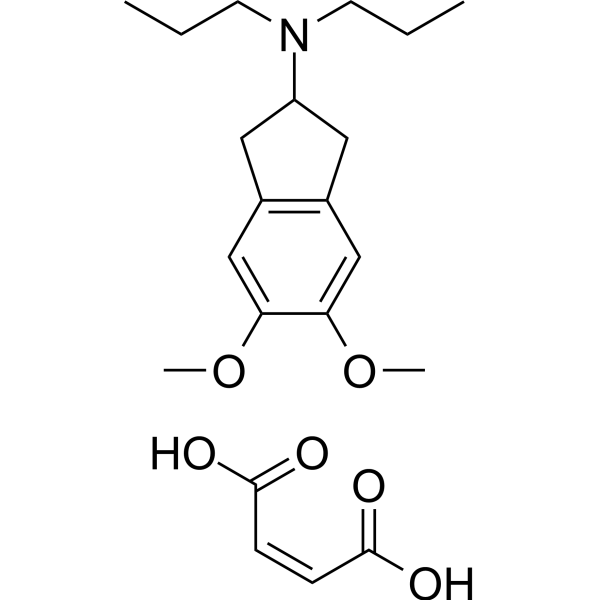
    U-99194 (PNU-99194) maleate is a selective, potent dopamine D3 receptor antagonist (Ki =160 nM). U-99194 maleate inhibits the activation of D3 receptor mediated by endogenously released dopamine or exogenous D3 agonists. U-99194 maleate abrogates the IPSC-suppressive effect of the D3 agonist PD 128907 in rat hippocampal slices. U-99194 maleate significantly suppresses Nicotine (HY-127019)-induced tremor in mice. U-99194 maleate can be used for the study of dopamine D3 receptor-mediated motor disorders, particularly kinetic tremors .
    U-99194 maleate
  • HY-123889

    Dopamine Receptor Neurological Disease
    VK4-116 (Compound 19) is a selective Dopamine D3 receptor (D3R) antagonist with a Ki of 6.84 nM.VK4-116 significantly inhibits Oxycodone-induced hyperlocomotion and locomotor sensitization in mouse models. VK4-116 with pretreatment also inhibits the acquisition of Oxycodone-induced conditioned place preference (CPP) in rat models .
    VK4-116
  • HY-114618

    Dopamine Receptor Neurological Disease
    S33084 is a dopamine D(3)-receptor antagonist with the pKi values of 8.72, 8.62 and 6.82 of cloned rat dopamine D3 receptor, native rat dopamine D3 and D2 receptor .
    S33084
  • HY-12701

    U-99194A free base; PNU-99194A; JPC-211

    Dopamine Receptor Neurological Disease
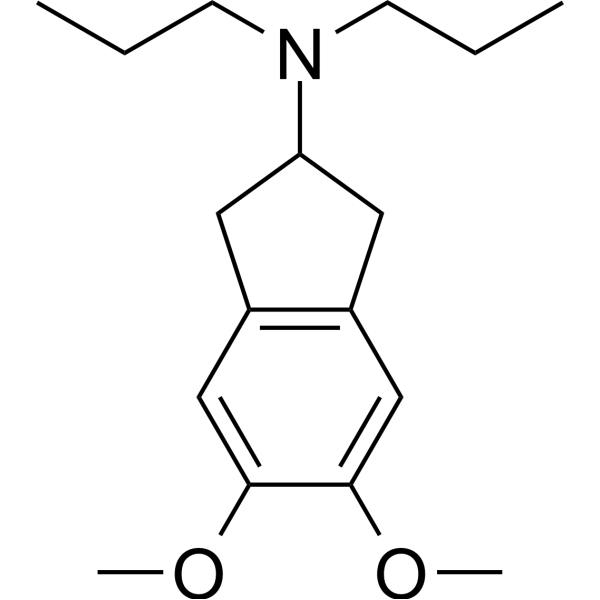
    U-99194 (PNU-99194) is a selective, potent dopamine D3 receptor antagonist. U-99194 inhibits the activation of D3 receptor mediated by endogenously released dopamine or exogenous D3 agonists. U-99194 abrogates the IPSC-suppressive effect of the D3 agonist PD 128907 in rat hippocampal slices. U-99194 significantly suppresses Nicotine (HY-127019)-induced tremor in mice. U-99194 can be used for the study of dopamine D3 receptor-mediated motor disorders, particularly kinetic tremors .
    U-99194
  • HY-100539

    Dopamine Receptor Others
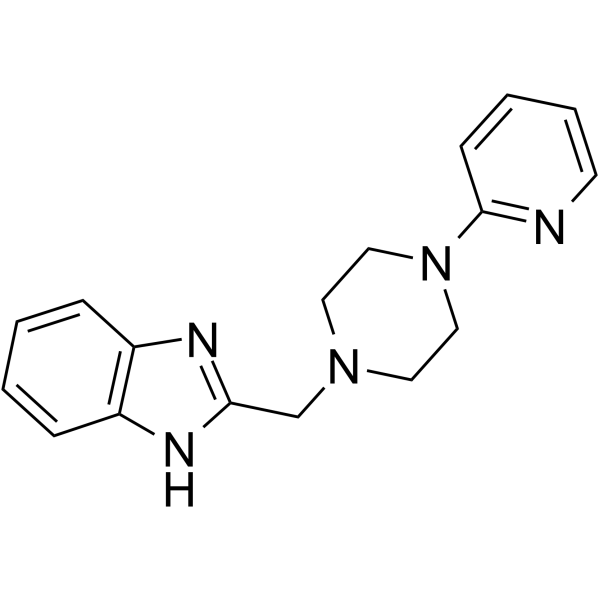
    PD 128907 is a D3 receptor ligand with activities of activating dopamine receptors, inhibiting cell firing, and inhibiting dopamine release. The active (+) enantiomer of PD 128907 has high affinity and selectivity for rat D3 dopamine receptors. PD 128907 inhibits cell firing in the ventral tegmental area and substantia nigra pars compacta with EC50 values of 33nM and 38nM, respectively. PD 128907 also inhibits dopamine release in the caudate putamen with an EC50 of 66nM. However, the selective D2 receptor antagonist L-741,626 has high affinity for receptors activated by PD 128907, indicating that the effects of PD 128907 are more likely on D2 autoreceptors rather than D3 dopamine receptor subtypes.
    PD 128907
  • HY-101641

    Dopamine Receptor 5-HT Receptor Adrenergic Receptor Neurological Disease Endocrinology
    NRA-0160 is a selective dopamine D4 receptor antagonist, with a Ki value of 0.48 nM and with negligible affinity for dopamine D2 receptor (Ki: >10000 nM), D3 receptor (Ki: 39 nM), rat 5-HT2A receptor (Ki: 180 nM) and rat α1 adrenoceptor (Ki: 237 nM).
    NRA-0160
  • HY-171328

    Dopamine Receptor Neurological Disease
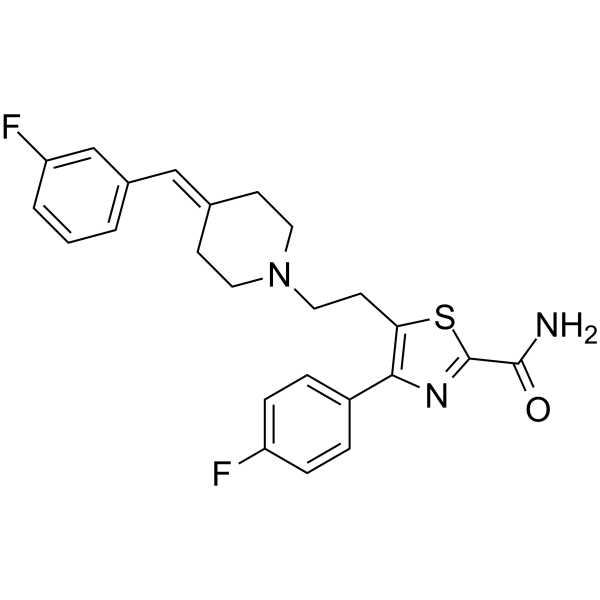
    RG-15 is the orally active antagonist for dopamine receptor that exhibits goof affinity to human D2 receptor and human D3 receptor with pKi of 8.23 and 10.49. RG-15 inhibits dopamine-stimulated [ 35S]GTPγS binding with IC50 of 21.2 nM (rat striatal membranes), 36.7 nM (mouse A9 cells expressing human D2L receptors) and 7.2 nM (CHO cells expressing human D3 receptors). RG-15 increases the turnover and biosynthesis of dopamine in mouse striatum and olfactory bulb, exhibiting antipsychotic activity .
    RG-15
  • HY-117743S

    Isotope-Labeled Compounds Angiotensin Receptor Cardiovascular Disease
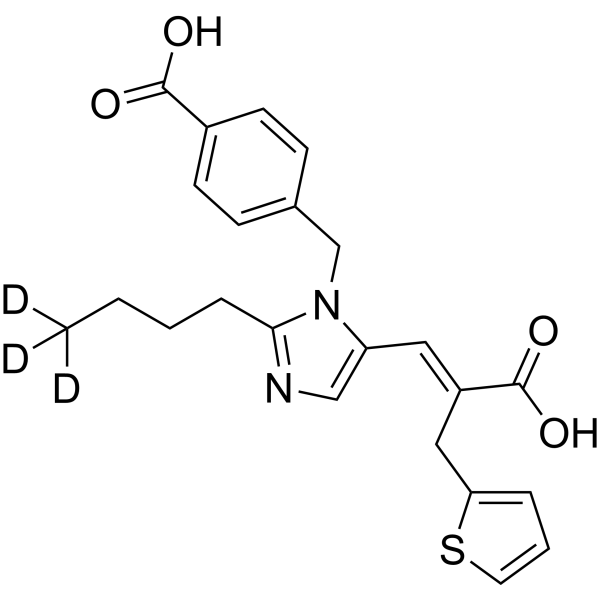
    Eprosartan-d3 is the deuterium labeled Eprosartan. Eprosartan (SKF-108566J free base) is a selective, competitive, nonpeptid and orally active angiotensin II receptor antagonist, used as an antihypertensive. Eprosartan binds angiotensin II receptor with IC50s of 9.2 nM and 3.9 nM in rat and human adrenal cortical membranes, respectively .
    Eprosartan-d3
  • HY-100820B

    EMD 128130 dihydrochloride

    5-HT Receptor Dopamine Receptor Neurological Disease
    Sarizotan dihydrochloride (EMD 128130) is an orally active serotonin 5-HT1A receptor and dopamine receptor agonist. Sarizotan (EMD 128130) exhibits IC50 values of 6.5 nM (rat 5-HT1A), 0.1 nM (human 5-HT1A), 15.1 nM (rat D2), 17 nM (human D2), 6.8 nM (human D3) and 2.4 nM (human D4.2), respectively .
    Sarizotan dihydrochloride
  • HY-100820A

    EMD 128130 hydrochloride

    5-HT Receptor Dopamine Receptor Neurological Disease
    Sarizotan hydrochloride is an orally active serotonin 5-HT1A receptor and dopamine receptor agonist. Sarizotan hydrochloride (EMD 128130) exhibits IC50 values of 6.5 nM (rat 5-HT1A), 0.1 nM (human 5-HT1A), 15.1 nM (rat D2), 17 nM (human D2), 6.8 nM (human D3) and 2.4 nM (human D4.2), respectively .
    Sarizotan hydrochloride
  • HY-A0168S

    CVT-3146-d3

    Isotope-Labeled Compounds Adenosine Receptor Cardiovascular Disease Cancer
    Regadenoson-d3 is the deuterium labeled Regadenoson. Regadenoson (CVT-3146) is a potent and selective A2A adenosine receptor agonist, with Kis of 290 and 1120 nM for rat and pig adenosine A2A receptor, respectively. Regadenoson is selective for the adenosine A2A receptor over adenosine A1 and A2B receptors, and shows 13-fold selectivity over the human adenosine A1 receptor. Regadenoson is a vasodilator stress agent has shifted the landscape of vasodilator myocardial perfusion imaging. Regadenoson increases blood-brain barrier (BBB) permeability in rodents .
    Regadenoson-d3
  • HY-100820R

    EMD 128130 (Standard)

    Reference Standards 5-HT Receptor Dopamine Receptor Neurological Disease
    Sarizotan (Standard) is the analytical standard of Sarizotan. This product is intended for research and analytical applications. Sarizotan (EMD 128130) is an orally active serotonin 5-HT1A receptor and dopamine receptor agonist. Sarizotan (EMD 128130) exhibits IC50 values of 6.5 nM (rat 5-HT1A), 0.1 nM (human 5-HT1A), 15.1 nM (rat D2), 17 nM (human D2), 6.8 nM (human D3) and 2.4 nM (human D4.2), respectively .
    Sarizotan (Standard)
  • HY-106827S1

    RU 27987-13C,d3

    Androgen Receptor Phosphatase Progesterone Receptor Isotope-Labeled Compounds Endocrinology
    Trimegestone- 13C,d3 is 13C and deuterated labeled Trimegestone (HY-106827). Trimegestone (RU 27987) is an orally active 19-norpregnane progestin. Trimegestone binds to progesterone receptor (PR) with an IC50 value of 3.3 nM (rat PR). Trimegestone increases alkaline phosphatase activity (EC50=0.1 nM) but not luciferase activity. Trimegestone also shows a weak antiandrogenic activity (weak androgen receptor affinity). Trimegestone can be used in studies of contraception or menopausal syndromes .
    Trimegestone-13C,d3
  • HY-N0361S

    Isotope-Labeled Compounds Apoptosis Bcl-2 Family Reactive Oxygen Species (ROS) TRP Channel Caspase PI3K Akt Others
    Dihydrocapsaicin-d3 is the deuterium labeled Dihydrocapsaicin (HY-N0361) . Dihydrocapsaicin, a capsaicin, is a potent and selective TRPV1 (transient receptor potential vanilloid channel 1) agonist. Dihydrocapsaicin reduces AIF, Bax, and Caspase-3 expressions, and increased Bcl-2, Bcl-xL and p-Akt levels. Dihydrocapsaicin enhances the hypothermia-induced neuroprotection following ischemic stroke via PI3K/Akt regulation in rat .
    Dihydrocapsaicin-d3
  • HY-100057

    6-Hydroxybuspirone; 6'-Hydroxybuspirone; BMS 528215

    5-HT Receptor Drug Metabolite Dopamine Receptor Neurological Disease
    BMY 28674 (6-Hydroxybuspirone) is the active metabolite of the anxiolytic buspirone (HY-B1115A) and is metabolized by CYP3A4.4. BMY 28674 binds to the serotonin (5-HT) receptor subtype 5-HT1A in the rat hippocampus and dorsal raphe (EC50s are 4 and 1 μM, respectively) and is an antagonist of dopamine D2, D3, and D4 receptors (IC50s are 3.1, 4.9, and 0.85 μM, respectively). BMY 28674 also inhibits organic cation transporter 1 (OCT1), OCT2, and OCT3 expressing human transporters in S2 proximal tubule cells in a concentration-dependent manner.
    BMY 28674
  • HY-181721

    Dopamine Receptor Neurological Disease
    Dopamine D3 receptor agonist 1 is a dopamine D3 Receptor agonist with a Ki value of 0.268 nM. Dopamine D3 receptor agonist 1 exhibits metabolic stability in rat liver microsomes. Dopamine D3 receptor agonist 1 can be used to study severe mental disorders comorbid with substance use disorders .
    Dopamine D3 receptor agonist 1
  • HY-100658S

    Isotope-Labeled Compounds 5-HT Receptor Dopamine Receptor Neurological Disease
    Didesmethyl cariprazine-d8 is the deuterium labeled Didesmethyl cariprazine (HY-100658). Didesmethyl cariprazine is an orally active, BBB-permeable metabolite of Cariprazine (HY-14763). Didesmethyl cariprazine is a partial agonist at the D2 and D3 receptors, full agonist at the 5-HT1A receptor, and antagonist at the human 5-HT2B receptor (Ki: 1.41 nM (human D2L), 0.056 nM (human D3), 1.7 nM (human 5-HT1A), 0.52 nM (human 5-HT2B)). Didesmethyl cariprazine dose-dependently inhibits the spontaneous activity of rat midbrain dopaminergic neurons.
    Didesmethyl cariprazine-d8
  • HY-100658R

    5-HT Receptor Reference Standards Dopamine Receptor Neurological Disease
    Didesmethyl cariprazine (Standard) is the analytical standard of Didesmethyl cariprazine (HY-100658). This product is intended for research and analytical applications. Didesmethyl cariprazine is an orally active, BBB-permeable metabolite of Cariprazine (HY-14763). Didesmethyl cariprazine is a partial agonist at the D2 and D3 receptors, full agonist at the 5-HT1A receptor, and antagonist at the human 5-HT2B receptor (Ki: 1.41 nM (human D2L), 0.056 nM (human D3), 1.7 nM (human 5-HT1A), 0.52 nM (human 5-HT2B)). Didesmethyl cariprazine dose-dependently inhibits the spontaneous activity of rat midbrain dopaminergic neurons .
    Didesmethyl cariprazine (Standard)
  • HY-19337S

    BAY 1896953-d3; ORM-15341-d3

    Isotope-Labeled Compounds Androgen Receptor Cancer
    Ketodarolutamide-d3 (BAY 1896953-d3) is the deuterium labeled Ketodarolutamide (HY-19337). Ketodarolutamide (ORM-15341) is a potent, high-affinity nonsteroidal competitive full antagonist of androgen receptor (AR). Ketodarolutamide displays a Ki value of 8 nM for rat wild-type AR and an IC50 value of 38 nM in AR-HEK293 cells . Ketodarolutamide inhibits testosterone-induced nuclear translocation of the AR and antagonizes both overexpressed and mutant ARs . Ketodarolutamide specifically suppresses the proliferation of AR-dependent prostate cancer cells and exhibits antitumor activity in models of castration-resistant prostate cancer (CRPC) . Ketodarolutamide is suitable for the mechanistic and therapeutic research of prostate cancer .
    Ketodarolutamide-d3
  • HY-103409R

    Reference Standards Dopamine Receptor Neurological Disease
    ABT-724 trihydrochloride (Standard) is the analytical standard of ABT-724 trihydrochloride (HY-103409). This product is intended for research and analytical applications. ABT-724 trihydrochloride is a potent and highly selective dopamine D4 receptor agonist with an EC50 of 12.4 nM for human dopamine D4 receptor. ABT-724 trihydrochloride is a potent partial agonist at the rat D4 (EC50 of 14.3 nM) and the ferret D4 receptor (EC50 of 23.2 nM), and has no effect on dopamine D1, D2, D3, or D5 receptors. ABT-724 trihydrochloride could be useful for the treatment of erectile dysfunction and has favorable side-effect profile .
    ABT-724 trihydrochloride (Standard)
  • HY-183776

    Dopamine Receptor Others
    Dopamine D3 receptor agonist-2 is a selective dopamine D3 receptor partial agonist with a Ki of 0.268 nM. Dopamine D3 receptor agonist-2 exhibits 29-fold selectivity over dopamine D2 receptor (Ki= 7.67nM) .
    Dopamine D3 receptor agonist-2

Consulta en línea

Your information is safe with us. * Required Fields.

Saludo


Country or Region *

Nombre del solicitante *


Nombre de la Organizaciòn *

Department *


Direcciòn del E-mail *


Nombre del producto *

Cat. No.


Requested quantity *

Número de teléfono *


Observaciones

Consulta en línea

Inquiry Information

Nombre del producto:
Cat. No.:
Cantidad:
MCE Japan Authorized Agent:

