1. Search Result
Search Result
Results for "

root development

" in MedChemExpress (MCE) Product Catalog:

17

Inhibitors & Agonists

1

Inhibitory Antibodies

7

Natural
Products

1

Isotope-Labeled Compounds

Cat. No. Product Name Target Research Areas Chemical Structure
  • HY-N9599

    Fungal Endogenous Metabolite Parasite Insecticide Infection
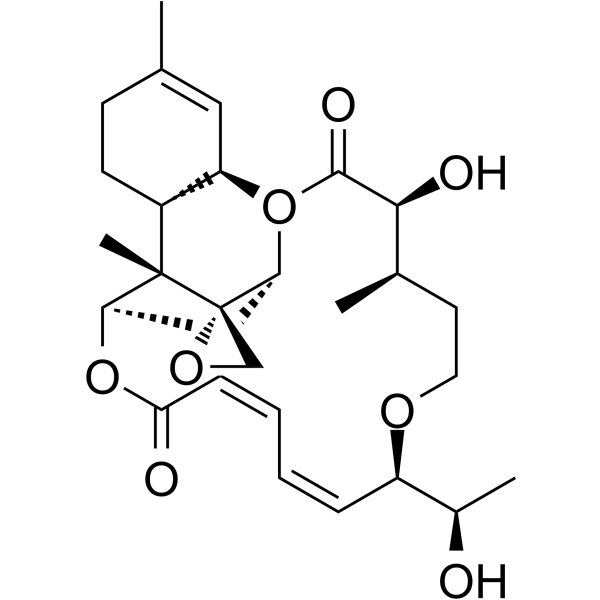
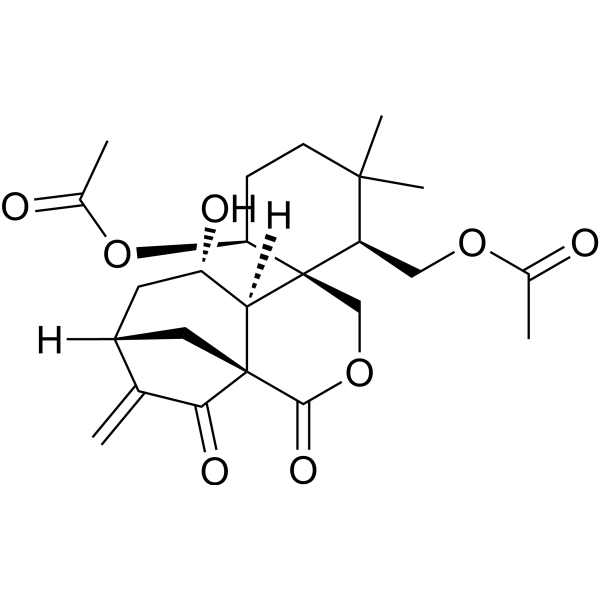
    Roridin A acts as an inhibitor of pollen development in Arabidopsis thaliana and nematicide. Roridin A is isolated from the fungus Cylindrocarpon sp. Roridin A delays the flowering time of Arabidopsis thaliana, inhibits pollen development and stem elongation, and blocks plant growth. Roridin A induces larval death of the southern root-knot nematode (Meloidogyne incognita) .
    Roridin A
  • HY-B2050

    Environmental Pollutants Herbicide Microtubule/Tubulin Others
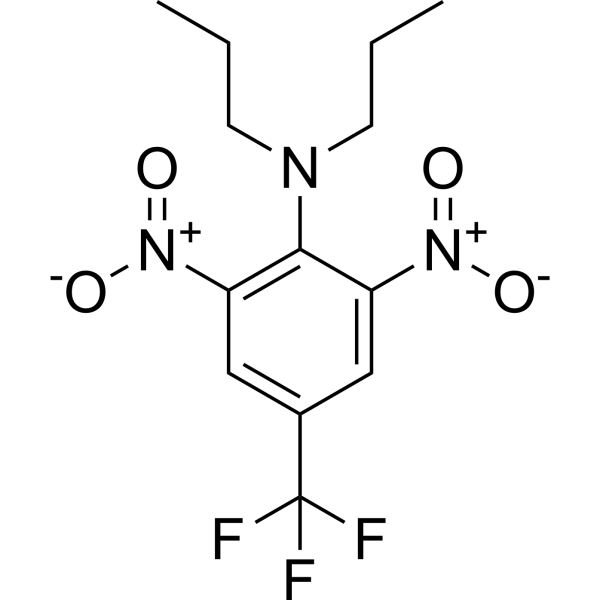
    Trifluralin is a selective, preemergence, soil-applied herbicide providing control of many important annual grass and broadleaf weed species. Trifluralin prevents weed growth by inhibiting root development through the interruption of mitosis. Trifluralin binds to tubulin and results in the failure of spindle apparatus and cell plate formation. Trifluralin inhibits radicle development on roots. Trifluralin inhibits cell mitosis. Trifluralin is considered to be neurotoxic and haematotoxic .
    Trifluralin
  • HY-136403

    Phytohormone Others
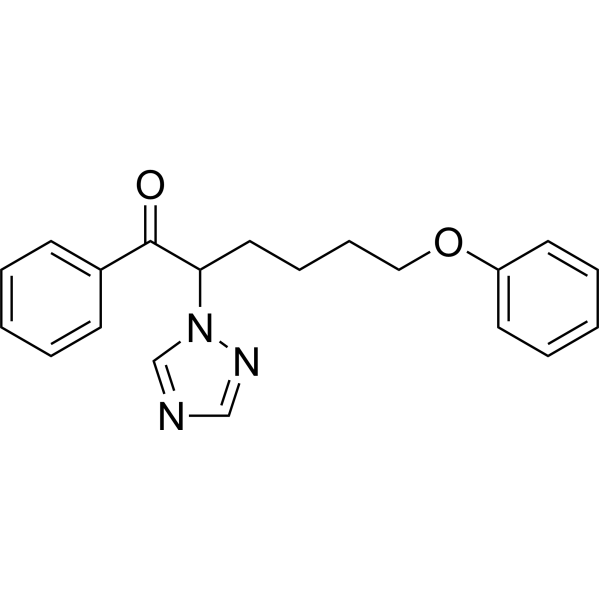
    TIS108 is a triazole-type strigolactone biosynthesis inhibitor. TIS108 inhibits Arabidopsis embryogenesis and root hair growth, and promotes shoot branching. TIS108 can also increase the gibberellin content in Gastrodia elata. TIS108 can be used in the research of plant growth and development as well as plant responses to the environment .
    TIS108
  • HY-118448

    Antibiotic Bacterial Fungal Parasite Infection
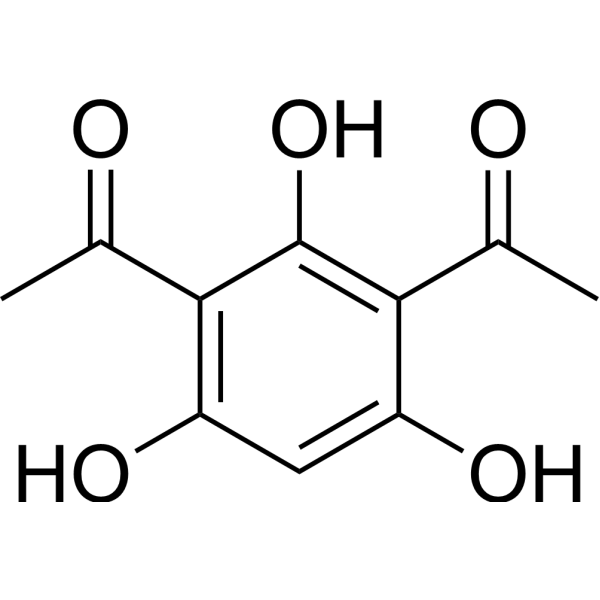
    2,4-Diacetylphloroglucinol is a polyketide antibiotic produced by Pseudomonas fluorescens. 2,4-Diacetylphloroglucinol exhibits broad-spectrum toxicity against various organisms such as bacteria, fungi, oomycetes, and nematodes. 2,4-Diacetylphloroglucinol can also inhibit plant pathogens and affect the root development of tomato seedlings .
    2,4-Diacetylphloroglucinol
  • HY-163311

    Transketolase Herbicide Others
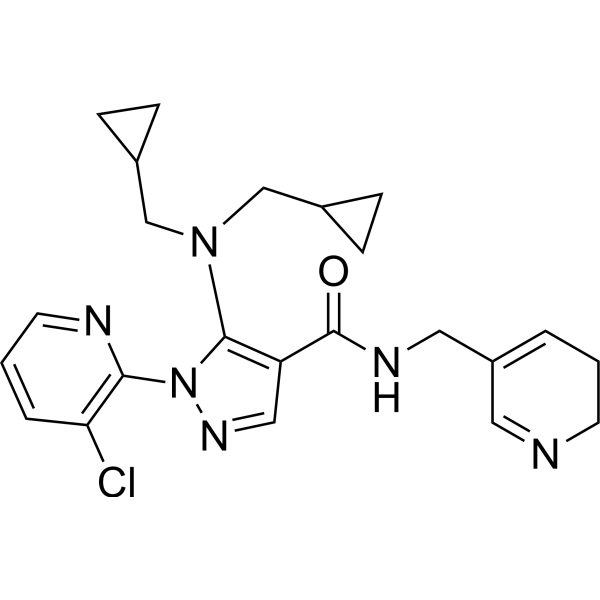
    Transketolase-IN-6 is a potent transketolase inhibitor and a herbicide. Transketolase-IN-6 inhibits root growth of Digitaria sanguinalis, Amaranthus retroflexus, and Setaria viridis. Transketolase-IN-6 shows low phytotoxicity to wheat, maize, soybean, and cotton. Transketolase-IN-6 can be used for the research of herbicidal agent development .
    Transketolase-IN-6
  • HY-N7229

    DNA/RNA Synthesis Cancer
    Rabdosin B is an ent-kaurene diterpenoid with anticancer effects. Rabdosin B induces DNA damage in cells, and inhibits lettuce root hair development of seedlings .
    Rabdosin B
  • HY-178358

    Drug Derivative Others
    JAX-44 is a potent root architecture modulator. JAX-44 maintains primary root length while substantially increasing lateral root numbers, thereby optimizing the plant’s overall root system. JAX-44 is the metabolic precursor of JAX-77 (HY-178359) and can be converted to Indole-3-butyric acid (IBA) (HY-N0186). JAX-44 can be used for auxin biology and root development research .
    JAX-44
  • HY-175736

    Herbicide Others
    Herbicidal agent 11 (Compound 8a) is a herbicidal agent. Herbicidal agent 11 has significant postemergence herbicidal activities against the monocotyledonous weed Echinochloa crusgalli with inhibition of potent root and stem growth and has a good crop selectivity against wheat, maize, and oilseed rape. Herbicidal agent 11 also has effective inhibitory effects on Digitaria sanguinalis, Eclipta prostrate and Eleusine indica. Herbicidal agent 11 can be used for the development of herbicides .
    Herbicidal agent 11
  • HY-N12856

    Others Others
    Cyclo-olivil-9-O-β-glucopyranoside can be isolated from the root of Urtica triangularis HAND-MASS. Cyclo-olivil-9-O-β-glucopyranoside can be used in the drug development .
    Cyclo-olivil-9-O-β-glucopyranoside
  • HY-B2050S

    Isotope-Labeled Compounds Microtubule/Tubulin Others
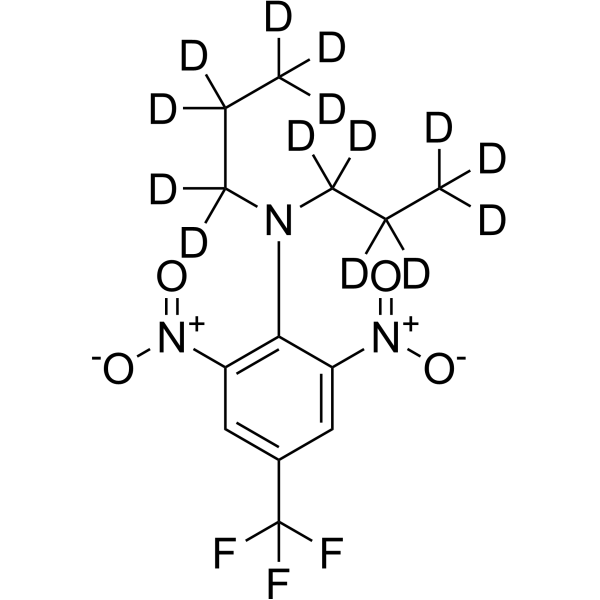
    Trifluralin-d14 is the deuterium labeled Trifluralin. Trifluralin is a selective, preemergence, soil-applied herbicide providing control of many important annual grass and broadleaf weed species. Trifluralin prevents weed growth by inhibiting root development through the interruption of mitosis. Trifluralin binds to tubulin and results in the failure of spindle apparatus and cell plate formation. Trifluralin inhibits radicle development on roots. Trifluralin inhibits cell mitosis. Trifluralin is considered to be neurotoxic and haematotoxic .
    Trifluralin-d14
  • HY-N13302

    Others Others
    Cedrene regulates auxin transport and signal transduction in Arabidopsis, and thus stimulates the plants root development. Cedrene affects the Arabidopsis roots morphology by increasing the lateral roots, promoting the elongation of primary roots, affecting the expression of the auxin response gene DR5 and auxin transporters such as PIN2 and PIN3 .
    Cedrene
  • HY-B2050R

    Reference Standards Microtubule/Tubulin Herbicide Others
    Trifluralin (Standard) is the analytical standard of Trifluralin. This product is intended for research and analytical applications. Trifluralin is a selective, preemergence, soil-applied herbicide providing control of many important annual grass and broadleaf weed species. Trifluralin prevents weed growth by inhibiting root development through the interruption of mitosis. Trifluralin binds to tubulin and results in the failure of spindle apparatus and cell plate formation. Trifluralin inhibits radicle development on roots. Trifluralin inhibits cell mitosis. Trifluralin is considered to be neurotoxic and haematotoxic .
    Trifluralin (Standard)
  • HY-N7697BR

    Reference Standards Others Others
    Gibberellic acid (Standard) is the analytical standard of Gibberellic acid. This product is intended for research and analytical applications. Gibberellic Acid is named after the fungus Gibberella fujikuroi. Gibberellic Acid regulates processes in plant development and growth, including seed development and germination, stem and root growth, cell division, and flowering time. Gibberellic Acid also improves plant response to growth stress caused by various environmental stresses, such as cold stress, drought stress, heavy metal stress, etc. Gibberellic Acid also causes increased lipid peroxidation and fluctuations in the antioxidant defense system in rats .
    Chitobiose dihydrochloride (Standard)
  • HY-118448R

    Reference Standards Antibiotic Bacterial Fungal Parasite Infection
    2,4-Diacetylphloroglucinol (Standard) is the analytical standard of 2,4-Diacetylphloroglucinol (HY-118448). This product is intended for research and analytical applications. 2,4-Diacetylphloroglucinol is a polyketide antibiotic produced by Pseudomonas fluorescens. 2,4-Diacetylphloroglucinol exhibits broad-spectrum toxicity against various organisms such as bacteria, fungi, oomycetes, and nematodes. 2,4-Diacetylphloroglucinol can also inhibit plant pathogens and affect the root development of tomato seedlings .
    2,4-Diacetylphloroglucinol (Standard)
  • HY-178359

    Drug Derivative Others
    JAX-77 is a potent root architecture modulator. JAX-77 maintains primary root length while substantially increasing lateral root numbers, thereby optimizing the plant’s overall root system. JAX-77 is the key intermediate metabolite formed from the hydrolysis of JAX-44 (HY-178358) and can be converted to Indole-3-butyric acid (IBA) (HY-N0186). JAX-77 can be used for auxin biology and root development research .
    JAX-77
  • HY-182408

    Glycosyltransferase Others
    Endosidin7 is a specific inhibitor for plant callose deposition during cytokinesis. Endosidin7 inhibits cytokinesis-specific callose deposition at the cell plate, disrupts cell plate maturation, and alters localization of cell plate-associated proteins during late cell plate development. Endosidin7 slows root growth and induces formation of cell wall stubs in Arabidopsis thaliana seedlings .
    Endosidin7
  • HY-P991947

    AFS98; TG3003

    c-Fms Inflammation/Immunology
    ELB041 (AFS98) is a rat monoclonal anti-murine c-fms antibody (IgG2a). AFS98 inhibits M-CSF–dependent colony formation and cell growth by blocking the binding of M-CSF to its receptor. AFS98 prevents development of fatty streaks in ApoE-deficient mice. ELB041 can be used for the research of atherosclerosis .
    ELB041

Inquiry Online

Your information is safe with us. * Required Fields.

Salutation


Country or Region *

Applicant Name *


Organization Name *

Department *


Email Address *


Product Name *

Cat. No.


Requested quantity *

Phone Number *


Remarks

Inquiry Online

Inquiry Information

Product Name:
Cat. No.:
Quantity:
MCE Japan Authorized Agent:

