11 Results for "

skin hyperpigmentation

" in MedChemExpress (MCE) Product Catalog:
Products (11)

11 Results for "skin hyperpigmentation" in MCE Product Catalog:

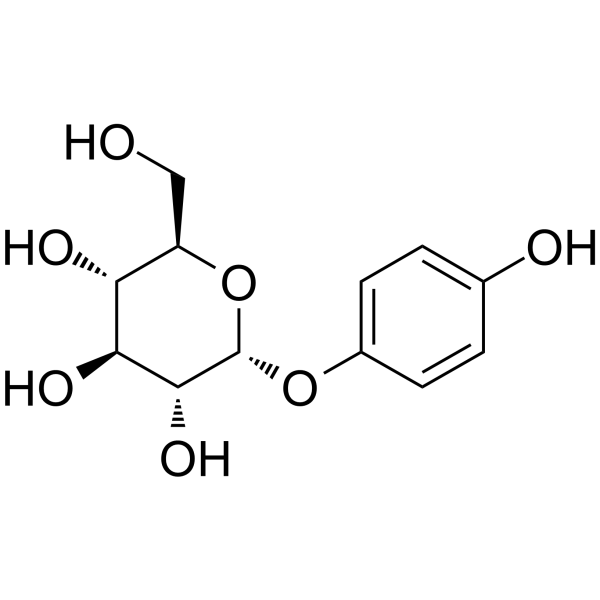
Cat. No.: HY-N3002
CAS No.: 84380-01-8
Synonyms: 4-Hydroxyphenyl α-D-glucopyranoside
α-Arbutin (4-Hydroxyphenyl α-D-glucopyranoside) is a tyrosinase inhibitor, which is used as an effective skin whiteners. α-Arbutin is promising for research of various diseases such as hyperpigmentation disorders, types of cancers, central nervous system disorders, osteoporosis, diabetes .
loading...
    loading...
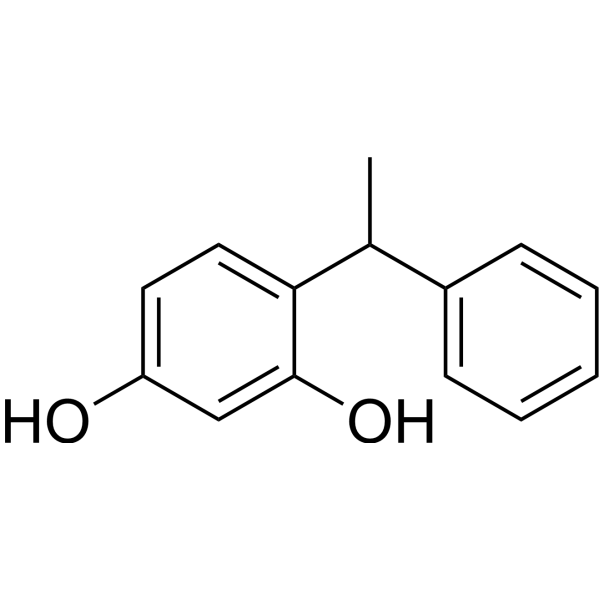
Cat. No.: HY-125809
CAS No.: 85-27-8
Purity:  99.31%
4-(1-Phenylethyl)resorcinol is a skin lightening agent used in cosmetics. It works by inhibiting the production of melanin, the pigment that gives skin its color. This helps reduce the appearance of dark spots, hyperpigmentation and uneven skin tone. 4-(1-Phenylethyl)resorcinol is considered safe for cosmetic use and is approved for use in several countries.
loading...
    loading...
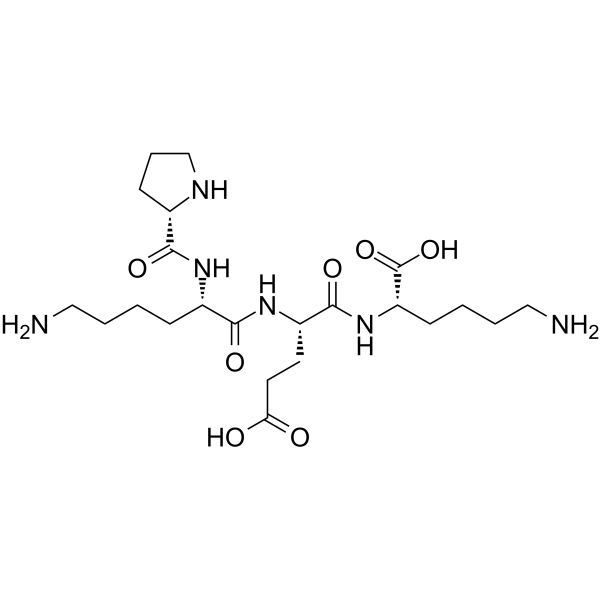
Cat. No.: HY-P3452
CAS No.: 1036207-61-0
Target:  

Tyrosinase

Research Areas:  

Inflammation/Immunology

Tetrapeptide-30 is a skin-brightening peptide consisting of four amino acids. Tetrapeptide-30 can act as a tyrosinase inhibitor, lightening hyperpigmentation and evening out skin tone by reducing the amount of tyrosinase and inhibiting melanocyte activation .
loading...
    loading...
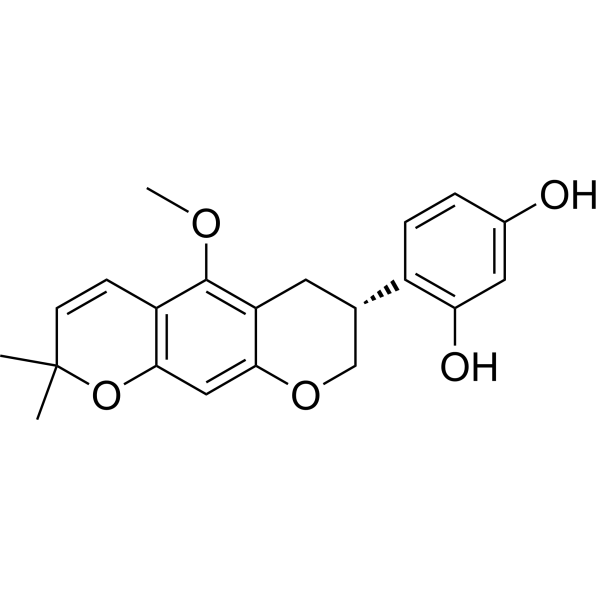
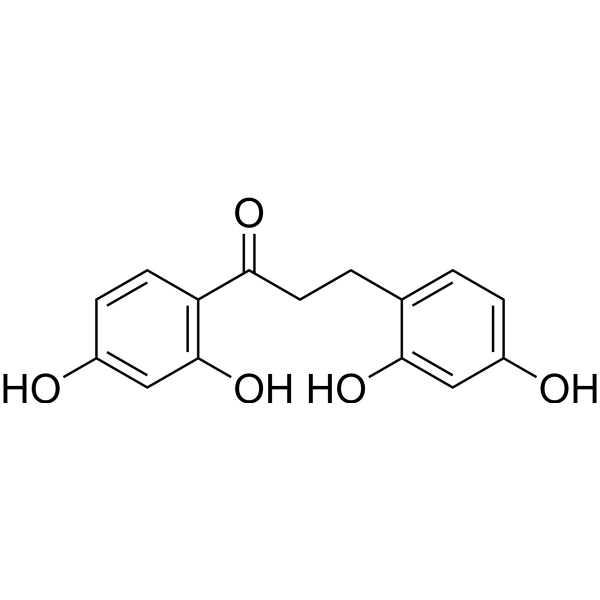
Cat. No.: HY-N3200
CAS No.: 53734-74-0
Neorauflavane is a tyrosinase inhibitor with mushroom tyrosinase IC50 values of 30 nM and 500 nM, and Ki values of 19 nM and 130 nM. Neorauflavane inhibits monophenolase and diphenolase activities, binds to tyrosinase’s active site via its B-ring resorcinol motif and A-ring methoxy group. Neorauflavane reduces melanin synthesis in melanoma cells. Neorauflavane can be used for the research of skin hyperpigmentation .
loading...
    loading...
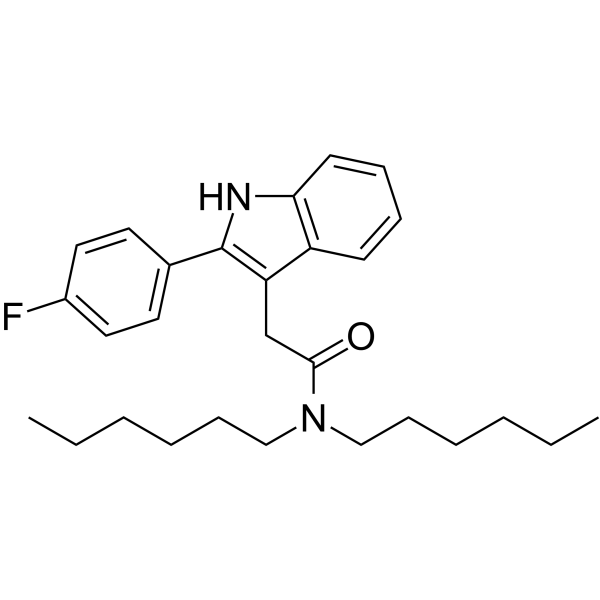
Cat. No.: HY-101059
CAS No.: 142720-24-9
Purity:  99.95%
FGIN-1-27 is a blood-brain barrier-penetrant TSPO ligand with a Ki value of 5 nM. FGIN 1-27 inhibits PKC-β, PKA/CREB, p38/ERK MAPK, MITF, tyrosinase, TRP-1, and TRP-2, thereby inhibiting melanogenesis and pigmentation. FGIN-1-27 alleviates X-ray radiation-induced astrocyte mitochondrial hyperfunction, reduces ROS and superoxide production, inhibits excessive activation of A1-type astrocytes, downregulates GFAP and C3 protein expression, and restores astrocyte proliferative capacity. FGIN-1-27 produces anticonvulsant effects in normal mice; in diazepam-withdrawn mice, the brain MDR pathway becomes subsensitive, and the anticonvulsant activity disappears. FGIN-1-27 attenuates pigmentation in zebrafish embryos and ameliorates UVB-induced skin pigmentation in guinea pigs. FGIN-1-27 directly stimulates testicular Leydig cells while upregulating luteinizing hormone levels, causing an acute increase in serum testosterone in male rats. FGIN 1-27 can be used for research related to hyperpigmentation, epilepsy, brain injury, and other diseases .
loading...
    loading...
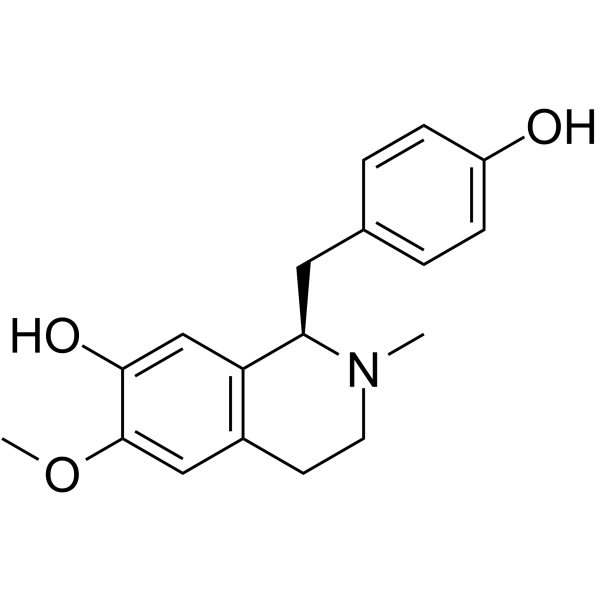
Cat. No.: HY-N7717
CAS No.: 5096-70-8
Synonyms: (–)-(1R)-N-methylcoclaurine
(-)-N-methylcoclaurine ((-)-(1R)-N-methylcoclaurine) is a benzylisoquinoline alkaloid and melanogenesis inhibitor with an IC50 of 6.5 μM that can be found in the flower buds of Nelumbo nucifera. (-)-N-methylcoclaurine inhibits theophylline-stimulated melanogenesis in melanoma cells. (-)-N-methylcoclaurine can be used for the research of skin hyperpigmentation disorders .
loading...
    loading...
Cat. No.: HY-149207
CAS No.: 240797-64-2
Purity:  98.12%
Target:  

Tyrosinase

Research Areas:  

Metabolic Disease

Tyrosinase-IN-11 is a potent tyrosinase inhibitor with IC50s of 50 nM and 64 nM for L-tyrosinase and L-dopa, respectively. Tyrosinase-IN-11 has significant antioxidant activity and low cytotoxicity. Tyrosinase-IN-11 has the potential for skin hyperpigmentation research .
loading...
    loading...
Cat. No.: HY-139430
CAS No.: 2138-43-4
Purity:  98.03%
Synonyms: 4-IPC
Target:  

Tyrosinase

Research Areas:  

Inflammation/Immunology

4-Isopropylcatechol is a potent and irreversible cutaneous depigmenting agent. 4-Isopropylcatechol significantly inhibits protein biosynthesis in mouse melanoma cells containing high levels of tyrosinase. 4-Isopropylcatechol can be use to study hyperpigmentation of skins .
loading...
    loading...
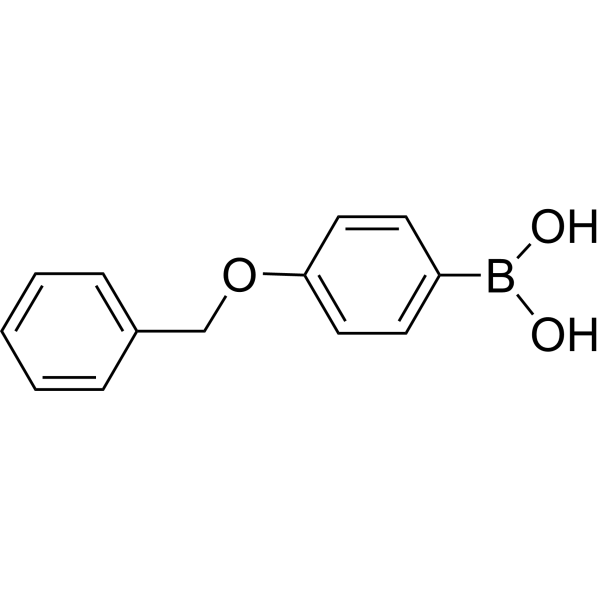
Cat. No.: HY-W000873
CAS No.: 146631-00-7
Target:  

Drug Intermediate

Research Areas:  

Metabolic Disease

4-Benzyloxyphenylboronic acid is an arylboronic acid reagent that generates Monobenzone (HY-30272), a compound that inhibits melanin production in the skin, via electrochemical deboronation hydroxylation. 4-Benzyloxyphenylboronic acid serves as a coupling partner in Pd (0)-catalyzed Suzuki-Miyaura cross-coupling reactions for the synthesis of bent-core liquid crystals and liquid crystalline amphiphiles. 4-Benzyloxyphenylboronic acid is used in the study of hyperpigmentation .
loading...
    loading...
Cat. No.: HY-W552702
CAS No.: 408335-66-0
Target:  

Tyrosinase

Research Areas:  

Metabolic Disease

Tyrosinase-IN-29 (compound 5c) is a potent inhibitor of tyrosinase abTYR (IC50: 6.11 μM). Tyrosinase-IN-29 can be used to further study the inhibition of skin hyperpigmentation .
loading...
    loading...
Cat. No.: HY-101059R
CAS No.: 142720-24-9
FGIN 1-27 (Standard) is the analytical standard of FGIN 1-27 (HY-101059). This product is intended for research and analytical applications. FGIN-1-27 is a blood-brain barrier-penetrant TSPO ligand with a Ki value of 5 nM. FGIN 1-27 inhibits PKC-β, PKA/CREB, p38/ERK MAPK, MITF, tyrosinase, TRP-1, and TRP-2, thereby inhibiting melanogenesis and pigmentation. FGIN-1-27 alleviates X-ray radiation-induced astrocyte mitochondrial hyperfunction, reduces ROS and superoxide production, inhibits excessive activation of A1-type astrocytes, downregulates GFAP and C3 protein expression, and restores astrocyte proliferative capacity. FGIN-1-27 produces anticonvulsant effects in normal mice; in diazepam-withdrawn mice, the brain MDR pathway becomes subsensitive, and the anticonvulsant activity disappears. FGIN-1-27 attenuates pigmentation in zebrafish embryos and ameliorates UVB-induced skin pigmentation in guinea pigs. FGIN-1-27 directly stimulates testicular Leydig cells while upregulating luteinizing hormone levels, causing an acute increase in serum testosterone in male rats. FGIN 1-27 can be used for research related to hyperpigmentation, epilepsy, brain injury, and other diseases .
loading...
    loading...
  • 1

